Tag: NDTV

  • NDTV’s KVL Narayan Rao passes away

    NDTV’s KVL Narayan Rao passes away

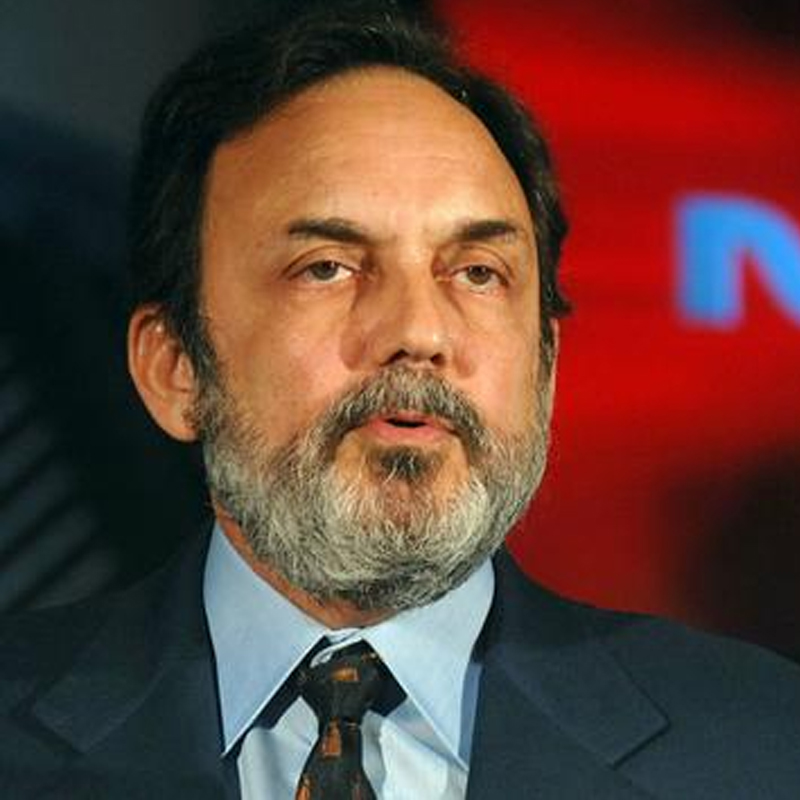
    MUMBAI: NDTV group CEO and executive vice chairperson KVL Narayan Rao passed away at 8am today. Suffering from cancer, he was 63 years old.

    His funeral is scheduled at 9.30 pm at Lodhi auditorium

    In October 2016, Narayan Rao was reappointed for a second tenure as NDTV’s group CEO replacing Vikram Chandra, in addition to his responsibilities as executive vice chairperson. 

    Narayan Rao started his career as a journalist with the Indian Express before joining the Indian Revenue Service (IRS), wherein he held several important appointments during his tenure from 1979-1994.

    Narayan Rao had joined NDTV in January 1995 looking after human resources, administration and operations of IRS.

    He was invited to join the board of NDTV in 1998 and had been its executive director since then. He was appointed group CEO in 2007 and executive vice chairperson in August 2011. A former president of the News Broadcasters Association (NBA), Rao was also on the board of the Indian Broadcasting Foundation (IBF). He has been VP of the Commonwealth Broadcasting Association (CBA). He also served as a member of the FICCI Entertainment Committee as well as a member of the CII National Committee on Media and Entertainment. 

  • NDTV Digital narrows NDTV loss in second quarter

    NDTV Digital narrows NDTV loss in second quarter

    BENGALURU: Operating profit at NDTV Digital has enabled New Delhi Television Limited (NDTV) to narrow consolidated operating loss (EBIDTA) to Rs 137.7 million for the quarter ended 30 September 2017 (Q2 FY 2017-18). An NDTV earnings release mentions a rounded off operating loss of Rs 20 million incurred by the company. The release also states rounded off operating losses by NDTV’s television and allied and ecommerce businesses to the extent of Rs 135 million and Rs 1 million, respectively, and operating profit of Rs 12 million from its digital business during the quarter.

    During the corresponding quarter a year ago, operating profit from the digital business was Rs 10 million (rounded off). An analysis of the numbers put out by NDTV on the stock exchanges shows that the company had incurred lower operating consolidated loss of Rs 106.9 million during Q2 FY 2016-17. On contacting NDTV about the discrepancy, the company responded on email saying, “The difference in the EBITDA in published results versus press release is primarily due to Ind AS adjustment for ESOP cost, which is being shown as one-line item just prior to PAT.”

    NDTV reported a 3.1 per cent drop in consolidated revenue for the quarter under review at Rs 1,025.5 million as compared with Rs 1,162.9 million for the year ago quarter. Net loss stood at Rs 231.40 million for Q2 FY 2017-18 as against net loss of Rs 229.1 million for Q2 FY 2016-17. Consolidated total comprehensive loss for the quarter declined slightly to Rs 233.7 million from Rs 236.40 million in the corresponding previous year’s quarter.

    NDTV reports numbers from two segments–television and media related operations (television) and retail ecommerce. The company reported operating revenue of Rs 1,002.2 million and operating loss of Rs 65.2 million for its television segment and operating revenue of Rs 350 million and an operating loss of Rs 89.3 million for its retail ecommerce segment for the quarter. Corresponding numbers for the year ago quarter were – revenue Rs 1,138.2 million and operating profit of Rs 0.6 million for the television segment and revenue of Rs 30.7 million and operating loss of Rs 136.1 million for the retail ecommerce segment.

    Let us look at the other numbers reported by the company

    Consolidated total expenditure for the quarter declined by 9.4 per cent y-o-y to Rs 1,254.1 million from Rs 1,384 million. Production expenses and cost of services decreased by 34.9 per cent y-o-y to Rs 172.1 million from Rs 264.3 million. Employee benefit expenses increased by 10.2 per cent y-o-y to Rs 573.9 million from Rs 520.70 million. Operating and administrative expenses declined by 21.6 per cent y-o-y to Rs 251.3 million from Rs 320.4 million. Marketing, distribution and promotional expenses reduced by 4.7 per cent to Rs 155.4 million from Rs 163.1 million.


  • Samsung becomes India’s most attractive brand in 2017

    Samsung becomes India’s most attractive brand in 2017

    MUMBAI: The crown for India’s most attractive brand has yet again gone to a South Korea-based company. Smartphone company Samsung dethroned LG as India’s most preferred brand.

    LG has slipped to second position followed by Sony in the top 3. Tata, after falling by almost three ranks in 2016 has come back to hold its position to rank 4th in 2017. Honda ranks 5th after ranking 4th in 2016 and 6th in 2015. The 6th most attractive brand in 2017 is Apple, which has jumped 12 places after ranking 18th in 2016 and 15th in 2015.

    The survey for the 4th edition of India’s Most Attractive Brands was conducted among 2,456 consumer influencers across 16 cities and generated nearly 5 million data points and 5,000 unique brand mentions, out of which the top 1000 brands have been listed in this year’s report.

    TRA Research CEO N Chandramouli mentioned, “The one aspect that has somehow stayed constant is the fight for the top 3 ranks between Samsung, LG and Sony. Will this be the case even next year? Well it may be difficult to predict as the rankings this year have seen some major rank climbs and falls, making a few of the former new category leaders and the latter resigning from their coveted spot.”

    One of the list’s major brand rank climbs is Patanjali; from ranking 371 in 2015 to ranking 87 in 2016 to making it to rank 12 in 2017.

    Chinese mobile phone maker Oppo has claimed the 20th position by taking a major jump from its position at 341 in 2015.

    In the Media-TV segment, NDTV has emerged as the numero uno channel followed by Aaj Tak and Sony Entertainment at number 2 and number 3 positions respectively. In Hindi GEC, Zee TV slipped to number 2 position with an overall ranking of 226 which is a major slip from its last year’s position of 93.

    Baba Ramdev’s Patanjali emerged at number 1 position in the Fast Moving Consumer Goods (FMCG) category with an overall position of 12 which is 75 ranks up than its last year’s position at number 87. Colgate followed at number 2 position and saw a slip in its overall ranking by retaining its position at 43.

    In food and beverage category, Brooke Bond tea saw a major slip in its ranking. The tea brand ranked at 120 in the category but slipped by 776 points in its overall ranking this year with 941 as compared to last year’s 165.

    In the branded fashion category, homegrown brand Fastback emerged as a clear winner at number 1 spot beating international luxury brands Gucci at number 2 spot, Tommy Hilfiger at number 3 respectively.

    In DTH sector, Tata Sky was the most attractive brand with an overall ranking of 315. Reliance DTH was among the worst losers as it ranks at 888. Cadbury Perk joined the bandwagon of losers with its rank at 949 as compared to the previous year’s 499, a difference of 450 ranks.

    “This year we have incorporated the theme of diversity in the report. Diversity is something that our study radiates,” concluded Chandramouli.

  • NDTV promoters get clean chit from SEBI in disclosure case

    NDTV promoters get clean chit from SEBI in disclosure case

    MUMBAI: NDTV promoters Prannoy Roy, Radhika Roy and firm RRPR Holdings can breath a sigh of relief as the Securities and Exchange Board of India (SEBI) has cleared them of charges related to delayed disclosure of company details at the end of the financial year 2011-12. Proceedings against the company have been disposed.

    At the end of every financial year, promoters need to disclose shareholding and voting rights details within 7 working days after 31 March. NDTV was alleged to have delayed this by 64 days to the BSE and one day to the NSE for the FY 2011-12.

    SEBI stated that after investigation, it found them to have made the requisite disclosures to both the trading bodies within the stipulated time. While the BSE admitted that it had reported an incorrect receipt date while the NSE clarified that it got the details in time.

  • OTT trumps TV by 44 min among youth: Chrome DM

    OTT trumps TV by 44 min among youth: Chrome DM

    BENGALURU: Online was larger of the two platforms for consumption of content by youngsters who consumed content only on television or only online in India, a Chrome Data Analytics and Media (Chrome) “OTT Consumption” study has revealed.

    The average daily time spent on content consumption online was 44 minutes higher than the average daily time spent on content consumption on television. Chrome’s survey included 2,505 respondents of which 28 per cent were aged between 15 and 24 years and 72 per cent were in the age group of 25 to 34. 49 per cent of the respondents were male and 51 per cent were female.

    Television versus online

    According to the study, 16 per cent of the respondents consumed content only on online devices, while only two per cent said that they consumed content on television alone. 81 per cent of the respondents said that they consumed content on both the platforms.

    Consumption patterns by respondents who used both platforms for content consumption

    2,054 respondents consumed content both on television and online.

    Genres consumption

    A mobile phone was the preferred device for music consumption among respondents who used both platforms. Eighty three per cent of the 2,054 respondents said that they consumed music on mobile phones as compared to 34 per cent that said that they also consumed music on television and 17 per cent who said that they also used a desktop/laptop for listening to music.

    In the case of movies, television was the preferred device with 66 per cent saying that they watched movies on television as compared to 39 per cent who watched movies on mobile phones and 29 per cent who watched movies on a desktop/laptop.

    Television was also the preferred device for news consumption, with 64 per cent watching it on television and 29 per cent who also watched it on a mobile phone and 9 per cent who also consumed news on a desktop/laptop.

    Seventy four per cent of the respondents consumed sports content on television. 21 per cent and 14 per cent also consumed it on mobile phone and desktop/laptop respectively.

    Sixty nine per cent consumed GEC content on television, and 17 and 6 per cent watched it on mobile phone and desktop/laptop respectively.

    Daily time spent on the mediums

    The average daily time spent online by the 2,054 respondents who consumed content on both television and online was 1 hour 37 minutes on television and 2 hours and 21 minutes online.

    Twenty nine per cent spent less that 30 minutes viewing television, 39 per cent spent between 1 and 2 hours viewing television daily; 26 per cent spent between 2 and 3 hours daily watching television, 3 per cent spent 3 to 5 hours viewing television daily and 3 per cent spent more than 5 hours on daily television viewing.

    Comparative numbers for online consumption of content were: 23 per cent spent each less than 30 minutes daily and between 1 and 2 hours daily; 29 per cent spent between 2 and 3 hours daily; 9 per cent spent between 3 and 5 hours and 17 per cent spent more than five hours on online content consumption daily.

    Frequency

    Seventy four per cent of were daily watchers of television and 26 per cent had no fixed routine for watching television. 77 per cent watched content online daily; 14 per cent watched content online during weekends and 9 per cent had no fixed routines.

    Apps

    YouTube was the preferred app for consumption of all types and genres of content. Other apps/websites such as hotstar, JioTV, Eros Now, Voot, gaana, saavn, Wynk Music, Sony Liv, TOI and NDTV were used for different content genres.

    Top three apps for music consumption

    The top three apps for Hindi music consumption were YouTube, Hungama and gaana , while for English music consumption they were YouTube, Wynk Music and gaana. In the case of Regional Music, the top three apps were YouTube, saavn and JioTV

    Top three Movie apps

    The top three apps for Hindi content consumption were YouTube, hotstar and Eros Now, for both English and Regional content they were YouTube, hotstar and JioTV.

    Top three GEC apps

    The top three apps for Hindi GEC content were YouTube, hotstar and Voot, while for English and Regional content they were YouTube, hotstar and JioTV.

    Top 3 sports apps.

    The top 3 sports apps were YouTube, hotstar and Sony Liv

    Top 3 News apps/websites

    The top 3 News apps/websites were YouTube, NDTV and TOI

    Top 3 apps for Online exclusive content

    The top 3 apps for online exclusive content were YouTube, Hotstar and Voot

  • Indiantelevision.com’s VR news journalism workshop gives fresh insights

    Indiantelevision.com’s VR news journalism workshop gives fresh insights

    MUMBAI: “Immersive Journalism.” “The Use of VR in News Journalism”

    Indian broadcast news journalists have heard these terms being used either online or in conversations. But, apart from NDTV, Republic and Times Network, not many of them have explored the innovation that is currentl engaging TV news viewers worldwide.

    To fill this gap, indiantelevision.com organised a half-day workshop in Noida’s Radisson Blu MBT Hotel on 26 September.

    In the house were a select group of tech professionals from news organisations such as NDTV, ABP News, India Today and News18 Television. The workshop was presented by  VR expert, the Dubai-based Clyde Desouza.

    Indiantelevision.com founder, CEO and editor-in-chief Anil Wanvari stated at the start of the workshop that VR journalism is not just in an experimental stage currently, it is a reality amongst many broadcasters worldwide. The reason for this is the falling prices of 360 VR cameras and VR headsets.

    public://Clyde DeSouza.jpg

    Clyde Desouza gives his take

    I’ve just completed a whirlwind initiative to bring awareness of Immersive Journalism to media organisations in India, thanks to the support and thrust provided by IndianTelevision.com.

    What started out as a series of discussions with the founder of IndianTelevision.com, Anil Wanvari, culminated in an exclusive, invite-only seminar on the future of factual storytelling – Virtual Reality and Mixed Reality Journalism at the Radisson Hotel, Noida, India.

    The top news and media organisations are headquartered in Noida, and CxO-level professionals from these organisations attended along with news editors and graphics teams to look into the future of news reporting and what I’d like to term as “Experiential Journalism.”

    The audience was informed and engaged. I won’t hesitate to say I’ve learned equally as much from the questions posed, as from the non-linear discussions that ensued well past the two-hour time allotted for the workshop.

    It was encouraging to see attendance from such prestigious organisations as E&Y, alongside respected NEWS and media organizations such as NDTV, ABP, and Network 18 in India.

    The seminar started with an overview of what Immersive Journalism is, with due credit given to the such luminaries as Noni De La Peña, but also the current state of the art in Virtual Reality news reporting and looking forward to Mixed Reality storytelling.

    As a tech / creative evangelist for VR, I was happy and impressed with the questions asked, and was genuinely excited to field queries ranging from Photogrammetry offer ideas on how CG “assets” could be created, and a library built for rapid Immersive Journalism pieces, with existing television CG packages and solutions such as VizRT and Wasp3D.

    There is certainly an appetite among the media and NEWS organisations in India, to take reporting beyond what’s possible on linear TV.

    While I’m currently bringing one of India’s leading news channels up to speed in VR, it was heartening to see almost all other major and emerging media organisations, aware that in order to build loyalty to their channel and brand, they need to engage their audiences on a level that goes beyond sensationalism and traditional news reporting.

    Twitter @cly3d

    Linkedin: https://www.linkedin.com/in/clydesouza

    www.realvision.ae/blog

    Many of the broadcasters are foraying into it because they want to get brand innovation credibility, apart from attaining a sense of future preparedness. Wanvari added that currently most of the players are actually producing a lot of 360 videos, rather than fully immersive ones.

    The early adopters apart, most news broadcasters are treading cautiously because the monetisation models have yet to be developed, and though prices have been heading southwards, the cost of VR gear – both at the producer end and at the consumer – still make it an elitist hobby, said Wanvari.

    He added that around three million headsets have been sold internationally.

    He urged the Indian news industry to get together under the NBA umbrella to work cohesively with tech partners, and platforms to increase awareness amongst its members as well as to negotiate on both production equipment and content standards.

    Desouza, on his part, began by explaining to the audiences what VR really seeks to achieve.

    “VR is not VR for VR’s sake,” he said. “It’s the experience that your brain feels.” 

    He explained the difference between VR and AR. “AR is when digital assets are added into the real world,” he said. “VR is when it’s entirely virtual and digital.”

    Desouza pointed out that care should be taken while filming 360-degree videos. “You have to keep the viewer in mind. You can’t pan and swish and zoom in like you would do with a normal camera. These kinds of motions give the VR viewer a headache.”

    He pointed out that many organisations are investing hundreds of thousands of dollars and producing videos that don’t really work as VR or immersive journalism.

    “The VR video has to draw the viewer into understanding that it is his point of view which he is experiencing,” he said.

    Desouza added that news brands internationally are using — and can use — VR to galvanise the audience into action.

    “For instance, a feature on haemophiliacs can be told from a victim’s point of view and the viewer should be able to feel and experience what the haemophiliac is feeling and going through and how we need to deal with them,” he explained.

    His view is that Indian news organisations would do well to keep aside budgets of about US$ 100,000 to start up their VR departments as well as a room with young, trained journalists so that costs can be kept under control.

    His talk was illustrated with the best and the worst examples of VR and immersive journalism videos from global studios.

    Desouza is currently consulting a leading Indian English news broadcaster to help steer it into VR journalism, and is in talks with a couple of others for the same.

    To read Clyde Desouza’s perspective on the workshop, click here.

  • SpiceJet’s Ajay Singh may take control of NDTV, latter denies (updated)

    SpiceJet’s Ajay Singh may take control of NDTV, latter denies (updated)

    MUMBAI: NDTV may change hands as its founders — Prannoy Roy, Radhika Roy and the promoter firm RRPR Holding — are facing a CBI probe for allegedly concealing a share transaction. A senior NDTV official, however, told the Hindu that the reports were untrue.

    Singh, it was earlier reported, will have controlling stake in NDTV of around 40 per cent and the promoters Roy and his wife will hold around 20 per cent in the company.

    Sources had told the Indian Express that SpiceJet CMD Ajay Singh, of who was also part of the BJP’s 2014 poll campaign, has bought a majority holding in the news channel. Ajay Singh is set to take control of NDTV along with editorial rights, the source was quoted as saying

    The CBI had in June conducted searches at the residences of the Roys. Refuting the allegations, NDTV had said that the CBI had filed its FIR based on a complaint by a “disgruntled” former NDTV consultant.

  • Business news most benefitted, English GEC most affected genres: Chrome DM

    Business news most benefitted, English GEC most affected genres: Chrome DM

    MUMBAI: With a growth of 1.04 per cent as compared to last week (35), the Business news genre marked the highest opportunity to see (OTS) among all categories in week 36 of Chrome Data Analytics & Media.

    In the business news category, Zee Business gained the highest OTS in six metros with 85.2 per cent whereas NDTV Profit/Prime was the most affected in terms of OTS with 47.5 per cent.

    OTS is the actual census-based percentage connectivity of a channel spread across 81 million homes, reported by Chrome DM, across analogue cable, digital cable and DTH.

    The second position in the gainer’s list of OTS was grabbed by the English movies genre with the growth of 0.50 per cent in six metros. Movies Now was the most benefitted channel in this category with 53.6 per cent whereas Sony Pix was the most affected one with 45.9 per cent OTS.

    Religious genre saw little less growth of 0.16 per cent in week 36 as compared to the last week (35), which was 0.33 per cent. In this category, OTS of Sanskar was leading the genre with 96.2 per cent on an HSM (Hindi-speaking market) excluding 1L-market.

    The youth genre hopped on to the fourth position in the list with 0.12 per cent growth and MTV catered to 88.4 per cent OTS on an HSM (Hindi-speaking market) excluding 1L-market.

    The fifth position in gainers list was bagged by the sports genre with a growth of 0.09 per cent. In this category, DD Sports is topping the OTS chart with 95.6 per cent on an all-India basis in week 36 of Chrome DM.

    Among the losers, the English GEC was the most affected genre with a drop of 0.74 per cent OTS in six metros with AXN recording the highest fall in ratings in the segment with 94.4 per cent whereas Colors Infinity still maintained to keep on the top with 47.7 per cent OTS.

    The Hindi News category recorded a fall of 0.53 per cent OTS on an HSM (Hindi-speaking market) excluding 1L-market. Aaj Tak was the most affected among the top 5 channels in this genre with 94.1 per cent, whereas India TV maintained to be on the top in the list with 99.6 per cent OTS in week 36.

    Infotainment and ‘kids all-India’ pocketed third and fourth positions with a drop of 0.23 per cent and 0.12 per cent, respectively. The Discovery channel in the infotainment genre and Pogo in kids were the most affected channels in the Top 5 chart with 75.8 per cent and 74.3 per cent, whereas NGC and Nickelodeon topped the chart with 91.9 per cent and 88.9 per cent, respectively.

    Hindi Movies genre stood at the fifth position with a fall of 0.11 per cent OTS with Movies OK holding the last position in the Top 5 channels’ chart with 90.4 per cent and Sony Max leading the chart with 93.9 per cent OTS on an HSM (Hindi-speaking market) excluding 1L-market.

  • NDTV Good Times plans bonanza for viewers on tenth anniversary

    NDTV Good Times plans bonanza for viewers on tenth anniversary

    MUMBAI: “The great thing about getting older is that you become more mellow,” quoting Irish author, playwright and columnist Maeve Binchy who died in 2012. However, viewers are hoping that the same will not be the case with India’s  long-running lifestyle channel, NDTV Good Times, as it becomes all of 10 today.  

    Launched on 7 September 2007 in partnership with the now allegedly tarred former Indian liquor magnate Vijay Mallya, its intent was to offer a wide range of aspirational lifestyle programming on health, fashion, food, travel, and luxury. 

    And it has been doing that effectively by engaging and entertaining English-speaking upscale TV audiences in India the US, Singapore, Sri Lanka, Mauritius and Maldives. In India, In fact, it has gone on to define the lifestyle niche  – being present across all major cable markets and all six DTH platforms in the country –  even as others have fallen by the wayside. (Mallya is no longer associated with the channel, but the Good Times brand has stayed with NDTV Lifestyle – a division under the NDTV network.)  

    A press release issued by the network says the uniqueness about NDTV Good Times is that “it  presents fresh, original programming that gives its viewers mantras on how to enjoy food both highway and Michelin star, find good health through salsa and yoga, follow fashion on ramps both Indian and global and most of all on how to live life to the fullest, no matter where you are. The line-up of shows covers every aspect of the lifestyle genre to portray and cater to an increasingly global India.”

    Indeed, some of NDTV Good Times’ shows  like ‘Band Baajaa Bride’, ‘Yarri Dostii Shaadi’ and ‘My Yellow Table’ have become iconic.

    The channel has won several programming awards at the Indian Television Academy Awards, indiantelevision.com’s The Indian Telly Awards and the World Media Festival for key shows and interstitials like Highway on My Plate, No Big Deal and Making of the Kingfisher Calendar.

    And on its tenth anniversary, the channel’s team, says  its   logo, icons, idents and a vibrant and dynamic colour palette are a testament to its evolution.

    “We are continuing to offer programming that is impulsive, interactive and with an attitude to match,” explains NDTV Lifestyle CEO Smeeta Chakrabarti. “We have planned an exciting line-up and fresh seasons of hit shows, starting with My Yellow Table with the popular chef Kunal Kapur.  Also planned is an exciting contest to gratify our viewers who could win luxury experiences.”

    Adds  channel head Arati Singh: “Our focus has always been to provide an immersive Good Times experience through 360-degree multi-platform content. NDTV Good Times inspires its viewers to #LiveYoung and #LiveIndian which has been the channel’s tagline and  has been integrated with its social media as well.”

    With that kind of go-getter attitude, there’s no stopping the good times for its TV viewers.

  • Content is supreme, lyrics are vital, says Farhan Akhtar at NDTV conclave

    Content is supreme, lyrics are vital, says Farhan Akhtar at NDTV conclave

    MUMBAI: “If the story is not good, then no matter where you shoot the film it doesn’t matter. Content has to be supreme. There was a time when music became more important than lyrics. Audience would not even remember the lyrics. That is changing now. The thought that if you have one hit number in the movie and that can ensure success of the film is also changing,” said actor-director Farhan Akhtar at the NDTV conclave in New Delhi on Monday.

    NDTV saw the culmination of its Youth for Change Conclave, a day-long event that aims to focus on solutions for challenges that our youth face today. This year saw a host of personalities from diverse fields come together to address the issues that are concerned with today’s youth.

    The sessions also featured celebrities like Kangana Ranaut, Ajay Devgn, Arjun Kapoor, Ileana D’Cruz, Emraan Hashmi, Esha Gupta, Armaan Malik, Neeti Mohan, Irshad Kamil, Sachin Jigar and the stars of the women cricket team – Mithali Raj, Jhulan Goswami and Punam Raut, among others. The sessions covered issues ranging from Gender divide, challenges of fake news and is social media a bane or boon.

    Ranaut shared the travails of being a superstar: “Big cities are money-oriented, small towns are more concerned about what people – buaji, mausiji – will say. I come from an extreme environment, a conservative background. I felt stifled and just wanted to be free. On being discriminated against as a child: I could never feel pride in my lineage and I don’t feel like I belong when I go home. I want to tell women that they should fight for their own dignity, be it against fathers, husbands or children.”

    Mithali Raj, Jhulan Goswami, Punam Raut talked about setting new records against all odds.

    Raj, Captain, Women Cricket Team, said: “PM Modi tweeting about the women’s team was a moment of pride for us. My grandparents did not want me to take up cricket. Cricket is not life to me. There is life beyond cricket too.”

    Goswami, cricketer, said: “”World Cup final defeat will continue to hurt all of us. After beating Pakistan in the World Cup league match, even their fans applauded us. Unfortunately only one day out of 365 is celebrated as Women’s Day.”

    Arjun Kapoor, actor, shared his views on the gender divide: “”I am not very educated. I didn’t clear my Class 11. But, my upbringing has been such that despite this lack of education, I got a chance to move on in my life to do what I wanted to do. I don’t think women get such opportunity. I have grown up among women, predominantly with my sister and mother, and I have seen how strongly women face adversity. We should incorporate it in the syllabus itself how men should treat women. We always hear, ‘Stop crying like a woman.’ We inadvertently are implying that women are the weaker gender. I have a sister and somewhere there is always a concern about her safety. It is not just about urban or rural areas, world over security of women is an area of concern. We are moving forward and progress is everyone’s right. It cannot be gender specific. Gender parity means that both are equal not one is superior to the other.”

    Armaan Malik, singer: “I was a 10-year-old when I got to know that I am from Music composer Hasrat Jaipuri’s family. In my family everybody is a composer, I am the first one to get into singing. My grandmother makes me listen to Hasratji’s music and always asks me if such good music is being composed today as well. I feel good music is still being created.”

    Irshad Kamil, lyricist: “Today the films are closer to reality and so the scope of music in the films have gone down.”

    Sachin-Jigar, music composer duo: “The shelf life of songs have not gone down. Today lot more songs are being made and so audience has a lot of options to keep sifting through. But good songs live on for a long time even today.”

    Ajay Devgn, actor: “Always look ahead and not dwell on the past, just focus on rectifying the errors as we move forward.”

    Emraan Hashmi, actor, said: “If you are from a family connected with film industry then getting a break may be easier but at the end of the day you have to be good in acting. At the end of the day the audience is the decision maker. There is more pressure on ‘star kids’.”