Tag: NDTV Profit

  • News broadcasters are all revved up for Union Budget 2016

    News broadcasters are all revved up for Union Budget 2016

    MUMBAI: The Railway Budget was successfully announced by the railway minister Suresh Prabhu, and the fourth pillar of democracy i.e. the press, made justice by covering the entire highlights in detail of the allotment to its viewers. The people are anticipating the same coverage by the media with the announcement of the Union Budget which is right around the corner. The finance minister Arun Jaitley will announce the budget on 29 February 2016.

    With the increase in the number of the channels and the growing competition, the news channels need to focus on various factors to have an upper hand over the others. While, some channels take up on-ground activities to interact with the lehman, some get an esteemed panellist on board to discuss the budget while a few resort to get analysts with a special programming line-up.

    In this brawl, the viewers are left baffled with which channel to be watched and followed for a better insight on the budget. Taking a hint from this, Indiantelevision.com did a quick round-about of how the channels are going to cover the Union Budget 2016.

    Read on:

    Abp news will air a budget special show titledDesh Ka Budget anchored by Kishore Ajwani. ABP News will analyse the budget with FICCI and CII representatives along with political and economy critique.

    Culminating with the Budget announcement, CNBC-TV18 will present a host of special shows, led by India’s most experienced business editorial team that will focus on key aspects of the Government’s fiscal policy. The Channel will speak to the most influential names of Markets & India Inc., to understand their expectations from the Budget. The channel will present a number of special shows to understand the country’s expectations from the Budget.

    The channel will air Budget Caravan traversing the length and breadth of the country and will travel to the growth centres of India, to get a sense of the big expectations, straight from the shop floor and give viewers an economic health check of the nation, with this special series.

    What’s Ailing Rural India will see reporters travelling to the smallest pockets of the nation to understand the rural nerve of the country. With the aim to find an answer to how will the budget impact the rural population of the country and what are their key needs?

    The other show that will be broadcasted on the channel  is Budget Hangout which will feature the young business community and professionals of India; we speak to the young CMOs and CEOs of leading corporate names in India. In a refreshingly new format, team CNBC-TV18 chats with these young icons on their expectations from the budget.


    CNN-IBN and IBN7 will bring rolling coverage on union budget on 29 February 2016 under the umbrella of the special shows The Booster Budget on CNN-IBN and Budget Waale Babu Meri Income Bada Do! on IBN7.

    The shows will be a culmination of a series of pre-budget shows through which both the channels have been capturing the mood, expectations and suggestions of different sections of the society. The network has lined up an extensive live programming to cater to the viewers with all they need to know about the upcoming budget.

    On the general budget day, the channels will have leading economists and industry leaders including the former finance secretary CM Vasudev, executive director India foundation and MD Zeus Caps Shaurya Doval, BIMTECH director Dr. Harivansh Chaturvedi, LocalCircles.com chief strategy officer K Yatish Rajawat and Gaursons MD Manoj Gaur for IBN7 and National Institute of Public Finance and Policy professor Dr. Ila Patnaik (Professor, Swarajya economist, journalist and editorial director R Jaganathan, author and historian Patrick French, Mercury Travels executive VP Ashwini Kakkar, Government of India former chief economic advisor Dr. Arvind Virmani and Shell India executive chairman and Brookings India former chairman Vikram Mehta for CNN-IBN.

    Media experts from around the country will also be seen with the CNBC¬TV18 budget editors. Traders will be guided by technical analysts lead by Ashwani Gujral, Sudarshan Sukhani, Prakash Gaba and Rajat Bose. While the fundamental impact of the budget on individual stocks will be analysed by S P Tulsian, Prakash Diwan and Ambareesh Baleega.

    The channel has dedicated the entire day to cover the Union Budget 2016. Starting from 7 am, the channel will air Time Is Now stretching up till 11 pm followed by the finance minister’s speech going on till 1:30 pm. A second part of the show Time Is Now will begin from 1:30 to 4:30.

    Going further, the viewers can tune into ET NOW Budget Trades till 5 pm followed by a third segment of Time Is Now till 6:30.

    The channel will then broadcast a 30 minute exclusive Tax Effect from 6:30 to 7 pm. Investors Guide Budget Special will be aired from 7:30 pm to 8 pm followed by Markets & Macros will begin from 8 pm extending to 9 pm.

    The channel will be seen debating on the budget with esteemed panelists in The Budget Debate from 9 pm to 10 pm. ET NOW Budget Trades’ will follow till 10:30 pm. Thye Budget Debate will air from 10:30 pm to 11:30 pm. The channel will air its last for the day with Markets & Macros till 12 am.

    To get a clear picture about the budget this year, IBN-Lokmat is already airing Apeksha Budgetcha for exclusive coverage and discussion on the past promises & future expectations of the Union budget.

    The channel will also air budget special show titled Lokmanch, deciphering last year’s budget fulfilment, fund allocation to the state, its utilization and more. The channel will have interviews and discussion special shows talking about the developmental need in agro industries, infrastructure & cooperative sectors. IBN Lokmat will also have an exclusive show with renowned economist Dr. Narendra Jadhav on 27 February at 8  pm.

    On the budget day, the channel will have a dedicated budget special telecast starting from 9 am covering the finance minister’s live speech and an expert panel with eminent personalities from various industries & social segments, discussing the budget and its effect on the Indian economy.

    The channel will decode the budget with Rajat Sharma in the show Namo Budget 2016 from 10 am.

    Budget Buzz will begin on the channel at 8 am with Shweta Rajpal Kohli and Vikram Chandra as they ask  what does the highly anticipated budget mean for industry and the people of India?

    Following that will be a live budget speech with Prannoy Roy with CEOs, analysts and the aam aadmi for their reactions to the Budget at 11 am. At 7 pm Manisha Natarajan will look at the tax implications with a panel of tax experts. Budget Buzz 2016 ends with a full analysis of the budget with Prannoy Roy and a panel of expert analysts from 8- 10 pm

    NDTV Profit’s Budget Buzz has a full day of programming starting at 8 am with Prashant Nair and Manvi Sinha Dhillon with guest experts. Watch full in-depth discussions of highlights post the live Budget speech with market and expert analysts.

    India Ka Budget will begin at 10 am with Ravish Kumar and Aunindyo Chakratvarty with guests as they anticipate what changes the Budget will bring and give us analyses of highlights following the live budget presentation by the finance minister.

    The evening programming will highlight what the budget means as Ravish discusses significant budget points with his guests on primetime at 9 pm.

    The channel will air Budget Debate with Arnab Goswami with a panel of experts debating if the government has delivered on its reform promise. The panelists include Sanjeev Sanyal, Sandeep Gurumurthi, Omkar Goswami, Nalin Kohli, Pavan Varma, Rashesh Shah and Dr. Rajeev Kumar. The debate will happen on 28 February 2016 at 1 pm and a repeat at 9 pm.

    *The channels are arranged in an ascending order

  • BARC week 42: India TV is No. 1; Times Now, ET Now, CNBC Awaaz retain top slot

    BARC week 42: India TV is No. 1; Times Now, ET Now, CNBC Awaaz retain top slot

    MUMBAI: In the Hindi news channels segment, India TV climbed up one step ahead and stood at the number one position. On the other hand, Times Now continued to rule the English news channels genre in the All India (U+R) market according to Broadcast Audience Research Council (BARC) India data for week 42.


    In the English business news genre, ET Now maintained its position as the leader in the genre, whereas CNBC Awaaz retained its number one position in Hindi business news genre.  


    HINDI NEWS


    India TV secured the first place in Hindi news genre with 60875 (000Sums) followed by Aaj Tak in the second spot with 58968 (000Sums). ABP News secured the third berth with 52565 (000Sums), whereas News Nation with 51785 (000Sums) and Zee News with 41783 (000Sums) bagged the fourth and fifth place respectively. 


    ENGLISH NEWS


    Though Times Now witnessed a fall in ratings compared to last week, it managed to garner pole position with 400 (000Sums) followed by CNN IBN at 250 (000Sums). NDTV 24×7 garnered third position with 223 (000Sums) and India Today Television held the fourth place with 194 (000Sums). Like last week, News 9 maintained its fifth slot and scored 156 (000Sums) in week 42. 


    HINDI BUSINESS NEWS


    In the Hindi business news genre, CNBC Awaaz bagged the first spot with 968 (000Sums) followed by Zee Business in second slot with 854(000Sums). 


    ENGLISH BUSINESS NEWS


    The top four English business news channels maintained status quo in week 42. ET Now continued to dominate the genre with 472 (000Sums) followed by CNBC TV18 with 278 (000Sums) in the second spot. NDTV Profit & NDTV Prime in the third slot scored 112 (000Sums), whereas Bloomberg TV secured fourth place with 17 (000Sums) in week 42. 

  • “Under Arnab’s guidance, ET Now will innovate & redefine biz news genre:” MK Anand

    “Under Arnab’s guidance, ET Now will innovate & redefine biz news genre:” MK Anand

    Launched on 17 June, 2009 Times Group’s business news channel ET Now, has now completed six years in the Indian television industry. ET Now is the youngest player in the English business news space and faces firm competition from CNBC TV 18, NDTV Profit and UTV Bloomberg.

    On numerous occasions the channel has grabbed the pole position in terms of viewership. What’s more, as per the recent Broadcast Audience Research Council (BARC) India ratings it is placed in second place with 136 (000s) sum, while CNBC TV 18 holds the pole position with 154 (000s) sum.

    Times Network has been strongly promoting the business venture and in order to strengthen it further, the network has now given Arnab Goswami the additional responsibility of being its editor-in-chief. Speaking to Indiantelevision.com’s Anirban Roy Choudhury, Times Network CEO and managing director MK Anand shares the network’s plans and proposals for the future.

    Excerpts:

    How has ET Now’s journey been so far?

    It has been a splendid journey. In just three and a half years, ET Now had established itself as the No.1 business news channel of India, beating a global giant competitor and creating history of sorts. Recently, the BARC measurement system has re-validated our position as India’s Number 1 business news channel. ET Now was launched on 17 June, 2009 in a challenging economic environment, and practically rewrote the script for the genre.

    Over the years, the channel has not just gained its viewers’ trust but has also gone on to become the preferred choice of India Inc. and policy makers alike.

    What’s your take on the business news market? Do you see it growing?

    The business news market, like the Indian media market in general, is most definitely poised for strong growth. Despite recent volatility, we are in the middle of a structural bull run that could see a whole new set of viewers tuning into business channels like ET Now, for unbiased news coverage and analysis. We believe in re-imagining and creating new value with our products. If last year is any indication, our bet on the English audience and more specifically on the English news category will pay us handsomely. We see geometric growth in the medium term.

    What will be your strategy to stay ahead of competitors?

    ET Now has built its leadership on three key pillars – speed, integrity and expertise. We will continue to up the ante on all three pillars and further consolidate our leadership by reaching out to a wider catchment of viewers. Our distribution has already been scaled up substantially. We also have the best in class content team. The trick is to relentlessly be ahead on quality. We are confident to be able to do it.

    Over the years, what has been advertisers’ reaction towards the channel?

    Advertisers and brand owners have been extremely positive and encouraging; they have continuously reposed their confidence in us, for we cater to the audience that matters the most. ET Now continues to reach out to maximum viewers in the English business news category and we ensure our advertisers get the maximum ROI for their spends. Our ad growth is the best indicator of our advertiser confidence.

    How aggressively will Times Network push to promote ET Now?

    ET Now is an integral and important part of Times Network’s news portfolio. The recent clutter breaking consumer and trade engagements, never-seen-before budget campaign and the recent leadership drive, reinforces Times Network’s intent towards ET Now’s growth and success.

    Can you throw some light on the channel’s distribution numbers? How do you plan to improve it further?

    For ET Now, the focus earlier was only on metros. However, with digital addressable system (DAS) implementation in Phase II and the demand of the channel growing in markets beyond metros, ET Now’s penetration has increased to almost 100 per cent in all 1 Mn+ markets. We have also doubled the penetration in 0.1 to 1 Mn markets, in the last 10-12 months.

    With the impending DAS III & IV phases, the focus on LC1 has also increased for all broadcasters and likewise for ET Now, where language is no longer a barrier considering the kind of content it provides.

    With Arnab Goswami as the new editor-in-chief, will there be any change in programming?

    Arnab has been a champion of innovation in the general news genre. Under his guidance, ET Now will continue to innovate and redefine the business news genre. We have a winning team and a champion leader.

    What is the channel’s stand on the new rating body BARC? Do you see enough difference when compared to TAM?

    We are happy with the new measurement system. BARC is technologically advanced and is larger than the erstwhile base of meters by almost two-and-a-half times. An extended viewer base has certainly helped bring in more consumers into the analysed set and helped us improve our services to them and thus generate more value. With BARC, we have retained the No.1 spot across channels, and we continue to lead the broadcast space in the respective genre with a clear margin. Times Network’s ‘Now or Nothing’ philosophy, helps us sustain our leadership across genres with differentiated and hard hitting content and stay on top of the audience pyramid as always.

    As ET Now celebrates its sixth anniversary, will there be any special programming to celebrate the occasion?

    This is ET Now’s anniversary week and we thought we must delight our loyal viewers. So we have launched a ‘Built on Six’ contest, where in six lucky viewers have the chance to win an iPhone.

    On the programming front, we have a power packed line of shows and experts this week. Some of the most seasoned market experts like Vallabh Bhanshali and Ramesh Damani will be speaking exclusively to ET Now and sharing their insights on the market. We also have some exclusive interviews lined up with key ministers and govt officials. That’s not all, we also have a special show on 17 June (anniversary day) called Stocks and Stars, which will feature Bollywood superstar- Amitabh Bachchan.

  • News channels’ budget special

    News channels’ budget special

    MUMBAI: Will Arun Jaitley successfully meet the expectations of the common man or are the aspirations too high? Will we get new schools and colleges? Will the number of AIMS increase? What will happen to health security? Will medical treatments become more affordable? Will there be any rationalization of taxation?

    The Ministry of Finance will be under the spotlight in the coming days as the country seeks answers to many such questions.

    Indiantelevision.com takes the opportunity to throw a set of questions to various news channels on their plans and offerings to meet viewer’s aspirations.

    ET Now

    The theme for Budget 2015 for the channel is Budget for Achhe Din. “This being the first full-fledged budget from Modi government, the common man’s and various stakeholders’ expectations for achhe din are really high and this perhaps would be the chance for the government to testify the promises made,” says ET Now managing editor R Sridharan.

    With the budget being a highly anticipated event, news channels are gearing to grab as much attention as possible. ET Now is content with the advertiser response. “The response has been phenomenal and we have brought on-board the maximum (and exclusive) budget sponsors within our category. Besides, we have sold out complete inventory on FCT and non FCT elements during budget week and budget day,” adds channels spokesperson .

    Budget also tests the editorial prowess. “All stakeholders of the budget viz. India Inc., market participants, traders, retail investors and the common man would largely depend on us to bring the fastest news updates, analysis, reactions and verdict on the budget,” he says.

    ET Now is looking at providing the most comprehensive and decisive analysis on budget to its viewers. “Every year our budget verdict is closely watched. This year we have a power packed line-up of pre-budget programming named Budget Marathon all through the budget week, which will consist of budget debates, a daily call-in show on personal finance and special editions of our extremely popular show market makers,” he informs.

    So why should one tune into ET Now? Sridharan says, “The sheer depth and expertise of ET Now’s budget coverage will be unmatched as compared to any other English business news channel. Foremost economist Swaminathan Aiyar and Motilal Oswal joint managing director Raamdeo Agrawal will lead ET Now’s programming on budget day. Aiyar, is the most respected economic expert in India who has been analysing budgets for more than 45 years now. In addition to our seasoned anchors, ace fund manager Punita Kumar Sinha will also be part of our stellar line up of experts. With the combined might of these three, the viewers will gain tremendous insights and knowledge ranging from economy, markets, finance and investments.”

    “Each of our experts is a stalwart in his or her area. Be it institutional investors or retail investors, market participants look to our panel to get the most decisive analysis of budget proposals. We have the most authoritative voices on the channel,” he informs.

    NDTV Network

    NDTV, as part of its budget special, will throw all the key questions to find out if the Narendra Modi led government will be able to live up to the expectations of 1.25 billion Indians.

    The channel, through its budget programming, will find out if the growth stimulus is pro-subsidy or pro-investment?

    NDTV senior vice president corporate affairs and senior editor real estate Manisha Natarajan says that the first full budget will be the Modi government’s first real acid test. “Join NDTV as we balance the numbers and find out how Budget 2015 affects you,” she says.

    The programming of the 24 hours English news channel NDTV 24/7 during budget will be as follows:

    Pre-Budget programmes

    23 and 24 February: Budget ADDA at 5:30 pm. In the build up to the Union Budget, Shweta Rajpal Kohli will be joined by the captains of the industry to outline their wishlist for the first proper budget of the Narendra Modi government.

    26 February: Rail Budget Live (12–1 pm): The rail budget presentation will be followed by analysis with railway industry experts and policy makers.

    27 February: Economic Survey Special (9-10 pm). Senior economists, industry voices and policy makers debate and discuss the Economic Survey 2015.

    28 February: Union Budget 2015. Industry and political voices, policy makers and economists join Prannoy Roy and Shweta Rajpal Kohli from 9 am to 3 pm to look at the Narendra Modi government’s first budget.

    9-11 am: Pre-Budget expectations and analysis

    11 am – 1 pm: Budget Speech Live from Parliament

    1-3 pm: Post Budget analysis

    The scheduling of the network’s business channel NDTV Profit is as follows:

    Betting on the Budget: Presented by Prashant Nair, the viewer will get insights into the expectations of the financial markets from the Union Budget. The show will have top-notch market participants who will discuss and debate what the budget can do for the economy and of course for the financial markets.

    B-School Budget: Moderated by Shweta Rajpal Kohli, in this show young business students talk about their perceptions and understanding of the budget and how they might perhaps do it differently.

    Budget ADDA: In the build up to the Union Budget, captains of industry outline their wishlist for the first proper budget of the Narendra Modi government. The show will be anchored by Shweta Rajpal Kohli.

    Programming on Budget Day 

    Name – Union Budget 2015

    Anchors – Vikram Chandra and Prashant Nair

    Timing – 8 am to 5 pm 

    Pre Analysis – 8 am to 11 am 

    Budget Speech – 11 am to 1 pm 

    Post speech analysis – 1 pm to 5 pm 

    News X

    When queried about its special coverage for budget 2015, NewsX editor in chief Rahul Shivshankar says, “NewsX has a new mission for the new NDA government for their first budget – Mission 10 per cent. This is also our branding for the coverage, which will all dovetail into this special theme- how to attain double digit growth for India.”

    NewsX will be breaking the mould with a new virtual gfx (graphics) technology to present the big numbers in the budget.

    Talking about the motto of News X, Shivshankar says, “We believe that one of our primary functions is to ensure that the voice of the common person reaches the newsmakers. We are doing a series of roundtables with experts and opinion makers which will be suggestive of what the government focus for the budget should be.”

    During the budget, viewers tune in to a channel to follow the editorial content. The channel with better content garners more viewership. “NewsX has a detailed roll out plan for budget programming. From 19-27 February, our programming Your Budget, Your Expectations would highlight the expectations of the common person from the FM and PM. From 21-25 February on our budget show Mission 10 per cent at prime time, we will debate on issues like growth, fiscal deficit, tax, growth and aspirations of the youth with eminent panel of experts. From 27-28 February our prime focus will be on the political and economic implications of the Rail Budget and Union budget including Economic Survey. Overall, our editorial focus will be to be non jargonistic, to simplify the numbers and ensure the coverage is detailed yet tailored to the common person,” he informs.

    The panel of experts is a very important part of any presentation and the NewsX panel of experts will have former advisor to PMO Subhashish Gangopadhyay, Vivian Fernandes, former cabinet secretary TSR Subramanian, economist BB Bhattacharya, founder Air Deccan/Industrialist Captain Gopinath, senior journalist MK Venu, convener economic cell BJP PN Vijay, direct tax expert KPMG Prashant Kapoor and personal tax expert KPMG Ashish Gupta.

    When asked why should people choose NewsX over others Shivshankar replies, “For clarity. It’s as simple as that. We put the viewer before the numbers.”

    Times Now

    Times Network’s 24 hours news channel Times Now has named its special coverage Super Budget in concurrence with the theme that this budget will perhaps be a kick-starter for the next phase of growth.

    Super Budget 2015 will be a congregation of debate shows, interviews, analysis and discussions with Times Now editor in chief Arnab Goswami and economists like Omkar Goswami, Lord Meghnad Desai, Dr. Rajeev Kumar and Sunil Alagh who will discuss issues regarding the common man’s expectations from the budget 2015,” says a Times Now spokesperson.

    The channel is known for its innovative adaptations, as during every special presentation it comes with a new technical innovation. The budget will be another effort to showcase innovate formats both in terms of technology and editorial styles.

    When questioned about the impact of budget presentation in news channels, the spokesperson asserts, “The budget is a crucial exercise that plays a key role in determining not just the economy but also impacting our lives. Viewers watch news channels for information around the budget, how the subject matter experts are reacting to the budget and how the budget will impact our life. Times Now tries to simplify the budget by analyzing it in simple terms bereft of jargons.”

    The channel will continue its strategy of bringing the budget to its viewers in a simple and understandable form. “We will be analysing how the budget will impact our daily lives and the impact it will have on corporate and the markets. With a range of experts from industry the analysis is aimed to be sharp and fast with path breaking graphics to support the same,” he adds.

    With all the news channels having more or less the same presentation, it is highly challenging to emerge as viewer’s choice. “In all budgets, Times Now has been the choice of viewers. We have managed to garner record shares in each budget. With a team that comprises two of India’s best voices on economics in Dr. Omkar Goswami and Lord Meghnad Desai, the channel promises to deliver sharp analysis. Additionally experts like Dr. Rajiv Kumar, Sunil Alagh and Sanjeev Sanyal will provide industry viewpoints to the budget. All this packaged in an interesting format makes for exciting viewing,” reiterates the spokesperson.

    Ad rate hike

    According to media buyers, the news channels will see a minimum hike of 50 per cent in the ad rate. A media executive says, “Budget is one of the major event for news channels and they prepare special marketing campaigns for it so that brands come and endorse.”

    Another executive from the media planning community adds on condition of anonymity, “The hike in ad rate is directly proportional to content in store. Better content delivered by prominent dignitaries grabs more attention and hence the channel get better price for their ad slots.”

    Though economic reform is a 365 days agenda, the general budget plays a vital role in the economic condition of the country. It remains to be seen if budget 2015 takes India, which was recognised as ‘fragile five’ couple of years back, one step forward towards the fantastic or favourite five in global economy.

    (The channels are listed in alphabetical order and not on the basis of viewership ratings or accolades.)  

  • “There is a growing difference in the way the economies are performing”: Jack Lew

    “There is a growing difference in the way the economies are performing”: Jack Lew

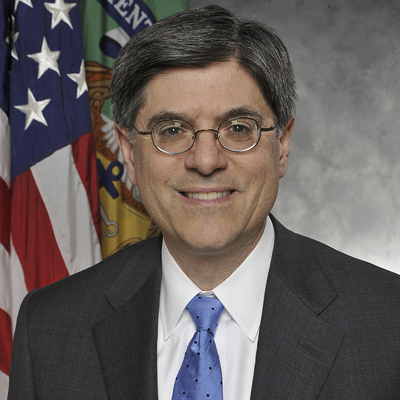
    In an exclusive interview US treasury secretary Jack Lew tells NDTV Profit that he believes that the recovery in US is not fragile though he remains concerned about the pace of growth in other parts of the globe. He says the US will push back very hard when it sees countries acting unfairly on currencies.


    He remains optimistic on India and hopes that reforms will make investment environment more attractive here. His message to Finance Minister Arun Jaitley is to give more clarity to investors on policies.


    In an interview with NDTV Profit executive editor Prashant Nair, he speaks on Make in India, optimism about India, how to battle slowdown and much more.


    Excerpts… 


    Nair: The global economy is growing at different speeds, very different speeds. The US has picked up growth, expectations are quiet high-Eurozone has slowed down, deflation fears persist there, China which is slowing down and of course India where hopes are very high with the new government taking charge. How is it all going to pan out, what are the prospects for the global economy looking like? I have got someone who has got the answers- Jack Lew who is the Secretary to the US Treasury and I am really honored to have him with me here. Thanks very much Sir.


    Lew: Great to be with you Prashant.


    Nair: So you are just back here from the G-20 meeting. What was the message, what was the take away from that meeting?


    Lew: I think there was a common focus in the G-20 meeting on the need for growth and the need for stability and we had lot of discussions on both the topics. You know I think the challenge that the global economy faces is to have the whole global economy picking up, not just dependence on the United States to be the sole driver. I think that coming out of the financial crisis US has demonstrated alongwith a number of other countries like UK that when you use all the policies leverage that you have, you can change the course of your economy’s future. You need to use monetary policy, you need to use fiscal policy that help grow demand and you need to do structural reforms so that there is confidence in future and flexibility in the economy. That was my message at the G-20.


    Nair: You think other economies aren’t doing that well or they are maybe too late in the game?


    Lew: I think that it is challenging in each system to use each of the tools. Certainly it is challenging in our system and it’s not always as quick and as simple as you want it to be. I think that what we have shown is that when you do deploy all the tools it has the right effect. If you rely too heavily on any one of the tools it is not going to be as powerful. I think that the challenge is to bring particularly the fiscal tools in some places and the reform tools in other places into gear when the monetary tools are already being deployed, I think it will be more effective strategy If all these leverages were used.


    Nair: What’s your view on US economy? I read somewhere you said that it has turned a corner.


    Lew: I think it has turned a corner, I think if you look at the economic growth over these past six months, the past year we are seeing a dramatic change from the past. We are seeing sustained growth in jobs, we are seeing even an increase in wages which were slow to come, but over the last year there is over 2% increase in wages. We are seeing strength in manufacturing and we are even seeing a comeback in the housing and construction sector which has been the slowest part of the economy to recover from the recession that was really driven by the collapse in that area. I think that what we have now in US is the kind of recovery that will feed on itself and grow but we can’t look at the US as if it is an island all by itself. So we are very much concerned that there needs to be more growth in other parts of the global economy as well. I don’t think it is the situation like we saw even in 2012, where the US recovery was fragile and headwinds from global economy growing not as strong as it should, that were a real risk. I think that now we are going to continue to grow, the question is how fast and I would like our economy to grow as fast as it possibly can for us to grow as many jobs as we possibly can. But I think the global economy really needs morefor there to be more growth in other places as well, and that’s why we carry the message that we do.


    Nair: You know some have said that the FED will increase interest rates. It will start to raise interest rates sometime in 2015, what you said is important that growth is self sustaining in the US now and it feeds into itself. So, if that’s the case, a) FED rate hike will happen and second there is no reason for more stimulus in the US now, is that clear now?


    Lew: Now Prashant, it is a well-established tradition that treasury secretaries do not comment on the monetary policy in US, the FED will have to make a decision based on its valuation of the data as it comes in and I will leave that to the FED and the very able chair Janet Yellen.


    Nair: What do you make of what is happening in the Eurozone and what should happen there now?


    Lew: Well I think in the Eurozone there are multiple things that are challenging right now. I think there has been a reluctance to use the fiscal tools because there are some countries which have fiscal space others that don’t. Having deployed the monetary policy tools, I think were Europe to use some of its fiscal space, to grow demand, it would actually make monetary policy more effective. It will help to get the economy moving. There is also need for reforms. I think that ideally you will see the structural reforms and the demand moving together and you have all 3 levers being deployed. It has been challenging and it’s not the first time that we have made that argument. I think I heard more people making that argument at this last G-20 than I have in the past. I think there is a growing sense but obviously Europe has to make its own decisions. At the same time, I think Europe has some real challenges both with the situation in Ukraine and in Greece, where stability is something that they need to maintain. That is why it is so important that the global community comes together and have a financial package that will support Ukraine and the Ukraine will make the reforms that it needs to going forward in order for it to be released. And I think it is important that all parties in the Eurozone, as I have said several times clamp down the rhetoric and work on a practical solution that everyone can agree to.


    Nair: Most countries are devaluing their currencies to try to stimulate their exports because the domestic demands is not there. China as some say is on the verge of launching a massive programme which again will sort of devalue & push the Yuan down.I would like your thoughts on what’s happening in terms of currencies and specifically your thoughts on China?


    Lew: Look I think that there obviously is a growing difference in the way the economies are performing, which is leading to some differentials in currency valuations. There is a very big difference between countries that use domestic tools for domestic purposes, macroeconomic tools to grow their economy which is something that in the world community we have agreed to and we in the United States have used in QE for example.On the other hand, it is another thing to target your currencies for the purpose of gaining unfair trade advantage. We have been clear, that kind of unfair policy is something that we won’t pose and we will push back very hard on. On the other hand we do understand that macro- economic tools need to be used. But on the back of what I said about using all the levers, I think it is a mistake to over rely on any one lever. And using all the levers I think we will actually prevent some of that and I think it would be a very big mistake for the world to get into a situation where I think there is kind of a race to devalue.


    Nair: For India-here the prospects are looking better and better. Financial markets have been very appreciative of the change in the past structure here over the last year with the new government. International investors seemed to be quite bullish. You interacted with business leaders here, what’s your perception about what’s going on here?


    Lew: Well Prashant, I met today-both leaders of the Reserve Bank and leaders in the business community. Tomorrow I will be meeting in Delhi with Finance ministry officials and other leaders in the government and I met in Washington at international meetings and a number of occasions with our colleagues. I think there is a great deal of enthusiasm for the reform agenda that the Prime Minister has put forward. I hear it internationally, I hear it from business leaders in India, I hear it from business leader in the United States. I think India is a very attractive investment opportunity for American institutional investors. The desire for US in the economic relations is strong on both sides and I think it is in our mutual interest. So I actually think this is a relationship that we can continue to develop and the reforms that the prime minister has talked about will make India even more attractive target for investment.


    Nair: What do you make of the ‘Make In India’ campaign of the government or the flagship program of the Prime Minister Modi?


    Lew: I think that there are many aspects of the program there that are designed to make it easier do business in India and to get manufacturing and other jobs growing. I think that India has no shortage of talent, it has no shortage of entrepreneurs. The reform program will I think take away some of the obstacles that have made it hard for people in India to do business and for others to come and do business. So I think that if the reforms are implemented as they have been planned, it should lead to significant job creation and investment. We look forward as I say to having strong United States- India partnership. The President came here again for second visit, the first US president to come twice. In those meetings he discussed the importance of the economic relationships and I am here now to continue that dialogue.


    Nair: You will be meeting the Finance Minister Mr. Jaitley, what are the 2 or 3 things you would ask him to do in terms of reforms that you spoke about?


    Lew: I think that the importance of making the investment environment in India, one that is attractive even more attractive to foreign investors is important. There has been over the years a sense of difficulty of getting clarity in certain areas and some rules that were more rigid, that would make it ideal. I think that in terms of the domestic economy, the reforms they have been talking about in terms of making it easier to do business and having the legal changes to make the structures of doing business work better are very important, and I think the budgetary ideas-though I haven’t seen the new budget but the budgetary ideas-cutting back on subsidies and freeing up resources to invest in the future should make the economy both more efficient and build the foundation for future growth.


    Nair: Have you seen this kind of interest amongst US corporations to come to India, after the new government?


    Lew: Yes, when the Prime Minister was in Washington a few months ago there was some extraordinary turnout of business leaders. And its not just that they came, but there is an enthusiasm and the hope that the reforms would go from being campaign platforms to being policies that are implemented. I think that there is real interest and I think that you will see that going forward.


    Nair: You know one big focus area for the new government is adding jobs, a million jobs a month, and there has been some amount of debate about how to do it, whether to do what China did a few decades back, you know big factories, lots of workers, keep the currency under control, is that going to work? The RBI governor feels it won’t work, the world has changed, I would just like your thoughts on this.


    Lew: I don’t believe that there is one solution to creating jobs in any economy. The economy as large as India’s, with population as large as India has, there is going to be need for many different areas of economic growth. So there will be some growth in manufacturing that looks like large factories. There will be other things-where more entrepreneurs are doing start-ups that create the economic engine for the future. I think that if India is able to design its economic program to encourage some more risk taking, some more entrepreneurship that will lead to changes that will open up small and large doors. And you know, large companies start as small companies and large factories start as small ones.


    Nair: You were at the UID Centre that’s been one of the flagship programmes by the last government that has been continued by the new government and sort of talks about inclusion, all kinds of inclusion.


    Lew: I thought it was very impressive. Inclusive financing is very important. To sign up 800 million people in a program where they have access to banking services, many for the first time ever, is extraordinary. What I saw today was technology that was simple and was working. People were enthusiastic about having access to banking services and who understood that it was important in terms of both a place to do their banking and a way to build their credit history, and to have access to financial products in the future. So I think access to financial services is correctly important in developed and developing economies. And what India has done at this scale is truly impressive.


    Nair: Thanks very much for your time and its truly an Honour Sir.


    Lew: Thank you very much for having me.

  • Q3-2015: NDTV y-o-y revenue up 18%; company reports profit

    Q3-2015: NDTV y-o-y revenue up 18%; company reports profit

    BENGALURU: New Delhi Television Limited (NDTV) reported 17.9 per cent y-o-y  growth in consolidated Total Income from Operations (TIO, revenue) to Rs 149.93 crore in the current quarter (quarter ended 31 December, 2014, Q3-2015) as compared to the Rs 127.21 crore in Q3-2014 and 26.4 per cent more than the Rs 110.38 crore in Q2-2015. TIO for 9M-2015 at Rs 407.73 crore was 21.4 per cent more than the Rs 335.79 crore in 9M-2014.


    Note: 100,00,000 = 100 lakh = 10 million = 1 crore


    The company reported consolidated profit after tax (PAT) of Rs 1.56 crore in the current quarter as compared to a consolidated loss of Rs 10.43 crore in Q3-2014 and a consolidated loss of Rs 26.89 crore in Q2-2015. Loss in 9M-2015 at Rs 26.82 crore was lower than the Rs 49.75 crore in 9M-2014.


    Let us look at the other results reported by NDTV


    The company says that NDTV and allied business unit revenue went up to Rs 134 crore in Q3-2015 from Rs 122 crore in the year ago quarter. This segment’s EBIDTA doubled to Rs 18 crore in the current quarter from Rs 9 crore in Q3-2014. This business unit reported PAT of Rs 7 crore as compared to a loss of Rs 3 crore in Q3-2014.


    NDTV’s Convergence business unit reported revenue of Rs 30 crore in Q3-2014 as compared to revenue of Rs 19 crore in Q3-2014. This segments EBIDTA reduced to Rs 2 crore in Q3-2015 from Rs 6 crore in Q3-2014.


    The company’s Total Expenditure (TE) in Q3-2015 at Rs 145.94 crore was 9.8 per cent more than the Rs 132.95 crore in Q3-2014 and 10.2 per cent more than the Rs 132.43 crore in Q2-2015. 9M-2015 TE at Rs 426.54 crore was 8.7 per cent more than the Rs 392.3 crore in 9M-2014.


    Q3-2015 Production expense went up 24.8 per cent to Rs 28.63 crores as compared to the Rs 22.93 crore in the year ago quarter and was 32.3 per cent more than the Rs 21.64 crore in the immediate trailing quarter. Production expense increased 24.7 per cent to Rs 86.93 crore in 9M-2015 as compared to the Rs 69.74 crore in 9M-2014.


    Marketing, distribution and promotional expense (marketing expense) went up 17.7 per cent in Q3-2015 to Rs 30.91 crore as compared to the Rs 26.27 crore in Q3-2015 and was 23.8 per cent higher than the Rs 24.96 crore in Q2-2015. For 9M-2015, the company spent 11.4 per cent more at Rs 81.64 crore towards marketing than Rs 73.27 crore in 9M-2014.


    Employee Cost (EBE) in Q3-2015 was 6.8 per cent higher at Rs 46.24 crore than the Rs 43.29 crore in Q3-2014 and was 1.3 per cent more than the Rs 45.65 crore in Q2-2015. EBE in 9M-2015 at Rs 137.75 crore was 3.5 per cent more than the Rs 133.14 crore in 9M-2014.


    The company’s operating and administrative expense (O&E) in Q3-2015 at Rs 27.73 crore was 14.6 per cent lower than the Rs 32.48 crore in Q3-2014 and 14.4 per cent lower than the Rs 32.41 crore in Q2-2015. 9M-2105 O&E at Rs 94.59 crore was 3.8 per cent lower than the Rs 90.95 crore in 9M-2014.

  • Television Media Segment leads NDTV’s loss in Q2-2015

    Television Media Segment leads NDTV’s loss in Q2-2015

    MUMBAI:  Announcing the current quarter results (Q2-2014), news broadcaster NDTV reported a net loss of Rs 26.89 crore. The loss for the company for the quarter had widened from Rs 1.49 crore in the preceding quarter (Q1-2014) and Rs 15.26 crore in the corresponding quarter last year (Q2-2013).

    But the loss before tax for the HY-2014 has decreased to Rs 26.05 crore from Rs 33.56 crore in HY-2013.

    The loss for the company for this current quarter is led by its television media and related operations segment. The segment reported a loss of Rs 15.22 crore in Q2-2014 as compared to a profit of Rs 7.95 crore in Q1-2014 and loss of Rs 1.98 crore in Q2-2013. Half yearly, the segment also reported a decline in loss. In HY-2014 (first half of 2014), the loss for the segment was reported as Rs 7.27 crore as compared to Rs 19.38 crore in the first half last year (HY-2013).

    In the current quarter, the company also reported a fall in its Total Income from Operations (TIO) on a q-o-q basis contributing to its widening loss in the current quarter. TIO in Q2-2014 was Rs 110.38 crore, 25.12 per cent less than Rs 147.42 crore in the last quarter while the company reported a 3.9 per cent rise in its TIO at Rs 106.19 crore on a y-o-y basis.
    In H1-2014, NDTV’s TIO at Rs 257.80 crore was 23.5 per cent more than Rs 208.59 crore in HY-2013, explaining the contraction in the HY-2014 loss.

    The revenue on television media and related operations segment decreased 24.4 per cent q-o-q, from Rs 143.96 crore in Q1-2014 to Rs 108.83 crore in Q2-2014, another factor in the widening loss in Q2-2014. The revenue for the segment was almost flat (1.3 percent rise) at Rs 1.7.42 crore in Q2-2013.

    In HY-2014 the revenue for the segment at Rs 252.79 crore was 20.37 per cent more than Rs 210.01 crore in HY-2013, another element in the reduction in the HY-2014 loss while the Q2-2014 loss had expanded.

    Total expenses for the company in Q2-2014 was reported at Rs 132.43 crore, 10.6 per cent less than the Rs 148.18 crore in Q1-2014 and 2.3 per cent lower than Rs 135.58 crore in Q2-2013.

    NDTV’s production expenses decreased 40.9 per cent from Rs 36.67 crore in Q1-2014 to Rs 21.64 crore in Q2-2014 and 5.2 percent from Rs 22.84 crore in Q2-2013.
    According to the company statement, NDTV Convergence showed revenue growth of 22% in this quarter and a growth of 34% for H1-2014 on a y-o-y basis.

    Also, NDTV Profit / Prime achieved a major turnaround by turning EBITDA positive in Q2 FY15, within six months of its re-launch, added the statement.

    The company also announced on BSE that the board had ‘mandated the management to focus’ on the following: accelerate growth in core business; fix, restructure or sell non-core businesses; further invest in online assets to accelerate the Company’s leadership position to benefit from the digital revolution and explore all options to unlock and maximise shareholders’ value.

    “NDTV’s losses are lower in the first half of this year than in the previous year and are narrowing down over time. A major step forward is that NDTV Profit / Prime was EBITDA positive this quarter (this is after making losses of Rs 40+ crore last year and losses in earlier years too). This will help the company to move towards profitability. Further, profitability can also be achieved by restructuring of businesses or selling of loss-making units while ensuring a hard focus on the core business,” said the company in a statement.


  • NDTV reports standalone profit, lower consolidated loss in Q1-2015

    NDTV reports standalone profit, lower consolidated loss in Q1-2015

    BENGALURU: New Delhi Television Limited (NDTV) reported a standalone PAT of Rs 2.6 crore in Q1-2015 as compared to a loss of Rs 19 crore in the corresponding year ago quarter. On a consolidated basis, the company reported almost one tenth (1/9.5 times) the loss in Q1-2015 at Rs 3.02 crore as compared to the loss of Rs 31.39 crore in Q4-2014 and about one-sixth (1/5.7) the loss of Rs 18.88 crore in Q1-2014.

    Note: 100,00,000 = 1 crore = 100 lakh = 10 million

    NDTV’s consolidated Total revenue (TOI) for Q1-2015 was 42.6 per cent more at Rs 146.04 crore as compared to the Rs 106.19 crore in Q4-2014 and was 17.7 per cent more than the Rs 124.09 crore in the immediate trailing quarter.

    The company says that General News continues to be profitable and recorded an EBITDA of Rs 26 crore; an increase  Rs 20 crore compared to the same period last year.

    NDTV Profit / Prime: Net Loss of Rs 11 crore remained same as last year despite the re-launch costs incurred during the quarter on the back of impressive revenue growth of 81 per cent in the current quarter.

    NDTV Group PAT performance improved by Rs 23 crore, from a loss of Rs 24 crore in Q1-2014 to Rs 1 crore loss in current quarter.

    Consolidated revenues increased by 40 per cent to Rs 150 crore in Q1-2015 from Rs 107 crore in Q1-2014.

    The company says that NDTV Convergence maintained its growth momentum clocking 50 per cent growth YoY and continues to be profitable.

    Ndtv.com saw traffic with 13 billion hits in one day – on the counting day of 16 May 2014 for the Lok Sabha elections.

    NDTV Retail / E-commerce venture IndianRoots has achieved an ‘Average Order Value’ of Rs 9,000. IndianRoots has carefully positioned itself as a platform for high end fashion. While the United States remains its largest market, IndianRoots has also made strong inroads into India. India accounts for 30 per cent of the total traffic and is the second largest market. Revenue growth is at 52 per cent QoQ and in line with early stage e-commerce businesses. It has incurred a loss of Rs 4.5 crore in this quarter.


  • CNBC-TV18 tops the chart on Budget day

    CNBC-TV18 tops the chart on Budget day

    MUMBAI: Upholding their legacy of 15 years of leadership, CNBC-TV18 has once again emerged decisively as the No.1 channel during Budget 2014 with 67 per cent market share on Budget Day.

    As pioneers of coverage of the Union Budget, CNBC-TV18 has always provided viewers with a comprehensive programming line up. This time was no different; with a one month long focus on the channel about key expectations from the industry, banking and financial sectors as well as policy changes anticipated from what was Prime Minister Narendra Modi and Finance Minister Arun Jaitley’s maiden Union Budget.

    Yet again, India’s leading business news channel has proved that they are specialists of the genre –  through differentiated Budget coverage, aimed at helping viewers achieve an incisive understanding of the Budget and what lies ahead, presented by an editorial powerhouse.

    CNBC-TV18 led across the following programming pegs & time bands during the Union Budget in July 2014:


    1.    Budget Day (24 hrs) in all India: CNBC-TV18 leads with 67 per cent relative share followed by ET Now with 22 per cent, NDTV Profit is at #3 with 11 per cent and Bloomberg TV has 1 per cent viewership.

    2.    Budget Week (24 hrs) in all India: CNBC-TV18 leads with 65 per cent relative share followed by ET Now with 27 per cent, NDTV Profit is at #3 with 7 per cent and Bloomberg TV has 2 per cent viewership.

    3.    FM Speech (11:01 to 13:13 hrs) in all India: CNBC-TV18 leads with 58 per cent relative share followed by ET Now with 29 per cent, NDTV Profit is at #3 with 13 per cent and Bloomberg TV has no viewership.

    All these figures are for the core audience group of CS AB Males 25+.

    In addition to the above data points, CNBC-TV18 also lead across all markets and target audiences, in all parameters pertaining to Budget coverage.
    CNBC-TV18 has always been at the forefront of covering business, political and economic news and bringing quality journalism to its viewers. This strong performance reiterates CNBC-TV18’s undisputed leadership and legacy in coverage of key economic events for the past 15 years.
    CNBC-TV18 Managing Editor Shereen Bhan said ‘I have firmly believed in the power of specialisation and this overwhelming verdict confirms my belief. Being the first in Business news is not just a tagline for us, it is our core strategy. Our Budget coverage is a reflection of our deep expertise and experience. It also showcased our ability to stay ahead of the curve with new programming which included our reporters travelling around the country from Nashik to Ahmednagar to get an in-depth look at how Government Schemes like the NREGS are performing. We brought together the most influential voices from India Inc, the markets, Foreign Investors and Tax experts to find the devil in the details. CNBCTV18 was also the channel of choice for the Finance Minister Arun Jaitley and his Budget team including the Finance Secretary and Revenue Secretary as they laid out the roadmap for economic revival.’

    Commenting on CNBC-TV18’s impactful Budget coverage and viewership, Anil Uniyal (CEO, CNBC Channels) said, “We have consistently sought to bring content of value to our viewers and this is what has reinforced our No. 1 position in Budget 2014. I’d like to thank our viewers for making CNBC-TV18 their channel of choice for the Budget and also for the past 14 years, which encourages us to stay ahead and continue to strive for excellence.”

  • NDTV Prime to fully operate on sponsored programmes

    NDTV Prime to fully operate on sponsored programmes

    MUMBAI: New Delhi Television (NDTV) is carrying forward its de-risking strategy of reducing dependence on advertising revenues. Higher revenues from programme sponsorship had helped the news broadcaster report a small net profit of Rs 2 crore in 2012-13 despite weak advertising revenues, after two years of losses.

    NDTV has now brought on board a channel sponsor and a channel partner for its split channels NDTV Profit and NDTV Prime. NDTV has from tonight converted its business news channel NDTV Profit into a dual channel – NDTV Profit will be a business news channel from 9:00 am till 5:00 pm on weekdays and will thereafter convert into a lifestyle and entertainment channel NDTV Prime. Over the weekends, the channel will be entirely NDTV Prime.

    The 2-in-1 channel will provide NDTV with two primetime segments, one during the market hours and the second in the evening.

    Mobile phone maker Micromax will be NDTV Prime’s channel partner for a three-year period, under a deal, according to sources, that’s valued at a shade above Rs 30 crore. Micromax will gain huge mileage as its emblem ‘M’ will be replacing the character ‘m’ in NDTV Prime.

    NDTV has a channel partner for NDTV Profit in the country’s largest exchange the National Stock Exchange (NSE). The channel will carry a line ‘Partnered by NSE’ under the NDTV Profit logo.


    A promotional campaign featuring Shah Rukh Khan has already begun through print and TV with the tagline ‘Work Hard Play Hard’ embodying the dual nature of NDTV Profit and NDTV Prime.

    NSE MD and CEO Chitra Ramakrishnan said the goals of NSE and NDTV Profit were similar in terms of investor outreach.

    Says Micromax co-founder Rahul Sharma, “NDTV Prime provides an ideal opportunity for Micromax to reach out to evolved viewers through new programming on lifestyle, reality, automobiles, sports, music, property, gadgets and gizmos and comedy. With digitisation and advancement of technology, we are seeing a trend for greater consumption of high quality
    content among the viewers.”

    In addition to the channel sponsor for NDTV Prime, the channel will also have sponsor or sponsors for every programme. This is expected to help NDTV Prime break-even within a year.


    As reported earlier by indiantelevision.com, NDTV Prime’s big-ticket show will be ‘Ticket to Bollywood’ sponsored by Videocon d2h along with VLCC and Fortis. Prime has been divided into various bands that are sponsored as well.

    Education band ‘Mindspace’ at 6:30 pm is sponsored by LIC, IMS, Vidyalankar and Rau’s IAS study circle, Property at 7:00pm is powered by Supertech and indiaproperty.com, Tech band at 8:00 pm is sponsored by Croma, Nokia and Toshiba, Auto band at 8:30 pm is with MRF, Mercedes-Benz, Hyundai, Volvo, VistaTech, Mobil1 and Polaris as main sponsors.

    The Comedy band at 10:00 pm and Strip movies at 10:30 pm are currently the only ones without sponsors. “How often do you see a channel which even before launch is pre-sold? People know this channel will work and I was sure we won’t launch it without having the money in the bank,” says NDTV group CEO Vikram Chandra.

    Each band will have a different show each day of the week. Along with TV, NDTV Prime will also have exclusive shows on its website www.ndtvprime.com. One of the first is two technology pieces of five to seven minutes that will be exclusively on its website every day.

    Does the genre have enough of such content to put out on a daily basis? Tech anchor Rajiv Makhni says, “In technology, something or the other is happening every day. If a mobile is launched say on a Monday why would you wait till Saturday to see a feature on it? So on Prime you will see news, analysis as well as suggestions. Not only will we zoom in on a few best in every category but we will also tell you exactly which product should you buy.”

    He also goes on to explain that just because Micromax and Nokia are sponsors, there will be no bias in favour of these brands. “If a product has flaws then it has flaws. You will see it on our shows,” says Makhni.

    Men will drive the viewership for NDTV Prime. “A lot of our evening content is aimed for people with interests besides stock market. In fact, now our morning viewership will be a subset of our evening one and the evening will see 10 times more viewership,” says NDTV co-chairperson Prannoy Roy.


    With the facelift that NDTV has given to NDTV Profit with a split channel in NDTV Prime, it is also looking at beefing up its distribution with a lot of pull effect coming from people who want to watch Prime, especially Ticket to Bollywood.

    “Entertainment and comedy usually has a pull distribution effect. So in this case we don’t have to pay carriage fee as well,” admitted Roy.

    Roy, who was speaking on the sidelines of the launch of NDTV Prime, also spoke about the future prospects of NDTV. “Our future has got more to do with the digital platform ndtv.com,” says Roy.


    Chandra had earlier said a large part of NDTV’s losses were due to NDTV Profit and now with Prime in place, the company is confident that its profits will get a boost.