|
The top three Hindi general entertainment channels punched hard at the second-tier channels with differentiated content, high-cost reality shows and big ticket movies. Barring Sab, the others such as Star One and Sahara One cracked under pressure.
So what did Sab do right? It correctly positioned itself as a family comedy entertainment channel and brought in light-hearted content that worked.
Sab had a basket of shows that crossed 1 TVR, catapaulting the channel to 101 GRPs for the week ended 12 June.
The channel will stick to its low-cost programming but also introduce family-based reality shows.
In an interview with Indiantelevision.com, Sab EVP and business head Anooj Kapoor talks about how the channel progressed in a difficult environment and what content is planned for its growth.
Excerpts: |
|
|
The top three Hindi general entertainment channels are seeing high drama. How has Sab managed to march ahead in this adverse environment for the second-tier GECs? The familiarities come in the form of joint family settings, female protagonists, and linear shows running from Monday to Thursday. The differentiating part is content that is light hearted and positive. We have the only set of shows where the consumer and ‘sasural‘ both love the female protagonist and the channel is as such the only one which has a brand slogan in the GEC sector. This helps in our positioning and it is now clear, specific and well defined. |
|
|
What led to this change of positioning of SAB from a youth to a comedy channel?
Thus all prime time spots need the women onboard as that is the key. That‘s why all shows depicting women suffering, like dowry issues, female infanticides etc. which are such deep rooted stigmas, strike a chord with the audience that is predominantly female, and can empathise and relate easily to what‘s shown.
We, on the other hand, are addressing the fact that times have changed, families are now more nuclear, and there is more balance and light-heartedness. We have barely done 50 per cent of what we can do, but consumers have understood the message we are sending-“Laugh as a family, than cry alone.” |
|
|
Has this led to an increase in advertisement revenues? |
|
|
Are you looking to come out with some high cost production shows in the future, seeing the current trend in GECs? |
|
|
How has the journey into the comedy space been for SAB? |
|
|
|
|
Have the lower budgets hampered on the production value?
Thus we have been able to improve at an operational level without compromising on our sets or production values, while maintaining a tight budget and getting the desired results. |
|
|
What are you the most proud of when it comes to SAB‘s current standing and position in the market? |
|
|
What areas are you concentrating on in terms of investments why?
Besides, we want to expand our programming to 6 days, including Saturdays, without trying anything different in terms of genre. |
|
|
The current flavour of all channels has been reality shows and non-fiction. Is SAB going to venture into that space as well? |
|
|
SAB is one of the few channels that markets the entire channel and not just shows. What are the initiatives you are currently involved in? We even had a SAB mela in Ahemdabad which was a family fair attended by 27000 people and this was truly a one of its kind consumer connect campaign.
The fair was another platform for family entertainment where people even got to meet and spend time with many of the artists from the shows they like. The fair also had a school connect program, where different schools and college teams participated in entertainment activities like group dance performances. We also had a lot of local artists and cultural flavours at the fair, and the overall response was so encouraging that we have decided to repeat this initiative in 15 more cities this year.
Our other marketing plans as a channel include a radio promo, SAB ka Damadji wherein the “damadji” character created comes on air and talks to a group of ladies who ask him questions and he answers them via jokes and funny anecdotes.
Also the virals we have been airing have done very well and have helped get in more viewers. |
|
|
Tell us a little about your new show, Papad Pol Shahuddin Rathod Ki Rangeen Duniya, that will be aired soon? Papad Pol is like a street or machala where most of the people living are in the papd business. It is their lives and day-to-day interaction that forms the show. |
|
|
What‘s next for SAB viewers to look forward to? |
Tag: NDTV Imagine
-
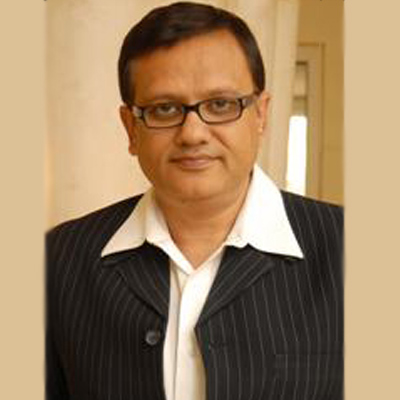
‘Sab is the only channel in India that is doing daily comedies’ : Sab EVP and business head Anooj Kapoor
-
News TV stocks weighed down by ad slowdown
MUMBAI: Shares of news broadcasters have taken a battering as they struggle to up their second-quarter revenues over the previous year amidst stiff competition and slowdown in the economy.
NDTV has failed to buck the trend despite the buzz in the market that Time Warner is in advanced negotiations to pick up a majority in its non-news business after the exit of NBC Universal. The stock has fallen from its closing price of Rs 140.70 on the BSE (28 October, the day it announced the results) to Rs 125.85 on Tuesday.
NDTV’s news business has seen a six per cent revenue drop from the year-ago period while net loss was at Rs 118.5 million. Operational cost-efficiency measures have narrowed the net loss from the prior-year period, but analysts are concerned about the revenue uptick in the subsequent quarters.
“The net cash position is close to zero, competition is intensifying at the news operations level, and the company is kicking in losses in non-news divisions as NDTV is still incubating these businesses,” a media analyst said.
A stake sale in NDTV Networks will, however, boost the scrip. NDTV Networks is the holding company for NDTV Imagine, NDTV Lifestyle, NDTV Convergence, Labs and NGEN Media Services (NDTV holds 50 per cent in this).
TV18, which runs business news channels CNBC TV18 and CNBC Awaaz, has had a bad run in the stock market after announcing its financial performance. The stock slid from Rs 90.10 on the result day to Rs 70.55 on Tuesday as TV18 posted a second-quarter net loss of Rs 246.95 million with revenue from news operations dropping 20 per cent over the previous year.
IBN18 had a similar fate on the bourses, falling from the closing price of Rs 99.60 on the second-quarter results day to Rs 78.35. The company that runs news channels CNN IBN and IBN7 had a standalone net loss of Rs 598.7 million (from Rs 175.76 million) and a 12 per cent revenue fall from the previous year.
Source : BSE India
TV Today’s shares plunged from 93.55 to Rs 76.95 despite the fiscal second quarter net profit jumping 40 per cent. Income from operations, however, fell marginally by 3.51 per cent to Rs 645.45 million.
The only scrip in this genre that climbed was Zee News Ltd (ZNL) as it rose from Rs 44.30 to Rs 51.25. But this was mainly due to the announcement that ZNL shareholders would be given shares of Zee Entertainment Enterprises Ltd (Zeel) as six regional general entertainment channels move out from the company.
“The weakness of advertising revenues seems to be weighing down the scrip prices of news channels. But rebound is bound to happen and we will see an upward curve gather momentum,” said the head of a broking firm.
-

Rahul Shaw is INX News SVP ad sales
MUMBAI: Rahul Shaw has joined INX News as senior vice president ad sales. Based in Delhi, he will be reporting directly to INX News COO Vynsley Fernandes.
In his new post, Shaw will be responsible for driving the revenue function of English news channel NewsX and the other upcoming channels from INX News.
Shaw was earlier with NDTV Imagine where he was working as senior VP ad sales.
Commenting on the appointment, Fernandes said: “Rahul has a wide experience of handling advertising sales across several genres in print and television. He has proven expertise of driving revenue growth in start ups as well as building and leading strong sales teams. We are delighted to have him on board.”
Prior to NDTV Imagine, Shaw was in Star India where he held various roles in the sales function. Shaw also had a stint in Set India, where he was managing revenue for their English language channels.
Shaw started his career with Bennett, Coleman & Company Ltd. and later moved to Turner International where he handled HBO, Cartoon Network and CNN before joining Set India.
-

‘We see GEC as a long-term game. We are playing a Test match and not a T20’ : Indrani Mukerjea – INX Media Pvt Ltd founder-CEO
From starting as a human resource (HR) consulting firm in 1996 to entering the fast-growing broadcasting space, INX Media has travelled a long way.
INX’s music channel 9XM has notched the top position in its genre while the general entertainment channel (GEC) 9X is making slow but steady strides.
Next in the roll-out pipeline is NewsX. Despite controversies dogging the news channel venture with the exit of Vir Sanghvi and his senior editorial team, plans are being put in place to launch the channel in March. Regional channels are also part of INX’s growth agenda.
In an interview with Indiantelevision.com , Mukerjea talks about her company’s growth plans.
Excerpts:
INX was a recruitment search consultancy company that you ran successfully for years. What pulled you to the broadcasting space?
Despite being a human resource consulting firm, INX has been very inclined towards media placements. In the last 10 years, a majority of our placements have been in this sector. Besides, Peter (Mukerjea – husband, chief strategy officer INX Media and former Star India CEO) has 14 years of experience in the television industry.But isn’t the mainstream broadcasting space too cluttered?
More and more channels are launching and doing fairly well. There is clearly a new emerging audience. You have seen how our music channel 9XM has grown ever since its launch. What is happening is that the gap between the number one and number two channels is decreasing. We are even seeing it in the GEC (general entertainment channel) space. The viewer base is also expanding; more and more TV sets are being bought. Moreover, viewership is getting fragmented; different viewers are liking different genres of entertainment.Though 9XM has shown rapid growth in the ratings game, it is a channel that runs songs without breaks. What does the revenue front look like?
I think viewers like to watch full songs. That is why we are getting good ratings. When it comes to revenue, there are Coca-Cola and Vodafone who have joined 9XM as platinum partners. Also, though we have not put in so much of commercials, we still follow the pattern of 12-minute break. We use this duration to show our channel promos. As more ads come in, the same space will be used.Isn’t the growth of 9X, your flagship Hindi general entertainment channel, on the slower side?
If you notice, we started with only two hours of prime-time programming and have added another half an hour in the last fortnight. Only by the end of June, we will be completing our four hours of prime-time programming. And that is the strategic decision we took very consciously.We see GEC as a long-term game. We are playing a Test match and not a T20. We want to build this block by block. The critical part is to stay there. It is very important to sustain. So, we have a five-year plan in the horizon to which we are sticking, and this is what I believe is going to make us sustain.
So you are thinking of breaking even after five years?
No no, breakeven will be before that. We are talking about long-term plans with short-term goals. And we are executing all our plans; you’ll see it in the coming three months. ‘We’re well funded. So it’s easy for us to make long-term plans‘
But there are other channels like NDTV Imagine that have shown faster growth in a short term?
We have been funded very well, and that’s why it is very easy for us to plan ahead. When you are backed by strong financers, you can make long-term plans. We don’t have to run and do full-time programming.Your programme ‘Mission Ustaad’ failed commercially?
We did Mission Ustaad as part of our corporate social responsibility (CSR). We were very clear from day one. The priority was also to establish the brand first. Now people know that there is a brand called 9X. You go to any part of the country, and people know about 9X.Aren’t you pumping in a huge amount of money for distribution and promotion?
Absolutely! For us, 9X is an institution and not just a channel. It’s very important to establish a brand, and once that is done, it becomes important to keep the hammer ready. This is what happens when any new channel comes into play: first, it establishes the brand; then it waits for the right moment to strike “big”.Also, whoever goes up quickly has a tendency to go down as well. So we are patient. Our investors are long-term players. It’s not that if we pull out a programme, things will crash. We have not launched a channel based on one programme.
And now, as we’ve established ourselves, I think we need at least another five months to bring in full programming. Strategically, it’s like a baby in my mind: a baby takes shape in nine months and we feed it when it’s born.
On the ratings front, only one show has TRP of over one. Besides, isn’t it true that the channel’s GRPs are mainly being driven by movies?
No, the report which we’ve got from Tam shows that 32 per cent of our GRPs are from movies while 54 per cent are from serials and 14 per cent from other shows. At the end of the day, when you are planning a channel, you have to think about overall GRPs, and we have taken a conscious decision not to bombard viewers. Now we have Chak De Bacche, Yeh Hai Jalwa and other programmes lined up. We are also having some serials which we will announce in due course.As a syndication deal, have you paid Sony Rs 400 million for 60 movies?
That’s absolutely wrong information. The actual amount is not even half of it.What do you think about syndication of movies as a business model?
It is a very good decision because at the end of the day the viewer is entertained and we, as a result, stand to gain. For example, with Jab We Met, we got fabulous advertisers, ratings. If I am calling it a family channel, I will have to provide content for the entire family.Mythologies seem to be coming back on Indian television. Is Ekta Kapoor doing Mahabharata for you?
No, Ekta is not doing Mahabharata for us. I have also heard it, but Ekta and I have not spoken about making Mahabharata.But what do you have to say about the invasion of mythos?
Mythological content has always been a part of Indian television. Be it Sai Baba, Sri Ganesh, Jai Maa Durga, Jai Hanuman – they have always been there. But it’s important for a channel not to overuse such content. You have to have a combination of movies, serials, soaps, fantasy, reality, etc. A good mix is essential.When are you launching NewsX?
Our test signals are already on, and we have roped in Karan Thapar’s firm Infotainment Television (ITV) as editorial advisor to the channel while Arup Ghosh is our newsroom head. We will hopefully launch the news channel sometime in March; I can’t specify the date, but it will be in March.What content will the channel focus on?
It will be analytical, in-depth news.How will it be different?
You have to watch it to notice the difference. Our main studio is in Delhi; our Mumbai studio is under construction and is almost done.Are we going to see more channel launches from INX Media in 2008?
The first priority is to complete the schedule and get NewsX up and running. We will also be launching regional channels. -
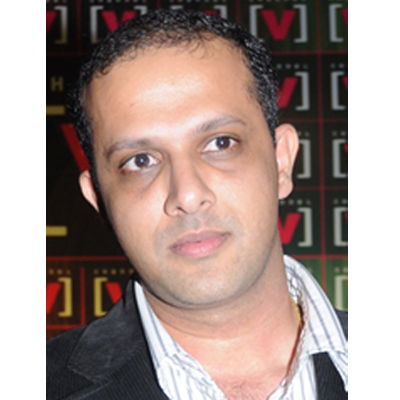
‘Star One is the number three GEC in the country in ratings’ : Prem Kamath – Star India VP marketing and Communication
A lot of flip-flop happening in the Hindi general entertainment channels. Yet Star Plus is the leader in the game, while Star One has consolidated its position on the back of new shows and re-positioning itself.
In conversation with Indiantelevision’s Nasrin Sultana, Star India VP marketing and communication Prem Kamath talks about Star Plus and the kind of resurgence up on Star One.
Excerpts:
How has 2007 been for Star India?
I think it has been a good year of consolidation. Lots of changes have happened within the organisation and in the market as well. But I think the initiatives that we have undertaken had shaped quite well for consolidation.How is Star Plus taking the competition further, when Zee TV is edging close to it in terms of ratings?
Zee TV saw an increase in the ratings post Sa Re Ga Ma Pa launch, which had narrowed the gap between Star Plus and Zee. Though there are a number of other things that have happened in Star Plus which have pushed the channel back to its place. Particularly the last four to five weeks’ data clearly say that Star Plus is considerably ahead of Zee. Several initiatives that we launched further strengthened our position. A weekly fiction based show called Sangam was launched in August. With Sangam, we extended our prime time to 7 pm, followed by Santan at 7:30 pm. Santan is doing extremely well in its time band with 2+ rating. Bidaai, which launched in the 9 pm slot is fetching good numbers. All the newly launched shows cumulatively have consolidated our position in the genre.What was the reason for extending prime time?
Traditionally prime time was always considered to have started from 7:30 pm. But a regular viewer of TV generally gets near the TV around 7, so we thought why not extend our prime time. It sort of prepares the viewers for bigger shows lined up from 8:30 pm.Is it true that one of Star Plus’ big ticket shows – Kasautii Zindagii Kay – is going off air?
Yes it is. It has reached its end. It was a mutual decision taken by both Star and Balaji. For further details you have to wait for a formal announcement.Star Plus poached Gajendrra Siingh and his whole team for Star Voice of India, yet it could not fetch the kind of business that Star Plus was looking forward to. What were the reasons that producers of an old and successful show like Sa Ra Ga Ma could not deliver so well on the Star platform?
Any show’s success is attributed to three or four parameters. There is no direct comparison between the two yet there are some. Sa Re… is an eight to nine years old show, and Star VOI just debuted this year. I think for the first year it has fetched good TRPs. It has garnered 4 to 4.5 TRPs. Besides, it has been extremely consistent with ads. Above all, it has been able to give competition to an old and established show.Soon after VOI reached its finale, you had Chhote Ustaad to compete with Zee’s Li’l Champs on the same slot? Where is the differentiated programming?
It was part of an intended move to retain viewership of the VOI slot. It enjoyed a TRP of 2.8 in its initial weeks. As far as reality shows are concerned, I think these kinds of shows build and develop a relationship with the contestants. The viewers come back on the same show for the bondage that they share with the participants.How has the story of Star One been shaping up now?
What you see now in Star One gives you a feel of serious resurgence. Star One is the number three GEC in the country in ratings. In the last four to five weeks, we have been garnering about 76 GRPs in all day parts, which is about 49 per cent up as compared to the period four weeks before that. This is on the back of the four properties that we have launched recently.We launched Dil Mil Gaye, which has touched a TRP of 2, Annu ki hoi gaya Wah Bhai Wah, Choona Hain Aasman, we are launching Pari Hoon Main in the next week, which kind of completes our week day prime time. In the week end we have launched Bol Baby Bol which again has a TRP of 2. We have tasted fair success with Chak De Punjabi. There are lots of vacant time bands in Star One which has not been programmed. There are couple of other shows which will make Star One as the big player in the space.
With so many launches are you reinventing Star One?
Yes we are, I mean kind of. Star One was one of the most successful launches seen in the space. We had a great success story. But yes, somewhere down the line, we shifted focus for a variety of reasons. In terms of programming, Star One ended up becoming very similar to Star Plus. What we are doing now is to re-define Star One’s programming for a differentiated market.Star One is now completely redesigned, with a universal appeal, yet differentiated. If you take Bol Baby Bol, hosted by Adnan Sami. It is a reality format show, which has mass appeal, yet it is differentiated as it is a lyrics based show. This is a first of its kind show in India. This goes out for Annu ki…, Pari Hoon Main, Dil mil Gaye and Choona Hain Aasman.
Shows of this kind have a lot of drama in them, yet they are differentiated. Context and sensibility makes them differentiated.
 ‘Nach Baliye grew so huge that it needed a bigger platform than Star One could afford to provide‘
Do you think that at one point of time Star One was almost a shadow of Star Plus?
Hmm, yes when more than a year back, when some of the shows of Star Plus were brought on Star One. Somewhere there had been a duplication of identity.But now Star One has defined itself and is certainly differentiated from Star Plus in all respects. Star Plus is a complete family entertainer while Star One’s TG is fixed at the 25-34 age in the top 20 cities.
When Star One launched, it had set its TG as totally urban youth. Do you think the TG could not contribute anything to Star One’s success?
What happened was, by default, whatever shows were on air were urban skewed. But some of the programmes did have universal appeal. Like Nach Baliye, which had a phenomenal success, had universal appeal. Same goes for The Great Indian Laughter Challenge.A flagship show like Nach Baliye, which has its contribution in putting Star One in the success grid was shifted to an already successful channel and Star One was left only with The Great Indian Laughter Challenge?
Nach Baliye is a big show. With every year, it grew in volume and economies. It grew so huge that it needed a bigger platform than Star One could afford to provide. The show was so large that it needed a platform like Star Plus to do justice to it. The shift has also got some new shows infused in Star one. It is not that Nach Baliye was uprooted from Star One and nothing was done to Star One. We had a series of launches after it. The good news is that even when Star One does not have Nach Baliye, yet it is on the verge of becoming number three in the GEC space.Even The Great Indian Laughter Challenge has been taken off from Star One?
It is only in its seasonal break. It will come back in a couple of months. There was fatigue after the three seasons were back-to-back.Did Comedy Circus on Sony contribute to the fatigue?
I think Comedy Circus was after LC. It did not have any effect.Star One is re-running its popular show Sarabhai vs Sarabhai in its prime time at 9:30 pm. Why not bring it back with new episodes?
Lots of people are asking for it. Logistically we are working out the possibilities.How do you shape up your marketing for the various properties that Star India has?
We always get the consumer engaged and get the consumer to experience the brand. Many properties on Star Plus have been marketed well on ground activities. Our effort is to shift the focus from mass media to on ground, engaging one-to-one communication with the consumers. Information has to be transferred to the consumer without any barrier in between. That is what an on-ground activity does. It breaks the barrier.Properties have been marketed well, whether it’s the on-ground event, road show or a mega event. We are constantly getting more and more into it. It is what we call engagement model. It is nothing but to engage the viewers with the brand, so that they experience more of the brand. We have rounded off 16-20 cities. Before any launch, we actually do a variety of activities and events in these cities.
Do you see the launch of NDTV Imagine as a threat, if not to Star Plus and Zee, then at least to the lower rung channels where competition is getting tougher?
The space will get fragmented. Connection with the audience is the best way to beat the competition. Star plus has been doing it extremely well and it will continue to do so.Some of the major content providers like Hats Off, Sagar Arts and SOL are also working on the up-coming channels. Do you agree that is going to create some conflict?
I agree that producers bring a lot to the table. With so many channels floating in the market, I do not think duplication of content can be at all avoided. A show being successful has many factors to it. First is the content, second is the platform it is on, and third is the relationship with it.Coming to Star World, you launched some TG specific shows in the middle of 2007. How has been the response?
We introduced some familiar shows which got tremendous response, especially for the SEC A, which is the TG of the channel. Shows like Heroes and Desperate Housewives are working tremendously well. But we have to understand that the Star World universe is relatively very small.How does the story look like with Star Gold?
It is faring well. It is after Set Max and neck and neck with Zee Cinema. There have been lots of other properties that Star Gold pioneered like Star Gold Sabse Favourite Kaun and Star Gold Comedy Honours.Earlier Star Gold had dubbed movies, now there are movies channels completly dedicated to dubbed content. Which markets do dubbed content work?
It works all across all the markets. Some of the films really work. Films which have good action and thrills work well in this genre.What was new to Star Plus in 2007? What’s on the cards?
What you see now is certainly some freshness in its content, with some new launches in the year- Bidaai, Jai Maa Durga. We will get periodic innovation in the channel as and when required. Nothing is to be changed now. -

NDTV floats subsidiary in Netherlands; Q3 net profit up 85% at Rs 48.8 million
MUMBAI: News major NDTV Ltd, while declaring an 85 per cent rise in net profits for the quarter, anounced that it has floated a subsidiary – NDTV Networks BV in Netherlands.
This new company will wholly own NDTV Networks Plc and its underlying subsidiaries – NDTV Imagine, NDTV Lifestyle, NDTV Convergence and NDTV Labs and 50 per cent in NGEN Media Services. All these subsidiaries are currently wholly owned by their respective parents and would engage in implementing the new business initiatives to be undertaken by NDTV, the company said in a release.
Indiantelevision.com had first reported that NDTV Group had floated Networks Plc, UK, which would play a big role in bringing in investments for the entertainment and other non news channels. The company had applied for Foreign Investment Promotion Board (FIPB). Reportedly, the approval is for pumping in $130-160 million in the form of foreign direct investment (FDI).
Hindu Business Line has reported that the subsidiary would raise funds in the overseas market, particularly through listing on the Alternative Investment Market (AIM) segment of the London Stock Exchange. While $106 million would be invested into NDTV Imagine (a non-news Hindi mass entertainment channel), FDI to the tune of $25.23 million would be pumped into NDTV Lifestyle which would be engaged in the business of content production for TV channels dedicated to travel, food, fashion, shopping and health and wellness in India and abroad.
NDTV Q3 net profit up 85 per cent at Rs 48.8 million
Meanwhile, NDTV has reported 85 per cent rise in net profit to Rs 48.8 million in the third quarter ended 31 December 2006 against Rs 26.4 million in the year-ago period.
Total income rose 15.21 per cent to Rs 793.8 million from Rs 689 million during the same period. The company’s operating profit margin dropped from 22.24 per cent to 17.77 per cent year on year.
Profits and revenues rose despite huge incubation costs, the company said in a release.
“NDTV’s Indonesian JV (Astro Awani) made profits this quarter within just six months of its launch. The channel is on track to launch its Malaysian channel shortly. The company has also launched operations in Australia and New Zealand,” the statement added.