Tag: NDTV Imagine

  • Parinda Singh appointed marketing head Hindi Movie Cluster & Sony Marathi at SPNI

    Parinda Singh appointed marketing head Hindi Movie Cluster & Sony Marathi at SPNI

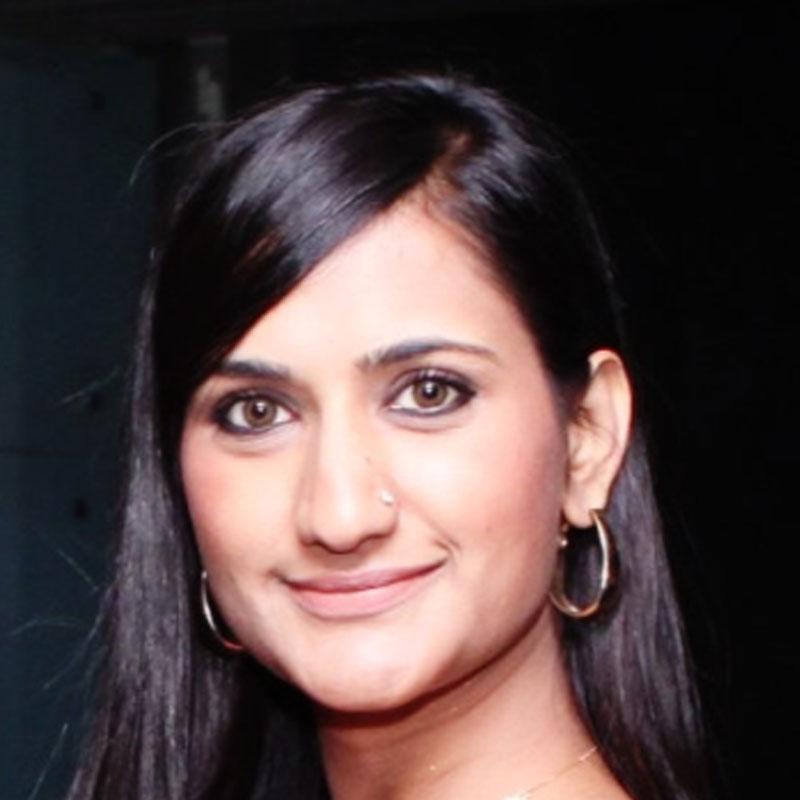
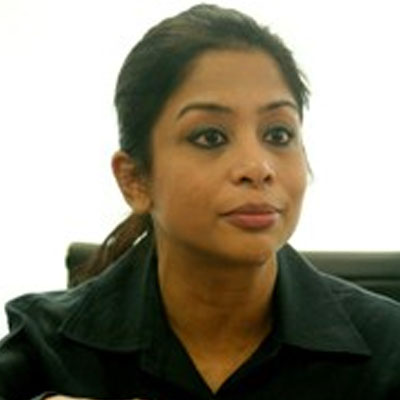
    MUMBAI: Sony Pictures Networks India (SPNI) has announced the appointment of Parinda Singh as head of marketing for its Hindi movie cluster and Sony Marathi.

    Bringing over 23 years of experience in brand building, consumer insights, and marketing strategy, Singh has worked with India’s top brands, media houses, and Fortune 500 companies. her expertise spans content marketing, digital media, fintech, and over-the-top (OTT ) platforms. She has a proven track record of developing growth strategies, scaling brands, and fostering cross-functional collaboration.

    Prior to this appointment, Singh served as a marketing consultant, advising leading organisations across sectors such as sports, media, and digital platforms. she has previously held senior marketing roles at Zee Entertainment, Star TV network, NDTV Imagine, and Bennett Coleman & Co. Singh has also worked ad agencies on the servicing side such as Lowe Lintas, FCB Ulka and Mudra Communications. She holds  a bachelor’s  degree in commerce and an MBA in marketing from NMIMS, Mumba.

    In her new role, Singh will spearhead marketing strategies, enhance brand engagement, and drive growth for the Hindi movie cluster and Sony Marathi, with a focus on delivering impactful campaigns that resonate with audiences.

  • Sony Pictures Networks India  hires southern market expert Rajaraman Sundaram as head content strategy

    Sony Pictures Networks India hires southern market expert Rajaraman Sundaram as head content strategy

    MUMBAI: Sony Pictures Networks India or Culver Max Entertainment has hired veteran television executive Rajaraman Sundaram as head content strategy. One wonders what one should read into this hire by CEO Gaurav Banerjee.

    Rajaraman has had deep exposure to the southern markets having worked at Vijay Television for almost 11 years in two phases January 2011-March 2006 and April 2009-January 2015. On both occasions, he was in the finance department.

    He was  given charge  of Asianet between December 2017 and September 2021 first as executive vice-president strategy (south) and then as business head. He was given the responsibility of Colors (Tamil) between September 2021 and July 2023.

    Rajaraman was then lured back to Disney Star India to work in the country manager India’s office between August 2023 and November 2024.  In between, the qualified chartered accountant worked with NDTV Imagine for two years (May 2007-April 2009) as vice-president finance. Then he had a stint at Hathway Cable & Datacom as chief operating officer -video business between April 2015 and December 2017.

    A question that needs answering is: in his new role, has Rajaraman been hired  to take Sony into the southern regional language market? Or is he being brought in to help Gaurav Banerjee  build the fictional slate of Sony Entertainment Television?  

    Gaurav Banerjee  and his core management team know it. And he is not telling. As yet. 

  • Ranjana Mangla joins Star Sports as VP – emerging sports

    Ranjana Mangla joins Star Sports as VP – emerging sports

    MUMBAI: Ranjana Mangla has joined Star Sports as vice president – emerging sports, Indiantelevision.com has learnt. Mangla, who took charge of her new role on Monday, was the national revenue head of India Today TV in her last gig.

    Mangla has previously worked with Discovery Jeet where she served as director – ad sales, India. Other than sales responsibilities, she also managed content partnerships for the entire network. She has also been part of Viacom18 as vice president – sales, spending more than four years with the media and entertainment conglomerate.

    Mangla has over fifteen years of experience in large and medium sales team management, complex commercial deal negotiations with expertise in revenue strategy, large scale product launches and C-level market relations.

    Starting her career as a marketing and PR specialist in Visionaire India, she has also worked with NDTV Lifestyle, NDTV Imagine, Star India, and the Dainik Bhaskar Group of Publications.

    Mangla’s appointment seems to be in line with Star India’s vision of driving growth with sports as a big pillar. Apart from cricket the Star Sports bouquet of channels broadcasts Pro Kabaddi, Indian Super League, I-League, Super Cup, Premier League, Bundesliga, Badminton World Federation events, Premier Badminton League, Ultimate Table Tennis, and other premium sports such as Formula 1, Wimbledon, The French Open and US Open.

    Earlier this week, the Ministry of Youth Affairs and Sports along with Star Sports kick started the countdown to Khelo India Youth Games with an appeal to encourage India to play more- with the evocative ‘#5MinuteAur’ campaign.

    Khelo India Youth Games, which are a part of the Khelo India programme, will be held from 9 to 20 January 2019 in Pune, Maharashtra. The games will be telecast live across Star Sports Network and Hotstar in five languages – English, Hindi, Tamil, Telugu and Kannada.

    Mangla was named national revenue head of India Today TV in July this year.

    India Today Group CEO Vivek Khanna too called it quits last month in a letter dated 30 November 2018. The resignation was informed to the Bombay Stock Exchange on the same date stating that he plans to pursue other professional opportunities by the company.

    Khanna joined India Today Group in November 2017.  

  • Sony Pictures Network promotes Aman Srivastava, Amogh Dusad

    Sony Pictures Network promotes Aman Srivastava, Amogh Dusad

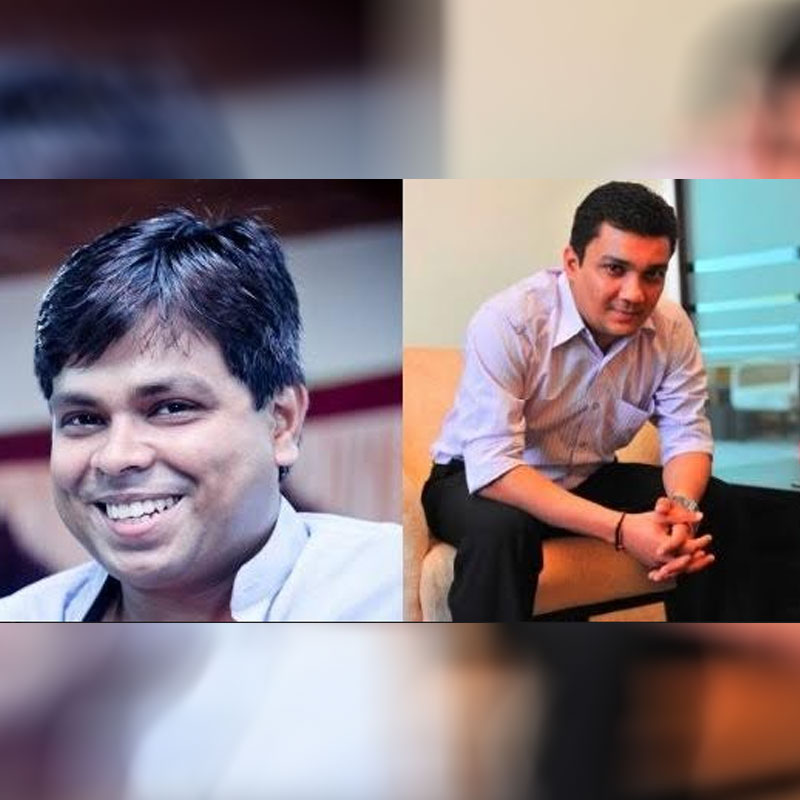
    MUMBAI:  Sony Pictures Network (SPN) has witnessed a flurry activity at senior positions of late. The latest movers in the hierarchy include for Aman Srivastava and Amogh Dusad who were elevated by the company. Srivastava has been promoted to senior vice president, head of marketing at Sony Entertainment Television (SET), while Dusad was handed a new responsibility as head of  digital products at SET.  Earlier Srivastava and Dusad occupied the roles of vice president, marketing and senior vice president and head – programming and content acquisition respectively.

    After a three-year stint as senior marketing manager at Sony, Srivastava joined Viacom 18 as associate director- international marketing. In 2013, he moved on from Viacom 18 as director- international business and syndication to join The Walt Disney Company as head of marketing, youth and movie channels. After almost three years in that role, Srivastava returned to SPN as Vice President Marketing.

    Srivastava has more than 14 years of experience in marketing, communication and new product development -brand management, research, activation, new product launch and content syndication. He has also lead brand to success in terms of profitability, Market share & Share of Mind. He has successfully conducted channel and product launches across geographies.

    Before joining Sony, Dusad worked with NDTV Imagine as director in strategic planning and research. He started his career as an associate director at TAM Media Research, working there for four years.

    Over a career spanning 15 years, Dusad has a demonstrated a history of working in leadership positions covering different facets of the broadcast media industry including content acquisition, creating partnerships with content creators, leading cross functional teams to drive business planning, ad revenue maximisation, consumer insight generation, spearheading initiatives towards digital and second screen engagement.

    Also Read:

    SPNI elevates Abhishek Joshi at digital biz

    Shishir Gupta elevated as head content acquisition sports at SPNI 

  • ALTBalaji is essentially everything that Balaji on TV is not: Sameer Nair

    MUMBAI: It was in the year 1994 that Sameer Nair was hired as a director-producer in the television industry. Shortly later, he became Star Movies’ executive producer.

    In the following years, he controlled acquisitions of movies for Star in India, and subsequently became its programming head. He eventually became the CEO of Star TV-India, a position he enjoyed till 2007. In 2008, Nair became the CEO of NDTV Imagine, a Hindi general entertainment channel from the NDTV stable, which went off air in 2011. In 2012, after quitting NDTV Imagine, Nair partnered with a few ex-colleagues and founded few startups in the media sector. In 2014, Nair became part of Ekta Kapoor’s Balaji Telefilms, a company that he had given break while in Star TV. He joined as group CEO and expanded Balaji’s digital business. In a recent development, just before Balaji and Reliance Industries announced that the latter has taken an equity stake in BLT a shade less than 25 per cent, Nair announced his departure from BLT end July.

    Nair was one of the speakers at indiantelevision.com’s second edition of Vidnet2017, held mid-July. He had a one-on-one conversation with Indiantelevision.com consulting editor Anjan Mitra.  Edited excerpts from the conversation:

    Has being in Balaji different from what you’ve been doing at Star and Imagine TV or even at a startup company?

    First of all, I have been associated with Balaji for many years because we used to work with them in Star. Balaji is primarily a television production house and is one of the most successful television production houses in India. And, the plan with Balaji was that how do you take a business like this and scale it up. How do you grow 10x? For example, for a company that is already having eight to nine shows on air, we have 20 per cent market share in general entertainment Hindi fiction. We make some movies too. So how do you grow 10x? We can’t go from 8 shows to 80 shows. So the sense was we have to go from being a B2B business to being a B2C business, which is where this plan of creating a (digital) platform came up. Now, if you could take all the Balaji shows today and put it on one channel, then that one channel would become the #1 channel. But obviously that ship has sailed and we couldn’t have started one more GEC channel. So it became clear that we should go B2C and should go digital (OTT). We should create content for it and act on our key strength, which is content creation.

    Which segment of the Balaji media business drives the revenues?

    Currently, television, obviously. TV is our base business where all the money comes from. But the future will be the digital business, which is Alt Balaji that we launched on April 16, 2017. That’s where the future is.

    How is Alt Balaji different?

    Balaji is known for its daily soaps on TV…shows that have been extremely popular and also have been criticized (for regressive themes, at times). Alt Balaji is essentially everything that Balaji on TV is not! The kind of content that we get to create (for Alt) is stuff that’s not available on TV; that you don’t see on TV and is exclusive to a platform. And, it’s in the fiction space because that’s what we specialize in. This is a big market. We have chosen to be in the OTT SVOD space.

    But critics say that the Indian digital realm is still more of traditional broadcasters, TV companies putting content available on linear or traditional television onto a digital platform. Do you agree with this line of thinking?

    It’s true. It’s common sense. Whenever a new medium starts and it grows, it lives off content from an old medium. That’s the way it goes. When satellite TV started in India, it was living off the English language programming from the West. Then English language programming was dubbed into Hindi and finally original Hindi and regional language programming came. It’s a process of evolution. Logically, if you got to put the content out there into a new medium, by default, Star’s Hotstar would put its own TV shows. In fact, that drove a lot of the viewership (to the digital platform) to start with. But as it goes forward, if you can get content everywhere, then why would you pay for it? If you actually want people to pay for anything, then it (content) has to be good and exclusive and people must see value in it.

    You mean content that you once famously described “between Narcos and Naagin”. Has that median changed or are you still grappling to traverse that terrain?

    In India in the 2000 (decade), we did the ‘K’ soaps — `Kyunki’, `Kahaani Ghar…’, etc. In 2017, that is pretty much the staple on Indian television, almost after a generation has gone. So, what we have missed as an evolutionary step is premium subscription television — the likes of HBO and Showtime. The closest India came to premium subscription television was, may be, Star One. So that’s where the opportunity is. The need (today) is the world between `Narcos’ and `Naagin’. It’s a world between a Colors Infinity and Colors — in all languages, not just in Hindi. And, that’s what we (at Balaji) are going after.

    I was reading an interview of Reed Hastings where he said that new shows, especially when they are released, do affect the seasonality of the business and the bottomlines. Do you feel in India it is still the same story or India is still an evolving drama?

    Even if you look at the TV business, the content business tends to work like that. So, in the Diwali quarter, your spends are up and your revenues too go up. However, I think, the big difference between Netflix and traditional content houses is if you have a subscriber model, then you have a basket of programming for a basket of revenue.

    Would you like to share some of the numbers?

    I am not going to share the numbers, but I can tell you what we are doing and why we think what we are doing makes sense.

    Why are you shying away from numbers?

    I am going to come to that. I got to build up to it. What we are doing is we are creating fiction shows— 10 to 12 or 15 episodes in a series and with multiple seasons going forward. We will give five episodes free. So we don’t have a one-month free scheme. What we have is every series of ours is free for the first five episodes — three episodes you can see on YouTube, two you can see on the app and then it means you have liked it; which means you are hooked on to it. We are going to ask you for some (subscription) money then. That’s the play we are aiming at. There are some things you want to pay money for and some you would not. For a movie like `Dangal’, a big section of the audience in India gave Aamir Khan Rs 300-400 crore (Rs. 3-4 billion in ticket sales) despite being aware that the film would come on TV for free technically, in a few months (of its theatrical release). But they still thronged the theatres and bought tickets. There is a draw that (good) content has…where people want to pay and see it. Our sense is to create content that people would want to watch and pay for.

    Coming back to numbers, we have got a great start. We have got about four-five million downloads. We have got subscriptions from day one, primarily because we are in five-episode free model. I can’t give you subscription numbers, but we are doing well compared to the market now. We have got subscriptions from about 70 countries. Most people have taken the quarterly pack and not the annual pack, which is fair I guess. They may first want to sample the content and see how the service is. We have got good reaction to our content.

    People who have downloaded your app are mostly of the Indian diaspora?

    Indians mostly. It’s an Indian and Indian diaspora game. It’s all in Hindi for now. We have done one Tamil show and are going to do one Bengali show. But it’s targeted towards Indians primarily. So we are not yet in the foreign (audience and non-Hindi speaking) space.

    What are the expansion plans for Alt Balaji?

    For first couple of years, we are going to focus on content, build up customer base and do content in multiple languages. We are doing content in Hindi, Tamil and Bengali. We want to add Gujarati, Punjabi and Telugu too, which we are planning to launch within 18 months time.

    The sense that I get from feedback that even the big OTT players don’t know where the revenue is going to come from in India. What is Alt Balaji’s point of view on revenues and business model, considering you are quite a late entrant?

    We are looking at the revenue from a subscription point of view and we are not in the AVOD space. We are not looking for advertising support. Within the SVOD space, our business plan is to spend some amount of money on content and getting to a certain number of paying subscribers by the end of two to three years, which takes us to break-even. That’s the plan. And, for that, the kind of content we are creating is premium subscription television content — the kind India has not seen so far. We are putting it out there (and) giving consumers the opportunity to sample it. We think the market is pretty large. There are two million homes that are watching Star World or Colors Infinity and there are 165 million (TV) homes that actually a Colors or a Star Plus reaches. The in-between audience, say about 25-30 million homes, today are already spending Rs.1000 to Rs. 2000 on a combination of Internet, entertainment and telecom (per month). They have two-three smartphones, have a DTH connection and watch one or two movies in a month. These guys will potentially spend $10 more per month in the next five years. That figure when you take to 25 million homes becomes a $3 million market. Now, what will they spend it on? They will spend it on OTT services, watching new movies. So, we are focusing on those 25 million homes, which will, in the next five years, probably become 25-40 million homes. Out of that, we want a fair share.

    By 2019-2020 you will reach the breakeven point. So, where are the stumbling blocks? Which are the three biggest stumbling blocks for digital platforms in India?   

    One of the big stumbling blocks used to be the connectivity issue. We used to wonder how this is going to work and how would we reach the consumers. Call-drops and bad connectivity is a problem. But in the last year or so, with the kind of push Jio is doing, the (digital) highways are being built. Second big stumbling block would be, would people pay? We keep saying that Indians get everything for free and that’s like a constant refrain. But ideally you pay for everything. You get nothing for free. If you go to a temple, you got to put money in the pooja thaali for blessings. So, I think people will pay. They are paying for movies, IPL matches…In fact, people have always paid for TV. For all this drama around ‘Indians like to get everything for free’, ever tried to not pay for your cable connection? They’ll (LCOs) just cut it (connection) off. Right? And, from 1992 this is going on. The third stumbling block would be if consumers are willing to pay, what are they going to pay for? That’s where the content comes in. Already, almost all of us have become Netflix subscribers. It may be expensive, but for a certain set of audience it is good to go. Amazon has come along too. So, these are the three key things and they are being addressed.

    In all this, do you feel somewhere the government can be helpful in removing the stumbling blocks?

    I don’t know actually. But government should stay far away from it. This is going reasonably well. Private players are helping in building infrastructure and are building businesses. Let market forces decide.

    At the moment, it is almost like ‘free for all’ without any regulations for the digital players; something like what cable and satellite TV was once upon a time before MIB and TRAI waded into it in 2003-04 onwards. How do you view the growth of the digital world vis-a-vis regulations or its absence?

    This is a tough one because the Internet is open; so technically at this point of time you can go out on the net and find porn too. Now going forward, more and more people will create (digital) content and somebody will push the boundaries and maybe or maybe not the government decides to regulate it. Ideally, if the players together are not creating obscene content just for the sake of creating obscene content, that would be the best self-regulated environment. But it is a big a market; too many content creators are out there and it’s hard to assume things. But I feel there are already some rules and regulations in place.

    And where do the OTT platforms fit into the Indian debate of net neutrality?

    Obviously, there should be net neutrality. I think all the OTT platforms are now pushing for net neutrality. If we don’t have net neutrality, then it would be like the TV business’ carriage phase, which still persists, though it has gone down because of the digitization.

    Is the digital world at the moment a content driven business or a technology driven business?

    Well, it’s a combination of both. Tech is equally important.


  • Originals are a big play for us, says Viacom 18’s Gaurav Gandhi

    Originals are a big play for us, says Viacom 18’s Gaurav Gandhi

    If you look at Gaurav Gandhi’s CV, you will see that this NMIMS graduate began as a strategic business media executive with the Sam Balsara-promoted Madison Communications way back in 1998. He then took the plunge into television, joining Turner as a researcher and planner, and then, Star India. He followed that up with a stint in NDTV Imagine. 

    But, for the past six years, he has been associated with the Viacom18 brand – first as the commercial head, then moving on to distribution of traditional television with various assignments in Sun18 and IndiaCast, before being given the responsibility of steering the company into the digital space in late 2015. 

    Burning the midnight oil for more than seven months, he and his team, rolled out their first offering – a VOD service called Voot in March 2016. Rivals such as Star India, and Zee TV had their versions – Hotstar and DittoTV — in play for a longer period. But, that did not faze Voot COO who is known to be a feisty fighter. He is quite clear of the direction that Voot is taking, and he spoke about its journey so far in a tete-a-tete with Indiantelevision.com’s Megha Parmar. Read on to get some Gandhi insights on the Indian OTT space.

    How has the response to Voot been so far?

    The response has been very good. We are happy where we are. To get to be the third largest streaming website in watch time in a short period that we have is very encouraging. It’s been a good journey. We know that, as a market, we have close to 100 million users now, which will go to 400 million. So, the 4x growth is happening in the market, and we are riding that well.  There are three things that really encourage us. First, 45 minutes per day per user on an average is a very good number, so the watchtime is there. We have a large user base now, which excites us. Second is the fantastic response to our content. Of our three properties (TV, kids and originals), specifically for television, there is so much to do around a reality show. Thirty per cent of the views come from the extra stuff that we do around it. We shoot a lot of things along with our TV counterparts. And having 50+ advertisers on board definitely gives us a sense that we are going in the right direction.

    What were the learnings in the past few months?

    There has been a lot of learning. With our kids, we know exactly what is going on.We have a publishing cycle in place and the way it works is to make sure that we refresh it thrice a day. Kids will come back from school by 4 pm, and we thought that we should put our best content there and market it. Reality happened to us at 9 pm as the kids were watching it at that point of time when their parents are busy with dinner. That was the learning, which came alongside. Actually, the father’s phones have been used far more on weekends.

    We initially were of the opinion that 500 cities are enough for us but, in the third month, we crossed 1000 cities. There are viewers in 1100 cities right now who regularly consume Voot.  It’s all been a great learning. We had originally thought that it was about currency or new shows, but the catalogue has been watched by people for new stuff.

    People repeatedly come to us for something they love such as the MTV show, Kaisi Yeh Yaariyan. We look at the data and have witnessed that a lot of people consume data when in office between 1:30 am and 3 pm. There is a big surge of content.

    The kids demo peaks at 9 pm, the GEC at 10 pm and youth escalates from 11 pm to 1 at night. Our traffic only goes down from 2:30 am to 5 am. That is the time when we have some time with us, say, to solve a technical problem. Those things are very different. This is a consumer business, B2C, as against the past. We have not been going to  the consumers directly. We are consumer brands now, and that is an interesting proposition.

    When you say that 75 per cent of video consumption is now happening through WiFi and it is expected to change after digitization, after which a majority of the consumption will happen through telcos. The telcos are also coming into play with their own offerings of VOD and aggregation OTT platforms such as Jio, Wynk, Idea TV. Are the VOD platforms going to be at a disadvantage?

     Let me be honest with you, there is no dearth of platforms, and there will be none going forward. It’s like we have approximately 600 to 800 channels right now technically, and it still has a demand because people are watching. We are ultimately providing content. Those are platforms wherein everything is available but ours is a video-on-demand platform where you can choose what you want to watch and at what time.

    If you are talking from the content front, if you have a clear direction on the partnerships, the consumers as well as the content creation that you are doing, I don’t see a threat. Second, telcos are building services out. How we work with them and tie up is yet to be seen. The fact that we are over the top, we are available to every single person. We are an OTT service and we are available to all.

    Telcos are only concerned about one thing: consumer data. We work very closely with Jio and many other players. I think, from a telecoms perspective, they want to give their users everything possible and encourage them to consume data. From our point of view, we are talking about the fact that we want maximum viewership and that converts to eyeballs, money, and so on. So it’s very much a complementary situation. We provide content, and they get the users to use that content on their network. We get our eyeballs they get their consumption.

    What type of growth do you see after 4G rolls out completely?

     I see currently 120 million digital video users overall to go to 400 million next year. That’s three and a half times growth. You are doubling the user base over digital video every year. Now, if that is the case, all the players will grow automatically. Obviously, there will be top three, four, five, naturally who will see more growth because of more content.

    The other part of India is an interesting challenge because top five or six companies control 80 per cent of the IP. They are investing on the IPs and they are building more and more. Naturally, they will have a bigger advantage. Telcos will build their interesting products. How you will work with the telcos and how they launch their products will be interesting to see.

    Currently, it’s an ad-supported market largely, and that leads to getting more eyeballs because you are making it available to a large set. We foresee growth to be fairly phenomenal in the next 36 months for everyone in the market. We want to grow at a faster pace — naturally.

    So, you think an ad supported model is faring well for you, and that is the way to go? Or, will you also experiment with other models?

    There are multiple models that you can play with. The reason that, today an ad supported model works, and is the right way is because of three main reasons. One, people are psychologically prepared to pay for content. You get 400 channels for Rs 300, and if you go back 10 years, the cable TV monthly subscription was around Rs 200. Channels have increased, it’s become digital, HD has arrived, etc., but the amount you are paying is the same. People think that this is our birthright, we will get it anyhow. So, there is a big mindset shift that needs to happen and it has to happen with the distribution industry. But, till then, the value of content in the mind is benchmarked to the amount you pay on TV, especially if it a subscription base. If it is event based, for eg, paying for a movie where you are paying for the experience of movie, you will not pay the same amount for watching a movie at home. You are paying for the outing, the experience, so there is a challenge.

     The second challenge is data prices, that are very high. To pay for data and to pay for content together for a consumer is very steep today.

    The third one is payment gateways. How do you pay for content? Not many people have credit cards, and people are not using it for recurring charge.

    I see this mindset changing in the next 36 months as well. The data prices will fundamentally come down, you will have data, bundled deals of content, you will have better speed connectivity, you will be offered premium services, HD service and various other services. Even the gateways will emerge. All these things will allow me to do a subscription model or a TVOD model as well. But, the large belly of the business is the ad-supported model.

    To run an advertising model you need humongous volumes. If you are a niche player, however good you might be, you can’t get business on advertising because the whole model of advertising is built on the number of eyeballs.

    It is a very expensive business. There are technology costs which are very high, there are content costs, there are costs of marketing and acquiring a customer, there are costs of streaming to the customer.

    The more content you watch on Voot or Hotstar or Youtube, there are two things which tend to happen. You are charged for data and it will also cost more to me as well as I have to pay the CDN (content delivery network) cost. So, the more you watch, the more I am paying. So I have to recover that cost. Unless you are a large volume player, you can’t do ad-supported. If you are a small player, you have to charge a sensible price to recover that cost. Netflix  – taking the sliver of the market at that price point, saying I only want these people – is one model. You are paying Netflix month on month.

    I think there will be more interesting models emerging in India going forward to break the psychological barrier in people’s mind. It’s not only an affordability barrier, but also a psychological barrier.

    We have to traverse the journey from ‘completely free’ to ‘completely pay.’ That journey has to pass through the consumer’s point of view, who is trying to pay for somethings. Once you are hooked on, then you tend to convert into a smaller package. The consumers will convert, but you can’t straight away give them a shock that tomorrow morning you will have to pay Rs 700. You will then get some, but a small portion.

    However, that’s not enough as in this country you have to build volumes. We are in the volume business. But, with some products, you can say that I want to play the international market game and play on the subscription part. It makes a lot of sense.

    But, one player has minimalised its rate to say the cost of a samosa. What do you have to say about that?

    We are not comparing with them. They only offer channels and not video on demand. I don’t know how are they doing it. Any strategy in my mind has to be sustainable. If they are able to offer all the channels in the world at Rs 20, then I think cable companies should talk to them and figure out why are they not charging that amount for the same channels.

    But, think of it logically. If you have all channels, everything for life at Rs 20 per month, then why would you pay the cable operators? You can choose to acquire customers from any route. You have a different way of acquiring customers and then you can hope them to stay hooked. I think it’s a marketing strategy from their point of view. People use different marketing strategies. But, I don’t think it makes business sense.

    I personally consume Voot content while it also is a ritual for me to catch up on Splitsvilla. But, there is a lag of around eight hours. Why?

    Splitsvilla has a humongous catch-up. There was a day where the Splitsvilla Sunday numbers were bigger than the next three days put together combined in a total value. I am a firm believer that consumers should have an ad model but you also need to understand that an ad supported model, you are getting this absolutely free as compared to me providing it to a cable or a DTH operator who is charging customers for it. There needs to be some gap. I could make this little pay and make it at the same time. But, if it is absolutely free here, you can play it, Chromecast it, share it, then personally I don’t feel that it is the right model. But, you can argue with me why it has to be eight hours? Why can’t it be six hours or a four hour lag? Those things are workable from my point of view but currently we have started with this strategy to put it up next morning. So, the way it works is TV airs it, we then process it, which takes about two to three hours. The team comes up here at 5am and publishes it on for the TV, tablet, mobile, website, etc. By 7:30 am, the content gets published most of the times.
    Is there scope of providing live content? How much, according to you, can the window be narrowed which also makes sense to your business?
    I am not going to comment on live, but, from case to case, we might have a much shorter window. I can narrow it down to zero also but, right now, I am not taking up that call because putting it up in the morning makes sense. You have to look at the larger thing. Currently, TV is measured on ratings and that’s how channels and advertisers are making money. TV has a large business there. This type of an emerging business has a separate sales, cost, structure, separate consumer base; we have to grow both businesses. It can’t be at the cost of the other. Definitely, it can’t be that you are actually working against the partners of yours especially on the distribution side by providing it free or live at the same time. I know some of my competitors have done it on the same time or even before, but as a stunt it is fine. But, if you do it continuously, I think it is should be made a free channel, which should be also free for the cable operators.

     I think giving it absolutely free at the same time is something I am not completely convinced right now. It is just a commercial business challenge to figure out whether it makes sense.

    We at the same time are also trying to increase the ARPU of the consumers. The business will grow but it also needs value. If I say that the same channel is available here for free and you stream it whereas there you are charging Rs 600 for it, then why will you pay? For what? The consumers will come and leave. We are just four months old, and this is an evolving space for us. At this time, we feel a six to eight hours lag is good. But, sometimes we reduce the lag.

    Do you plan to have Colors Infinity content on Voot?

    We do have it with us. The stage is there. We already have all the Indian productions of Infinity. At this time, it will only be home-grown content because the international content has two challenges, one is the third-party rights and the international players are a little more circumspect about putting content on ad-supported models. They want to put it on premium models. So, we are working with them to see what we can do. We have the format for ‘24’ with catch-up available. So, we get the stuff we create here. I think it is a journey. There are only two large ad-supported models in the world i.e China and India. They have never seen many big ad-supported models in the world.

    It’s a shift for us as well. If you talk to large players, they come to India and are amazed by the advertising growth here. Their mindset has changed. Netflix charges $8 in US which is like Rs 500 for us. But, that is their price point. I think as you are playing with the consumers in the market, you also have to adjust your prices and look at that.

    Some are B2B players who don’t talk to consumers directly. It takes sometime for them to figure out their life. So, I think it will take some time to convince the big studios to put their content on the ad-supported model in English.

    How are your originals doing onVoot?

    Very good. We only started with a few. There is a surge in catch-up audience or the ones who were more skewed towards TV content. ‘Chinese Bhasad’ has done well for us. ‘Badman’ has won awards India and internationally as well. ‘Shaadi Boys’ have seen a crazy demand and we have some episodes in place for the next season to come up shortly. The kind of traction we get for trailers is mind-blowing. I have got my competitors writing to us saying the content is phenomenal. Just now, someone from Star wrote that you are killing it with your shows. So, we are very happy with the response. I think the idea really is to create differentiated content that people don’t get on television but also have it relevant. We don’t want flaky things at all. We want to connect with the audience, and this is mature show. This is for everybody who is either married or is in relationship. It is not for a 15, 18 or 20 year old.

    Do you plan to package separately for your originals on Voot?

    As we speak, we have launched six shows. But, overtime, we will create a separate section of Voot Originals on the app. That is the way for us. Totally! Originals are a big play for us.

    Data is crucial for OTT and VOD. Are advertisers buying (agreeing with) the data you are giving them. What do they expect?

    Fifty advertisers on board, it’s not a small number. Everybody can see us as the third largest platform in the country in terms of size, in terms of minute data. You look how we have gotten million downloads. We are amongst the first guys who shared our data weekly dashboard to advertisers. Before us nobody used to do that. We are proud of what we have pursued in the first few months but it’s a long way to go. So advertisers are very keen. We have deals with several agencies, all the big clients are on board, we have long term deals as well.

    What is the sweet spot for advertising rates for OTT and VOD platforms? Let’s say for Voot?

    That is very hard, I can’t guesstimate. Let me tell you that we are on the higher end of the market. Because you know what you get here are the premium audiences – in the sense that they would not be buying Porsche and BMW but a loyal audience who can actually be fully measured and targeted.  You will be able to get a sponsorship opportunity, content, several integrations and lot more things surrounded. Sometimes, you are able to own the entire show as well.

    SonyLiv, Hotstar, Amazon Prime are going to be bidding for IPL rights? Where will that place platforms such as Voot as compared to the one who gets it?

    See, we don’t play in sports. Whether it comes on OTT or television, the reality of it is very simple. When there is cricket and when there is India playing, people are watching something. I do not buy the fact people are watching both things at the same time. The statement that you are watching TV and you are watching Voot or Hotstar or whatever it might be does not work.

    I actually believe that a sport, especially cricket, is something which you watch with a lot of people together. It’s an event-based thing. People watch it so numbers are there is no doubt about it. But, in my mind, it’s not as if those two hours or four hours or three hours of a match impacting my Voot journey too much. Contrary to that, I think we have a clear strategy on three big or four big types of content and I want to put my money behind that and that’s why what I am doing with kids, originals, reality. It is a clear indicator that I was actually putting my money before advertisers came on. I commissioned the shows in originals before they came on right. I am not waiting for the next guy to come who will give me money so that I can start.

  • Originals are a big play for us, says Viacom 18’s Gaurav Gandhi

    Originals are a big play for us, says Viacom 18’s Gaurav Gandhi

    If you look at Gaurav Gandhi’s CV, you will see that this NMIMS graduate began as a strategic business media executive with the Sam Balsara-promoted Madison Communications way back in 1998. He then took the plunge into television, joining Turner as a researcher and planner, and then, Star India. He followed that up with a stint in NDTV Imagine. 

    But, for the past six years, he has been associated with the Viacom18 brand – first as the commercial head, then moving on to distribution of traditional television with various assignments in Sun18 and IndiaCast, before being given the responsibility of steering the company into the digital space in late 2015. 

    Burning the midnight oil for more than seven months, he and his team, rolled out their first offering – a VOD service called Voot in March 2016. Rivals such as Star India, and Zee TV had their versions – Hotstar and DittoTV — in play for a longer period. But, that did not faze Voot COO who is known to be a feisty fighter. He is quite clear of the direction that Voot is taking, and he spoke about its journey so far in a tete-a-tete with Indiantelevision.com’s Megha Parmar. Read on to get some Gandhi insights on the Indian OTT space.

    How has the response to Voot been so far?

    The response has been very good. We are happy where we are. To get to be the third largest streaming website in watch time in a short period that we have is very encouraging. It’s been a good journey. We know that, as a market, we have close to 100 million users now, which will go to 400 million. So, the 4x growth is happening in the market, and we are riding that well.  There are three things that really encourage us. First, 45 minutes per day per user on an average is a very good number, so the watchtime is there. We have a large user base now, which excites us. Second is the fantastic response to our content. Of our three properties (TV, kids and originals), specifically for television, there is so much to do around a reality show. Thirty per cent of the views come from the extra stuff that we do around it. We shoot a lot of things along with our TV counterparts. And having 50+ advertisers on board definitely gives us a sense that we are going in the right direction.

    What were the learnings in the past few months?

    There has been a lot of learning. With our kids, we know exactly what is going on.We have a publishing cycle in place and the way it works is to make sure that we refresh it thrice a day. Kids will come back from school by 4 pm, and we thought that we should put our best content there and market it. Reality happened to us at 9 pm as the kids were watching it at that point of time when their parents are busy with dinner. That was the learning, which came alongside. Actually, the father’s phones have been used far more on weekends.

    We initially were of the opinion that 500 cities are enough for us but, in the third month, we crossed 1000 cities. There are viewers in 1100 cities right now who regularly consume Voot.  It’s all been a great learning. We had originally thought that it was about currency or new shows, but the catalogue has been watched by people for new stuff.

    People repeatedly come to us for something they love such as the MTV show, Kaisi Yeh Yaariyan. We look at the data and have witnessed that a lot of people consume data when in office between 1:30 am and 3 pm. There is a big surge of content.

    The kids demo peaks at 9 pm, the GEC at 10 pm and youth escalates from 11 pm to 1 at night. Our traffic only goes down from 2:30 am to 5 am. That is the time when we have some time with us, say, to solve a technical problem. Those things are very different. This is a consumer business, B2C, as against the past. We have not been going to  the consumers directly. We are consumer brands now, and that is an interesting proposition.

    When you say that 75 per cent of video consumption is now happening through WiFi and it is expected to change after digitization, after which a majority of the consumption will happen through telcos. The telcos are also coming into play with their own offerings of VOD and aggregation OTT platforms such as Jio, Wynk, Idea TV. Are the VOD platforms going to be at a disadvantage?

     Let me be honest with you, there is no dearth of platforms, and there will be none going forward. It’s like we have approximately 600 to 800 channels right now technically, and it still has a demand because people are watching. We are ultimately providing content. Those are platforms wherein everything is available but ours is a video-on-demand platform where you can choose what you want to watch and at what time.

    If you are talking from the content front, if you have a clear direction on the partnerships, the consumers as well as the content creation that you are doing, I don’t see a threat. Second, telcos are building services out. How we work with them and tie up is yet to be seen. The fact that we are over the top, we are available to every single person. We are an OTT service and we are available to all.

    Telcos are only concerned about one thing: consumer data. We work very closely with Jio and many other players. I think, from a telecoms perspective, they want to give their users everything possible and encourage them to consume data. From our point of view, we are talking about the fact that we want maximum viewership and that converts to eyeballs, money, and so on. So it’s very much a complementary situation. We provide content, and they get the users to use that content on their network. We get our eyeballs they get their consumption.

    What type of growth do you see after 4G rolls out completely?

     I see currently 120 million digital video users overall to go to 400 million next year. That’s three and a half times growth. You are doubling the user base over digital video every year. Now, if that is the case, all the players will grow automatically. Obviously, there will be top three, four, five, naturally who will see more growth because of more content.

    The other part of India is an interesting challenge because top five or six companies control 80 per cent of the IP. They are investing on the IPs and they are building more and more. Naturally, they will have a bigger advantage. Telcos will build their interesting products. How you will work with the telcos and how they launch their products will be interesting to see.

    Currently, it’s an ad-supported market largely, and that leads to getting more eyeballs because you are making it available to a large set. We foresee growth to be fairly phenomenal in the next 36 months for everyone in the market. We want to grow at a faster pace — naturally.

    So, you think an ad supported model is faring well for you, and that is the way to go? Or, will you also experiment with other models?

    There are multiple models that you can play with. The reason that, today an ad supported model works, and is the right way is because of three main reasons. One, people are psychologically prepared to pay for content. You get 400 channels for Rs 300, and if you go back 10 years, the cable TV monthly subscription was around Rs 200. Channels have increased, it’s become digital, HD has arrived, etc., but the amount you are paying is the same. People think that this is our birthright, we will get it anyhow. So, there is a big mindset shift that needs to happen and it has to happen with the distribution industry. But, till then, the value of content in the mind is benchmarked to the amount you pay on TV, especially if it a subscription base. If it is event based, for eg, paying for a movie where you are paying for the experience of movie, you will not pay the same amount for watching a movie at home. You are paying for the outing, the experience, so there is a challenge.

     The second challenge is data prices, that are very high. To pay for data and to pay for content together for a consumer is very steep today.

    The third one is payment gateways. How do you pay for content? Not many people have credit cards, and people are not using it for recurring charge.

    I see this mindset changing in the next 36 months as well. The data prices will fundamentally come down, you will have data, bundled deals of content, you will have better speed connectivity, you will be offered premium services, HD service and various other services. Even the gateways will emerge. All these things will allow me to do a subscription model or a TVOD model as well. But, the large belly of the business is the ad-supported model.

    To run an advertising model you need humongous volumes. If you are a niche player, however good you might be, you can’t get business on advertising because the whole model of advertising is built on the number of eyeballs.

    It is a very expensive business. There are technology costs which are very high, there are content costs, there are costs of marketing and acquiring a customer, there are costs of streaming to the customer.

    The more content you watch on Voot or Hotstar or Youtube, there are two things which tend to happen. You are charged for data and it will also cost more to me as well as I have to pay the CDN (content delivery network) cost. So, the more you watch, the more I am paying. So I have to recover that cost. Unless you are a large volume player, you can’t do ad-supported. If you are a small player, you have to charge a sensible price to recover that cost. Netflix  – taking the sliver of the market at that price point, saying I only want these people – is one model. You are paying Netflix month on month.

    I think there will be more interesting models emerging in India going forward to break the psychological barrier in people’s mind. It’s not only an affordability barrier, but also a psychological barrier.

    We have to traverse the journey from ‘completely free’ to ‘completely pay.’ That journey has to pass through the consumer’s point of view, who is trying to pay for somethings. Once you are hooked on, then you tend to convert into a smaller package. The consumers will convert, but you can’t straight away give them a shock that tomorrow morning you will have to pay Rs 700. You will then get some, but a small portion.

    However, that’s not enough as in this country you have to build volumes. We are in the volume business. But, with some products, you can say that I want to play the international market game and play on the subscription part. It makes a lot of sense.

    But, one player has minimalised its rate to say the cost of a samosa. What do you have to say about that?

    We are not comparing with them. They only offer channels and not video on demand. I don’t know how are they doing it. Any strategy in my mind has to be sustainable. If they are able to offer all the channels in the world at Rs 20, then I think cable companies should talk to them and figure out why are they not charging that amount for the same channels.

    But, think of it logically. If you have all channels, everything for life at Rs 20 per month, then why would you pay the cable operators? You can choose to acquire customers from any route. You have a different way of acquiring customers and then you can hope them to stay hooked. I think it’s a marketing strategy from their point of view. People use different marketing strategies. But, I don’t think it makes business sense.

    I personally consume Voot content while it also is a ritual for me to catch up on Splitsvilla. But, there is a lag of around eight hours. Why?

    Splitsvilla has a humongous catch-up. There was a day where the Splitsvilla Sunday numbers were bigger than the next three days put together combined in a total value. I am a firm believer that consumers should have an ad model but you also need to understand that an ad supported model, you are getting this absolutely free as compared to me providing it to a cable or a DTH operator who is charging customers for it. There needs to be some gap. I could make this little pay and make it at the same time. But, if it is absolutely free here, you can play it, Chromecast it, share it, then personally I don’t feel that it is the right model. But, you can argue with me why it has to be eight hours? Why can’t it be six hours or a four hour lag? Those things are workable from my point of view but currently we have started with this strategy to put it up next morning. So, the way it works is TV airs it, we then process it, which takes about two to three hours. The team comes up here at 5am and publishes it on for the TV, tablet, mobile, website, etc. By 7:30 am, the content gets published most of the times.
    Is there scope of providing live content? How much, according to you, can the window be narrowed which also makes sense to your business?
    I am not going to comment on live, but, from case to case, we might have a much shorter window. I can narrow it down to zero also but, right now, I am not taking up that call because putting it up in the morning makes sense. You have to look at the larger thing. Currently, TV is measured on ratings and that’s how channels and advertisers are making money. TV has a large business there. This type of an emerging business has a separate sales, cost, structure, separate consumer base; we have to grow both businesses. It can’t be at the cost of the other. Definitely, it can’t be that you are actually working against the partners of yours especially on the distribution side by providing it free or live at the same time. I know some of my competitors have done it on the same time or even before, but as a stunt it is fine. But, if you do it continuously, I think it is should be made a free channel, which should be also free for the cable operators.

     I think giving it absolutely free at the same time is something I am not completely convinced right now. It is just a commercial business challenge to figure out whether it makes sense.

    We at the same time are also trying to increase the ARPU of the consumers. The business will grow but it also needs value. If I say that the same channel is available here for free and you stream it whereas there you are charging Rs 600 for it, then why will you pay? For what? The consumers will come and leave. We are just four months old, and this is an evolving space for us. At this time, we feel a six to eight hours lag is good. But, sometimes we reduce the lag.

    Do you plan to have Colors Infinity content on Voot?

    We do have it with us. The stage is there. We already have all the Indian productions of Infinity. At this time, it will only be home-grown content because the international content has two challenges, one is the third-party rights and the international players are a little more circumspect about putting content on ad-supported models. They want to put it on premium models. So, we are working with them to see what we can do. We have the format for ‘24’ with catch-up available. So, we get the stuff we create here. I think it is a journey. There are only two large ad-supported models in the world i.e China and India. They have never seen many big ad-supported models in the world.

    It’s a shift for us as well. If you talk to large players, they come to India and are amazed by the advertising growth here. Their mindset has changed. Netflix charges $8 in US which is like Rs 500 for us. But, that is their price point. I think as you are playing with the consumers in the market, you also have to adjust your prices and look at that.

    Some are B2B players who don’t talk to consumers directly. It takes sometime for them to figure out their life. So, I think it will take some time to convince the big studios to put their content on the ad-supported model in English.

    How are your originals doing onVoot?

    Very good. We only started with a few. There is a surge in catch-up audience or the ones who were more skewed towards TV content. ‘Chinese Bhasad’ has done well for us. ‘Badman’ has won awards India and internationally as well. ‘Shaadi Boys’ have seen a crazy demand and we have some episodes in place for the next season to come up shortly. The kind of traction we get for trailers is mind-blowing. I have got my competitors writing to us saying the content is phenomenal. Just now, someone from Star wrote that you are killing it with your shows. So, we are very happy with the response. I think the idea really is to create differentiated content that people don’t get on television but also have it relevant. We don’t want flaky things at all. We want to connect with the audience, and this is mature show. This is for everybody who is either married or is in relationship. It is not for a 15, 18 or 20 year old.

    Do you plan to package separately for your originals on Voot?

    As we speak, we have launched six shows. But, overtime, we will create a separate section of Voot Originals on the app. That is the way for us. Totally! Originals are a big play for us.

    Data is crucial for OTT and VOD. Are advertisers buying (agreeing with) the data you are giving them. What do they expect?

    Fifty advertisers on board, it’s not a small number. Everybody can see us as the third largest platform in the country in terms of size, in terms of minute data. You look how we have gotten million downloads. We are amongst the first guys who shared our data weekly dashboard to advertisers. Before us nobody used to do that. We are proud of what we have pursued in the first few months but it’s a long way to go. So advertisers are very keen. We have deals with several agencies, all the big clients are on board, we have long term deals as well.

    What is the sweet spot for advertising rates for OTT and VOD platforms? Let’s say for Voot?

    That is very hard, I can’t guesstimate. Let me tell you that we are on the higher end of the market. Because you know what you get here are the premium audiences – in the sense that they would not be buying Porsche and BMW but a loyal audience who can actually be fully measured and targeted.  You will be able to get a sponsorship opportunity, content, several integrations and lot more things surrounded. Sometimes, you are able to own the entire show as well.

    SonyLiv, Hotstar, Amazon Prime are going to be bidding for IPL rights? Where will that place platforms such as Voot as compared to the one who gets it?

    See, we don’t play in sports. Whether it comes on OTT or television, the reality of it is very simple. When there is cricket and when there is India playing, people are watching something. I do not buy the fact people are watching both things at the same time. The statement that you are watching TV and you are watching Voot or Hotstar or whatever it might be does not work.

    I actually believe that a sport, especially cricket, is something which you watch with a lot of people together. It’s an event-based thing. People watch it so numbers are there is no doubt about it. But, in my mind, it’s not as if those two hours or four hours or three hours of a match impacting my Voot journey too much. Contrary to that, I think we have a clear strategy on three big or four big types of content and I want to put my money behind that and that’s why what I am doing with kids, originals, reality. It is a clear indicator that I was actually putting my money before advertisers came on. I commissioned the shows in originals before they came on right. I am not waiting for the next guy to come who will give me money so that I can start.

  • We will look for international, local collaborations and diversifications: Sameer Nair

    We will look for international, local collaborations and diversifications: Sameer Nair

    I had never gone away”, says the man who is credited with bringing KBC and K shows to the Indian television screens. Sameer Nair, after a hiatus of three years, is back at doing what he does best. He has been busy exploring opportunities in online video, e-commerce, film & television production, education, hospitality and of course, helped the newest entrant, AAP, into Indian politics.


    A maverick as many call him goes by the philosophy – communicate clearly, be polite, be persuasive, sweat the detail, seize the moment and create not compete for what is already created.


    As the new group CEO at the country’s biggest production house, Balaji Telefilms, he will work closely with Shobha and Ekta Kapoor to take it to the next level.


    Indiantelevision.com’s Meghna Sharma caught up with him to know about his views on today’s audiences, their taste, Balaji’s success in gripping the viewers’ pulse and its future plans.


    Excerpts…


    You had the genius to select the content which caught the pulse of the viewers. How has that evolved? How do you keep abreast with the change in taste?


    Television is dynamic. When we did ‘KBC’ and ‘Kyunki saas bhi kabhi bahu thi’ which went on air on the same night, quickly followed by ‘Kahani ghar ghar kii’ and ‘Kasauti zindagi kay’, it used to be half an hour weekly programming on three main channels – Star Plus, Zee and Sony. This gave viewers 90 choices to pick from. At Star our big strategy was to channel this to daily and changed the whole schedule, reducing the primetime viewing choice to five. Which others followed and continues to be even done today. It was a new concept then and people liked it. With Imagine, we got mythology into primetime which can be seen today as well.


    In the last 22 years of Indian television, we have had a full generation of television – executive, creatives. When I started of in 1993, we were the pioneers then, and had only the legacy of Doordarshan (DD) to look back at whereas today’s generation has 22 years of television to study. So, in the last 20 years, there has been a lot of process especially in consumer taste because the country has progressed. Today we have 150 million television homes, 800 million mobile phones, internet, disposable income has increased and content has kept in pace with it because of the new talent entering the space. For instance, Colors has had wonderful success, Sab has created a special niche for itself and done remarkably well, production houses are doing well and coming up with shows like ‘24’ and ‘Yudh’.


    Content has evolved and so have the people.


    Channels do a lot of research, but what I feel is that research can only prevent you from doing a mistake. It can tell you what not to do and not what to do. Finally, what has to be done is done with meticulous details, creativity and the way a story is told. For instance, ‘kyunki…’ as a daily show was a good idea strategically, but people remember the story of Tulsi in the big Virani family. It is all about great stories, well told.


    What is your role as group CEO?


    Balaji is in a very good place and we have had a successful run of films as well as shows. I was doing a count and Balaji has 15 of the top 50 shows currently on the Indian television screens. There are a very few listed industries in this space and it is one of them.


    And in the past six months we have been discussing the growth plans and one of the main take outs of those meetings has been that we should scale up the company. So, now Balaji will do more movies, more television, we will look for international as well as local collaborations and look for diversifications.


    I have really come here to work with Shobha and Ekta Kapoor to do that.


    Which verticals are you looking at for collaborations?


    Could be movies, shows, formats or just partnering with an international company on specific projects. If there is a format company looking to set up a shop here in India or wants to do catalogue shows here then that could be an opportunity we would be looking at.


    Between Ekta, Shobha and you, how are the roles divided?


    Ekta is creative and she is great at that. Mrs Kapoor has been the operational backbone of the company, so I will work closely with her. And also with Ekta. The main aim here is to work together and look for growth opportunities.  


    What in your assessment are Balaji’s strengths and weaknesses? And what are its opportunities?


    Balaji has a very good team and they have produced some incredible work. So, if there has to be a weakness then it is to have craft a strategic plan and then execute it. At its current stage, the Indian television industry is at its best and has no weaknesses. But of course, one can always do better and look at different genres, show etc. But, I wouldn’t say that these are weaknesses but are opportunities.


    As for the strengths, they are very strong on creative, production and have the ability to deliver. The talent in Balaji is phenomenal and there is a lot of ambition.  


    What is Balaji’s USP- is it talent, creativity or the ability to know what viewers want?


    The USP is the storytelling. Ekta’s way of telling a story is what sets her apart from the others. The market is crowded and a lot of others are also doing a great job. It is not a monopolistic market. But Balaji is special.


    A lot of famous faces have come from Balaji’s house. How is the talent management arm, Spark, doing?


    I haven’t taken a look at it yet, but will soon do. I want to do some reorganisation with that arm. We at Balaji want to manage the talent in the country and look at growing more talent.


    Lately, we have seen channels experimenting with finite shows. According to you, what is its future in India?


    The market is already segmenting. There is a segment which will continue to watch the dailies and then there is another who will consume mythology and historical shows. But there is and will grow into a bigger section of audience which is interested in finite shows. So, there will be two distinctive audiences – you and your mother.


    Niche is always more valuable. And with digitisation it will benefit the industry and the viewer as one can choose to pay for a channel showcasing only hi-end products. As this group grows, it becomes a business model.


    The market is moving that ways and we are the market leaders.


    Globally, there are firms like Shine, BBC, Fremantle who have spread their wings internationally. Do you think Balaji can be India’s Shine?


    A lot of global companies which have come to India and come with their format catalogue which they are selling in India tend to be in reality and game show space. But we haven’t seen any international firm making any head way in the fiction space. The same thing applies on reverse basis. The west has been more advanced than India when it comes to television. The formats have done well there and since they are universal, they can travel across the globe.


    What Balaji will look to do is to partner with them. The future of this business is creative collaboration rather than destructive competition. We are looking at more people to work for.


    And we have already had a few offers to co-produce international movies into Hindi with a foreign partner. Maybe, later we could do shows as well and who knows set up a collaborated company in the future.


    Earlier there was Balaji and Balaji alone, apart from UTV. But today we have Beyond Dreams, Director’s Kut, Swastik which are producing big ticket shows. Did Balaji let go of opportunities? Or was it the content demand that helped them crop?


    It’s an expanding market and there is a limit to what a production house can do and should do. So, it’s just a dynamic market. There are too many channels and we need more shows so therefore more producers are needed to produce these shows.


    It is a nice competitive space with good creativity energy.


    Balaji did produce regional content for TV, will we see that happening again? What about venturing into regional films?


    I have heard that regional market is going through a bit of turmoil and price points have really crashed there. So, we are looking at the regional market to work with the right partners. So, again the big focus in on collaboration.


    Balaji has a lot of inherent strength and a lot of reverse so we have to see if we can collaborate with creative people there. We have an open door policy and anybody with a great idea can approach us. We are always looking for people to work with whether in television or films or new media.


    As far as films are concerned, what is the strategy?


    We have had a good run this year and the plan is to settle towards eight to 12 movie slates per year. So we will have to work really hard to achieve this because it will have to be across genre and across budgets. We have always done it that way and that’s why we have had films like ‘Ragini MMS 2’, ‘Mein Tera Hero’ and ‘Ek Villian’. So there is a lot of variety and we will be looking at scaling it up.


    What will be Tanuj Garg’s role now?


    The film arm is strong and has churned out fabulous work in the past. And will continue do so. Tanuj will be reporting to me.


    Balaji doesn’t own IP. Is that what has kept its price at the level it is?


    There is too much hype given to Intellectual Property (IP). The value of IP is when it has the ability to monetise the content. Movies have IP because after the theatrical release you can sell the broadcast rights to a channel and then re-syndicate it through DVDs.  In television, the kind of shows that are being made there is not much beyond what is in the first run. The channels are anyway syndicating it aboard.


    The US has so much of IP because of the content available there. For instance, they can have a great run of a show like ‘Big Bang theory’ and then sell it in India because we watch it too. But the reverse doesn’t work for us. For example, we can’t sell a ‘CID’ there for the Americans to watch, but we will watch ‘CSI’. So, IP makes sense when your content can cross boundaries and still be consumed.


    What is on the agenda for the next couple for years?


    We are looking a long term strategy of growing the business. In the next three to five years, we should double or triple in size. That means more shows, films and some good co-productions.


    The big agenda is that we are looking for creative people and companies to partner with and grow in inorganic manner as well.


  • Sameer Nair joins Balaji Telefilms as Group CEO

    Sameer Nair joins Balaji Telefilms as Group CEO

    MUMBAI: He has donned numerous hats. From selling space in Yellow Pages to being a member of a political party, Sameer Nair has had a volatile career.


    The former Star India CEO is now all set to join Ekta Kapoor’s Balaji Telefilms as Group CEO.


    On 15 July, Nair attended the board of directors meet and will take full -charge from today.


    Nair said, “I have enjoyed a wonderful association with the Kapoor family since 2000 following the launch of the hugely successful ‘K-series’ on Star Plus and later with their shows on Imagine. Undoubtedly the team has done a remarkable job of creating one of the most vibrant entities in content generation. The M&E industry is currently at a very dynamic stage and  will  continue  to  present  several  exciting  opportunities  across  all  segments, heralding significant change in times to come. I am delighted to have the opportunity of being a part of an extremely exciting business at one of India’s most pioneering, creative and talented media houses. Given BTL’s several strengths as a business, it is very well poised to capitalise on emerging growth prospects. I look forward to working together with Ekta, Shobhaji and the team, in driving strategic initiatives, furthering the Group’s vision of being regarded as an innovative entertainment powerhouse and enhancing value for all stakeholders.”


    Balaji Telefilms MD Shobha Kapoor added, “We are delighted to have Mr. Nair joining the Balaji family. Sameer brings with him immense and diverse experience in the media and entertainment industry and an acknowledged   record  of  content  innovation,  business  leadership  besides  being  an excellent  resource  unifier. Over  the  last  several  years  we  have  built  an  unparalleled franchise in creation of television content and have also developed  a very strong brand equity within the film production  segment. We are excited that Mr. Nair possesses  the same passion  for entertainment  as us and we look forward to him further reinforcing Balaji’s  inherent  strengths  in  both  segments  and  driving  the  Company’s  growth  & expansion strategies to help us scale greater heights.”


    Nair who was very vocal about his association with Aam Admi Party (AAP) started his TV career in 1994 where he began as a director-producer for Star Movies, Star’s English movie channel. In 2000, his career as well as Star reached higher peaks with Kaun Banega Crorepati which helped take Star Plus from number three position to number one.


    Soon, he was given the charge of the network as CEO. But it was short lived as he quit the company after 13 years of association in 2003.


    After that, he joined NDTV’s new joint venture with Karan Johar’s Dharma Productions as CEO. As part of the JV, he was involved in launching NDTV Imagine, the Hindi GEC in November 2007. However, the channel didn’t do well and was shut in 2012. 


    Since then, Nair has been busy as independent media entrepreneur and been making frequent trips to Delhi to support and contribute in AAP’s communication strategy.

  • ‘Star to invest in India’s growth market and not be greedy about profits’ : Star India CEO Uday Shankar

    ‘Star to invest in India’s growth market and not be greedy about profits’ : Star India CEO Uday Shankar

    Uday Shankar had to wrestle with a thorny problem as soon as he took over as Star India CEO: How to be more successful than his predecessors Peter Mukerjea and Sameer Nair?

    Grown up as a journalist and in TV news for long, Shankar did not take long to take tough business calls in the television entertainment broadcasting business. He parachuted out of the Balaji Telefilms’ joint venture agreement as the popular long-running ‘K’ soaps were running out of steam and were turning out to be “expensively” priced. He brought in a bunch of young producers to connect with the changing India at a time when new players like Viacom18 (Colors), 9X (Mukerjea’s venture after quitting Star) and NDTV Imagine (headed by Nair) were making their entry.

    Shankar also quickly realised that Star’s creative, marketing and distribution strategies were not in sync to capture the new markets that had come into the C&S homes. He designed Star’s new strategy and laid out a clear road map for the Rupert Murdoch company’s growth in India which at that stage was heavily dependent on the flagship Hindi general entertainment channel (GEC) Star Plus.

    Asianet was acquired to get a footprint in the lucrative South Indian media market and Bengali and Marathi GECs were launched. He next launched the second entertainment channels in Hindi to house them under the ‘OK’ brand.

    Shankar knows well that India is a growth market and has, thus, decided to reinvest in the business aggressively to build a Star network that would grow and thrive in the future as well. “While we will always try to keep a very sharp eye on the profits, we will not be greedy about profit margins,” he says.

    In the third and concluding part of the interview with Indiantelevision.com’s Sibabrata Das, Shankar talks about how Star India is ring-fenced today to stay as a strong leader in the TV entertainment business and is ready to grow in a digitised environment.

    Excerpts:

     
    Q. How challenging was it for somebody who came from a news background to conquer the entertainment broadcast business as CEO of Star India? Or was the transition easier because TV news in India had imbibed entertainment content in its culture?
    Listen, the news that I was part of is very different from the news of today. I launched Aaj Tak which was a financially very healthy company. It did high quality news, it had a large number of viewers and it was profitable. Hence, it could invest in content. Today, the scenario is very different.

    I think too much is made out of this whole thing of news versus entertainment. At the end of the day, the viewer is the same. In a way, news allows you to engage with the consumer in a very dynamic environment and it gives you those insights. Those insights helped me.

    The other thing that helped me is that as a news editor or journalist you get to develop some understandings and insights about the Indian society which in all humility I think the entertainment guys lack completely. Their reference to India is a few films, a few shows and little stories that they pick up in newspapers. Sometimes I see what is portrayed in our films and stories and dramas about India is completely unrealistic. And that is what my advantage was in this aspect. Because I had done so many years of journalism, I understood India very well. My general understanding of this country, both as a journalist and as a student of social sciences, was fairly evolved. I think that helped.

    Q. When you inherited the chair, Star India had slipped into some sort of a management mess. What were the ills that you had to correct?
    No ills. Star was a great company even then and it had a solid leadership. It had an amazing brand; I don’t think there is or there ever will be a media brand in this country that would be as big as Star. The problem is that it was the victim of its own success. There was a sense of complacency that had set in.

    The other thing that had happened is that there was a disconnect that had developed between the channel and its viewers. The cable and satellite (C&S) TV universe had penetrated deeper into the countryside. And our creative, marketing and distribution strategies were not in sync to capture the new markets that had come into the C&S homes. I think that was the biggest challenge which I had to tackle. And that is what we have done slowly – by going regional, by creating stories which are more diversified and realistic. We got content which echoed the new sentiments, the new aspirations and the new women. We brought that into Star Plus by way of ‘Rishta Vohi Soch Nayi’.

    I also think that we changed the talent mix inside the channel and also the mix of the producers outside the channel. We brought in a bunch of young producers who were producing their first shows at that time. They brought in a fresh pair of eyes and a certain amount of freshness of creativity – and I would like to think that they were better connected. So that’s what helped.

    Q. Was there a need to bring about changes in Star Plus in phases? Are we seeing the Aamir Khan show as part of that content evolution?
    I don’t see those as different phases. I see them as a journey of evolution for a company, a channel, an entertainment network and for me as a professional.

    We were doing a certain kind of stories, we were reaching out to a certain kind of audiences and were addressing a certain kind of market. Slowly, we wanted to expand and diversify in all these three areas. First we started doing different kinds of dramas and then a different kind of non-fiction shows which finally evolved into ‘Satyamev Jayate’ (the Aamir Khan show launched in May 2012 and aired on Sunday mornings). However, it would be a mistake to say that ‘Satyame Jayate’ was the first such step that we took. As early as four years ago, we did a show with Kiran Bedi called ‘Aap ki kacheri…Kiran ke saath’ and in 2009 had ‘Sacch ka Samna’. In drama, we launched Kaali – Ek Agnipariksha.

    I go back to the philiosophy that I carry from my journalism background – we must constantly try out new things and must constantly innovate. Because the biggest story of yesterday becomes stale today. And that is something which is deeply ingrained in me.

    Q. When you earlier spoke about sports broadcast, you mentioned about drama becoming a bit of a commodity. What made you say that?
    Anybody who has the money and an idea can go and create a drama – lease the producer, the writer and the studio. But even if you have the money and the idea, you can’t go and create a sporting property because it is locked in IP. You have to have the teams and the sporting board has to back you up. In that sense, the access to drama is commoditised. But that is not the case with sporting content. If you want to create a cricket tournament, you can’t do it unless the BCCI is supporting it. And BCCI won’t go and support any cricket tournament.


    ‘My bosses and I are very clear about one thing: reinvesting in the business far more aggressively than taking out profits because India is a growth market and we are building a network that would grow and thrive in the future as well. This is the most critical phase of building the network. If we don’t continue to invest aggressively and ahead of the curve in a market that is so dynamic and evolving and segmenting, then the market forces might overtake us. While we will always try to keep a very sharp eye on the profits, we will not be greedy about profit margins‘


    Q. Is entertainment content limited by the fact that India is primarily a single TV household country? That is a bit of a concern. There is mature adult explicit content that you can’t do in a single TV household. Even otherwise, you can’t do that in multiple TV households because not everybody in his or her bedroom wants to watch adult content; the content consumption habits are heavily determined by our cultural systems. I am not sure whether Star as a network would want to do such kind of content even in multiple TV households.

    But what is bad is that the government, the regulator and a bunch of self-styled policemen want to act on behalf of the audiences. They act as guardians thinking that the audience is a mass of retarded, dumb, unintelligent people who do not know what is good for them. You go and show them one kiss and it is as if the whole culture of India will collapse. It doesn’t work like that. And these are the people who either have a vested interest and say this because they want to control media or their mindset is so corrupt and regressive that they think that because they have a dirty mind, the whole world has a dirty mind.

    Q. But isn’t the growth of niche content limited by single TV households in India?
    Surely, because niche content means content that is of interest to a very small set of people. It is difficult to have a business model for niche channels in an analogue cable environment where there is bandwidth constraint. A channel on health, education, classical music and serious political drama will not interest a large number of people and youngsters. Older audiences are not generally interested in science fiction; nor are women in crime or thriller-based shows. In a single TV household you will have to do content which appeals to a large common denominator.

    In Star Plus, for instance, we don’t want to put content that won’t deliver reach; it simply doesn’t work for us. But digitisation will change this whole content game. We can then create a channel only for youth or for older men or for teenagers. And audiences having digital cable can choose individual channels; in an analogue system they have to take the whole bunch of channels and pay for it. Why will a family having no youngster in the house want a youth channel? And if there is no old parent living with me, I wouldn’t want a channel meant for old people.

    Q. Star Plus made an effort in creating a Sunday morning band and we have seen other channels follow that. Is it possible to drive in audiences regularly in these time slots?
    I hope so. I do think that on Sundays there is an appetite that we as content providers are not able to satisfy. Sunday content is generally not satisfying except for a movie that gets shown once in a while.

    The quality and quantity of Sunday content is not adequate. Broadcasters should step in to fill that gap with all kinds of programming. What matters is the emotions that your content triggers, the stories that you tell and the connect that you build.

    Q. Haven’t all Hindi entertainment networks evacuated the afternoon band?
    This is kind of sad but reflects our economic compulsions. The advertising market is tough, rates are under pressure, subscription incomes aren’t going up much and the programming costs are up. That is why broadcasters have to do all kinds of things. But it is not good in the long run. There are a large number of people who tune in to watch TV in the afternoons. It is an audience that all of us had built over a period of time. I guess broadcasters have all had to take short sighted and tactical steps.

    I also think that there is another challenge. The creative capacity, particularly in Mumbai, is not developed enough. Or not broad enough to cater to the prime time, afternoon and the weekend needs of such a large number of Hindi entertainment channels. So somewhere the capacity construct is also influencing. You are not getting high quality content. At least that is what our experience has been.

    Q. Hindi GECs are almost entirely depending on prime time for ad revenues. As we are in the midst of an economic slowdown, is this the wrong time to make that shift and cultivate other time bands?
    There are challenges in opening other time bands. But there is never a right time and there is always a right time. The last few months have not been great for advertising. That has pulled back broadcasters from experimenting with the afternoon slots. But I see this as a short term tactical withdrawal.

    Q. Since Star is as you say an amazing brand, why did you create the OK brand for your second channels in the Hindi general entertainment and movie space?
    Though we have a big portfolio, each market in India is segmenting and new competition is coming. We were getting restricted because in Hindi we had only one channel and Star One was not doing well. When we were looking at fixing Star One, we thought why should we limit the company to just one brand. Though Star is an awesome brand property, we decided to create one more brand. That is how the OK brand was born.

    Q. Is Star being identified as premium and the OK brand with a more general appeal?
    I don’t see the positioning of Star Plus or Zee TV or Sony as any different but pretty much similar. If at all, we see Star Plus to be the channel that’s identified more closely with people who are more aspirational and OK with those who are satisfied with life. That is the only distinction we think we can make.

    Q. Is this more in tune with a flanking strategy?
    I don’t believe in flanking strategies at all. It is a very boring and owner-driven mindset. Viewers do not understand anything of that; they want to go to a channel and a programme that they like. Everything competes with everything in this market. It is a very dynamic and fluid market where one remote changes everything. Flanking is perhaps a product conceived by somebody who has been influenced by a military mindset and didn’t understand media much.


    ‘The C&S TV universe had penetrated deeper into the countryside. And our creative, marketing and distribution strategies were not in sync to capture the new markets that had come into the C&S homes. I think that was the biggest challenge which I had to tackle. And that is what we have done slowly – by going regional, by creating stories which are more diversified and realistic‘

     
    Q. Do you see the need of a second channel, particularly in a digital environment which will lead to further audience fragmentation?
    It will always help in segmenting the market. But there is no question of a second GEC. Who knows? The viewer doesn’t. That is why we have decided to keep Life OK totally separate from Star Plus. A large number of viewers may not be even aware that the two channels are owned by the same company.

    In a market where there is Star Plus, Life OK, Zee TV, Colors, Sony, Sab and Sahara, everyone competes with everyone. At an ownership level, you might have two channels. But in the marketplace, the two channels are relevant only when they are the only two channels.

    But yes, second channels help in aggregating audiences. And it is becoming increasingly difficult to address the entire Hindi heartland through one channel. Demographic segmentation is also taking place.

    Q. Was Movies OK conceived because Star had a vast movie library and a new channel gave it more ad inventory to sell?
    India is a very movie crazy market. TV attracts more audiences than cinema theatres for movies. We beefed up Star Gold. We thought we should go deeper into that market and so launched a second movie channel. In any case, we had invested in a big enough movie library.

    Movies OK gives more fizz to the OK brand. And opens up ad inventory.

    Q. Will we see more launches in the OK brand?
    It is always an option. In Hindi entertainment content, we have already got Life OK and Movies OK. Unless there is some clarity on the digitisation front, I am not sure we are going to launch more channels in the near future. We have a huge challenge on the sports front and need to build it after the deal (buyout of Disney’s stake in ESPN Star Sports) finds the necessary regulatory approvals. We also need to consolidate Life OK and Movies OK.

    Q. What led Channel [V] to shed its Bollywood music content to become a youth GEC from 1 July?
    In the ‘90s, Channel [V] and MTV connected to the youth through music offerings. But now music has become a commodity; it is accessible across many devices including FM radio, mobile and online sites. So we needed a different proposition to get to the youth segment. We came up with the idea of capturing their aspirations through regular TV viewing formats and dramas; we thought this way we would integrate more deeply with youth and address them more effectively.

    The other route some music broadcasters have taken is some kind of non-fiction content which reduces youth to being sex-starved and having non-thinking minds. Reality shows like Roadies (MTV) have painted the youth as a group that is sensually-driven. We have not gone through that path. We believe the youth is interested in society, career and education.

    Q. How is Zeel’s Ebitda margins from non sports business (Q1 Fy’13 at 34%) higher than Star’s which market estimates say is around 25-27per cent?
    First of all, I am not commenting on Ebitda margins because Star doesn’t discuss its financials. But my bosses and I are very clear about one thing: reinvesting in the business far more aggressively than taking out profits because India is a growth market and we are building a network that would grow and thrive in the future as well. This is the most critical phase of building the network. If we don’t continue to invest aggressively and ahead of the curve in a market that is so dynamic and evolving and segmenting, then the market forces might overtake us. While we will always try to keep a very sharp eye on the profits, we will not be greedy about profit margins.

    Q. Will digitisation increase content costs with many more channels being launched?
    Yes, but your earnings should also go up. If you have more channels, you will have more inventory to sell and your subscription income should be more if you succeed.

    Q. Will Star launch new channels or enter into new regional markets?
    No, I don’t see any immediate plans. In regional markets, the carriage capacity is even more constrained. Even if digitisation happens with contracts, its impact will not be felt for at least 2-3 years after the implementation.

    We might do small channels here and there. We just launched a movie channel in Kerala (in July) to take our bouquet of Malayalam channels to three – Asianet, Asianet Plus and Asianet Movies. In Tamil Nadu, we have Vijay TV which is a very successful Tamil GEC but is still not the leader. There is an opportunity to make it grow bigger. In Kannada, we have Suvarna which is doing very well now and is the No. 1 channel in prime time. But it is still not the unqualified leader in the Karnataka market. So there are certain unfinished agendas that we have to first complete before we launch something new.

    Q. Sun TV network is seeing some sort of market share erosion due to cable TV distribution being challenged by state-owned Arasu Cable. It is also losing control over movie studios in the state. Will Star be aggressive in Tamil Nadu to capitalise on this opportunity?
    Everybody has been talking about it (market share erosion) but it has not happened yet. And I don’t see that happening in a hurry, if at all. Don’t forget that despite everything, Sun has built a very loyal viewership profile. It also has many channels and is, thus, able to segment the market very well.

    The shift in viewership you are talking about is marginal, not gigantic. There would always be a bit of an opening in that market but it would be a mistake to swing to the other extreme. Sun has some very strong content and some very successful channels. And those are not easy to take away.

    I won’t launch anything where we don’t have clarity on breaking even and making the business profitable. Otherwise, it doesn’t make business sense. And right now there is no business model.

    Q. When Star expanded into regional-language markets why did it look at Bengali and Marathi GECs?
    Though the states of Bengal and Maharashtra form part of the Hindi TV viewing population, they are also distinct linguistic markets with strongly driven local creative communities. While Gujarat and Punjab are also attractive markets, the creative class does not work in the local language. Mumbai is more attractive for them and they find it lucrative churning out Hindi content. We, thus, decided to launch Bengali and Marathi GECs first.

    Q. Why are broadcasters pressing for a new television ratings system under the aegis of BARC?
    Television advertising is cheaply priced today. TAM (the sole TV audience ratings agency in India) does not map the entire C&S universe and only a part of India is measured. We want the ratings coverage to spread out into more areas and socio-economic demographics.

    The ratings system should primarily be for a broadcast market. BARC will reflect this need of the broadcasters and allow them to monetise the eyeballs that they deliver more effectively.

    Also read:

    ‘BCCI rights great opportunity to build Star‘s sports biz‘

    ‘Cross-media regulation has only discouraged clean, legitimate players in DTH & cable‘