Tag: NDA

  • Rudy fires poll shot on Live Times’ Point Blank

    Rudy fires poll shot on Live Times’ Point Blank

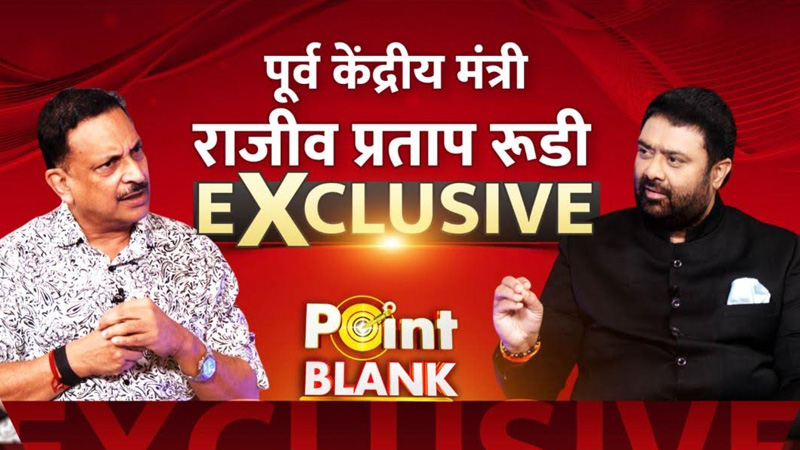
    MUMBAI: It was no political tea break on Point Blank, it was all straight talk. Senior BJP leader and former union minister Rajiv Pratap Rudy declared that the people of Bihar have already made up their minds in favour of the NDA, as he joined journalist Deepak Chaurasia for an exclusive interview on Live Times’ flagship prime-time show Point Blank.

    Confident and composed, Rudy claimed the alliance was poised for a comfortable victory in the upcoming state polls, adding that “the mood on the ground is clear and consistent.”

    Live Times founder Dilip Singh, said the episode aims to bring a “fresh and factual perspective” to the political narrative ahead of the Bihar elections. “Point Blank isn’t about sensationalism; it’s about hearing the truth directly from the source,” he noted.

    Viewers can catch the full interview on 5 October at 8 PM exclusively on Live Times, India’s first global multicast news hub, available on DD Free Dish (100), Tata Play (539), Airtel Digital TV (385), Dish TV (665), Sikka Cable (519), and Jio TV (359).

    The show can also be streamed live on the Live Times website and social platforms including Youtube, Facebook, Instagram, and X.

    Because when it comes to Bihar’s ballot buzz, Live Times promises exactly what it stands for: complete truth, whatever it takes.

  • Asianxt’s Mood of the Nation Survey shows advantage BJP in Lok Sabha Polls

    Asianxt’s Mood of the Nation Survey shows advantage BJP in Lok Sabha Polls

    Mumbai: The forthcoming Lok Sabha Elections are set to be a litmus test not just for the Bharatiya Janata Party but also, more importantly, for the Opposition. The INDI alliance is squaring off against Prime Minister Narendra Modi and the collective might of the National Democratic Alliance.

    The mega Mood of the Nation Survey conducted digitally by the Asianxt News Network shows that the Opposition has quite an uphill battle on its hands in the forthcoming elections. The extensive survey was conducted by Asianxt News Network’s digital platforms in English, Hindi, Malayalam, Kannada, Tamil, Telugu, Bangla, and Marathi between March 13 and March 27 with a massive sample size of more than 7,59,340 respondents.

    According to the survey, an overwhelming 51.1 percent of the respondents believe that the Narendra Modi government’s decision to notify the Citizenship Amendment Act rules will positively impact the BJP’s election prospects.  A further deep dive revealed that in the Hindi heartland 30.04 percent cited the fulfilment of the Ram Mandir promise as the Modi government’s biggest achievement.

    As per the poll, Narendra Modi was voted as the top choice for the Prime Minister’s post with a majority vote of  51.06 percent.

    A notable insight that emerged from the survey was that voters have shed the decades-old practice of falling for freebies and populist promises. An overwhelming 80.5 percent of the respondents stated that development — not caste dynamics, candidate profile, or freebies — will be the factor that determines their vote.  The survey significantly highlighted that 60.33 percent of respondents — even those in states not governed by the BJP — believe that the INDI alliance will not be able to overpower the Modi wave in the 2024 Lok Sabha Elections. The data revealed that 48.24 percent of the respondents believed that the Opposition’s biggest failure was three-pronged — lack of vision, lack of leadership, and having too many leaders with Prime Ministerial ambitions.

    The survey also stated that more worrying prospects lie ahead for the Congress, which has, in recent weeks, seen a spate of resignations. It revealed that 54.76 percent of the respondents believe that former Congress president Rahul Gandhi’s Bharat Jodo Nyay Yatra will not improve the party’s prospects in the forthcoming Lok Sabha Election 2024.

    When asked in specific terms about who the respondents thought was better suited to govern India for the next five years, the mandate was one-sided with 78.6 percent opting for an NDA government while 21.4 percent rooted for the INDI alliance.

    The 2024 Indian General Elections are set to commence on April 19 and will be conducted in seven phases till 1st June 2024, with the results scheduled to be announced on 4th June.

    Asianxt Digital Technologies Pvt. Ltd. chairman Rajesh Kalra shared his takeaways from survey, stating, “Mood of the Nation clearly indicates that Indians from across the length and breadth of our country are taking a decisive stance going into this General Election. The survey is also testament to the reach and quality of Asianxt’s diverse audience base. Just look at the responses to the question on caste dynamics, candidate profile or whether freebies or development play a larger role in your vote. Responses were overwhelmingly in favour of development over gimmicks. It shows the maturity and coming of age of our digital readers.”

    Asianxt Digital Technologies Pvt. Ltd. CEO Neeraj Kohli added, “Asianxt’s flagship digital news portal asianetnews.com has always been at the forefront of capturing the pulse of India. The depth of participation in the Mood of the Nation survey is testament to an engaged electorate restless for the nation’s continuing rise as a global leader. The survey paints a vivid picture of the varied aspirations of a Rising Bharat and its citizens. This is the one of many such initiatives that Asianxt will bring to its audiences through the election season.”

  • If Lok Sabha polls are held now, Modi led NDA will witness landslide victory: India TV opinion polls

    If Lok Sabha polls are held now, Modi led NDA will witness landslide victory: India TV opinion polls

    New Delhi: India TV has predicted that if Lok Sabha elections are held now, prime minister Narendra Modi-led National Democratic Alliance (NDA) can register a landslide victory on 362 Lok sabha seats out of a total of 543. The prediction is made following a nationwide opinion poll by India TV-Matrize News Communication.

    The results of the survey titled ‘Desh Ki Awaaz’ (Voice of the Nation) were telecast on India’s No. 1 news channel India TV on July 29 at 4 p.m.

    According to the survey, Congress-led United Progressive Alliance (UPA) is projected to win only 97 lok sabha seats if general elections are held now, with ‘Others’ including small, regional parties and independents projected to win 84 seats.

    The survey says, NDA is projected to get 41 per cent votes, UPA may get 28 per cent and others 31 per cent votes, if elections are held now.

    Asked about their first choice for Prime Minister, 48 per cent said they would want to see Narendra Modi again as PM. Modi was followed by Rahul Gandhi with 11 percent, Mamata Banerjee 8 percent,  Sonia Gandhi 7 percent,  Mayawati 6 percent, Sharad Pawar 6 percent, and Arvind Kejriwal 5 percent, Nitish Kumar 4 percent, K Chandrashekhar Rao 3 pcercent and Priyanka Vadra with 2 percent.

    Asked who is the strongest political opponent of Modi, 23 percent respondents favoured Rahul Gandhi, while 19 percent opted for Arvind Kejriwal. 11 per cent favoured Mamata Banerjee, and 8 per cent  each opted for Nitish Kumar and Sonia Gandhi.

    The India TV-Matrize Opinion Poll ‘Desh Ki Awaaz’ was conducted from 11-24 July, in 136 out of 543 parliamentary constituencies of India with a sample size of 34,000 respondents, among whom 19,830 were males and 14,170 were females.

    The state-wise break-up given in the survey makes interesting reading.

    In the most populous state Uttar Pradesh, NDA may win a whopping 76 out of 80 Lok sabha seats, with UPA and others projected to win only two seats each. In Bihar, NDA may win 35 out of a total of 40 seats, and the UPA may win five seats.

    In Maharashtra, NDA may win 37 out of a total 48 lok sabha seats, while non-BJP opposition may win the remaining 11 seats.

    The ruling DMK-led UPA in Tamil Nadu is projected to win 38 out of a total of 39 seats, leaving the lone remaining seat to NDA. In LDF-ruled Kerala, the non-BJP opposition can sweep all the 20 Lok sabha seats in the state.

    In TMC-ruled West Bengal, Mamata Banerjee’s Trinamool Congress is projected to win 26 out of a total of 42 seats, with NDA projected to win 14 and UPA two.

    According to state-wise break up given by the survey agency, Gujarat has total 26 seats out of which NDA can get 26 and UPA 0. While in Maharashtra, there are total 48 seats, out of which NDA can get 37 and UPA 11.

    Goa has total 2 and both will be named to NDA. Rajasthan has total 25 and NDA will get all 25. Madhya Pradesh has total 29, NDA can get 28 and UPA may get 1.  Chhattisgarh has total 11 out of which NDA may get 10 and UPA 1.

    Below is the seat wise prediction for all the states.

    West Bengal: Total 42, NDA 14, UPA 2, Others (TMC) 26.

    Bihar: Total 40, NDA 35, UPA 5.

    Jharkhand: Total 14, NDA 13, UPA 1.

    Odisha:Total 21, NDA 11, UPA 2, Others (includes BJD) 8.

    Himachal Pradesh: Total 4. NDA 4.

    Punjab: Total 13, NDA 3, UPA 3, Others (includes AAP) 7.

    Haryana: Total 10, NDA 9, UPA 1.

    Jammu & Kashmir, Laddakh: Total 6, NDA 3, UPA 0, Others 3.

    Delhi: Total 7, NDA 7, UPA 0, Others 0.

    Uttar Pradesh: Total 80, NDA 76, UPA 2, Others 2.

    Uttarakhand: Total 5, NDA 5, UPA 0.

    Telangana: Total 17, NDA 6, UPA 2, Others (includes TRS) 9.

    Andhra: Total 25, NDA 0, UPA 0, Others (includes YSRCongress) 25.

    Karnataka: Total 28, NDA 23, UPA 4 Others 1.

    Tamil Nadu: Total 39, NDA 1, UPA(includes DMK) 38, Others 0.

    Kerala: Total 20, NDA 0, UPA 20, Others 0.

    Tripura: Total 2, NDA 2, UPA 0.

    Assam: Total 14, NDA 11, UPA 1, Others 2.

    NE states: Total 9, NDA 7, UPA 1, Others 1.

    Rest UTs:Total 6, NDA 4, UPA 2, Others 0.

  • MIB addresses Congress MP Manish Tewari’s query on govt’s ad spends

    MIB addresses Congress MP Manish Tewari’s query on govt’s ad spends

    MUMBAI: Congress MP Manish Tewari, asked the Ministry of Information and Broadcasting (MIB) to reveal details about the yearly amount spent by the Government of India (GOI) on print, broadcasting, social media and outdoor advertisements between 26 May 2014 and 30 September 2019 on 29 November. He also has asked for details about the amount spent on ads in foreign media.

    Tewari inquired about the Government’s advertising share in the revenue streams of the top 20 Indian media firms between 04 April 2014 and 09 September 2014.

    MIB minister Prakash Javadekar replied “The Bureau of Outreach and Communication (BOC) releases notices, tenders, auctions, recruitments, etc. and also undertakes awareness campaigns and dissemination of information about the government schemes and programmes through various media.”

    Javadekar wrote in his reply that the details about the release of advertisements on various media between the said dates are available on BOC’s website.

    He explained that the revelation of per sq cm rate of ads in print media has increased from Rs. 42.31 to Rs. 62.13, but the average per year print media space of advertisements given by the BOC between FY 2014-15 and 2018-19 has reduced during NDA’s rule from Rs. 11.88 crore sq cm to Rs. 10.95 crore sq cm in UPA II rule between FY 2009-10 and 2013-14.

    Javadekar lastly said that GOI does not maintain details about the Indian media companies. He also emphasised that the Ministry does not issue advertisements in foreign newspapers and TV channels.

  • ABP News’ Desh ka Mood survey projects NDA short of majority

    ABP News’ Desh ka Mood survey projects NDA short of majority

    MUMBAI: Desh Ka Mood, leading election programming of ABP news, today released the survey results done by CVoter. The timeline of the survey was from 1st Week Feb 2019 to 1st Week March 2019 spread across PAN India. The survey finding showcased that the Balakot strikes have made BJP’s core voters happy and repositioned the party for neutral voters, putting other opponents on defensive position. This entire episode has helped BJP consolidate its position just before the general elections with Prime Minister taking a central role as a protagonist. Survey result also shows that PM Modi is the first PM after Indira Gandhi to attack sovereign Pakistani territory.

    Mr. Avinash Pandey, CEO, ABP News Network said, “We at ABP News Network have pioneered the art of bringing well researched and thoroughly analyzed facts that provide a holistic perspective to the viewers. The trends presented by this edition of ‘Desh Ka Mood’ highlight the changing dynamism in the pitched political battle for the impending union elections 2019. The paradigm shift shows rhetorical hoopla and the changing mood of the nation after the Pulwama attack and the Balakot air stikes on POK by the Indian Air Force. This ‘Desh Ka Mood’ offers the current clear image of the political scenario within the country and the intricacies that are indicative of a hotly contested election.”

    He further added, “Desh Ka Mood not only offers a decisive perspective but also engages the discerning audience. ABP News Network has been steadfast in bringing this entire drama to the people and accentuated their entire comprehension of this political grandeur from the largest democracy in the world.”

  • ABP News releases results of ‘Desh ka Mood’ survey

    ABP News releases results of ‘Desh ka Mood’ survey

    MUMBAI: Desh Ka Mood, leading election programming of ABP news, today releases the survey results done by CVoter, the timeline of the survey was October 2018 with over 15463 respondents spread across Pan India. The survey finding showcased that If the Lok Sabha Elections are held today, the NDA is likely to poll 38% votes followed by UPA with 26% votes at all India level.

    Mr. Avinash Pandey, COO, ABP News Network said, “Riding on the unmatched and innovative programming, ABP news is a leader and the most preferred Hindi news channel when it comes to election. Our endeavor has always been to keep our audiences updated with the current situation on the elections along with a detailed analysis of the latest vote and seat share.”

    He further added, “Staying ahead of the industry, ABP started the very first show of 2019 elections on January 1st, 2018, being the first one to set a benchmark in setting decisive trends in terms of covering and engagement during the elections. 

    Mr. Yashwant Deshmukh, Founder, CVoter, “It the most transparent and elaborate Survey Research exercise taken up by CVoter and ABP together, we are putting across all possible permutations and combinations together for our audience. Our Audience knows the best, and we are given them a detailed analysis on the upcoming elections 2019. #DeshKaMood is not only reading the public perception across the country, but also for the first time in Indian TV history, opening the Public participation in analyzing the Elections 2019, which arguably are going to be the most critical elections contested in recent times. 

    POLITICAL EQUATIONS: AS ON TODAY (Basis Oct 2018 data):

    If the Lok Sabha Elections are held today, as per the CVoter Tracker, the NDA is likely to poll 38% votes followed by UPA with 26% votes. With one single big state of Uttar Pradesh hanging in balance, it could single handedly make or break the national numbers.

    · If the much hyped MGB (Mahagathbandhan) of SP+BSP actually materializes, then this could translate into national tally of 261 seats for NDA and 119 seats for the UPA at the moment. The SP+BSP tie up alone could snatch 44 seats in Uttar Pradesh; bring the current NDA tally to less than majority mark.

    · But if Mayawati walks away from the much talked about MGB, then this would result in another NDA sweep, with BJP winning as many as 70 seats in UP alone taking the probable NDA tally to 300 seats, UPA at 116 and rest all others having a combined tally of 128 seats only. In such a scenario, within the NDA, the BJP is likely to win 270 seats while NDA allies are likely to win 30 seats in total. While in the UPA, the Congress is likely to win 89 seats on its own and 27 seats is the potential tally of UPA allies.

  • Govt to help revitalise DD under ‘autonomous Prasar’, dubs censors as ‘facilitators’ within law

    Govt to help revitalise DD under ‘autonomous Prasar’, dubs censors as ‘facilitators’ within law

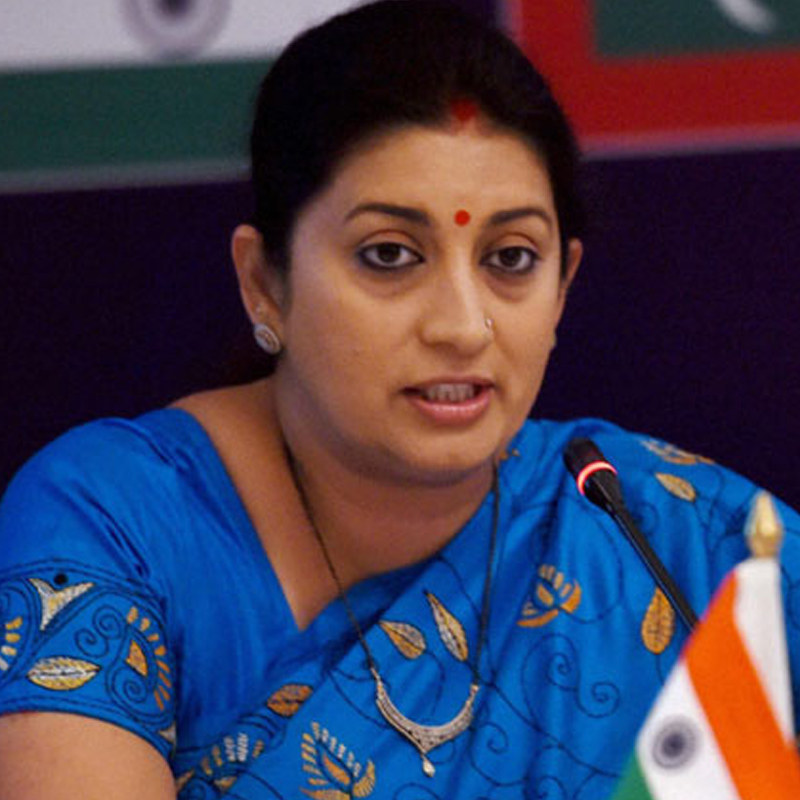
    MUMBAI: Union information and broadcasting minister Smriti Irani on Friday said the government saw agencies including the Censor Board “as facilitators” within the ambit of the law. Irani was speaking at a World Economic Forum-India Economic Summit session moderated by film maker Karan Johar in New Dlhi.

    She added that the government would consider a suggestion to help bring out a television series on freedom fighters to be telecast on the pubcaster Doordarshan.

    Defending the central government on demonetisation and the way Good and Services Tax (GST) regime was implemented, she said that the NDA was voted to power to change the status quo by taking difficult decisions. She said that those decisions were taken with a view to simplify the tax regime, increasing tax compliance, widening the tax base and increasing productivity.

    Revitalising Doordarshan: At an earlier event — CyFy 2017, by Observer Research Foundation, Irani had said that the government was planning to revitalise Doordarshan. She spoke of the government’s problems in improving the functioning of the Doordarshan as it was under the jurisdiction of an autonomous body — the c
    However, Irani made it clear that she would also like the Doordarshan to be a world-class channel which Indians and the diaspora would be proud of.

    The government, the minister said, was also planning to promote positive storytelling, and added that it would promote the film “Lunchbox” at the upcoming Goa International Film Festival. India, she said, had several good writers, actors, and other creative artistes capable of making world-class films, but the problem arose when the producer looked at the balance sheet.

    The minister opined that the social media by and large had brought balance with the main media, since it could criticise biased articles and commentaries in newspapers which was not possible a few years ago. She agreed with the Swedish prime minister Carl Bildt who had said: “The norms and values of the internet should be the values and the norms of society.”

  • Guest Column: The ‘make or break’ budget

    Guest Column: The ‘make or break’ budget

    The recent cash ban has sucked a lot of momentum out of one the world’s fastest growing economy. Finance Minister Arun Jaitley is meticulously examining ways which can boost the slumping economy, as a result of s. No budget is effortlessly manageable, but 2017 is certainly taking challenges to a new high with several global and national factors to take note of.

    Arun Jaitley should be immaculately prepared as this is one of the most awaited budgets ever, in the history of India. The fourth budget of the NDA term, this budget demands to be the beautiful balance of crisis management and future prospectus. The government, a couple of months ago was of the notion that they will be able to reap a humongous amount of money as unreturned old currency notes. In the government’s perspective, this sum could have been later invested in infrastructural development along with other progressive measures. This plan seems to have misfired with a huge chunk of ‘unamounted’ currency finding its way back to the banks. This concern has to be dealt with caution, immediately.

    One factor that can be attributed to the demonetisation effect is the increased collection of direct taxes. This may further culminate in more of such fraudulent cases giving into the pressure and larger chunks of money being deposited in the banks as some kind of income.

    Expectations are riding high as government may benefit the salaried class by increasing the margin of the income tax slab. Taking into consideration the existing miniature base of the tax payers in the country, many experts have warned the government against taking such a move.

    The government clearly has to strike a balance between staying loyal to the fiscal deficit roadmap and borrowing large amounts to spend on improving the economy. As a nation that’s pacing towards becoming a global power, the minister will have to bring down the fiscal deficit to three per cent of GDP in FY18 to maintain the stability. Many have observed based on the current scenario that the government may announce a target of 3.5 per cent which is slightly more achievable.

    By far, the hardest challenge would be to make up for the crack caused by the private sector’s unwillingness to invest in the economy due to debt-heavy balance sheets and insufficient demand. Also, scrapping the fiscal plans would require exaltation by rating agencies will need time to be set up. The alternative would not be a cakewalk either; not loosening the grip on fiscal deficit could weaken demand in the economy more.

    For capital markets, it’s a mixed scenario. On a positive note, there might be some extra incentives for new investors in equity markets. But as a flipside, it is being assumed that the government may increase the threshold for long term capital gains to three years from the current one year. The current system favors long term investors as they do not have to pay long term capital gains when they sell. This privilege is often taken advantage of by several high net worth individuals to launder their unaccounted income, by counterfeiting long term capital gains.

    Prime Minister Narendra Modi mentioned that the financial markets must make a fair contribution to nation-building through taxes and we are looking forward to a revolutionary budget that’s inclusive of all.

    public://Untitled-3_11.jpg

    (Santosh Nair is the editor of Moneycontrol. The views expressed here are personal, and Indiantelevision.com need not necessarily subscribe to them)

  • Guest Column: The ‘make or break’ budget

    Guest Column: The ‘make or break’ budget

    The recent cash ban has sucked a lot of momentum out of one the world’s fastest growing economy. Finance Minister Arun Jaitley is meticulously examining ways which can boost the slumping economy, as a result of s. No budget is effortlessly manageable, but 2017 is certainly taking challenges to a new high with several global and national factors to take note of.

    Arun Jaitley should be immaculately prepared as this is one of the most awaited budgets ever, in the history of India. The fourth budget of the NDA term, this budget demands to be the beautiful balance of crisis management and future prospectus. The government, a couple of months ago was of the notion that they will be able to reap a humongous amount of money as unreturned old currency notes. In the government’s perspective, this sum could have been later invested in infrastructural development along with other progressive measures. This plan seems to have misfired with a huge chunk of ‘unamounted’ currency finding its way back to the banks. This concern has to be dealt with caution, immediately.

    One factor that can be attributed to the demonetisation effect is the increased collection of direct taxes. This may further culminate in more of such fraudulent cases giving into the pressure and larger chunks of money being deposited in the banks as some kind of income.

    Expectations are riding high as government may benefit the salaried class by increasing the margin of the income tax slab. Taking into consideration the existing miniature base of the tax payers in the country, many experts have warned the government against taking such a move.

    The government clearly has to strike a balance between staying loyal to the fiscal deficit roadmap and borrowing large amounts to spend on improving the economy. As a nation that’s pacing towards becoming a global power, the minister will have to bring down the fiscal deficit to three per cent of GDP in FY18 to maintain the stability. Many have observed based on the current scenario that the government may announce a target of 3.5 per cent which is slightly more achievable.

    By far, the hardest challenge would be to make up for the crack caused by the private sector’s unwillingness to invest in the economy due to debt-heavy balance sheets and insufficient demand. Also, scrapping the fiscal plans would require exaltation by rating agencies will need time to be set up. The alternative would not be a cakewalk either; not loosening the grip on fiscal deficit could weaken demand in the economy more.

    For capital markets, it’s a mixed scenario. On a positive note, there might be some extra incentives for new investors in equity markets. But as a flipside, it is being assumed that the government may increase the threshold for long term capital gains to three years from the current one year. The current system favors long term investors as they do not have to pay long term capital gains when they sell. This privilege is often taken advantage of by several high net worth individuals to launder their unaccounted income, by counterfeiting long term capital gains.

    Prime Minister Narendra Modi mentioned that the financial markets must make a fair contribution to nation-building through taxes and we are looking forward to a revolutionary budget that’s inclusive of all.

    public://Untitled-3_11.jpg

    (Santosh Nair is the editor of Moneycontrol. The views expressed here are personal, and Indiantelevision.com need not necessarily subscribe to them)

  • India continues to be the second most economically confident nation: study

    India continues to be the second most economically confident nation: study

    MUMBAI: India continues to be the second most economically confident nation globally on the back of improved performance by industry and services sector, according to a report by global research firm Ipsos.


    According to the ‘Ipsos Economic Pulse of the World’ study, Saudi Arabia (94 per cent) solidified its position at the top of the national economic assessment in February 2015, followed by India (80 per cent), Germany (76 per cent), Sweden (73 per cent), China (71 per cent), and Egypt (61 per cent).


    The lowest average global economic assessment this month is in Italy (eight per cent). Close behind are France (10 per cent), Brazil (12 per cent), Spain (12 per cent), South Korea (13 per cent) and Hungary (16 per cent).


    One in two (50 per cent) Indians believe that the local economy, which impacts their personal finance is good, a sharp drop of five points.


    Indians are very hopeful that the Narendra Modi-led NDA government will continue making progress on its domestic reforms agenda and encourage investments that will trigger economic growth and create more jobs; with more than six in ten (64 per cent) people expecting that the economy in their local area will be stronger in next six months, a rise of two points making India the most optimistic country globally.


    “The Indian economy is reviving, aided by positive policy actions by the government that has improved investors’ confidence and lower global oil prices. However, India needs to revitalize the investment cycle and fast-track structural reforms to speed up growth further,” said Ipsos managing director – India Amit Adarkar.


    “India – Asia’s third-largest economy is expected to grow faster than China in the next few years backed by strong GDP growth, low inflation and stable development focused government at the center,” added Adarkar.


    The online Ipsos Economic Pulse of the World survey was conducted in February 2015 among 18,235 people in 24 countries.


    Starting the New Year on a positive note, the average global economic assessment of national economies surveyed in 24 countries is down one point as 40 per cent of global citizen’s rate their national economies to be ‘good’.


    Countries with the greatest improvements in this wave: Saudi Arabia (94 per cent, +7 pts.), Belgium (39 per cent, +6 pts.), Japan (26 per cent, +3 pts.), Argentina (24 per cent, +3 pts.), Mexico (22 per cent, +3 pts.), France (10 per cent, +3 pts.), Russia (28 per cent, +2 pts.), Sweden (73 per cent, +1 pts.), South Africa (27 per cent, +1 pts.) and Spain (12 per cent, +1 pts.).


    Countries with the greatest declines: China (71 per cent, -9 pts.), Egypt (61 per cent, -6 pts.), Germany (76 per cent, -5 pts.), Brazil (12 per cent, -5 pts.), Canada (59 per cent, -4 pts), the United States (47 per cent, -4 pts.), Australia (56 per cent, -2 pts.), Great Britain (44 per cent, -2 pts), Turkey (43 per cent, -2 pts), and Poland (25 per cent, -1 pts.).


    Saudi Arabia (68 per cent) regains the top position in the local economic assessment, which impacts their personal finance. Sweden (59 per cent) is in the distant second, followed by China (53 per cent), Germany (53 per cent), Israel (51 per cent), India (50 per cent) and Canada (40 per cent). Small minority assess their local economy as ‘good’ in Italy (11 per cent) followed by Hungary (12 per cent), South Korea (13 per cent), Spain (13 per cent), France (15 per cent), Japan (15 per cent) and Mexico (15 per cent).


    India (64 per cent) remains in the lead of the future outlook assessment, followed by Saudi Arabia (60 per cent), Brazil (51 per cent), China (44 per cent), Egypt (44 per cent), Mexico (38 per cent) and Argentina (32 per cent). Once again, only a fistful in France (five per cent) expect their local economy to be strong six months from now, followed by Israel (eight per cent), Belgium (10 per cent), Sweden (10 per cent), Hungary (11 per cent), South Korea (11 per cent), Italy (12 per cent), Poland (12 per cent) and Japan (14 per cent).