Tag: NBDA

  • Rajat Sharma takes helm of India’s top news broadcasters’ body

    Rajat Sharma takes helm of India’s top news broadcasters’ body

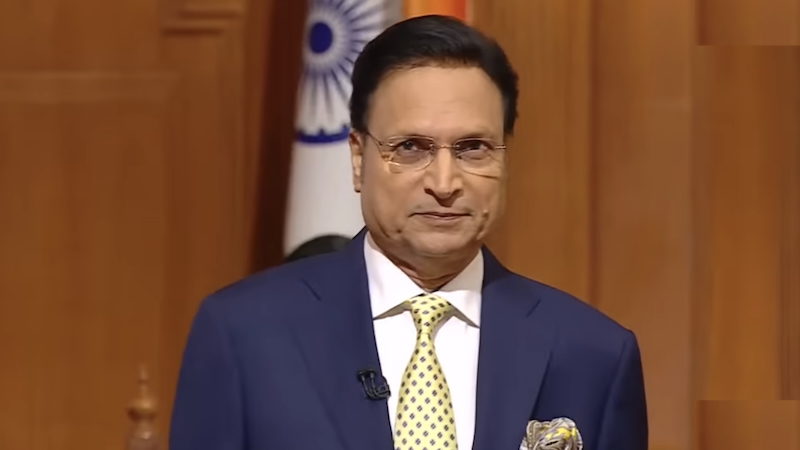
    NEW DELHI: Rajat Sharma, the seasoned television news anchor and promoter of India TV, has been unanimously elected president of the News Broadcasters & Digital Association (NBDA) for 2025-26. The appointment, announced at the organisation’s board meeting on 19 September positions him at the head of India’s most influential media news lobbying group as the industry navigates mounting regulatory pressures and fierce competition from digital platforms.

    Mathrubhumi Printing & Publishing , managing director M.V. Shreyams Kumar will serve as vice-president, whilst News24 Broadcast India chairperson and managing director Anuradha Prasad Shukla takes the honorary treasurer role. Both appointments were unanimous.

    The NBDA board includes heavyweights from India’s media landscape: Rahul Joshi of Network18 Media & Investments, Kalli Purie Bhandal from TV Today Network, and Anil Kumar Malhotra of Zee Media. Other members are Dhruba Mukherjee (ABP Network), I. Venkat (Eenadu Television), Rahul Kanwal (New Delhi Television), Mahesh Kumar Rajaraman (Sun TV Network), and Rohit Gopakumar Velloli from Bennett Coleman & Co.

    Annie Joseph remains secretary general, providing continuity as the association faces an increasingly complex media environment marked by regulatory scrutiny and the relentless rise of streaming platforms and independent news influencers.

  • News broadcasters press Sitharaman for GST relief on ads and credits

    News broadcasters press Sitharaman for GST relief on ads and credits

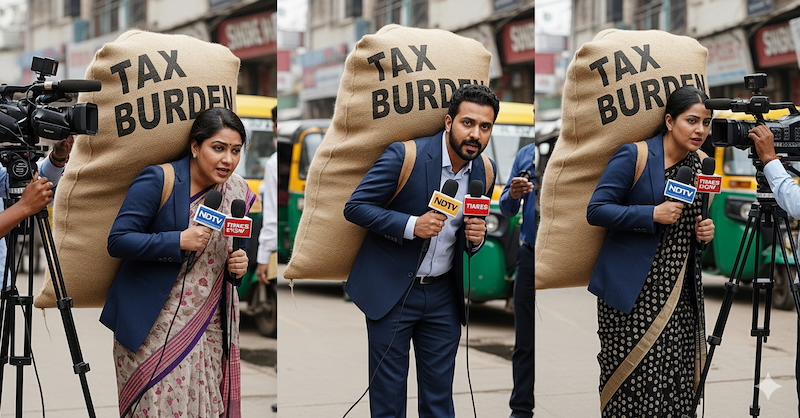
    NEW DELHI: India’s news broadcasters have taken their tax fight to the top. The News Broadcasters & Digital Association (NBDA), led by president Rajat Sharma, has written to finance minister and GST Council chair Nirmala Sitharaman, warning that the current goods and services tax regime is throttling the financial health of television and digital news outlets.

    In its 28 August representation, NBDA said the system of taxing advertising sales at the point of invoicing, rather than when payments are actually received, is crippling cash flow. Broadcasters, it noted, are often left waiting months for money from government departments, state agencies, PSUs and even the government’s own ad-buying arm DAVP. Yet GST has to be coughed up immediately, leaving newsrooms to carry the burden of taxes on income not yet in hand.

    The association also demanded a rethink of Section 17(5) of the GST Act, which denies input tax credit on everyday operational spends such as vehicle hire, catering, employee insurance and even routine services like beauty treatments required for on-air talent. NBDA argues these restrictions make little sense for an industry that runs on people, mobility and presentation.

    Sharma said the relief sought is not a handout but a rational correction. “The changes will align taxation with actual revenue flow and remove arbitrary blocks on legitimate business costs,” the letter states.

    The news business, already squeezed by weak advertising growth, digital disruption and rising costs, says it can ill afford such tax distortions. NBDA’s blunt message to North Block: fix the GST rules, or risk further erosion of an industry vital to India’s democracy.

  • NBF questions Barc’s opt-out methodology; demands release of recent historical data

    NBF questions Barc’s opt-out methodology; demands release of recent historical data

    Mumbai: The News Broadcasters Federation (NBF) has written to Broadcast Audience Research Council (Barc) expressing its apprehensions around the manner in which the agency is to resume ratings on 17 March. In a letter dated 9 February, NBF has alleged that the move indicates “continued favouritism to select few channels that would reflect in skewed audience measurement numbers and fabricated industry representation when the data is planned to be released on March 17, 2022.”

    Barc’s communication to its subscribers on 7 February comes barely a week after detailed discussion with channels of NBDA, which the NBF claimed “are of conflict of interest on this issue. NBF, as the largest new broadcasters’ industry association protecting the business interest of news channels, has not been consulted despite several requests on the same.”

    The association has also expressed doubt regarding the opt-out methodology being used by Barc having an official seal of approval from the MIB.

    “The MIB had directed Barc to release the data with ‘immediate effect’ on a four week rolling over basis including the data for the preceding three months ‘for fair and equitable representation of true trends’. Barc, however, has chosen to completely undermine the government’s order, and in violation, is now proceeding with an opt-out option. Ratings are relative within a genre. The opt-out option is a direct contravention and renders completely redundant the MIB direction of three-month ratings. It is a way to conceal even recent historical data,” NBF said.

    The association argued that the decision to withhold data will deprive advertisers of complete clarity on how news viewership had been during the dark period and will hinder the post-evaluation of their campaigns. “News channel viewership is measured in market share terms. Any channel opting out disrupts the true representation of the market share. Barc by providing an opt-out option is doing an extreme disservice to the entire industry including advertisers and advertising agencies as well.”

    Voicing concern regarding the date of ratings release, NBF noted that the MIB order directing the ‘immediate’ release of ratings came on 12 January. Releasing the data on 17 March will not give a ‘fair and transparent picture of the actual viewership.’

    “Even if the audience data is released on a four-week rolling average basis on 17 March, final TRPs will skew the average since it would only reflect a one-off major event of the assembly elections and the ensuing counting day to five states, including Uttar Pradesh. The day chosen for the resumption of ratings will not give a fair and transparent picture of the actual viewership across the stakeholders – trusted viewers, advertisers and advertising agencies.”

    In an earlier letter dated 28 January, NBF had urged Barc to resume TV ratings for willing news channels, starting 3 February. Its member news channels had, in fact, demanded the release of ratings for the entire blackout period of 16 months.

    “Even during the dark period – October 15 2020 until date – audience data is being collected and tabulated for all genres including those with a lesser sample size than news channels. So, in all fairness, it should be released as they are, with immediate effect and as directed by the MIB,” stated the letter dated 9 February.

    The NBF has also questioned Barc’s silence on the systems that have to be put in place to correct the impact of landing pages, which is a major concern for the industry. “Barc needs to openly declare the outliers and the measures that are being taken to prevent the spike in ratings due to landing pages,” it observed.

  • TV9 withdraws from NBDA over news ratings issue

    TV9 withdraws from NBDA over news ratings issue

    Mumbai: News broadcaster TV9 Network has announced its decision to withdraw its membership of News Broadcasters and Digital Association (NBDA) over the latter’s stance on the issue of resuming TV news ratings.

    Just a day after the government gave its go-ahead to Barc India to release the ratings, NBDA called upon the TV rating agency to take “some additional measures” before releasing the data. This included steps to make the systems more transparent, robust, and reliable, as well as to ensure that there is no manual intervention at any step in the rating process.

    In his letter to the association on Friday, Das said, “We, TV9 network, a full member of NBDA, do not subscribe to this view of NBDA Board. This seems to be a viewpoint of select members of the association and certainly not that of the entire NBDA.” He also wrote an open letter expressing his disappointment over the association’s alleged attempts to stall the ratings by raising doubts over the credibility of the Barc data.

    On Wednesday, the information and broadcasting (I&B) ministry directed Barc India to immediately resume news ratings which had been hanging fire since October 2020. The decision to resume ratings came at the back of sustained efforts of several news channels, working with various stakeholders for over one year.

    “As a full member of NBDA, we have tried to reason with NBDA repeatedly but to no avail. I am not sure whether the association actually wants the ratings to resume at all. The latest communication only makes a bad situation for the news industry worse” he wrote further, “. On the contrary, NBDA has been expressing views in public, on the most critical issue pertaining to the news genre, which I am completely in disagreement with. Therefore, I am left with no option but to withdraw from NBDA with immediate effect.”

    According to Das, the stalling of ratings has “imperiled the news genre viability from a revenue perspective”, which he termed as an “unfair trade practice”. “The news genre is being put to disadvantage as more and more advertisers threaten to walk out. Here again, genuine interests of the news TV industry are being compromised,” he wrote.

    TV9 Network is also a member of the News Broadcasters Federation, another representative body of broadcasters that had been imploring the government to resume TRPs for news channels for over a year.

    Also read : News genre ratings: Broadcasters question ‘curious delay’; NBDA calls for additional measures

  • News genre ratings: Broadcasters question ‘curious delay’; NBDA calls for additional measures

    News genre ratings: Broadcasters question ‘curious delay’; NBDA calls for additional measures

    Mumbai: Day after the government gave its long-awaited approval to Broadcast Audience Research Council (Barc) India to release ratings for news channels, the News Broadcasters and Digital Association (NBDA) called upon the TV rating agency to take “some additional measures” before any ratings are released.

    In a statement released on Thursday, the association said that while it recognises that a number of reforms are being undertaken at Barc, there is “still room to make systems more transparent, robust and reliable”. The association, which had earlier termed the Barc ratings “unreliable”, further noted that Barc should also evaluate ways to enhance data security and ensure that there is no manual intervention at any step in the ratings process.

    “We hope before any ratings are released, these measures are in place,” stated NBDA, even as another industry association- News Broadcasters Federation (NBF) cried foul over the “unnecessary delay” in executing the orders. 

    “The audience viewership data is with Barc and withholding it despite clear instruction from the ministry, is not necessary. It should comply and release the ratings of news channels without any further delay. If there are news channels that don’t want ratings, they can be voluntarily exempted,” said NBF in a statement, highlighting that it was “disappointed.”

    The representative body of news broadcasters exhorted Barc to put an end to the severe challenge that the news genre was facing as advertising was deeply hurt in absence of any ratings, leading to a loss in revenue. 

    When will the news ratings finally be released?

    The statements come amid Barc India’s continued silence over the release of TRPs for news channels which have been in limbo since October 2020. While the I&B ministry has asked the TV measurement body to “release the news ratings with immediate effect” along with last three months’ data in a monthly format, it is yet to announce when it will publish the same.

    Queries sent to Barc India did not elicit any response till the filing of the report.

    On Wednesday, the I&B ministry directed the rating agency to resume news genre ratings on TV effective immediately on a four-week rolling average concept to ensure fair and equitable representation of true trends.

    Furthermore, the government also assured broadcasters that Barc has undertaken revision in its processes, protocols, oversight mechanism and initiated changes in governance structure, and revamped and tightened the access protocols for data. “Barc has indicated that in view of the changes undertaken by it, they are reaching out to related constituencies to explain the new proposals and are in readiness to actually commence the release as per the new protocols,” it stated further.

    NBDA says it stands vindicated

    Meanwhile, the NBDA also stated that it stands vindicated as the ministry has recognised the need for improvement, acknowledged the deficiencies, and the need to urgently increase sample size and systemic corrections. “The association will continue to work with all stakeholders on refining the Outlier Policy to eliminate statistical anomalies and increasing the sample size to strengthen the credibility of data,” it added further.

    The ministry’s go-ahead comes just weeks ahead of an intense election season in five states, including an electoral battle for India’s most populous state. However, with broadcasters continuing to spar over the issue, it remains to be seen how long the state of suspension will continue.

    The overhaul in the television rating system in India kick-started in October 2020 when Mumbai Police claimed in a press briefing that they probed a case of manipulation of TRPs and found some incriminating evidence. The police said the accused were allegedly bribing the households to keep a particular channel running, leading to several arrests, and FIRs against three news channels. The controversy which quickly turned into a political football for the broadcasters, with allegations and counter-allegation forcing Barc India to temporarily suspend the publishing of weekly data for news channels in October 2020, which hangs fire till date.

  • Rajat Sharma elected as president of NBDA

    Rajat Sharma elected as president of NBDA

    Mumbai: The News Broadcasters and Digital Association (NBDA) has elected Rajat Sharma as president at a meeting held on Monday. The board also elected ABP Network chief executive officer Avinash Pandey as vice president and Times Network managing director and chief executive officer MK Anand as honorary treasurer for the year 2021-22.

    The other members on the NBDA board include News24 Broadcast India chairperson-cum-managing director Anuradha Prasad Shukla; Mathrubhumi Printing and Publishing managing director MV Shreyams Kumar; TV18 broadcast managing director Rahul Joshi; Eenadu Television director I Venkat; TV Today Network vice-chairperson and managing director Kalli Purie; New Delhi Television editorial director Sonia Singh, and Zee Media chief executive officer – cluster 1 Sudhir Chaudhary.

    Formerly known as the News Broadcasters Association, the industry body had renamed itself after it decided to bring digital media news broadcasters within the membership of the association. The members at the EGM unanimously passed the modification in the name of the association and amendments to the memorandum and articles of association.

    “I am glad to inform the members that the ministry of corporate affairs, government of India have approved the new name and the amendments to the memorandum and articles of association,” said Rajat Sharma in a statement.

    The ministry of electronics and information technology notified the Information Technology (Intermediary Guidelines and Digital Media Ethics Code) Rules, 2021 (IT rules), thereby bringing digital media, including OTT platforms, digital news broadcasters, and news aggregators, for the first time, within the ambit of government supervision.

    The IT rules which have been framed to regulate digital media, not only lay down a code of ethics to be complied by digital news broadcasters but also establishes a three-tier grievance redressal mechanism to ensure observance of the same.

    Similarly, the ministry of information and broadcasting also notified the Cable Television Networks (Amendment) Rules, 2021(Cable Amendment Rules) to establish a three-tier complaint redressal structure to ensure observance of the Programme Code and Advertisement Code under the Cable Television Networks (Regulation) Act, 1995 and the Cable Television Networks Rules, 1994.

    “NBDA has challenged the constitutionality of both the IT rules and cable amendment rules in the Kerala high court on various grounds including on the grounds that the rules give the government authorities excessive powers to unreasonably and impermissibly restrict the freedom of speech and expression of the media under Article 19 (1)(a) of the Constitution. Interim orders were granted in favour of NBDA in both matters,” observed Sharma. 

    Despite several months having passed, the Broadcast Audience Research Council (Barc) ratings have not been restored as yet. “The NBDA board and Barc have had several rounds of discussions to ensure that reliable, credible, tamper-free data is made available to the news broadcasters,” said Sharma. 

  • News Broadcasters Association rechristens as News Broadcasters & Digital Association

    News Broadcasters Association rechristens as News Broadcasters & Digital Association

    Mumbai: News Broadcasters Association (NBA), the largest body of news broadcasters in the country, has decided to change its present name to ‘News Broadcasters & Digital Association’ (NBDA).

    NBA consists of the nation’s top-rated news channels and commands more than 80 per cent of news television viewership in India. With the media landscape has changed drastically due to technology, enormous choices have now become available to viewers to access content on various mediums and digital seems to be the future. NBA Board has decided to change the name of NBA to NBDA in order to reflect the addition of digital media news broadcasters as its members.

    “NBA has decided to bring within its purview digital media news broadcasters. In its new phase, with the inclusion of digital media news broadcasters, the NBA board has decided to change the name of the body from NBA to NBDA,” said NBA president Rajat Sharma announcing the decision.

    “I firmly believe that the NBDA will become a strong collective voice for both the broadcast and digital media. Along with commercial and regulatory issues, it will also enable the Association to defend the fundamental right of free speech and expression guaranteed to the media in the Constitution of India in a better manner,” Sharma added.

    The pride of the NBA has been the setting up of an independent self-regulatory body News Broadcasting Standards Authority (NBSA) 14 years ago. The NBSA has put in place a time-tested complaint redressal system and process, headed by eminent judges of the Supreme Court of India and eminent persons who have striven to improve broadcasting standards.

    NBDA board has decided that with the inclusion of digital media news broadcasters, the name of the self-regulatory body, NBSA be rechristened as ‘News Broadcasting & Digital Standards Authority’ (NBDSA).