|
A late player in the news game, Times Now sits at the top with its hard news stance and round-the-clock news focus.
The Mumbai terror attack coverage is where the tide turned in Times Now‘s favour as the older players ceded ground. Though it is still a close chase in the ratings race, the channel has stayed ahead at a time when the news genre is finding it difficult to expand.
Some critics have attributed the channel‘s success to its sensational treatment of hard news. Times Now Editor-in-Chief Arnab Goswami, the architect behind the channel‘s uprise, however, believes that the channel has stayed away from it and also kept a distance from the mixing of news and gossip.
For a channel that just completed four years, the bespectacled Goswami does not hesitate to take a point of view in an obvious case of right and wrong. “In the Ruchika case, we called Rathore a molestor DGP,” he argues. As he says, “to be unsure of news is not a virtue.”
In a candid interaction with Indiantelevision.com‘s Gaurav Laghate, Goswami shares his views on the definition of news, the relevance and importance of hard news vs sensationalism and the leadership of the channel he manages.
Excerpts: Yes, 26/11 increased our viewership share. We were No 1 even before that but the channel‘s consistent leadership gap grew from then on.
Many people believe that it‘s because of something different that we did during the terror attacks. I can‘t pinpoint at what we did differently because I was live all the time. So I can‘t give a comparative view. But yes, after that there has been an upsurge in our viewership.
If you look at all weeks after 2611, there would be about 60 weeks or so that have passed. And we have been number one in 99 per cent of the weeks since 26/11. What data are you quoting? Tam says in 25+ All India market, the competition is neck-to-neck… We take 25+ AB, 1 million-plus towns. This is the market that everyone considers when it comes to English news channels.
We are 13-14 per cent ahead of our closest competitor NDTV in this market, and we are very happy with this viewership figure. There is no competition in that sense.
We don‘t have to do it. Those who may have made mistakes would have to do it. We did not make any mistakes, so there is no question of making any change or taking any corrective step. But isn‘t the overall quality of news journalism declining? Quality keeps increasing. There is more news content today than there was 2-3 years back. The focus on hard news is coming back. Yes, there are lots of channels which show programmes not centred on hard news, but the excesses are fewer.
There is a strong code of conduct which seems to be working. So, all in all, I think the last 2-3 years have been good for the news channel industry. So you think NBA is the right body to tackle the issues of content regulation? Or is there a need for an independent body? I strongly believe that self-regulation is the only way out. Both the NBA (News Broadcasting Association) and the BEA (Broadcast Editor‘s Association), of which I am an active member, are the best forums to carry out that self regulation. There is no scope for slightest government interference in regulatory processes. And I think there is total unanimity amongst them.
‘Yes! I had a point of view in the Ruchika case. We called Rathore a molester DGP. Is that wrong? We called the killer of Francis Induwar a Maoist terrorist‘ Not government interference, but a body like OfCom (UK) may be? No. I think the way people are regulating right now is good enough. You don‘t need a new regulatory system. You don‘t have to reinvent the wheel. Self regulation is working, it should be encouraged and that‘s that.
I don‘t do sensationalism. I don‘t believe in sensationalism, so I don‘t want to discuss sensationalism as it has nothing to do with me.
But what is sensational and what is not is sometimes a matter of perception. For some people even covering the IPL may be sensationalism. These are subjective matters and I don‘t want to pass a sweeping judgment on it.
It is quite apparent to us in the Times Now newsroom that almost every other English news channel and several Hindi news channels follow us. I find it flattering.
What has changed is that with the leadership of Times Now, people in this country are given the news clearer, faster and more directly than any channel or group in the past has given them. People love that. Whether or not it will work for other channels to copy us, I don‘t know. But so far, it doesn‘t seem to be working.
I will say that Times Now has set totally new standards in news reporting, which some seem to be taking a cue from. And I am happy about that. Besides that news is news, definition of news does not change anywhere.
The USP of a news channel has to be news. I don‘t believe that getting 100 people to sit together and talk for 100 minutes is the job of a news channel. Some channels still do it.
In my view that is an antiquated approach. Some people believe that the town hall approach, where you get 100 people to sit and talk, is what a news channel should be doing. I don‘t think so.
So you come to Times Now; it‘s the only place among the news television channels in India today which has news every second, every minute. It works for us.
In 2007, when we hit the No. 1 spot for the first time, and within 15 months after entering the market, it was a major high point for me and my team.
The opportunity to make a real change in our society, and be part of a campaign that reopened the Ruchika case recently, personally was a very big high point.
I will not call 26/11 a high point, because it was not. It was a painful experience for all of us. But in terms of objectivity of our reporting, it was a high point. My reporters did not hype, did not over dramatize; they were straight forward, to the point and honest. And I think the difference showed. Professionally it was a high point, though personally it was a sad event for all of us.
And when we completed 2009, we won 50 weeks out of 52, it was a high point. You see, to win is good but to win decisively, like we did in 2009, and that too without any major news event besides the elections is a high point for us. For me, staying there is more important than getting there. It means a lot to me and my team. Biggest high point was that my core editorial team has supported me and stayed with me in every step since launch. Many of them are behind the camera, but they run the systems in the channel and help us stay No 1.
Oh! Dramatic changes… Times Now today and Times Now when it launched… In fact, there is a new thing happening daily on the channel. On an average, we have introduced over 200 changes, which may be in production style, graphics, shows, nature of reportage… it may vary. I am a great believer of innovation and I think one of the reasons we have won is because we have a very innovative team. But that‘s the beauty of our business which constantly enables us to change according to what‘s happening around us.
That‘s where we stand out from competition. They do the same and they look the same. But may be it‘s got to do with the youth and energy of Times Now and the average age of our team compared to competition. We have got far more energy and passion as compared to any of our competitors.
Aren‘t you disturbed that the news genre has shrunk as per Tam data? I am not concerned about the news genre. I am concerned about my share in the news genre. But what it means is that despite Times Now gaining share, the others collectively are losing. So the others should be worrying.
I am very pleased with our viewership trend, because it is just growing. If I go by latest Tam figures for the C&S 25+ AB market, we are averaging about 36-37 per cent channel share. But why is the news genre shrinking? I do not think news genre is shrinking. Everything is relative. The viewership of news channels is greatly dependent on news events. So when there is a major event, you may find a 25 per cent jump and it may not grow further till the next event. But it will not fall majorly. So it means that people who came to you largely stayed with you.
Now within this share, why Times Now is growing and why NDTV or CNN IBN and other channels are shrinking is something they should be worried about. My relative share is increasing week on week. My polynomial is showing an upward curve.
I don‘t think that people will accept gossip after some time. You cannot mix up news and gossip. And so it‘s best if we don‘t cross that line. A lot of gossip passes as news on many channels, but not on Times Now.
Hard news is what I believe in; it is the only thing that we do, and the only reason why Times Now is No. 1.
We do specific shows – The Newshour at the very critical 9 pm slot holds almost 60 per cent share. None of the other English news channels come close. Weekend shows like Total Recall is hugely successful. We have feature programming, but yes, I do not believe in diluting news with features.
To not take a position is not a virtue, to prevaricate is not a virtue, and to be unsure of news is not a virtue. You look at all the stories recently, and you ask yourself which channel do I remember? Answer is Times Now.
Take the Australian racial attacks, for instance. Nowhere my reporting was stilted or prejudiced. Similarly, the BT Brinjal case. To not talk about the health issues with BT Brinjal is not appropriate. Similarly, questions raised on RK Pachauri. To report the questions is not taking a position. So the reporting we do is transparent and honest. People see it and accept it. Let viewers decide.
If there is an obvious case of right or wrong, I can‘t pretend not to know what is right and what is not. And if in that situation, I prevaricate or chose to be silent, then that is wrong.
Yes! I had a point of view in the Ruchika case. We called Rathore a molester DGP. Is that wrong? We called the killer of Francis Induwar a Maoist terrorist. On the contrary, you should ask people, who do not call them Maoist terrorists, why they are not calling them that. I am stating the fact.
I am sure in what we do and my viewers are sure that Times Now will not deliberately keep the truth away from them.
It is a thin line but the challenge of our job is to be sure on which side of the line you are in. There is not a single story where people can say we did anything populist on Times Now.
My concern is not with my competitors but with my viewers. We have never done anything which is factually incorrect, ethically wrong, or journalistically compromised. And as long as we don‘t do any of these three, we don‘t need to explain where we stand.
Ours is not an investigative channel, it is a news channel. There is nothing called 100 per cent investigative channel, neither is Times Now, nor is any other channel. I am no expert in investigative journalism.
How much focus is on the website, timesnow.tv? We have a very successful website. And we are continuing to innovate on it. There is a lot of synergy between Timesnow.tv, Indiatimes and TimesofIndia.com.
We have large viewership through these synergies, which we continue to build and expand. And in the future, this is going to be a major thrust area for us. We are planning to increase and revamp our online content, reach and connectivity. This is the area we will be working a lot on in 2010.
It is not true. What we do on the news and what we do on the campaign Aman Ki Asha are not mutually contradictory. And we have done several shows on Aman Ki Asha, of which some have been the highest rated shows.
But it doesn‘t mean that we do not report on what Qureshi or Gilani say. Whether the peace process will really move forward or it is just symbolic – we do both. There is no contradiction in this. Does the network strength help? With campaigns like Aman Ki Asha, it does. It also gives us access to lots of quality content. And our news stories sometimes find space in Times of India, purely on merit of course. So there is a natural synergy. |
Tag: NBA
-

‘To not take a position is not a virtue’ : Times Now Editor-in-Chief Arnab Goswami
-
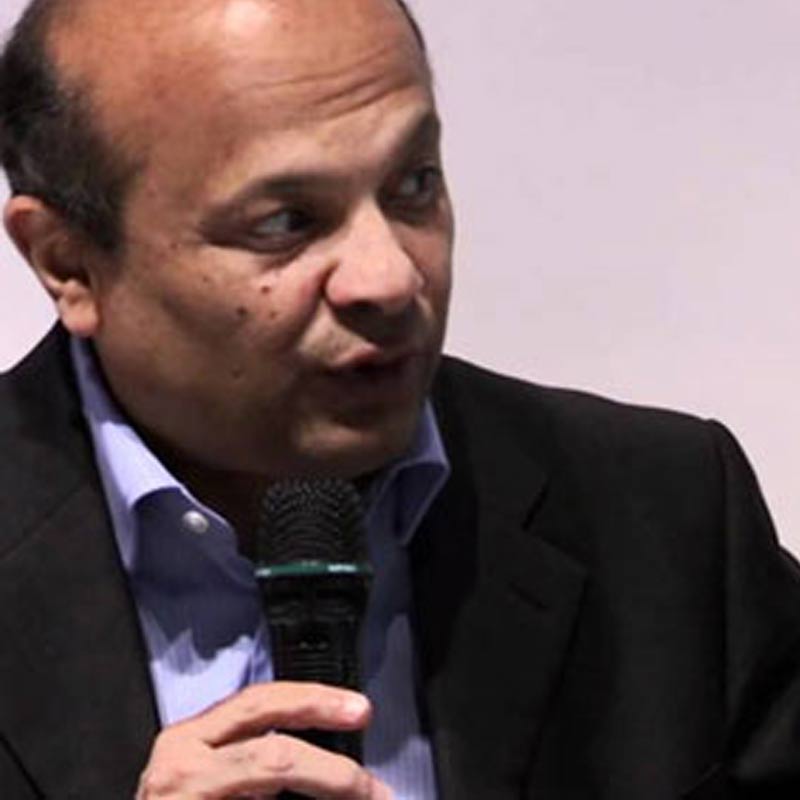
Sameer Manchanda is NBA president
NEW DELHI: IBN18 Broadcast Ltd joint managing director Sameer Manchanda has been elected President of the News Broadcasters Association (NBA) for the year 2009-10. He succeeds TV Today CEO G Krishnan, who has held the post since the formation of the NBA in 2007.
NDTV Group CEO KVL Narayan Rao is the vice president while Zee News Ltd CEO Barun Das is the Treasurer.
The Board of NBA also consists of Krishnan, Times Global Broadcasting CEO Chintamani Rao, Independent News Service chairman Rajat Sharma, and Media Content & Communications Services (India) managing editor Shazi Zaman.
-

India TV returns to NBA fold after three-month estrangement
NEW DELHI: India TV has returned to the News Broadcasters Association after three months of estrangement over the decision of the NBA Authority taking suo motu action on the telecast of a report relating to an interview by a Pakistani researcher to Reuters after the terrorist attacks in Mumbai on 26 November last year.
Following the channel’s return to the NBA, its founder-chairman Rajat Sharma will rejoin as a member of the NBA Board. The channel’s managing editor Vinod Kapri, who had tendered his resignation, returns as a member of the NBA Authority.
It is understood that though the channel was forced to pay a penalty of Rs 100,000 and run an apology scroll, India TV which had quit NBA on 19 April decided to sink differences after some members of the NBA Board – themselves broadcasters – were sympathetic and admitted the guidelines of the Board had not been followed.
NBA sources told indiantelevision.com that any viewer can complain to the respective TV channel directly about any report. The matter goes to the NBA Authority headed by Justice JS Verma only after the channel has not been able to satisfy the complainant within one week.
India TV had run a late night report in Hindi about an interview given in English to Reuters by Barhana Ali who is a researcher with the American CIA about the terrorist attack. Ali had subsequently complained to the channel that the interview had been in English to Reuters and not to the channel, and that she had been erroneously described as a CIA spy.
The channel had subsequently run a story clarifying the points made by Ali, and she was satisfied. The NBA Board had been duly informed and decided to treat the matter as closed.
However, the 9-member NBA Authority – set up by the NBA Board – decided suo motu to take up the case and is understood to have taken a decision against the channel in a hearing which reportedly did not have the quorum as required under the guidelines.
India TV is understood to have taken the decision to return in the larger interest of unity among news channels.
-

‘As there is no clear No. 2 sport in India, NBA has an opportunity to take that spot’ : Emilio Collins – NBA senior VP international development & partnerships
Cracking the Chinese wall, the National Basketball Association (NBA) plans to break into the Indian market and become the No. 2 sporting power within five years.
Last week the NBA inaugurated a dedicated basketball court at Nagpada in Mumbai, the first in a series of courts that it plans to develop in line with its long term commitment to grow the sport in India.
For the first time, the NBA also opened up its live matches to the online viewers in India.
In an interview with Indiantelevision.com’s Ashwin Pinto, NBA senior VP international development and partnerships Emilio Collins talks about the other plans that the company has to grow the market for basketball in India.
Excerpts:
Could you talk about the strategy NBA has employed to grow its reach globally over the last couple of years?
Our strategy starts with media. This means getting television reach and forming partnerships with other digital outlets to grow the reach of the NBA brand. Post this, we focus on building the sport out. This is done by creating more basketball opportunities. We aim at providing more access to the game like infrastructure development.Which are your top five markets outside the US and where does Asia fit in this?
China is our biggest market. It represents 40 per cent of our international business. Over the last six years, there has been substantial growth in that market. Philippines, Korea and Japan are the other key Asian markets where the basketball population is very high.In Europe there is tremendous relevance in Turkey, Spain, Italy, the UK and Russia. A lot of our international players come from Europe and so the relevance is very high. Latin America is a big priority for us, especially Mexico and Brazil. We have recently started to look at the Middle East.
Did the NBA see good revenue growth last year?
The NBA is growing at a significant clip at 20 per cent a year. I cannot talk about numbers, though. Asia contributes a little over 50 per cent while Europe accounts for 35 per cent. Latin America makes up the rest.How much do television license fees contribute?
Media license fees contribute 50 per cent. This is followed by sponsorship and consumer products.Why didn’t you push NBA into the Indian market earlier and how big a market opportunity do you see here now?
The biggest challenge that we face at the NBA as far as our international business is concerned is how to size up opportunities simultaneously. We wanted to ensure first that we managed China correctly. A lot of resources went there.India is one of our focus markets now, along with the Middle East and Latin America. The emerging middle class provides a big opportunity for us here. Basketball can play a big role in the development of sports infrastructure. The appetite for sports and entertainment is growing which has been proven with the success of the IPL. The NBA also fuses sports and entertainment. The IPL has successfully tapped into this combination.
How do Indians perceive the NBA as a brand?
The brand value is very high. We are in the unique position where the best basketball players from around the world play in the NBA. So if you grow up and get exposed to basketball, you automatically aspire to be a part of the NBA. Our players are global icons and by the sheer nature of the presentation of our game, players become larger than life personalities and figures; they are fused into the world of pop culture and entertainment. This has enhanced the status of the NBA brand.How tough is India as a market for the NBA to grow, particularly since it is a one-sport nation?
This, in fact, marks an opportunity for us as we want to be number two. In a market where there is no clear number two, there is an opportunity for growth side by side with the number one sport that is cricket.Our strategy revolves firstly around building the sport. We want to provide more access to the sport through infrastructure development. Then we want to get involved with the community and develop activities around it with our local partners. We can use basketball as a means to contribute to the community. Thirdly, we plan to expand the reach of NBA Lifestyle and offer opportunities to fans to experience the NBA. This can be done through basketball competitions, interaction with players and most importantly through broader media distribution.
Where do you see the NBA in India five years down the line?
The NBA has a long-term development plan for India. Our goal is to make basketball the No. 2 sport in India in the next five years.‘Outside the US, China is our biggest market. It represents 40% of our international biz. Philippines, Korea and Japan are the other key Asian markets where the basketball population is very high. India is one of our focus markets now‘You have successfully grown the NBA in countries like China and Japan. Are there any learnings from that brand building process which you would want to apply to India?
We have learnt the most from China. It all starts with spreading the NBA brand through television. This is then followed up with on-ground activities mixed with community initiatives. To make a court for the Nagpada neighbourhood and make this the epicenter of social and physical activities for them would make a difference to the community. This is critical to all the markets where we operate.Secondly, we want to introduce the sport to new audiences. This means going into schools and teaching basketball fundamentals through a Junior NBA initiative. We also want to create participation. We can use the Nagpada court to have tournaments there.
We bring the NBA Lifestyle experience to the market. In the USA, we will be going into malls over the summer and bringing the experience to fans like slam dunk on a small court. One can play NBA videogames. You can meet NBA players and really feel the NBA experience.
Finally, we want to bring the NBA competition to India. We will bring NBA teams to compete in an exhibition game. But before doing this, the infrastructure in India has to develop at a faster pace.
How is the deal with Star Sports working out?
They have partnered with us for many years – in fact, since 1993. In addition to showing our games live on Fridays and Saturdays, they are also increasingly showing repeats during primetime. This is very important in terms of broadening the awareness of the NBA. We go beyond this by offering highlights and condensed programming that allow fans to connect.Then there is behind the scenes programming. We focus on what our players are doing in the community and on what our teams are doing day in and day out. We look at contributions teams make in their key markets. It is about capturing what the NBA brand is about in different markets across the US.
Is there interest from other Indian and Asian television broadcasters as well for the NBA content?
There is significant interest from other Indian and Asian television broadcasters for NBA content. We are in discussions with various local Indian media outlets to distribute our content in different ways to appeal to Indian fans.Does the NBA do a lot of tie ins for film and TV shows?
The NBA works with a variety of TV broadcasters and film studios to tie in the League’s content – from product placement to guest appearances by NBA players, etc. The NBA brand and its players are a significant part of pop-culture and films and TV shows leverage the League as a platform to reach its target audiences.Would this avenue be explored in India?
Integrating NBA content within TV and film is an important component in creating local relevance for our brand in India. We are developing strong relationships with broadcasters and film studios in India to showcase the lifestyle and pop-culture appeal of our League, teams and players. We have already begun to integrate with Bollywood. This past November, the NBA hosted two Bollywood stars – Lara Dutta and Dino Morea – for an all-access VIP weekend in L.A. NBA Entertainment documented their experience and produced a 30 minute program which aired on ESPN in India on Christmas Day last year.Are you looking at specials which can serve as value adds?
In a game played by LA Lakers, Dino Morea and Lara Dutta took part in many activities around the Staples Centre. We produced a half-hour special with ESPN Star Sports. We will do more activities like this down the road. It helps if that many Bollywood celebrities are fans of basketball. We can create shows on the experiences of Bollywood celebrities with the NBA.In addition, there are opportunities for reality-based content. There could be a talent search contest about finding the next great Indian basketball player. We are talking with ESPN Star Sports in this regard as well as with other platforms.
What kind of content does NBA offer on the mobile?
It is crucial in India as there are hundreds of millions of subscribers in India. We need our content using this platform. Photos, ringtones, wallpaper and then as 3G comes in, we would offer highlights. This will all be in addition to standard scores and statistics. -

Indian news broadcasters fix reporting guidelines
NEW DELHI: Facing criticism following the Mumbai terror coverage, Indian news broadcasters have chalked out guidelines on reporting of such events.
The regulations, outlined by the News Broadcasters Association (NBA), cover a wide spectrum ranging from national security to accuracy and sting operations.
The new code says live interviews with terror suspects should not be aired by broadcasters. They should not disclose technical details of ongoing operations involving national security.
The guidelines were finalised after a meeting of NBA authority under the chairmanship of Justice (Retd) JS Verma held on 10 February.
The regulations also extend to coverage of issues relating to law and order and crime and violence. According to the guidelines, the content should not glamourise or sensationalise crime or condone criminal actions, including suicide.
Content should also not depict techniques of crime that may tempt imitation, especially with reference to terrorism and suicide. Reports on crime should not amount to prejudging or pre-deciding a matter that is, or is likely to be, sub-judice. And no publicity should be given to the accused or witnesses that may interfere in the administration of justice or be prejudicial to a fair trial.
Identities of victims should not be disclosed in cases of sexual crimes and violence on women and children. Close-ups of dead or mutilated bodies should not be shown, the guidelines state.
Violence must not be depicted solely for its own sake, or for its gratuitous exploitation or to pander to sadistic or other perverted tastes. Moreover, scenes with excessive violence or suffering such as close-up shots of persons being subject to brutality, torture or being killed and visual depiction of such matter should be avoided.
The guidelines specify that subjects promoting horror, supernatural, superstition, occultism, exorcism, divination, and the paranormal which may be frightening to children, should be avoided. And belief in superstition, occultism, exorcism, divination and the paranormal should not be promoted.
Regarding sting operations, the code states that it should only be conducted in public interest and when no other means is available to obtain the requisite information, without any illegality or inducement and subject to the legitimate right to privacy.
Broadcasters should resort to sting operations only if editorially justified, for exposing wrong-doing, particularly of the public facets of people in public life. Also no sting operation should be conducted except with the concurrence of the person overall in-charge of editorial function; and the Managing Director and/or the Chief Executive Officer of the broadcaster should also be kept fully informed of any sting operation. Further sting operations should be so conducted as to obtain ‘evidence’ of an offence but not to induce ‘commission’ of an offence.
The guidelines insist on providing privacy while reporting sensitive issues. For example, broadcasters should exercise discretion and sensitivity when reporting on distressing situations, on grief and bereavement. Also, people should not be featured in content in a manner that denigrates or discriminates against sections of the community on account of race, age, disability, sex, sexual orientation¸ occupation, religion, cultural or political beliefs. Content that would cause unwarranted distress to surviving family members, including by showing archival footage, should be avoided.
Additionally no information relating to the location of a person’s home or family should be disclosed without permission from the concerned person. Surreptitious recording of any person or event should only be made without committing any illegality and if editorially justified. And, finally, interviews of the injured, victims or grieving persons should be conducted only with prior consent of the persons or where applicable their guardian.
The guidelines also specify on how to report on sex and nudity and how to protect children’s interest while airing content which might disturb or alarm them.
-

NBA launches website to spread awareness on broadcasting standards
NEW DELHI: News Broadcasters Association has launched its website www.nbanewdelhi.com to spread awareness on broadcasting standards set up by news channels. The site will also list the self-regulatory norms that the sector has outlined.
Says NBA president and TV Today Network CEO G Krishnan, “The website has been launched to inform the public of the existence of ‘Broadcasting Standards’ and the self-regulatory system established by India’s private news and current affairs broadcasters. The provision of the maximum amount of information for the public on the NBA’s codes, decisions, related legislative and regulatory documents, links to other useful web sites and documents are seen as a material component of that educational process. The NBA website would be recognised as the principal tool in this connection.”
Additionally, the site carries calendar of events which is further divided into NBA event, member’s event and other events.
Some features of the site like ‘Initiatives’, ‘Awards & Competitions’, ‘Training & Scholarships’ and ‘Member news’ are under construction.
-

NBA imposes rules for channels on terror coverage
NEW DELHI: After facing criticism that their live TV footage helped militants in the Mumbai terror attacks, Indian news broadcasters have produced a set of rules on how to cover such events.
Under the six-point guidelines framed by the umbrella body NBA (News Broadcasters Association), the channels shouldn’t be telecasting details of identity, number and status of hostages. Nor should they provide information of pending rescue operations or details on the number of security personnel involved or the methods employed by them.
The News Broadcasting Standards Disputes Redressal Authority, constituted by the NBA, today said television TV channels should avoid any “live contact with the victims or security personnel or other technical personnel involved or the perpetrators during the course of any incident.”
Addressing a press meet, Authority Chairman Justice JS Verma also said media should avoid “unnecessary repeated or continuous broadcast of archival footage that may tend to re-agitate the mind of the viewers. Archival footage, if shown, should clearly indicate ‘file’ and the date and time should be given where feasible.”
The Authority said “no live reporting should be made that facilitates publicity of any terrorist or militant outfit or its ideology or tends to evoke sympathy for the perpetrators or glamourises them or their cause or advances the illegal agenda or objectives of the perpetrators.”
The dead should also be treated with dignity and their visuals should not be shown. Special care should be taken in the broadcast of any distressing visuals and graphics showing grief and emotional scenes of victims and relatives which could cause distress to children and families.
At the outset, the Authority said all telecast of news relating to armed conflict, internal disturbance, communal violence, public disorder, crime and other similar situations should be tested on the touchstone of ‘public interest’.
Furthermore, the media had the responsibility to disseminate information which was factually accurate and objective.
Noting that these were broad guidelines and were not meant to be exhaustive, Justice Verma urged the channels not to comment individually on them as these had been drawn up at their initiative. However, he said in reply to questions that he could not prevent anyone from speaking if he so wished. He urged the media to “keep your conduct and do not fall into traps.”
He said in reply to questions that nothing should be telecast which hampers the operation of justice. When it was pointed out that similar guidelines had been submitted to the Delhi High Court and the Government had also drawn up its own Self-Regulations Guidelines, he said all these would generally be in tune with each other.
Replying to a question on whether action was being taken by the Authority against any channel vis-a-vis coverage of Mumbai terror attacks, Verma said, “It is too early and the media should give the Authority some more time.” Asked to specify details, he said, “wait and watch.”
He said similar guidelines had also been issued in 1997 but had to be revised as some channels differed with the earlier guidelines. He also pointed out that an advisory had been issued by the Authority on 27 November, a day after the Mumbai terrorist attacks.
During a meeting convened by Minister of State for Information and Broadcasting and External Affairs on 10 December when he reprimanded the channels for their continuing broadcasts of the Mumbai terror attacks, the NBA had informed him that it was working on an Emergency News Protocol.
Justice Verma, a former Chief Justice of India and former Chairperson of the National Human Rights Commission, was accompanied at the press meet by Professor Deepankar Gupta of the Jawaharlal Nehru University and Annie Joseph of the NBA.
Verma said he had been working upon drawing up the Guidelines for telecast of news relating to sensitive matters for some time but the tragic episode of the Mumbai terror attack made it extremely urgent that such guidelines be immediately circulated at least in relation to episodes akin to the Mumbai terror attack.
Clearly alarmed by the cascading effect of what it terms as the unending coverage of the Mumbai terror attacks, the Government had on 10 December decided to set up a coordination committee with broadcasters to ensure some self-regulation to ensure balanced coverage.
Meanwhile, the Government reiterated in Parliament today that it had constituted an Inter-Ministerial Committee (IMC) to look into the specific violations of Programme and Advertisement Codes by the satellite channels at national level and to recommend action against them for such violation.
Orders for constitution of the State and District Level Monitoring Committees have been issued so as to keep a close watch on content carried by the local cable TV channels at district or State level.
Under the Cable Television Networks (Regulation) Act, 1995 and rules framed thereunder, the District Magistrate, Sub Divisional Magistrate or Police Commissioner have been designated as authorized officers who can immediately take action against the local cable TV channels in case of violation. As separate committees/authorities take cognizance of complaints against National or local TV channels as the case may be, complaints do not have to be routed from District to State to National level before action is taken.
-

NBA to create emergency protocol for news channels
NEW DELHI: News Broadcasters Association under the chairmanship of former chief justice of India JS Verma, will work towards creating an emergency protocol for all news channels within 10 days.
Speaking to indiantelevision.com NBA secretary general Annie Joseph said, “The NBA would issue an emergency protocol for news channels in another 10 days time. The protocol will cover various issues like reporting on war, communal riots, terror attacks and any kind of lawlessness event coverage.”
Earlier in the day, the Minister of State for Information and Broadcasting Anand Sharma had held a meeting with NBA and other television broadcasters. Sharma once again pressed for the need of self restraint in coverage of news events like the Mumbai terror attack.
The broadcasters on their part reaffirmed their commitment to strengthen self-regulation guidelines in the light of dramatic events of Mumbai terror attack on 26 November and its aftermath.
-
I&B urges IBF, NBA to exercise restraint in content selection
MUMBAI :The information and broadcasting (I&B) ministry has issued an advisory to the Indian Broadcasting Foundation (IBF) and News Broadcasters Association (NBA) to direct their member channels not to telecast any news item which may endanger the life of a person.
In the advisory, I&B ministry has also desired IBF and NBA to ensure that their member channels exercise restraint in selection of their content for broadcast.
The ministry has issued the advisory on a request from National Commission for Protection of Child Rights (NCPCR). The commission had raised objection by writing to the ministry on the repeated telecast of the live interview of the balloon seller who is a key witness to the Delhi blast.
The NCPCR said that it has found the act of media as insensitive and negligent which endangered the life of Rahul, a 12-year boy, with no one to protect or advise him of the serious consequences. It has also observed that media exhibited reckless behaviour and instead of having concern for the safety they allowed the identity of the child to be exhibited to the nation in their attempt to encash on the sad tragedy.
-

NBA sets up News Broadcasting Standards Authority to redress disputes
NEW DELHI: In its effort to self-regulate, the News Broadcasters Association (NBA) has formed the ‘News Broadcasting Standards (Disputes Redressal) Authority’ to enforce NBA’s code of ethics and broadcasting standards.
The authority will become operational from 2 October.
Says NBA president and TV Today Network CEO G Krishnan, “Self-regulation is the only and the best way of keeping a check on the content shown by news television channels. We have drafted one of the best self-regulation mechanisms. The government should not intervene in the business of press as it is against the fundamental right of the constitution which grants freedom of speech.”
Former chief justice and former NHRC chairperson Justice J S Verma will head a nine-member authority which comprises historian Ramachandra Guha, former Nasscom chief Kiran Karnik, JNU doyen Dipankar Gupta and economist and ex-under secretary general of UN, Nitin Desai, as the four members from non-news television background. The panel’s editor-members are: India TV managing editor Vinod Kapri, Zee News group editor B V Rao, Star News managing editor Milind Khandekar and Times Now editor-in-chief Arnab Goswami.
When asked whether the mechanism is restricted to only English and Hindi news channels, Krishnan said, “The self-regulation mechanism is applicable to all the members of NBA and new members are also welcome to join us.”
As per the self-regulation mechanism, if any broadcaster, television journalist or news agency is found guilty of showing inappropriate content, the authority can warn, admonish, censure, express disapproval against or impose a fine upon the broadcaster, television journalist or news agency.
The authority can even recommend to the concerned authority for suspension, revocation of licence, accreditation of a broadcaster, television journalist or news agency.
“The broadcaster, television journalist or news agency is found showing content which is inappropriate will be asked to pay a fine of Rs 0.1 million. And then further action will be taken if the situation persists,” said Krishnan.
The summary of every enquiry would be available on NBA’s website, through press release and in the annual report of NBA which will be published in various newspapers.