Tag: NBA

  • Pressure of work before HC leads to adjournment of ad cap hearing to 21 January

    Pressure of work before HC leads to adjournment of ad cap hearing to 21 January

    NEW DELHI: The ad cap case has been adjourned yet again – this time to 21 January – in view of a large number of pending cases before the High Court.

     
    During the last hearing on 25 September, News Broadcasters Association counsel Nisha Bhambani had sought adjournment in view of the senior counsel S Ganesh not being in Delhi.

     
    Earlier on 15 July, the Court had adjourned the case as the final hearing of the bunch of petitions challenging the ad cap sort to be imposed by TRAI as the authority had not finalised its rejoinder.

     
    The case had been previously heard in the High Court on 17 December last year and 13 March this year.

     
    While TRAI had earlier given an assurance that it would not take any action against any channel pending the petition, the Court had at the regulator’s instance directed that all channels keep a record of the advertisements run by them.

     
    The NBA had challenged the ad cap rule, contending that TRAI does not have jurisdiction to regulate commercial airtime on television channels.

     
    Apart from the NBA, the petition have been filed by Sarthak Entertainment, Pioneer Channel Factory, E24 Glamoru, Sun TV Network, TV Vision, B4U Broadband, 9X Media, Kalaignar, Celebrities Management, Eanadu Television and Raj Television.

     
    The news and regional broadcasters fear that the capping of commercial airtime will curtail their ad revenues. They also argue that the ad cap must be brought only after the benefits of cable TV digitisation start kicking in.

     
    Earlier this year, the Court also granted interim relief to Hyderabad-based MAA Television Network against the ad cap regulation. However, the court had also observed that the cap on advertisements is a ‘reasonable exercise’.

     
    Four major broadcast networks—Star India, Zee Entertainment, Multi Screen Media and TV18 Group—are following the regulations.


  • NBA condemns assault on mediapersons in Hissar, wants action against policemen

    NBA condemns assault on mediapersons in Hissar, wants action against policemen

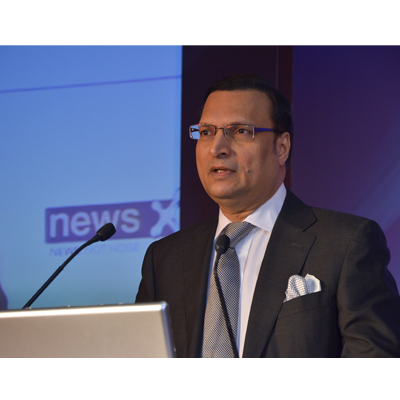
    NEW DELHI: The News Broadcasters Association (NBA) vehemently condemned the brutal assault by policemen on journalists and cameramen who were covering the police action outside the ashram of self-styled godman Baba Rampal in Hissar, Haryana on 18 November.


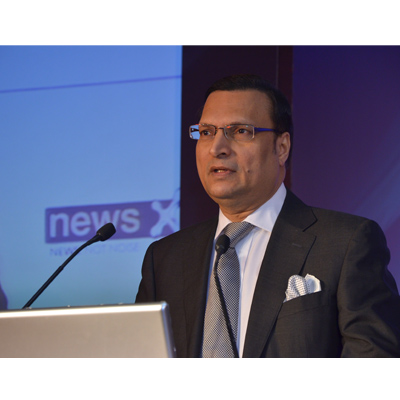
    In a press statement today, NBA president Rajat Sharma said: “This was a frontal attack on the freedom of the press. The whole nation was watching on television as policemen in ‘khaki’ were openly beating up journalists and cameramen who were merely doing their job of reporting. Policemen in uniform deliberately damaged expensive TV cameras and cellphones belonging to news channels and reporters, in full view of their senior officials.”

     
    The NBA president has urged the Chief Minister of Haryana to ensure that action be taken immediately against the men in uniform who ordered and carried out the unprovoked attacks on journalists and cameramen.  


    “The NBA clearly wishes to put it on record that such a naked show of unbridled ‘khaki’ power is unacceptable under any canon of democracy. The powers-that-be must understand that the journalists were only carrying out their lawful duty of disseminating information to the people even as events were unfolding right in front of their eyes.


    “For over two weeks now, the nation has been watching the spectacle of a state police looking completely helpless in arresting a self-styled godman hidden by his goons in his ashram and producing him before the Hon’ble High Court. On the contrary, the police today unleashed its power on helpless journalists doing their lawful duty.


    “The NBA considers this attack a blot on the face of democracy, and an assault on the fundamental right to freedom of speech and expression as enshrined in the Constitution,” Sharma said.


    “The Chief Minister must take exemplary action against the culprits to ensure that such shameful incidents are not repeated in future,” added Sharma.


    Meanwhile, the Delhi Union of Journalists (DUJ) also strongly condemned the beating up of journalists and camerapersons who were covering the clashes between the police and supporters of controversial godman Rampal.


    It said it had been reported that while some journalists have been injured, camera and equipment of photo journalists have been damaged or broken. Even DGP S N Vashisht, confronted with evidence, had to concede a journalist was beaten up and that he will investigate the matter.


    The DUJ calls for the institution of a high level enquiry to probe the beatings of journalists. While demanding immediate compensation for those who have suffered injuries and damage to their equipment, the DUJ reiterates its demand that a compensation and insurance cover be put in place for media persons who while covering such conflicts have to face various hazardous tasks.


    The DUJ would also like to state that no one is above the law. The use of women and children as protective shields and exposing them to grave risks is highly condemnable and cannot be tolerated.


  • NBA president Rajat Sharma to meet Arun Jaitley, soon

    NBA president Rajat Sharma to meet Arun Jaitley, soon

    MUMBAI: A few months into the Narendra Modi government and Prakash Javadekar taking charge as the Minister of State (independent charge) of the Information and Broadcasting Ministry, a reshuffle has now put Arun Jaitley in charge of the department, in addition to Finance and Corporate Affairs with the MoS charge being given to Col Rajyavardhan Singh Rathore.


    While Jaitley is someone who has knowledge of the ministry, Rathore is yet to understand the nitty-gritty of it. News Broadcasters Association (NBA) president Rajat Sharma is optimistic about Jaitley handling the portfolio. “NBA welcomes the appointment of Arun Jaitley as I&B Minister. He has a great understanding of the challenges faced and ahead of the broadcasters and I hope that he will play a proactive role in resolving the issues,” he says.


    Jaitley has been an advisor to broadcasters in the past and is aware of issues they face such as carriage fees, ad cap, digitisation etc. “The NBA delegation will be meeting Mr Jaitley soon to discuss industry problems,” he adds.


    Sharma had earlier mentioned while speaking at indiantelevision.com’s 7th Indian News Television Summit that the NBA would be meeting the Prime Minister Narendra Modi, the I&B Minister Prakash Javadekar and the Home Minister Rajnath Singh to place before them, concerns of the news television industry.


    Sharma says that it feels good to have ‘industry’s friend’ as a minister of the department. 

  • We want to create a new category, Sportainment: Uday Sodhi

    We want to create a new category, Sportainment: Uday Sodhi

    The last couple of years have been good for sports in India. As more and more leagues are launched, the sports channels have a lot to offer to the viewers. And in a bid to capture viewer’s attention, many of them have launched portals.


    One such is, LIV Sports from the Multi Screen Media (MSM) stable, which was launched just before the FIFA World Cup 2014 Brazil commenced.  It has been a late entrant when compared to its competitors like Tensports.com and starsports.com, but has been able to make a mark in the digital space.


    In September, the portal saw former HeadHonchos’s CEO Uday Sodhi taking charge as MSM executive vice president and head digital business to take the portal to the next level. With LIV Sports acquiring the mobile and internet broadcast rights of the UEFA Euro 2016 Qualifiers for India and the Champions Tennis League, the executive spoke to Indiantelevision.com’s Herman Gomes about the portal’s growth so far and his future plans for the site.


    Excerpts…


    What is the growth LIV Sports has seen since its launch and in which markets? 


    The success has been phenomenal. With LIV Sports we are aiming to create a new category of Sportainment or Sports Entertainment. The objective is to empower the sports fan with deep statistics on video as well as engage with the fence sitters. 


    We registered a record number of downloads and live match views between 13 June and 13 July 2014.  It attracted over 20 million page views in July. Viewers spent on an average of 28 minute watching the live streaming of the matches across online, mobile and the tablet LIV Sports application.


    Of the total traction observed on LIV Sports, the maximum percentage of unique views came from the six metros (53 per cent) with Mumbai and Delhi in the lead (13 per cent each), followed by Bengaluru (10 per cent). 83 per cent of the total viewers in the country were within the age bracket of 18-34 years. The World Cup also attracted 25 per cent female viewers; engagements like the Predictor, ‘Mohit Bana Messi – Jerseyfy Me’ and ‘Pehchaan Kaun’ helped achieve this number. We also registered phenomenal numbers in terms of social presence. The Blogger outreach programme enabled a reach of over 2.85 million.


    Technical problems were witnessed initially… 


    Initially, we did face some technical glitches because of the overwhelming number of active users on our site. But we upgraded our technical capabilities and erased out the issues.


    Which are the different audiences the portal seeks to target through its sports entertainment content?


    In an attempt to redefine the way sporting content is presented and consumed, LIV Sports has blended sports with a right dose of entertainment. LIV Sports viewers gets the best of both worlds, high quality interactive sports content, comprehensive informative data and analytics as well as fun and entertaining content – keeping every cross section of consumers actively participating with addictive engagements modules.


    “My time, my content and my device” is where today’s audience is heading. Consumers want to engage, interact and consume content at their terms, at their convenience and in their method. They want personalised and contextualised experiences with each click. Their attention span is ever-shrinking and secondly, keeping them engaged with the right packaging is thus imperative. And that’s why our focus is on the mobile platform, to create a customised viewing experience and allow them to stay updated with their favourite sports.


    It’s been over two months since you took charge. What is on your priority list for the website?


    Over the next few months, viewers will be able to catch up with the widest range of sporting content, including football, NBA, UFC, tennis and cricket on LIV Sports. The digital destination offers live and exclusive video content along with a complete coverage of the latest sporting content present, across devices. Our key focus is on mobile platforms to provide both content on live streaming and video on demand for catch-up content. With superior handsets and improved connectivity, we’re witnessing huge growth on mobile and see it as a continuing trend.


    What is the revenue model of the same?


    We saw significant downloads of the app on both iOS and Android during the FIFA World Cup 2014. Revenue model is subscription and advertising. We worked with partners across categories for FIFA World Cup 2014 and we’re in constant discussion with potential advertisers for upcoming sporting properties.


    Do you see e-commerce platforms advertising online on sports websites?


    Certainly. E-commerce is a key category and we’ve already worked with brands in this space. LivSports.in offers brands the opportunity to create targeted campaigns for a defined audience.


    How do you view the growth of sports platforms in the coming years?


    Digital, video, online and mobile is fairly new in sports broadcasting. With the increase in the bandwidth and increase in internet penetration, video consumption overall is going up. With live sports, a publisher/broadcaster needs to have very good infrastructure in place in order to have a large number of users watching the live streaming of the match together, in high quality. We are getting there slowly. 


    Video inventory in sports is hard to find, since legally licensed rights are expensive and it requires the marketing bandwidth to reach out to the target user group. Football has the second largest viewership after cricket. Interest in the sport is growing, with investment in local leagues as well. 


    In terms of data points, as per the recent Mobile Sports Report released by Adobe, watching sports online or on mobile devices is the primary driver of the continued worldwide growth in digital video consumption. Some of the key findings have been that sports video streams increased 640 per cent, year on year, compared to an overall growth of 440 per cent for all types of content. Secondly, sports events accounted for 37 per cent of all streams, compared to 32 per cent for news programs and 28 per cent for TV shows. And finally, one quarter of all sports digital viewing now happens on mobile devices, a 73 per cent year-over-year increase. And though tablets lead all forms of non-TV devices for video viewing, streams on smartphones and gaming consoles are also growing rapidly.


    We need to be where the consumer is i.e., be it mobile, TV, online or a tablet at the same time.


    Which are the other sports properties you look at tapping in the future?


    We are looking at expanding with a mix of sports including NBA, UFC, TNA and more.

  • Election broadcast must be seen in context of electoral constituencies: NBSA

    Election broadcast must be seen in context of electoral constituencies: NBSA

    MUMBAI: A case had been filed against English news channels CNN-IBN, NDTV, Times Now and Headlines Today regarding a piece of news that was broadcast on 7 April 2014.

    The complaint filed by Vishal  Kudchadkar and  Syed Ali Hussaini claimed that on the particular day, some constituencies in Assam and Tripura went to polls but the above mentioned channels chose to broadcast the BJP manifesto release on the same day. According to the complainants, they have violated the Section 126 (1) of the Representation of People Act, 1951, which prohibits any public display of  election  matter  by means  of cinematography,  television and other  similar apparatus  during  the  period  of 48 hours  prior  to  the end  of  polling.  

    This apart they allege that it also violates the direction of the Election Commission of India and Guideline 12 of the NBA guidelines for election broadcasts.

    The NBSA sought a reply from the ECI in this regard to which it said, “The legal opinion (obtained by EC) on the issue relating to Section 126 of  RP Act was that the said section,  being a penal provision,   had  to be strictly construed; and that the telecasting of an election related event such as release of election manifesto or an election address or a press conference outside the limits of a constituency  going  to   the  poll  would  not  attract  the  penal  provisions  of Section 126; and that the prohibition  regarding the release of  a manifesto or election address or press conference will have to be restricted  to any election matters relating to that constituency and the candidates in that constituency.”

    Guideline 12 of the NBA says, ‘The  broadcasters shall not broadcast any ‘election matter’ that is, any matter intended  or calculated to influence or affect  the result of  an election during the 48 hours ending with the hours fixed for the conclusion of  poll, in violation of  Section 126 (1) (b) of  the Representation of People Act. 1951.’ The EC was proposing to consider the broadcast of the BJP manifesto as a violation of section 126 of RP Act.


    Therefore, the NBSA feels that this falls in the jurisdiction of the criminal courts. It says that it could have considered that the broadcasters had violated the provision of section 126 (1)(b) of the RP Act, had the words ‘in violation of section 126(1)(b) of the Representation of People Act, 1951’.


    The election matter also involves the fact that whether anything was done to disturb or tilt the voting scenario in the area where it is being held rather than throughout the country. Therefore, the NBSA says that the complaints have no merit and can be closed.


  • Time Warner reports y-o-y increase in Q3-2014

    Time Warner reports y-o-y increase in Q3-2014

    BENGALURU: Time Warner Inc (Time Warner) posted 34 per cent higher adjusted EPS for Q3-2014 (quarter ended 30 September 2014) at US$ 1.22 (on a lower adjust outstanding share base) and better than last quarter’s US$ 0.98.


    Diluted income per share in Q3-2014 was US$1.11 (average 870.2 million diluted shares outstanding) versus the US$ 1.25 (average 938.8 million diluted shares outstanding) in Q3-2013 and US$ 0.98 (average 894.2 million diluted shares outstanding) in Q2-2014.


    For Q3-2014, Time Warner reported total revenue (TIO) of US$  6243 million, which was 3.3 per cent more y-o-y at US$ 6042 million, but 8 per cent less that the US$ 6788 million in Q2-2014. Total adjusted operating income at US$ 993 million in Q3-2014 was 37.5 per cent less than the US$ 1589 million in Q3-2013 and 38.6 per cent lower than the US$ 1618 million in Q2-2014.


    Time Warner chairman and CEO Jeff Bewkes said, “We had another good quarter, featuring solid revenue growth as well as strong growth in Adjusted EPS. As we discussed at our Investor Event last month, we’ve refocused the company over the past few years to aggressively pursue the huge global opportunities we see in video content. And once again, we are seeing the benefits of our increased investments in great content and storytelling. In the quarter, both Turner and HBO had double-digit increases in subscription revenues, reflecting the growing strength and appeal of their programming. HBO received 19 Primetime Emmy Awards, the most of any network for the 13th straight year, including five Emmys for newcomer True Detective. At Turner, TNT ranked as ad-supported cable’s #1 primetime network for the second consecutive quarter, TBS was the #2 ad-supported cable network in primetime among adults 18-49 and 25-54, and Adult Swim again shined as ad-supported cable’s #1 total day network among its key adult demos. Turner’s extension last month of its longstanding relationship with the NBA through the 2024-25 season is another great example of investing in distinctive programming that will serve us well for years to come. This fall, Warner Bros. is once again the number one producer for broadcast television, including a strong slate of new shows. Season-to-date, Gotham ranked as broadcast’s #2 new show among adults 18-49, while The Flash had the most-watched telecast ever on The CW. These shows are among five series featuring DC characters that will air this season. DC is also a key component of the ambitious film slate that Warner Bros. recently unveiled. Further demonstrating our continuing commitment to shareholder returns, so far this year we’ve returned over $5.7 billion to our shareholders in the form of share repurchases and dividends.”


    Time Warner has three segments that contribute to its numbers – Turner, Home Box Office (HBO) and Warner Bros (WB). Turner, which contributes about 40 per cent of TIO, disappointed with a drop in its share of adjusted operating income to 35.2 per cent versus the approximately 60 per cent during Q2-2013, Q3-2013 and Q2-2014. All of Time Warner’s segments reported y-o-y reduction of adjusted operating income in Q3-2014.


    Let us look at the numbers reported by the segments of Time Warner for Q3-2014


    Turner


    Turner reported revenue of US$ 2556 million (39.2 per cent of TIO), which was 4.6 per cent more than the US$  2338 million (38.7 per cent of TIO), but 11.1 per cent lower than the US$  2750 million (40.5 per cent of TIO) in the immediate trailing quarter ended June 30, 2014.


    Adjusted operating income from this segment fell a massive 64 per cent to US$ 350 million (35.2 per cent of total adjusted operating income) from US$ 971 million (61.1 per cent of total  operating income) and was 62.8 per cent lower than the US$ 940 million (35.2 per cent of total adjusted operating income)in Q2-2014.


    Here is what the company has to say about its Turner segment results:


    Revenues rose 5 per cent (US$ 108 million) to US$ 2.4 billion, mainly due to growth of 10 per cent (US$ 117 million) in subscription revenues and 17 per cent (US$ 12 million) in content revenues, offset in part by a decline of 2 per cent (US$ 18 million) in advertising revenues. The increase in subscription revenues was primarily due to higher domestic rates and international growth. Advertising revenues decreased due to declines at Turner’s international networks. Advertising revenues at Turner’s domestic networks were essentially flat.


    Adjusted Operating Income declined 64 per cent (US$ 621 million) to US$ 350 million, as higher revenues were more than offset by higher programming costs and increased restructuring and severance costs. Programming costs grew 84 per cent due to the current year quarter’s US$ 482 million of charges related to Turner’s decision to no longer air certain programming. Excluding these charges, programming costs increased in the low double digits due to higher costs associated with increased volume of original programming and the first year of Turner’s new agreement with Major League Baseball. The current year quarter included US$ 199 million of restructuring and severance costs compared to US$ 30 million in the prior year quarter. Excluding the programming and restructuring and severance charges, Adjusted Operating Income would have been US$ 1.0 billion.


    HBO segment

    HBO reported 9.9 per cent increase in revenue in Q3-2014 at US$   1304 million (20.9 per cent of TIO) from US$   1186 million in Q3-2013, but was 8 per cent less than the US$   1417 million (20.9 per cent if TIO) in Q2-2014.


    HBO’s adjusted operating income at US$   380 million (38.3 per cent of total adjusted operating income) was 4.3 per cent lower than the US$   397 million (25 per cent of total adjusted operating income) in Q3-2013 and 31.2 per cent lower than the US$   552 million (34.1 per cent of total adjusted operating income) in Q2-2014.


    Here is what the company has to say about its HBO segment results:


    Revenues grew 10 per cent (US$ 118 million) to US$ 1.3 billion, reflecting increases of 10 per cent (US$ 106 million) in subscription revenues and 7 per cent (US$ 10 million) in content revenues. The increase in subscription revenues resulted from higher domestic rates and subscribers as well as the consolidation of HBO Asia and HBO South Asia (collectively, HBO Asi”). The growth in content revenues was primarily due to increased home video revenues.


    Adjusted Operating Income decreased 4 per cent (US$ 17 million) to US$ 380 million, as higher revenues were more than offset by increased expenses due to higher programming and distribution costs as well as increased restructuring and severance costs. Programming costs grew 16 per cent due to increased expenses for original and acquired programming as well as the consolidation of HBO Asia. Distribution costs increased primarily due to higher participation expenses. The current year quarter included US$ 48 million of restructuring and severance costs compared to US$ 24 million in the prior year quarter. Excluding the restructuring and severance charges, Adjusted Operating Income would have been US$ 428 million.


    Operating Income declined 24 per cent (US$ 122 million) to US$ 380 million. The prior year quarter included a US$ 105 million gain related to Home Box Office’s acquisition of its former partner’s interests in HBO Asia in September 2013.


    Warner Bros (WB)

    WB reported 3 per cent growth in revenue in Q3-2014 to from US$   2775 million (44.4 per cent of TIO) from US$   2694 million (44.6 per cent of TIO) in Q3-2014, but was 3.3 per cent lower than the US$   2870 million (42.3 per cent of TIO) in Q2-2014.


    WB’s adjusted operating income at US$   241 million (24.3 per cent of total adjusted operating income) was 20.2 per cent lower than the US$   302 million (19 per cent of total adjusted operating income) in Q3-2014, but 2.1 per cent higher than the US$   236 million (14.6 per cent of total adjusted operating income) in Q2-2014.


    Here is what the company has to say about its WB segment results:

    Revenues increased 3 per cent (US$ 81 million) to US$ 2.8 billion, mainly due to growth in subscription video-on-demand revenues for television product, higher licensing of theatrical product, growth in television production, including from the acquisition of Eyeworks Group’s operations outside the U.S., and revenues from a patent license and settlement agreement. These increases were partly offset by softer performance of current year quarter theatrical releases compared to the prior year’s slate, which included Pacific Rim, The Conjuring and We’re the Millers, and lower domestic off-network television license fees.


    Adjusted Operating Income decreased 20 per cent (US$ 61 million) to US$ 241 million, as higher revenues were more than offset by increased restructuring and severance costs, higher film costs for television product and a value added tax accrual. The current year quarter included US$ 45 million of restructuring and severance costs compared to US$ 2 million in the prior year quarter. Excluding the restructuring and severance charges, Adjusted Operating Income would have been US$ 286 million.


    Operating Income declined 23 per cent (US$ 70 million) to US$ 237 million.


    Through 2 November, Annabelle grossed over US$ 230 million at the worldwide box office. Season-to-date, Gotham ranked as broadcast’s #2 new drama series among adults18-49. The premiere of The Flash had a total of 6.8 million total viewers in final live +7 ratings, making it The CW network’s most-watched telecast ever.

     

  • Flo Rida gets down with NBA on ESPN

    Flo Rida gets down with NBA on ESPN

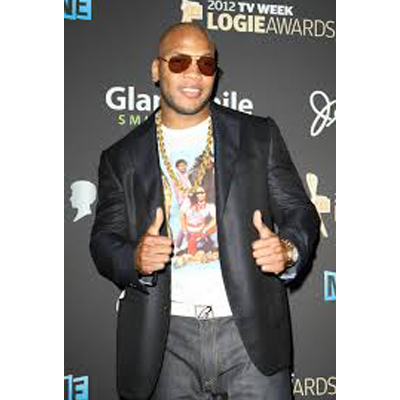
    MUMBAI: IMG/Poe Boy/Atlantic recording artist Flo Rida has announced an array of activity surrounding his hot new single, G.D.F.R. (feat. Sage the Gemini and Lookas) is available now at all DSP’s. Currently standing at number one atop the iTune’s stores Top Hip-Hop/Rap Songs chart, G.D.F.R. (feat. Sage the Gemini and Lookas) is featured in the latest ad from the new NBA on ESPN campaign titled, This Is Your Game. The track will be the baseline soundtrack for ESPN’s coverage of the entire 2014-15 NBA season, with spots and other digital/social elements slated to run across all ESPN platforms.


    G.D.F.R (feat. Sage the Gemini and Lookas) has also received online appreciation, with critical acclaim coming from national outlets as The Source, which noted the track is “likely to be a club favourite.” In addition, the track’s official lyric video was premiered on Flo Rida’s official YouTube channel.


    Flo Rida who is a recognizable hip hop hero, burst out of the gate in 2007 with the RIAA 7x platinum certified hit, Low (feat. T-Pain) and spent 10 consecutive weeks atop the Billboard Hot 100. The Miami-based rapper has a string of record-breaking, multi-platinum certified singles, including the worldwide favourite, Right Round (Feat. Ke$ha), In the Ayer (feat. will.i.am) and Club Can’t Handle Me (feat. David Guetta). In addition, Flo has made guest appearances on tracks such as David Guetta’s platinum certified Where Them Girls At, Troublemaker and Taio Cruz’s chart-topper, Hangover.

  • NBA and IBF to approach govt bodies regarding broadcasting woes

    NBA and IBF to approach govt bodies regarding broadcasting woes

    MUMBAI: The broadcasting industry of India has been facing several issues right from carriage fees to the imposition of the ad cap. In order to reduce the burden on the broadcasters, the Indian Broadcasting Foundation (IBF) and the News Broadcasters Association (NBA) have now decided to unite and present their views to the highest authorities in India.  


    India TV chairman and editor in chief Rajat Sharma who is also the NBA president and the IBF vice president of strategic affairs, said that the two bodies will meet the Prime Minister Narendra Modi, the Finance Minister Arun Jaitley and the Information and Broadcasting Minister Prakash Javadekar to make them aware about the growing cancer called carriage fees. ”We will also show a revenue model that MSOs can adopt so that we don’t become dependent on carriage fees,” said Sharma.    


    Regarding ad cap he said that they will show the ministers the kind of revenue loss the channels will incur if the 10+2 minute ad cap is implemented. The case is currently being fought by the NBA in the Delhi High Court.  “We will request for the 12 minute advertising cap to be removed from the licencing conditions,” he said. The NBA president added that no channel, be it a news channel or a GEC, wants to show more than five minutes of advertising but the revenue model forces them to do so. “None of us want to compromise on programming,” he said.


    The new ratings system that will be applicable once BARC India starts its operations, should be transparent, he said. ”Till the time these issues are not addressed, the industry will keep suffering,” he opined.   


    While speaking to indiantelevision.com, Sharma said that the meeting is expected to happen in the next few days.


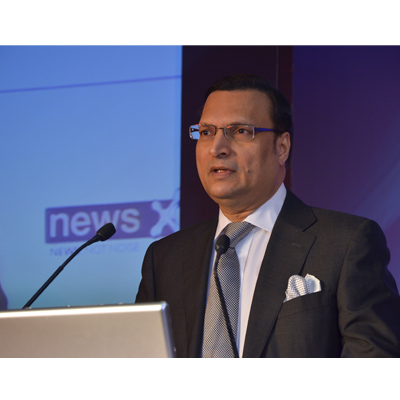
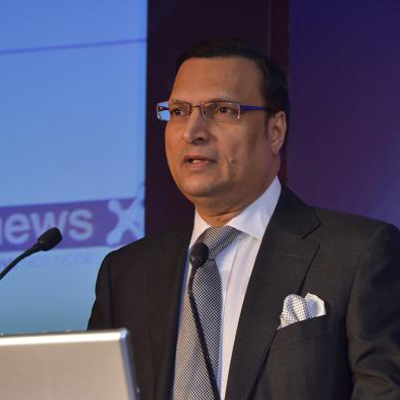
    Sharma was addressing a keynote at the Seventh Indian News Television Summit, organised by indiantelevision.com where he discussed the role of a news channel and the challenges and hurdles that they face.

  • The 7th Indian News Television Summit a roaring success

    The 7th Indian News Television Summit a roaring success

    NOIDA: The 7th Indian News Television Summit that was held at The Radisson in Noida, was a huge success with some of the big names in the industry attending the conference.


    The day began with a keynote by India TV chairman and editor in chief and the News Broadcasters Association president Rajat Sharma wherein he spoke about the changing face of news and how content as well as ad sales is under pressure and for things to improve, the industry has to get together and find solutions.


    He lamented on the horror of having to pay huge carriage fees along with the burden of the ad cap which the NBA is vociferously fighting. According to him, the TV news industry has changed in the last three years with more responsibility having crept into the veins of channels.


    This was followed by a one on one with ITV Network MD Kartikeya Sharma wherein he discussed about why he got into the news business, the aim of his news network and its future roadmap to being the biggest news company in the country.


    The first session saw NDTV Group CEO Vikram Chandra, TV Today CEO Ashish Bagga, IBN18 CEO Avinash Kaul, Focus News Network group CEO Neeraj Sanan and Doordarshan ADG news Mayank Agrawal speak on the various modes of revenue generation through traditional and digital mediums. Executives highlighted that it was too soon to depend heavily on the digital medium for revenue which will work as a compliment to television but not replace it.


    This was followed by a keynote from GroupM south Asia CEO CVL Srinivas who highlighted what brands were looking for in news networks and how the genre is growing year on year. According to Srinivas, news broadcasters need to keep in mind a few things for the future-co creating socially responsible agendas with brands, invest more in digital, new metrics such as consumer sentiment, social buzz, social impact, viewers’ profile and getting into big data.


    Following this was a discussion on finding innovative ways for revenue generation that saw Zee Sangam national sales head Harsha Vardhan Dwivedi, India TV senior VP and country head ad sales Sudipto Chowdhuri, CNN-IBN and IBN7 national revenue head Vishal Bhatnagar, IPG Mediabrands CEO initiatives Anamika Mehta and Times Television Network senior VP and business head for branded content Hemant Arora.


    An informative presentation by Amagi co-founder KA Srinivasan enlightened the audience about utilising geo-targetting to increase revenue for various channels of a network and also more focused reach for a brand.


    The day concluded with an editorial session that discussed how much editors are willing to allow ad sales to interfere with content for higher revenue. ITV Network editor in chief Deepak Chaurasia, senior columnist QW Naqvi and Mi Marathi consultant Nikhil Wagle discussed on how much an editor can mix with the ad sales team and how much of interference by them is acceptable.


    With the belief that the discussions between the various stakeholders of the industry will propel better returns for the community as a whole, we look forward to the Indian News Television Summit 2015.

  • “The news industry is fighting amongst itself”: Rajat Sharma

    “The news industry is fighting amongst itself”: Rajat Sharma

    NOIDA:  He is one of the most well known faces of the Indian media industry. Rajat Sharma, the host of popular talk show, Aap Ki Adalat, has added responsibilities on his shoulders. He is not only the chairman and editor in chief of India TV, but also represents the industry as the new president of the News Broadcasters Association as well as the vice president of strategic affairs of the Indian Broadcasting Foundation (IBF).

    Sharma, who was addressing the 7th Indian News Television Summit 2014 organised by indiantelevision.com as a keynote speaker highlighted the evolution of the news industry as well as listed the three biggest challenges that lie ahead.

    He began by saying that three years ago the news channel industry was very different from what it is today. “There has been a change in perception in the way news is seen,” Sharma said adding that news no longer is considered to be negative.

    Substantiating the evolution in terms of changing perception, Sharma gave the example of the 26/11 terror attack when reporters did 24X7 reportage and were blamed for aiding the terrorists and their handlers in Pakistan. “News channels also suffered commercial losses during the attacks as ad breaks were restricted,” he informed. According to Sharma, while news channels earlier were perceived as being a platform that telecasted frivolous events to garner eyeballs, things today have changed. “News is back,” he announced.

    He pointed out that the space has seen drastic changes.  “The society has evolved and the media has played a great role in it especially during events like the Lokpal Bill, the Delhi gang rape and the tirade against corruption,” he said.

     “Today even if Shah Rukh Khan or Salman Khan want to promote their films or emerging sports like Kabaddi wants to garner attention, news channels have a role to play in that as well,” he opined.

    Sharma while praising the social commitments of the news industry said that the space as a whole is not healthy. “The biggest problem for the industry is its revenue model,” he said while pointing out that though this year the balance sheets of the industry looks good due to elections, but, as a whole, the model is not sustainable.

    Listing the three main challenges for the genre, Sharma said that carriage fee was the biggest concern. “A few years ago, people expected news channels to be a loss making property since carriage fees were high and when broadcasters spoke to the multi system operators (MSOs) they said it was a problem of demand and supply. When digitisation kickstarted, we thought that consumers will get better quality channels and carriage fees will disappear. For the MSOs, it is the carriage fee from the news channels that helps them sustain, since they pay the GEC’s huge sums for getting their programming on their platform,” he said.

    He informed that the industry had 20-25 meetings with the previous TRAI chairman to discuss the issue of carriage fees.  While it was expected that digitisation would bring down carriage fees, something unexpected happened. Two days before the former TRAI chairman could retire he signed the ad cap. “When we were trying to improve the content and trying to solve one issue we were burdened with another one.”

    “Ad cap ensured we received 50 per cent less advertising. Death was certain now for the news channels,” he added.

    While the then Union Minister Ambika Soni said she will look into the matter, the broadcasters decided to fight the case in TDSAT. “News channels have managed to get a stay and therefore are surviving,” he said while giving the example of the newspaper industry, which has no such restriction. “We want the same for the broadcasting industry,” he opined.

    He also mentioned that the industry needs a better rating system and the TAM currency will be replaced by BARC India, which is an incorruptible agency.  “Therefore today the biggest challenge for the industry is the ad cap, the rating system and carriage fees,” he informed.

    In his closing remarks he said the whole industry including the IBF and the NBA should work together to resolve these issues. “The news industry as a whole cannot fight the MSOs as we are fighting amongst ourselves. While, we come together during a board room meeting, once we are out there will be one or two who would go against the same,” he lamented.