Tag: Nazara Technologies

  • Gaming giant Nazara acquires Smaaash in a smashing Rs 126 crore deal

    Gaming giant Nazara acquires Smaaash in a smashing Rs 126 crore deal

    Mumbai, India – Nazara Technologies Limited has hit the jackpot, completing the acquisition of Smaaash Entertainment Pvt Ltd,  making the gaming and entertainment company a wholly-owned subsidiary.  The deal, valued at a whopping Rs 126 crores, sees Nazara solidify its position in the gaming sector, proving it is not just playing games when it comes to expansion. 

    On 6 June 2025, Nazara announced the successful completion of the resolution plan, previously approved by the National Company Law Tribunal, Mumbai Bench. This means Nazara has acquired 100 per cent of Smaaash’s share capital by subscribing to 1,00,00,000 equity shares of Rs 10 each, costing the company Rs 10 crores. But the fun doesn’t stop there! Nazara also extended an inter-corporate loan of Rs 116 crores to Smaaash to settle its creditors’ dues, showing it is all about clearing the board for future success. 

    Smaaash, incorporated on 30 November 2009, is no stranger to the entertainment scene, operating gaming and entertainment centres across 11 Indian cities under the ‘Smaash  brand. Its  business spans gaming, food and beverages, events, and sponsorships, bringing in a turnover of Rs 112.34 crores as of 31 March 2024. 

    While Smaaash’s turnover did see a slight dip from Rs 120.88 crores in 2023, this acquisition is a clear sign that Nazara is ready to power up its inorganic growth in the gaming sector.

  • Nazara’s Fusebox drops Big Brother bombshell in mobile gaming world

    Nazara’s Fusebox drops Big Brother bombshell in mobile gaming world

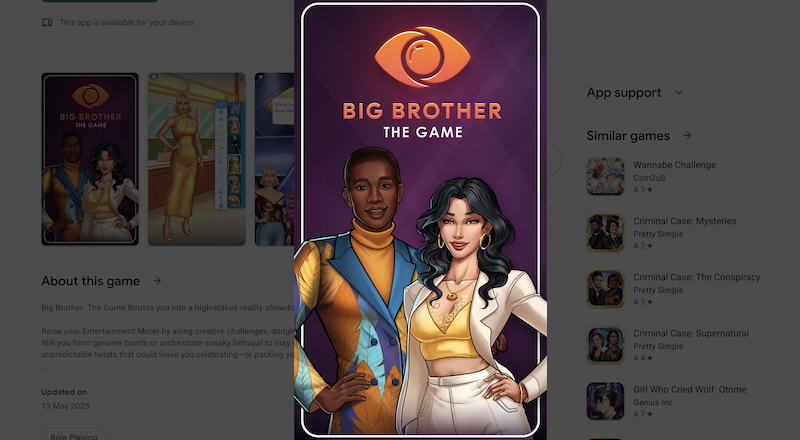
    MUMBAI:  India’s Nazara Technologies has tossed a juicy twist into the global gaming arena. Its UK-based subsidiary, Fusebox Games, has teamed up with Banijay Rights to launch Big Brother: The Game, bringing the drama, deceit and diary room straight to your smartphone.

    This mobile game isn’t just another tap-and-swipe time-killer. It’s a choose-your-own-chaos simulator where players enter the infamous Big Brother house, craft their own characters, form alliances, win challenges — and yes, face the agony of eviction. Think Love Island meets Survivor meets screen-time addiction.

    Fusebox CEO Terry Lee said: “We’re incredibly excited to bring Big Brother: The Game to players around the
    world. This is more than just a mobile game — it’s a reality show experience where players shape the drama, form alliances, and fight for survival in the Big Brother house. The global appeal of the Big Brother franchise, combined with our interactive storytelling expertise, makes this a truly unique release.”

    Nazara CEO Nitish Mittersain added: “Fusebox Games has demonstrated exceptional creativity and innovation in bringing popular IPs to the interactive gaming space. The launch of Big Brother: The Game aligns with our vision to expand globally and deliver engaging content that resonates with diverse audiences. We are proud to support Fusebox in this exciting endeavor. “

    For Banijay, it’s yet another digital reboot of a format that’s still raking in eyeballs after 600 series across 70 countries.

    Big Brother has captured the hearts of millions of viewers worldwide. Our partnership with Fusebox Games opens exciting new possibilities, creating immersive ways for fans to engage with this iconic brand. We look forward to seeing players around the world experience the drama, strategy, and excitement of the Big Brother house in a whole new way,”  said Banijay Rights svp of gaming Mark Woollard. 

    Available on iOS and Android, the game builds on Fusebox’s hit-making streak, which includes the Love Island game that previously ruled the app charts. With custom narratives and dynamic characters, Big Brother: The Game is designed to stir drama across demographics.

    One of the world’s most iconic and successful reality television franchises, Big Brother first hit screens 25 years ago in the Netherlands in 1999. Since its debut, over 600 series of the show have aired around the world in 70 markets. Globally, the format has maintained huge popularity and is one of Banijay Entertainment’s top three formats, airing in 28 territories last year. The format continues to make a splash globally, with prime-time success in the UK, Spain and Brazil, long-running versions airing consistently in the US and Italy since 2000, six regional versions each year in India, and a new adaptation in Malta. Big Brother is a Banijay Entertainment format.

    For Nazara, which acquired Fusebox in 2024, it’s one more power play in a global gaming push that’s anything but subtle. The message is clear: if the world’s watching, Nazara’s building.

  • Nazara goes full throttle, bags Curve Games in Rs 247 crore console conquest

    Nazara goes full throttle, bags Curve Games in Rs 247 crore console conquest

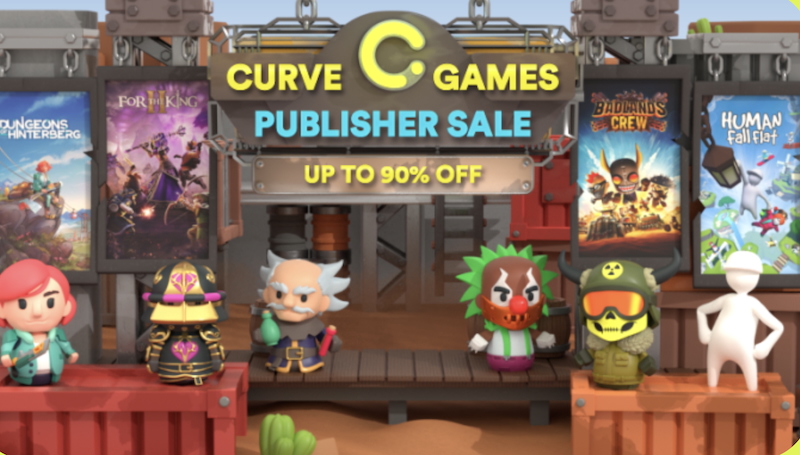
    MUMBAI: Nazara Technologies has fired its latest acquisition shot — and this time, it’s hit the UK. The homegrown gaming giant has snapped up 100 per cent of Curve Games, a renowned UK-based publisher of PC and console titles, in a Rs 247 crore (GBP 21.7 million) all-cash deal.

    The move turbocharges Nazara’s foray into the $100 billion global PC and console market, unlocking fresh access to new platforms, geographies, and genres. Curve, best known for indie blockbusters like Human Fall Flat, Bomber Crew, and The Ascent, has racked up more than 100 million downloads globally — and a tidy revenue of Rs 263.5 crore in calendar 2024.

    “This acquisition strengthens our ability to work with developers globally — and over time, also creates a pathway for Indian game developers to bring their games to global audiences across PC and console platforms. It aligns with our broader vision to contribute to India’s growing role in the global gaming ecosystem, echoing the emphasis from India’s leadership on making the country a hub for digital and creative industries.,” said Nazara chief executive Nitish Mittersain. 

    Curve posted an EBITDA of Rs 114.4 crore and a PBT of Rs 49.6 crore last year, making it a lucrative addition to Nazara’s already eclectic portfolio, which includes Kiddopia, Animal Jam, Sportskeeda, and World Cricket Championship.

    Curve’s executive chairman Stuart Dinsey was equally upbeat: “”Joining the Nazara family is an exciting new chapter for Curve. Nazara’s ecosystem, access to emerging markets and long-term orientation make them a strong strategic partner. We are aligned in our vision of building a leading global indie publishing platform, and we look forward to the next phase of growth together.”

    For Nazara, this isn’t just another acquisition — it’s a checkpoint cleared in its quest to become a truly global gaming force, one IP at a time. Game on.

  • India plays its game at GDC – San Francisco developer conference

    India plays its game at GDC – San Francisco developer conference

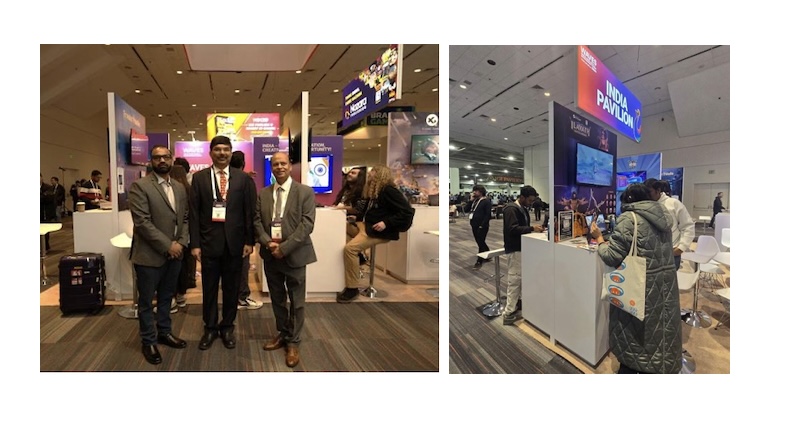
    MUMBAI: India has levelled up its presence in the global gaming industry with its  pavilion at the Game Developers Conference (GDC) in San Francisco. The showcase, inaugurated by India’s consul general in San Francisco K. Srikar Reddy, puts the spotlight on the country’s burgeoning gaming sector and its ambitions to become a worldwide content powerhouse.

    The India Pavilion features an impressive roster of exhibitors, including established players like Nazara Technologies and WinzO, alongside plucky award-winning upstarts such as Wala Interactive, Brewed Games, Xigma Games, and Singular Scheme. These companies are demonstrating that India’s gaming industry is no longer just pressing “play”—it’s pressing ahead.

    Several champions of the “Bharat Tech Triumph Season 3” challenge are also showcasing their wares, including Yudiz Solutions, Brahman Studios, and the whimsically named Over the Moon Studios. The pavilion serves as a matchmaking service of sorts, connecting Indian developers with global publishers, investors and potential collaborators.

    Beyond gaming, the pavilion is drumming up interest for the upcoming World Audio Visual and Entertainment Summit (Waves), scheduled for May in Mumbai. This flagship event, organised by the ministry of information and broadcasting through the National Film Development Corp (NFDC), aims to position India as the “Content Hub of the World”—a lofty ambition for a country already producing films and television at an industrial scale.

    The timing could hardly be better. GDC, running from 17 to 21 March, attracts the crème de la crème of the global gaming industry. By planting its flag at this influential gathering, India is signalling that its developers are ready to play in the big leagues.

    For a nation long associated with outsourced IT services, the pivot to creative digital content represents a strategic shift. India’s gaming companies are no longer content to be mere back-office operations—they’re designing the games, creating the characters, and writing the storylines that could captivate players worldwide.
    As one industry insider quipped, “India has been the world’s back office. Now it wants to be its arcade too.”

  • Nazara Technologies COO Sudhir Kamath cashes out chips after impressive run

    Nazara Technologies COO Sudhir Kamath cashes out chips after impressive run

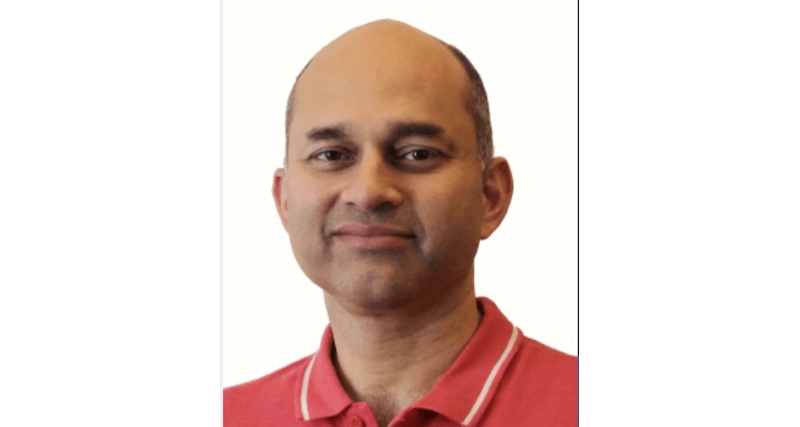
    MUMBAI:  In a departure,  that’s sent ripples through India’s gaming industry, Nazara Technologies’ chief operating officer Sudhir Kamath is folding his hand after a two-and-a-half year winning streak.

    The gaming and sports media powerhouse confirmed yesterday that Kamath will step down from his post on 1 April, with the veteran executive citing family reasons for his departure from the Mumbai-based firm’s C-suite. It made this declaration through a regulatory filing with the Bombay stock exchange. 

    “Kamath is exchanging his corporate royal flush for a full house back home,” quipped one industry insider, referencing the executive’s previous life as co-founder and CEO of online poker platform 9stacks, where he dealt cards for over five years before Nazara poached him in October 2022.

    His decision to relocate to his native city marks the end of a diverse career that has seen him play across multiple tables – from McKinsey’s consulting halls and Nigerian oil fields to the competitive word tiles of the Scrabble Association of India, where he spelled out success as president from 2020 to 2022.

    During his tenure at Nazara, Kamath helped the company level up its operational strategy while navigating the increasingly competitive gaming landscape. industry analysts suggest his departure comes at a pivotal moment as India’s gaming sector faces regulatory challenges and fierce competition from international players.

    While Nazara’s managing director Nitish Mittersain and board  has yet to name a successor, the company’s shares remained stable following the announcement, suggesting investors aren’t throwing in their cards just yet. The firm continues to expand its portfolio across esports, gamified learning and mobile gaming.

    For Kamath, who once turned an amazing return as an early investor in fruit exporter INI Farms, this latest move appears less about game over and more about selecting a new avatar closer to home.

  • “Our focus remains on building a truly global gaming company from India”- Nazara  Technologies CEO Nitish Mittersain

    “Our focus remains on building a truly global gaming company from India”- Nazara Technologies CEO Nitish Mittersain

    It’s game to go global. In fact that’s the only game it looks like it is willing to play. Nazara Technologies, under the leadership of CEO Nitish Mittersain, is charting an ambitious course to become a global gaming powerhouse built from India.   One would find it hard to believe that Nitish is  anything more than 35 years of age, he carries oodles of boyish charm with him everywhere. (He’s actually 45). The boyish looking executive who’s grown Nazara from a bedroom operation to one of the most impressive gaming and experiences companies to emerge from India.

    Hailing from a business family, Mittersain began coding at  the age of eight, had tech pioneer and actor Shammi Kapoor as a mentor, set up a website building business when he was just 15.  Nazara followed when he was 19. It nearly went belly up with the dot com bust with huge debts piled up; its saving grace was that it  had a relationship with cricket’s God Sachin Tendulkar. Hence it  managed to attract investment from Westbridge Capital.

    Since then there’s been no looking back. A massive IPO has seen the company raise capital, followed by  acquisitions galore – both in India and overseas as Mittersain  goes about his business building a group touching various aspects of the gaming ecosystem and one which can rival other scaled enterprises globally.

    Nazara’s latest quarter financials saw a bunch of investors, analysts probing him during an investor call  to check if the company’s story still holds merit. He parried all with extreme ease, grace and aplomb.

    Indiantelevision.com decided to paraphrase Mittersain’s  responses during the investor call, to give you insights into how this young gaming entrepreneur is single mindedly cobbling together a global Indian gaming enterprise. Excerpts: 

    On Nazara’s great Q3 FY2025 performance.
    Our Q3FY25 performance demonstrates the strength of our diversified portfolio. Revenue reached Rs 534.7 crore, representing 67 per cent  year-on-year growth, while EBITDA grew 39 per cent to Rs  52.4 crore. The core gaming segment was particularly strong, growing 53 per cent  year-on-year, driven by our Fusebox Games acquisition and solid performance from existing titles like Animal Jam. 

    For the first nine months of FY25, we’ve reported revenue of Rs  1,103.7 crore and EBITDA of Rs  102.4 crore, showing consistent growth across our business segments.  Gaming contributed 29 per cent  of total revenues and 56 per cent of EBITDA in Q3, while eSports delivered 43 per cent of revenues and 32 per cent of EBITDA. This balance demonstrates the resilience of our business model and the success of our diversification strategy.

    On the strategic thinking behind the recent capital raises through preferential placement that the company has resorted to recently. 
    The Rs  495 crore raised through preferential placement to Aksana Estates LLP represents more than just capital – it’s a strategic partnership that validates our vision. Having established entrepreneurs like Arpit Khandelwal and Mithun Sacheti, the founder of CaratLane, join us as co-promoters brings valuable expertise to our growth journey and provides us with substantial financial flexibility. Having Plutus Wealth and Mithun Sacheti cross the 25 per cent  threshold and join as co-promoters is a significant validation of our business model.

    While some investors might view dilution with concern, we’re seeing unique opportunities in the global gaming market. The current environment, characterized by post-COVID normalization and higher interest rates, has created situations where high-quality assets are available at attractive valuations. Our strategy isn’t about short-term arbitrage – we’re building a sustainable global gaming company by acquiring strong assets and growing them systematically.

    Picture courtesy inc42

    On how the company evaluates potential acquisitions, particularly in terms of IP valuation
    We look at multiple factors. First, we assess the historical performance – app store ratings, download numbers, current user base, revenue trends, and profitability. Second, we evaluate growth potential under Nazara’s ownership – can we expand the business through improved live operations or market reach? Finally, we consider valuation metrics, typically based on EBITDA multiples within our acceptable range. For instance, with our recent game acquisitions from Zepto Labs, we saw strong existing performance metrics combined with clear opportunities for growth under our management.

    On the company’s IP licensing strategy, particularly with brands like Barbie and Big Brother.
    Our IP strategy represents a shift from our traditional approach of relying solely on original content. We’ve observed that popular IPs can significantly reduce user acquisition costs through organic downloads and improved click-through rates. These partnerships, such as Kiddopia’s agreements with Mattel for Barbie and Moonbug Entertainment for Little Angel, typically involve minimum guarantees plus revenue sharing arrangements. Even with these costs, we expect better profitability compared to traditional user acquisition spending. The success of Fusebox’s Love Island game has given us confidence to pursue similar partnerships with Big Brother globally and Bigg Boss in India.

    On  how  Nodwin  Gaming is performing, and what’s the path to profitability
    Nodwin continues to build market leadership in eSports and youth engagement. Their Q3 revenue grew 23 per cent  year-on-year, but the like-for-like growth was actually 48 per cent excluding Wings, which was deconsolidated. While profitability has been impacted by strategic investments and events like the NH7 Weekender cancellation, we’re seeing strong performance from proprietary IPs and live events. Nodwin has expanded its footprint to 20 countries and made strategic acquisitions in influencer management (Trinity Gaming), content distribution (AKF Gaming)  and event production (StarLadder). Their international revenues now account for 48 per cent of total revenue, demonstrating successful global expansion.

    We’re deliberately prioritising growth over immediate profitability because we believe building market leadership and strong moats now will create significant value in the future. The youth attention economy, particularly in emerging markets, represents a massive opportunity that requires scale and presence to capture effectively.
     

    On PokerBaazi, and its growth trajectory
    PokerBaazi is the dominant poker platform in India, and our strategy is focused on building an even stronger moat through brand development. Their gross gaming revenue grew 67 per cent  year-on-year in Q3, with healthy growth in both traded value and deposits. Rather than focusing on performance marketing, they’re investing heavily in brand building through strategic sponsorships like Shark Tank and IPL. The core business is very profitable – quarterly EBITDA fluctuations mainly reflect the timing of brand spending. This approach should create a more defensible market position over time.
     
    On the approach while developing games – both in India and internationally
    We’re implementing a hybrid model that leverages global expertise with Indian capabilities. Take Fusebox Games for example – their core team of about 35 people in the UK drives game design and narrative, while we’re increasingly shifting development and engineering work to India. This allows us to combine international design expertise with India’s strong engineering talent pool.

    Through Nazara Publishing, we’re also bringing international games to the Indian market, providing localised support and marketing. This aligns with our view that India’s gaming market will see significant growth in terms of paying users over the next five years. Simultaneously, we’re investing in local studios and capabilities to create games in India for the global market, responding to the government’s vision of India as a gaming development hub.

    Nitish and His brands

    On the company’s G-commerce initiative and its potential impact
    G-commerce addresses a fundamental challenge in the Indian gaming market – low monetisation through both in-app purchases and advertising. By integrating e-commerce within gaming environments, we aim to create new revenue streams through affiliate fees. We’re in advanced stages of a pilot with ONDC, scheduled for launch in Q4FY25. If successful, this could be a significant innovation not just for India but globally. The concept leverages Indians’ familiarity with online shopping while providing game developers with better monetisation options than traditional advertising.

    On challenges post Apple’s  IDFA changes and how Nazara addressing them.
    The post-IDFA environment has certainly changed the landscape for user acquisition. We’re adapting through multiple strategies. First, our IP partnerships help generate organic downloads and reduce acquisition costs. Second, we’re seeing ad agencies and platforms develop new models that work within the privacy-first framework. Third, we’re exploring alternative channels and focusing on markets where Android remains dominant. The situation has stabilised over the past 18 months, and we’re seeing companies, including ourselves, successfully adapt their user acquisition strategies to this new reality.

    On the  role  AI will play in Nazara’s future operations
    We see AI as both an opportunity and a tool across our business. In game development, we’re exploring AI applications for content creation, testing, and personalization. In user acquisition, AI helps optimize targeting and spending. For eSports, AI assists in content creation and production efficiency.
    However, we maintain a balanced view. While AI can enhance efficiency and create new possibilities, the core of gaming remains human creativity and engagement. We’re focused on using AI to augment rather than replace human capabilities, particularly in areas like game design and community engagement.
    The real opportunity lies in using AI to better understand and serve our users while maintaining the human elements that make games and eSports engaging. We’re investing in AI capabilities but always with a clear focus on enhancing rather than replacing the core gaming experience.

    On guidance for future growth
    We’re maintaining our FY27 EBITDA target of Rs  300 crores and are confident in achieving it. Our recent capital raise and strong cash position give us the flexibility to pursue both organic and inorganic growth opportunities. 2025 presents particularly attractive M&A opportunities in the global gaming market, especially given current valuations. We’re seeing potential in both established markets and emerging economies, particularly in mobile gaming and eSports. Our focus remains on building a truly global gaming company from India, leveraging our expertise across different segments and geographies.

    (Picture of Nitish punching courtesy INC42)

  • Nazara Technologies to Raise upto Rs 495 Crores, Acquires Zeptolab UK’s IPs

    Nazara Technologies to Raise upto Rs 495 Crores, Acquires Zeptolab UK’s IPs

    MUMBAI:  It’s playing a sharp hand. Leading Indian gaming company Nazara Technologies has announced two key developments. The company will raise upto Rs 495 Crores through a preferential issue of upto 50 lakh equity shares at Rs. 990 per share, and acquire the Intellectual Property Rights (IPRs) of Zeptolab UK Limited for approximately Rs. 66.59 Crores.

    The preferential issue of upto 50 lakh equity shares at Rs  990 per share, with a maximum consideration of Rs. 495 Crores, will be issued to Axana Estates LLP, a company associated with the promoters of Nazara Technologies. The four partners of Axana Estates include:. Mithun Padam Sacheti, Siddhartha Sacheti, Yash Siddhartha Sacheti and Arpit Khandelwal. Earlier, Nazara’s board gave the fund raising proposal a thumbs up.

    The acquisition of Zepto includes the rights to CATS: Crash Arena Turbo Stars and King of Thieves, two highly successful mobile gaming IPs in their respective genres.  Nazara Technologies will take on the publishing responsibilities for both games and own the IPRs.The payment of Rs 66.59 Crores will be made in cash within 30 days, subject to regulatory approvals.

  • Nazara acquires US-based kids gaming firm WildWorks

    Nazara acquires US-based kids gaming firm WildWorks

    Mumbai : Nazara Technologies, Mumbai-based diversified gaming, and sports media company acquired a 100 percent stake in Delaware-based kids gaming firm WildWorks Inc. This would be one of the several acquisitions made in the past year by the Mumbai-based company.

    According to a filing with the BSE, Nazara Technologies agreed to acquire 100 percent of Wildworks’ share capital in an all-cash transaction from their existing shareholders for $10.40 million.

    After the merger and acquisition, WildWorks will continue to run the business with its original co-founders Clark Stacey and Jeff Amis as part of the “Friends of Nazara” network.

    WildWorks, founded in 2003, creates games for the children’s market. It’s available on iOS and Android mobile devices as well as on desktops.

    Oquirrh Ventures and Signal Peak Ventures were the investors of Wildworks at first. In contrast to 2020, the US-based company’s revenue decreased by 25 percent to $13.8 million in 2021 from $18.8 million in 2020, while EBITDA was recorded at $3.1 million in CY21 compared to $4.9 million in CY20.

    Prior to this, Nazara supported the educational app for preschoolers, Kiddopia, and bought the majority of the shares of Sports Unity, a platform for multisport content, Sportskeeda and Datawrkz.

  • SGA PR wins public relations mandate for Nazara Technologies

    SGA PR wins public relations mandate for Nazara Technologies

    MUMBAI: SGA Growth Advisors (SGA) has won the public relations and social media mandate for Nazara Technologies, India’s most prominent gaming and sports media platforms. As part of the mandate, SGA will manage Nazara Technologies’ overall communications strategy with all key stakeholders through multiple channels of investors, analysts, media, influencers, gaming industry stakeholders and public at large.

    With strategic communications and ideation, SGA aims to integrate its public relations, investor relations, and social media communications.  
    This mandate serves to add a holistic value to Nazara’s business strategy and boost its share of voice in the gaming space. SGA will leverage its insight-driven communications strategies to leverage Nazara’s rising digital footfall by building an integrated social and digital media framework.

    While speaking on this collaboration Nazara Technologies CEO Manish Agarwal said, “We have an existing relationship with SGA for our investor relations and annual report consulting. The teams at SGA work very closely with us to translate our thoughts into building narratives.”
    He added, “They also are young and agile, similar to our thought process and add new insights and perspective to the strategy. We have extended our partnership with SGA for PR and Social Media with an aim to have a common communication strategy across spectrums. Looking forward to working with the team.”

    Speaking about the PR mandate win, Strategic Growth Advisors (SGA) founder Kevin Shah commented, “We are delighted to have Nazara Technologies on board for PR & Social Media. It is a testimony to our vision of offering a complete communications’ solution to a company under one umbrella. Nazara Technologies, is a young unicorn and it is exciting to work in the new emerging spaces of technology and gaming. We believe, going forward, having a single partner integrated throughout all aspects of communications will be an efficient solution for companies. We are committed to offer the best in quality services across practices.” 

  • Vodafone Idea launches Vi Games in partnership with Nazara Technologies

    Vodafone Idea launches Vi Games in partnership with Nazara Technologies

    Mumbai: Vodafone Idea on Monday announced its foray into mobile gaming with the launch of Vi Games in partnership with Nazara Technologies. This will be the first phase of the company’s entry into the gaming space with subsequent expansion into esports, social gaming, streaming, and cloud gaming.

    Vi Games will be a destination within the Vi App and will offer more than 1200+ mobile games across ten genres to Vi customers in HTML5 and Android format. Vi Games has a massive catalogue of titles to choose from out of which 80 per cent are exclusively available on Vi App. While 27 per cent of the portfolio has free games, at an additional fee, prepaid and postpaid customers can access premium and super-premium games.

    Nazara Technologies have come on board as a technology partner and will support Vi Games by bringing its experience, competency and diversity of titles in mobile gaming. The company operates in 75 countries and has partnered with 50 telecom operators.

    Casual gaming is a Rs 6,000 crore market in India growing at 40 per cent CAGR in the last two years. It is expected to grow by an additional 30 per cent in the coming two years to touch Rs 17,000 crore in value. The majority of gaming consumption in India happens via mobile devices which accounts for 95 per cent of consumption. There are about 400 million casual games in India which is expected to cross 650 million users by 2025. Globally, gaming accounts for 70 per cent of mobile consumer spending.

    “We are seeing a significant uptake of gaming consumption in India with more than 95 per cent of gaming enthusiasts using the mobile device to enjoy a wide variety of content,” said Vodafone Idea chief marketing officer Avneesh Khosla. “Deeper penetration of smartphones and 4G availability has led to meteoric growth and adoption of gaming content making it a popular choice for fun and entertainment.”

    “While GenZ was driving the first wave of adoption in gaming, recent growth is far more encompassing,” said Khosla. “Women account for 43 per cent of gamers in India and 50 per cent of women gamers are above the age of 34. Gaming attracts a diverse mix of cohorts regardless of age, gender and geography.  

    “We see gaming as a major focus area of our digital content strategy and we intend to build a comprehensive play encompassing most facets of gaming with the aim of establishing Vi as a preferred destination for both, casual as well as serious gamers,” he added.

    “Gaming is not only the future of entertainment in India but already a key mode of entertainment for hundreds of millions of Indians playing games on their mobile phones every day,” said Nazara Technologies founder and group MD Nitish Mittersain. “Nazara is delighted to work with Vi to bring our entire portfolio of gaming content, esports and interactive entertainment to their larger user base.”

    The average Indian mobile user consumes an average of 16 Gb of data per month which is 60 per cent higher than the industry average at 9 Gb. Indians now spend one-third of their waking hours on mobile devices and at least three fourth Indians have played one mobile game.

    “In the last two decades, we have seen a dramatic change in the macro factors like penetration of mobile devices and cheap data that have helped make India a global giant in gaming,’ noted Mittersain. “Today gaming is reaching across demographics and there is a lot of opportunity to collaborate.”