Tag: Nawazuddin Siddiqui

  • Ogilvy, PokerStars India partner to launch India’s first-ever poker TV campaign

    Ogilvy, PokerStars India partner to launch India’s first-ever poker TV campaign

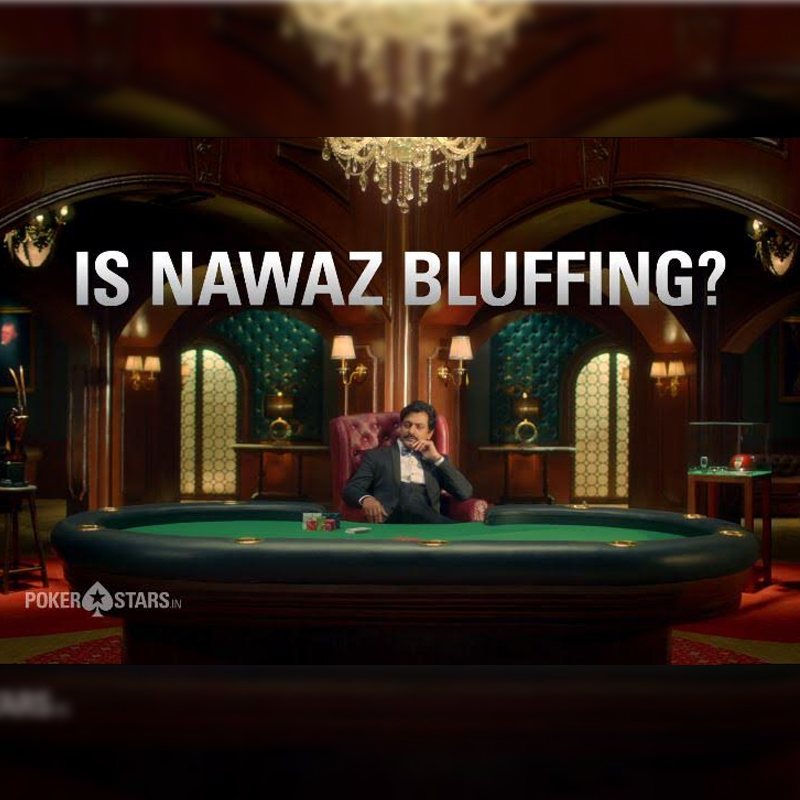
    MUMBAI: PokerStars India has announced its association with Bollywood actor Nawazuddin Siddiqui to launch India’s first-ever poker TV campaign. The launch and association are designed to strengthen the brand’s resonance as it seeks to bring the concepts of poker to a wider audience.

    The campaign has been conceptualised by Ogilvy and brings to life the concept of bluff through engaging and fun narratives designed to entertain but also encourage people to work out whether Nawaz is bluffing and try their hand at the game themselves.

    <iframe width=”560″ height=”315″ src=”https://www.youtube.com/embed/S7TC3LNI9XQ” frameborder=”0″ allow=”accelerometer; autoplay; encrypted-media; gyroscope; picture-in-picture” allowfullscreen></iframe>

    Ogilvy West group creative director Rohit Dubey said, “No pun intended, poker advertising in India is a tricky game. The communication has to tread the tight rope of legalities, balancing the elite and massy act simultaneously. The challenges were to tell engaging stories, that border between fact and fiction, and are interesting to watch. With ‘IS NAWAZ BLUFFING’, we tried to hit the triple whammy of curiosity, mass act and engagement that we hope is well accepted by the consumers. Nawazuddin Siddiqui brings an effortless fit and raises approachability quotient of Poker. It was sheer joy collaborating with the team at Pokerstars.in, who are creatively courageous and allowed us the room to write this campaign. Let’s see how cards unfold now. We are keeping a straight face.”

    Senior vice president Harsh Bhatt mentioned, “Pokerstars is the biggest online poker brand globally. Yet, in India, it is just about launching. There were a ton of barriers we had to address. For one, Indians are habituated to playing card games like Rummy and Teen Patti. The first task was to introduce them to a new kind of game; a game of skill. Secondly, we had to toe a fine line between introducing the brand to the masses, and yet keep it on a pedestal over the other card games. Nawazuddin was our choice for a brand ambassador who could balance both. The launch itself was planned such – stage one introduces Poker to the masses through the commonly known card term – bluffs. It’s an interactive campaign which will engage with the audiences. We plan a second burst soon which will take the messaging forward by introducing the prerequisites for playing Poker. You’ll be happy to learn that Indians have all the prerequisites and more. The past few months have been a combination of a whole lot of strategic thinking, creative ideation and celebrity management, but it has all come together beautifully as a campaign.”

  • Babumoshai Bandookbaaz… Aimless

    Babumoshai Bandookbaaz… Aimless

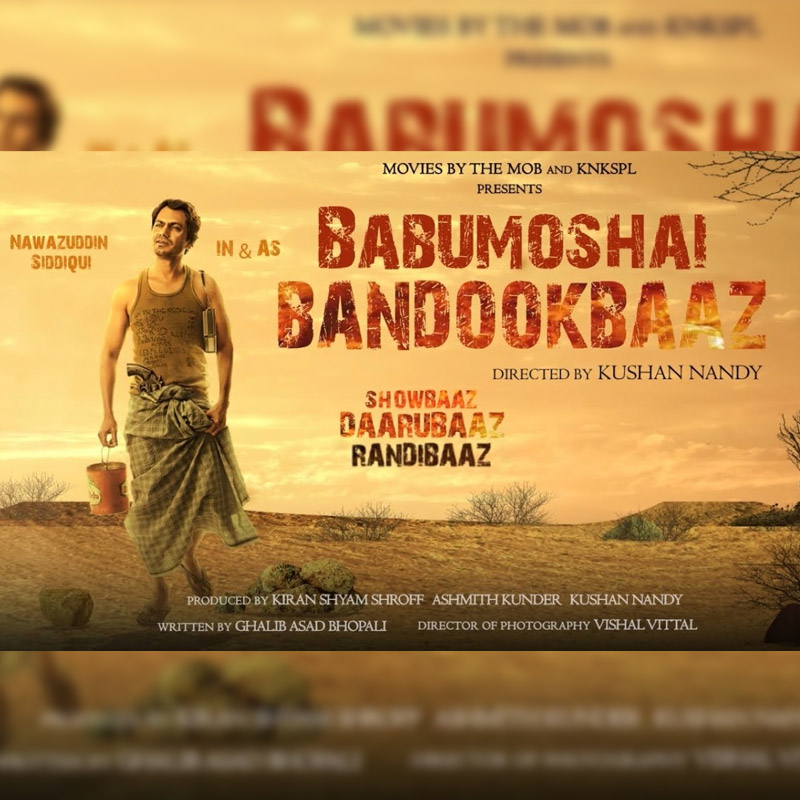
    Babumoshai Bandookbaaz is another film glorifying the local criminal of the Hindi belt. That they don’t work is a fact, though it fails to deter more such makers. What is worse, the makers don’t care about the time period when the film was based. It jumps at will from 1970s when Kishore Kumar songs ruled the roost on the radio to mobile phone era.

    The babumoshai, a Bengali term of respect while addressing someone, will always remain a mystery in the title of the film which is based in UP!

    The character of Nawazuddin Siddiqui is a sharpshooter, a supari killer, somewhere in UP working for a woman politician, played by Divya Dutta, spewing paan spit and foul words as her trademark. She assigns him to eliminate her detractors as and when required. Nawazuddin kills people at will, roams around freely in town and walks off to his hidden, far away abode. It seems, he makes it a point to kill his targets when witnesses are around.

    While Divya assigns killings to Nawazuddin, her two henchmen envy him. So, there are perpetual undercurrents of backstabbing and betrayals.

    Made to change sides, now Nawazuddin is engaged by another politician, a rival to Divya. Meanwhile, Nawazuddin has met and fallen in love with the character of Bidita Das, who mends footwear but is never shy of using her instruments of trade on men who act funny. Bidita and Nawazuddin hit it off and a sex affair starts (no, it is not a love affair).

    You realize that Nawazuddin is a legend in his field when he comes across his fan claiming to be his disciple, Jatin Goswami, who has turned into a shooter inspired by the stories of Nawazuddin’s exploits. Now, there are multiple angles. You don’t know who are the friends and who are the enemies. Killings take place as a sport. Everybody is betraying the other at whim.

    Babumoshai Bandookbaaz is a hackneyed film with no head or tail. It does not even have a single theme. Somebody points a gun, at times pulls a trigger and does not at other times! It tries to vend some ‘steamy’ kissing scenes and sex, as if they were just invented, to poor effect. Also, the film may be about sharpshooters but the bullets they spray rarely ever hit the target!

    The film lacks on scripting, has poor direction and is a let down on all counts. Nawazuddin has an ill-defined role and he only seems to be in a hurry to end his newfound success, with this film coming soon after Munna Michael, where he did a role not meant for him. Bidita Das can’t act. Divya Dutta and the rest are ineffective.

    Babumoshai Bandookbaaz is a sham of a movie.

    Producers: Kiran Shyam Shroff, Ashmith Kunder, Kushan Nandy.

    Director: Kushan Nandy.

    Cast: Nawazuddin Siddiqui, Bidita Das, Divya Dutta, Jatin Goswami, Murli Sharma and Anil George.

  • Om Puri Foundation unveiled in Cannes to help arts, farmers

    NEW DELHI: The Om Puri Foundation has been unveiled today at the 70th Cannes Film Festival to carry forward his legacy and the high standards set by him as an actor on films, television and the theater.

    Ms Nandita Puri and his son Ishaan were present as the Foundation was unveiled yesterday first at the British Pavilion and later at the Indian Pavilion.

    This was followed by a discussion with veteran critic Derek Malcolm, actor-director Nandita Das and actor Nawazuddin Siddiqui along with the Puris, moderated by eminent critic and wrier Uma Da Cunha.

    The Foundation aims to take forward Om Puri’s legacy, philosophy and values that he cherished.

    Initially, the Foundation will initiate the Om Puri Scholar for the most deserving student from the Film and Television Institute of India in Pune, the Om Puri Fellow for the most deserving student from the National School of Drama in Delhi where the actor had his initial training before joining FTII; and the Om Puri Grant for promising and deserving filmmakers to go to international film festivals to broaden their understanding of world cinema.

    Ishaan told indiantelevision.com from Cannes that the Foundation intends to take the actors films and work in television to schools, colleges and universities worldwide to keep alive the rich body of his work.

    It will also work to take forward a social cause that saddened Om Puri very much – the state of Indian farmers. The Foundation will offer scholarships to deserving children of farmers to pursue their higher studies and thus help farmers to make ends meet.

    Recipient of the OBE (Order of the British Empire) and the Padma Shree, Om passed away on 6 January 2017, leaving behind a large body of work that included theatre, television (one of the best being Shyam Benegal’s ‘The Discovery of India), and around 150 films in Hollywood and the United Kingdom apart from India.

    Best known for his author-backed roles in early years, he also excelled in comedy as well as action films and was known as the angry young man of art cinema in his early years. His powerful voice has been used to advantage by Shyam Benegal in ‘The Discovery of India” as the narrator apart from his appearance in more than ten different roles in that series, and by many makers of animation films.

    He made a mark overseas with ‘East is East’ apart from Richard Attemborough’s ‘Gandhi’ where he had a short but impactful role and then went on to act in more than a dozen films overseas.

  • ‘Freedom of speech’ vital in progressive society, says Nandita Das

    NEW DELHI: Three short films made by renowned filmmakers Sudhir Mishra, Nandita Das and Ram Madhvani on meaningful subjects marked the India Today conclave on its closing day in Mumbai. India Today Group editorial director Kalli Purie said the films had been commissioned by the group to mark four decades of its existence.

    Nandita Das said: “Freedom of expression is needed for any society to be progressive else we will go back in time if there are no diverse views or analysis, if a child cannot ask questions.”

    The three films addressed poignant and almost dark issues as compared to the power play in politics to the bloodshed of the Partition.

    The 30-minute-long screening began with Mishra’s “Life Support” that revolves around the play of power in politics with three protagonists. “It doesn’t show anyone in particular; it’s about power and its sad stories,” said Mishra. Explaining his film in which a young politician and “heir apparent” of a political party condones his father’s killing ordered by a powerful politician, he added, “There are people who have compromised. We don’t have an answer to everything and that’s the power of a story, it’s all about many things.”

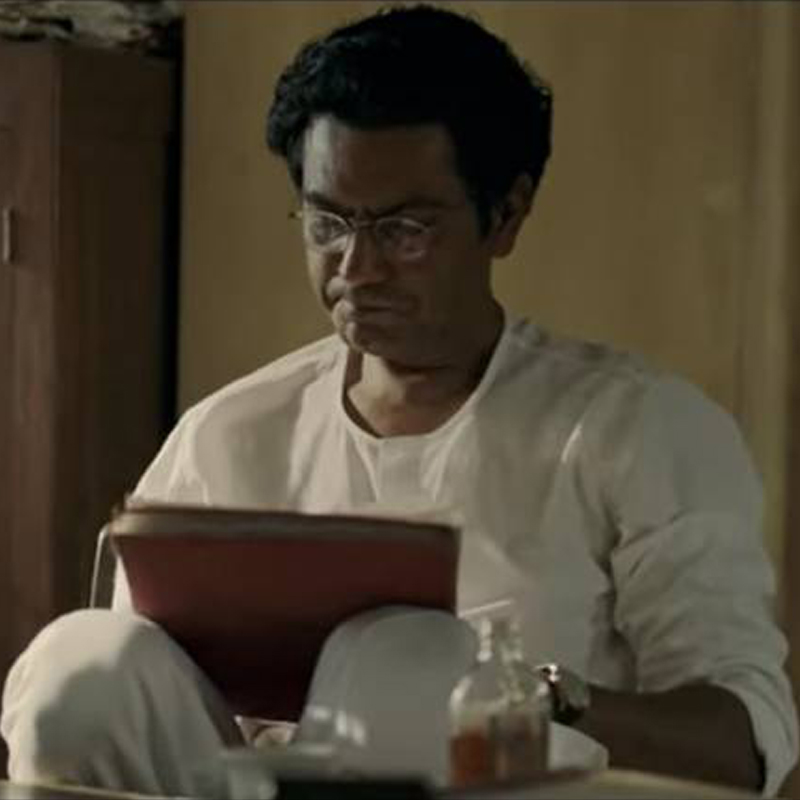
    Das’s film was on celebrated Pakistani writer Saadat Hasan Manto played by Nawazuddin Siddiqui, “In Defense of Freedom”. The film explores the need and importance of freedom of expression, as Manto questions why he should not write about the not-so-pleasant things in society. Through Manto’s life and preachings, Das emphasizes the need for freedom of expression in our society as well. “Manto is still so relevant even after all these years,” she said. “In any democratic or progressive society, freedom of speech, although ambiguous to define, should be cherished,” she added.

    Even as Nandita’s film drew attention to the freedom to express, the last film screened brought back to public memory the pain of the Partition. In his film “This Bloody Line”, filmmaker Ram Madhvani tells the story of Mohamed Ali Jinnah and the Partition and the fact that the Radcliffe Line led to the biggest mass migration in the history of mankind. He used poignant videos and pictures from the Partition of filled trains carrying people to their new country, of assaulted and injured women and children. “Till today, this line makes us bleed” said the concluding message. “This film is a reaction to the sadness and anger we feel,” he said.

  • Raees…..Don: The twisted tale

    Raees…..Don: The twisted tale

    MUMBAI: Playing a fictional don is not good enough, every hero wants a Deewar of his own, the film that cemented Amitabh Bachchan’s arrival as a star after Zanjeer. Deewar was the legendary film based on the life of Haji Mastan, Mumbai’s first don. But, Deewar was only inspired by Haji’s life with clever writing by the Salim-Javed duo which, without depicting violence in anyway, charted the life of a don more as a family drama as well as a conflict between law and outlaw.

    There have been more attempts recently at adapting real life criminals’ stories for films. None of these films tried to pass judgment on the criminal in its theme or paint him other than what he was. To see where things go wrong with Raees, it is necessary to know what the real don was and how the film presents him.

    Raees, though it does not credit the film as one based on the notorious Ahmedabad based criminal Latif, tries to present him as a benevolent do-gooder, a Robin Hood kind of don. Latif was a petty bootlegger in the city of Ahmedabad who, with the backing of various other criminals started out as a courier boy for a major bootlegger, eventually turning into one independently. Since alcohol in the totally dry state of Gujarat was the privilege of rich and influential,Latif seemed to be dealing with the right kind of people when it came to furthering his career.

    Latif specialized in inciting communal riots and soon became a tool in the hands of politicians. The city faced regular bouts of communal tensions during two occasions: the annual Rath Yatra and Makar Sankranti, the kite festival. Latif was known to play the lead role in inciting these riots. The local goon Latif graduated to become a don when he came into contact with Dawood and was instrumental in transporting the RDX used in the Mumbai bomb blasts. He later took refuge in Karachi with the aid of Dawood.

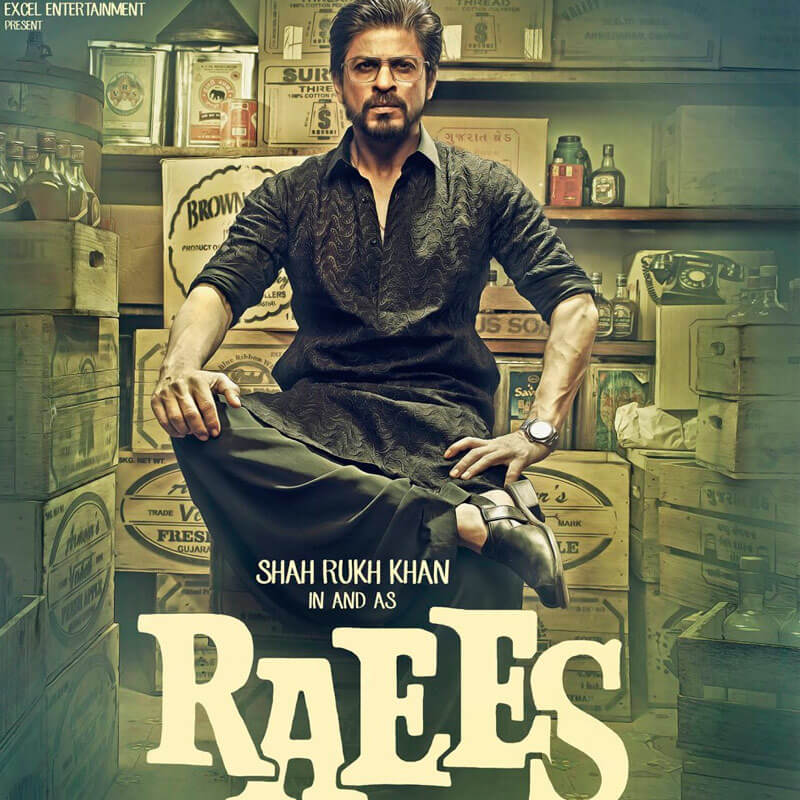
    Shah Rukh Khan plays the character based on the life of Latif. Suffering from weak eyesight, he can’t read the blackboard in school when asked. The family is very poor and can’t afford to buy him specs. Latif goes and steals the frame from a statue of Mahatma Gandhi. Poverty and his mother’s helplessness lead him to a local bootlegger, Atul Kulkarni, delivering bottles in his school sachet. As he grows up, he plans to start his own business. Talking about “Baniye ka deemag” and “Miyabhaiki daring”, it is strange that he plans to buy supply from Kulkarni himself to compete with him!

    Shah Rukh is now rich as well as influential. Everybody loves him be it Hindu or Muslim for he is a messiah who always stands for the poor and needy. He donates sewing machines to local women and gets justice for unpaid workers. He even plans a huge colony to settle poor people of his locality. So what if they are well settled in the heart of the city!

    There are riots in the city and Shah Rukh has nothing to do with it. He, in fact, is worried about people and children and provides food and milk for families and kids affected by the riots and the curfew-bound city.By now, Hindu and Muslim, both the communities adore him. Shah Rukh attacks an opposition leader’s rally and is asked by the CM to agree to go to jail to save face. He soon realises that the CM has betrayed him. He decides to fight the local municipal elections and wins to avail him bail from jail. (The real Latif fought the elections from six wards and won five.)

    But, now the CM is irritated with Shah Rukh and makes his life miserable. All his resources dry up and he is forced to seek financial help from a Mumbai don who asks him to run an errand for him: deliver a certain amount of smuggled gold which turns out to be RDX used for Mumbai bomb blasts of 1993. 

    There is nothing about Shah Rukh aka Latif running away to Dubai and later finding refuge in Pakistan.

    The film comes across all throughout as making a martyr out of a bad man. And, even otherwise, if one watches the film as a total work of fiction, it is a poorly conceived and executed film. A score of movies have been made on similar don stories and they only get worse with each attempt.

    There are two other tracks, both predictable; one is that of romance. Romance in this film is given. Shah Rukh and Mahira Khan seem to be in love with each other from the first time they meet. Soon they marry and Mahira joins in his illegal business as a helping hand. The other is that of the cop, Nawazuddin Siddiqui, who has sworn not to spare Shah Rukh, wherever he is transferred for doing that.The rest of the characters are mere caricatures. The first half of the film comes across as any making of a don story, the second half turns into a typical South Indian film where the bad man is good man.

    Raees has just about everything going wrong for it, from the choice of subject and the way it is moulded to make Shah Rukh a larger than life character, to the choice of female lead. While Shah Rukh plays his two faced personality sans conviction, Mahira Khan neither charms with her presence nor impresses with her performance. Nawazuddin promises to salvage the proceeds initially but the script holds him back as things proceed. However, he is the best part of the film. 

    The direction is patchy and attempts to portray the 1980s lacks conviction. Sets are shabby. Music is of no help. There is little scope for the editor. The film makes a hero out of criminal Latif in the process of making the film’s hero, Shah Rukh, larger than life.

    Raees has the advantage of a decent opening and a Republic Day holiday as a bonus but adverse reports will soon catch up with its box office status.

    Producers: Ritesh Sidhwani, Gauri Khan, Farhan Akhtar.

    Director: Rahul Dholakia.

    Cast: Shah Rukh Khan, Nawazuddin Siddiqui, Atul Kulkarni, Mahira Khan, Mohammed Zeeshan Ayyub.

    Kaabil….For select audience..

    Sanjay Gupta’s inspiration usually comes from South-East Asian films at times blended with a film from the West. Kaabil finds resemblance with Blind Fury (1989) and Broken (2014), from the US and Korea, respectively.

    That said, the film turns into a typical vendetta film, a trend started by South Indian films.When an injustice is done to a loving couple or a hero’s sister or mother falls prey to the villains, the hero seeks revenge. What is different here is that the lead actors, Hrithik Roshan and his lady love, Yami Gautam, are both blind.That adds a sympathy factor to the revenge saga. The handicap of momentary blindness has been used in various Kung Fu films over the years so the viewer would be quite familiar with the idea.

    Hrithik is a blind man living on his own. He has a talent for using different voices and is a popular dubbing artist for animation films. Through a common friend who is a matchmaker, he is introduced to Yami, who is also blind. She works for an NGO and also plays piano at a dance academy. While both are independent and reluctant to marry, they plan to meet again. What both also have in common is a sense of perception, a strong sixth sense.

    So far the going is good as there are some nice as well as emotional moments as both discover each other. The initial friendship turns into love and the couple decide to marry. The proceeds become heavy thereafter as a troublemaker, Rohit Roy, has bad intentions for Yami.

    Once while Hrithik is away at work, Rohit along with his sidekick, Md Sahidur Rehman, rapes Yami knowing both are blind and there is little they could do. Going to the police is of no help since Rohit’s politician brother, Ronit Roy, is a local councilor and can pull strings. Encouraged, Rohit decides to make it a routine to take advantage of Yami’s helplessness leading her to end her life.

    Frustrated by the police inaction, Hrithik decides to take matters in his own hands to settle score. This is what the film is about; a blind man plotting and taking revenge while making sure there is no way the cops can nail him. For he challenged the police that he will get even on his own.

    He plots each villain’s death differently using his talent of modulating his voice.
    Kaabil starts off well but the idea of bringing in a local politician, and a municipal councilor at that, makes the villain angle weak. That such a politician should be able to call the shots with a major metro police force does not quite convince. 

    Seeking revenge one by one is also oft seen in many films. That a blind man does all this is the USP of the film which may not be enough. The film’s music is a plus with the title song, Mai tere kaabil hun…… being the pick of the lot while Kuchh din se….. and Kissise pyar ho jaaye…. (Remix of old hit, Dil kya kare…. from film Julie) also being hummable. The cinematography is good. Editing could have been crisper. Action is commendable.

    The best part of the film is the performances by the lead pair, Hrithik and Yami. Hrithik is totally convincing as a blind man carrying a blank sort of look in his eyes through the length of the film. Yami complements him though her role is shorter. Ronit, Rohit and Sahidur are routine. Girish Kulkarni and NarendraJha as the cops are effective.
    Kaabil has had a weak opening. Thursday holiday and the weekend are expected to fare better but the target for the film is too high.

    Producer: RakeshRoshan.

    Director: Sanjay Gupta.

    Cast: HrithikRoshan, YamiGautam, Ronit Roy, Rohiit Roy.
  • Raees…..Don: The twisted tale

    Raees…..Don: The twisted tale

    MUMBAI: Playing a fictional don is not good enough, every hero wants a Deewar of his own, the film that cemented Amitabh Bachchan’s arrival as a star after Zanjeer. Deewar was the legendary film based on the life of Haji Mastan, Mumbai’s first don. But, Deewar was only inspired by Haji’s life with clever writing by the Salim-Javed duo which, without depicting violence in anyway, charted the life of a don more as a family drama as well as a conflict between law and outlaw.

    There have been more attempts recently at adapting real life criminals’ stories for films. None of these films tried to pass judgment on the criminal in its theme or paint him other than what he was. To see where things go wrong with Raees, it is necessary to know what the real don was and how the film presents him.

    Raees, though it does not credit the film as one based on the notorious Ahmedabad based criminal Latif, tries to present him as a benevolent do-gooder, a Robin Hood kind of don. Latif was a petty bootlegger in the city of Ahmedabad who, with the backing of various other criminals started out as a courier boy for a major bootlegger, eventually turning into one independently. Since alcohol in the totally dry state of Gujarat was the privilege of rich and influential,Latif seemed to be dealing with the right kind of people when it came to furthering his career.

    Latif specialized in inciting communal riots and soon became a tool in the hands of politicians. The city faced regular bouts of communal tensions during two occasions: the annual Rath Yatra and Makar Sankranti, the kite festival. Latif was known to play the lead role in inciting these riots. The local goon Latif graduated to become a don when he came into contact with Dawood and was instrumental in transporting the RDX used in the Mumbai bomb blasts. He later took refuge in Karachi with the aid of Dawood.

    Shah Rukh Khan plays the character based on the life of Latif. Suffering from weak eyesight, he can’t read the blackboard in school when asked. The family is very poor and can’t afford to buy him specs. Latif goes and steals the frame from a statue of Mahatma Gandhi. Poverty and his mother’s helplessness lead him to a local bootlegger, Atul Kulkarni, delivering bottles in his school sachet. As he grows up, he plans to start his own business. Talking about “Baniye ka deemag” and “Miyabhaiki daring”, it is strange that he plans to buy supply from Kulkarni himself to compete with him!

    Shah Rukh is now rich as well as influential. Everybody loves him be it Hindu or Muslim for he is a messiah who always stands for the poor and needy. He donates sewing machines to local women and gets justice for unpaid workers. He even plans a huge colony to settle poor people of his locality. So what if they are well settled in the heart of the city!

    There are riots in the city and Shah Rukh has nothing to do with it. He, in fact, is worried about people and children and provides food and milk for families and kids affected by the riots and the curfew-bound city.By now, Hindu and Muslim, both the communities adore him. Shah Rukh attacks an opposition leader’s rally and is asked by the CM to agree to go to jail to save face. He soon realises that the CM has betrayed him. He decides to fight the local municipal elections and wins to avail him bail from jail. (The real Latif fought the elections from six wards and won five.)

    But, now the CM is irritated with Shah Rukh and makes his life miserable. All his resources dry up and he is forced to seek financial help from a Mumbai don who asks him to run an errand for him: deliver a certain amount of smuggled gold which turns out to be RDX used for Mumbai bomb blasts of 1993. 

    There is nothing about Shah Rukh aka Latif running away to Dubai and later finding refuge in Pakistan.

    The film comes across all throughout as making a martyr out of a bad man. And, even otherwise, if one watches the film as a total work of fiction, it is a poorly conceived and executed film. A score of movies have been made on similar don stories and they only get worse with each attempt.

    There are two other tracks, both predictable; one is that of romance. Romance in this film is given. Shah Rukh and Mahira Khan seem to be in love with each other from the first time they meet. Soon they marry and Mahira joins in his illegal business as a helping hand. The other is that of the cop, Nawazuddin Siddiqui, who has sworn not to spare Shah Rukh, wherever he is transferred for doing that.The rest of the characters are mere caricatures. The first half of the film comes across as any making of a don story, the second half turns into a typical South Indian film where the bad man is good man.

    Raees has just about everything going wrong for it, from the choice of subject and the way it is moulded to make Shah Rukh a larger than life character, to the choice of female lead. While Shah Rukh plays his two faced personality sans conviction, Mahira Khan neither charms with her presence nor impresses with her performance. Nawazuddin promises to salvage the proceeds initially but the script holds him back as things proceed. However, he is the best part of the film. 

    The direction is patchy and attempts to portray the 1980s lacks conviction. Sets are shabby. Music is of no help. There is little scope for the editor. The film makes a hero out of criminal Latif in the process of making the film’s hero, Shah Rukh, larger than life.

    Raees has the advantage of a decent opening and a Republic Day holiday as a bonus but adverse reports will soon catch up with its box office status.

    Producers: Ritesh Sidhwani, Gauri Khan, Farhan Akhtar.

    Director: Rahul Dholakia.

    Cast: Shah Rukh Khan, Nawazuddin Siddiqui, Atul Kulkarni, Mahira Khan, Mohammed Zeeshan Ayyub.

    Kaabil….For select audience..

    Sanjay Gupta’s inspiration usually comes from South-East Asian films at times blended with a film from the West. Kaabil finds resemblance with Blind Fury (1989) and Broken (2014), from the US and Korea, respectively.

    That said, the film turns into a typical vendetta film, a trend started by South Indian films.When an injustice is done to a loving couple or a hero’s sister or mother falls prey to the villains, the hero seeks revenge. What is different here is that the lead actors, Hrithik Roshan and his lady love, Yami Gautam, are both blind.That adds a sympathy factor to the revenge saga. The handicap of momentary blindness has been used in various Kung Fu films over the years so the viewer would be quite familiar with the idea.

    Hrithik is a blind man living on his own. He has a talent for using different voices and is a popular dubbing artist for animation films. Through a common friend who is a matchmaker, he is introduced to Yami, who is also blind. She works for an NGO and also plays piano at a dance academy. While both are independent and reluctant to marry, they plan to meet again. What both also have in common is a sense of perception, a strong sixth sense.

    So far the going is good as there are some nice as well as emotional moments as both discover each other. The initial friendship turns into love and the couple decide to marry. The proceeds become heavy thereafter as a troublemaker, Rohit Roy, has bad intentions for Yami.

    Once while Hrithik is away at work, Rohit along with his sidekick, Md Sahidur Rehman, rapes Yami knowing both are blind and there is little they could do. Going to the police is of no help since Rohit’s politician brother, Ronit Roy, is a local councilor and can pull strings. Encouraged, Rohit decides to make it a routine to take advantage of Yami’s helplessness leading her to end her life.

    Frustrated by the police inaction, Hrithik decides to take matters in his own hands to settle score. This is what the film is about; a blind man plotting and taking revenge while making sure there is no way the cops can nail him. For he challenged the police that he will get even on his own.

    He plots each villain’s death differently using his talent of modulating his voice.
    Kaabil starts off well but the idea of bringing in a local politician, and a municipal councilor at that, makes the villain angle weak. That such a politician should be able to call the shots with a major metro police force does not quite convince. 

    Seeking revenge one by one is also oft seen in many films. That a blind man does all this is the USP of the film which may not be enough. The film’s music is a plus with the title song, Mai tere kaabil hun…… being the pick of the lot while Kuchh din se….. and Kissise pyar ho jaaye…. (Remix of old hit, Dil kya kare…. from film Julie) also being hummable. The cinematography is good. Editing could have been crisper. Action is commendable.

    The best part of the film is the performances by the lead pair, Hrithik and Yami. Hrithik is totally convincing as a blind man carrying a blank sort of look in his eyes through the length of the film. Yami complements him though her role is shorter. Ronit, Rohit and Sahidur are routine. Girish Kulkarni and NarendraJha as the cops are effective.
    Kaabil has had a weak opening. Thursday holiday and the weekend are expected to fare better but the target for the film is too high.

    Producer: RakeshRoshan.

    Director: Sanjay Gupta.

    Cast: HrithikRoshan, YamiGautam, Ronit Roy, Rohiit Roy.
  • Nawaz is face of Vodafone’s new campaign

    Nawaz is face of Vodafone’s new campaign

    NEW DELHI: Actor Nawazuddin Siddiqui is the brand ambassador in north India while Bobby Simha will be publicising the new Vodafone FLEX plan.

    Vodafone India Director-Commercial Sandeep Kataria told Indiantelevision.com it would be a high-decibel, 360-degree multi-media creative campaign to propagate the launch and introduce this new concept. This highly vibrant and impactful campaign will be seen across mediums — TV, print, OOH, radio and digital.

    Vodafone introduced Vodafone Flex to ease the problems of consumers who have to separately pay for voice data, STD calls, and Internet. Consumers will now pay a fixed fee for a period of 28 days that covers all.

    Kataria said this plan was only for pre-paid subscribers, and would not apply to post-paid consumers. He said it would take away the hassle of consumers of remembering dates when they have to pay and will be able to use their monthly subscription. Furthermore, he said that, if the full amount paid remained unutilised, it would be carried over to the next month.

    Consumers would receive a message three days before the period expires to let them know they need to renew their subscriptions. He said that 90 per cent of the consumers were still in the pre-paid segment.

    The rates would vary from city to city, and the rates in Delhi range from Rs 119 (325 Flex) to Rs 399 (1750 Flex).

  • Nawaz is face of Vodafone’s new campaign

    Nawaz is face of Vodafone’s new campaign

    NEW DELHI: Actor Nawazuddin Siddiqui is the brand ambassador in north India while Bobby Simha will be publicising the new Vodafone FLEX plan.

    Vodafone India Director-Commercial Sandeep Kataria told Indiantelevision.com it would be a high-decibel, 360-degree multi-media creative campaign to propagate the launch and introduce this new concept. This highly vibrant and impactful campaign will be seen across mediums — TV, print, OOH, radio and digital.

    Vodafone introduced Vodafone Flex to ease the problems of consumers who have to separately pay for voice data, STD calls, and Internet. Consumers will now pay a fixed fee for a period of 28 days that covers all.

    Kataria said this plan was only for pre-paid subscribers, and would not apply to post-paid consumers. He said it would take away the hassle of consumers of remembering dates when they have to pay and will be able to use their monthly subscription. Furthermore, he said that, if the full amount paid remained unutilised, it would be carried over to the next month.

    Consumers would receive a message three days before the period expires to let them know they need to renew their subscriptions. He said that 90 per cent of the consumers were still in the pre-paid segment.

    The rates would vary from city to city, and the rates in Delhi range from Rs 119 (325 Flex) to Rs 399 (1750 Flex).

  • Movies: A drab week of creative bankruptcy

    Movies: A drab week of creative bankruptcy

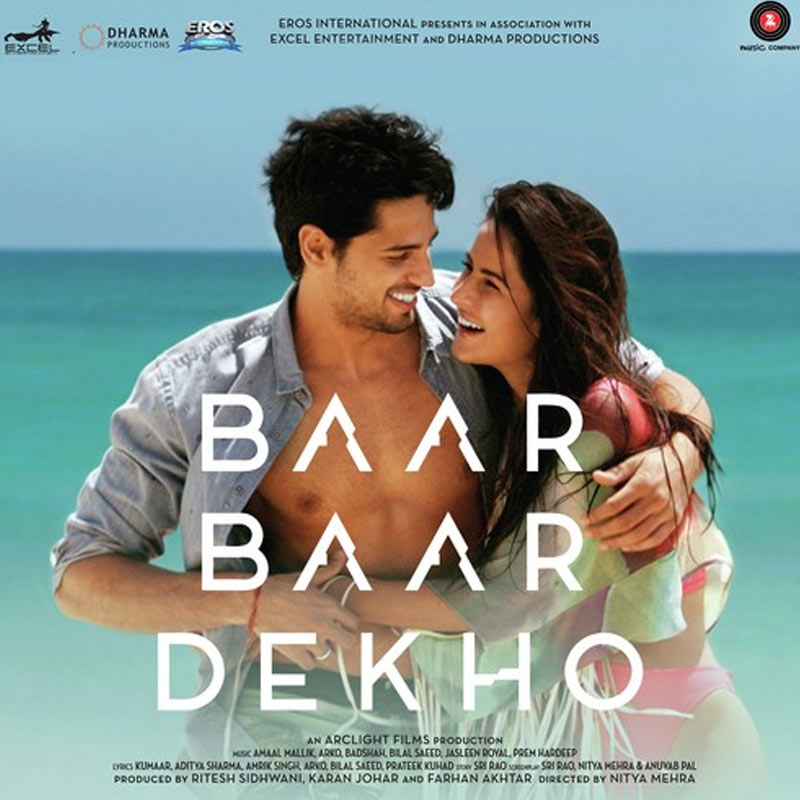
    MUMBAI: *Baar Baar Dekho meets with universally negative response from viewers. A half-baked idea gone totally haywire which makes watching the film tiring. Besides the story, the execution and length, the casting proved to be the last straw. The chemistry between Sidharth Malhotra and Katrina Kaif is non-existent. All that the film earned on the social media was puns galore on its title.

    The film opened with weak collections on Friday grossing just about Rs 6 crore with no significant improvement on Saturday while, on Sunday, the collections dropped, instead, to put together Rs 18.4crore during the opening weekend. The film may face trying times in the day ahead before it completes its first week run.

    *Freaky Ali, a sport-oriented comedy-romance, deals with the sport of golf, a sport alien to layman. The film banking totally on Nawazuddin Siddiqui to play the underdog urchin to excel in an elite sport did not quite manage to draw the crowds, and the sustenance thereafter seemed unlikely.

    The film opened with poor collections as expected and remained that way to end its opening weekend with Rs 6.4 crore. The film may end up with cancelled shows in the days to come for want of footfalls.

    *Akira adds to the list of rejected woman action-‘hero’ films. The protagonist, Sonakshi Sinha, turning to action after a number of romantic roles went against her image. Also, Anurag Kashyap as the main villain was taking the paying public for granted and added to the problems. The film had a below-average opening weekend, and could not add much over the next four days as it concluded its first week with Rs 24.1 crore.

    *Yeh Toh Two Much Ho Gaya, Sunshine Music Tours and Travels and Island City have proved to be disasters.

    *A Flying Jatt has managed to hold on to the second week run though the collections are on a lower side. The film added Rs 1.75 crore in its second week to take its two-week total to Rs 35.5 crore.

    *MohenjoDaro collections have dropped to below Rs 10 lakh in its fourth week making the film one of the biggest disasters in a long time.

    *Rustom collected Rs 2.1 crore in its fourth week to take its four-week total to Rs 123.7 crore.