
Tag: Nawazuddin

  • ‘Bajrangi Bhaijaan’: Sober Salman, excellent Nawazuddin steal the show

    ‘Bajrangi Bhaijaan’: Sober Salman, excellent Nawazuddin steal the show

    MUMBAI: Salman Khan turns producer with Bajrangi Bhaijaan and, at the same time, ventures into a different genre away from his usual action films. Salman has been doing action films on a regular basis since Wanted and it has generally worked for him. But, now, especially with a bunch of new generation actors, all with chiselled muscular bodies doing the same, it’s probably time for Salman to take a much needed detour. After all, how much can one differ in every action film? Instead of countering the law of diminishing returns, this film is meant to touch hearts.


    Salman is a diehard Lord Hanuman devotee, is clean hearted and swears by Hanumanji that he would never do anything wrong or illegal and would never lie. So much so that people call him Bajrangi, a name he loves. Following the myth, he even bows every time he sees a monkey. His introduction scene comes through a group dance he is performing in the praise of Hanumanji at a local temple in his native town.As he sits down for a glass of water, he sees a six year old girl. Salman offers her water and she gulps it down to the last drop. Realising she could be hungry as well, he orders a paratha for her but she signals for two.


    The doll-like girl, Harshaali Malhotra, is speech impaired and,at an elder’s suggestion, is on a visit to the dargah of Nizamuddin Chishti in Delhi from her native town in Pakistan occupied Kashmir. Her mother is told that whatever one wishes for at the dargah comes true. Having paid their visit to the dargah, mother and daughter are on their way back to Pakistan on the Samjhauta Express. The train is still on Indian territory and has taken a long halt because of a technical problem. While all others are sleeping, Harshaali spots a lamb near the train, the kind she loved to play with in her native village. She can’t resist the urge to go cuddle it and gets down from the train.


    While Harshaali is playing with the lamb, the train starts moving, leaving her behind. Distraught, the girl sees a goods train come to a stop there. She boards it and ends up in Salman’s town. After being fed parathas, she tags on to Salman not willing to leave him. Salman tries various ways to pass the responsibility but fails. He has to return to Delhi where he has shifted after his father passed away and where he lives with his father’s friend, Sharat Saxena. He has no alternative but to take her to Delhi with him.


    Sharat has a pretty daughter, Kareena Kapoor. Soon, Kareena falls for Salman’s simple ways. This romance, subtle though, and gradually finding out about where Harshaali hails from takes almost all of first half of the film. It is slow, feels like it is not going anywhere and makes one restless. Since Harshaali can’t speak, Salman reels off names of all the towns in the vicinity. After all, kids get lost in crowded places like a fair or a pilgrimage. Harshaali can’t relate with any city from the names.


    Salman, himself a guest in Sharat’s house, is under pressure to find Harshaali’s folks. Salman convinces him that she sould be a Brahmin like both of them looking at how fair she is. When he watches her craving for non-veg food, he assumes she is a Kshatriya.It is during an India-Pakistan one day match the family is watching on TV that they realise Harshalli is from Pakistan.


    Failing to find a way to send her to Pakistan on her own, through the embassy or through an agent, he decides to take her home on his own. That is when the film takes a direction and has some better moments. Nawazuddin Siddqui’s entry soon after adds some distraction and interest in the proceedings. A small-time stringer trying to sell his footage to TV channels, almost always unsuccessfully, he picks up the story that a spy, Salman, has crossed over illegally into Pakistan. He shoots Salman as he is escaping from a police station. He also starts following him and listens to Salman’s story as he narrates it to the co-travellers on the bus.


    Nawazuddin has had a change of heart realising that Salman is not a spy and has entered the country with noble intentions. He now becomes Salman’s escort helping him along as the police is hot on their trail.When no news channels is willing to accept Nawazuddin’s footage or version of the story, he finally takes recourse to the net, splashing the true story with videos online.


    India and Pakistan are uneven enemies but both share similar sentiments and the writer and director use it to come up with an emotional climax. Nawazuddin’s posts on the net spread Salman’s message: ‘Being Human’ giving the film its best moments.


    Direction is apt living up to standard set by Kabir Khan with his last couple of films; climax wins the battle for him. The music is not much to hum about. Editing needed to be crisper. Dialogue is claptrap atplaces. Cinematography is good.


    Salman Khan brings to the fore his sober side and convinces the viewers with his portrayal of a simple, honest man. Kareena Kapoor does not have a meaty role, yet manages to make her presence felt. Nawazuddin excels. The central character, Harshaali is the casting coup and she manages to deliver as expected. The supporting cast is okay.


    Bajrangi Bhaijaan appeals mainly to the gentry and a Salman film being inevitable for masses, also to single screen audience. Releasing worldwide on the Eid weekend with an open two week run, there is no stopping this film at the box office.


    Producers: Salman Khan, Kabir Khan, Sunil Lulla

    Director: Kabir Khan

    Cast: Salman Khan, Kareena Kapoor,Harshaali Malhotra, Nawazuddin Sidiqui, Sharat Saxena, Om Puri (guest artiste), Adnan Sami (cameo)

  • NYIFF: ‘Labour of Love’ wins best film; Nawazuddin & Kalki bag best actor awards

    NYIFF: ‘Labour of Love’ wins best film; Nawazuddin & Kalki bag best actor awards

    NEW DELHI: Labour of Love written and directed by Aditya Vikram Sengupta won awards for best film, best screenplay and best director award at the New York Indian Film Festival (NYIFF).


    On the other hand, actor Nawazuddin Siddiqui got the Best Actor award for Haraamkhor, whereas Kalki Koechlin won the Best Actress award for her performance in


    In Haraamkhor, which is directed by Shlok Sharma, Siddiqui plays a married teacher in love with his student, essayed by Shweta Tripathi. In Margarita, With a Straw,directed by Shonali Bose, Koechlin is seen as Laila, an outgoing wheelchair bound teenager with cerebral palsy who is absolutely determined to have a normal life despite her challenges.


    The week-long 15th annual festival ended earlier this month with the New York premiere of Dum Laga Ke Haisha, a Yash Raj production starring Ayushmann Khurrana and debutante Bhumi Pednekar, directed by Sharat Katariya.


    Set in the crumbling environs of Calcutta, the film Labour of Love tells the story of two ordinary lives suspended in the duress of a spiraling recession. They are married to a cycle of work and domesticroutine and long stretch of waiting in the silence of an empty house; they share each other’s solitude in pursuit of a distant dream that visits them briefly every morning.


    Vignesh and Ramesh received the Best Child Actor award for the Tamil film Kaakaa Muttai. Directed by Manikandan M, the film tells the story about how two slum boys are consumed by the desire to taste a pizza after the opening of a pizza parlour on their old playground. Realizing that one pizza costs more than their family’s monthly income, they begin to plot ways to earn more money – inadvertently beginning an adventure that will involve the entire city.


    Seek and Hide, a short film directed by Manoj K. Nitharwal starring Mohan Agashe, Seema Biswas, Shalva Kinja Wadekar, Suleman, Khushboo Upadhyay, and Shabnam Sukhdev, won the Best Short film award. 


    Daughters of Mother India directed by Vibha Bakshi won the Best Documentary award. The documentary is a filmmaker’s journey through the aftermath of the horrific rape and murder of a 23 year old medical intern in Delhi on 16 December, 2012. For weeks mass protests filled the streets of India and the country witnessed ‘gender consciousness’ and extraordinary solidarity by the ordinary citizens – like never before.


    Filmmakers like Vishal Bharadwaj, Hansal Mehta, Shonali Bose, Dev Benegal and actors including Koechlin, Agashe, Samrat Chakraborty and others walked the red carpet.

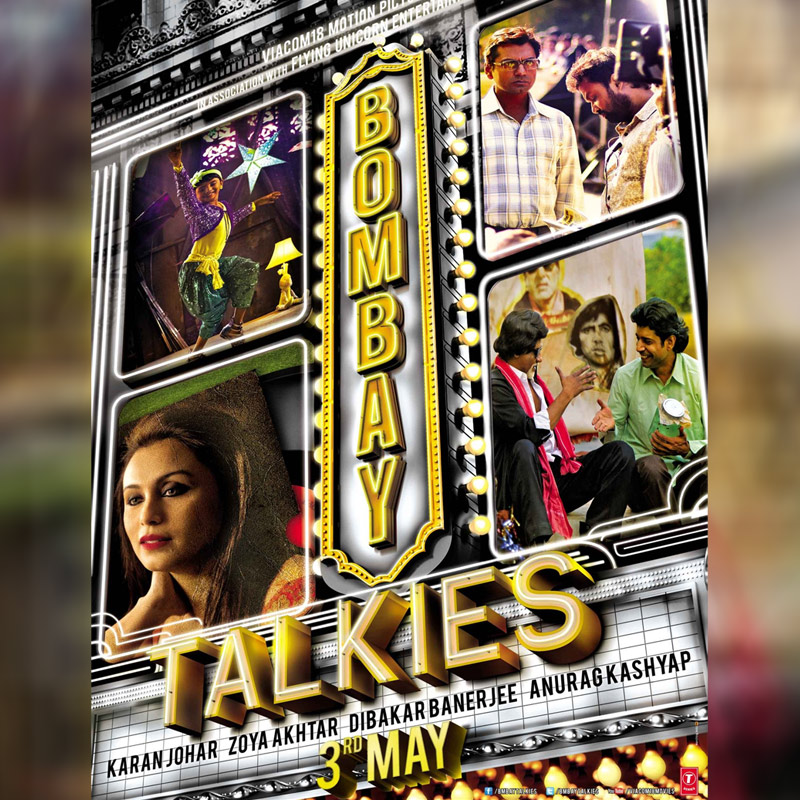
  • Bombay Talkies : A montage of cinema

    Bombay Talkies : A montage of cinema

    MUMBAI: Bombay Talkies is a 128-minute film made to pay tribute to the Indian film industry on its completing 100 years. The film tells four stories directed by four filmmakers: Karan Johar, Dibakar Banerjee, Zoya Akhtar and Anurag Kashyap. These are followed at the end by the use of a montage created with the participation by all the top artistes from past and present through a song.

    Producers:Viacom 18 Motion Pictures, Ashi Dua.
    Director: Karan Johar, Dibakar Banerjee, Zoya Akhtar, Anurag Basu.
    Cast: Rani Mukerji, Randeep Hooda, Saqib Saleem, Nawazuddin Siddiqui, Vineet Kumar Singh, Sadashiv Amrapurkar, Ranvir Shorey, Naman Jain, Sudhir Pandey, Khushi Dubey, Amitabh Bachchan and Katrina Kaif incameo

    The first feature by Johar (27 minutes) is about a long-married couple, both professionals in the media, Rani Mukerji and Randeep Hoooda, and co-starring Saqib Saleem. Saleem is a fresh intern at the newspaper where Mukerji is the associate editor. She prefers to sit among her colleagues rather than boxed in a cabin and is an amiable kind. Saleem befriends her instantly and informs her that he is gay. He has a way with words and is full of wit. He is invited over for dinner at Mukerji‘s for his birthday where Hooda is first indifferent to him but later feels that there is more to Saleem than his wisecracks. The story of a happily married couple and their lives changes after that day.

    This is an interesting story thanks to its humour and with restrained performances by Mukerji and Hooda and a sparkling one by Saleem.

    The feature by Banerjee (26 minutes) is about a failed Marathi stage actor, Nawazuddin Siddiqui, whose only connection now with acting is telling his daughter film stories while enacting parts of them. This one is based on a short story, Patol Babu, Film Star, by Satyajit Ray. One day, Siddiqui is on his way for a job of a building security man. He is late and the job has been taken. On his way back, he

    watches a film being shot on the streets. As he penetrates the crowd of onlookers to come ahead for a better view, he is offered a passing shot in the film. He has to pass the star and bang into him and then react with ‘Aeeeeeeee‘. While imagining his dialogue to be all the powerful ones from past films he has mouthed a hundred times he has an encounter with the soul of his father, Sadashiv Amrapurkar, and gets into a debate. He comes out enlightened, suggests to the crew that it made no sense him walking straight and banging into the star. Instead, it would make more sense if he was reading a paper as he walked and banged. His suggestion is welcomed. Shot is okay in one go. Excited that finally he has a new story to tell his daughter that of his own success, he does not even wait to collect his remuneration for that one shot and rushes home.

    This one is a showcase of Nawazuddin‘s versatility as he shows his comfort with the Marathi language as well as character.

    In the feature directed by Akhtar (24 minutes), 12-year-old Naman Jain is out watching a movie with his parents and sister, Khushu Dubey. There comes a song performed by Katina Kaif, ‘Sheila ki jawaani‘, and the boy is absorbed as he watches all the moves made by Kaif. Back home, he gets into his sister‘s clothes and starts to mimic the steps only to be caught by his father, Ranvir Shorey. Shorey wants his son to play football and be athletic, not dance in girls‘ clothes. Then Kaif is on TV telling her viewers to be determined and keep one‘s desires to oneself. Shorey shows a clear gender bias as he would rather pay Rs 3000 for his son‘s football coaching which he hates than spend Rs 2000 on his daughter‘s school picnic. Since Jain has shared his passion for dancing with his sister, he decides to do something about her school trip. After opening piggy banks, they are still Rs 250 short. A show of Naman‘s dances is organised in the building backyard. ‘Shiela ki jawaani‘ saves the day.

    An eternal debate about parents forcing own aspirations on children and their bias towards boy child.

    The last feature, directed by Kashyap (30 minutes) stars Sudhir Pande and is about a dying man‘s last wish to have Amitabh Bachchan taste a piece of murabba from his jar and return the rest so that he may taste a bit everyday and have a longer life. The man‘s father had desired Dilip Kumar to do the same with a jar of honey which Pande was made to carry from Allahabad to Mumbai to meet Dilip Kumar and ask him to do the needful. Pande‘s emotional and obedient son, Vineet Kumar Singh, proceeds to Mumbai to meet Bachchan. After days of trying, he finally meets Bachchan who obliges, no questions asked.

    This purposeless story seems more about a tribute to Bachchan and his popularity.

    The montage tribute song that marks the end of the film is the most watchable.


    Shootout At Wadala: A gory encounter

    MUMBAI: Shootout At Wadala is a chapter chronicled in S Husain Zaidi‘s book on Mumbai underworld about the rise of Dawood Ibrahim Kaskar. However, the film is not really about Dawood Ibrahim as the book is. Not only did Dawood neutralise many reigning dons like Haji Mastan and Karim Lala on his way up, he also created some and met some on the way. Two such people were Manohar Surve aka Manya Surve. This film aspires to make a Deewaar out of Shootout At Wadala using Manya Surve‘s story. But Manya Surve is just a chapter in Dawood story and remains just that. Deewaar was a dramatised version of the rise of Haji Mastan, who was a living mystery for many at the time. He was linked to film stars as well as other city elite and hence had his own glamour. In comparison, to today‘s generation, Manya Surve comes out of the blue.

    Producers: Sanjay Gupta, Anuradha Gupta, Shobha Kapoor, Ekta Kapoor.
    Director: Sanjay Gupta.
    Cast: John Abraham, Anil Kapoor, Tusshar Kapoor, Kangna Ranaut, Manoj Bajpai, Sonu Sood, Ronit Roy, Mahesh Manjrekar, Ranjeet with cameos by Jackie Shroff, Akbar Khan and item numbers by Sunny Leone, Priyanka Chopra and Sophie Choudhary

    John Abraham (Manya Surve), a Mumbai youth and diligent student, is honest to the core and with only one aim: to graduate and bring his mother, Soni Razdan, out of the misery his stepfather has put her through all her life. He has a steady girlfriend, Kangna Ranaut, whom he refuses to help during exams as he does not want to get caught doing any wrong which may derail his plan. Abraham‘s step-brother, though debarred from the city, lands up at home. His enemies soon follow him and are about to kill him. Abraham, a simple, non-violent lad, intervenes on the goading of Ranaut and during that time his brother grabs the opportunity and stabs the last of his enemies attacking him.

    It is the day of the result and Abraham is on the way to check how he did via his mandatory visit to the temple when the police too reach his college. After being beaten in front of the entire college crowd, he is taken in custody for the murder his brother committed. That there is a conspiracy to frame Abraham is revealed only much later. Abraham‘s life does a cartwheel. His future plans of a secure job, marriage and happy life for his mother all end as he is sentenced to life imprisonment along with his brother. The brothers are attacked in jail and while his brother is killed, Abraham is saved by Tusshar Kapoor. Abraham knows there is no turning back now but to rise on the path he has been forced on, that of crime.

    A bond is formed between Abraham and Kapoor and both escape from jail. It has been nine years and that time has taught the duo all the tricks of the crime world and of survival. They need to join some group and decide on Kaskar brothers, Manoj Bajpai and Sonu Sood, though here they are referred to as different names instead of Sabir and Dawood. But instead of joining them, they come back as enemies of these brothers who lead the most dreaded gang in South Bombay at the time because of which no other gang will accept them anymore.

    Abraham decides to form his own gang with the ultimate aim of ruling Bombay, becoming ‘Bambai ka Baap‘. Soon a gang is formed, adding some expert criminals on its roster, like Siddhant Kapoor, a sharpshooter etc. Meanwhile, Ranaut has also returned to his life, duly widowed. As the Surve saga unfolds and meets its inevitable end, there is gore, violence, bullets flying, use of foul words, some sex and item numbers. There are also known faces for cameos like Akbar Khan playing Haji Mastan, Ranjeet as a dada whose conspiracy it was to frame Abraham and Jackie Shroff playing the commissioner of police. His gang members are either killed by the Kaskars or taken in by the police. Left alone, Abraham is holed up at a safe location. But he is bored and wants to break out and leave the city with Ranaut. Ranaut is deceived into believing that police wanted to save Abraham‘s life from the Kaskar gang. Anil Kapoor, the cop chasing Abraham learns about his plan to meet her at Wadala College the next day. A posse of policemen led by Anil Kapoor, Ronit Roy and Mahesh Manjrekar rains bullets on Abraham to carry out the first acknowledged encounter by Mumbai police.

    The narration of Shootout At Wadala is in flashbacks. Abraham is shot fatally and in the pretext of taking him to hospital, Anil Kapoor whiles away time as he dies while listening to the story of Manya Surve. Thus the story proceeds in a number of flashbacks, often confusing the viewer about the time factor. Also, though it may be the first encounter, it is not the first gang world film and hence no novelty including the deception of Ranaut which is similar to a recent film. This also makes the flow of the film suffer. Sanjay Gupta shows some enterprise in shot taking. While the Sunny Leone item number is good, the one on Priyanka Chopra has no appeal and Ala re ala…. is good for front bench masses. Attempts at creating claptrap dialogue have worked a few times but often the result is a blunt nothing. Photography is good. Despite a crowded screen, it is John Abraham‘s show all the way and he does justice to the character of Manya Surve. Tusshar Kapoor is an excellent foil to the protagonist. Ranaut is incidental to the story. Anil Kapoor, Manoj Bajpai, Sonu Sood, Ronit Roy, Mahesh Manjrekar are good in support.

    Shootout At Wadala has its best prospects in the Bombay circuit, especially the Maharashtra belt and its single screens are expected to do better than multiplexes.