Tag: Naveen Jhunjhunwala

  • BBC to launch new business programme from India

    BBC to launch new business programme from India

    MUMBAI: The BBC is launching a new business programme, broadcasting from the BBC’s Delhi bureau and air on both BBC World Service English (radio) and BBC World News (TV). The show, WorklifeIndia, will start from 9 November at 9 pm.

    BBC Global News India COO Naveen Jhunjhunwala said, “We are very excited to be collaborating with BBC World Service to bring this new programme to BBC World News viewers, thanks to our special Delhi studio adapted for both radio and TV, particularly as Ipsos has just named the BBC as the top international news brand in India this week.”

    The show will be a half-hour weekly programme providing real-time conversations on the realities of modern life. Anchored from the Delhi studio, specially adapted for TV and radio, and presented by Divya Arya and Devina Gupta, it will tackle issues around money, work, family, business and finance for both a South Asian audience and global audience. The aim is to offer a positive understanding of the changing factors that shape all our lives. The programme will then go daily in Spring 2019, and will also be available as a podcast.

    BBC Indian languages head Rupa Jha said, “It is a programme about money and opportunity but one that’s also about saving, spending, and sharing what money can give and recognising the daily reality of a world of huge opportunities and huge disparities.”

    The programme will pick up on key issues to extract global lessons from local issues. Guests and panelists will be drawn from the business community, academics and experts in Delhi and Mumbai. The show will also leverage the wealth of expertise and talent in the BBC’s Delhi and Mumbai bureaus from across the BBC’s English and Language services. It will also draw on the business unit's expertise and contacts in London, New York, Singapore and elsewhere.

  • BBC.com sees record traffic in India post Brexit results

    BBC.com sees record traffic in India post Brexit results

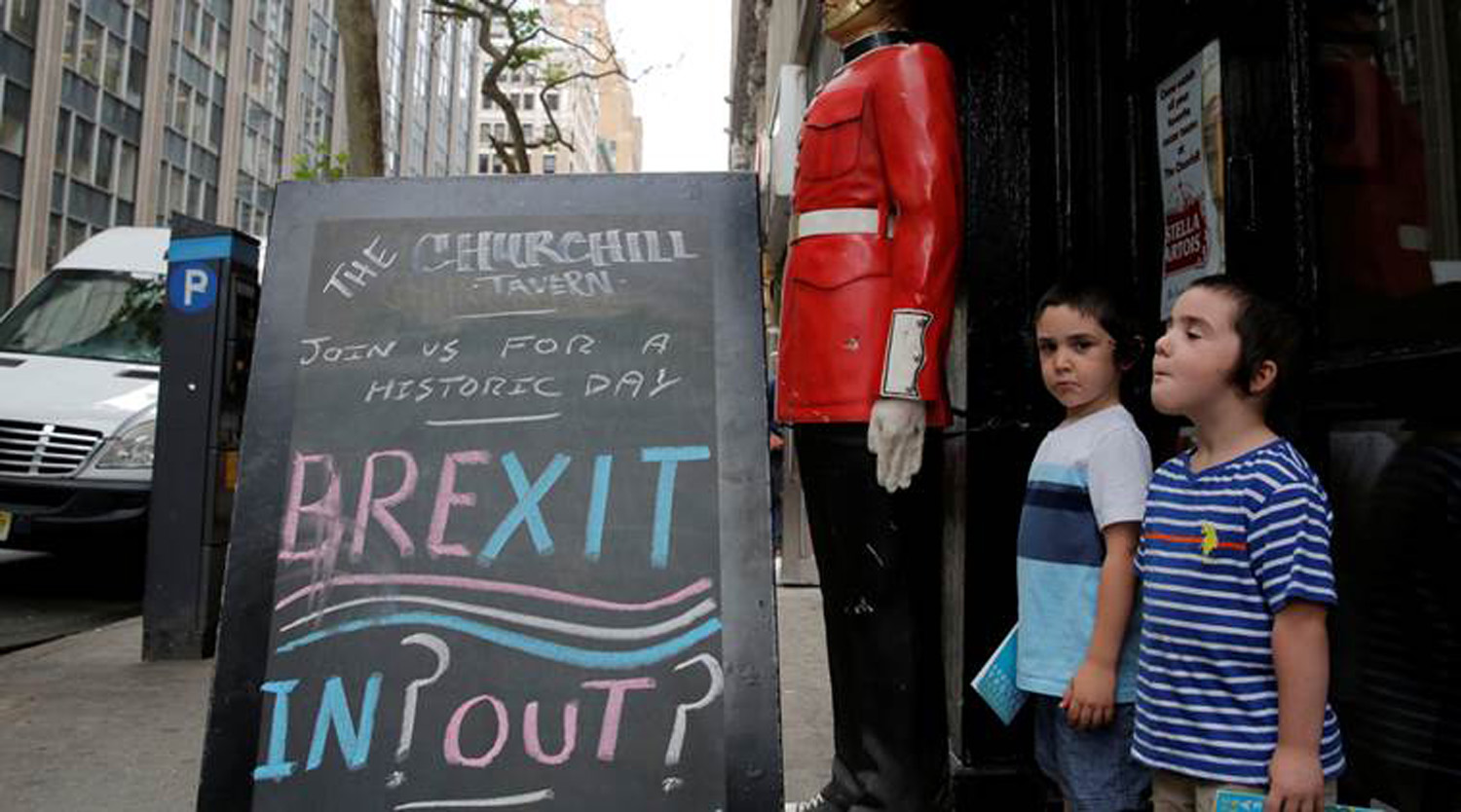
    MUMBAI: Indians seeking the latest on the UK’s vote to leave the European Union have helped BBC.com reach a record breaking spike in traffic. On the day the historic result became clear– June 24, the BBC’s international news services were in demand as people around the world sought to understand what the next steps are and what it could mean for them.

    Operating a dedicated url during the campaign at bbc.com/eureferendum and following up with bbc.com/brexit to bring audiences updates after the result, meant the global news platform has been able to provide a continuing wealth of content drawing on the BBC’s network of experienced correspondents particularly across politics, business and finance (such as EU referendum: Will India benefit from Brexit? and UK starts post-Brexit trade talks with India)

    Globally BBC.com attracted more than 21million unique browsers and 114million page views on results day (Friday 24hJune) alone – with 30million unique browsers and 170million page views across the weekend*.

    In India alone, unique browsers increased by 170% with page views going up by 324%, when compared to the average daily amount in May 2016 as per Adobe Digital Analytix.

    Page views per browser stood at 3.9 on the day of the result which was +56% compared to average daily figure in May 2016*. Even after the initial furore around the result had died down in India the daily average of unique browsers and page views was still 44% and 43% more respectively after 72hours, than the average daily traffic for May*.

    Speaking about the spike in traffic, BBC Global News COO Naveen Jhunjhunwala said,“These record figures are testament to the effort of the BBC World News teams, as they have worked tirelessly to help our global audiences make sense of this historic and fast paced story. That so many people, not just in India but around the world, made BBC.com their go to place for impartial trusted, information and analysis on the decision by UK voters to leave the European Union is incredibly heartening.”

  • BBC.com sees record traffic in India post Brexit results

    BBC.com sees record traffic in India post Brexit results

    MUMBAI: Indians seeking the latest on the UK’s vote to leave the European Union have helped BBC.com reach a record breaking spike in traffic. On the day the historic result became clear– June 24, the BBC’s international news services were in demand as people around the world sought to understand what the next steps are and what it could mean for them.

    Operating a dedicated url during the campaign at bbc.com/eureferendum and following up with bbc.com/brexit to bring audiences updates after the result, meant the global news platform has been able to provide a continuing wealth of content drawing on the BBC’s network of experienced correspondents particularly across politics, business and finance (such as EU referendum: Will India benefit from Brexit? and UK starts post-Brexit trade talks with India)

    Globally BBC.com attracted more than 21million unique browsers and 114million page views on results day (Friday 24hJune) alone – with 30million unique browsers and 170million page views across the weekend*.

    In India alone, unique browsers increased by 170% with page views going up by 324%, when compared to the average daily amount in May 2016 as per Adobe Digital Analytix.

    Page views per browser stood at 3.9 on the day of the result which was +56% compared to average daily figure in May 2016*. Even after the initial furore around the result had died down in India the daily average of unique browsers and page views was still 44% and 43% more respectively after 72hours, than the average daily traffic for May*.

    Speaking about the spike in traffic, BBC Global News COO Naveen Jhunjhunwala said,“These record figures are testament to the effort of the BBC World News teams, as they have worked tirelessly to help our global audiences make sense of this historic and fast paced story. That so many people, not just in India but around the world, made BBC.com their go to place for impartial trusted, information and analysis on the decision by UK voters to leave the European Union is incredibly heartening.”

  • IDOS 2014: News broadcasters still struggling to make money

    IDOS 2014: News broadcasters still struggling to make money

    GOA: The news television industry has been witnessing losses for several years now. To throw some light on what are the hurdles and what needs to be kept in mind while forming regulations, NDTV vice chairperson KVL Narayan Rao, Times Television Network MD and CEO MK Anand and BBC World News India COO Naveen Jhunjhunwala took the stage at IDOS 2014 for the session ‘News Television- a specialised beast’ that was moderated by Castle Media founder Vynsley Fernandes.


    The session took off with a keynote from industry veteran Rao, who spoke of the issues facing the most competitive news industry. “News has always been a high cost, low return industry and since 20 years, there has been an unholy dependence on advertising revenue in an environment that doesn’t seem to be changing,” he said while adding that one needs to consider the importance of news in such a landscape. “Not a single news operator in this country is making money,” he stressed.


    The recent extension to digitisation has also not gone down well with Rao, who just this week stepped down as the president of the News Broadcasters Association. “Digitisation was to finish by this year but has been extended till 2015 and 2016. To say the least, I am very disappointed with this decision,” he said.


    As far as regulations are concerned, he says that content should always be kept separate from carriage. “The business environment that we are operating in is one where we pay a large amount of money as carriage fees. For most news broadcasters, one third of operating cost goes as carriage fees while 90 per cent of revenue is generated from advertising and in some cases 100 per cent. All news broadcasters today pay a large amount as carriage fees and it is a terrible burden that we find impossible to bear,” said he. All the stakeholders must see the way the news channels operate and not look at regulations in isolation.


    News channels during primetime end up showing only panel discussions because of the lack of resources. The western countries have subscription revenue of up to 60 to 70 per cent. All these issues were meant to change after digitisation with subscription revenues kicking in and carriage fees eventually coming down. However, Rao hopes that the new government helmed by Narendra Modi would do all it can in its new ‘Digital India’ plan.


    He spoke of the statement by the Editors’ Guild regarding denial of access to journalists by government and increasing number of significant government authorities taking to social media to give information. He says that this serious issue needs to be addressed since news is not about press releases but rather about ‘ferreting information out’.


    Adding to the issues faced by the industry was Anand. He said that the last six months have seen a loss of collective bargaining due to the deaggregation paper by the Telecom Regulatory Authority of India (TRAI). “The paper has hit news broadcasters and unless one diversifies into entertainment, it is difficult to survive,” he said. In order to make money, the idea is generally to go heavy on branding and marketing and create an aura around the channel. The lopsided ad sales revenue also adds to the woes.


    Jhunjhunwala said that the BBC has been broadcasting news for decades and the technological advancements have allowed it to make it smoother and more cost effective.


    The ad cap has also hit them hard by restricting advertising air time to 12 minutes per hour. Here, the panel agreed that there are times when channels go live for hours without showing any ads and there is no provision to make up for the lost time. Fernandes questioned that in such a scenario, could there be alternative sources of revenue that can be put into use.  Rao said that now, to monetise news one needs to generate revenue through different streams such as sponsorships and associations. “But how can you not have subscriber revenue?” he questioned.


    Fernandes then questioned if there should be a limit on the number of channels that exist to which Rao said that the government should not curtail the number of channels because it is a free market. However, he feels the politicians and political parties should not be allowed to be in news.


    Anand said that the regulator could think about regulating carriage fees with some focus on news channels. He also pointed out that a decade ago, ad spots on news channels were sacrosanct but today it is being sold at one third the rate.


    Jhunjhunwala said that the government could look at raising the FDI limit on news to bring in more investment. There were talks of raising it to 49 per cent but no one has addressed the issue.


    Rao finally concluded by saying that though the digitisation deadline has been extended it will hopefully iron out things.

  • Moving beyond television

    Moving beyond television

    MUMBAI:  The online space for content is growing, not just in terms of online production houses coming up but also in terms of innovation. But how much of this affects the distributors and operators in India? Well! that was the talking point of a discussion titled ‘Beyond the Television Screen –Distributors and Operators’ at the afaqs! TV.NXT 2014 summit.


    Joining the panel were BARC India chief executive officer Partho Dasgupta, PwC India Entertainment and Media leader Smita Jha, SureWaves Media chief operating officer Mandar Patwardhan, BBC Global News (Indian operations ) chief operating officer  Naveen Jhunjhunwala and Indiantelevision.com founder, CEO and editor in chief Anil Wanvari who also anchored the discussion.


    Dasgupta began by saying that while today a lot of new and innovative content was available on multiple platforms, the popularity depended on the quality of content being produced.  When asked if the rating agency would be taking steps to monitor any online content, Dasgupta said, “We will set up a system that is platform agnostic and even monitor digital content.”


    Enlightening the session with interesting facts, he said that while starsports.com received 2.8 million hits during the last IPL season, NDTV received 13 billion hits for its coverage of the Lok Sabha elections.


    Talking about BBC’s digital strategy, Jhunjhunwala emphasised on how a specialised in-house team has been setup that specifically caters to producing online content for its Indian website. “The India page has a lot of content that is localised. The challenge for us is to have Indian local content that has an international perspective,” he said.


    Jha, commenting on global trends, revealed that worldwide TV advertisements were growing at five per cent while internet advertising was growing at 10 per cent. But the size of the internet advertising market is still evolving. “Advertising agencies today have specific teams to produce online content. It is essential for brands today to come up with one to two commercials every 15 days,” she said.


    On the other hand, Patwardhan said that while traditional mediums have already begun to adapt to the digital environment, the reverse could also take place wherein online content producers would switch to the linear television format and a crossover would take place.


    Wanvari at this point interjected saying that broadcasters today solely wanted to own the IP and producers had very little time, since they are busy with their shooting schedules, to put forward their point for joint ownership of an IP. 


    Jha in her parting words said that the IP should rest with the producer and not the broadcaster so that innovation could be introduced in multiple formats for audiences.

  • BBC Global News appoints Naveen Jhunjhunwala as India COO

    BBC Global News appoints Naveen Jhunjhunwala as India COO

    MUMBAI: Last month, indiantelevision.com broke the news that BBC Global News India COO Preet Dhupar had decided to move out of her 14 year stint with the company. Now, the global broadcaster has found a person to fill the space in Naveen Jhunjhunwala.


    Jhunjhunwala was previously with Turner International India for 15 years as vice president for corporate finance and administration, looking after the financial functions for distribution, ad sales and marketing of CNN International, Cartoon Network, POGO and HBO in India, Pakistan, Sri Lanka, Maldives, Bangladesh, Nepal and Bhutan.


    Speaking on his new role Jhunjhunwala said, “I am delighted to be joining the BBC. I am looking forward to taking up my new role and to being part of the talented team at one of the world’s most renowned news operations. The BBC is an iconic brand and carries a special position for the Indian audience and in today’s dynamic market place, with digitisation, growing online penetration and the BBC’s special focus on India, it has exceptional potential for growth in both television and online space.”


    At Turner, he helped launch the company’s India operatons including the CN subscription business, launch of new channels like HBO, POGO and WB. He also helped set up the Zee Turner distribution JV, including MediaPro as well as CNN-IBN. Prior to Turner, he was with Ernst & Young in New Delhi.


    The role of COO for India was created last year to better organise the company’s business operations in a growing Indian market. Apart from looking at finance, Jhunjhunwala will also be responsible for determining BBC’s commercial priorities and targets for news across the country as well as ad revenue, content distribution and audience growth.


    “I’m pleased to welcome Naveen on board at such an exciting time for the BBC’s news interests in India.  Naveen brings with him a wealth of experience and will be a real asset to the BBC, building on the successful work to date of our teams in Delhi and Mumbai,” said BBC Global News CEO Jim Egan.


    “India is a country we are proud to have been broadcasting to and from for more than seven decades and we remain committed to our audiences here. We have featured India in two dedicated programming seasons on BBC World News already this year, have recently launched a new Indian edition of bbc.com/mobile and are mid-way through our most comprehensive coverage ever of the Indian general election. I am sure Naveen will be invaluable as we work to develop even further in this exciting and dynamic market,” he added.


    Naveen will take up his position in Delhi on 1 May. He replaces Preet Dhupar who left the organisation earlier this month.