Tag: Native Advertising

  • Taboola enters multi-year strategic partnership with Asianet News

    Taboola enters multi-year strategic partnership with Asianet News

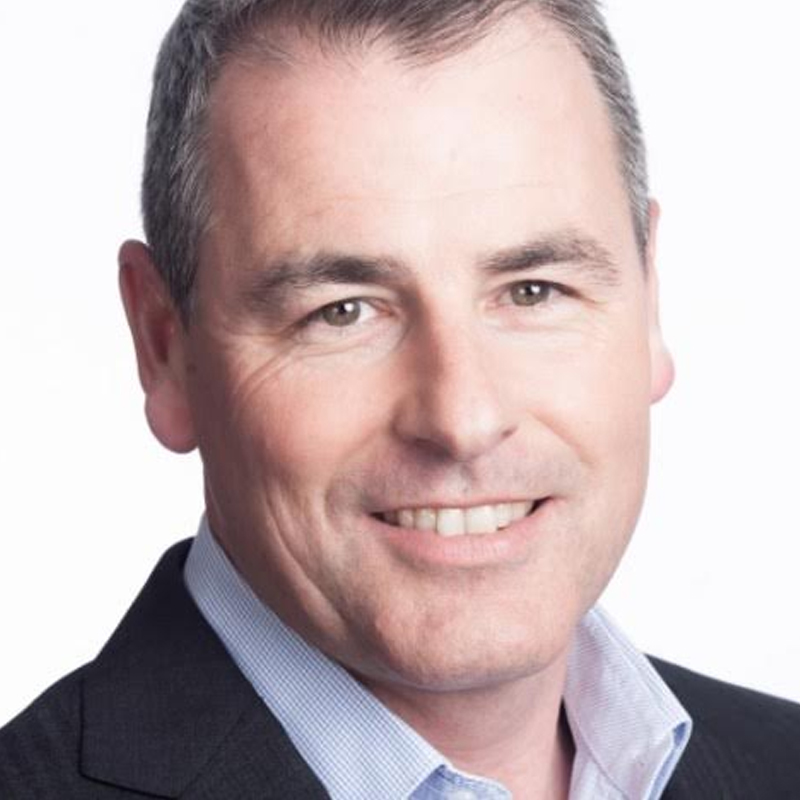
    Mumbai: Content discovery and native advertising platform Taboola has entered into an exclusive multi-year partnership with Asianet News Media & Entertainment. Under the partnership, Asianet News will use Taboola to maximise traffic and increase audience engagement and monetisation.

    Asianet will also leverage Taboola Newsroom’s insights and A/B testing capabilities, providing editorial teams with actionable insights and data about content performance in real-time. This allows them to power content recommendation through superior algorithms and test the performance of headlines, thumbnails and story placements and discover topics their users are most interested in reading about.

    Taboola Feed will provide its readers a seamless flow of personalised content recommendations and videos to keep them engaged on the publication’s application, website and Taboola’s Audience Exchange, which is an advertising technology for the buying and selling of online ads, said the statement.

    Using Taboola News, Asianet News will be able to feature its content across its seven languages at exclusive touchpoints on devices beyond the open web to drive website traffic at no additional cost, it added.

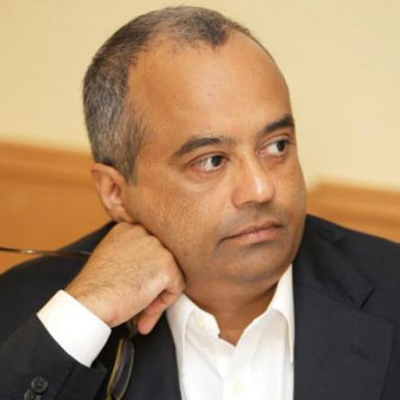
    “Under our partnership with Taboola, we aim to leverage their platform to increase audience engagement, product experience and revenue. We are confident that this partnership will help us scale and engage with our readers across all languages more effectively,” said Asianet News Media and Entertainment Pvt Ltd, chief business officer, Samarth Sharma.

    Taboola, CEO and founder, Adam Singolda added, “We are excited to bring content recommendations, discovery, and insights to Asianet’s large readership. Our technology and their scale unlock new ways for readers to engage while giving Asianet insights that can inform effective editorial decisions.”

  • Over 60% of BBC APAC’s revenue is from native advertising: Alistair McEwan

    Over 60% of BBC APAC’s revenue is from native advertising: Alistair McEwan

    NEW DELHI: When native advertising had entered the marketing world, just a few years ago, many questions were raised regarding its feasibility for both advertisers and publishers. From people not trusting sponsored content to it diminishing the credibility of a news publication, doubts loomed large over its future. However, the much-maligned ad format has risen above all that, and how. Forecasts from BI Intelligence, IAB and eMarketer show that global native advertising has grown by 213 per cent in 2020 as compared to 2016. Another report by ADYOULIKE, a leading in-feed native advertising technology, indicates that it will further grow by 372 per cent from 2020 to 2025, reaching a total global value of $402 billion. 

    In a recent virtual fireside chat with Indiantelevision.com founder, CEO, & editor-in-chief Anil Wanvari, BBC Global News SVP – commercial development for Asia & ANZ Alistair McEwan claimed that around 60-65 per cent of the organisation’s commercial revenue in the Asia Pacific region is driven by native advertising, which they’ve dubbed “commercial content marketing solutions.”

    McEwan was speaking on day one of Indiantelevision.com’s virtual conference PubNation (digital & print), organised in partnership with Quintype Technologies and Gamezop. 

    “We are either producing content directly with and for the brands, or we are commissioning advertiser-funded editorial programming. The sponsorships are thus a very significant amount of our output. But we create this content with the same editorial standards that we do for our other editorial outputs. And actually, that’s why we have seen this enormous growth in branded content,” he elaborated. 

    McEwan, who had joined the conference from Sydney, added that he is seeing a massive growth coming from India too. 

    He also highlighted that to tap the full potential of the Indian and global market, when it comes to native advertising, BBC has also put in place its in-house content agency called BBC Content. “We launched in India two years ago and we are now producing a lot of branded content for different organisations, both in public and private sectors.”

    PubNation (print & digital) is a two-day-long virtual confluence of the leading publishers, advertisers, and agencies across India. Launched on 9 December 2020, it will dissect hot-button issues including advertising opportunities, the content that will define the future of publications, and technologies that will aid that. You can watch the event live on Indiantelevision.com and its social media handles. For more information, visit (https://www.indiantelevision.com/pubnation/index.html). 

  • Mobile games are the next big advertising frontier: GreedyGame’s Arpit Jain

    Mobile games are the next big advertising frontier: GreedyGame’s Arpit Jain

    NEW DELHI: Digital entertainment formats have become hugely popular across India, with the Covid2019 pandemic further accelerating the shift to online modes of pleasurable pastime. One of the prime beneficiaries has been the mobile gaming ecosystem. It is already amongst the top five globally and as per Statista, will be worth about $2.4 billion in 2020, up from $600 million in 2017. However, despite the marvellous growth it has been witnessing, there is still a lot of grey-space to be filled when it comes to advertising revenues. That’s where GreedyGame comes into the picture. Headquartered in Bengaluru, GreedyGame is a mobile-first native ads platform that helps app and game publishers monetise better and help acquire genuine users globally. 

    Founded by IIT Ropar alumnus Arpit Jain in October 2013, GreedyGame is solving the fundamental problem for mobile publishers and advertisers – how to run ads without disrupting the user experience.  

    With the backing of renowned investor institutions such as Times Internet and angel investors including Ankit Nagori from Curefit, Sujeet Kumar from Udaan, Ravi Garikipati from Davinta, Anuj Choudhary from Aalgro, etc, GreedyGame has been growing 100 per cent YoY since its inception in 2013, and has reportedly clocked more than 4X in this FY. It is currently helping more than 200 app/game publishers to monetise higher and acquire quality users across the globe, including Dream11. 

    Jain tells Indiantelevision.com, “We started GreedyGame with a mission to empower mobile developers to develop world-changing apps and build the most engaging games without constantly worrying about revenue. Hence, we created an end-to-end implementation, mediation and optimisation platform for ads.”

    With its unique software development kit (SDK), GreedyGame enables app developers to run native ad units customised for their app experiences. It also helps app and game publishers increase their users globally by helping them with the right user acquisition strategies and optimising their campaigns on multiple mediums including Google and Facebook ads.

    “Our strategy is simple, to first study the app in order to understand better and come up with an app-specific monetisation strategy. GreedyGame SDK, which is enabled with the ‘smart refresh’ feature, picks the best model for app monetisation customising to the developer’s needs. Our AI-enabled recommendation of dynamic ad unit templates also helps publishers of all sizes to implement native ads effortlessly. The cross-format support enables developers to try a variety of ad formats like banner, interstitial and native in single ad space and modify the ad format as they like. We help publishers implement native ads in their apps in a hassle-free manner, making sure that their revenues are optimised, without any policy violations, and also keeping the users happy,” he elaborates. 

    GreedyGame also has a dedicated team of marketers who run Google, Facebook, and other media campaigns for app publishers. “Currently, we are managing 50+ publishers Google Ad accounts. We are able to generate approximately three million+ installs at an optimum CPI,” he adds. 

    Jain notes that the Covid2019 pandemic has further created a flourishing environment for online and mobile gaming ecosystem and that has pushed more and more brands to utilise the space for advertising. 

    “Online gaming, primarily on mobile devices, has become massively popular in India. 50 per cent of mobile app users play games, second only to social media and communications apps in terms of time spent. During the months of lockdown, people spent significantly more time on their phones and there was a surge in the downloads of popular games such as Ludo King, PUBG, etc. If we look at the data, taking an example of IPL-related gaming apps, 88 per cent of audience profiles were playing on these apps during the recent IPL season. So, when the user base is that huge it definitely is something that lures the advertisers. Brands have started working on independent budgets for capturing gaming users and big brands like Oppo, Flipkart, Amazon are increasingly opting for mobile advertising considering the reach,” he shares.

    Jain illustrates this with an example: streaming giant Netflix recently claimed that Fortnite, a popular multiplayer shooter game, is a bigger competitor than rival streaming platforms like HBO in the US. “Big brands like Cadbury, Tesco, Heineken, Flipkart, Amazon etc believe that it is easy and the ROI in gaming ads is higher. Brands like Unilever, Coca-Cola, and Ford invest heavily in mobile gaming, and many of the early-adopting brands look at mobile gaming as the new social media in terms of the opportunity to engage with consumers at scale. Molson Coors is another example of a brand advertiser that has been ramping its media investment in gaming and e-sports for many of its most popular brands like Miller Lite and Coors Lite.”

    Today, ads are a major source of revenue for game publishers as only 0.25 per cent of total users pay for IAPs (In-App Purchases) in India, remarks Jain. “Rewarded ads are the biggest ad revenue-generating format in games. India is among the lowest eCPM (effective cost per thousand impressions) countries in the world, so LTVs are very low. Hence, the user base needs to be high to make sustainable revenues from ads and games need to generate organic traffic. Most successful games are localised – for example Ludo, cricket, card games etc – which is why they get organic traffic and are able to generate sustainable revenues.”

    He believes that there await a plethora of opportunities in the in-game advertising industry and he is willing to capitalise on that, helping the publishers and advertisers alike to generate maximum ROI.

    “GreedyGame intends to work with app/game publishers who are making money via ads and maximise their revenue through our SDK. Our plan is to become the market leader in the genre of mobile-first advertising through native ad formats. We aim to work with 1000+ publishers by the end of next year,” he signs off. 

  • “Emerging categories are looking at digital as it is cost effective to reach the TG”: CVL

    “Emerging categories are looking at digital as it is cost effective to reach the TG”: CVL

    One of the most awaited report, which brings out the trends of advertising spends for the calendar year, was released by media agency GroupM on 2 February. Called ‘This Year, Next Year,’ the report highlights a marginal increase in the AdEx: from 12.5 per cent in 2014 to 12.6 per cent in 2015.


    Inaugurating the report, GroupM south Asia CEO CVL Srinivas said, “With achhe din at the centre, we are hoping that things will only go upwards from here.”


    The media agency has forecasted the nation’s advertising investment to reach an estimated Rs 48,977 crore in 2015. Digital, as per the report, will show maximum growth with 37 per cent in 2015, which had been growing at an average rate of 35 per cent over the last two years.


    With the whole industry looking very positive, Indiantelevision.com’s Seema Singh and Meghna Sharma caught up with Srinivas to get a few insights on the released report and the way forward.


    Excerpts:


    What is the highlight of ‘This Year Next Year’ findings?


    We have just released GroupM’s ‘This Year Next Year’ ad spent forecasting and GroupM is forecasting ad spent growth of 12.6 per cent this calendar year, which is January to December as compared to the previous year. We are in the same level as we were last year, which we estimated to grow at 12.5 per cent.


    General elections helped increase the ad spent last calendar year. Wouldn’t World Cup 2015, Indian Premiere League and Delhi elections help boost AdEx?


    To an extent, the World Cup 2015 and the other opportunities offset the fact that we don’t have the general elections this year. Because last year, minus the general elections, the total AdEx grew at over 10 per cent. So on a like-to-like basis, if we remove the general elections, then the AdEx is growing from 10 odd per cent to 12.6 per cent, and this is definitely a growth with the rest of the industry. But if you bring the general elections into play, looks like we are in the same zone.


    We see this year, once again, to be strong for e-commerce. While the base is still small, we expect them to increase their ad spent anywhere upwards of 50 per cent. We also see a good year for segments like auto and BFSI. Not only this, FMCG which is a very big contributor to the AdEx, while will be a bit under pressure, is expected to be steady on their ad spent.


    The report also highlights the growth of digital. How do you see Star India’s Video on Demand (VoD) platform hotStar and MSM’s Sony LIV adding to the medium?


    Digital has been growing, in fact by about 35 to 40 odd per cent year on year for the last many years and we forecast the ad spent growth by about 37 per cent for the current year and I think the reasons for that would be:


    1) Lot more penetration of smartphones and we are seeing better infrastructure and hopefully we will see better bandwidth in months and years to come, and therefore using smartphones to connect with consumers with lesser wastage is a trend that will only catch on from here.


    2) The other contributor to the digital ad spent will be digital video. The fact that as Indians we love consuming video on content and we are one of the highest consumers of video online, plus there are a lot of platforms opening up for video consumption, large broadcasters are launching their own platforms to disseminate content and hence more opportunities for advertisers on digital media.


    3) A lot of emerging categories are looking at digital, because it is very cost effective for them to reach out to the target audience.


    So all said and done, digital will see a strong growth.


    What about broadcasters who are launching new channels?


    TV, despite having a high base already and contributing to 44 per cent of the total AdEx, according to our estimate, will continue to grow at healthy double digits. Also this year, we have opportunities like the World Cup and various programming initiatives being taken by channels. We also have some increase in the supply that is available across newer channels. So overall, we see the medium to grow this year as well.


    The report shows a drop in OOH. What’s the reason for that?


    We have estimated that OOH will grow by four per cent this calendar year. I think these are estimates of what each medium will do. But the bigger story is that there is huge opportunity to grow across media.


    We are still a nation, which is under branded and we are still scratching the surface when it comes to smaller towns, geographies, which are regional and we need to get more and more of those brands and clients to advertise. I think, the more we do that, the more we can open up revenue opportunity for media players in this industry.


    The sky is the limit for all media – be it radio, OOH or print and hopefully 2016-2017 onwards, one would see the industry moving at higher growth rate when consumer sentiment improves and one actually sees off takes going up on the ground.


    You have also stressed on native advertising being the trend to watch out for. How can one implement this?


    It is one of the formats of advertising, which is gaining in popularity because of more consumption of content of digital media of smaller screens. So you cannot always use the same content or format of advertising for different screens and different modes of consumption. On smaller screens content is consumed on the go and is quick and easy. The consumption is very different and so there needs to be a different style of advertising.


    Native advertising has been born out of this change in consumption habits. It is one form of advertising and will not override all the other forms of advertising because you will still need the traditional storytelling and brand advertising, but it’s definitely a format which is here to stay and provides opportunities to brands to communicate and connect with its consumers.


    Last year, GroupM revised its report. Will you do that even this year? If yes, will it be upwards or downwards? Do you think ‘Achhe Din Aa Gaye Hai?’


    The way we do the study is that we put out the number at the start of the year basis all the analysis that we do through our intelligence and analytics team. We get a chance to review our numbers in the middle of the year, because by then we can get real data and numbers. So we are able to go back and test our hypothesis and take a call if we have to revise our numbers.


    Currently, it is very difficult to say if we will revise our numbers and if so, upwards or downwards, because it will all depend on the performance of the first five-six months. But if at all, we will need to revise the numbers, we will do it in July and not wait for the end of the year.