Tag: Nasscom

  • India stresses need for Indo-African ICT cooperation

    India stresses need for Indo-African ICT cooperation

    NEW DELHI: Sharing expertise and growing businesses. India has a vast experience in setting up of ICT infrastructure and the experience can be leveraged by the government as well as private sectors in African nations, Communications Minister Manoj Sinha said.

    The minister was inaugurating the 2nd edition of the Indo-Africa ICT Expo at KICC, Nairobi, from 1 to 3 September, with the help of India’s Telecommunication Equipment and Services Export promotion Council (TEPC) in conjunction with NASSCOM, and ICT Authority of Kenya last weekend.

    He said: “To explore synergies on the ground, I have with me about 100 ICT companies from India participating in this event that will facilitate growth of business opportunities in our nations.” This event is supported by India and Kenya. Kenya ICT Minister Joe Mucheru was also present on the occasion.

    The event, aimed at enhancing cooperation between African countries and India in the ICT sector, also saw attendance of various senior government officials from neighbouring countries such as South Sudan ICT & Postal Services Deputy Minister Akol Paul Kordit with a big delegation, Uganda ICT Principal Secretary Jimmy Pat Saamanya, and Malawi ICT and Civic Education Secretary Justin Adack K Saidi. Business leaders from India, Kenya, Tanzania, Uganda, the UK, Israel, South Sudan, Rwanda, Mauritius and Commonwealth Telecom Organization were also present.

    Sinha stressed that India had conditions similar to those in the African nations. The country also had special ties with East African countries. Together, India saw many opportunities for cooperation and transfer of expertise in the areas of setting up ICT infrastructure, solutions and application development, skill development and innovation that could be leveraged by the governments as well as the private sector in the continent. India was keen to find ways to increase business between India and Africa in ICT sector, he said.

    Kenya minister Mucheru called upon the local businesses to tap into the huge reservoir of knowledge their Indian counterparts had and develop technology-based solutions for Kenyan, African and the global market. He also noted that there were numerous opportunities for partnerships between both, public and private, sectors of Kenya and India. He said India and Africa continued to witness exponential growth in the telecommunication and information technology segments. It is thus essential to evaluate the areas where the two regions could cooperate so as to further enhance lives of the people through technology.

    The second edition of the expo-cum-conference saw over ICT companies participating from India showcasing their latest products and solutions to explore synergies on the ground.

    A key highlight of the event on 1 September 2016 was the ICT Ministers Round Table Meeting on ‘Digital Dreams of the Developing Nations’, wherein ICT Ministers/Secretaries leading high-level government and business delegations from India, Kenya, South Sudan, Uganda and Malawi participated. Government-to-Government bilateral talks were also held between the Indian Government officials and government delegations from Kenya, Uganda, Malawi and South Sudan.

    A NASSCOM statement said, “Africa is turning into one of the fastest growing regions in the world, offering huge domestic market potential and growing economically at more than 5% per year. This event only reiterates the fact that India and Africa are well on their way to collaborate and become the next global leaders in technology. Africa is turning into one of the fastest growing regions in the world, offering huge domestic market potential and growing economically at more than 5% per year. During the last two years, the focus has been on the SME sector engagement and a number of the participating delegate companies have achieved their biggest success in Africa.”

    The sessions at the conference were aligned with theme “Digital Dreams of Nation”. The event was attended by over 2500 visitors and over 300 conference delegates with a world-class speaker panel. The expo was designed to bring together thought leaders across the entire ICT value chain to discuss solutions to regulatory and business issues.

    The event also had more than 400 Business-to-Business meetings between Indian and African countries. Over 10 MoUs worth Rs. 40 crore business were signed. In addition, there was a demand for setting up of training centre and technology transfer.

    TEPC is also organizing Buyer-Seller business meets in New Delhi where potential buyers from across the globe are invited to meet the telecom equipment and services suppliers of India to develop long-term business relations. The event for 2016 has been planned from 3 to 5 October 2016 in New Delhi and Bangalore. Sinha invited business delegations from participating countries to join the event in India.

  • India stresses need for Indo-African ICT cooperation

    India stresses need for Indo-African ICT cooperation

    NEW DELHI: Sharing expertise and growing businesses. India has a vast experience in setting up of ICT infrastructure and the experience can be leveraged by the government as well as private sectors in African nations, Communications Minister Manoj Sinha said.

    The minister was inaugurating the 2nd edition of the Indo-Africa ICT Expo at KICC, Nairobi, from 1 to 3 September, with the help of India’s Telecommunication Equipment and Services Export promotion Council (TEPC) in conjunction with NASSCOM, and ICT Authority of Kenya last weekend.

    He said: “To explore synergies on the ground, I have with me about 100 ICT companies from India participating in this event that will facilitate growth of business opportunities in our nations.” This event is supported by India and Kenya. Kenya ICT Minister Joe Mucheru was also present on the occasion.

    The event, aimed at enhancing cooperation between African countries and India in the ICT sector, also saw attendance of various senior government officials from neighbouring countries such as South Sudan ICT & Postal Services Deputy Minister Akol Paul Kordit with a big delegation, Uganda ICT Principal Secretary Jimmy Pat Saamanya, and Malawi ICT and Civic Education Secretary Justin Adack K Saidi. Business leaders from India, Kenya, Tanzania, Uganda, the UK, Israel, South Sudan, Rwanda, Mauritius and Commonwealth Telecom Organization were also present.

    Sinha stressed that India had conditions similar to those in the African nations. The country also had special ties with East African countries. Together, India saw many opportunities for cooperation and transfer of expertise in the areas of setting up ICT infrastructure, solutions and application development, skill development and innovation that could be leveraged by the governments as well as the private sector in the continent. India was keen to find ways to increase business between India and Africa in ICT sector, he said.

    Kenya minister Mucheru called upon the local businesses to tap into the huge reservoir of knowledge their Indian counterparts had and develop technology-based solutions for Kenyan, African and the global market. He also noted that there were numerous opportunities for partnerships between both, public and private, sectors of Kenya and India. He said India and Africa continued to witness exponential growth in the telecommunication and information technology segments. It is thus essential to evaluate the areas where the two regions could cooperate so as to further enhance lives of the people through technology.

    The second edition of the expo-cum-conference saw over ICT companies participating from India showcasing their latest products and solutions to explore synergies on the ground.

    A key highlight of the event on 1 September 2016 was the ICT Ministers Round Table Meeting on ‘Digital Dreams of the Developing Nations’, wherein ICT Ministers/Secretaries leading high-level government and business delegations from India, Kenya, South Sudan, Uganda and Malawi participated. Government-to-Government bilateral talks were also held between the Indian Government officials and government delegations from Kenya, Uganda, Malawi and South Sudan.

    A NASSCOM statement said, “Africa is turning into one of the fastest growing regions in the world, offering huge domestic market potential and growing economically at more than 5% per year. This event only reiterates the fact that India and Africa are well on their way to collaborate and become the next global leaders in technology. Africa is turning into one of the fastest growing regions in the world, offering huge domestic market potential and growing economically at more than 5% per year. During the last two years, the focus has been on the SME sector engagement and a number of the participating delegate companies have achieved their biggest success in Africa.”

    The sessions at the conference were aligned with theme “Digital Dreams of Nation”. The event was attended by over 2500 visitors and over 300 conference delegates with a world-class speaker panel. The expo was designed to bring together thought leaders across the entire ICT value chain to discuss solutions to regulatory and business issues.

    The event also had more than 400 Business-to-Business meetings between Indian and African countries. Over 10 MoUs worth Rs. 40 crore business were signed. In addition, there was a demand for setting up of training centre and technology transfer.

    TEPC is also organizing Buyer-Seller business meets in New Delhi where potential buyers from across the globe are invited to meet the telecom equipment and services suppliers of India to develop long-term business relations. The event for 2016 has been planned from 3 to 5 October 2016 in New Delhi and Bangalore. Sinha invited business delegations from participating countries to join the event in India.

  • Long-term negative impact of Brexit on India negligible; short-term challenges remain

    Long-term negative impact of Brexit on India negligible; short-term challenges remain

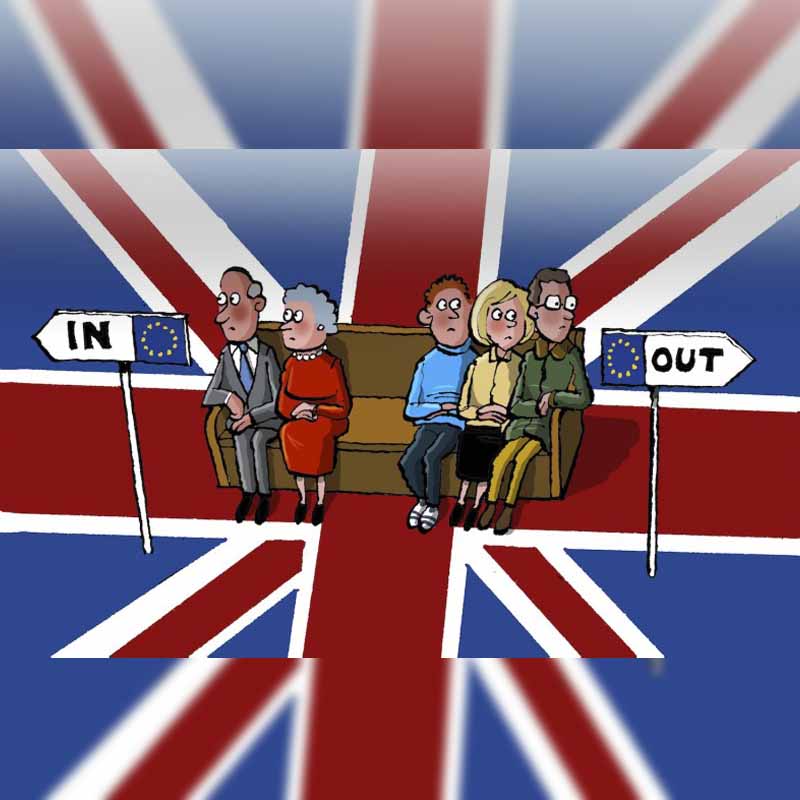
    NEW DELHI/MUMBAI: Britain’s politically controversial referendum last week to exit from the European Union, a unique economic and political union between 28 European nations, has created ripples globally, but in India the general feeling is long term impact may be negligible.

    While the British media and entertainment industry, having major exposure to European market(s), are wringing their head in dismay at possible long-term financial fallout and increased bureaucracy and paperwork, Indian media industry has been subdued in its reaction.

    Sources in both BBC World and Star India said that they were still studying the fine prints of Brexit — as Britain’s EU exit has been popularly dubbed — but added they don’t see any short to medium-term impact (except, of course, the currency exchange valuations).

    Some Indian media companies like Zee, Star, and Times TV Network do have fairly big exposure to the European markets in terms of their TV channels’ distribution and sale of Indian content and formats.

    Similarly, Hindi and increasingly Indian language film industry are shooting more in various European countries in sharp contrast to yesteryears few fav foreign locales like Holland, London and Paris.

    While organisations like The Film & Television Producers Guild of India had no statement put out on Brexit, European media & entertainment players have been very active.

    Forbes magazine quoted a statement on Brexit from Britain Stronger in Europe campaign, signed by the likes of Patrick Stewart, Benedict Cumberbatch and Keira Knightley amongst hundreds of celebrity-signatories, as saying: “Our global creative success would be severely weakened by walking away.”

    Such sentiments and falling markets and currencies, coupled with media conjectures on future of multi-billion dollar budget TV programmes like the popular Game of Thrones, made its producer HBO to issue clarifications.

    “We do not anticipate that the result of the EU Referendum will have any material effect on producing Game of Thrones,” HBO said in an official statement late last week

    Variety magazine reported that HBO had confirmed GoT received financial support from the EU’s European Regional Development Fund when it first began, but there has been no contribution to its massive $10 million per episode budget in recent years.

    That everybody is scrambling to assess the political and economical fallout of Brexit, while remaining cautiously optimistic at present, is reflected in the opinions of some industry chambers too.

    Pointing out that the “way forward, and timelines to achieve negotiated agreements with the EU and other trade partners is not yet known”, UK India Business Council said, “What is clear, though, is that the UK’s trade and economic engagement with the world’s leading countries, including India, will become more important to the nation’s future, not less.”
    Motion Picture Association of America in a statement said, “While it will take time to understand the full implications of the referendum result, we urge the UK Government to prioritize a stable environment for the film and television sector.”

    Closer home in India, some reactions did come forth on Brexit.

    Ashish Bhasin, chairman and CEO, Dentsu Aegis Network, South Asia discounted any mid or long term impact of Brexit on India.

    Pointing out short term uncertainty may lead to a “depressed business sentiment,” Bhasin said advertising gets directly influenced and often suffers when business sentiment weakens.

    According to Frost & Sullivan’s senior partner and managing director for Europe Sarwant Singh, “It is important to note that during this interim period, Britain will still be subject to existing EU treaties and laws, but will be barred from decision-making processes. Therefore, existing regulations are likely to continue until negotiations are completed.”

    The National Association of Software and Services Companies (NASSCOM), whose member-companies have billions of dollars of exposure in the European and UK market, termed the Brexit announcement as a phase of uncertainty in the near term but a mix of challenges and opportunities in the longer term.

    Meanwhile, the Indian government has assured that the Indian economy is fundamentally strong enough to withstand any immediate impact of Brexit.

  • Long-term negative impact of Brexit on India negligible; short-term challenges remain

    Long-term negative impact of Brexit on India negligible; short-term challenges remain

    NEW DELHI/MUMBAI: Britain’s politically controversial referendum last week to exit from the European Union, a unique economic and political union between 28 European nations, has created ripples globally, but in India the general feeling is long term impact may be negligible.

    While the British media and entertainment industry, having major exposure to European market(s), are wringing their head in dismay at possible long-term financial fallout and increased bureaucracy and paperwork, Indian media industry has been subdued in its reaction.

    Sources in both BBC World and Star India said that they were still studying the fine prints of Brexit — as Britain’s EU exit has been popularly dubbed — but added they don’t see any short to medium-term impact (except, of course, the currency exchange valuations).

    Some Indian media companies like Zee, Star, and Times TV Network do have fairly big exposure to the European markets in terms of their TV channels’ distribution and sale of Indian content and formats.

    Similarly, Hindi and increasingly Indian language film industry are shooting more in various European countries in sharp contrast to yesteryears few fav foreign locales like Holland, London and Paris.

    While organisations like The Film & Television Producers Guild of India had no statement put out on Brexit, European media & entertainment players have been very active.

    Forbes magazine quoted a statement on Brexit from Britain Stronger in Europe campaign, signed by the likes of Patrick Stewart, Benedict Cumberbatch and Keira Knightley amongst hundreds of celebrity-signatories, as saying: “Our global creative success would be severely weakened by walking away.”

    Such sentiments and falling markets and currencies, coupled with media conjectures on future of multi-billion dollar budget TV programmes like the popular Game of Thrones, made its producer HBO to issue clarifications.

    “We do not anticipate that the result of the EU Referendum will have any material effect on producing Game of Thrones,” HBO said in an official statement late last week

    Variety magazine reported that HBO had confirmed GoT received financial support from the EU’s European Regional Development Fund when it first began, but there has been no contribution to its massive $10 million per episode budget in recent years.

    That everybody is scrambling to assess the political and economical fallout of Brexit, while remaining cautiously optimistic at present, is reflected in the opinions of some industry chambers too.

    Pointing out that the “way forward, and timelines to achieve negotiated agreements with the EU and other trade partners is not yet known”, UK India Business Council said, “What is clear, though, is that the UK’s trade and economic engagement with the world’s leading countries, including India, will become more important to the nation’s future, not less.”
    Motion Picture Association of America in a statement said, “While it will take time to understand the full implications of the referendum result, we urge the UK Government to prioritize a stable environment for the film and television sector.”

    Closer home in India, some reactions did come forth on Brexit.

    Ashish Bhasin, chairman and CEO, Dentsu Aegis Network, South Asia discounted any mid or long term impact of Brexit on India.

    Pointing out short term uncertainty may lead to a “depressed business sentiment,” Bhasin said advertising gets directly influenced and often suffers when business sentiment weakens.

    According to Frost & Sullivan’s senior partner and managing director for Europe Sarwant Singh, “It is important to note that during this interim period, Britain will still be subject to existing EU treaties and laws, but will be barred from decision-making processes. Therefore, existing regulations are likely to continue until negotiations are completed.”

    The National Association of Software and Services Companies (NASSCOM), whose member-companies have billions of dollars of exposure in the European and UK market, termed the Brexit announcement as a phase of uncertainty in the near term but a mix of challenges and opportunities in the longer term.

    Meanwhile, the Indian government has assured that the Indian economy is fundamentally strong enough to withstand any immediate impact of Brexit.

  • NASSCOM Game Developer Conference 2015 speaker schedule announced

    NASSCOM Game Developer Conference 2015 speaker schedule announced

    NEW DELHI: The National Association of Software and Services Companies (NASSCOM) announced the full speaker and workshop schedule for its Game Developer Conference 2015 being held at the Westin Hotel from 5 to 7 November in Pune.


    The conference will feature speakers from a wide range of regional and international tech companies, developers and publishers, including Microsoft, Unity Technologies, Google, Epic Games, Zynga and Autodesk.


    “With a mix of India’s independent games development industry and international speakers and delegates, this years program will provide attendees with a foundation of knowledge and networking opportunities that will help drive their studios,” said NASSCOM Games Developer Conference chairman Anando Banerjee. “By learning from the success and failures of other studios, hands-on workshops and an expo floor featuring some of India’s most innovative new IP across mobile, PC and VR platforms, this will be our best development conference yet.”


    Featuring five curated tracks: indie development, game design, marketing and PR, game art and technology, and with over 1300 industry delegates, 70 speakers, 50 games, an Expo promoting Indian video games and a dedicated day for workshops, the NASSCOM Game Developer Conference 2015 showcases the creative talent and upcoming industry trends in interactive entertainment in India.


    The conference will kick off on 5 November with a series of games development workshops from Unity Technologies, Google Play, a Design Workshop by Jitesh Panchal, Nazara, a Start-Up Funding Session from Japheth Dillman, Co-Founder of Yetizen and an Art Masterclass from Glu’s Rahul Philip.


    The next day, the full programme begins with a welcome address and introduction, followed by a presentation of the NASSCOM Gaming Forum-Newzoo Report for Indian games development. British games designer Ste Curran, will then keynote the design track with a talk called ‘Love and Violence’. Wednesday speaking highlights include a ‘Post Mortem – UNWYND: From Android Failure to Editor’s Choice on iOS’ by Ankush Madad, ‘Dropout Games, Getting Consumers to Love Your Game in under 3 minutes’ by Anila Andrade, 99 Games and ‘25 Tips for Video Game PR’ by Audra McIver, Plan of Attack.


    On 6 November, Zynga’s chief visual officer Henry LaBounta with keynote address ‘Learning to See’ on visual effects in games design. Thursday speaking highlights include‘Designing Procedural Content – Good Robot’ by Arvind Raja Yadav, ‘Analytics Driven Product Management’ by Rachna Rao, Zynga, a panel discussion on Indian publishing and a women in game development meet up.


    The NGDC 2015 Expo, running alongside the conference, will showcase 50+ games that have been developed or published in India. The NGF 2015 Awards will also recognise achievements in Indian games development and encourage the creation of building original IP in India.

  • E-commerce players’ 2015 ad spends in India pegged at Rs 3900+ crore: NASSCOM

    E-commerce players’ 2015 ad spends in India pegged at Rs 3900+ crore: NASSCOM

    BENGALURU: E-commerce players would have spent approximately Rs 3900 crore (or $600 million) in India on advertisement by the end of 2015, as per the second edition of the start-up report released by the National Association of Software and Services Companies (NASSCOM) and Zinnov.


    The report titled “Start-up India – Momentous Rise of the Indian Start-up Ecosystem” was released on the side-lines of NASSCOM Product Conclave 2015 in Bengaluru.


    As per the report, the total funding in the India based start-ups is estimated to be nearly $5 billion by 2015.


    With 100 per cent growth in number of private equity, venture capitalists, angel investors along with a 125 per cent growth in funding over last year, the Indian start-up ecosystem has risen to the next level says NASSCOM. Various central and state government start-up initiatives are further supporting this progressive phase of start-ups in India.


    The Indian technology start-ups landscape has seen tremendous growth in the emergence of innovative start-ups and creative entrepreneurs. In terms of providing a conducive ecosystem for the start-ups to thrive, India has moved up to third position and has emerged the fastest growing base of start-ups worldwide. India is one amongst the first five largest startup communities in the world with the number of start-ups crossing 4,200, a growth of 40 per cent, by the end of 2015.


    NASSCOM president R Chandrashekhar said, “The maturing Indian start-up ecosystem is now contributing to the Indian economy in many ways. Apart from positively impacting the lifestyles of citizens involved, start-ups are now creating innovative technology solutions that are addressing the key social problems that India is facing and creating significant growth opportunities for every stakeholder.”


    Some of the key highlights of the report are as follows:

    India is the youngest start-up nation in the world- 72 per cent of the founders are less than 35 years old.

    More than 50 per cent of the 1200 startups focus on e-commerce, consumer services and aggregators.

    Nine per cent female founders and co-founders in startup ecosystem.

    Number of accelerators grew by 40 per cent from approximately 80 in 2014 to approximately 110 in 2015.

    Total funding in 2015 saw a growth of approximately 125 per cent over 2014.

    Number of PE/VCs investments have grown by 100 per cent over 2014.

    80,000 jobs created by startups.

  • IBF appoints Girish Srivastava as secretary general

    IBF appoints Girish Srivastava as secretary general

    MUMBAI: The Indian Broadcasting Foundation (IBF) has appointed Girish Srivastava as secretary general.


    He has worked in the area of policy, regulations, promotion of cross-border trade in services, research, strategic expansion of existing businesses and development of new markets.


    In a career spanning over 24 years, Srivastava has worked with NASSCOM (National Association of Software and Service Companies), Bechtel Corporation, Bechtel Management Consulting, Reliance Industries, Toyo Engineering India as well as on projects mainly funded by international donor agencies.


    “I, along with rest of the IBF members welcome Girish and wish him success for his new assignment,” said IBF president and Star India CEO Uday Shankar.

  • NASSCOM partners Symantec for building cyber security skills in India

    NASSCOM partners Symantec for building cyber security skills in India

    MUMBAI: The National Association of Software and Services Companies (NASSCOM) and global cyber security company Symantec have signed a Memorandum of Understanding (MoU) for building cyber security skills in India.


    The initiative aims to develop world-class skilled and certified professionals. The MoU was signed in the presence of NASSCOM president R. Chandrashekhar and Symantec president and CEO Michael A. Brown.


    The development is part of Prime Minister Narendra Modi’s call at NASSCOM’s silver jubilee in March 2015 to focus on global cyber security challenges. Sector Skill Council (SSC) NASSCOM and DSCI along with Symantec will focus on developing five prioritized job roles in cyber security along with a master training program. Additionally, the program also intends to fund the scholarship for 1000 women undertaking the cyber security certification by NASSCOM.


    Chandrashekhar said, “This is a positive step towards our objective to address the cyber security issue at large. This partnership will enable the industry to map existing and future skills requirements and plug its demand-supply gap. The program will also focus on developing pioneering models for scaling capacity and enhancing employability through assessments and certifications. We would like to thank Symantec for coming forward for this crucial initiative.”


    With the rise of Internet related crimes, cyber security has become an area of focus for NASSCOM and its member organizations, and the association has launched several initiatives to promote data protection, security, privacy codes and standards. Also, the role of security professionals over the years has undergone major transformation, leading to a sharp rise in the need for a larger and more dynamic cyber security workforce. The demand for the workforce is expected to rise to six million (globally) by 2019, with projected shortfall of 1.5 million. Symantec and NASSCOM have collectively decided to address this issue. This initiative also aims to facilitate internships and placement of the certified candidates.


    Brown added, “With the rise in targeted attacks aimed at Indian enterprises and consumers, cyber security has become more important than ever before. As a leader in cyber security, Symantec is deeply committed to addressing the workforce skills gap in this area. With the partnership with NASSCOM, we are taking the first big step towards building cyber security skills in India. The initiative will also facilitate internships and placement of certified candidates, and is an extension in India of the Symantec Cyber Career Connection (SC3), a program launched last year to attract and train young adults and women in the field of cyber security.”


    With the global IT Security market estimated to be $77 billion in 2015 and grow at over eight per cent annually, NASSCOM has been actively working towards building capacity for the sector.

  • FICCI Frames: Don’t ignore the numbers; investment experts tell filmmakers

    FICCI Frames: Don’t ignore the numbers; investment experts tell filmmakers

    MUMBAI: A panel discussion on Making the Impossible Possible: Dating and Investor and Getting Funded,’ on the second day of the FICCI Frames 2015 saw the participants focussing on the key value drivers that investors look at.


    The discussion, moderated by KPMG India Transactions and Restructuring director Girish Menon centred on finding money to release small, medium and regional cinema at a profit. The participants were NASSCOM co-founder and past chairman Saurabh Srivastava, Indian Angels Network CEO Padmaja Ruparel, Zodius Capital MD Gautam Patel, Blume Ventures Sanjay Nath and Idyabooster founder Nandini Mansinghka.  


    Srivastava spoke about how the success of investment in technology can be replicated in entertainment. “It’s all about venture capital,” he said.


    Today, the manner in which we communicate or travel, or even access healthcare and education has changed dramatically from a few years ago. This change has happened “because we found a way to finance innovation,” said Srivastava.


    The old paradigm of low risk funding does not apply to innovative technology, which is high risk. So new investment models that fund several innovations at a time with high annualised returns came into the market and that made Google, Facebook and Twitter possible. That hasn’t happened with movies because the dynamics of the investment structure are flawed. “The success rate is low because if you have a scenario where you cannot take it to enough people, then a movie that could make money will not, and people will not take risks,” Srivastava added. In his opinion, this will change with the new technology that will disrupt how movies are made, distributed, and what screens they are made for.


    Ruparel shared her experience of two decades in the entrepreneur ecosystem. When she started, angel investment did not have the foothold that it has today. Start-ups today get a lot of backing. The work was hard, but it has brought them success. What worked for them was leveraging the expertise of “like minded people with different domain expertise to bring complementary strength.” They brought in huge value and created a mechanism where start-ups were able to thrive. “Dropping costs and new technology are enabling content to get aggressive, which is what angels and venture capitalists look for. The good thing is that entertainment has its own chutzpah,” she added.


    Nath agreed that the investment climate has matured with the new disruptive technology. Highlighting the challenges, he said that there is a gap between media and entertainment executives and venture capitalists. E-commerce, on the other hand, is more investor friendly. “Companies are easier to evaluate because of the transactions. Content companies haven’t got funded because of monetization,” said Nath.


    Getting around monetisation will be a huge factor, he felt. He also saw a similarity in the movie or entertainment business and venture capitalism. Both are a ‘hits’ business. They talk to almost the same crowd, but there is a chasm in the way investors think, because the objective of investment is to make money.


    Mansinghka described her work as looking for a way “to reduce the entry barrier for people to invest in creative projects.” According to her, the challenges are that funding levels are higher, production houses are unwilling to experiment, and there is a differential in the primary objective of producers and investors. “When you go and pitch for money, you have to talk about numbers.” Without a change of mindset, investors will not come on board. She also felt that mere passion is not enough. “There has to be a business person who knows how to run this as a business that makes money,” she said.


    Echoing the same thoughts, Srivastava said, “The risk-reward scenario needs to make sense.” Investors are willing to take risks; those investments that succeed should bring in good returns. “Position yourself as a savvy filmmaker. Don’t look at 10 million, see what you can do for one or two million,” he advised.


  • ET Now holds first Cisco Technology Awards

    ET Now holds first Cisco Technology Awards

    MUMBAI: India’s premier English business news channel ET Now and worldwide leader in networking Cisco collaborated to hold the first ever Cisco Technology Awards on 30 July 2014. The first edition of these awards aimed at encouraging, recognizing and rewarding those organizations that have displayed a strong technology foundation and are ready to harness a new wave of technology called the ‘Internet of Everything’. This technology works on the simple premise of connecting people, process, data and things. The Internet of Everything has the power to transform the Indian landscape and can really revolutionize the way we live and the way we work.

    The event was graced with the presence of State Bank of India Chairman Arundhati Bhattacharya, Chairman and judged by key dignitaries from the world of technology such as Capgemini India CEO Aruna Jayanthi, Narsee Monjee Institute of management Studies information systems area professor and chairman Nilay Yajnik, NASSCOM former president Som Mittal and Advent International operating partner Girish Paranjpe.

    Listed below are the winners of the Cisco Technology Awards;

    Cisco India and SAARC marketing director Nand Kishore Badami said, “We are very proud to announce the winners of the Cisco Technology Awards. Each winner is a testament to the fact that India is full of innovative companies that are well positioned for the future by embracing the Internet of Everything. The Cisco Technology Awards is another example of how we are partnering with the industry to fully realize the promise of the Internet of Everything.” 

    Times Television Network branded content business head Hemant Arora said, “We are proud to have partnered with Cisco to launch the first ever platform to recognize technology and its impact on organizations. Moving towards the future, technology is set to take all of us to the next level through innovations that will transform our lives and surroundings and together we aim to highlight its importance through this partnership.”

    In addition to the awards, ET NOW and Cisco have also created a unique television show ‘Internet Of Everything: Tech Talks’. The first two episodes highlighted the importance of Internet Of Everything and how it is helping organizations such as ‘Trident Group’ the largest producer of terry towels in the world, make its process more efficient and cost effective and how ‘Navi Mumbai Municipal Corporation’ uses technology to deploy a first of its kind intelligent surveillance system that improves citizen security.

    Tune in to catch the telecast of the ‘Cisco Technology Awards’ on 9 August at 7:30 pm & 10t August at 4 pm exclusively on ET Now.