Tag: Nasscom

  • TRAI implements new measures to eliminate spam calls and SMS

    TRAI implements new measures to eliminate spam calls and SMS

    New Delhi – In a mission towards curbing the menace of spam calls and SMS, the Telecom Regulatory Authority of India (TRAI) has implemented a series of robust measures. These initiatives are aimed at safeguarding consumer interests and also ensuring accountability among service providers and telemarketers.

    TRAI’s directive issued on 13 August 2024, stated its no-tolerance policy toward entities engaging in promotional calls and messages that violate regulations. The mandate includes disconnection of telecom resources, blacklisting of violators for up to two years, and a prohibition on new resource allocation during the blacklisting period.

    These decisive actions have already shown promising results. Access providers, acting on TRAI’s directive, have significantly reduced the number of complaints against spam calls. In August 2024, 1.89 lakh complaints were registered. This figure dropped by 13 per cent to 1.63 lakh in September and further declined by 20 per cent to 1.51 lakh in October.

    To ensure transparency and traceability in messaging, TRAI issued a directive on 20 August 2024, requiring a clear trail of all messages from senders to recipients. This measure, set to take effect on 1 November 2024, ensures that accountability is embedded into the messaging ecosystem.

    Recognising the need for a smooth transition, TRAI extended the implementation deadline to 30 November 2024. This extension provides additional time for Principal Entities (PEs) and Telemarketers (TMs) to align with technical and operational requirements. Access providers have swiftly implemented the necessary technical solutions, laying the groundwork for a seamless transition.

    TRAI has actively engaged stakeholders through webinars aimed at raising awareness about these measures. On 12 November 2024, the first webinar, conducted in collaboration with Reliance Jio Infocomm Ltd., witnessed participation from over 1,000 representatives, including those from entities regulated by the Reserve Bank of India (RBI), Securities and Exchange Board of India (SEBI), Pension Fund Regulatory and Development Authority (PFRDA), and Insurance Regulatory and Development Authority of India (IRDAI).

    The second webinar, held on 19 November 2024, in association with Vodafone Idea Ltd., saw participation from over 800 representatives, including officials from central and state government departments. Building on this momentum, a third webinar is scheduled for 25 November 2024, in partnership with Tata Teleservices Ltd. This event is expected to engage stakeholders from diverse sectors, including consumer affairs, fintech, and technology organisations such as Nasscom and the Fintech Association for Consumer Empowerment (FACE).

    The collaborative efforts of TRAI and access providers have already driven remarkable progress. Over 13,000 Principal Entities have registered their communication chains with access providers, with many more registrations underway. Access providers are also issuing warning notices to entities that have yet to comply, emphasising the urgency of completing these declarations.

    As the 30 November deadline approaches, all principal entities and telemarketers are urged to prioritise compliance. Failure to adhere to the defined telemarketer chain will result in message rejections, reinforcing TRAI’s resolve to uphold consumer rights and regulatory standards.

  • 3AI Holding Ltd & SML India launch launch GenAI platform – ‘Hanooman’

    3AI Holding Ltd & SML India launch launch GenAI platform – ‘Hanooman’

    Mumbai: 3AI Holding Ltd and SML India has announced the launch of ‘Hanooman’, India’s homegrown largest multilingual and most affordable GenAI platform in 98 global languages, including 12 Indian languages, to build Gen AI ecosystem for India by leveraging the country’s diverse linguistic and cultural heritage.

    Derived from the name of Lord Hanuman, it symbolises the platform’s commitment to using the power of GenAI for greater good. Hanooman, with all his knowledge, power and strength always served Ram loyally and we want Hanooman to bring the same GenAI power to humanity. Hanooman has been developed by SML India in partnership with 3AI Holding. The platform aims to reach 200 million users within its first year of launch.

    As part of the launch, SML India announced its partnership with leading technology stalwarts and innovators like HP, NASSCOM, and Yotta. Through the partnership, Yotta will provide GPU cloud infrastructure to bolster SML India’s operations. Additionally, SML India’s partnership with NASSCOM is aimed at several initiatives, like supporting AI startups, fostering fintech innovation, engaging with 3000 colleges, and participating in research programmes.  The company has also collaborated with the Government of Telangana and the Department of Administrative Reforms and Public Grievances (DARPG), to facilitate seamless translation between English and Telugu, enhancing accessibility and understanding of crucial documents like court orders. These strategic partnerships with leading tech players and government bodies signify a monumental leap forward in India’s GenAI landscape, and underscoring Hanooman’s capabilities and commitment to delivering innovative solutions to businesses and individuals alike. The 12 Indian languages that the web and app are currently available in include Hindi, Marathi, Gujarati, Bengali, Kannada, Odia, Punjabi, Assamese, Tamil, Telugu, Malayalam, and Sindhi. Additionally, Hanooman will support a host of global languages, including English, Spanish, Italian, German, Japanese, Korean, and 80 other languages worldwide.

    Powered by 3AI Holding’s cutting-edge technology, it combines specialised LLMs built with a dynamic integration synthesis matrix to deliver clear, adaptive insights and transform complex data into actionable intelligence effortlessly. It is presently accessible in its free version, with the premium subscription plan to be launched later this year. Along with its exceptional translation capabilities, Hanooman’s versatile features can handle everything from a casual chat to offering professional advice, as well as perform complex technical tasks like coding and tutoring.

    With integration-ready pipelines seamlessly integrating into existing products, Hanooman aims to cater to four sectors, including healthcare, governance, financial services, and education. Hanooman is set to offer an open-source alternative to commercially accessible Large Language Models (LLMs), while providing a closed-source model tailored for enterprises in need of on-premise solutions.

    3AI Holding MD Arjun Prasad said, “Our mission is clear: to ensure that AI is not just a privilege for a few, but a tool accessible to every Indian. Hanooman embodies this commitment of democratising access to cutting-edge technology to every Indian. What sets Hanooman apart is that it is built in India, built for India, and stored in India (data). Through our strategic partnership with SML India, we strive to cater to a diverse spectrum of users, making AI inclusive and available to everyone, regardless of their ethnicity or location. We strongly believe that by empowering individuals with GenAI, we can unlock unprecedented opportunities for innovation, thereby contributing to the growth of the country.”

    SML India co-founder & CEO Dr. Vishnu Vardhan said, “Hanooman represents a new era of AI innovation in India. With its launch, we aim to impact the lives of 200 million users within the first year alone. 80 % of Indians can’t use English, hence, Hanooman’s capabilities to support Indian languages will bring Gen AI to the reach of everyone in India and open massive opportunities for companies and startups bringing Gen AI products to the market.

    We envision Hanooman not only as a technological marvel but also as a catalyst for societal change. We see Hanooman as a cornerstone of India’s economic future, unlocking the vast potential of GenAI to drive innovation, productivity, and prosperity across various sectors.”

    The strategic partnership between SML India and 3AI Holding reflects a commitment to the fundamental mission of ‘AI for All.’ By jointly owning Hanooman, both the entities are dedicated to democratising the GenAI space and bridging the gap between urban and rural India. The platform’s launch marks a significant milestone in India’s AI journey, positioning the country as a global leader in AI adoption and innovation.

    Hanooman is now available for download in India and can be accessed through the web and mobile application for Android users on the Play Store. The forthcoming IOS app will soon be available for download on the App Store.

    To unlock the potential of Hanooman, please visit: https://hanooman.ai/ and download the app:

    https://play.google.com/store/apps/details?id=com.hanooman.ai&hl=en_US&pli=1

  • Algorand partners with T-Hub, NASSCOM, and TiE Bangalore

    Algorand partners with T-Hub, NASSCOM, and TiE Bangalore

    Mumbai: AlgoBharat, Algorand Foundation’s India-focused initiative, today strengthened its commitment to the Indian Web3 ecosystem with a number of high-profile announcements made at Algorand Impact Summit, a two-day event that convenes business leaders, policymakers, NGOs, and developers to discuss how blockchain can help solve some of the world’s most intractable challenges.

    The partnerships are an extension of Algorand’s vision of delivering greater access to markets, capital & financial services by unlocking the power of blockchain technology, especially for the underserved sections of society with limited access to traditional banking infrastructure.

    Algorand Foundation CEO Staci Warden said, “India’s remarkable role in global technological progress has inspired us to establish a distinctive presence in the country. In just a year, our strategic collaborations and innovative blockchain solutions with key players have pioneered financial inclusion, with the potential for impacting millions of lives in underserved communities. As we contribute to the growth of the global Web3 ecosystem, our journey in India has only just begun, with much more ground to cover.”

    “Blockchain technologies can bring profound upliftment by providing greater access to markets, capital, and financial services. The Algorand Impact Summit stands as a testament to our belief in the Indian Web3 ecosystem.”  said Algorand Foundation VP and India country head Anil Kakani. “Partnering with those who share our passion, we are eager to witness the tangible on-the-ground impact on improving access to markets, capital, and financial services.”

    Announcements include:

    ●   A first-of-its-kind partnership with T-Hub, a Telangana government-led prominent tech incubator, to launch “Startup Labs”, a 12-month program that will offer end-to-end mentorship for 20 high-potential Web3 startups.

    ●   A partnership with NASSCOM, through its FutureSkills Prime skilling hub, to provide modular-based training content and assessments to support the training and employability of students and professionals building out their Web3 developer capabilities.  

    ●   A partnership with TiE Bangalore with the key objective of fostering the Indian Web3 ecosystem through strategic educational and training initiatives. This partnership will help Algorand establish its foothold with the startup, investor and tech communities in Bangalore.

    ●   A collaboration with Mann Deshi to develop a blockchain-based credit scorecard and identity system for Mann Deshi Foundation’s women entrepreneurs. The project, which aims to address the challenges created by lack of formal credit histories and limited access to loans, is being rolled out in a phased approach with a select group of women entrepreneurs.

    ●   Launch of the first pilot through our partnership with the Self Employed Women’s Association (SEWA) to empower women to earn high-value carbon credits through a blockchain-based solution that captures data on the production of renewable gas from biogas digesters.

  • BQ partners Nasscom, T-Hub & Karnataka Govt for startups to ‘ScaleUP’

    BQ partners Nasscom, T-Hub & Karnataka Govt for startups to ‘ScaleUP’

    MUMBAI: With a view to encourage startups and emerging companies, Bloomberg Quint has tied up with industry body NASSCOM, T-Hub and the government of Karnataka (GoK) to launch an initiative called ‘ScaleUP’. It will focus on startups in the fields of BFSI, healthcare, consumer retail and education.

    As part of a six month schedule, the program will help participant companies showcase and promote their products, skill-up in areas required to scale further and access business opportunities and strategic advice.

    Speaking on this, Bloomberg Quint CEO Anil Uniyal said, “We believe lack of ‘scale’ in strategy and execution is one of the biggest reasons young companies struggle in their growth journeys. As a program, ScaleUP has been designed to offer real, meaningful business value to companies. Whether it is highlighting their achievements or creating opportunities for business. And all of this will be spearheaded by an experienced set of partners and guides.”

    The program will range from multi-format digital content to on-ground engagement with key players in the ecosystem including potential clients and venture funds. An advisory board will spearhead the vision for the program that shall include content showcases, mentoring sessions, buyer-seller meets, sectoral summits, funding pitches leading up to a grand finale for all participants.

    Nasscom Product Council’s serial entrepreneur, investor and vice-chairperson Dr Somdutta Singh joins the board as the chief strategic advisor of BQ ScaleUP. Speaking about the launch, he said, “Business growth is possible only through business connects and cross platform visibility. One should be able to quickly grab a new/existing opportunity and grow their business. This will be possible through Bloomberg Quint ScaleUp. We will help bridge the gap and focus on real and sustainable growth for these emerging companies. Not just promises, our goal is to deliver.”

    ScaleUP will be promoted and distributed for mass consumption on the Bloomberg Quint network spanning its own digital platform its network of content partners and top social platforms. The content created shall include elements such as videos, live streaming shows, articles and infographics apart from on-ground interactions.

    GoK minister of IT, BT & Tourism Priyank Kharge commented, “Business connect isn’t just an art, it’s hard work. Every contact you build makes it easier for you to compete and scale. Karnataka’s start-ups’ association with Bloomberg Quint will be an enabler to this need. Our prime focus from the government is to collaborate with platforms that will enable every dream become a goal and action is taken towards its achievement.”

    T-Hub COO Srinivas Kollipara added, “Ideas are easy, implementation is hard, and scale is even harder. Business connects are critical, and can be the difference between success and failure, but they’re hard to get. An initiative like Bloomberg Quint ScaleUp will deliver these. T-Hub is on a mission to scale start-ups and this initiative aligns with it. We are excited about this collaboration.”

    Nasscom President R Chandrasekhar commented, “The start-up ecosystem has witnessed steady growth over the past few years and we have unwavering faith in the young and innovative minds of India that are driving the nation’s entrepreneurially rich ecosystem. As a part of our commitment to scaling this further, we believe that our collaboration with Bloomberg Quint to co-create ‘ScaleUp’ as a platform where start-ups can share knowledge, deepen linkages, sharpen their strategy will empower them to foster innovation and drive growth. Providing promising start-ups forums to improve their products, services, strategies and grow extensively in their domains is vital for their success in the demanding and saturated global arena. We are confident that this platform will provide start-ups which are participating, an experience that will truly help transform them.”

    Also Read:

    Live digital video now on Bloomberg|Quint, plans cable and DTH foray

    FB and BloombergQuint collaborate for live biz news service

    BloombergQuint: Business reporting the cross platform way

  • Govt DTH channels may beam into Tier-II theatres & other areas

    Govt DTH channels may beam into Tier-II theatres & other areas

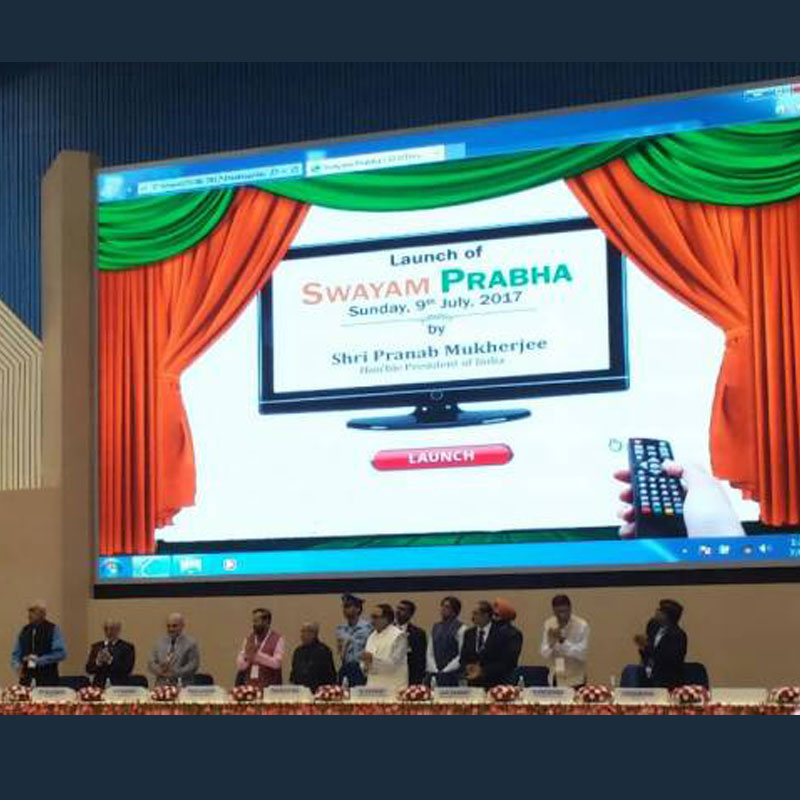
    MUMBAI: The human resources development ministry, through Swayam Prabha DTH, may plan to screen educational content in cinema halls if approved. The government is scrutinising a proposal for showing the content in theatres in small towns across India, ministry officials said.

    The HRD ministry had launched 32 channels on Swayam Prabha in August 2016 for providing higher education, including three for students to prepare for IIT entrance examination.

    The ministry is exploring ideas to relay courses through the DTH channel to cinema halls in urban areas having a population of less than a lakh and in Tier-II towns. Educational content could be shown between 7 am and 11 am or at a convenient time keeping in mind school timings of a particular area, an official told Hindustan Times.

    There are several single-screen halls that remain unutilised. Mass viewing of this content on big screens by high school and higher secondary school students could have a positive impact. However, matters related to the project cost et cetera are still to be worked out.

    The screening, idea of which was first mooted by NASSCOM, may also be done on Sundays and other school holidays, sources said.

    ALSO READ :

    32 free DTH educational channels on Dish TV & FreeDish start functioning

    Only Dish TV carrying HRD ministry’s educational TV channels

    Educational DTH channels to remain free-to-air, says minister


  • Nasscom projects 730mn Net users in India

    NEW DELHI: There were 391.50 million Internet subscribers as on 31 December 2016. The government has said it is expected that number of internet users will increase in the country owing to fast adoption of digital technology,.

    Minister of communications Manoj Sinha told the Parliament that the National Telecom Policy-2012 envisages 600 million broadband connections by 2020 at minimum 2 Mbps download speed.

    According to National Association of Software & Services Companies (NASSCOM) –Akamai report launched on 17 August 2016 regarding “The Future of Internet in India”, 730 million Internet users are anticipated in the country by 2020.

    The government has allocated 965 MHz spectrum through auction in October 2016 to various telecom service providers for access services. This will enable the telecom service providers to roll out 3G and 4G services which will facilitate proliferation of high speed internet facility.

    The BharatNet project is also being implemented to provide 100 Mbps broadband connectivity to all Gram Panchayats (approximately 2,50,000) in the country by using an optimal mix of underground fibre, fibre over power lines, radio and satellite media.

  • Shark Tank-like govt-run show to tie up with TV prod house

    Shark Tank-like govt-run show to tie up with TV prod house

    MUMBAI: India’s Department of Industrial Policy and Promotion (DIPP), on 4 March, gave a primary in-principle approval for a government-made reality show on the terms of American TV show Shark Tank so as to give a fillip to the startup culture.

    The DIPP may allow public voting so as to decide the ‘Most Popular Startup’, the Indian Express reported. At a 9 November 2016 meeting, it was also decided that 60 finalists will be given a reward of Rs 10 lakhs each.

    Shark Tank is a popular American show features a panel of potential investors called ‘sharks’ who consider offers from aspiring entrepreneurs seeking investments.

    The programme, to be simultaneously broadcast on the pubcaster Doordarshan, radio and digital platforms, would have startups pitch to an investors’ panel for impromptu investments.

    The DIPP plans to partner with a TV production house to oversee the implementation, production and execution of the TV show. The National Association of Software and Services Companies (NASSCOM) may be the coordinating agency for managing daily operations.

    The first round of evaluation is set to take place in seven cities — Mumbai, Delhi, Chandigarh, Kolkata, Bangalore, Indore and Guwahati. In all, 440 participants would be selected, of which 35 would be declared as “regional winners”. These winners would further proceed to the second round of evaluation or the “grand finale”.

    DIPP secretary Ramesh Abhishek said that the department is facing finance issues. NASSCOM told the government the show would require a budget of Rs 64 crore. While Rs 34 crore may be raised from states and sponsors, the DIPP would have to invest approx Rs 30 crore from their side.

    The show will be simultaneously aired across a number of platforms to “allow greater reach and connect with both the urban and rural audience across different sections of the society”.

    While the DIPP will have complete rights over the programme, NASSCOM may ‘managing’ day-to-day operations. “For implementation, a task force will be constituted with a partner leading in each region, who will be responsible for the execution of the entire show. This will include running day to day operations and for management of all deliverables, timelines, agencies and interfacing regularly with all sponsors and partners in each of the regions,” the DIPP note says.

    The proposed partners for north, east, west, south and central regions are — FICCI, The Indus Partners (TiE), Indian Science and Technology Entrepreneurs Parks and Business Incubator Association (ISBA), NASSCOM, Confederation of Indian Industry (CII), respectively.

    A steering committee to oversee the programme management would include representatives from NITI Aayog, the Ministry of Electronics and Information Technology, the HRD Ministry, and Department of Biotechnology, as well as Axis Bank and Yes Bank.

  • ‘New oil’ provider Jio open to partnerships

    MUMBAI: Reliance Jio, which has crossed 100-million customer milestone after its launch in September 2016, has an open mind for partnerships at this stage. Jio hopes to put India among the top 10 countries in terms of broadband access, from the 155th position in 2015.

    Reliance Industries chairman Mukesh Ambani, speaking at the Nasscom leadership forum in Mumbai, is betting big on data-driven telecom, emphasising that data was the “new oil”. Crediting the success of Jio to the Aadhaar-based verification, Ambani, who spent over Rs 1.2 trillion on Jio, said that the foundation of the fourth industrial revolution was connectivity and data, which was the new natural resource.

    Predicting that India would be a key player in this revolution, PTI reported Ambani as stating that India’s large talent base would have had a competitive advantage.

    The salient feature of this revolution is “convergence of the physical biological and digital sciences”, and “we are on the threshold of an exponential change,” he said. India’s 1.3 billion propulation, Ambani said, lends it a huge advantage and the data thus generated could be converted into intelligence.

    Ambani recommended looking at the larger picture of helping millions to resolve their problems with the adoption of digital technologies. Digitalisation would continue to face challenges in terms of security, privacy and data theft, but that they could find solutions to problems.

    Ambani advised adopting of next generation technologies. India would have to become the capital of real implementation of blockchain, he said, adding that they had the opportunity to adopt artificial intelligence and natural language processing, adopt drones in India’s own logistics as India could become one of the largest software markets.

    Ambani advised the industry to focus on the home market while describing the protectionist statements of the new US president Donald Trump as “a blessing in disguise” for the Indian IT sector. The US$ 155-billion Indian IT industry earns over 65 per cent of its revenues from the US.

    The IT industry meantime awaits clarity on Trump’s plans to double the salary for H1-B visa-holders and significantly curb visa issuance to techies.

    Also Read :

    http://www.indiantelevision.com/iworld/telecom/jio-may-use-us44bn-to-lay-ofc-expand-network-to-stifle-competition-170118

    http://www.indiantelevision.com/iworld/telecom/jio-becomes-top-isp-wireline-growthretards-overall-broadband-internet-subs-fall-in-nov-16-170202

    http://www.indiantelevision.com/iworld/telecom/q3-17-jio-affects-airtel-revenue-digital-tv-segment-numbers-up-170124

  • IoT conversations will promote interoperability: NASSCOM, Georgia Tech tie up

    IoT conversations will promote interoperability: NASSCOM, Georgia Tech tie up

    NEW DELHI: The National Association of Software and Services Companies (NASSCOM) and the Georgia Tech Advanced Research Corporation (GTARC) joined to advance Internet of Things (IoT) and fostering IoT-based innovation through the development of a conducive ecosystem in India.

    The partnership will also help drive conversations around IoT that will promote interoperability across industry and geographic markets. Both the COE-IoT and the GTARC will also get the opportunity to showcase their individual efforts to raise awareness on the subject.

    An MoU between the two provides for both NASSCOM and GTARC cooperating to address technological and non-technological challenges that surround the adoption of IoT technologies, creating an amiable environment for all organizations in the industry.

    The agreement between NASSCOM’s Center of Excellence on the Internet of Things (COE-IoT) based out of Bangalore and GTARC’s Centre for the Development and Application of Internet of Things Technologies (CDAIT) will see both organizations combine their individual efforts to raise awareness on IoT and drive topic related events for the purpose of developing a vibrant global IoT ecosystem facilitating the effective and efficient adoption of IoT technologies.

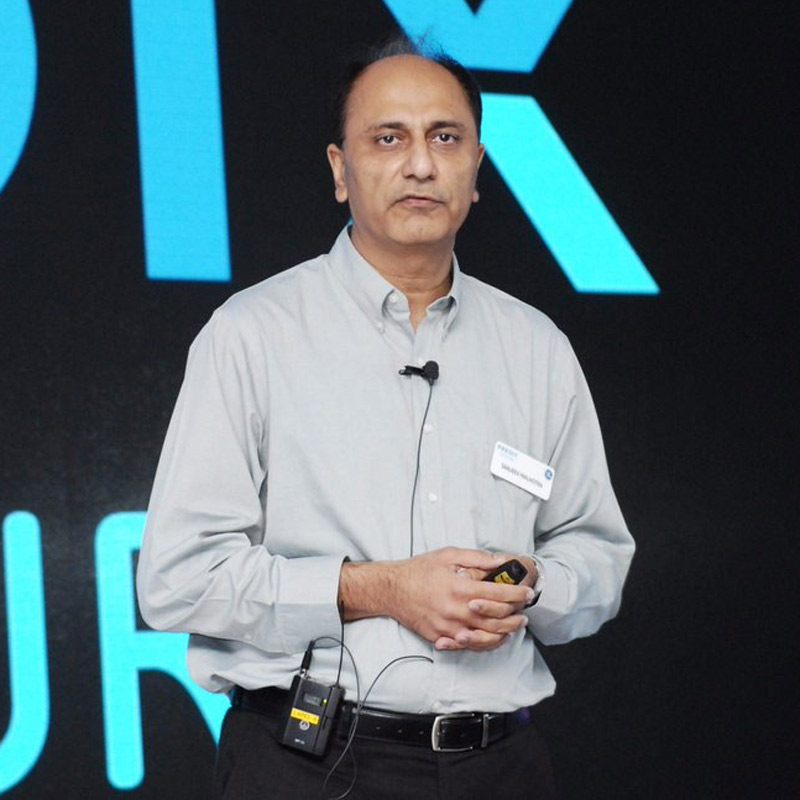
    NASSCOM COE-IoT CEO Sanjeev Malhotra said: “The disruptive nature of IoT will have a major impact in all areas of the consumer’s life – across all industries including industrial, healthcare, agriculture and smart homes. IoT will also be used across these industries to improve productivity with minimum usage of natural resources. We are happy to be partnering with GTARC, a leading institute with a focus on emerging technologies, leading to a mutually beneficial agreement that will help us combine GTARC’s advanced technology research along with the thriving innovation ecosystem in India.”

    Centre for the Development and Application of Internet-of-Things Technologies (CDAIT), GTARC, MD Alain Louchez said: “In close cooperation with NASSCOM’s IoT center, we intend to explore ways to leverage IoT technologies to accelerate and optimize the pace of digital transformation throughout the economy.”

    Through its COE-IoT located in Bangalore, NASSCOM is focusing on systemically expanding the technology ecosystem, with the Center providing a platform to address challenges such as the lack of understanding that leads to low adoption levels and security issues faced by the industry. The CoE – IoT is a joint initiative between the Department of Electronics and Information Technology (DEITY), Education and Research Network (ERNET) and NASSCOM and features laboratory that provides IoT focused startups the usage of various facilities that help them develop IoT solutions in application areas like Agriculture, Automobile, Telecom, Healthcare and Consumer IoT.

  • IoT conversations will promote interoperability: NASSCOM, Georgia Tech tie up

    IoT conversations will promote interoperability: NASSCOM, Georgia Tech tie up

    NEW DELHI: The National Association of Software and Services Companies (NASSCOM) and the Georgia Tech Advanced Research Corporation (GTARC) joined to advance Internet of Things (IoT) and fostering IoT-based innovation through the development of a conducive ecosystem in India.

    The partnership will also help drive conversations around IoT that will promote interoperability across industry and geographic markets. Both the COE-IoT and the GTARC will also get the opportunity to showcase their individual efforts to raise awareness on the subject.

    An MoU between the two provides for both NASSCOM and GTARC cooperating to address technological and non-technological challenges that surround the adoption of IoT technologies, creating an amiable environment for all organizations in the industry.

    The agreement between NASSCOM’s Center of Excellence on the Internet of Things (COE-IoT) based out of Bangalore and GTARC’s Centre for the Development and Application of Internet of Things Technologies (CDAIT) will see both organizations combine their individual efforts to raise awareness on IoT and drive topic related events for the purpose of developing a vibrant global IoT ecosystem facilitating the effective and efficient adoption of IoT technologies.

    NASSCOM COE-IoT CEO Sanjeev Malhotra said: “The disruptive nature of IoT will have a major impact in all areas of the consumer’s life – across all industries including industrial, healthcare, agriculture and smart homes. IoT will also be used across these industries to improve productivity with minimum usage of natural resources. We are happy to be partnering with GTARC, a leading institute with a focus on emerging technologies, leading to a mutually beneficial agreement that will help us combine GTARC’s advanced technology research along with the thriving innovation ecosystem in India.”

    Centre for the Development and Application of Internet-of-Things Technologies (CDAIT), GTARC, MD Alain Louchez said: “In close cooperation with NASSCOM’s IoT center, we intend to explore ways to leverage IoT technologies to accelerate and optimize the pace of digital transformation throughout the economy.”

    Through its COE-IoT located in Bangalore, NASSCOM is focusing on systemically expanding the technology ecosystem, with the Center providing a platform to address challenges such as the lack of understanding that leads to low adoption levels and security issues faced by the industry. The CoE – IoT is a joint initiative between the Department of Electronics and Information Technology (DEITY), Education and Research Network (ERNET) and NASSCOM and features laboratory that provides IoT focused startups the usage of various facilities that help them develop IoT solutions in application areas like Agriculture, Automobile, Telecom, Healthcare and Consumer IoT.