Tag: Narendra Modi

  • Is television viewership petering out as India adjusts to lockdown?

    Is television viewership petering out as India adjusts to lockdown?

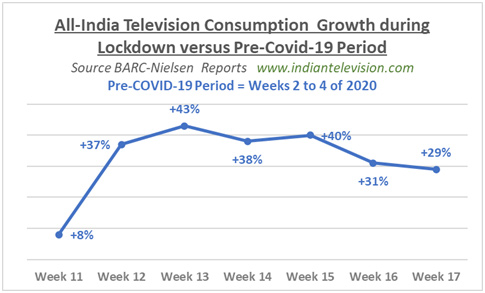
    BENGALURU: Television consumption in India seems to be petering out, according to Broadcast Audience Research Council of India (BARC)-Nielsen Reports. Of course, even in the sixth week and the second extension of the national lockdown to lockdown 3.0, television consumption is 29 per cent higher than during pre-Covid2019 periods. BARC and Nielsen have compared data for the pre-Covid2019 period with average numbers for Weeks 2 to 4 of 2020. Television consumption had peaked in Week 13 of 2020, the first full week since the lockdown commenced in the middle of Week 12 of 2020, on 25 March 2020 in India. Television consumption grew 43 per cent in Week 13 of 2020 as compared to the pre-Covid2019 period. BARC-Nielsen reports are available for the period starting Week 11 of 2020 until Week 17 at the time of writing of this paper.

    Please refer to the figure below for All-India television consumption trends.
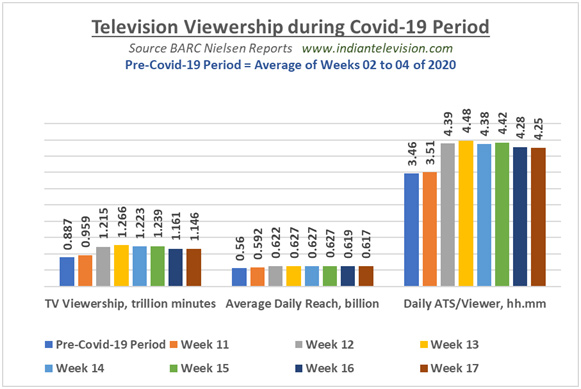
    The basic currency for total television consumption is trillion minutes. Average television viewership during the pre-Covid2019 weeks considered in the BARC-Nielsen Reports (Average of Weeks 2 to 4 of 2020) was 887 billion minutes with an average daily reach of 560 million. This worked out to a daily average time spent (ATS) watching television of 3 hours 46 minutes. In Week 13 of 2020, this peaked to 1,266 billion minutes with a reach of 627 million and ATS of 4 hours and 48 minutes.  These numbers have been sliding down since then. Please refer to the figure below.
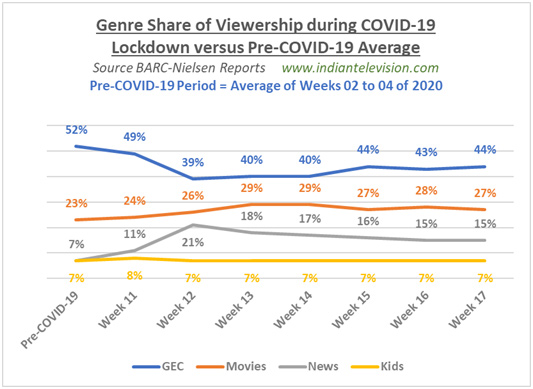
    In the pre-Covid2019 weeks, four genres had 89 per cent of viewership share – in terms of size, they are GEC, Movies, News and the Kids genres.  During the 7 weeks for which BARC-Nielsen Reports are available (Weeks 11 to 17 of 2020) at the time of writing this report, their combined share grew to 93 per cent. During the pre-Covid2019 weeks considered in the BARC-Nielsen Report (Weeks 2 to 4 of 2020) GEC had the largest viewership share of 52 per cent, followed by Movies with 23 per cent, the news and the kids’ genres with 7 per cent each. During Week 13 of 2020, this had changed to 40 per cent for GEC, 29 per cent for Movies, 18 per cent for news and 7 per cent for Kids. It must be noted that though share of the Kids channels was has generally been steady, overall television viewership has gone up during the lockdown period, and hence the number of viewers and ATS on the Kids was much higher than earlier times. It must further be noted that News had a share of 21 per cent in Week 13 of 2020.

    GECs, which had been experiencing a decline in viewership share during the Covid2019 lockdown due to the lack of fresh programming, got a breath of fresh air by way of re-runs of mythology and old classics on pubcaster network DD’s DD National and DD Bharati.  GECs’ viewership share has climbed to 44 per cent in weeks 16 and 17 from a low of 39 per cent in Week 12. The Movies genre seems to have stabilized at abut 27 per cent share as compared to the 23 per cent share during the pre-Covid2019 weeks considered in the BARC-Nielsen Reports.

    Please refer to the figure below:
    Overall, television consumption seems to be petering out slowly across the other major genres also.  Besides the four genres mentioned above, business news, youth, infotainment and lifestyle have witnessed changes in consumption growth. Relatively, the lifestyle genre seems to have had stabilized with about 32 per cent growth since week 13 of 2020 as compared to the average of the pre-Covid2019 weeks considered by BARC-Nielsen. The news genre, which had seen consumption triple in week 12, has stabilized consumption at around 165% growth in Weeks 16 and 17 of 2020 as compared to the average of the pre- Covid2019 weeks. Please refer to the figure below:

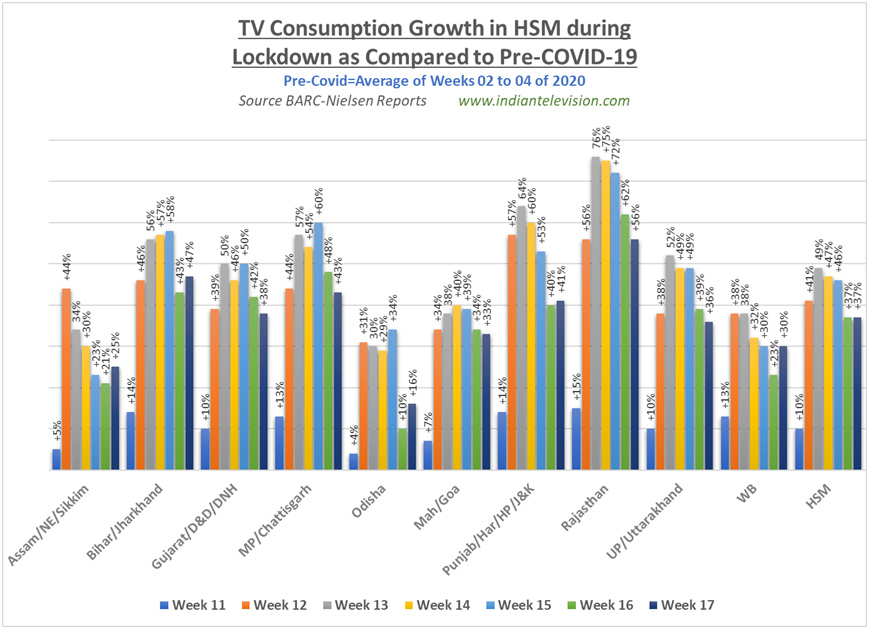
    BARC considers the Hindi Speaking Market or HSM as All India minus the four Southern Languages: Kannada, Malayalam, Tamil and Telugu. The South is a mature market with a higher penetration of television as compared to the HSM. Television consumption is also higher in the South. Hence, growth in the South market has been more muted as compared to the HSM during the lockdown weeks to date as compared to the average of the BARC-Nielsen Covid2019 weeks. The North Eastern states saw television consumption peak in week 12 itself – this was the week when the Janata Curfew and a couple of days later the first series of Lockdown or Lockdown 1.0 were announced by Indian Prime Minister Narendra Modi.  Most of the states saw viewership peak in Week 13. The exceptions were a few states where more of local ‘Covid2019’ and or/or events such as the lynching of the Sadhus in Maharashtra or the swearing in of ministers in Madhya Pradesh. There has been a general decline in television consumption since then, as mentioned before. Please refer to the figure below:
    Further, as mentioned above, South India has seen lower growth in viewership during the lockdown weeks because of its higher base and longer ATS spent even before the Covid2019 lockdown weeks. Hence the decline in television viewership since the peak has been lower in the South markets as compared to HSM. Please refer to the figure below:

    Is this the way forward?

    Television networks have tried to bring in viewership and maintain viewer stickiness. News by itself has grown as a genre because of the playout of events around the lockdown. Taking a cue from the movies genre, many networks have started beaming film-based content, but this has not been enough. The South GECs have witnessed growth on the back of comedy films over the last few days. Channels have brought back mythology and classics. Reruns of the Ramanand Sagar Ramayan and the B R Chopra Mahabharat, through daily episodes as opposed to the weekend episodes that were experienced when these magnum opuses were first aired, have brought in viewers and ensured their loyalty in the case of DD National and DD Bharati. Since mythology seems to have worked for DD, private networks have decided to include them in their programming mix. This seems to have worked to an extent in the case of Star Plus which launched of Ramayan in Week 17, and that slot for the channel has seen viewership grow by 65 per cent according to a preview of data by BARC for Week 18. Viacom18’s flagship Hindi GEC Colors has seen viewership growth of 24 per cent in Week 18 for the time slot when it commenced airing Mahabharat.

    It is still early days for a cure or vaccine for the pandemic to make things easier for humans, to bring back some form of normalcy. A lot more people will continue to stay at home. As the world and India slowly limp back in a phased manner to a ‘new normal’ from the Covid2019 lockdown, fresh content will surely be produced. However, given the circumstances globally, the ‘new normal’ has yet to take on a definite shape. If study, work, exercise, etc. from the home becomes the ‘new normal’, then ‘entertainment consumption at home’ is definitely set to be a big part of daily life. Content viewership from home, be it on the OTT platform, or the idiot box, or on the smart phone or a computing device, is definitely set to be much larger than during the pre-Covid2019 weeks. The question is“Will it be higher than during lockdown weeks?”
  • Television viewership peters down slightly in Week 14

    Television viewership peters down slightly in Week 14

    BENGALURU: The first three weeks of Indian COVID-19 lockdown have expanded television viewership in India to an extent that was probably never imagined earlier. As many average Indian citizens, bound by the lockdown within the confines of their homes, sought to comfort their minds with news of what was happening within the country and the world and with the pseudo realism that Movies provide, their television viewership habits changed week-on-week. Here’s how.

    Viewership

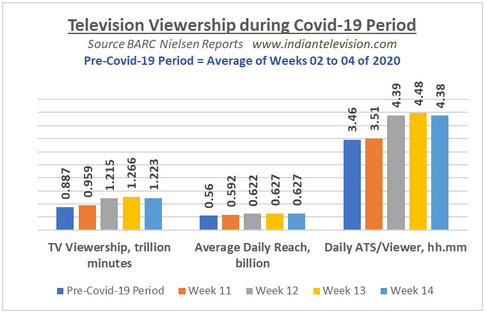
    In the third week of the Indian COVID-19 lockdown (week 14 of 2020, Saturday, 4 April 2020 to 11 April 2020), television viewership at 1.223 trillion minutes was 37.9 per cent higher when compared to the average of Weeks 2 to 4 of 2020, or the pre-COVID-19 period according to joint Broadcast Audience Research Council of India (BARC) Nielsen reports. But then, this was 3.4 per cent lower than the 1.266 trillion minutes of the previous week, despite the same average daily reach of 627 million television viewers. Hence, the average time spent was obviously lower at 4 hours 38 minutes in Week 14 of 2020 as compared to the 4 hours and 48 minutes that television viewers spent in Week13.

    As is obvious from the chart below, TV viewership has grown like never before during the lockdown week, but week 14 data shows that week-on-week, viewership in Week 14 of 2020 is slightly lower than the previous week, which has so far seen numbers peak at high levels. Please refer to the chart below:

    Effect on genres

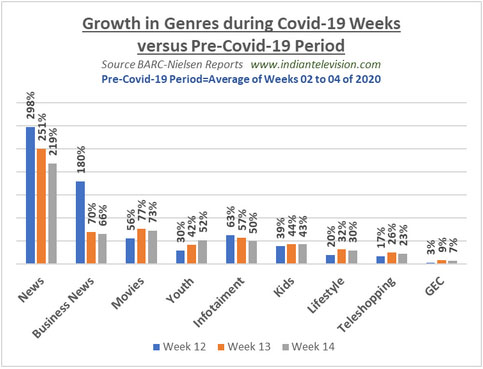
    News, which until the COVID-19 period had seven per cent share of viewership, saw it triple to 21per cent in Week 12, or the first week of the Covid-19 Lockdown in India. Though news is still the leader in terms of growth in viewership, the growth of the genre in relation to the Pre-Covid-19 period has been lower in Weeks 13 and 14 as compared to Week 12 of 2020. Business news also seemed to be following the trends of its larger sibling, news. The other seven genres have seen growth in Weeks 13 and 14 vis-à-vis the Pre-Covid-19 Period averages.

    Since no fresh content was being produced, GECs’ saw the smallest growth during the first three weeks of the Covid-19 lockdown. It must be noted that GECs’ are the largest genre in terms of viewership, so the 9per cent and 7per cent growth in Weeks 13 and 14 respectively versus the Pre-Covid-19 are good numbers.

    In the Pre-Covid-19 Period, Hindi GECs’ had a 32per cent share of viewership of the Hindi speaking market of HSM. Hindi GEC’s in the urban Hindi speaking market or HSM (U) which reduced to 29per cent in Week 14. Despite this Hindi GECs’ in HSM (U) attained an all-time high of 4 billion impressions. HSM (U) viewership grew by 26per cent in Week 14 in relation to the average of the Pre-Covid-19 Period. This growth could be attributed mainly to GECs’ resorting to airing old classics. The major growth drivers of the genre were pubcasterDoordarshan’s GECs’ DD National and DD Bharti which saw the return of programmes such as Ramanand Sagar’s Ramayan and B R Chopra’s Mahabharat, as well as soaps like Dekh Bhai Dekh, Byomkesh Bakshi, Shaktimaan, ShrimanShrimati, Buniyaad and Circus. The other GECs’ generally saw flat growth according to BARC.

    Please refer to the figure below:

    GECs’ in South India continued to lead viewership in Week 14 of 2020, but with a lower share as compared to the pre-COVID-19 period. The movies and news genres saw higher viewership in Week 14 as compared to the Pre-Covid-19 Period. Please refer to the chart below:

    Who was watching television when?

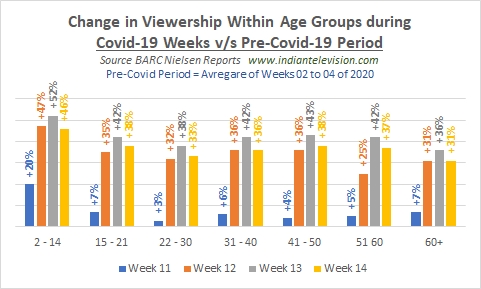
    Growth in viewership continued to be led by the younger generation –the 2-14-years age groups followed by the 15-21 and the 31-40-years age groups as well as in the week preceding (Week 11) the lockdown and during the three weeks of the lockdown (Weeks 12, 13 and 14 of 2020). However, growth was lower amongst all age groups in Week 14 of 2020 as compared to Week 13 with respect to the Pre-Covid-19 Period.

    Please refer to the figure below:

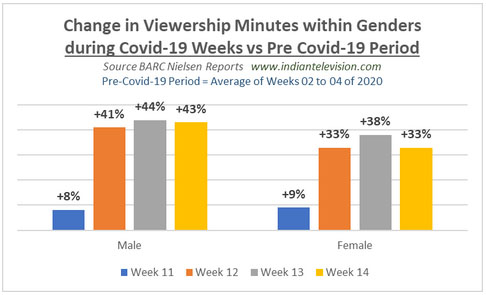
    Since people spent time at home, growth in time spent in minutes for watching television was higher among males. The change was slightly lower in Week 14 of 2020 as compared to Week 13 for males and females with viewership of both the weeks in relation to the Average of the Pre-Covid-19 Period. Please refer to the chart below:

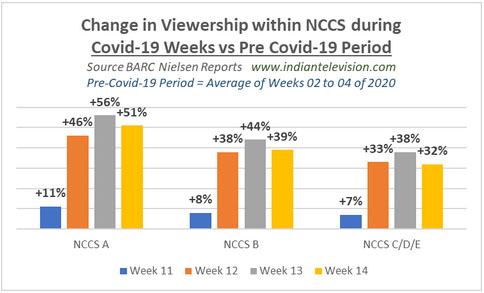
    A BARC Nielsen Report dated 16 April 2020 said that BARC’s NCCS A saw the highest growth during the three weeks of the lockdown as well as Week 11 of 2020 as compared to the average of the Pre-Covid-19 Period.  NCCS A has seen the highest growth in Weeks 12, 13 and 14, with growth peaking in Week 13 of 2020 and then petering slightly in Week 14 of 2020. Please refer to the chart below.

    Non-primetime continued to be a growth driver of Television viewership in Week 14. While Full Day All India Television viewership grew 38per cent in Week 14 as compared to the Pre-Covid-19 Period, Rural India viewership growth was driven by non-Primetime viewership. Primetime viewership grew 10per cent in Urban India, while it remained stable in Rural India.

    News is event driven. Week 15 of 2020 has seen the Covid-19 lockdown in India being extended to 3 May 2020. Prime Minister Narendra Modi’s speech on 14 April 2020 announcing the extension of the lockdown which was aired on 199 channels garnered the highest ratings at 3,937.3 million viewing minutes as compared to his previous 3 addresses to the nation on the Covid-19 crisis.

  • PM Modi’s lockdown extension address got 4 bn viewing mins

    PM Modi’s lockdown extension address got 4 bn viewing mins

    MUMBAI: Prime minister Narendra Modi’s address to the nation regarding the first extension of the lockdown on 14 April garnered four billion viewing minutes, as per latest data released by BARC-Nielsen. 

    This address garnered the highest viewership among his four addresses to the nation regarding COVID-19.  In his recent address, PM Modi announced that the nation-wide lockdown will be extended till 3 May.

    The lockdown extension speech received 3937.3 million viewing minutes while the earlier one on 3 April got 1024.5 million viewing minutes. The PM’s first lockdown announcement on 24 March got 3862.9 million viewing minutes, the second-highest among the four.

    The latest 25-minute address of the prime minister was shown on at least 199 channels with over 200 million people watching it. The recent address was the most important one compared to the three previous addresses, as PM Modi was about to speak on the future of lockdown imposed due to the COVID-19 crisis.

    PM Modi’s first address (Janta Curfew) on 19 March had garnered over 1.2 billion viewing minutes. In his second address, he announced the 21-day lockdown, which helped gain over 3.8 billion viewing minutes. The third address was only able to achieve 1 billion viewing minutes, during which he urged citizens to light a lamp and candles to stand together in India's fight against the pandemic. 

  • Regional news channels see sharp rise in viewership during Covid-19

    Regional news channels see sharp rise in viewership during Covid-19

    MUMBAI:  There is a temporary shift in TV viewership patterns as Indians are forced to stay inside their homes due to the lock-down courtesy Covid-19, according to the latest BARC-Nielsen report. It shows that regional news channels are gaining viewership.

    While Marathi news consumption was up by 101 per cent, that of Tamil grew by 84 per cent. While Oriya news consumption was up by 78 per cent, Malayalam and Bangla news consumption grew by 75 per cent each. 

    While Gujarati news consumption witnessed a growth of 61 per cent, that of Kannada was up by 47 per cent. Whereas Telugu news consumption grew by 21 per cent, that of Punjabi was up by 16 per cent, and English news consumption grew by 39 per cent.

    This is good news given that Hindi news dominates otherwise. Hindi news consumption was up by 62 per cent with the daily average time spent (ATS) up by 17 per cent. The daily average reach witnessed a growth of 34 per cent and the weekly impressions was up by 57 per cent.

    The overall growth of the entire news industry was 57 per cent with daily average reach up by 34 per cent. Daily average time spent on total news is also up by 17 per cent.

    With people clamouring for more information, news is the primary destination for a lot of Indians. Which is why prime minister Narendra Modi’s national address on 24 March addressing the country about the 21-day lockdown had 197 million viewers. They were watching the PM through 201 news channels with a total of 3891 million minutes of viewing.

    It’s not only television where the news genre witnessed a huge increase in the viewership number; it grew on digital platforms as well. News apps saw eight per cent more users per week with an increase of 17 per cent in time spent per user per week. News websites were explored by 26 per cent more users. Additionally, the number of visits to a website by a user went up by 29 per cent. Clearly, all of them are seeking news on Covid-19.

    There was a 30 per cent jump in the news consumption in mini-metros; metro cities witnessed 12 per cent growth whereas growth in tier I and tier II cities was up by 14 per cent. As per the BARC-Nielsen report, the top 20 news apps witnessed 30 per cent increase in time spent. News aggregators saw a growth of 22 per cent and news apps saw 76 per cent increase.

    BARC also reported that even kids between the age group of two years to 14 years consumed 83 per cent of news. This is likely due to co-viewing with parents.

  • As PM Modi announces pan-India lockdown to fight coronavirus, doctors on VMate tell what we should do

    As PM Modi announces pan-India lockdown to fight coronavirus, doctors on VMate tell what we should do

    At 8 pm on Tuesday, Prime Minister Narendra Modi appeared on the national television and putting end to all speculations, announced a strict 21-day country-wide lockdown to prevent spread of Covid-19 aka Coronavirus. This was also a declaration of India entering a decisive stage in the war against the global pandemic, at the forefront of which are medical professionals such as nurses and doctors. While experts across the world are striving to introduce a vaccination for the life-threatening virus, doctors in hospitals are combating the menace at the ground level. Their commitment to work is coupled with heavy psychological burden as well.

    With the pandemic holding humanity hostage and practically placing millions of Indians under house arrest, one thing that we all are fighting simultaneously is acute boredom. What has come to our rescue in this phase are the various short video platforms, such as VMate. Besides entertaining us, the short video apps are also adding to our pool of information regarding the virus. VMate, which has emerged as an active warrior in the battle, has witnessed convergence of doctors and medical professionals as well who are spreading authenticated and valuable information among the users.

    One of the doctors on the trending short video app is Khushboo Tanwar from Faridabad in Haryana, who has explained the various symptoms of the virus – dry cough, fever, headache, fatigue and breathing trouble. She also explains how we can make home-made sanitizers using doctor spirit and aloe vera. Another doctor on the app, Dr Chitra Tamta from Nainital, has touched upon a common but least realized mistake that we commit. Most of us have been using masks since the outbreak of coronavirus but sadly, most of us have been doing it the wrong way. Dr Tamta, through her videos, has explained the right ways to wear a mask and use sanitizers.

    Dr Animesh is another senior medical practitioner who is using VMate to spread awareness among masses. In his videos, the doctor stresses upon the need and means to ensure cleanliness, and also advises people to maintain a healthy diet to boost immunity. Adding to the bank of information is Dr Deepak Devgun from Haryana’s Kurukshetra. According to Dr Devgun, we must refrain from buying loose rations and instead stick to branded and packaged ration till the crisis is averted. According to him, germs/virus can be transmitted easily through loose lentils, rice, etc. Similarly, Dr Sandeep from UP’s Gautam Buddh Nagar has highlighted how regular exercise can help boost our immunity and deal with the situation.

    With the mankind presumably facing the worst-ever health crisis, the tips and suggestions by these physicians on VMate can turn out to be life-saving mantra for us. Through small doable steps, they empower us and provide ammo to combat the corona crisis.

    It is not for the first time that VMate, which is among the 10 most downloaded social media apps in the world, has offered us valuable information with regard to the Covid-19 outbreak. Recently, a number of videos of mask makers – stitching masks in bulk at factories and even small-time workshops – had trended on the platform. In the course of it, some of the creators had explained how a simple piece of cloth/handkerchief could be used to make a mask. Besides, some of the creators went for a lighter take on the issue, bringing smiles to our faces in the difficult times. Some had used parodies of popular songs while a few others had used jingles of advertisements to educate all on various aspects of the pandemic.

  • Viacom18 network to air PSA around CoVid 2019 at 5 pm today

    Viacom18 network to air PSA around CoVid 2019 at 5 pm today

    MUMBAI: Even as a billion Indians have heeded prime minister Narendra Modi’s call for a curfew since this morning and as millions of them are getting ready to clap and clang their food plates from balcony’s and windows at 5 pm today, Viacom 18 has announced an initiative called #PauseForACause. Cheer and Applause. campaign across all its media assets.

    #PauseForACause. Cheer and Applause. is a social awareness and public awareness announcement inclined campaign that urges viewers across all platforms to pause, remember and appreciate efforts and contributions of all those who are providing essential services in the fight against COVID-19, practise social distancing and support the Janta Curfew.

    #PauseForACause. Cheer and Applause. will be front lined by a 310 seconds ad that will air once on all Viacom18 channels simultaneously at 4:59:50PM on 22 March 2020. Viacom18 will further use its reach on its social media channels as well as on its OTT platform VOOT thus amplifying the message in the digital ecosystem.

    Speaking on the initiative, Viacom18 group CEO & MD Sudhanshu Vats said: “At Viacom18, we are deeply invested towards using our presence to create awareness around issues however large or small. We have always leveraged the power of storytelling to ensure that our viewers become more socially responsible while being entertained. The current health and social crisis has created unprecedented disruption at the national and global level.

    While constant efforts are being made by the Government to keep it in control, we would like to play a small role to amplify the message. Keeping this in mind, we would like to pay our tribute to medical, paramedical and all other professionals who have been providing round the clock support during this pandemic with our campaign #PauseForACause – Cheer and Applause. We are deeply grateful for all their efforts. We urge citizens to practice social distancing, avoid travel & social gatherings at a personal level to help the Government flatten the curve for the greater good of the society.”

  • Modi’s Women’s Day initiative to move women from ‘other half’ to ‘significant half’ zone

    Modi’s Women’s Day initiative to move women from ‘other half’ to ‘significant half’ zone

    DELHI: Indian Prime Minister Narendra Modi is one of the most popular politicians on social media globally. Therefore, when he posted an update of his plans to quit social media on coming Sunday, netizens went crazy. In no time, #NoSir started trending on Twitter, and many followers and politicians decided to follow his footsteps as well.

    However, Modi fans heaved a sigh of relief today, when the prime minister cleared the air around his cryptic social media post. Almost after 24-hours of his previous announcement, Modi shared that he will be handing over his social media accounts to women who inspire, like some Twitter users had predicted.

    He also called for entries from netizens to take the opportunity of handling his very famous social media presence for a day.

    Modi’s #SheInspiresUs campaign is being seen as a smart and welcome move by industry insiders. Harish Bijoor Consults Inc founder Harish Bijoor quipped, “All I can say is nice googly Prime Minister Ji!”

    The decision is being seen as a smart move to further augment the wide popularity he enjoys on digital platforms. The industry insiders also believe that it will lead to more women getting inspired to join politics.

    Mirum India ECD Naila Patel said, “This move is significant on multiple levels. One, Indian women are emerging as game changers on the political scene and the validation is coming from the highest source possible. Also it clearly moves a woman from ‘the other half to the significant half’ zone. As a branding activity it will ensure extremely positive PR for a party whose leading spokespersons have been clearly and domineeringly male!”

  • Marketing of India to Trump

    Marketing of India to Trump

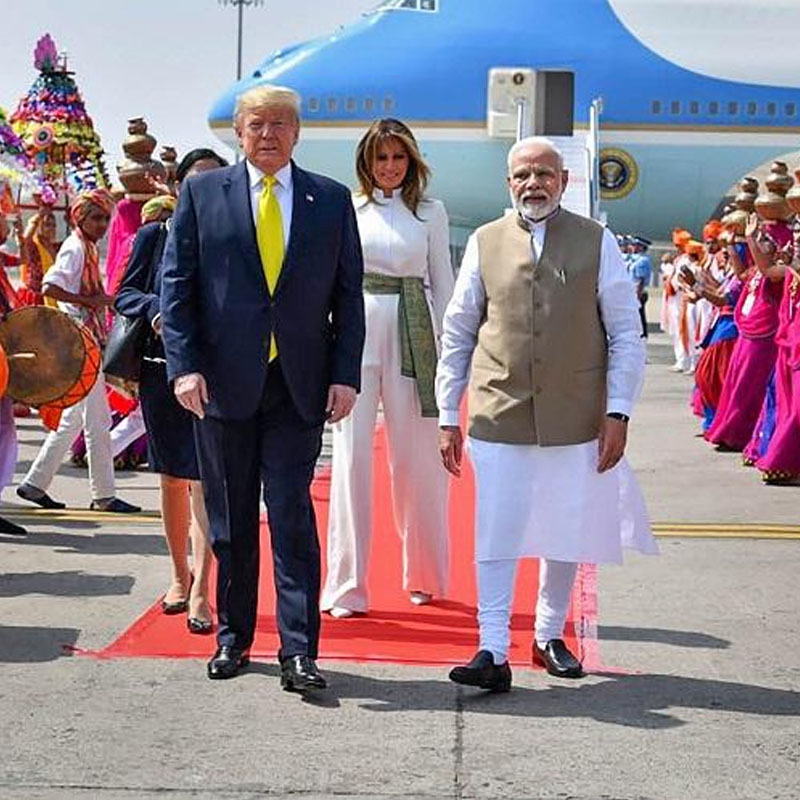
    MUMBAI: It’s not your normal day when the president of the United States of America pays a visit. India tried to sway his priorities and hosted the guest and his family as lavishly as possible.

    Starting its preparation a month in advance, the Indian administration left no stone unturned to woo US president Donald Trump.

    From traditional folk dance at the airport to the 22- kilometer long roadshow lines with people waving the first family while holding flags of both the countries, India went big in all its efforts. The preparation didn’t stop there as Ahmedabad saw posters and OOH ads all across the city with the tagline ‘two dynamic personalities and one momentous occasion'.

    Dentsu Aegis Network India chief executive officer Anand Bhadkamkar says: “I don’t think the hospitality given to Trump and his family could be termed as a marketing strategy. However, India presented itself quite well in front of the US president. Trump’s India visit was more of to enhance bilateral ties between the two nations and bonhomie between the leaders.”

    Trump for the first time ever addressed a crowd of over 1 lakh attendees on a foreign land during an event.

    “Trump is a persona, who is all about spectacle and received very good spectacle in Ahemdabad", believes Bengaluru-based brand guru Harish Bijoor. “It was a very lavish show presented by India as far as the US president was concerned.”

    Donald Trump was on his first-ever two-day (24-25 February) state visit to India post his election as the US president in 2016 along with wife Melania Trump and other dignitaries from his administration.

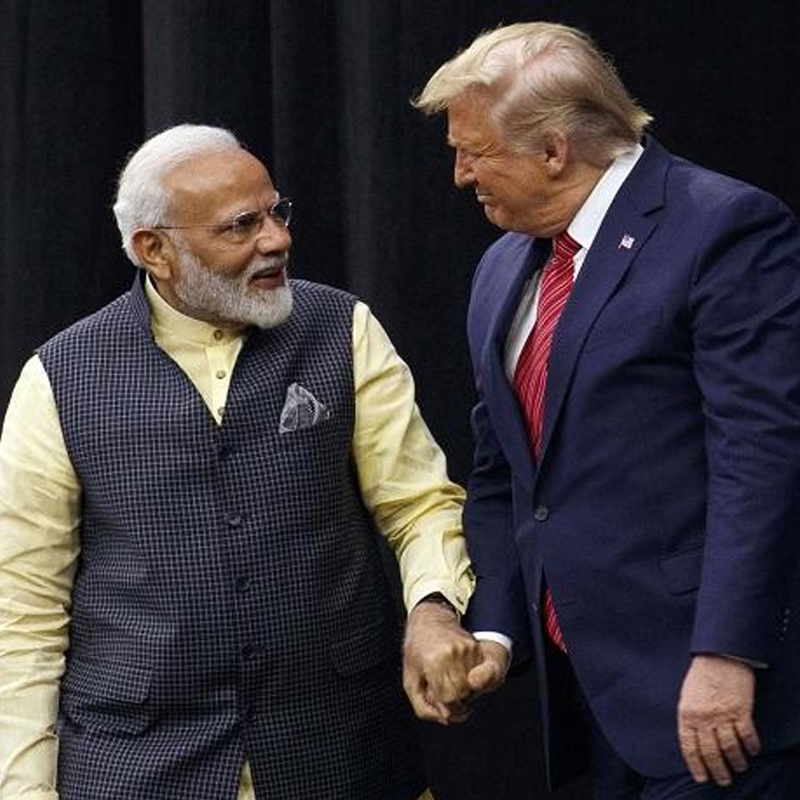
    The first day of Trump’s visit to India was all about hospitality to Trump. Post landing in Ahmedabad, he visited Sabarmati Ashram, attended Namaste Trump, a return gift for the Howdy Modi event that took place last year in Texas, followed by a visit at the Taj Mahal and eventually ending the first day in the national capital for the next day’s ceremony. The second day was all about a ceremonial event to honour the guest with a state dinner at President of India’s residence Rashtrapati Bhawan.

    Bijoor says, “POTUS (President of the United States) is a very powerful persona as far as the world is concerned, particularly in terms of business and occupying a solid position in the mind of POTUS has been the basic goal of India during the Namaste Trump event, which we have achieved successfully.”

    “The marketing goal of India to Trump was to achieve that pole position and it has been very well established. If the US president repeats his term in the presidential elections slated this year then the gamble is well played as we have a friend in the US for another five years," adds Bijoor.

    As a marketing strategy, this is not the first time that prime minister Narendra Modi has hosted a guest in different parts of the country apart from New Delhi. He had hosted China’s president Xi Jinping in Mahabalipuram, a coastal town in Tamil Nadu, last year and Japanese prime minister Shinzo Abe in his Lok Sabha constituency Varanasi in 2015, wherein Modi made Abe participate in Ganga aarti.

    “Modi is one of the best marketers India has ever had in all of the prime ministers. Modi is India’s best brand endorser,” says Bijoor. “I don’t think India has had any brand endorser as good as Modi. In terms of branding, we’re at a focal point right at the peak with prime minister Modi as a brand ambassador.”

    One only hopes that India's marketing to Trump pays off adequately in the eyes of the world.

  • News channels unveil programming, content strategy for Trump’s visit to India

    News channels unveil programming, content strategy for Trump’s visit to India

    MUMBAI: When the US president comes visiting, news channels need to stay on their toes. Indian news channels are now gearing up for a special and round-the-clock coverage of the maiden visit of the United States of America’s president Donald Trump to India on 24-25 February.

    Times Now, Mirror Now and ET Now will bring a 360-degree news reportage to its viewers on US president, Donald Trump’s first-ever visit to India. Times Now with ‘Modi Trump Summit’, will run a curated programming line-up all through the day on 24 and 25 February offering viewers a comprehensive update on Trump’s visit.

    Mirror Now will begin rolling coverage from 11 am anchored by news editor, Tanvi Shukla and will also host a special Urban Debate edition at 9 pm. On day-2 of Trump’s visit, it will focus on the joint statement between two nations on trade, terrorism and defence and host a two-hour primetime special show on the key takeaways and the outcome of the meeting.

    Unlike Times News Network’s news channels, Network18’s CNN-News18 has lined-up exclusive programming on the first official visit of the international dignitaries. Titled ‘Namaste Trump’, the special reportage will cover every facet of President Trump’s Indian tour.

    “The programming will comprise engaging news reports on Trump's India visit in view of the upcoming US presidential elections. Starting 22 February, the channel has lined-up non-stop programming capturing major highlights of the US President Trump’s India visit,” says News18 Network’s chief executive officer – English and business news cluster Basant Dhawan.

    Tracking the bilateral discussions on key trade and political issues, the channel will also analyse the socio-political implications of the entire tour.

    As Trump’s visit to India going to be one of the biggest televised events this year, Dhawan says, “It has led to a great deal of advertiser interest. We have been actively engaging with the advertising community and our teams have been working closely to create innovative solutions for our clients.”

    Times Now and Mirror Now have deputed over 15 reporters each covering the visit from Ahmedabad, Agra and Delhi. Whereas, Network18’s CNN-News18 on-ground reporting coverage from Ahmedabad will be led by Maha Siddiqui —senior editor of the network, and the channel's programming will be led by the channels executive editor Bhupendra Chaubey along with other senior editors of the group network.

    In this regard, the CEO – English and business news cluster says, “Our reporters will be reporting live from ground zero – whether it is bilateral meetings or First Lady’s visit to schools in New Delhi.”

    The US president, who already is enroute to India along with wife Melania, will inaugurate Sardar Patel Gujarat Stadium in Ahmedabad, Gujarat and address at least one lakh attendees. “The programming of the network will aim to draw a parallel between ‘Howdy, Modi’ in Houston last year and ‘Namaste Trump’ in India this year,” explains Dhawan.

    Times Now reportage will highlight a national and global political outlook, ET NOW will cover the economic and business aspects of Trump’s visit. Whereas, Mirror Now will present the key takeaways for India from this visit, with an emphasis on trade and visa issues. All three channels of TNN will use LiveU, OB Vans and phone cameras to air the live feed.

    To decode what it essentially means for India-US ties, TNN’s Mirror Now will bring expert voices that include Barkha Dutt – Senior Journalist, Maroof Raaza – strategic and defence expert and Anil Trigunyat – former diplomat and senior journalists from the Washington Post amongst others.

    "With the CNN advantage, we have exclusive access to international experts and news stories. Additionally, CNN’s journalists travelling to India as part of President Trump’s contingent will also share their outlook with CNN-News18 exclusively,” opines Dhawan.

  • BARC week 39: ‘Howdy Modi’ and UNGA proceedings boost English news viewership

    BARC week 39: ‘Howdy Modi’ and UNGA proceedings boost English news viewership

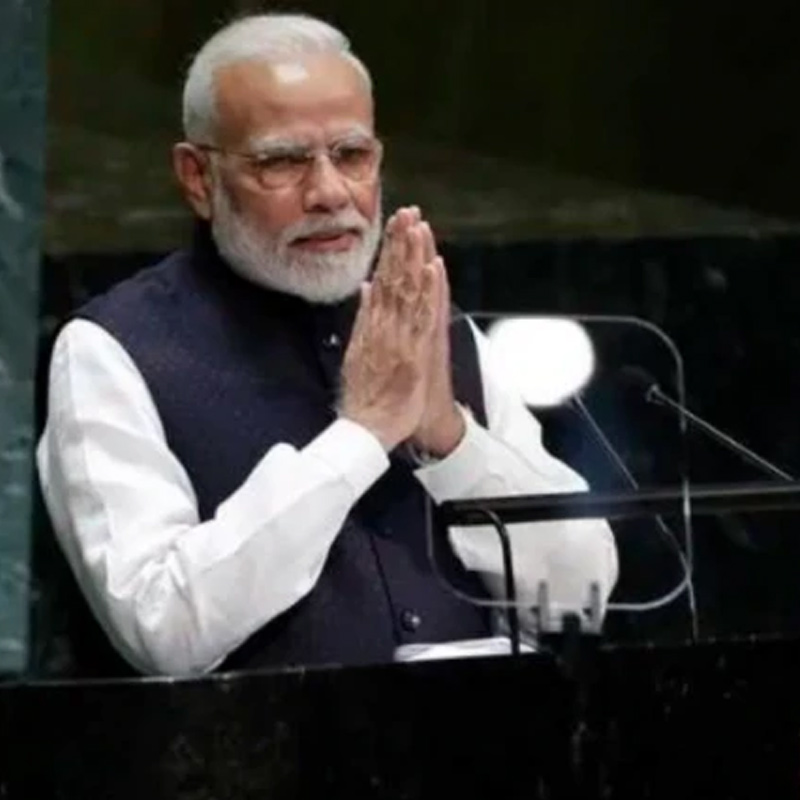
    BENGALURU: Indian Prime Minister Narendra Modi’s speech at the United Nations General Assembly (UNGA) and incidents related to the event such as the speech of Pakistan’s Prime Minister Imran Khan and the abrogation of article 370, helped boost up English news viewership in Broadcast Audience Research Council of India’s (BARC) week 39, 2019 ratings. After the super success of ‘Howdy Modi’, the Indian premier’s speech was the most awaited one by world. Short to the point, the speech called upon the world to unite to face challenges such as terror, climate, fight against poverty, etc.

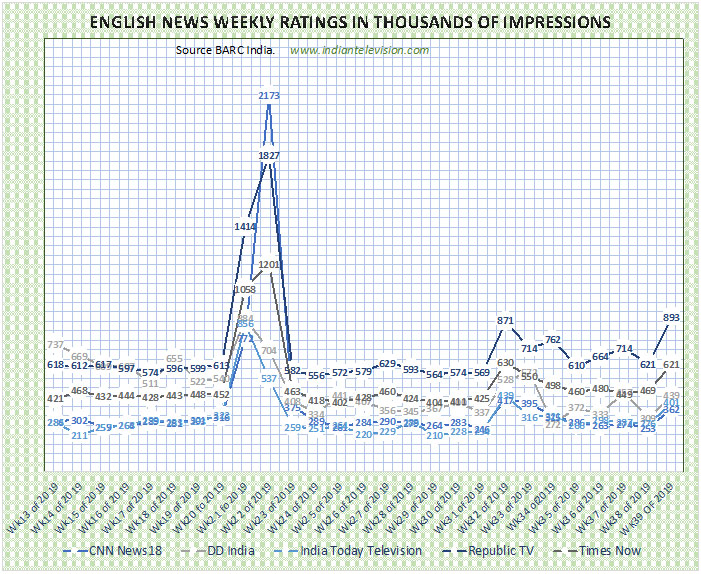
    The combined viewership of the top 5 English news channels in week 39 of 2019 (Saturday, 21 September 2019 to Friday, 27 September 2019, week or period under review) increased 0.788 million weekly impressions or by 41 per cent as compared to the previous week – week 38. Needless to say that all the five channels saw ratings climb up at least 32 per cent during the period under review. 

    As mentioned above, viewership of the top 5 English news channels increased 41 per cent in week 39 of 2019 to 2.716 million impressions as compared to 1.928 million weekly impressions. Please refer to the figure below:

    The ranks of the top 5 English news channels in week 39 of 2019 were the same as those in week 38 of 2019. Please refer to the chart below:

    English news channels in week 39 of 2019

    Despite Arnab Goswami being conspicuous by his absence during some of the boisterous and uncontrolled debates that contribute hugely to his channel’s viewership and numero uno position, Republic TV saw its viewership increase 44 per cent or by 0.272 million weekly impressions in week 39 of 2019 from 0.621 million weekly impressions in the previous week. Times Now, at second rank, saw viewership increase by 0.152 million (32 per cent increase) weekly impressions in week 39 of 2019 to 0.621 million weekly impressions from 0.469 million weekly impressions in week 38.

    Continuing on at third rank, pubcaster Doordarshan’s English news channel saw ratings increase by 0.130 million weekly impressions (42 per cent increase) to 0.439 million weekly impressions in week 39 of 2019 from 0.309 million weekly impressions in the previous week. India Today Group’s India Today TV at rank 4, saw its ratings increase 0.125 million weekly impressions or increase by 45 per cent to 0.401 million weekly impressions in week 39 of 2019 from 0.276 million weekly impressions. Completing the quintet at rank 5, Network18’s CNN News18 saw viewership increase 43 per cent or by 0.109 million weekly impressions in week 39 of 2019 to 0.362 million weekly impressions from 0.253 million weekly impressions in week 38.

    Please refer to the figure below: