Tag: Narendra Modi

  • The New Government and Indian Media: Agenda for Reform

    The New Government and Indian Media: Agenda for Reform

    I will begin by taking a cue from a catchphrase Mr. Modi used frequently in his stump speeches through the electioneering. “More Governance. Less Government.”


    If PM Modi follows this through in all those facets of the government that media industries deal with, he will simultaneously:


    • Strengthen plurality of voices and reinforce the media’s ‘Fourth Estate’ role as our democracy’s watchdog and first line of defence

    • Unlock investment interest, domestic and FDI, and quickly create thousands of new jobs in the people-intensive creative content sector

    • Give fillip to revenue growth for the centre and state governments

    • Allow freer play of market forces to accelerate growth in the still nascent media sector

    Let us look at specific examples of each of these:

    • It is nearly two decades since FM radio was first opened up to private broadcasters. Even today, licence conditions prohibit radio broadcasters from news and current affairs. In a laughable concession they are, however, permitted to retransmit, without any editing or alteration, All India Radio news bulletins. In the meanwhile, television, which reaches a much larger slice of the population, has a whole, officially recognised and duly licensed ‘news’ genre. Apart from a visceral fear of real free speech in both the legislative and administrative arms of the government, there seems to be no justification for this position. The Supreme Court admitted a public interest litigation on 17 October 2013 seeking the abrogation of this restriction. Can the new government show us that its heart is in the right place when this matter next comes up for hearing?

    • While restrictions on foreign investment in the news business are nearly universal for easily understood reasons, the government will soon be hearing petitions from several players in the electronic news media about the dire straits they are in. While clearly appreciating the need to ensure that a clear majority in a news business must remain in Indian hands, could the government not consider pushing up FDI to 49 per cent? Similarly, the related-party restrictions on investments in the cable & satellite distribution plant (DAS, DTH, HITS etc.) impede the path for many natural investors. Given the ambitious path laid out to analog sunset at the end of this year, the sector is crying out for more investment and the progress of the digitisation project to date is evidence enough for the consumer and content creator benefits it brings in its wake.

    • A very important reason for mandatory digitisation is that it lays to rest the unregulated analogue cable plant, which from the beginning, has operated in a twilight zone beyond the reach of the state. An unfortunate outcome, for central and state governments, is that incomes and profits of businesses in this segment of the media industry have stayed in the informal, ‘black’ economy. Given turnovers in tens of thousands of crore, the loss to the exchequer over the last several years is evidently sizable. The future, however, looks better. Now if the government acts to open FDI pathways into the distribution plant, this future of big service and entertainment tax revenues might be even closer at hand.

    • The Telecom Regulatory Authority of India (TRAI) was an accidental invitee to the television industry. Once it got in, though, it behaved like the well-known fable about the Arab and the Camel. On a cold night in the desert, the camel requests the Arab if it can only get its freezing nose into the tent. One thing leads to another and soon the camel is in the tent and the poor Arab is freezing out in the open. TRAI has chosen to build a complex framework to regulate tariffs between content providers and distribution platforms with all sorts of caps and restrictions. Interestingly enough, it appears that the regulations work only to protect distribution interests while doing little or nothing for the final consumer. With a multiplicity of content providers and distribution platforms, the likelihood of any player or group of players being able to exert monopolistic or even oligopolistic economic power leading to extortionate impositions on the consumer now appear far-fetched. Under the circumstances, it may be time to wind down this onerous framework. In any case, an erstwhile TRAI chairman Pradeep Baijal, had indicated that regulation would make way for forbearance soon as the last-mile was competitive. How much more competitive can it get with half a dozen DTH players, hundreds of DAS platforms and indications of other initiatives like HITS in the pipeline?

    The country has given an unequivocal mandate to Mr. Modi, his party and coalition. Expectations are stratospheric and everything that accelerates the wheels of business and commerce should be music to his and his government’s ears. BBC’s stated mission “To enrich people’s lives with programmes and services that inform, educate and entertain” is a great encapsulation of the mission of the entire media industry itself. Support this industry and you unleash a catalysing force of good, Mr. Modi.

    Because ultimately, as the Clinton Campaign in 1992 put it pithily, it’s “The Economy, stupid.”

    (These are purely personal views of Provocateur Advisory principal Paritosh Joshi and indiantelevision.com does not subscribe to these views)
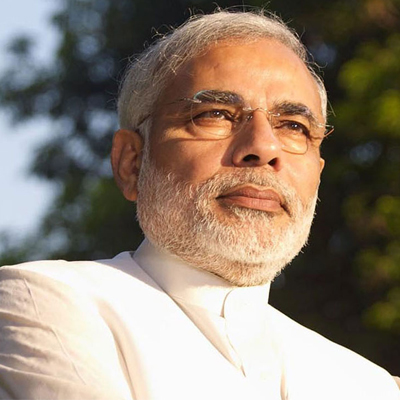
  • Narendra Modi: India’s next Prime Minister

    Narendra Modi: India’s next Prime Minister

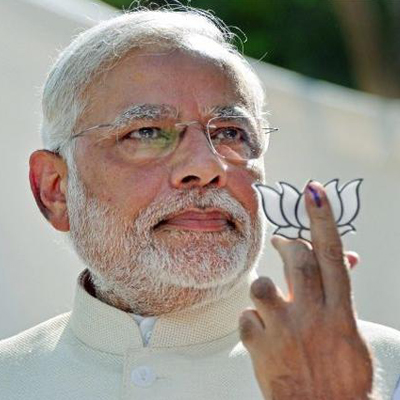
    MUMBAI: As the dusk sets on the historic day in Indian history, soon-to-be India’s fourteenth Prime Minister, Narendra Modi, thanked the people of Vadodara (Baroda) for giving him a record margin of 5.7 lakh votes.


    While the Congress accepted its humiliating defeat, Bharatiya Janata Party (BJP) is busy giving out laddoos to people.


    Even though early leads suggested that BJP was way ahead of other parties, by afternoon all doubts were abolished. At the time of filing this report (7:18 pm) while NDA had secured 337 seats, BJP alone had 283 seats, way past the magical figure of 272. On the other hand, UPA managed only 58 seats, while Congress put up a disappointing figure of 45 seats.


    The Congress saw a resounding defeat as it barely managed to get a few seats while retaining its main seats of Amethi (Rahul Gandhi) and Rae Bareily (Sonia Gandhi).


    It is after 30 years that a party achieved the feat of having a thumping majority to lead the Lok Sabha.  BJP saw clean sweeps in the states of Gujarat, Rajasthan, Delhi and Goa while other states had clear majority. There were a few states like Kerala, Tamil Nadu, West Bengal, Tripura, Sikkim, Odisha and Manipur,where the party couldn’t cement a strong hold.


    The election which saw many firsts has already gone down in the history as the election of the century.

  • Elections 2014: News channels ‘Modi’fy

    Elections 2014: News channels ‘Modi’fy

    NEW DELHI: Even as television channels are trying to be one up on the other in the coverage of the counting process and the general election results, most channels reflected a common perception:that the results were individual-based and not party-based.

    In fact, most channels had the faces of Narendra Modi when showing the results of the Bharatiya Janata Party (BJP), that of Rahul Gandhi when showing the fate of the Indian National Congress (INC), of Arvind Kejriwal when reflecting how the Aam Aadmi Party (AAP) was doing, and so on. The party symbols of these parties were curiously missing from the studio reportage, even as these appeared during the live coverages from all over the country.

    Doordarshan News expectedly was the most sober in its coverage even as it was a little behind the other channels in showing the trends or results, but surprisingly even Times Now appeared to move a bit slowly with the trends and results even as it succeeded in getting a large number of panelists and politicians on board throughout the day.

    Even Lok Sabha TV (LSTV) and Rajya Sabha TV (RSTV) joined the fray for the first time to show the results. However, while LSTV confined itself to showing figures taken from Doordarshan accompanied by a live panel discussion, RSTV had live coverages from different parts of the country in collaboration with DD.   


    Clearly, NDTV 24×7 and ABP News captured a large number of eyeballs with their graphic presentations. NDTV 24×7 showed graphic presentation of the Lok Sabha, with a majority of seats occupied with yellow-coloured figures representing the BJP, and the numbers changed as the trends and results emerged.

    Aaj Tak had moving caricatures of Modi, Gandhi and Kejriwal reflecting the fate of their respective party, with Modi dancing with joy, Gandhi brow in frustration, and Kejriwal looking crestfallen in place of the party symbols.

    Interestingly the poll figures remained on screen even during the commercial breaks, reflecting the interest of the viewer.     

    As expected the presentations on the main news channels were led by their heads including Prannoy Roy of NDTV, Arnab Goswami of Times Now, and Rajdeep Sardesai of CNN-IBN.

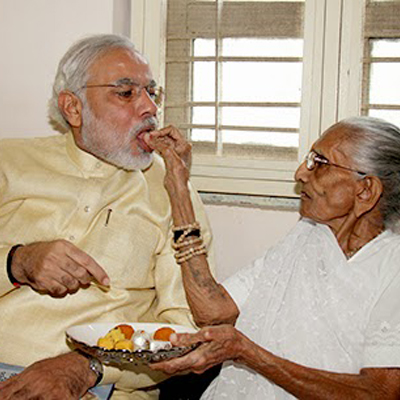
    One common repeat throughout the day on all channels were the shots of Modi meeting and taking the blessings of his aged mother after his Vadodara victory and the run of the party for which he is the Prime Ministerial candidate.


    While Times Now appeared very cluttered with too many figures running simultaneously along with several visuals at the same time, channels like Zee News, ABP News, NDTV 24X7, P7, India News, CNN-IBN and NewsX caught the eye with their graphics and presentation.


    The interest in the Indian elections overseas was reflected by BBC Global News, as it went live several times during the day and had a live translation of all press meets being addressed in Hindi. CNN in comparison showed little interest as it only mentioned the results or trends from time to time.

    Clearly, all the channels were out to outdo each other as far as presentation was concerned vis-a-vis live graphics and coverage, and some like Times Now, ABP News, CNN-IBN and NDTV 24X7 catching the eye with their sets, with ABP News and NDTV 24X7 being most innovative.

    But it was clear that all the channels probably spent much more than the budgets initially earmarked by them for today. An earlier report had said that the channels had put aside Rs 1 crore to Rs 1.5 crore for the day, but one reporter of a channel told indiantelevision.com that the amount would go higher.


    Certain common points of discussion emerged throughout the day: was it the victory of Modi, the BJP workers or the RSS (an issue raised by both LK Advani and Sushma Swaraj during the day); will Rahul resign, accepting responsibility; did the allies matter since the BJP had emerged strongly on its own; was this high vote for BJP a rejection of many that it was a communal party; whether BJP leader Giriraj Singh who had made some very damaging statements should be removed from the party; why Sonia and Rahul Gandhi did not take questions and just made statements (Rahul was ready to face question, but left on Sonia’s gesture); and why were Dr Manmohan Singh and Arjun Kejriwal conspicuously missing. Advani and Sushma Swaraj’s attribution of the victory to BJP workers and the Rashtriya Swayam Sevak Sangh; and the virtually plastic smile on the face of Rahul also made for a lot of talk on TV channels and social media.

    But apart from the TV channels and even All India Radio including FM Gold which went live from 8:30 am in the morning, the social media was as active. While live coverage by way of latest figures appeared on sites like yahoo.in, Twitter was very active and was quoted throughout the day by TV channels whenever any personality including Modi and LK Advani sent tweets.


    Several interesting cartoons came on the internet, particularly Facebook, from individuals. One had a cartoon of Rahul Gandhi’s smiling face with the use of a BJP slogan: ‘Acchey din aaney waley hain, hum naani ke ghar jaane waaley hain’ (Good days are coming, we will go to our grandmother’s house) while another had a poster of ‘Dabbang 3’ with the photo of Modi. Some wanted to know if the victory of the film personalities was that of the individuals or the party they represented.    

    Even as the results started coming in the afternoon, the focus shifted entirely to the major personalities in the fray. And it will be interesting to note the conjectures of the channels about possible portfolios, particularly since most TV channels had got the exit polls right by predicting the victory of BJP.

  • 2014 Poll results through the eyes of Bengali channels

    2014 Poll results through the eyes of Bengali channels

    KOLKATA: News channels including ABP Ananda, 24 Ghanta, ETV News Bangla, Focus TV, Kolkata TV and Tara Newz and infotainment channels like Aakash 8 have resembled a battlefield since 8am on 16 May, what with counting of votes taking place in 42 Lok Sabha constituencies.


    Each channel has tried to outshine the other with live shows, panel discussions and what have you in terms of the fate of politicians in the state. Not only have they provided byte-by-byte news to viewers who are glued to their TV screens since morning but they have also kept their websites up-to-speed with the latest updates.


    While the ruling Trinamool Congress (TMC) has emerged the winner, it isn’t exactly the lion’s share of seats that the party was confident of bagging in the face of a challenge from the left front and the Congress. What’s more, BJP, that was hitherto a fringe player in the state, has sprung a surprise by forging a lead in three seats. These are among the reasons why television channels are now eagerly awaiting chief minister Mamata Banerjee’s reaction on the results.  


    Interestingly, while BJP wasn’t able to make the kind of inroads in the state as it desired, quite a few Bengali channels are highlighting the party’s rise in the state.


    A city-based media observer said, “Even when the BJP was in power in 1999, it had only one MP from Bengal but this time, apart from the expected historical win at the centre, channels are talking about BJP making inroads in the state.”


    Another media expert said, “TMC’s result isn’t entirely unexpected. The major surprise is BJP coming up in West Bengal. The opposition vote has got divided.” Talking about the way Bengali news channels covered election result day, he said, “Panellists in local Bengali channels are mostly junior and unimportant leaders of parties.”


    While economist and political analyst, Swaraj Mukherjee questioned, “Kolkata is an island of its own. Trends in the rest of the country never touched this island in the past nor do they today. So TMC wins. The big number is because of big rigging, though TMC will always deny but who can deny the audio-visual documents?”


    “People are quiet. They would have rejoiced if the BJP would have got a few more seats in line with the rest of the country. They cannot react so openly for fear of personal security. None the less, the victory of Sudip Bandopadhyay and Dinesh Trivedi augur well as they are liked by the people in their constituencies,” Mukherjee said, adding, “News channels are covering the news but slanted for fear of government action.”


    A third expert rued, “It seems most of the channels have forgotten that this is a national election and not a Panchayat poll where they can have an overdose of local politics.”


    Whereas Focus Bangla (earlier Ne Bangla) editor-in-chief Biswa Majumdar said that the channel had interviewed most of the big shots in these elections as elections were an important occasion for making a mark in the regional news space.

  • #Elections2014 result: Media industry tweets

    #Elections2014 result: Media industry tweets

    MUMBAI: Social media played an important role in this election season. With the country buzzing with the election results today and Narendra Modi ready to take charge as the PM, the social media is buzzing again.


    People have their own set of opinions/jokes/statements to make regarding the day which is being pointed as a historic day by many.


    We at indiantelevision.com bring to you what the media fraternity feels/thinks about the new dawn.


    Punit Goenka @punit_goenka – The government that comes to power should be given time to perform! We need to understand that there’s no overnight solution! #Results2014


    Jehangir Pocha @JehangirPocha – The Indian elections are the greatest democratic show on Earth. A fitting tribute from an ancient nation to the greatest human idea.

    Raj Nayak @rajcheerfull – The right thing for all parties would be to accept the verdict gracefully, pick up the phone & congratulate @narendramodi before Obama does.


    Vivek Srivastava @vivek3180 – The Indian voters have done their job given clear majority… now its about the politicians to deliver. #Results2014


    Satbir Singh @thesatbir – Remember: in 1984, BJP won 2 seats. 30 years later, 280. Today, AAP leading in 4 seats. Anything can happen in future


    TANUJ GARG @tanuj_garg – Rakhi Sawant got 15 votes, FYI. Y’all can sleep in peace now.


    bhatnaturally @bhatnaturally – So Mani Aiyyar can open tea shops in Mayiladuthurai now


    Madhavan Narayanan @madversity – Sensex at 25,000. It is a dream peak. But where does it go from here? What do mountaineers to when they reach the Everest?


    Ashok Lalla @ashoklalla – It’s Diwali day for halwais and mithai shops across India as the #RaceTo272 is decided today.


    Madan Sanglikar @maddyisms – It’s Boxing Day today in India #election2014


    Ramesh Srivats @rameshsrivats – Modi’s first act as PM will be to change the password for @PMOIndia from Sonia123 to ModiOnly1.


    Harit Nagpal @haritnagpal – I switched on Times Now to figure out which party was leading and was told that Times Now leads, amongst news channels.


    Harini Calamur @calamur – The last time a political party got these kind of numbers, I was in school


    Sunil Lulla @SunilLulla – Jai Namo, Jai Namo, Jai Namo


    dilip cherian @DILIPtheCHERIAN – Exaggerated or not the stories of internecine battles in the #BJP indicate it’s now a party that has a whiff of power!


    Partho Dasgupta @parthodasgupta – So will now VK Singh be the new Defence Minister? Kissakursika

  • 16 May: Modi’s day out

    16 May: Modi’s day out

    MUMBAI: The campaign ‘Abki Baar Modi Sarkar’ which began in mid March has finally proved ‘Aache din aane wale hai’ today.


    Many may have rubbished any Modi ‘wave’ when the opinion polls and exit polls were being declared, but the results have spoken, and spoken pretty loudly.


    India has unanimously chosen Narendra Modi as its next Prime Minister, and the man is all set to take charge. Busy days for him have begun and while the country is still rejoicing over the change, Modi’s day is packed.


    While the first thing he did was tweet: @narendramodi: India has won! Bharat ki vijay. Aache din wane wale hai. As per twitter, it has already become the most retweeted tweet from India.


    In India nobody starts an important day without ‘Maa ka aashirvad’ and that’s what Modi did. Soon, Modi will be seen in Vadodara, where BJP has planned a victory road show. The nation is eagerly waiting for the evening when he will address the citizens for the first time, after his huge win, live from Ahmedabad.


    Surely a busy day for Modi and voters, alike.

  • Sensex sees a high with Modi win

    Sensex sees a high with Modi win

    MUMBAI: It is not only that BJP and the citizens of the largest democracy are rejoicing over the victory of Narendra Modi, who is set to swear in as the next Prime Minister. The hope that Modi had shown to people during his campaigns, has reflected on the sensex today. The S&P BSE Sensex had managed to rally over 1400 points in quick time on Friday.

    At 11:00 a.m.; sensex was trading 982 points higher or 4.1 per cent at 24887.82. It hit a low of 24,271.54 and a high of 25,375.63 in trade today. According to a news report in the Economic Time, a few cash rich companies will be a priority for investors now.


    According to another report by Financial Express, shares of Mukesh Ambani owned Reliance Industries Limited (RIL) increased by as much as 9 per cent.


    Mukesh Ambani-led Reliance Industries scrip surged 8.47 per cent to touch one-year peak of Rs 1,142.50 at the BSE. Shares of another listed-entity Reliance Industrial Infrastructure rose by 3.94 per cent to Rs 455.85.On the NSE, the blue-chip stock zoomed 8.71 per cent to hit its fresh 52-week high of Rs 1,145.25.


    Another market report available on Economic Times.com, mentions how the shares of the Adani group of companies have escalated to as much as10 per cent. The Group head Gautam Adani is known to be close to India next PM Narendra Modi as the mandate of the 16 Lok Sabha gave a humongous victory to the BJP.


    This Gujarat based company along with RIL, which has its oil refinery at Jamnagar is expected to gain the most with Modi’s win. At 09:30 a.m.; Adani Ports & Special Economic Zone was trading 3.4 per cent higher at Rs 227.85, Adani Enterprises was up 6.2 per cent to Rs 532.45 and Adani Power was trading 4.4 per cent higher at Rs 57.40. 


    The rupee meanwhile rallied to a 11 month high of 58 of 58.71 against the dollar early today due to persistent selling of the US currency by both banks and exporters on hopes of higher foreign capital inflows. The weakness of the dollar in the overseas market has also boosted the rupee value.


    Major business news channels and newspapers have said the stocks of certain companies like ICICI Bank, Axis Bank, PNB, BOI, Yes Bank, RIL, IOC, ONGC, GAIL, HPCL, Maruti Suzuki, M&M, Motherson Sumi and Apollo Tyres have gone bullish.. According to Economic times, United Phosphorus, Dhanuka Agritech, Lupin, Divis, Aurobindo Pharma, L&T, Voltas, Crompton Greaves, Cummins, TCS, Mind Tree, Tech Mahindra, HCL Tech, Tata Steel, Century Textile, DB Corp, Emami Ltd, IRB Infra, Havells India and Welspun India will outperform as the new government takes charge.

  • 7 things that could blow your mind on 16 May

    7 things that could blow your mind on 16 May

    MUMBAI: Come Friday, every news channel has promised hours of the latest and extensive election result updates by their anchors and arm chair experts. Almost all channels in their excitement to grab eyeballs will begin their coverage from 6 am as the world waits with baited breath to know the mandate of the nation.


    As almost everyone is glued to their sets and expecting a common possibility to pour out, we from the team of indiantelevision.com bring you seven such wacky yet possible outcomes that could be contrary to what is expected in the biggest election of all times.


    What if…


    Rahul Gandhi loses Amethi and Kejriwal wins Varanasi

    This will be a fortune teller’s delight and an astrologer’s worst nightmare come true. Narendra Modi won’t have much to worry as he still has another safe seat- Vadodra in Gujarat.  Mr Muffler winning from Varanasi in his enthusiasm could well be seen then, taking a dip in the holy Ganga- not advisable for a man with cold eh?


    There is a power cut for hours

    Families sitting in front of a TV set. Popcorn and cola being passed around and midway through the coverage as anchors are about to tell you which party is seen gaining the maximum seats… click goes the electricity. One may recall, in June 2012, 20 of India’s 28 states were left without power when a grid had collapsed. So, the situation is a possibility. But on an election result day, people will have much more to complain other than just the sweltering heat.


    Exit poll prediction goes wrong

    A repeat of 2009, when exit polls had signaled the green light for the NDA cannot be rubbished.  This could also be the death kneel for research agencies already under a cloud for rigging opinion polls. Congress’s spokespersons will be the ones having the last laugh as anchors try to put on some saving grace.


    Markets crash…

    When exit poll results were shown recently, the markets reacted very strongly to a pro-Modi sentiment. But what if in the overzealous quest of share market, investors and holders, the sensex crashes. Again a possibility that cannot be ruled out.


    Jashodaben escorting Modi on his victory rally!

    A perfect ending to a troubled marriage as seen in Bollywood movies, Jashodaben escorting her star husband could silence many of his critics. It would also bring tears to many Indian voters except Rahul baba who now would face pressure of finding a bride as if the electoral drubbing wasn’t enough. Rahul Ka Swayamwar -maybe?


    NDA unable to get 272

    What if the NDA is unable to get to the magic figure? Yes it could reach out to form alliances with regional players. What could make this situation scarier is regional players offering their support on the condition that Modi is not the PM. Rajnath Singh could then be tipped to be the PM, in this Game of Thrones.


    EC declares 16 May as ‘Dry day’

    Celebrations will be cut short if this comes true! All that one would be left to celebrate with are the kilos of ladoos that the BJP has ordered for. With no booze to celebrate, India would be instantly wrapped by the “Gujarat model” and be a dry country. Amul milk and cookies may be?


    All celebrities winning the elections, Rakhi Sawant too!

    With many celebrities trying their luck at the ballot, they winning the same would add the much need glamour to our non-glitzy parliament. Whether they provide deep insight or pure entertainment is one’s wild guess. And, Rakhi Sawant in parliament? Oh jeejus!

  • Manish Tewari’s views on I&B appear to be thinking of a frustrated mind

    Manish Tewari’s views on I&B appear to be thinking of a frustrated mind

    NEW DELHI: It is a well known truism that the administrative arm of the government is not run by politicians but by bureaucrats. And while there have been many cases where a minister had to bow because the bureaucracy in his own ministry did not support him or her, it is only seldom that the politician allows himself to be cowed down.


    One therefore wonders whether the statement by outgoing Minister Manish Tewari that there is no relevance of Information and Broadcasting Ministry (I&B) and that it belongs to ‘an era that is past’ is something that comes out of his own wisdom or his frustration in dealing with an ex-bureaucrat who now heads the public service broadcaster.


    Coming as it does on the eve of the government going out of office, the statement is either way misplaced. It is now open to the new government to decide whether this ministry needs to remain or go.


    And clearly, ‘Broadcasting’ does not mean just Prasar Bharati in a scenario where not only has the radio and television industry grown by leaps and bounds, but needs controls and regulations that only a Ministry can handle.


    At the same time, ‘Information’ does not just mean giving information to the people through the media and goes much beyond to an administrative regulatory role over various media units of the government. If this Ministry has no relevance today, one winders who will monitor the working of these media units!


    Experience of the past decades has shown that the role of the I&B Minister has probably been totally misunderstood by the heads of government. Because the designation says ‘Information’, the government thinks that it has to be led by a person who is well versed with the policies of not only the government but also the ruling party.


    Tewari, therefore, often found himself answering questions about the ruling party rather than his Ministry whenever he was mobbed by the media, particularly electronic media looking for sensational bytes!


    Factually speaking, questions about government policies should have been tackled by the Director General (Media and Communication) in the Press Information Bureau and those about the party by the official party spokespersons speaking in the respective party offices.


    Clearly, the government took ‘Information’ to mean ‘Information and PR’, which is the kind of designation given to ministers holding this charge in the states.


    Actually, the debate over whether one needs an Information and Broadcasting Ministry is not new.


    The issue had also come up about a decade earlier when Sushma Swaraj was in charge of the Ministry.


    At that time, a Group of Ministers had been set up under the chairmanship of the then Finance Minister Yashwant Sinha on the possibility of setting a Convergence Commission and also piloting a convergence bill. This was being considered as it was felt that Broadcasting and Information Technology were gradually merging.


    The issue could not be resolved even after several meetings of the GoM, and the whole thing was put in cold storage because of the change of government in 2004.


    While the then Communication and Information Technology Minister Pramod Mahajan and the then Law Minister Arun Jaitley appeared to be in favour of the Commission, it is understood that it was vehemently opposed by Swaraj.


    The possible reason for this is not far to seek: if a Convergence Commission (which would have also made the Prasar Bharati Act redundant) had been indeed approved, then the chances were that broadcasting ministry would have gone to the IT Minister and Swaraj would have been left with only Information and thus a reduced portfolio in terms of power – something no senior politician can afford to let go.


    As far as the broadcasting side goes, surely Tewari knows there is more to broadcasting than dealing with a former bureaucrat who insists that the government has backed out after creating an autonomous Prasar Bharati, by still keeping most powers to itself.


    The view of Prasar Bharati CEO Jawhar Sircar, who has also chosen the current time to express them in writing in an article in a popular magazine, may have its own merit. And while one could always argue on whether a public service broadcaster almost totally dependent for its existence and funds on the government can expect full autonomy!


    But he has deliberately chosen to air his views about ‘covert control raj’ to coincide with the entry of a new government and as well as the interview of Narendra Modi on Doordarshan. Interestingly, even DD News Director General S M Khan has gone on record to say that the decision to make cuts in the interview had nothing to do with the Ministry and were done internally by DD News staff as they wanted the interview to be more balanced.


    As a matter of fact, one wonders whether Prasar Bharati which was conceived at a time when only Doordarshan and All India Radio existed has a place in a scenario dominated by private radio and TV channels!


    And one can hardly deny that there are very few countries in the world which do not have radio or television channels of their own, and many even own news agencies and newspapers.


    In a country as large in population as India and with a low literacy rate, surely no one can deny that the government needs to have a channel to disseminate information about its programmes, and help people learn about their powers. And there is little gain saying the fact that both Doordarshan and All India Radio are today airing programmes which private channels running after TRPs and advertisers cannot do.


    Tewari’s view therefore about the “inherent redundancy” of the Ministry itself appears redundant.


    Perhaps his views about the Films Division can be judged on the same footing. While the Division has undergone various changes from the weekly news reviews to magazines and now short films, it is also an institution that is doing things no private agency would do and this is also becoming clear from the increasing number of National awards its films have been winning, apart from the fact that it was chosen by the Ministry itself to manage the country’s only Museum on Indian Cinema.


    The fate of private television and film training schools is also well-known as they end up as shops that want to give quick training but charge high fees. In that scenario, both the Film and Television Institute of India and the Satyajit Ray FTII have to remain under the I&B Ministry, though there one can hardly deny that greater participation of the private sector – particularly the film industry and TV channels – would help.


    In fact, Tewari himself had said in November 2012 that ‘however archaic its structure might be, I&B over a period of time seems to have got the nuances fairly right. It is to a very large extent, hands-off. If you were to abolish the ministry, what would you replace it with?’


    Interestingly, Tewari had initiated steps to grant more autonomy to it by constituting the Sam Pitroda Committee.


    Irrespective of which party comes to power, I&B is a subjects that will remain with the central government if there has to be a continuity of policy as far as the media and even freedom of speech and expression is concerned, especially in a country where business houses are waiting to gobble up whatever freedom the media enjoys today.

  • Election Campaigns: How they boosted OOH sector

    Election Campaigns: How they boosted OOH sector

    Since the 2014 elections is being touted to be one of the toughest elections of all time, parties are more than willing to dig deep into their pockets and spend on advertising…especially outdoor since their vote bank lies within the masses on the street of not just the metros but also the tier II, III, IV markets. Therefore, outdoor has become massively important for them. It’s much more rigorous this time.


    Election season has given a boost to outdoor advertising industry by more than 30 per cent. Understand, unlike television and print which also exude national presence, the power of outdoor lies in its local behaviour. It helps put up a larger than life picture wherein literacy is not a heavy requirement. You can easily look at the picture and understand the message. As a result outdoor has become a very significant medium for the parties to reach out to the masses who stay in the hinterlands of this country. They are their vote banks, most of whom who may not even have a television at home to watch an ad or are not literate enough to read the paper. It’s outdoor that helps the candidates and parties to reach out to such regions. Now talk of metros like Mumbai, where time is limited and people do not have the leisure to watch TV and read papers, since people are constantly on the run and outdoor helps capture their attention in a very big way. Outdoor inventories  such as hoardings, transit medium, street furniture, mobile vans, railway media all can be placed at strategic locations and just cannot go unnoticed by the target viewer. In a city like Mumbai where consumers are constantly travelling, hoardings play an exponential role in capturing their attention.


    The government has estimated a 4.9 per cent rise in economic growth this financial year, against a decade-low of 4.5 per cent last year. Parties have majorly used larger than life hoardings without much innovation in a bid to keep their campaign language simple and direct. National political parties such as Congress, BJP, NCP and the latest entrant in the political game Aam Admai Party (AAP) have also rolled out an outdoor campaign to woo voters pan India. Outdoor has come up as an effective mass communication tool for targeting people on the go as soon as they step out from their home.  This has given rise to the demand of outdoor inventories on big scale especially large size hoardings. Taking the professional approach, these parties have engaged highly lit, strategically located, clutter free hoardings along with bus media.


    Interestingly, political parties have also raised ad spend on OOH medium to cater to large number of diverse voters. Focused on innovation, diverse range of outdoor inventory and tactical media planning have brought national political parties closer to outdoor medium.


    Digital Marketing and OOH: Combination used?


    These political campaigns came up with single objective to influence the decision of voters. Therefore, the demand of quality outdoor products coupled with highest reach gained popularity amongst parties.


    Parties used combination of digital and outdoor campaigns for various political promotional events such as rallies, public appearance of prime ministerial and Lok Sabha seat candidate in every constituency, awareness campaign of party’s agenda and promises to the voters and many more.


     This year we have noticed many new trends such as advertising via mobile vans, LED, huge display screen at traffic junctions, public announcements, heavy advertising on railway and bus stations etc. A lot of BTL activities are also planned around the city like Narendra Modi T-shirts, Arvind Kejriwal’s Cap and Rahul Gandhi’s Mask to list a few.


     What after election?


    The elections this year is expected to boost the ad revenues across sectors in double digits. And this boost will help sustain even the OOH industry for the rest of the year. It is only an addition to the already existing and growing business of OOH as a whole. So, we do not think that there should be any coping issues. There will be business as usual. Elections are a once in a five year phenomenon. We do not depend on elections alone, therefore…right?! The elections will get over in a few days. And April-May are the best advertising months. Its summers…and holiday season for schools too. So, a lot of advertising happens across the summer FMCG brands, tourism and education too.


    (These are purely personal views of Global Advertisers MD Sanjeev Gupta and indiantelevision.com does not subscribe to these views)