Tag: Narendra Modi

  • CNBC Bajar aims to expand business news viewership

    CNBC Bajar aims to expand business news viewership

    MUMBAI: Giving Gujaratis of the world a taste of their own mother tongue in the trade that is most attributed to them is TV18’s new Gujarati business news channel CNBC Bajar. 


    CNBC channels and Forbes India CEO Anil Uniyal said, “On every economic parameter, from industrialisation to GDP per household, Gujaratis are top performers today. However, there isn’t enough content being created to serve this hugely affluent set of viewers. It was thus a very simple decision for us when we decided to start this channel. Not only that, no other community devours content revolving around finance, markets, business and economics the way this community does.”


    Speaking on the launch, Prime Minister Narendra Modi said, “You have understood the mindset and lifeline of Gujarat and I believe this Gujarati channel will get you the highest profit, as compared to all other channels of your network.”


    Launched on 1 July, CNBC Bajar is the third business news channel apart from the existing CNBC TV-18 and CNBC Awaaz with the tagline ‘Business Ni Matrubhasha,’ which means ‘the mother tongue of business’.


    CNBC Awaaz and Bajar marketing senior manager Kunj Sanghvi says that approximately Rs 4 crore has been pumped into a month-long promotion campaign.


    The Bajar marketing campaign also launched on first is created by O&M with the theme ‘the mother tongue of business’. It will be visible on TV, print, outdoor, online, mobile, on ground and railway stations. For print, Bajar Mint, Sandesh, Gujarat Samachar and Forbes have been targeted. Network18 channels including Colors, MTV, CNBC channels, IBN channels, ETV Gujarati, ETV Rajasthan, ETV MP, History, MTV Indies, Comedy Central and VH1 will air Bajar TVCs.


    The channel says that more than 120 outdoor spots have been booked across Gujarat while 30 sites have been taken in Mumbai, this being handled by media agency Madison. Big FM is the radio channel that is being used in Surat, Baroda and Rajkot.


    CNBC Awaaz editor in chief Sanjay Pugalia will also hold the same position in Bajar. Pradeep Pandya and Aashka Goradia will represent the channel as its prime anchors. Though the new channel will offer news related to NSE, BSE, currency, retail, local Gujarat business, tax, real estate and entrepreneurship, Bajar will focus and expand the commodity news sector. Specific advice will be given on trading, stock market, investor education and personal finance. Other programming inclusions on Bajar are lifestyle, food, fashion and entertainment, CNBC Awaaz doesn’t focus too much on some of these Gujarati tastes. 


    The Bajar team consists of 40 journalists and production professionals. Headquartered in Mumbai, it has bureaus in Ahmedabad, Vadodara, Surat and Rajkot. A new studio has been created in the main office with SD quality cameras. “We want to show with CNBC Bajar that a language product can also be as sophisticated as international channels. Regional journalism has been mediocre in the country but we want to establish that we can create good quality standards,” avers Pugalia.


    However, Pugalia does not feel that this will take away viewership from its Hindi business news channel but will rather expand the genre. “When we launched Awaaz, many people said it will cannibalise the main channel but we proved them wrong. The genre actually expanded. Bajar will create a new viewership for itself in the Gujaratis of the world specially those who don’t consume business news itself,” he points out.


    An ecstatic Pugalia informs that CNBC Bajar is not a regional channel but a Gujarati channel. “This is a channel for Gujaratis not just in India but all over the world. Bajar is actually an extension of Awaaz but the channel is an independent one,” he adds.


    The channel has a one year long partnership with infibeam.com, an online shopping portal based out of Ahmedabad. Infibeam will get channel association wherever CNBC Bajar is named but the channel says that it will not get any editorial advantage because of its association. Advertisers include Infibeam, Adani, Ganesh Housing and Tradebull.


    Now that the channel has been launched officially, it will scout for more advertisers. As per sources, approximately Rs 10 crore to Rs 12 crore has been invested in the channel and the aim is to break even within one year.

  • Launch Satellite for benefit of SAARC countries: Modi

    Launch Satellite for benefit of SAARC countries: Modi

    NEW DELHI: Prime Minister Narendra Modi  has asked the Indian Space Research Organisatinon to develop a satellite that India can gift to the South Asian Association for Regional Cooperation (SAARC) region.


    He asked ISRO to expand navigation system to all of south Asia.


     Speaking at Sriharikota spaceport, around 100 km from Chennai, after witnessing the launch of PSLV C23, Modi said, “India’s space programme is driven by a vision of service to humanity. Not by a desire of power.”


    He added that the country must share the fruits of its technological advancements with those who do not enjoy the same – the developing world and India’s neighbours in particular.


     India is already sharing disaster management data with over 30 countries and provides benefits of telemedicines to Afghanistan and African countries. “But we must do more,” said the Prime Minister.


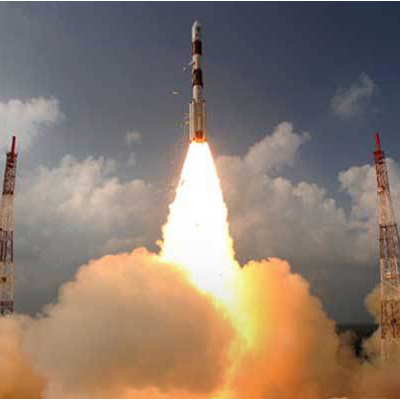
     Earlier, Modi saw the launch of the Polar Satellite Launch Vehicle PSLV-C23 which successfully lifted off from the first launch pad of Sriharikota space station at the Satish Dhawan Space Centre.


     The launch vehicle PSLV-C23, with a height of 44.4 metres and a vehicle lift-off mass of 230 tonne, is carrying SPOT-7, a 714 kg, French earth observing satellite as the main payload, which will be injected into a 655 km Sun Synchronous Orbit (SSO). Other satellites include 14 kg AISAT of Germany, NLS7.1 (CAN-X4) & NLS7.2 (CAN-X5) of Canada each weighing 15 kg and the 7 kg VELOX-1 of Singapore.


    PSLV has had 26 consecutive successful flights till date. The PSLV-C23 will be the tenth flight of PSLV in “core-alone” configuration, which means a configuration without the use of solid strap-on motors.


    After an estimated time of 20 minutes, ISRO’s workhorse PSLV separated all five satellites — one by one into their intended orbit.


    During his first visit to the facility, the Prime Minister took a tour of the facilities, including the launch pad. He was also briefed by ISRO scientists and its Chairman K Radhakrishnan.


    NLS 7.1 and NLS 7.2 are from the University of Toronto, Institute of Aerospace Studies/ Space Flight Laboratory. Canada.


    Both payloads would fly in precise formation using differential GPS with centimeter-level accurate position control system.


    VELOX-1 from Nanyang Technological University, Singapore is a technology demonstrator for design of image sensor, MEMS-based attitude determination and control system and inter-satellite RF link.


    These five satellites are being launched under commercial arrangements that ANTRIX, ISRO’s commercial arm, has entered into with the respective foreign agencies.


    Isro earlier delayed the launch by three minutes due to the threat of space debris getting into the way of the satellites. The PSLV C23 lifted off from the spaceport at 9.52 am on Monday instead of 9.49 am as decided when the launch plan was announced.


    One of the debris objects could have come as near as 40 metres from the spacecraft and by delaying the launch ISRO wanted to avoid the objects by thousands of kilometres as debris move at a velocity of several kilometres per second, said Isro officials.


    A report quoting experts stated that the debris from the 2011 collision of a US satellite and a Russian satellite were found at altitudes above 600 km.


    Until now, the largest number of foreign satellites launched by PSLV was from Germany. In the first launch of satellites of other countries, PSLV-C2 has launched the German satellite with a mass of 45 Kilogram, along with a KITSAT-3 with 110 Kg mass were the payloads. Including this, till April, 2014, eight satellites of Germany reached their destination in space through the launch vehicle of Isro. Canada has sent five satellites till April, 2014 through PSLV while Japan has sent three satellites using the service.

  • ET NOW decodes the most awaited #Budget2014

    ET NOW decodes the most awaited #Budget2014

    MUMBAI: As the Modi government gears up to present its first union budget, India’s number one business news channel ET Now is set to launch a power packed line up of shows. ET Now will be kicking off its special two-week long comprehensive programming from 30 June, 7:30 pm. Over 10 special shows will be aired in the run up to the big budget that will cover not just key sectoral expectations but also the economic imperatives of this make-or-break exercise. Given the significance of this budget, ET Now has aptly used the tagline ‘The Big Reset’ for its entire budget programming.


    Times Television Network managing director and CEO MK Anand said, “This is the new government’s maiden budget and ET Now will bring together leading experts across different fields in India, think-tanks, global investors and the country’s best editorial minds to decipher and analyse the union budget 2014. Through our shows, we aim to reach out to every Indian from industrialists to the common man by providing a detailed coverage on the run up to the budget and the budget day.”


    ET Now managing editor R Sridharan said, “We have the most powerful line up of seasoned experts in the business. ET Now will also have the most viewer-friendly screen and the fastest flashes. Our programming line-up caters every key stakeholder in the economy ranging from the CEO to the retail investor.  The viewers’ overwhelming response to our budget 2013 programming is a vindication of the tremendous value that our content delivers.”


    Times Now, ET Now and zoom CMO Jatin Bhatt said, “With all eyes on the much-anticipated budget from the Modi government, ET Now has put together an extensive programming line-up that will give audiences a holistic view on the Indian economy and the impact it will have after the union budget 2014 is announced.  For a channel like ours, union budget is an opportunity to present the most engaging and eclectic content that builds credibility among our existing viewers and helps generating new audiences.


    ET Now’s budget programming will be led by India’s most respected economist- Swaminathan Aiyar, who is also the channel’s consulting editor. Apart from Swaminathan Aiyar, other prominent economists like Bibek Debroy and Mythili Bhusnurmath will be commenting exclusively on ET NOW.


    The key shows are as follows:

    Budget 2014: The Politics of Budget

    Budget 2014 will be the budget presented by the new government in power. ET Now’s policy editor Supriya Shrinate to quiz the biggest political commentators on the politics that will be at play for budget 2014

    Date:  30 June, 7:30 pm


    Budget 2014: Cracking the Tax Code

    Panel discussion will focus on the key taxation issues in the run up to budget 2014. Some of the biggest tax experts and lawyers will be analysing the likely tax reforms and their impact on corporate India and the taxpayer.

    Date: 1 July, 7:30 pm


    Budget 2014: The Global View

    The show to decode the game changing reforms that could change market sentiment and attract foreign money, the expectations of the investors. Catch top global fund managers and market experts share their budget expectations exclusively on ET Now.

    Date: 2 July, 7:30 pm


    Budget 2014: The Market Makers Budget Special

    Stocks editor Nikunj Dalmia to interview big market voices on market expectations from budget and stocks and sectors to watch out for.

    Date: 3 July, 7:30 pm


    Budget 2014: Macroscope

    A discussion programme anchored by Mythili Bhusnurmath that gives a view of the macroeconomic imperatives faced by the government, and how the budget is likely to address them.

    Date: 4 July, 7:30 pm


    Budget 2014: What Markets Want

    Nikunj Dalmia to interview (three person panel) with three of the biggest market voices analysing the market expectations from budget 2014

    Date: 7 July, 7:30 pm


    Budget 2014: Rail Budget

    The Narendra Modi-led NDA government will announce its maiden railway budget in Parliament. Just as the general budget, the rail budget is also keenly watched by experts and the country as a whole. Watch the extensive coverage of the budget only on ET Now with eminent experts from various fields

    Date: 8 July, 11:00 am


    Budget 2014: Budget & India Inc

    A panel discussion anchored by ET Now’s national editor Sandeep Gurumurthi. It will bring together the top names from corporate India to talk about how the budget can spur growth, and give an impetus to the reform process. India Inc’s biggest CEOs will share their wish list.

    Time: 7:30 pm


    Budget 2014: Eco Survey 2014

    A detailed coverage of annual document of the ministry of finance. In the economic survey programming ET Now will speak to experts about the developments in the Indian economy over the previous 12 months and will also analyse the reforms roadmap of the govt.

    Date: 9 July; 11:00 am


    Budget 2014: An Agenda for the FM

    The biggest macro-minds and economists come together to present an agenda for the FM. Catch ET Now’s budget think tank:  Swaminathan Aiyar, Bibek Debroy and  Punita Kumar Sinha present an agenda for the FM. This show will be anchored by ET Now’s policy editor Supriya Shrinate.

    Time: 6:30 pm


    Budget Day programming

    The budget day will have budget special programming all through the day with ET Now’s best line of experts comprising CEO’s, economists, market experts and foreign investors.

    Stay tuned to ET Now all this budget season for the most credible and accurate analysis of budget 2014.

  • India fourth most economically confident country: Ipsos Study

    India fourth most economically confident country: Ipsos Study

    MUMBAI: Little did anyone know that the Modi sarkar that had vowed to boost growth, control inflation and restore investor confidence will actually work wonders at such a short span.


    According to the study conducted by Ipsos, India’s economic confidence has got a major boost primarily due to a landslide victory of the business-friendly government led by Narendra Modi.


    ‘Ipsos Economic Pulse of the World’ survey reports that the country’s economic confidence shot up by six points to 66 per cent in May 2014 compared to April 2014, making it the fourth most economically confident country in the world after Saudi Arabia, Germany and China.


    Indians are the most optimistic people in the world and are very confident of good time coming soon. For the very first time India (60 per cent) tops the list of countries whose citizens expect that its economy will be stronger in next half year. Marginally less than a half of Indian citizens (43 per cent) believe their local economy which impacts their personal finance is good, a significant rise of five points.


    “All the data points in the Ipsos report indicate that India’s economic confidence has shot up substantially, which is also corroborated by the fact that India’s current account deficit has significantly eased, the currency has stabilised, inflation has substantially pulled back, stock market had a dream run so far and corporate earnings are improving,” said Ipsos CEO Mick Gordon in India.


    “However, recent high food inflation, conflict in oil-producing Iraq and the fear of a below normal monsoon is big challenge for the new government,” added Gordon.


    The online ‘Ipsos Economic Pulse of the World’ survey was conducted in May 2014 among 19,242 people in 25 countries. For the results of the survey herein, a total sample of 19,242 adults aged 18-64 in US and Canada, and aged 16-64 in all other countries, were interviewed between 1 and 15 April 2014.


    For a second month in a row, the average global economic assessment of national economies surveyed in 25 countries remains unchanged as 39 per cent of global citizens rate their national economies to be good.


    Although down two points since last round, Saudi Arabia (87 per cent) is in the lead once again, with Germany (75 per cent), China (66 per cent), India (66 per cent), Canada (65 per cent), Sweden (64 per cent) and Indonesia (59 per cent) following behind. European countries dominate the bottom of the global average: France (9 per cent), Italy (9 per cent), Spain (10 per cent), Romania (10 per cent), Hungary (18 per cent) and Argentina (18 per cent).


    Countries with the greatest improvements in this wave: South Africa (28 per cent, 10points), Indonesia (59 per cent, 9 points), Russia (58 per cent, 8points), India (66 per cent, 6points), Great Britain (43 per cent, 6points), Poland (31 per cent, 6points) and Belgium (42 per cent, 2points).


    Countries with the greatest declines: Australia (53 per cent, -7pts), Hungary (18 per cent, -6pts), Brazil (20 per cent, -6pts), South Korea (19 per cent, -4pts), Sweden (64 per cent, -2pts), Saudi Arabia (87 per cent, -2pts) and China (66 per cent, -2pts).


    Up three points since last sounding, Saudi Arabia (67 per cent) leads the local economy assessment which impacts their personal finance, followed by Germany (55 per cent), Sweden (51 per cent), China (48 per cent), India (43 per cent), Canada (42 per cent), and Indonesia (39 per cent). Ranked the lowest in this measure this month is Italy (9 per cent), followed by Spain (11 per cent), Romania (12 per cent), Hungary (13 per cent), France (13 per cent), Japan (14 per cent) and Argentina (15 per cent).


    New leader emerges, as for the first time India (60 per cent) tops the list of countries that predict their local economies will be stronger in the next six months. The rest of the highest-ranking countries are: Brazil (56 per cent), Saudi Arabia (53 per cent), Indonesia (50 per cent), China (39 per cent), Mexico (31 per cent) and Argentina (31 per cent). Only 6 per cent of those in France expect their future local economies will be “stronger” in the next half year, followed by South Africa (11 per cent), South Korea (13 per cent), Hungary (14 per cent) and Japan (14 per cent).

  • Bloomberg TV India asks ‘Will The Government Walk the Talk’

    Bloomberg TV India asks ‘Will The Government Walk the Talk’

    MUMBAI: The year 2014 saw a landmark in the Indian political system with Bharatiya Janata Party (BJP) coming to power with a landslide majority.


    Since then, all eyes have been on the new government’s moves and with the budget just a couple of weeks away, news channels especially the ones which cover business have once again gone into a tizzy. It is time for them to decipher the next phase.


    A channel that prides itself in being a part of the biggest financial network in the world is setting a benchmark for the upcoming budget. ‘Will They Walk the Talk’, essentially Prime Minister Narendra Modi and finance minister Arun Jaitley, is the question that Bloomberg TV India will seek answers to through its three week long special budget programming. 


    Bloomberg TV India editor Vivek Law points out that the new BJP government is riding on high expectations from both Indian as well as global investors. “The budget is the first detailed statement that will be very closely watched. We have heard the government’s campaign and manifesto that clearly said that once in power, they will resurrect the economy. Stock market is all about the foreign institutional investors (FII) and this market is only standing on the legs of the money that FIIs are bringing in. It is very important how they perceive the performance of the government and what this budget will give them,” he says.


    Keeping this in mind, the channel has decided to begin its budget programming from 30 June, dedicating 60 to 70 per cent of time addressing the global audience.  In the run up to the budget which is fixed for 10 July, the various programmes will focus on India Inc, global view, youth and personal finance wherein discussion will be on what should be the government’s agenda and post the budget it will analyse what Jaitley has put forth for year 2014-15. “For the last few years, Indian investors have not been participating in the equity market much.  They are now keen to know if it is time to get back in the overall growth. Once the budget is announced we will discuss whether they have really managed to bring back the retail investor into the market,” adds Law.


    Shows will focus primarily on the global investor with Vivek Law, Harsha Subramaniam, Anupriya Nair and Priyank Lakhia leading the pack. Panel discussions both in and out of studio have been arranged in Mumbai/Delhi, youth discussions in campuses and market and corporate shows in public locations. On 10 July, Bloomberg TV India says it will have global investors and experts from Hong Kong, Dubai, Sydney, London, Tokyo, Singapore and the US on board stating whether the budget sticks to its word or not.


    The channel will also be leveraging its Bloomberg Terminal that has close to 350,000 subscribers world over and allows them to watch the channel live. “Given the fact that we are a JV, we have access to the entire network & content and that’s a huge advantage. If you are outside India and you want cutting edge live information, you can only get it from our terminal,” says Law.


    Even though focus is on global investors, sponsors will not be very different with the primary sponsors from BFSI, automobiles and the consumer durables sector who are being approached. A 360 degree marketing campaign created by Triton Communications has been designed including outdoor, TV, print, online, social media, radio, ground activations and PR to promote the budget programming with spends close to Rs 80 lakhs to Rs 90 lakhs, the channel says.


    Since 2012 the broadcaster has aimed at positioning the channel as an extension of its parent channel Bloomberg. Law is certain that it is not a day trader channel. “You will not get tips or any buy/sell calls on our channel. We reach out to the aspirational and influential audience, who are not necessarily rich. It could be the judiciary, political establishment, bureaucracy, top corporate professionals or global investors. This is in sync with the way our channel is world over,” he says. To add to this, changes have also been incorporated in the channel’s design and more are to be expected, soon.

  • Government committed to communicating with people across media platforms: Javadekar

    Government committed to communicating with people across media platforms: Javadekar

    NEW DELHI: Information and Broadcasting Minister Prakash Javadekar today promised a stable policy regime with transparency and time-bound mechanism and said efforts would be streamlined so as to make the process of clearances speedy and transparent.

    He said while addressing the “CEOs Roundtable on Media & Entertainment” by Confederation of Indian Industry (CII) that the government has always promoted the Media & Entertainment fraternity as partners in growth and would remain a facilitator to encourage the growth of the industry and provide a roadmap in the interests of the people.

    Javadekar said the potential of the Indian M&E industry is untapped and endorsed the CII vision of taking the Indian M&E industry to $100 billion by the end of this decade. He said the government will be “partner in progress” with the growth of the M&E industry.

    Reacting to suggestions from stakeholders, Javadekar said the policies of this government would be people-centric and would aim at meeting the aspirations of the common citizens. He added that providing information, entertainment and knowledge to the citizens would be the priority of the Ministry. Innovative approaches would be encouraged so as to ensure quality information.

    “This government is about communication and consensus. We will create a process in which decisions will be taken in four weeks which was taking four months earlier,” he said with reference to decisions pertaining to the broadcast sector.

    The Minister was categorical that the ongoing digitisation will not be abandoned, Radio phase III licensing will be processed faster, news allowed in FM radio, current DAVP rates will be relooked and self regulation advocated for print medium.

    The Minister also emphasised on the need for expanding the reach of Community Radio and aimed at opening up of 1000 Community Radio Stations in near future.

    Referring to the vision of Prime Minister Narendra Modi of ‘Speed, Skill and Scale’, the Minister urged the media industry to strive to attain new heights.  

    Praising new-age technologies, he described how the social media platforms had changed the dimensions of news reporting.

    While recognising the importance of the Freedom of Speech and Expression he emphasised on the need for responsible journalism. Javadekar assured the stakeholders that their suggestions on various policy issues would be looked into in a time-bound manner.

    Earlier, I&B secretary Bimal Julka assured the media that the Ministry would work as a facilitator for the industry and would work towards single-window clearances ‘with no multiple grills’ for better transparency and accountability. He said the phase III FM Radio auctions will be completed by December 2014. Julka also made a request to the M&E industry to present budget proposals to his Ministry by 23 June to be presented to the Finance Ministry.  

    40 top CEOs of the M&E sector interacted with the Minister and were confident that pending decisions will not be further delayed by the new government. Issues related to broadcast, films, DTH, cable, radio, print, news broadcast were briefed by industry leaders at the CII roundtable.

     “We believe that the soft power of Indian M&E sector can bring innumerable benefits to the Indian economy. The M&E industry provides direct employment to around 10 million people and has the potential to double the number. This sector also is on the cusp of achieving the same global success that the Indian IT industry has achieved,” said CII president Ajay Shriram.

    CII Media and Entertainment Committee and group CEO, Viacom 18 Media, Sudhanshu Vats said accountability, clarity and foresight from M&E stakeholders will take the sector to new heights.

    In his opening address CII DG Chandrajit Banerjee said that an innovative push from the government in an enabling regulatory infrastructure and policy reforms will create a world class knowledge driven entertainment in India. 


  • Ideologically I&B Ministry should be abolished: Javadekar

    Ideologically I&B Ministry should be abolished: Javadekar

    NEW DELHI: Virtually echoing the views of former Minister Manish Tewari, Information and Broadcasting Minister Prakash Javadekar said that he ‘philosophically’ and ‘ideologically’ favoured abolishing his Ministry.


    However, he justified this by noting that it was in keeping with Prime Minister Narendra Modi’s emphasis of ‘less government, more governance’. 

           
    “Philosphically or ideologically, I’ll be willing to do that,” he said, when asked if India needed an I&B Ministry when many major democracies do not have such a profile.


    Asked whether Modi was also “philosophically and ideologically” in agreement with his line of thinking, Javadekar said: “Absolutely”, during an interview by Karan Thapar on Headline Today’s programme “Nothing but the Truth.”


    The Minister agreed with the suggestion for hiring professional editors for Doordarshan and All India Radio.


    He was also open to discussion with stakeholders on more FDI in media.


    “I think you are giving a good line for us. But ultimately, when our Prime Minister Narendra Modi says that more governance and less government, so you are actually contributing to the idea of less government and more governance. That’s our focus, but to achieve that end we have to follow a process,” he said.


    The Minister said that as far as the public broadcaster is concerned, there are various models like the BBC and others available which would be studied. Javadekar said he was not in favour of a model where the public broadcaster is accountable to the minister “only”.


    Javadekar said in the years ahead, words like “government-run”, “government-controlled” or “government intervention” will be less heard of.


    “But I would like that government becomes less and less and freedom and market forces and at the same time social justice is achieved,” Javadekar concluded. 

  • Rajdeep Sardesai and Arnab Goswami poles apart on future of journalism

    Rajdeep Sardesai and Arnab Goswami poles apart on future of journalism

    MUMBAI: The venue: the National Centre of Performing Arts auditorium in south Mumbai. The occasion: a panel discussion that preceded the Press Club of India’s Red Ink Awards. On stage were IBN18 editor-in-chief  Rajdeep Sardesai, Times Now editor-in-chief Arnab Goswami, and Dainik Divya Marathi chief editor Kumar Ketkar, O&M national creative director and chairman Piyush Pandey. And for a change it was they who were grilled by Star India CEO Uday Shankar, a former journalist himself. The topic: Elections 2014: were we fair or did we stoke the NaMo wave?’

    Shankar set the pace for the panel when he spoke first, stating that it is he who would be asking the questions and no one would be allowed to answer – in all probability taking a jab at Arnab. As the audience burst into laughter,  he then told Rajdeep to open the debate by speaking his mind.

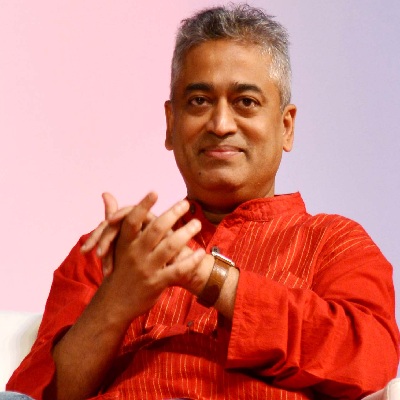
    Dressed as casually as one can get, in a red kurta, simple trousers and chappals, Sardesai delivered a hard hitting monologue on Modi and the kind of journalism that exists in India now.

    “Modi had the most  innovative and sustained campaign that we have ever seen in an Indian election,” he said, while pointing out that Congress president Rahul Gandhi was like a kid in kindergarten in front of Modi. But he also said that it was unfair to blame the media for creating the NaMo wave.

    “Some channels have abandoned the basic role of media. They are now doing cheerleading or supari journalism to get more viewers and ratings. Modi was not subject to the intense scrutiny in the last two years that the others were subject to. While he was brilliant with his social media strategy and communication he was spared the ignominy that others were subject to. Some channels elevated Narendra Modi to God. He is a good politician and communicator but not a messiah. Some journalists need to ask themselves if they want to do journalism or hagiography,” he added.

    On the other hand, Arnab instantly put himself and his channel in the spotlight by stating that one of the positives of being located in Mumbai, far away from the hub of channels (Noida) was that it keeps him disassociated with politicians.

    “I am not romantically involved with any political party so I don’t end up having a bitter break up with them. My distance with politicians is both physical and psychological. We in India are overawed by them. Modi was the focus because there was no competition. We are not dependent on politicians for ratings. There is no scientific evidence that Modi gets ratings,” he said while also stating that he wasn’t aware of this supari journalism that Rajdeep referred to.

    “The next 10 years of journalism to me are very bright,” said Arnab. A view that Shankar totally endorsed. Said he: “The future of journalism is bright because we do something that is essential to the society. We should not be cynical about the media, without them the country would not have been what it is.”

    However, Arnab’s view seemed to have irked Rajdeep who in the latter part of the discussion said, “We can state that in 10 years things will be great and things are going to change, but arrogance is the downfall of every journalist! At our time, it was never that what the anchor said would matter more than what the guests said.”

    Ketkar who comes from the print side of the media and was the senior most scribe on the panel let loose his spleen as he lambasted the electronic media for sidetracking and sideswiping print publications.

    “It is the electronic media that sets the tone for the next day’s morning headlines in the paper by these discussions. The people don’t set the agenda, the media does. The media has covered how miserable Bihar is but no mention of the Gujarat floods when Modi was campaigning at the height of his campaign trail. So, it is not just that you have to speak more about something, but by also not showing something you can stoke the fire,” he said.

    While the three editors did not refrain from taking digs and potshots at each other for the kind of journalism that is being resorted to, it was Piyush Pandey – the man behind the Narendra Modi election campaign –  who gave his insights on what led to NaMo wave. He pointed out that no matter what Modi did, he never gave the media a chance to ignore him; he made sure he was in the public eye, consistently giving out the right message that the public wanted to hear. “The media rode the Modi wave. It did not create it,” he said.

    While the very topic was sidelined, the editors were deeply engaged in pontificating on the state of journalism in the country with Goswami being the most optimistic about it.

    Having recently taken a month long break from his editorial duties, Rajdeep was the most vocal about the fact that news television needs to find its bearings quickly.

    “The idea that the television makes or breaks will not hold anymore. I really think that we have lost the capacity to go beyond the dramatic headline. We have lost our nerve. We need to introspect and ask ourselves : are we willing to do a serious interrogation of the Gujarat model, positive and negative?” he questioned. The fact that the BJP did well in places where cable TV did not reach efficiently was also brought out by Shankar and Sardesai.

    While the discussion didn’t see any real conclusion, it did end with a valuable point to ponder: whether journalists were getting too emotionally involved with politicians?

    Shankar had the last word on this. Said he:  “I think there is too much reverence even now in Indian media and on the other hand, there is too much emotional attachment. Either we are just cynical or when we go there we get sucked in. There has to be a balance in between. Overall, I think we shouldn’t be cynical about media. We have lots to capture and improve but without the media, this place, this country would be much worse.”

  • Government to look at law for preventing attacks on press

    Government to look at law for preventing attacks on press

    MUMBAI:Prakash Javadekar has been making a lot of appearances since he took over as the new Information and Broadcasting Minister. For a man who is aiming to be a media-friendly rather than a media-shy I&B Minister,  Javadekar took the centrestage at the Red Ink Awards held in Mumbai on 7 June, to send across a message from the government to the media fraternity.


    He started off by stating that the essence of democracy is the freedom of press and the Modi government is fully committed to the full freedom of media and it is their cardinal principle. While he questioned whether press meant owners, editors, the journalists or the readers and viewers, he also reminded the media that “society expects accuracy, balance and fairness from the media.”


    According to Javadekar, self-regulation is better than censorship. “I don’t like the word regulation. It should be self-restraint. Media needs to think whether it will play only what the public is interested in viewing or if it will also play what is in the public’s interest,” he said.


    Attacks on the press are not unknown of and Javadekar in his speech did not fail to acknowledge it. “This needs to be prevented. We will surely see if there is a possibility of a central law for prevention of attacks on press,” he stated.


    Expectations from the new Minister are high and he is in no hurry to come up with a game plan on the various issues. “There are many issues pending such as foreign direct investment in media, FM news, social media, digital media, digitisation etc. These are issues we will talk to all the stakeholders and then come to a consensus. We don’t want to thrust some decision on the whole sector but evolve it by consensus.”


    He also stated that both the  print and the electronic media will flourish in the upcoming years. 

  • MIB marks World Environment Day on social media

    MIB marks World Environment Day on social media

    MUMBAI: It was during his open session at last week’s GoaFest that Union Minister for Environment and Information & Broadcasting Prakash Javadekar spoke of the need for a paradigm shift in Indian political advertising.


    Javadekar went on to explain that he was disappointed to see creatives of half-page print ads scheduled for release on World Environment Day without any message. That’s when he thought of taking a different route to political advertising.


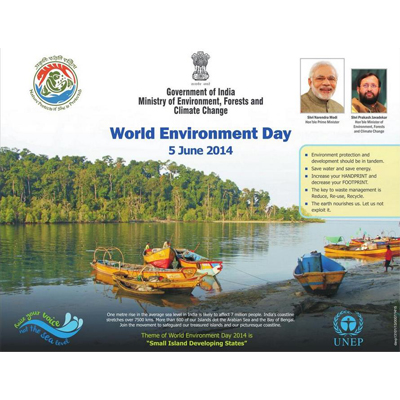
    Indeed, Javadekar has kept his word on World Environment Day today. Apart from gifting a plant to each and every minister, including Prime Minister Narendra Modi, the new Environment and I&B Ministry at the centre has refrained from run-of-the-mill print ads across newspapers. Rather, it has made a splash on social media through creatives on the official Facebook and Twitter pages of the Ministry of Information & Broadcasting (MIB), live updates from Javadekar’s own Twitter handle, tweets released from Modi’s official account and Javadekar’s conference via YouTube.


    There’s also a video doing the rounds of social media.


    Click here to watch the video