Tag: Narendra Modi

  • Wanted to name my book ‘TsuNaMo’, says Rajdeep Sardesai

    Wanted to name my book ‘TsuNaMo’, says Rajdeep Sardesai

    MUMBAI: “I had initially thought of naming it ‘TsuNaMo: The Election That Changed India’,” says one of India’s most recognised journalistic faces on television.

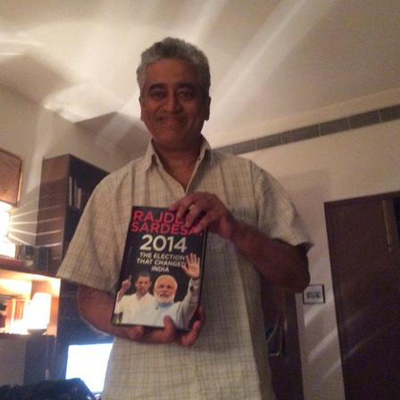
    Rajdeep Sardesai, who quit Network18 as IBN18 editor in chief in July this year and later on joined the India Today Group as consulting editor, recently launched his book ‘2014 : The Election That Changed India’.  The book tracks the story of the 16th Lok Sabha elections with a media insider’s view.

    The man with over 26 years of experience in the field first thought of writing a book last year but it was only in July, this year that he thought of penning his expertise. Sardesai was initially approached by Penguin Publishers to write a biography on Prime Minister Narendra Modi but he says he felt that he was more qualified as a journalist to write about the elections than just a biography.

    When asked why he chose 2014 elections to write the book on, he informs “I have been covering elections since 1989, but this was a historic election. For the first time, we had a non-Congress single political party winning by a huge and thumping majority. It was an election that saw the emergence of a larger than life Modi image, extensive media coverage along with new styles of campaigning that were very different from the past. The book while focuses on the 2014 elections has slices of elections from the previous years as well,” says the veteran.

    He provides three reasons why journalists and media students should pick up the book. “First, this was the biggest election we have seen so far. It documents a slice of history that people would want to be a part of. Secondly, people love to read good stories. With my 26 years of journalism experience, I have compiled interesting anecdotes of many years that bring to life many personalities from the political field. Thirdly, TV programmes today are like fast food while a book is like good wine that people will enjoy indulging in,” he says.

    Sardesai who singlehandedly wrote the book of 135,000 words without a team, informs that he was helped by Centre For The Study of Developing Societies (CSDS) for valuable statistics and insights. CSDS along with CNN-IBN together kept audiences abreast about election trends. He mentions that his wife Sagarika Ghose was the one who helped boost his confidence and pushed him to write the book. “She really energised me. She, in fact, is the book writer in the family. My daughter helped me out on the computer and printouts while my son set the deadline for me that was before his holidays began,” adds Sardesai.

    He is extremely happy with the response that the book has garnered, so far, as audiences have already termed it as a page turner. “One does not have to be politically obsessed to read the book. It is accessible for all to read,” he says.

    He is glad that even politicians have taken a liking to the book which goes for its second print next week.

    Talking about the marketing aspect for the book he says that while films by actors like Shah Rukh Khan need marketing to promote a film, for a book it boils down to the quality of prose and content.

    When asked if he plans to write another book on the elections or his autobiography, he chuckles and says “No, not for now. I will take a break of at least one year from book writing,” he concludes.
     

  • Modi encourages use of social media for his Mann ki Baat broadcasts

    Modi encourages use of social media for his Mann ki Baat broadcasts

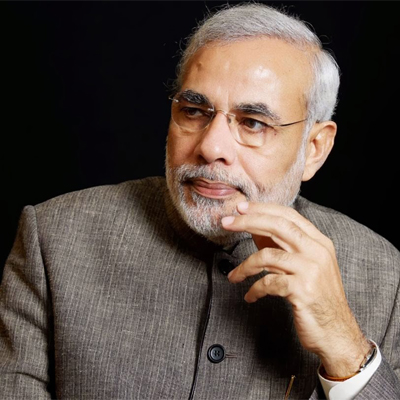
    NEW DELHI: Prime Minister Narendra Modi, who has won acclaim for his monthly ‘Mann ki Baat’ broadcasts on All India Radio, wants people to use social media to tell him about their views and experiences on dealing with the menace of drugs for his next broadcast.

     
    Modi said the link of the MyGov Open Forum for sharing comments, ideas, views and past work by NGOs in the area is http://mygov.in/groupissue/tackling-the-drug-menace-in-india/show .


    In a series of Tweets, he said: “If you have a personal experience and don`t want to share it in public, please write to me directly, using the hashtag #MannKiBaat at http://pmindia.gov.in/en/interact-with-honble-pm/”.


    In order to enable people without access to internet to communicate with him, the Prime Minister has invited people to write to him at: Mann Ki Baat, Akashvani, Sansad Marg, New Delhi.

     
    Those wanting to link can go to #PMonAIR. During the broadcast, those who are on the internet can also log on to newsonair.com for the live streaming.


  • Sadashiv Amrapurkar passes away

    Sadashiv Amrapurkar passes away

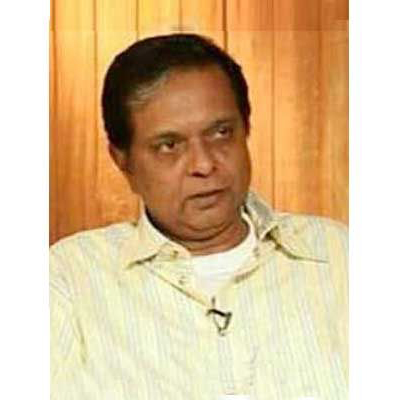
    NEW DELHI: Veteran Marathi and Bollywood actor Sadashiv Amrapurkar known for his negative and comic roles passed away of lung infection on 3 November at a  suburban hospital in Mumbai after battling with the disease for over a fortnight.


    Hospital sources said Amrapurkar was put on ventilator support and had been in a critical condition for the past few days. He was 64 and is survived by his wife and three daughters.


     The actor is remembered for several films and for his hard-hitting negative and sometimes comic roles in movies like Ishq, Aankhen, Gupt, Hukumat, Chor Machaye Shor and several others.


     Prime Minister Narendra Modi condoled the death of the veteran actor who he said, will be remembered for his versatility. “We will remember Sadashiv Amrapurkar as a versatile actor, popular across generations. RIP. My deepest condolences to his family,” read a post on Modi’s Twitter handle @narendramodi.


     With strong roots in rural and Marathi theatre, Amrapurkar made his film debut with Govind Nihalani’s acclaimed Ardh Satya in 1983. His performance in the film as a local mafia don won him several awards.


     Having established his acting credentials with the film, he went on to have a thriving career in both offbeat and Hindi commercial films for nearly two decades.

  • ETV aims to create a market with Gujaratis’ desire for comedy content

    ETV aims to create a market with Gujaratis’ desire for comedy content

    MUMBAI: Comedy is intrinsic to a Gujarati household. What they have till now been eating from the Hindi general entertainment channels (GECs) will now be served to them with a new revamped ETV Gujarati with six new shows, starting 3 November.


    With the tagline ‘Dilthi Gujarati’, the regional channel is now rising from the ashes. Tapping into the Gujarati euphoria that is surrounding the new Gujarati Prime Minister Narendra Modi, the family focused, female driven channel is gearing up to be Gujarati’s ‘real entertainment channel’ in a market which doesn’t have another entertainment channel.

    Viacom18 EVP and business head- ETV Gujarati and ETV Marathi Anuj Poddar says that the channel had been weakly positioned till now. “Our research showed us that the people there are not interested in high drama but about fun and comedy.” The channel has put in nearly six months of hard work to come up with the brand slate of programmes.

    The new shows include Pati thayo Pati Gayo (We Workshop Entertainment), 1760 Sasumaa (Meena Gheewala Telefilms), Aa Family Comedy Che (Sango Telefilms), Kanho Banyo Common Man (Entity Productions), Hirjini Marji (Click Digital Studios India and Vrajesh Hirjee) and Daily Bonus (a game show by Interscope Communications) from 7 pm to 10 pm. Popular names such as Ketaki Dave, Vrajesh Hirjee, Krishna Gokani and Sanjay Goradia will be seen on ETV Gujarati.

    Talking about this fresh line-up, ETV Gujarati programming head Sanjay Upadhyay says, “We have partnered with industry heavyweights to showcase a lineup that is contemporary, fresh and appeal to all who are ‘dilthi Gujarati’.”

    The fiction team in Mumbai and non- fiction team in Ahmedabad has conceptualised the new look. The two cookery shows have been retained, one in the afternoon and one early primetime due to their popularity. Although Poddar is sure that the high production quality of the shows will bring in audiences. He is aware that it isn’t easy to break their attachment to Hindi GECs anytime soon. “People will sample it at various times. It isn’t about us being one more player in the market but about creating the market itself,” he says.

    From an advertiser perspective, he says that the channel can be positioned relatively well because of its 8-10 per cent contribution to the Hindi speaking market (HSM). Currently the market size of Gujarati television is about Rs 40 crore to Rs 50 crore with 1 per cent viewership of the regional market which itself is about 16 per cent of entire TV market in the country. But Poddar puts the entire advertising market across platforms in Gujarat at over Rs 1000 crore, which he is eying.

    “In terms of opportunity size, the market is big; though a lot of it goes to Hindi GECs. Today advertising there happens mainly through print, radio and national TV but now they will have a platform to talk to the audience. Once we get the channel running, we will approach advertisers to reallocate to our channel,” he says confidently. Currently, the channel has Aimil Amyron as its strategic sponsor for several months.

    The channel has also hiked up ad rates by 100 per cent and is now selling primetime slot at Rs 3500. Advertisers currently prefer a Hindi GEC over a Gujarati channel, but he expects that to change in time. The national to regional advertiser skew is about 80:20.

    A huge marketing plan began since Navarati with sources pegging the expenditure at about Rs 3 crore, which for a Gujarati market is heavy. An in-house team along with agency The CO, has come up with the creative. The first leg of the campaign began in Navrati when the channel launched its anthem by getting the stars at various on ground events in Rajkot, Surat and Baroda. This was followed by the outdoor campaign executed by Milestone Brandcom consisting of hoardings and rickshaws followed by movie theaters along with the launch of Happy New Year and branding partnership with fast food joints across the state. The launch day will see full page newspaper ads in Gujarat Samachar, Sandesh and Divya Bhaskar and will be followed by radio activity on station My FM.

    A canter activity will commence from next week as well and is being executed by Marketmen Activations. Show promos are being shown on Gujarati channels TV9, VTV, GSTV, Sandesh News and its own ETV News Gujarati and CNBC Bajar along with UTV Movies and UTV Stars, the national channels. Digital advertising will include YouTube pre rolls and Facebook targeted spots for all Gujarati content. The entire campaign will go on for three weeks post launch.

    Media planning has been executed by both the in-house ad sales team as well as Vizeum. A special promo has been created just for the channel with big personalities endorsing the channel such as Yusuf Pathan, Irrfan Pathan, Murari Bapu etc. The channel promo packaging has been done by Supra Films by Rajul Mishra.

    A 30 member office is situated in Ahmedabad while the heads are in Mumbai. Poddar says that the production cost of the shows are close to what is spent in Marathi shows. However, the channel hasn’t launched any big ticket show for now to keep the costs low without compromising on quality. “We want to create a space that is different and unique from advertiser value proposition with targeted environment. So we aren’t taking a high burn strategy,” he says adding that he looks for a breakeven to happen by two years.

    While the shows will run from Monday to Saturday, Sunday will see Gujarati movies as well as Hindi movies from the Viacom18 library. “Though Hindi movies will spike up our ratings, but the aim is to strengthen the Gujarati primetime band,” states Poddar.

    Currently the channel is present on all DTH and digital platforms in the state while its analogue penetration is about 90-92 per cent. GTPL, Den, InCable, Dewshree,Tata  Sky, Airtel, Dish TV, Videocon d2h, Reliance Digital, Sun Direct are its list of distribution platforms. “The legacy that we have inherited from the old owner is its excellent distribution,” informs Poddar .


  • “Govt needs to look at broadcast as an important sector”: Uday Shankar

    “Govt needs to look at broadcast as an important sector”: Uday Shankar

    MUMBAI: It was in September that Star India’s Uday Shankar was once again handed over the reins of Indian Broadcasting Foundation (IBF), and since then, he has been working on a three-point agenda.


    Says the man who has been very vocal about his views on digitisation in India, “When you are heading an organisation like IBF, there are three things that we all need to look at. First and foremost is digitisation. It is the most fundamental thing that the industry requires and so we need to ensure that we engage with government and put the digitisation road map back on track.”


    The second is the carriage fees for both big and small channels, particularly for niche channels which are dying under the weight of this. He points out that the investment done by niche channels on content is totally destroyed because they don’t have the money. “Most of them are going bankrupt and carriage fee is the single biggest destructive influence on the industry. The key objective of digitisation was that it would expand carriage capacity and the carriage fees will get substantially reduced or would go away. That has not happened. We need to work on that,” he says.


    Thirdly, the foundation needs to make sure that the new government looks at broadcast as an important sector. “The government is genuinely reviewing it also,” he adds.


    The view at the IBF , currently, is that broadcast will play a huge role in the Narendra Modi government’s agenda of creating more jobs, creating more opportunities, entrepreneurship and wealth for people. “We as IBF want to take the plan to the government and tell them the way we can carry forward the government’s agenda,” says Shankar.


     With a view to benefit the industry and the customer, the foundation aims to work closely with all its synergies as well as other bodies like BARC India.   

  • It was Modi vs. the rest in Maharashtra: Nikhil Wagle

    It was Modi vs. the rest in Maharashtra: Nikhil Wagle

    My 10 takeaways from Maharashta Assembly election:


    1) The just concluded 2014 Assembly Elections in Maharashtra will go down as a historic development in the state’s politics, which has the potential to transform the face of Maharashtra. For the first time, a non-Congress party has reached a near majority. Since the inception of Maharashtra, BJP had never managed to reach the three-digit figure. Their highest number was 65 in 1995 when they formed the government with the help of their elder brother, Shiv Sena. But this time around, with 123 seats, BJP has inspired a tectonic change.


    2) The anger against the 15 years regime of Congress and NCP was palpable among the electorate. Serious corruption charges were labeled against the government, which they were unable to refute. Voters desperately wanted a change. The alternative was offered not by BJP, but by Prime Minister Narendra Modi whose impact was experienced during the Lok Sabha elections. Modi filled the credibility vacuum created by local leaders like Sharad Pawar, Prithviraj Chavan, Ajit Pawar and so on. Voters believed in Modi and decided to give him a chance. This is not a verdict for BJP, but Modi. It was Modi verses the rest.


    3) In spite of Modi’s popularity, BJP could not reach the magic figure of 144 in the assembly of 288 members. BJP’s national president Amit Shah tried his best with his electoral arithmetic. But Shiv Sena was able to stop them in regions like Kokan. In Vidarbha, BJP won 44 out of 62 seats. It is a big achievement, but the expectations were higher. The last minute decision of dropping the demand of separate Vidarbha from their manifesto could have damaged BJP here. In north Maharashta too, BJP could not live up to the expectations due to their weak party machinery. The lack of credible indigenous leaders and fragile cadres at remote places are the reasons behind BJP not crossing the halfway mark.


    4) Political pundits are blaming Uddhav Thackeray for Shiv Sena’s debacle. But I don’t agree with them. In fact, this is the best performance of Shivsena after 1995 when they got 70 seats. This time around, they were able to win 63 in spite of Modi onslaught. Many thought that Shivsena would be swallowed by the Modi-juggernaut but it did not only survive the storm but came out with their self respect intact. Credit goes to aggressive campaigning by Uddhav and grassroot machinery of party.


    5) Was it development verses Marathi pride, where the emotional issue took a back seat? I again disagree. Development was never ever a focus in this campaign. It was about clean and trustworthy leadership, where Modi won the battle. But along with this, the issue of Marathi pride helped Shivsena to protect their strongholds in Mumbai, Thane and Kokan. In fact, they totally snatched this plank from Raj Thackeray’s MNS.


    6) As far as MNS is concerned, this election has been a big blow to them. Raj is more charismatic than Uddhav. His oratory skills are as good as his uncle. But elections are never conquered on charisma. Due to wrong policies and frivolous politics, Raj has reached this stage. He started well in 2006, but was not able to build the party. In 2009 assembly elections, he had 13 MLAs, now he is decimated to just one. It is time for him to introspect.


    7) Raj should introspect but if there is anyone who needs utmost introspection, it is Congress and NCP. They have reached their lowest ever number in assembly elections. Congress is a house divided and NCP is totally engrossed in their politics of money and muscle power.


    By declaring unconditional support to BJP, Sharad Pawar once again proved his ‘Pawar Power’, which a common voter will only perceive as shameless opportunistic politics.


    8) This election could possibly write another chapter in the history of criminalisation of politics in Maharashtra. 165 of 288 newly elected MLAs have serious criminal charges against them and most of them are crorepatis.


     9) The participation of women candidates has been disappointing. Only 20 women candidates will be seen in the assembly, which is 7 per cent of the total assembly strength of 288. One wonders if it is still appropriate to call Maharashtra a progressive state.


    10) This election will also mark a black chapter for media, which witnessed unprecedented ‘Paid News’. In spite of the monitoring by the Election Commission, nobody could nail this cancer. Political parties sniffed the opportunity and took maximum advantage of the situation. It has set a dangerous precedent and the credibility of the media suffered like never before.


    (These are purely personal views of Mi Marathi consultant and veteran journalist, Nikhil Wagle and indiantelevision.com does not subscribe to these views.)

  • PM to give second radio broadcast on 2 November, last broadcast beamed by 270 FM channels

    PM to give second radio broadcast on 2 November, last broadcast beamed by 270 FM channels

    NEW DELHI: In an effort to fulfill his promise of sharing his thoughts with the people through All India Radio at least twice a month, Prime Minister Narendra Modi’s next ‘Mann ki Baat’ broadcast will be on 2 November.


    “Looking forward to the 2nd “Mann Ki Baat” radio programme on Sunday 2nd November 2014 at 11AM,” the Prime Minister tweeted. 

    “Once again, I invite you to share thoughts, comments and examples of good governance initiatives that have left an impression on your mind,” the Prime Minister added. 

    An Open Forum has been created on MyGov.in where ideas and thoughts for the radio programme can be shared.


    Meanwhile, AIR director general F Sheheryar told indiantelevision.com that 270 private and AIR FM channels all over the country had carried the broadcast earlier this month, apart from almost all the television news channels. The address in Hindi was also streamed live on several websites. It is learnt that the broadcast was accessible to 91 per cent of the population.


    In his address on 4 October, Modi had announced that he will talk to the nation at least on two Sundays every month via radio, since that was the only medium that reached everyone including the farmers.


    In his first radio address titled Mann Ki baat on the occasion of Vijaya Dashami, he had called upon people to regularly send him their views through the social media as he had received many constructive suggestions in the past few weeks. 


    He had said AIR helped him get connected with the maximum number of people and with those who have no access to TV. “I am really happy to be talking to you on the radio. I can reach all of you through radio, especially our poor, the villages. Today is the start. In future too I will keep talking to you on the radio. It will be on a Sunday at 11:00 am,” he said.

  • New central service officers need to be tech-savvy: Bimal Julka

    New central service officers need to be tech-savvy: Bimal Julka

    NEW DELHI: Information and Broadcasting secretary Bimal Julka has said that young officers training in central services need to be tech-savvy and to keep pace with the rapidly changing information and communication scenario.

    The challenge is to respond swiftly and firmly in real-time basis, he added, noting that the electronic media was developing at a very fast pace.

    “Reaching out to the masses at the grass-root and involving them in the development process is one of the biggest challenges before the Government”, he said while delivering his address at the valedictory function of induction training for the officer trainees of Indian Information Service (IIS) – 2013 and 2014 batch – at Indian Institute of Mass Communication.

    Julka said that the role of information service officers was critical in meeting this challenge as it enabled the bridging of the gap between people and the government. He exhorted the officer trainees to develop specialised communication strategies and tools for the successful implementation of various flagship programmes of the government such as Prime Minister’s Jan-dhanYojana, Swachh Bharat Mission, Beti Bachao, and Shramev Jayate Karyakram.

    Julka said his Ministry acts as a facilitator and enabler of government communication


  • Facebook to join hands with Indian government

    Facebook to join hands with Indian government

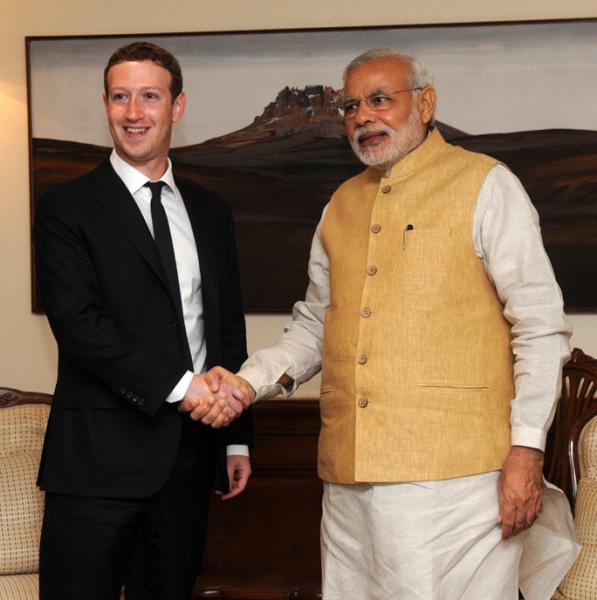
    MUMBAI: After swooning the nation with his ideas to enhance the internet connectivity in India in the Internet.org summit, Facebook founder Mark Zuckerberg, who was in the country on a two-day visit, met Prime Minister Narendra Modi on 10 October.

    Soon after the meeting, the PM tweeted, “It was wonderful meeting Facebook CEO Mark Zuckerberg. We discussed a wide range of issues.”

    The discussion included an array of topics revolving around the innovative use of Facebook as a platform to engage with a large audience in the service of humanity; from helping in the digital India campaign to fighting terrorism using social media.

    “I spoke to him about Swachh Bharat Mission. Zuckerberg shared that Facebook would assist the Government of India in the Clean India mobile application. This will surely give an impetus to Swachh Bharat Mission. “

    “Zuckerberg is excited about Digital India initiative. I requested him to identify certain areas where Facebook can help us in that. I also requested Zuckerberg to identify how Facebook can help promote India’s rich tourist potential across the world,” Modi posted on his Facebook page.

    They also talked about the Digital India initiative. A statement on Modi’s website said, “Zuckerberg said that he is extremely excited about the Digital India initiative of the Government of India. Prime Minister Shri Modi asked him to identify some domains of Digital India where Facebook can get involved and help.”

    The Prime Minister appealed to Facebook co-founder to look at how to enhance Internet literacy along with Internet connectivity.

    Adding to the same, Zuckerberg stated that Facebook wants to work with the Government of India in the fields of healthcare, education and provide a gamut of services to the people.

    He further added that Facebook will also help in the creation of the Clean India Mobile App and that it would be launched soon. This would give a strong impetus to the Swachh Bharat Mission.

    In the meeting, PM also pointed out that lots of terrorist elements are using social media platforms to recruit members, according to an official statement.
    “This is unfortunate and we need to think of the role the social media can play to stop terror,” Modi said.

    Earlier in the day, the Facebook co-founder also met Information Technology Minister Ravi Shankar Prasad as part of the Centre’s ambitious Digital India plan which seeks to expand internet access across the nation.

    “Mark’s interest in India impressed me. Facebook wants to work with the Digital India program and the Indian govt is happy to support them in their launch of internet.org,” Prasad said.

    “He has shown profound interest to involve Facebook in the Digital India program and in broadband distribution, e-Health, e-Education etc. Really there is a great scope to work together. His idea to promote entrepreneurship among Indians in the field of IT was truly remarkable,” he posted on his Facebook page.

    They also spoke about the National Optical Fiber Network (NOFN) project during their meeting which aims to connect 2.5 lakh village panchayats through high-speed broadband by 2017.

    Prasad said that he believes there exists a great opportunity for Facebook to harness the vast potential of Indian entrepreneurs in retailing of internet connectivity to the masses by involving local entrepreneurs. Government would extend all cooperation to Facebook in this endeavor.

    He proposed that Facebook could contribute to India’s Rs 21,000-crore NOFN project on last-mile connectivity.

    Zuckerberg also spoke of alternate technology such as drones and satellite communications playing a critical part in this last-mile linkage.

    “India could be the first country in which Facebook deploys drones to provide broadband connectivity in remote and inaccessible areas, with CEO Mark Zuckerberg proposing a pilot project to bridge this digital divide during his meeting,” the IT Minister added.

    Facebook’s Connectivity Lab is actively developing large, inexpensive, solar-powered drones that will be able to fly for years at a time, the division’s engineering director Yael Maguire announced earlier this year. These unmanned vehicles will be about the size of a Boeing 747 but weigh only as much as four car tyres while serving as large connectivity hubs.

    The drones would fly at a height of 60,000 to 90,000 feet above the ground, far above commercial jetliners and at a level where they wouldn’t be affected by the weather, effectively making them invisible.

    In order to continuously provide Wi-Fi coverage, they would be powered by the sun, Maguire had said, adding that these could be tested in the US as early as next year.

    On 9 October, while addressing media persons, Zuckerberg had said that Facebook is working extensively in rural India to enhance connectivity. “Internet.org  is an effort to bring basic Internet services to all”, he added. The pilot project of Facebook has already helped to connect more than 3 million people with this program.  “If we can connect people over here, we can help bring this rich Indian culture to the world.”

    Stressing on the importance of connectivity, Zuckerberg had said while India has about 243 million Internet users and have 100 million plus Facebook users, there are over a billion people in the country who do not have access to the net.

    The 30-year-old billionaire is the third high-profile head of a US-based tech firm to visit India in the last few weeks, after Satya Nadella of Microsoft and Jeff Bezos of Amazon.


  • Facebook is working extensively in rural India to enhance connectivity, says Mark Zuckerberg

    Facebook is working extensively in rural India to enhance connectivity, says Mark Zuckerberg

    MUMBAI: Stressing on the importance of enhancing internet connectivity in India, Facebook  founder and CEO Mark Zuckerberg today said, “Connectivity can’t be restricted to just the rich and powerful. Cost of internet access has to be made affordable.”


    The Facebook CEO is in India on a two-day visit and was speaking at the first summit for Internet.org, an organisation led by Facebook.


    Mark Zuckerberg has said that he would meet PM Narendra Modi on 10 October to discuss connecting Indian villages to the internet, and Facebook’s role in doing so.


    Pitching for free ‘basic net access’, Zuckerberg reckoned that it should be like dialing 911 in the US or 100 here in India. “There needs to be a 911 for the internet. We’ve been working with operators to offer free basic Internet for everyone, to break down the social barriers. With this model, we’ve already helped people connect 3 million people.”


    “Connectivity is a human right. We want to build an internet that works for all,” he added.


    The 30-year old also announced that Facebook will fund apps and services in local Indian languages for women, students and farmers.


    He pointed out that only about a third of people in the world had access to the Internet – 243 million in India and a recent survey showed that 69 percent of people in India said they didn’t know why it would be useful for them.


    The biggest barrier, he said, was that “lots of people who have never experienced the internet don’t know why they need it.”


    He also added that lack of relevant local language content is why most Indians don’t use internet and Facebook is working extensively in rural India to enhance connectivity.


    “Facebook is focusing on content in local languages. It is crucial to internet penetration in Asia, especially India,” said the 30-year-old billionaire. “80 per cent of content on the internet is just in 10 languages, while there are 22 official languages in India; 65 per cent of people use Facebook in a language other than English, including 10 Indian languages.”


    Zuckerberg stated that the next generation has the opportunity to bring the world to India and India to the world. The whole world being robbed of creativity and ideas because so many people in India are not online yet, he further said.


    He further revealed that Facebook has launched a new contest to develop local apps for farmers and social services in local languages with a $1 million fund dedicated for it.


    “We’re also going to extend a program called FB Start,” he added, “which provides $40,000 (Rs 25 lakh approximately) to developers who build and develop apps in these categories,” he added.


    Praising India, Zuckerberg credited it for ‘making leaps in revolutions that changed the world’. “Inventions have changed the world throughout history. ’Mangalyaan’ is a huge achievement for India,” he said.


    The CEO is of the opinion that lowering data costs by operators is not a sustainable solution. “Mobile operators invest a lot of money, lowering costs is not easy,” he said. “Infrastructure is the biggest barrier to internet, then technical issues. Language barriers are huge impediments to the internet,” he added.


    “Connected people have better access to technology, education and jobs. When people are connected, accomplishments are easy,” Zuckerberg said.


    Internet.org aims to make internet access affordable for people acrossthe globe. Focused on enabling the next five billion people without internet access to come online, the founding members of the project include Facebook, Ericsson, MediaTek, Nokia, Opera, Qualcomm and Samsung.


    The partners are collaborating on developing lower-cost, higher-quality smartphones and deploying internet access in under-served communities.


    Zuckerberg’s visit comes three months after Sheryl Sandberg, COO of the social networking giant, visited India which is Facebook’s second biggest market. She also met Modi, who has effectively used social networking during his election campaign and later even in governance.


    Zuckerberg is the third high profile CEO of a US-based corporation, after Amazon’s Jeff Bezos and Microsoft’s Satya Nadella, to visit India in last few days.