Tag: Narendra Modi

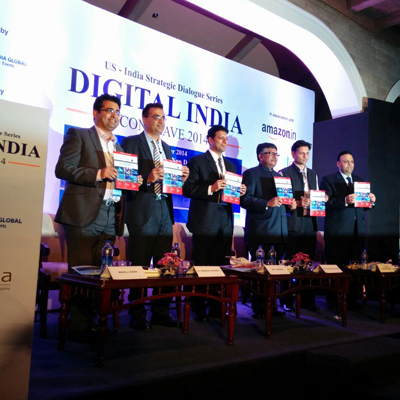
  • ‘Digital India Conclave 2014’ to intensify the ‘Digital India’ initiative

    ‘Digital India Conclave 2014’ to intensify the ‘Digital India’ initiative

    MUMBAI: The Narendra Modi led Indian government officially clicked through the ambitious ‘Digital India’ programme a few months ago. The vision is simple: to usher India into the digital age where each and every citizen can experience the impact. But this simple vision will require a lot of hard graft and investment towards the right kind of infrastructure.

    As a bridge between this vision and reality, India Inc. along with FICCI, Invest India and Chase India is organising a ‘Digital India programme’, a series of online and offline activities pivoting around two roundtables in New Delhi and Washington DC.

    India Inc. has created its own ‘Digital India’ initiative which ties in with the India-US Partnership Hub to bring in a series of online and offline programmes. It will explore the ‘Digital India’ vision and trigger dialogue to plug into this bold new programme.

    This online-offline integrated programme brings in perspectives and participation from senior policy decision makers within government and industry around a discourse to achieve the following objectives:

     • Identify the challenges and opportunities in the ‘Digital India’ initiative
    • Identify synergies that can be created between industries and the government to successfully implement the initiative
    • Explore how the India US collaboration could help achieve the ‘Digital India’ vision
    • Involve key stakeholders in defining a roadmap that will lead to a truly ‘Digital India’
    • Produce a series of online and offline activities to facilitate discourse culminating in a bespoke online publication
    • India is finally coming of digital age and we aim to provide an incisive new digital hub for this new age.

     Commenting on the initiative, Avian Media CEO and Chase India director Nitin Mantri said, “We are proud of this association with India Inc and a key aspect of this initiative is our first Digital India Conclave to be held in New Delhi on 5 December 2014. The sessions will focus on the prominence of the digital advancement across sectors and the requirement to streamline digital with the core business in order to initiate the Digital India initiative.”

    The conclave is in association with Amazon.in, Google and Qualcomm is supported by TCIL and NIXI and is the first phase of the programme which will bring together around 100 -150 key stakeholders across government/public sector, the private sector as well as other influencers such as think tanks, media and specialist experts.

    The first conclave of the ‘Digital India’ Programme is on 5 December 2014 in Delhi while the second conclave will be held in Washington in January 2015.


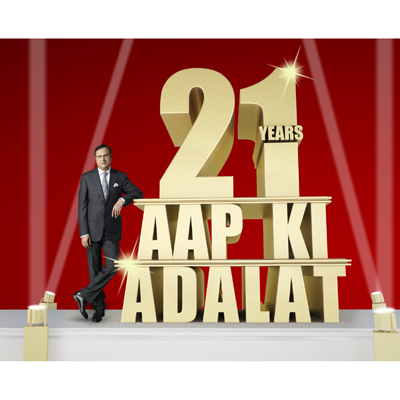
  • A blockbuster evening marks 21 years of ‘Aap Ki Adalat’

    A blockbuster evening marks 21 years of ‘Aap Ki Adalat’

    MUMBAI: India’s longest running television show ‘Aap Ki Adalat’ saw a gathering of icons including those from politics, sports, business and spirituality who came together to celebrate the 21 years of the show, with Rajat Sharma.


    The attendee list sported names like President Pranab Mukherjee, PM Narendra Modi, Union ministers Arun Jaitley, Smriti Irani, Venkaiah Naidu, Suresh Prabhu, Ravi Shankar Prasad, Prakash Javadekar, Ram Vilas Paswan, Dharmendra Pradhan, Rajyavardhan Rathore and Najma Heptullah. BJP president Amit Shah, Lok Sabha Speaker Sumitra Mahajan and former LS Speaker P A Sangma also attended the event. Chief Ministers Shivraj Singh Chauhan, Vasundhara Raje Scindia, and Harish Rawat were also present.


    The three Khans of Bollywood, Shah Rukh, Salman and Aamir, along with others like Anil Kapoor, Ajay Devgn, Hema Malini, Anupam Kher, Sonakshi Sinha, Shatrughan Sinha, Rani Mukerji and cricketer Gautam Gambhir also attended the celebration.


    PM Narendra Modi talking on what makes Aap Ki Adalat so distinct and unfading observed, “In the 21 years of this show, nobody has been forced to reply, Rajat knows the art of extracting a reply through his sweet questioning. Another big quality of Rajat is that he uses his tongue sparingly in his show, but he uses his heart to the fullest. A clever mind works behind this.”


    Anil Ambani, Gautam Adani, Hari Bharatia and Raj Kumar Dhoot were among the business tycoons who were present at the occasion. Other personalities who attended included noted Pakistani ghazal singer Ghulam Ali, Himesh Reshmiyya, Udit Narayan, Anu Malik, advertising guru and lyricist Prasoon Joshi, Rakhi Sawant, Dr. Naresh Trehan, Daler Mehdi, Sakshi Maharaj, Yogi Adityanath, Raju Srivastav, Shashi Sinha, and social activist Kiran Bedi.


    Senior Congress leaders Kamal Nath, Sachin Pilot, Janardan Dwivedi, Salman Khurshid, Jagdish Tytler, Vijay Bahuguna, Rita Bahuguna, Renuka Chaudhary, Sushil Shinde, R K Dhawan, Dr. Karan Singh, JDU chief Sharad Yadav, RLD chief Ajit Singh, Amar Singh and Jaya Bachchan were also present at the event.


    India TV chairman and editor in chief Rajat Sharma commented, “I am short of words to express how overwhelmed and humbled I feel right now. Over the last two decades I was simply focusing on doing my job right, I never expected the amount of affection and respect showered upon me by all including country’s topmost icons.”


    “I am more than grateful to all and mostly to my viewers who have backed me all through as their advocate while I tried to amplify their voice with who mattered,” he added.


    Speaking on the success of the mega event, India TV MD and CEO Ritu Dhawan observed, “When we first thought of marking the occasion, we always knew that this is going to be an industry benchmark, however I have no doubt now that our expectations have been hugely exceeded. This has been a truly superlative success & people will remember this for a very long time.”


    Star Plus has also decided to be part of the celebrations. The event will be simulcast on both the channels – India TV and Star Plus on 7 December at 10 pm. Cineyug, a premier event management companies managed the show that was hosted by singer Sonu Nigam.

  • ‘Make in India’ charts manufacturing-led growth, says Chaitanya Prasad

    ‘Make in India’ charts manufacturing-led growth, says Chaitanya Prasad

    KOLKATA: The ‘Make in India’ campaign initiated by Prime Minister Narendra Modi means Indian economy will shift from services-led growth to labour-intensive manufacturing-led growth, said Patents, Designs and Trademarks controller general Chaitanya Prasad at the Confederation of Indian Industries (CII) seminar.

    Urging the industry to opt for the intellectual property rights (IPR), Prasad said that the Indian industries get their products patented.

    “It is the IPR that will determine the country’s progress and the Indian industry should move towards the Madrid System as it is used widely,” Prasad

    Highlighting that the biggest concern was lack of awareness, Prasad said that India could not reap the benefits of registering and protecting trademarks (TM), globally. “While there are 11,000 TM designations from abroad, the number of Indian applications was about 185,” he said.

    Hoping that India would catch up with the rest of the world, Prasad said the patent filing system had been made online and available 24×7.  


  • ‘Taarak Mehta Ka Ooltah Chashma’ launches digital campaign to promote PM’s Swachh Bharat Abhiyaan

    ‘Taarak Mehta Ka Ooltah Chashma’ launches digital campaign to promote PM’s Swachh Bharat Abhiyaan

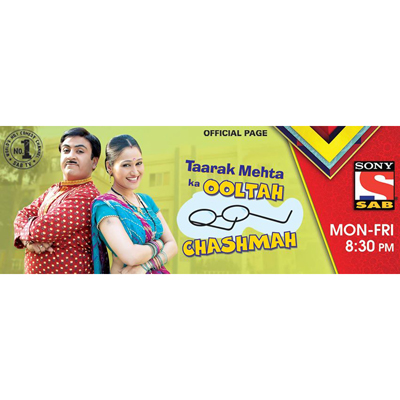
    MUMBAI: ‘My Clean India’ campaign is a nationwide initiative launched by Prime Minister Narendra Modi, who selected nine notable public figures to propagate this campaign, including the entire team of Taarak Mehta Ka Ooltah Chashma (TMKOC).

    After inspiring the audience via the show, wherein the characters visited slum areas to teach residents the importance of cleanliness and the process of cleaning, now TMKOC is starting a contest with the aim to involve viewers and fans to take up the initiative for a clean and healthy India.

    To participate, people can log on to the website www.tmkocmycleanindia.com and share images of their contribution to the ‘TMKOC My Clean India’ campaign. In the following manner:

    iSee – iClean – iMakeMyIndiaClean : If your surroundings are unclean, take a picture and upload it to the website’s iSee section. If you choose to clean your surroundings, take a picture during the act and upload it to the iClean section. After your surroundings are clean, take a picture and upload it to the iMakeMyIndiaClean section.

    Winners stand a chance to be felicitated by their favourite TMKOC stars in Gokuldham!

    This is just the beginning of the larger activity planned by Neela Tele Films and the team of TMKOC.

    The show is produced by Neela Tele Films; conceived and designed by Asitkumarr Modi.


  • Credai Bengal heads towards a ‘Clean India’ campaign

    Credai Bengal heads towards a ‘Clean India’ campaign

    KOLKATA: Credai Bengal, the state chapter of confederation of real estate developers’ associations of India, is soon to take a pledge of a ‘Clean India’ and ‘Skilled India’ at Credai Conclave 2014 to be held on 24 and 25 November 2014.

    The real estate developers’ body will adopt the ‘Swacch Bharat’ mission aligned with the policy direction by Credai. It is initiating a zero-garbage campaign in housing complexes, developed by its members and experiment on alternative models for garbage reduction and better waste management. Through this campaign, Credai would become the first among the associations of industry to adopt the mission as an organisational endeavour.

    Prime Minister Narendra Modi is expected to address the delegates of Credai Conclave 2014 through an audio visual link and provide Credai with a sense of direction on its endeavour of a ‘Clean India’ and ‘Skilled India’.

    Credai Bengal president Sushil Mohta says, “Credai Bengal aims to impart skills amongst the construction workers. We hope to introduce vocational and training programmes, an agenda that will be deliberated during the conclave.”

    The ‘Swacch Bharat’ campaign aims to accomplish the vision of a clean India by the 150th birthday of Mahatma Gandhi. This pledge touched a chord with the Credai fraternity nationally, motivating its members to try out alternative models for garbage reduction and waste management.

    Credai national vice president and Credai Bengal ex-president Harsh Vardhan Patodia concluded, “With our thought process being already aligned to the core objective of the Swachh Bharat Mission, it is natural for us to jumpstart this endevour and engage with the programme initiatives of the mission.”


  • “How India is leading the way in BBC innovation”

    “How India is leading the way in BBC innovation”

    It is always exciting to be in Delhi, to catch up with the latest political news and see a city that changes every time you visit. But for the BBC, India isn’t now only a fascinating story and a place with a large audience that is deep in the heart of the BBC. India is now a thriving hub of media and technology innovation.


    Yesterday, I visited the instant messaging app firm Line, in Gurgaon. It has 30m users in India, with just five employees here. The BBC, I’m proud to say, is the first news organisation to distribute its content via Line. I had a fascinating conversation with Line about how it’s very young users react to the news, using the emoticons or emojis which chat apps are famous for. We discussed whether serious news and emoticons go together. But if users want to react to BBC News emotionally that’s fine by me. Images that say “amazing news”, “scary news”, “funny news”, “important news” can only show the power of BBC news’ impact on people.


    For those of you who are users of chat apps and social media I hope that your reaction to my speech today about how well the BBC is innovating today in India will be, in the language of the chat app, smiley, smiley, smiley, smiley.


    I’m going to speak about some of the BBC’s innovative projects in India and how they stand as a symbol of a revitalised and modernised BBC World Service throughout the world. And I will give you a glimpse of the further reinvention of the BBC that will be seen in India and globally in future years. I believe that the greatest days for the BBC around the world are yet to come, based on the incredible transformation that has happened in recent years.


    First, let me detail the basis of the recent strength of the BBC. When I started my role as the director of BBC World Service Group in 2009, we had an estimated weekly audience of 238m globally. 177m of our audiences, the majority, were radio listeners and 82m were TV viewers and only 16.4m were online users. Six years on, our weekly radio audience has declined to 127m, but the TV audience has massively increased to 126m and online users have sharply risen to 46m, almost three-fold. Although our radio audience has declined sharply as Shortwave listening fades, our overall global audience now stands at 265m. Despite losing 50m radio listeners our total audience has gone up by over 10 per cent. We have achieved this through offering distinctive content via new platforms, in response to rapidly changing technologies and audience behaviours.


    But while we develop onto new platforms the BBC’s core strengths remain – our accuracy, our impartiality, our independence. And those values mean we continue to be rated the world’s most trusted news brand – that’s something that I hope is never going to change.


    In India trust in the BBC is still high and we remain a key player. Our BBC News website is the top international news site in India. The number of its page views is equal to the number of pages viewed by users of CNN, the New York Times and Huffington Post combined. Relied on by millions to understand the world and see how the world sees India, it serves a mainly young population. 73 per cent of users of BBC News website are under 35. We provide Indian audiences with a dedicated international homepage for BBC.Com, which curates the breadth of the BBC for Indian audiences – whether in News or in our world-beating factual genres like BBC Earth. Our BBC News app has an average of 11m page views per month in India.


    BBC World News is one of the highest rated international news channels here. It reaches around 32m households in India, which constitute over 8 per cent of BBC World News’s total household distribution globally. And our Hindi services have grown on new platforms – TV, online and mobile.


    Amongst its international competitors in India, the BBC is not only the most trusted, but research shows it is perceived to be relevant, high quality, unbiased, distinctive and providing a clear global view.


    So I believe the BBC has a growing role but it is one that will differ significantly from the heyday of shortwave radio. To understand how that role is inevitably altering let me give you a quick tour of the global media context, as seen from BBC News.


    In recent years the challenges in reaching global audiences have been intensifying. The platform on which BBC World Service historically was strongest – shortwave radio – has come under great pressure as FM radio, TV and mobile phones offer audiences compelling alternatives. In India, BBC Hindi is still available on shortwave and achieves an audience of 5.5 million which the BBC greatly treasures, but that audience has been declining fast as audiences switch to more audible radio and other platforms like TV.


    Globally, state-funded and commercial players are investing heavily to increase their reach and influence. In the past decade, we have witnessed a host of new international players emerging, including Qatar’s Al Jazeera and China’s CCTV. While many news organisations, including the BBC, have to operate in a very tight financial environment, countries such as China are spending billions pumping news to audiences around the world.


    At a local and regional level, news provision is rapidly increasing. India, for example, has nearly 800 TV channels, more than 240 private FM radio stations and over 94,000 registered periodicals.


    The Indian audience has grown, recovering from the last few years of decline. This comes thanks to investments in digital and TV for the Hindi Service, including the launch of the Global India programme on TV, which pulls in 6m weekly viewers. These increases now more than offset the loss of shortwave listeners to the Hindi Service. Our services in India, shifting from old platforms to new ones, are a strong illustration of a shift going on all over the world. In this, as in other areas, India is leading the way.


    This success has been mainly the result of our investment in digital and TV, and changing the way we work. However, we need to do a lot more to materialise our ambition, which is to double our international audience to half a billion by 2022.


    The massive shift of news consumption towards mobile and social media demands we work in different ways in a modernised operation.  Users consume our journalism everywhere, increasingly in real time on mobile devices and across social media. Working in platform based silos won’t work anymore. 


    Our London and Delhi newsrooms are a mix of talents from around the world and its output is enhanced by contribution from highly skilled journalists from our language services. We have individuals who come from the countries we are reporting, speaking the relevant languages fluently. They are bilingual reporters who work with our globally known English News teams, able to operate in English and their own language in various platforms.


    We believe this is one of the most ambitious and innovative undertakings in international journalism. It is cost effective but, much more importantly, it means our agenda which already strives to be truly and even-handedly global, is driven further by our multinational, multilingual approach.


    We have also been restructuring our overseas bureaux into multimedia, multilingual production units to work in an integrated way across platforms and languages. And the BBC Delhi bureau is also leading the way on this.


    In Delhi we have created a new digital first newsroom. It consists of a single multimedia team, which is working across languages for bbchindi.com and bbc.com/news. And that means that the story of India is increasingly being told to the world through our brilliant Indian teams, including from BBC Hindi, alongside the traditional high class ex-pat correspondents. It is vital that the BBC’s global output reflects the world it is reporting on. And I am delighted by the way the BBC India teams are contributing to that.


    As a result of our innovative ways of working and our distinctive editorial agenda we have been able to produce some unique output, covering topics that other media find uncomfortable to cover. I am particularly proud of our coverage of gender issues in India. I give you a few examples to illustrate this.


    Since the Delhi bus rape in December 2012, we have consciously kept gender issues high on our agenda. The incident triggered an ambitious, highly popular season of programming called ‘100 Women’, in October last year and this year. The aim was to turn the spotlight on women’s lives around the world and feature more women’s voices and women’s stories on the BBC’s global news channels.


    We have published moving pieces by our bilingual reporters in India, including a piece by Rupa Jha who highlighted the stigma and taboo around the issue of menstruation in the country. She reported on how women are considered impure and even cursed during menstruation and how at least one in five girls drop out of school during their periods due to lack of access to sanitary products.


    In another piece, our Delhi-based bilingual reporter, Divya Arya, looked at how lack of toilets in rural India is endangering the safety of women who have to walk long distances to go to open-air toilets in the fields. She travelled to a village less than 50 miles from Delhi to speak to women who have to wait for the dark and move in groups to keep safe when going to toilet.


    And our teams do original reporting and stage discussion on other important aspects of India.


    Last week the BBC broadcast an extended debate from the India International Centre here in Delhi on India’s role in World War One. In conjunction with our partners the British Council we brought the often neglected enormous sacrifice of Indians in WW1 to a global audience. The pride of the descendants of those Indian soldiers was wonderful to hear.


    And the BBC’s unrivalled network of correspondents around the world can keep an increasingly global India in touch with how the world sees it. For instance when PM Modi was in New York in September our reporter based there was able to tell the world of the powerful reaction to the PM, broadcasting in English, Hindi and Urdu, for BBC on TV, radio and online. (We keep our reporters pretty busy these days).


    All of our strongest stories about India are produced in Hindi and English. Local reporters who tell the stories from their country to the whole world are now an essential part of the BBC’s international newsgathering approach. They provide a depth and subtlety of understanding that complements the indispensable insights of the BBC’s “ex-pat” foreign correspondents. This shift to bilingual journalism is one of the most important changes in the BBC’s face to the world in recent years. It is an historic and irreversible shift.


    We are also innovating in our use of social media. BBC Hindi is operating as ‘Social First’, meaning social platforms are as important as publishing on its own homepage. BBC Hindi Facebook page has a fan base of 2.7 million and is growing faster than most of its competitors. BBC Hindi breaks news on Twitter and other social platforms first and produces infographics exclusively for social media.


    New Products


    Developing new digital products for mobile apps and web is a key priority for us. More than half of BBC World Service markets are “mobile first”, which means over 50 per cent of users’ first point of access to the internet is through their mobile phones. More than 70 per cent of BBC Hindi’s Unique Visitors online access our content through mobile devices. 


    Given the explosion in different types of mobile devices, all BBC World Service websites have been converted to responsive design, which adapts a site according to the device it’s being viewed on. BBC Hindi’s responsive mobile browser site was launched in March 2013 and its desktop went responsive in September this year. This has contributed to a rapid and steady growth of the Hindi website’s traffic. The number of Hindi’s monthly unique visitors across all platforms has jumped from 1.3m in April 2013 to 4.5m in October 2014 – remarkable tripling of audience in 18 months.


    In editorial terms, we’ve adapted our storytelling approach. The Hindi service has been one of the first services to pilot a “mobile first” strategy this year, making the stories shorter and punctuated with more pictures and graphics.  There was a 20 per cent uplift in mobile traffic after the first month of piloting these new editorial techniques.


    For the coverage of the Indian general elections earlier this year, we used two new platforms, WhatsApp and WeChat, to reach Indian voters and the Indian diaspora globally. We used these chat apps, which are widely used in India, to create a new editorial service in English and Hindi.


    This was the first time any international news organisation had used these platforms in this way. We had thousands of subscribers across both platforms and it meant we were able to deliver trusted news content, which was a big issue for many Indian voters with regards to domestic news providers, straight onto people’s mobile phones.


    Last month we launched a new ‘lifeline’ Ebola service for people in West Africa on Whatsapp, based on that innovation in India. This was the first time the BBC has used a chat app specifically for health information content.


    Recently BBC Hindi also made its content available on smartphone instant messaging platform Line, which is one the world’s top five chat apps. The launch of the BBC Hindi LINE app follows the recent launch on LINE of an English language BBC News account which has already acquired 300000 subscribers globally and over 100000 in India.


    Last year, we launched a number of innovative programmes global programmes, based on social media. For instance, we set up a new social media unit, BBC Trending, to spot and investigate social media trends around the world. The team produces a weekly World Service radio programme, a blog and a unique video product which is built to be shared.  Trending’s content is enhanced by BBC Monitoring and language services’ contribution which gives it a truly global flavour. Due to BBC Trending success, we have been expanding it to other languages including Arabic and Mundo and we hope also to launch in Hindi.


    I would like to give you some examples of how BBC Trending works and goes behind the stories.


    BBC Trending picked up the growing tension over the ‘’kiss of love’’ protest in Kerala at its very early stages and contextualised the social confrontation in India between young people and the conservative cadres of religious groups for a global audience.


    Last week, BBC Trending made a video on the “We are South of India’’ song, which became a YouTube hit and was made by a comedy group from the south of the country to educate northern people about the diversity of their culture down south. This is an example of the conversation India is having with itself and shared with the wider world through BBC Trending.


    When the newly elected Indian Prime Minister, Narendra Modi, launched a campaign to encourage Indians to clean up the country, there was a huge fanfare. But despite the huge coverage on the day, no other media outlets checked if it actually worked on social media.  BBC Trending looked at the lack of spread of the trend forensically.


    And those BBC Trending stories get reported back to India in both English and Hindi.


    Partnership


    We see editorial partnerships as a key way to reach a wider audience, enhance our content and help raise media standards around the world.


    We have built a network of FM partner stations around the world.  Here in India – we have a partnership with ETV which broadcasts the BBC Hindi TV programme, Global India, on its channels across the Hindi-speaking states. We have received encouraging indications of the substantial audiences already being achieved by Global India. I think this reflects a hunger among Indian audiences for content that relates India and the world, content that is largely missing from local providers who tend to be ruthlessly focussed on an India-only view of the world. The BBC can play a vital role in opening the eyes of audiences to the world.


    However, although partners are important to the BBC on TV and in digital, there is one area where the BBC is not able to rebroadcast its news content in India – on FM radio.  Since the election of the new government the former Minister for Information and Broadcasting, Prakash Javadekar, said this on deregulation of news on FM radio:


    “About (broadcasting) news on FM radio, it is an issue close to my heart. Sometimes I am unable to understand the government logic. When 24×7 news channels have the freedom to show news the way they want to…, what have radio channels done that they can’t air news? “


    “Why only restrict radio channels to AIR (All India Radio) bulletins (feed)? There can be three-four more options. We are looking at this issue very positively and we will take a decision soon.”


    That was an encouraging statement and we hope the new minister will take this idea forward.


    India is a highly modern and open society in so many ways. Its economically liberal IT sector, with an open internet at its core, is a huge advantage to the growth of India. But India’s out-dated approach to the control of news on FM radio betrays an unconfident approach. The BBC hopes that indications of reform from the Minister of Information are followed through with real action.


    The components of a dramatically modernised BBC World Service are clear: a commitment to distinctive journalism that reports stories that others won’t, with utter fairness; delivering that journalism on any platform that audiences use; a global editorial ethos based on a multilingual and diverse global workforce; and the systematic use of social media to engage with audiences, to gather their news and anticipate their information needs.


    But how will the BBC evolve further? It will need to continue to change as fast, even faster. I believe that if it does so, with the right support from the wider BBC, the best days of the World Service are yet to come. The remarkable advantage of committed public funding, a revitalised ethos of global journalism, the talents of the global BBC team and a commitment to technological innovation give the BBC inestimable advantages.


    Here are some clues for what we will do in future in India and around the world:


    The rapid proliferation of digital devices, the growth of digital video viewing and the declining cost of bandwidth create huge new opportunities for the BBC – an organisation with the strongest video news in the world. We are no longer constrained  by the time limits of TV news bulletins. BBC teams are experimenting with a variety of technologies that will produce continuous video news streams for digital devices on the subjects and places that most interest the world.


    Do you want news about the South Asia region? Do you want Asian business news? Do you want to know about new global developments in health technology? Do you want to know about Indian success stories in the UK and around the world? Each of those subjects will be able to be delivered as a video stream to your specification. We call this “channel in a box” – in other words a channel, or a visit stream, made in a black electronic box not a studio.


    And our multilingual teams are prototyping new techniques to produce these video streams in multiple languages. I expect all the services I mentioned should be able to be delivered in Hindi, Tamil, Urdu and Bengali and possibly other South Asian languages.  We will be organising our teams in multilingual subject-based global teams that make full use of our journalistic skills from across the world. This will shortly create the most innovative global content production of any news organisation in the world.


    In recent months the BBC World Service has started to add languages rather than cutting them, as happened over previous decades. We launched an emergency service in Thai after the military coup in Bangkok. And just this week we started a temporary crisis offer, funded through BBC Media Action, in Liberian English to help tackle the Ebola crisis.


    But I believe that with new technology and low cost translation methods the BBC could be producing content in 50 languages in five years’ time, with video streams/channels in about half those languages. That will help in achieving the BBC’s aim of a 500m global audience. More importantly, it would mean that in a world that has too much inaccurate, distorted and sensationalist news there will be a truthful news source available to a high proportion of the global population.


    As you may know, I will shortly be leaving the BBC. But I believe that the robust health of the BBC around the world, along with the ideas I have mentioned and the innovation that is already in train, provide a firm platform for continued success. All that is needed is for the BBC, the politicians who ultimately decide about the World Service and the British public who now pay for it, to realise that it is within their grasp to create the greatest days of the BBC World Service.


    If the BBC seizes that opportunity it will be following the example of many of the innovations by the BBC’s teams in India. In this, as in many other areas, India is helping to lead the way to help create the Future of the BBC World Service.


    (These are purely personal views of BBC World Service Group director Peter Horrocks and indiantelevision.com does not subscribe to these views.)

    (Peter Horrocks was speaking at the Observer Research Foundation)
  • DD National to telecast a special programme on ‘World Toilet Day’

    DD National to telecast a special programme on ‘World Toilet Day’

    NEW DELHI: Doordarshan is to telecast a special programme on ‘The World Toilet Day’ tomorrow keeping in view the ‘Swachh Bharat Campaign’ launched by Prime Minister Narendra Modi on 2 October. 

     
    The prime channel of public broadcaster, DD National is set to telecast the programme on ‘World Toilet Day’ titled ‘Bal Safai Abhiyan’ from 10.00 a.m. for half an hour.

     
    The Doordarshan Kendras across the country has been asked to ensure that the activities of Swachha Bharat-World Toilet Day on 19 November are being covered at National/Capital and at Gram Panchayat Level.

     Meanwhile, even as the UN Information Centre for India and Bhutan issued a poster that calls for the cultural integration of Toilet as a national aspiration in India, renowned contemporary painter Paresh Maity and the well-known classical dancer Geeta Chandran are launching the UN National Campaign in this regard.

     
    The UN today called on religious, education and opinion leaders in developing regions to join government officials and champion a halt to open defecation, a practice of 1 billion people worldwide — one-sixth of the developing world’s 5.9 billion inhabitants.


  • Use the power of cinema and other modern tools to spread knowledge and learning, says Jaitley

    Use the power of cinema and other modern tools to spread knowledge and learning, says Jaitley

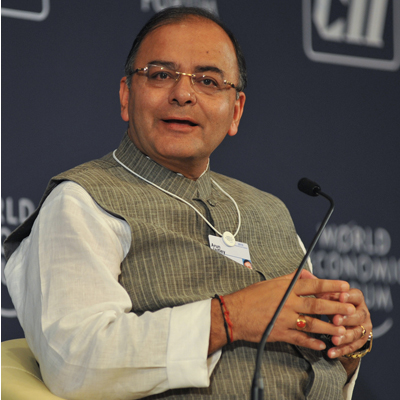
    NEW DELHI: Information and Broadcasting Minister Arun Jaitley said today that filmmakers and creative people should use modern tools like cinema to spread knowledge and learning.

    Referring to the Bal Swaccha Abhiyaan launched today on the occasion of the 125th birth anniversary of Pandit Jawaharlal Nehru, he said ‘Swachhta’ should be instilled as one of the core moral values in childhood so that children practice the habit of cleanliness as part of their childhood and personality.
     
    Inaugurating the first Rashtriya Bal Film Mela which coincided with Children’s Day, he stressed that celluloid media had become a powerful source of knowledge in the Information age and cinema had been emerged as a powerful tool for education in addition to its manifest function of entertainment.
     
    The Rashtriya Bal Film Mela would help in instilling values of cleanliness practiced and propagated by Mahatma Gandhi, the Minister added.
     
    Jaitley called upon the young children to watch the films made by veteran film director Shyam Benegal, who was present, including ‘The Making of Mahatma’ and ‘The Discovery of India’.  

    I&B secretary Bimal Julka said around three million watch films made by the Children’s Film Society, India, which has organised this three-day Festival.

    He pointed out that this will be held every second year, alternating with the International Children’s Film Festival (Golden Elephant) held in Hyderabad every alternate year by the CFSI which was set up at the initiative of Nehru as a soft power to unite children.
     
    He said the Ministry was carrying forward the vision of Prime Minister Narendra Modi regarding Swachh Bharat through this festival on the theme of ‘Swachhta.’
     
    Eminent sportsperson Sania Mirza, who recalled that she had always looked forward to the Gold Elephant as a child in Hyderabad, asked the children present to take a pledge with her to keep the country clean.

    Actresses Dia Mirza and Sakshi Tanwar also demonstrated how it was easy to keep the environment clean by regularly cleaning their own neighbourhoods. Kunal Roy Kapur and Divya Dutta have anchored the show.
     
    The three day festival would provide an opportunity for children to appreciate high-quality film content, experience value-based entertainment, and to trigger their imagination about environment conservation and cleanliness.

     
    The festival would showcase a bunch of internationally acclaimed children’s films on the theme of cleanliness. CFSI’s latest production, Pappu Ki Pugdandi was the inaugural film in the festival.


    Other films that would be screened in the festival include Kaphal which won the National Award for Best Children’s Film, Shortcut Safari which will be premiered for the first time, The Goal, Ek Ajooba (CFSI productions), Karamati Coat, Summer with the Ghost, Sunshine Berry & Disco Worms, Yeh Hai Chakkad Bakkad Bumbe Bo, The Boot Cake, Hawa Hawaii, Krish Trish Baltiboy- 3, and Goopi Gawaiiya Bhaga Bajaiiya.


    The festival would feature interactive workshops on film making with experts from the Film and Television Institute of India and the Satyajit Ray FTI in Kolkata, film appreciation, animation, Charlie Chaplin’s Mimes, and storytelling. Live dance performances, magic act, sand act, and puppetry along with various competitions such as painting on the theme, ‘Swachhta’, and digital collage on the theme ‘Clean India’ and the craft of making utility items from waste materials, were being organised on the sidelines of the festival.
     
    The inauguration was followed by a cultural programme with school children, the Prince Dance Troupe, Shiamak Davar’s Junior Group which included some disabled children, and the renowned artist Vilas Nayak giving performances.


  • “Digitisation will bring quality and transparency in subscriber base”: Arun Jaitley

    “Digitisation will bring quality and transparency in subscriber base”: Arun Jaitley

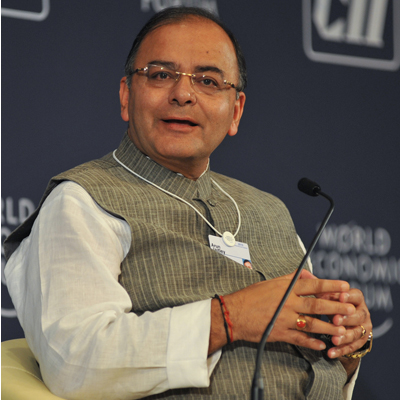
    NEW DELHI: Information and Broadcasting Minister Arun Jaitley has emphasised the importance of the digitisation programme in providing better quality of service, wider choice of content and its important role in bringing about transparency within the subscriber base.

     
    As a process it had also brought about a change in the broadcasting landscape as well as enabled broadband penetration within the country, he told the first Consultative Committee Meeting of Members of Parliament attached to his Ministry.


    The meeting devoted its deliberations to the issue of digitisation of cable TV network in phase III and IV.  Minister of State for I&B Col. Rajyavardhan Singh Rathore was also present in the meeting.


    A presentation was made on behalf of the Ministry giving an overview of the digitisation process. The presentation highlighted the steps taken during phase I and II and the proposed road map for phase III and IV.

     
    Specific reference was made to the initiatives undertaken by the Ministry including the discussions with stakeholders and the campaign to sensitise masses.


    Members of the Committee gave suggestions to ensure that the concerns of all stakeholders were addressed. It was also emphasised that MSOs should operationalise grievance redressal mechanisms to address the concerns of cable subscribers. They emphasised that quality of domestically manufactured Set Top Boxes (STBs) must be ensured.

     
    The issue of digitisation, plan of Doordarshan terrestrial network and the steps being taken to implement the process was also deliberated upon.

     
    It was also mentioned that the Ministry needed to take proactive steps to ensure timely registration of MSO applications so as to ensure the large presence of MSOs to implement the digitisation programme during phase III and phase IV.


    During the discussions emphasis was laid on the efforts being made by the Ministry to integrate the domestic STB manufacturers with the ‘Make in India’ programme. Specific reference was made to the initiative of the Ministry in resolving the long pending issue of ‘C’ Form to create a level playing field for domestic STB manufacturers. Members were also informed that interactions were being held with the STB fraternity to ensure that they utilised their capacity to fulfill the demand for STBs during phase III and phase IV.


    The Members of Parliament who attended the meeting included Dr. Jayakumar Jayavardhan, Tapas Paul, V. Sathyabama, M P Achuthan, P Rajeeve, Pawan Kumar Varma and Vivek Gupta.


  • Future of Prasar Bharati lies in Freedish, FM Radio and internet radio, says Jawhar Sircar

    Future of Prasar Bharati lies in Freedish, FM Radio and internet radio, says Jawhar Sircar

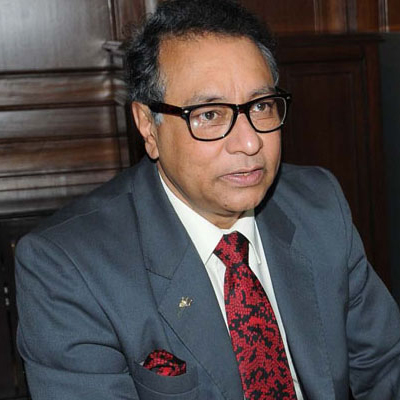
    NEW DELHI: Prasar Bharati chief executive officer Jawhar Sircar has said that the pubcaster would have to strengthen its direct-to-home platform Freedish and its FM services if it has to survive.


    He announced that Freedish was expected to go up to 112 television channels in the next two to three months but he had made it clear to the government that while most were coming through e-auctions, some popular channels may have to be ‘attracted’ to join Freedish since satellite television was the future. He said he was not opposed to digital terrestrial transmission but advances in technology may make it obsolete.  


    He said that when Freedish utilises its full strength, it will give the other DTH operators ‘a run for their money,’ while addressing a function organised by the Broadcast Engineering Society (India) on the occasion of Public Service Broadcasting Day.


    Similarly, he said he was conscious that FM was on analogue and may have to be phased out at some stage, but was the best alternative at present since medium wave and short wave were on the way out. That was the intent in his plan to simulcast MW programmes on FM channels. According to Sircar, AIR should direct its resources to strengthen FM broadcasts, particularly as even mobile phones and car radios could catch these signals.


    He denied that he was opposed to DRM (Digital Radio Mondiale), but said the present DRM will become obsolete by the time people are able to afford it and a futuristic version of DRM may be in vogue.


    He also felt that Internet Radio was the best alternative at present to short wave and asked the engineers to work on this.


    The day is marked as Public Service Broadcasting Day as it coincides with the only time that the father of the nation, Mahatma Gandhi, ever visited All India Radio. He had come to the station in Delhi to make a broadcast in 1947 aimed at Hindu refugees from Pakistan then staying in a camp near Kurukshetra.


    AIR director general F Sheheryar referred to Prime Minister Narendra Modi’s decision to talk to the people through AIR and to the disaster management that AIR had helped in during the floods in Jammu and Kasmmir or the storm in the Bay of Bengal. In Kashmir, he said people depended either on the Army for help or AIR for information on how to get that help.


    He said the clear philosophy of the public service broadcaster was to do more than just entertainment as the private FM channels were doing. A pubcaster gave precedence to public welfare over pecuniary gain.


    A pubcaster also helped in development of languages and literature and taking forward classical art, music and dance.


    He said AIR had now undertaken a major exercise to record for posterity all the dying forms of folklore and folk music before these vanish.


    From six stations in 1947, he said AIR had grown to 414 stations at present. However, there was severe dearth of technical staff.


    Speaking earlier, Doordarshan engineering-in-chief N A Khan said terrestrial transmission was necessary for narrow casting.


    Meanwhile, he said DD had already begun using 19 of the 64 digital transmitters being set up to strengthen digital terrestrial transmission.


    Nobel Peace Prize winner Kailash Satyarthi, who was the chief guest, said that he had depended on AIR when he set up ‘Bachpan Bachao Aandolan’ to reach out to parents who had lost their children or to get information about forcibly kept children.


    He also lauded radio for its work when the country was struck by disaster like the floods in J and K and the storm in the Bay of Bengal.


    He wanted AIR to work towards democratisation of knowledge. The pubcaster could help the people march from despair to hope and the dissemination of collective construction of information.


    While AIR had united India, he wanted it to help create a child-friendly India.


    Three former engineers of Prasar Bharati –M C Aggarwal, G S Sarma, and A R Krishnamurthy – were given lifetime achievement awards. BES(I) president O K Sharma and AIR E-in-C Animesh Chakravarty also spoke on the occasion.