Tag: Narendra Modi

  • Broadband target by government needs to be evaluated, says Khullar

    Broadband target by government needs to be evaluated, says Khullar

    MUMBAI: Telecom Regulatory Authority of India (TRAI) chairman Rahul Khullar said the target set by the government for providing broadband network for all was unrealistic and called for evaluating it. He said it would be simpler to first connect the metros and then look at connecting cities and talukas in a gradual manner.

     “Right now we are sort of deluding ourselves by saying we will achieve 100 per cent and all of you know exactly what has been achieved,” said Khullar. “This can’t be an infrastructure project. Focus on just building the infrastructure is wrong. The entire ecosystem – from applications to services — needs to be developed. The approach should be more practical and realistic,” Khullar added.

     The government plans to link 2.5 lakh village panchayats across the country by December 2016 through the national optical fibre network (NOFN) programme, while promoting initiatives like e-governance, e-education and e-health. The project also aims to ensure that all villages in India have high speed internet.

     In an interview with the Economic Times in August this year, telecom minister Ravi Shankar Prasad had said the government of Prime Minister Narendra Modi wants to ensure a smartphone in the hands of every citizen by 2019. Currently, nearly 74 per cent of the population has mobile phones, most of which though are in the hands of urban Indians.


  • Jaitley launches mobile app of the GoI calendar 2015 for the first time

    Jaitley launches mobile app of the GoI calendar 2015 for the first time

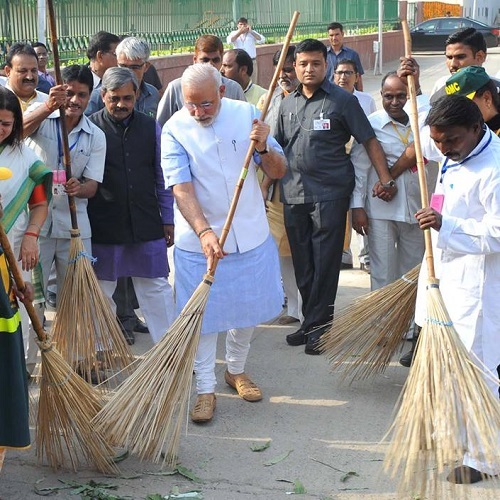
    MUMBAI: Two of the biggest initiatives taken by the new government since it took charge in June this year have been – Swachch Bharat and Digital India.

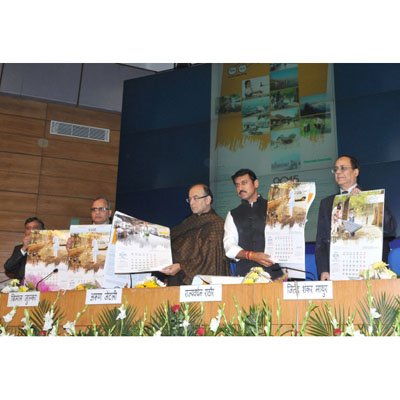
    And taking the philosophy forward in the coming years will be the new calendar launched by the government. The calendar was unveiled by Union Minister for Finance, Corporate Affairs and Information and Broadcasting Arun Jaitley.

    The calendar combines the conventional and technological modes of communicating the initiatives of the government. While the theme of ‘Swachh Bharat’ is portrayed visually in the conventional mode, the mobile application of the calendar reiterates the government’s vision of taking the idea of ‘Digital India’ forward.

    Jaitley said, “The digital version of the calendar 2015 reflects the vision of the government in taking forward the benefit of technology in information dissemination as no one could defy the growth and movement of technology. Technology today was operating on a real time basis.”

    The Minister also lauded the efforts of Directorate of Advertisement and Visual Publicity, DAVP, for developing the digital version of the calendar with socially relevant messages which would be accessible on real time basis through mobile phones.

    The mobile app of the calendar provides access to the latest tweets from the PMO, the YouTube channel of the Ministry of Information and Broadcasting, and the news/updates on PIB website. In addition to being a window for all websites of government of India, this informative application would serve as a planner to the users bringing news updates from AIR and DD News. The app was developed for android platforms initially which would be made available on other mobile platforms also in due course of time.

    The calendar has been developed on the theme of “Clean India Green India” with focus on “Swachhta” and environment issues. For instance, the January page of the calendar displays the launch of the “Swachh Bharat Mission by Prime Minister Narendra Modi.”

    Minister of State for Information and Broadcasting Rajyavardhan Rathore, and Ministry of I&B secretary  Bimal Julka along with senior officials of the I&B Ministry were also present at the unveiling.


  • Film Guild implements ‘swachh bharat abhiyan’

    Film Guild implements ‘swachh bharat abhiyan’

    MUMBAI:  The ‘Swachh Bharat Abhiyan’ initiative was launched this year on the occasion of Gandhi Jayanti by the Prime Minister of India, Narendra Modi all over the country with a remarkable endeavor to make India clean within the next five years.


     In association to this, the Film & Television Producers Guild of India Ltd. (Guild), the entertainment trade association comprising the who’s who of the Indian film & television industry, has taken up the challenging task to promote and encourage cleanliness, as an industry.


    The council of management of the Guild believes that the Film industry has always essayed an important role in contributing to such noble causes and as industry representative, the Guild should take the forefront in pioneering this wonderful enterprise of nation building through cleanliness ushered by Modi.


    With this laudable initiative, the Guild will work towards ensuring that the film industry’s support to the union government is unflinching, providing a stepping stone for exemplary success in the times to come.


    The council of management of the Guild has unanimously passed a resolution to refrain the members from displaying and affixing all kinds of film posters in public domain across Indian cities including 6 sheeters in the public places, walls and government structures across the country.  


    Film and Television Producers Guild of India president, Mukesh Bhatt states, “I would like to set an example myself by ensuring that the posters of my forthcoming film “Khamoshiyan – Silences have secrets” due for release on 23 January 2015 are not displayed on the public walls and government structures. I truly believe that this practice will not only act as a strong deterrent against showcasing film posters in public places but also set an ideal example for the society and general public to emulate the film industry’s path and thereby play an important role in joining hands with the Prime Minister and Central Government to make India clean and thus pay a fitting tribute to the Father of nation Mahatma Gandhi on his  150th birth anniversary, 2 October2019, who always advocated the principle ‘Cleanliness is Godliness’ throughout the great journey of his life.”

  • 2014 – The Year of the Mobile

    2014 – The Year of the Mobile

    2014 was a new era in the rise of mobile, content marketing and big data for many businesses. Right in its embryonic stage, mobile has irrevocably transformed digital marketing. It’s been an eventful year for marketers with the rise of omni-channel, mobile-first marketing, and a rapid growth in geo-tagging management – to name, but a few. The digital marketing industry will evolve even further in 2015, bringing a new set of marketing strategies and opportunities to look forward to. Here are some recent trends marketers should be attentive to for the year ahead.

    We have already heard a lot about the mobile craze everywhere but 2014 bucked that trend. We are now going to witness major consumer transactions happening via mobile driven by mobile payment options such as paytm and freecharge. There is a perfect atmosphere of strong consumer evolution to mobility for every aspect of their lives, as well as enterprises treating mobility as a strategic advantage. We also saw mobile usage of social media overtake desktop usage. The mobile-centric Instagram, grew to over 300 million active users. There are more mobile phones (7.2 billion) on planet than number of people (7.16 billion).

    It happens very rarely that a prediction in digital industry comes true. There were a lot of talks about 2014 being a year of mobile and that statement has come true, with 2014 witnessing an enormous growth in smartphones and so will 2015. Mobile presents a huge opportunity for marketers to reach their target audiences. Google research shows that 7 per cent of mobile searches led to a purchase within 24 hours, rising to 18 per cent for local searches. Smartphones are also changing communication habits – particularly for younger generations – with 94 per cent of communication time for 12 to 15 year olds spent on text-based activities such as instant messaging and social media, and only 3 per cent spent on voice calls.

    In 2015, we will see the widely discussed mobile-first marketing approach finally develop to take advantage of these high consumption levels. Retailers will push more high-volume, low-cost products through their mobile commerce platform, to gain enhanced data on consumer behaviour, locality, adaptation, and ROI.

    In the 2014 elections, we saw most politicians using social media for campaigning. Not only Indian politicians used social media but during the presidential elections in 2008 and 2012 president Barack Obama’s team most effectively used social media campaigns. In India, we saw the Modi selfie on voting day, live rally broadcasts on mobiles, AAP using it for driving new member joinees and for getting citizen participation in its initiatives.

    Global revenue from app stores is expected to rise 62 per cent this year to $25 billion. From ecommerce companies to travel outfits to government departments, everyone is launching mobile apps and driving significant sales and user engagement through same such as paytm, free charge and other mobile centric means for micro small payments. It’s almost like a DoTcom evolution of 15 years ago – no one wants to miss the bus. The same followed by a rise in the mobile handsets sales, led by newer and fancier smartphones is a major catalyst in making 2014 an era of the mobile and paving way for the coming year. India is already the 3rd largest market for smartphones and will overtake USA shortly.

     Telecom operators have finally started to see a lot of data usage from their customers and their 3G infrastructure investments have started to show financial results. Consumers are in a happy mode with lot of choices – lot of people have more than one handset and kids and teenagers are not the only one using them for social media.

    India has emerged as the strongest market for digital companies who see a huge growth opportunity here. For Facebook, Whatsapp, Google – India is one of their top markets. Regardless of where an Internet company is launched today, India very quickly becomes a large user base for it.

    Rural India is also not untouched from this craze and has started seeing relevant information and entertainment services readily available to them via mobile. Venture capitalists and investors are willing to bet long term on sustainability of mobile led digital evolution and are pumping in millions of dollars.

    So what does all this mean as a marketer?

    1- Jump on mobile bandwagon quickly, else you will lag behind

    2- Gear Up for Big Data & analytics to play a bigger role in next phase of mobile evolution

    3- Gut based decisions will start getting replaced by more number driven decisions

    4- 3Ms need to be central to your marketing plans –i.e., Millions of people engaging with Multiple offerings on their Mobile devices.

    Mobile has started to impact almost every sector of our life – payments, healthcare, shopping, eating, travel, investments, and education etc. and it is important for marketers to understand the changing trends and design their marketing strategies accordingly. Mobiles provide a personal connect to user base and customers which helps impactful brand engagement with the audiences, which is all a brand campaign is about.  It’s an era of dialogue creation, with integrated campaigns across platforms made even more convenient via mobile. 2015 promises to ride this wave of momentum as smartphones will become more secure, more contextual, more location-aware, more targeted, and more integrated. We will witness the most engaging mobile experiences till date come to life in 2015. There will be an integration of Mobility, the cloud, and the Internet of Things creating significant opportunities for businesses to expand and for consumers to enjoy. But these opportunities will also come with newer challenges.

    (These are purely personal views of Digital Quotient chief operating officer Vinish Kathuria and indiantelevision.com does not necessarily subscribe to these views.)

  • 2014: The year of bold steps

    2014: The year of bold steps

    The year 2014 will go down in history as the year of bold steps.  Whether it was the postponement of digitisation, the introduction of many a forward-thinking and hard-hitting paper and regulation by government regulator Telecom Regulatory Authority of India (TRAI), the industry’s punts at experimenting with big ticket shows, the completion of the acquisition of the Network18 group by Reliance Industries and the departures that followed thereafter, the push by YouTube into creating  a platform that could disrupt audiovisual content viewing, followed by the drive by broadcast networks to build their own independent digital platforms, the increasing importance of social media for television, the introduction of Reference Interconnect Offer (RIO) deals by Star India in a bid to force the industry to speed up digitisation,  big 4K announcements by Videocon and Tata Sky, the rise and rise of Life OK and SabTV, or the slow descent of Sony (once amongst the top two Hindi general entertainment channels -GECs ) to the number sixth spot, the continuing stranglehold of Star Plus over the Hindi GEC viewer,  the industry’s total disillusionment with existing TV rating provider TAM India, and the swing towards the new industry-backed BARC, the news and niche TV channels’ battle with the the government imposed advertising cap of 10+2 in the courts, the launch of three specialised Hindi general entertainment TV channels, a gradual increase in carriage fee payouts to the cable TV sector by smaller channel owners – all these and many were formed the highlights of the television business in 2014.

    To start with, the government took a firm decision to push ahead the analogue cable TV sunset date to 2016, seeing the state of progress by India’s 60,000 cable TV operators and seven-odd so called national multi system operators (MSOs). Of course, digitisation delay led to a lot of carping by many in the trade, but then it was back to business as usual very quickly. For some, no change was more comfortable than having to reinvent thinking, processes, and also business models – which was proving painful. Those who had pressed their foot on digitisation’s accelerator eased off a bit as they had been given some breathing space.

    The new government

    public://Narendra_D_Modi.jpg2014 was the year of the big change, with the Narendra Modi led Bharatiya Janata Party (BJP) sweeping the ‘election of the century’ and coming to power.  In the new government, the mantle of Information and Broadcasting Ministry was given to Prakash Javadekar, who in his five months tenure made numerous public appearances, making major announcements. Before, the portfolio was passed on to Arun Jaitely in November, Javadekar had made some crucial changes, that of pushing the deadline for digitisation of phase III to December 2015 and of phase IV to December 2016. The move was  done in order to help the indigenous set top box (STB) manufacturers’ boost their businesses as well as allow the MSOs and cable TV operators’ enough time to do it right.

    The year saw the tech savvy Prime Minister announcing his dream of seeing a ‘Digital India’, which was followed by numerous campaigns. It was also the year, when the Media and Entertainment sector envisaged of becoming a $100 billion industry by 2020.


    Cable, DTH and Distribution

    public://222222.jpgIn the cable TV sector, while the tiff between the last mile owners (LMOs) and MSOs over ownership of consumers, billing and revenue share continued like in 2013, some unity could be seen amongst the MSOs with regards to voluntary digitisation after the I&B decided to push digitisation to a later date. The LMOs on the other hand united in several parts of the country to form cooperatives in a bid to get some financial muscle to be able to digitise apart from strengthening their customer base. The year saw not only Hinduja’s headend in the sky (HITS) project taking strides, a new model of distribution: Cable Virtual Network Operator (CVNO) too came up in a few cities like Mumbai and Kolkata.

    Another major development towards the end of the year was the decision of Star India to apply the RIO deal approach with the MSOs. The move while aimed at bringing in addressability and packaging in the DAS markets, saw a number of MSOs coming up with either different packages or putting the network’s channels on a-la-carte.

    With the Average Revenue Per User (ARPU) not showing much signs of improvement, a number of MSOs have started shoring up their broadband offering to customers.  The year also saw Den Networks launching its broadband service in Delhi, with plans of expansion in the coming year.  

    The direct to home (DTH) operators too were seen taking some bold steps with Dish TV launching a sub-brand Zing for the regional markets and Tata Sky and Videocon d2h announcing that they would be introducing 4K set top boxes in India. Not only this, DD Freedish too decided to seed MPEG4 STBs along with MPEG2 boxes in interior areas.

    The icing on the cake was TRAI’s regulation on unbundling, which saw distribution giants, MediaPro and TheOneAlliance parting ways. A lot of other broadcasters too were seen setting up distribution initiatives of their own. 

    Advertising

    public://bjp.JPGThe 16th Lok Sabha elections were not only fought on the ground, but political parties laid siege to the airwaves as well. This general election was the first among many, where media was so extensively (and blatantly) used by political parties.  Far from fighting shy of marketing themselves, the main players – Congress and BJP –spent nearly Rs 400 to Rs 500 crore each on publicity campaigns. An additional Rs 500 to Rs 1,000 crore was spent on related activities such as banners, hoardings, organisation of public meetings and transportation of key campaigners, among others. Not surprisingly, media agencies had estimated around 2 to 2.5 per cent of overall advertisement spends this year to come from elections.

    The year also saw the growth of the e-commerce sector as they intensified their battle. As investments rolled in, the market spends increased to woo customers. And with Finance Minister Arun Jaitley in his maiden budget announcing that manufacturing units will be allowed to sell their products through retail including e-commerce platforms without any additional approval, paving a path for the foreign direct investment (FDI) in the manufacturing sector, the upsurge is expected to continue.

                                                                                                                                                                      News Broadcasters

    public://Mukesh-Ambani-1.jpgThe first half of the year went in covering what seems the country’s biggest election. From exit polls to election result day, one thing was clear that it was a battle of individuals and not parties. And one man leading it all was none other than, BJP’s Narendra Modi.

    The news channels went all out to outdo each other as far as presentation was concerned vis-a-vis live graphics and coverage.  As per industry sources, the channels had earmarked Rs 1 crore to Rs 1.5 crore for the day, but spent a lot more. And with youth stepping out to vote, the channels went all out to social media to gather the pulse of the nation. Channels tied up with Microsoft and Google as well.

    The second big thing, which shook the industry, was when India’s largest company Reliance Industries announced its takeover of India’s largest media companies–Network 18.

    In May, RIL said it would invest about Rs 4,000 crore through Independent Media Trust, of which RIL is the sole beneficiary, to acquire 78 per cent stake in NW18 and about 9 per cent stake in TV18. Founder Raghav Bahl continues to be on the board as a non-executive director.

    The announcement saw senior level exits from the network. The CEO, CFO, COO quit in the days after it. The network’s news channels too saw famous faces like Rajdeep Sardesai moving on.

    The move did make many ask: Is this the death of media independence? But Reliance managers took quick initiative to assuage any such doubts, essentially keeping a hands-off approach from the news network.

    Programming

    public://star.jpgThe television industry saw two major appointments – Uday Shankar taking over as president of Indian Broadcasting Federation (IBF) and NP Singh being elevated as Multi Screen Media (MSM) CEO. Then his predecessor Man Jit Singh was given a US posting and global responsibility in Sony’s home entertainment division.

    As for the programming, the number one channel as per TAM TV ratings, Star Plus intensified its youth turn by launching shows like India’s Raw Star, Airlines and Everest. 

    Zee experimented with content through its new channel, Zindagi, with a slate of programming from across the border – Pakistan . A relief from daily melodramatic soaps got another boost as the country’s first genre-specific Hindi entertainment channel, Epic, finally got a nod from the MIB after more than a year-long wait. MSM too launched two new channels – Max2 and Sony Pal – to add a little more flavour to its pack.

    As industry awaits Broadcast Audience Research Council (BARC) to give out ratings, the body held roadshows across the country to share its updates with all constituents across the entire broadcast value chain, and, equally important, to receive feedback and suggestions.

    Sports

    public://kabbdi.jpgThe year saw India embracing a number of sports leagues apart from cricket, like football, tennis, kabaddi and basketball, that too in different formats. The Pro Kabaddi League, an initiative to revive India’s contact sports was a success and a surprise, not just on television but also at the stadiums, as Indian families cheered  the country’s lost sport. Bud sadly enough, advertisers decided to play a wait and watch game and missed the bus. It was initiated by Mashal Sports and broadcaster Star Sports.

    The Hero India Super League, an IPL styled football domestic tournament was a hit too, on television, social media and fans flocking to the stadiums. Conceptualised by Star Sports, IMG-Reliance and All India Football Federation (AIFF), it garnered a strong advertising support in its maiden year. While bigger brand like Hero, Puma and Amul came on board for the league as title and associate sponsors, individual franchises too drew support from brands.  With advertising and sponsorships stakes high in the Indian Premier league (IPL), these formats have allowed brands with smaller advertising budgets to have a play in the sports television business.

    While the industry did take some bold steps in the year, it hopes to reap the benefits in 2015.
  • “Mr Modi, when are you giving me the big interview you promised?”: Rajdeep Sardesai

    “Mr Modi, when are you giving me the big interview you promised?”: Rajdeep Sardesai

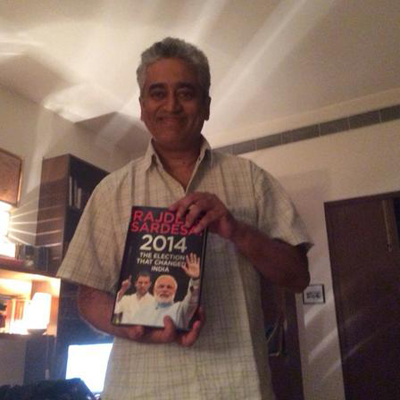
    He is one of Indian television’s most recognisable face as a news presenter and now the author of the best seller ‘2014: The Election That Changed India’. Rajdeep Sardesai may have quit Network18 as IBN18 editor in chief and later on joining the India Today Group as consulting editor, but the man with over 26 years of experience in the field continues to be recognised for his work.


    Sardesai was honoured with the Asian TV Award on 11 December for ‘The Best News Presenter’ for his coverage on the counting day of the general elections.


     The award is a special one for him as he becomes the first Indian to receive the recognition. On the occasion, in a quick chat with Indiantelevision.com’s Herman Gomes, Sardesai speaks about the recognition and upcoming plans for the New Year.


    Your feelings on receiving the award? Do you see Indian journalism receiving its due credit?

    When I was with NDTV, The Big Fight had won the Asian TV Award, three times in a row. At CNN-IBN, India at 9 and our election coverage had won awards for the best news coverage and best current affairs, but to win an individual award as the ‘Best News Presenter’ feels special. Being nominated with icons from CNN, Discovery, Nat Geo and CNBC, along with Chinese and Korean TV, makes it special. I feel honoured to be honoured as the only Indian.


    Are awards and recognition important for journalism?

    Being the first Indian to receive an award like this, feels nice, but only for a moment. Journalism is not about winning awards but about work or the interview you do.  Elections after all is a team game. The award is also for all those who worked with me as a team at my old organisation, CNN IBN.


    Any celebrations planned?

    I am going to have a quiet dinner when my son returns from his hostel. I am planning to take him out for dinner next weekend.  I owe a lot to the family.


    How well is your book ‘2014:The Election That Changed India’ been performing on the shelves?

    The book as of last week was placed at number two in the non-fiction category, behind Sachin Tendulkar’s autobiography: ‘Playing It My way’.  It has been on the best seller list for six weeks. I am told that in one month it has sold more than any other nonfiction political book of 2014. I am taking the book across the country for various promotions and lit fests.  On the weekends I promote the book while on weekdays I am caught up anchoring my show. It’s a packed week!


    Are politicians affected by the revelations in the book?

    Interestingly I find the Congress politicians having more problems with the book than BJP. The BJP politicians had feared the book, but Congress seems to be unhappy now.


    How has the state of journalism changed over the last one year?

    One of the continuing fears I have is the tendency to sensationalise. That continues to remain a trend and has not stopped. This is what I call window journalism, where you have eight people in a window, talking at each other rather than talking to each other.

    But at the same time there is some good work being done. But the sad part is it does not get the due recognition, because some of the less important work dominates the more worthy work.


    We are destroying our credibility in the long run.


    How do you view the growth for online journalism?

    My belief is that digital is going to see a big revolution in the next few years. It will not happen overnight but will take two to three years.


    Are there chances of you joining back CNN-IBN?

    There are no such plans. 2014 has been a roller coaster year for me. Our election coverage is being recognised at the Asian level. The book was a high point while my departure from CNN IBN was an unfortunate one. 


    It has been six months since the new government came to power. Do you think Aache Din Aa Gaye?

    Ache Sitare Aa Gaye, ache din we don’t know. Maybe next year. It’s too early to judge.


    One question you would want to ask the Prime Minister Narendra Modi?

    Mr Modi, when are you giving me the big interview you promised?


    How do you see the year ahead for the Indian media and how are you planning to welcome the New Year?

    I view the year 2015 as the year of introspection for the media including myself. 2014 has been a year of excitement. I am welcoming 2015 by going to Goa and resting by the beach.


    For this year do you want to be known as Rajdeep Sardesai: the journalist or the author?

    I want to be known as a journalist who has written a bestselling book!

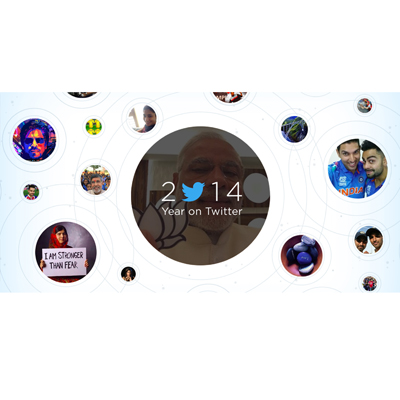
  • Narendra Modi triumphs again, this time on twitter

    Narendra Modi triumphs again, this time on twitter

    MUMBAI: Twitter as a global social platform, has always allowed netizens to express themselves in 140 characters, during moments of celebration, protest, mourning and joy. The micro blogging site receives more than 500 million tweets per day. And we Indian’s are not far away.

    Politicians, actors, cricketers, opinion leaders and citizens have taken to the platform quite well this year. But for the year 2014, Prime Minister Narendra Modi didn’t just steal the show during the elections, but also on twitter.

    The Golden tweet aka .the most-retweeted tweet for India in 2014 was Modi’s election-winning tweet. It received more than 70,000 RTs as it became the most retweeted tweet ever in India. The tweet read, “India has won. Bharat Ki Vijai. Aache Din Aane Wale Hain.”

    Globally, the golden tweet went to the Ellen Show’s starry photo from the Oscars telecast, which gave rise to the selfie phenomenon world over. It received more than 33,67,817 RTs.

    Meanwhile, India’s list of power tweeters is dominated by Bollywood stars, apart from Modi. In the top 10, Amitabh Bachchan leads with 1,18,18,056 followers, followed by Shah Rukh Khan at 1,02,46,755. Cricketers Sachin Tendulkar and Virat Kohli too make their entry but at number 15 and 16, respectively. Author Chetan Bhagat adds variety to the list, rounding off the top 20 for India.

    Rohit Sharma’s smashing the world record for the highest individual ODI cricket score of 264, on 13 November was the top peak moment for twitter. In fact, of the top 10 moments, three are related to cricket including the Indian Premier League. The second largest peak in twitter conversation for the year was Rajinikanth’s arrival on twitter. With over 2,00,000 followers in the first 24 hours and now over 1.1 million in total, it’s clear that he has many loyal fans both off and on twitter. Hardly surprising, two of the top five peaks in conversations were about Modi.  With 8.5 million followers, he is currently the second most followed political leader in the world (after President Barack Obama) and continues to grow his followers at a rapid pace.

    The fastest rising Twitter hashtag trends in India saw a mixture of sports, disasters and political campaigns. Conversations around the 2014 FIFA World Cup lead the trend, followed by the disappearance of the Malaysian Airlines flight, MH370. Meanwhile, Mufflerman, a campaign led by the fans of the Aam Aadmi Party in support of leader Arvind Kejriwal, gathered momentum towards the end of the year.

     

  • India’s ad spend estimated at 13.3 per cent by Magna Global Forecasts 2015

    India’s ad spend estimated at 13.3 per cent by Magna Global Forecasts 2015

    MUMBAI: In its latest study of global media owner advertising revenues, covering 73 countries, Magna Global estimates that ad revenues grew by more than 5.5 per cent this year, to reach the half-trillion mark ($512 billion). Advertising sales will grow by more 4.8 per cent in 2015 to reach $536 billion.

    Some of the most significant revisions in the 2015 forecasts are found among BRIC markets. China and Brazil advertising revenues are still predicted to grow by a decent amount (+8.6 per cent and +5.9 per cent, respectively) although two to three points below previous expectations. Russia is the single biggest negative revision, due to the combination of declining energy prices and the partial withdrawal of Western investors amidst geopolitical tensions; the 2015 advertising growth forecast is cut from 7.0 per cent to 0.8 per cent.

    India will, thus, become the most dynamic among the four BRICs, with an expected ad spend growth of +13.3 per cent following a similar pace of 2014 (+13.2 per cent).

    The general elections that took place in the first part of the year generated massive incremental spend. The outcome of the election, bringing a new BJP-led Government to power, improved business and consumer confidence, is what prompts ad growth forecast in the coming year. The new government is also committed to invest billions in order to connect millions of rural Indians to broadband internet, in a plan advertised through a recent meeting between the new Prime Minister Narendra Modi, and the Facebook founder Mark Zuckerberg.

    Magna Global global forecasting director and author of the report Vincent Letang said, “In 2014, the long-awaited European recovery finally came in time to partly offset a weaker- than-expected growth in the US and the BRICs. In 2015, the lack of non-recurring events, the continued slowdown of the BRICs and the deflationary effects generated by the rise of digital media will inhibit global advertising growth, in a slight disconnect with the positive acceleration in the macro-economic environment.”

    The report highlights that in the APAC, within digital, the fastest growing formats are social (+58.6 per cent growth), followed by video (+37.6 per cent growth) and search (+25.5 per cent growth). Mobile spend on social formats continues to lead the way, and other formats will follow.

    Television remains the dominant format for advertising spend in APAC, and spend will grow by 3.5 per cent this year and represent slightly over 40 per cent of all advertising dollars. Broadcast television continues to dominate the TV landscape, although multi-channel television is gaining share due to slightly higher growth rates, and by 2019 will represent nearly one quarter of TV dollars. Print continues to lose market share, and newspaper and magazines together will represent less than one in five advertising dollars this year. This is down from one third of all spending as recently as 2008.

    APAC will continue to be one of the stronger regional drivers of global advertising spend, although its lead on the global growth rate continues to narrow. Its total share of global ad spend will only increase slightly between this year and 2019, from 29 per cent to just over 30 per cent of total spend.

  • TV’s 10% growth will add to AdEx growth in 2015 in India, predicts ZenithOptimedia

    TV’s 10% growth will add to AdEx growth in 2015 in India, predicts ZenithOptimedia

    MUMBAI: The year 2014 saw the biggest Lok Sabha elections held in the country with Bharatiya Janta Party winning with a majority giving people a hope of ‘aache din’.

    It has been just over six months of the newly elected government led by Prime Minister Narendra Modi and it seems to have captured the collective consciousness of the country. And as the year comes to an end, ZenithOptimedia’s Advertising Expenditure Forecasts says that falling food prices as well as oil prices have contributed to a reduction in the Consumer Price Inflation to a historic low of 5.52 per cent in October. IMF and World Bank have forecast an identical 6.4 per cent growth in 2015, up from 5.6 per cent in 2014. The stock market index has crossed 28000, up from 20000 in November 2013.

    Hence, we enter 2015 with a strongly positive consumer and business sentiment, albeit recognising that consistent on-ground delivery and reforms will be needed to keep this sentiment up. Hence, cautious optimism, though with way more optimism than same time last year, is still the right expression.

    The agency expects consumption to continue picking up, with passenger car and utility vehicle sales turning positive, credit card spending on the rise, loans for durables growing. From an ad-expenditure point of view, FMCGs will continue their dominance but given the weak monsoons, some categories might stay flat or have slow growth. High growth is expected from telecom, e-commerce, mobile phones, cars and two wheelers, retail, realty and the BFSI sector. 2015 will also be the year of ICC Cricket World Cup, which will also be a trigger to growth in ad expenditure.

    And with the new TV measurement system scheduled to launch in 2015, as is the much-awaited phase III expansion of FM Radio. Regional media, across print, TV and all other media continues to drive growth in media consumption. With internet base increasing to 250 million, smartphone ownership expected to reach 200 million by 2014 end, and the country awaiting the launch of 4G services by telecom operators, online and mobile will continue to see the maximum growth rate. Digital advertising however, has become dearer as the government decided to re-impose service tax.

    Given these factors ZenithOptimedia expects the ad-ex to grow by 12 per cent to Rs 40,307 crore, at an overall level in 2015, as against 10.7 per cent in 2014 (over 2013). This growth will be primarily fuelled by print at 12 per cent, TV at 10 per cent and online and mobile at 25 per cent. Other media are expected to grow between 5 – 10 per cent.


    Global forecast

    The year 2014 continued the trend of seeing the rise of mobile advertising and social media, and the transition to programmatic buying of digital display, will help the global advertising market grow 5-6 per cent a year over the next three years.

    According to ZenithOptimedia, global ad spend will grow 4.9 per cent to reach $545 billion in 2015. The global economy is expected to improve (the IMF predicts 3.8 per cent global GDP growth in 2015, up from 3.3 per cent in 2014), but advertising faces a tough year-on-year comparison after the Winter Olympics, World Cup and US mid-term elections in 2014. Ad spend growth will therefore be slightly below 2014’s 5.1 per cent.

    2016 will be a quadrennial year – with the Summer Olympics, US Presidential elections and the UEFA European Football Championship – and we expect these events to propel ad spend to 5.6 per cent growth that year, before it slips back to 5.2 ad spend in 2017 in their absence.


  • Subhash Chandra knew I had a winning concept: Rajat Sharma

    Subhash Chandra knew I had a winning concept: Rajat Sharma

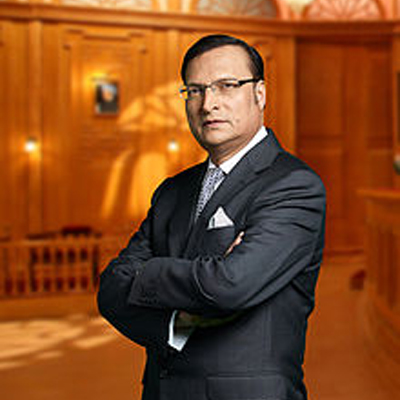
    In the 21 years of this show, nobody has been forced to reply, Rajat knows the art of extracting a reply through his sweet questioning. Another big quality of Rajat is that he uses his tongue sparingly in his show, but he uses his heart to the fullest. A clever mind works behind this,” is how Prime Minister Narendera Modi described the man who has been for 21 years making the icons of the country answerable.


    Rajat Sharma’s journey with ‘Aap ki Adalat’ began with Zee TV in 1994 and from then there has been no stopping. The talk show has seen politicians, sportspersons, celebrities and others pour out their heart as well answer some of the trickiest questions.


    Amidst the celebrations, indiantelevision.com’s Meghna Sharma in a freewheel chat with Sharma spoke about what keeps him ticking, his favourite interview and much more.


    Excerpts…


    21 years is a long time, what do you have to say about the journey? What keeps you ticking?


    It still feels that the journey has just begun; all my memories with the show are still very fresh. The type of guests we have hosted on ‘Aap Ki Adalat,’ their replies, the viewers’ response, the in-studio audiences, the ambience that makes me feel at home every time I step into the Adalat Studio, the affection showered upon me, probably the never-ending love of my viewers…all makes me feel really blessed and probably gives me the strength to keep going.


    When did you come up with the idea of starting ‘Aap ki Adalat’? Any glitches faced while launching the show?


    The idea came up in a casual conversation with Zee TV owner Subhash Chandra on a flight from Delhi to Mumbai, 21 years ago. Without much thinking I told Subhash Chandra how the interviews should be done for TV. I told him about putting politicians in the dock and making them accountable to public. After we landed I forgot about the conversation. Subhash Chandra, however, was quick to realise that I had come up with a winning concept.


    Your most memorable interview so far and why?


    Like I said, all of my interviews have been really special and still very fresh in my memory, however if you tell me to pick one, I would pick the one with the then PM candidate, Narendra Modi. The reason for my pick is not only did the show created a huge ripple in the broadcast media Industry, when almost India’s 85 per cent news audiences watched the show’s first telecast with competition reduced to negligible numbers but also because of spontaneity and ease with which Mr. Modi responded even to the trickiest questions…given the fact that he had a really bad throat after addressing six-odd election rallies during the hectic campaign spree. We weren’t expecting more than 15 minutes of shoot. We ended up shooting him for over two hours and the result was breathtaking.


    Whom/what do you attribute this success to? How do you still maintain the charm of the show?


    Talking of success, I am very sure that it wouldn’t have been the way it is now if the director of my show, who also is my wife, Ritu Dhawan wouldn’t have been around. She is the one who has been standing like a rock behind my success…taking care of everything, from my looks to the positioning of the show, she is everywhere.


    I have always believed in doing my job right and just focus on that. We have been able to create the right mix of depth, detailing and research mixed with the right amount of humour, we have ensured to keep the show relevant to the changing preferences of the audiences over the last two decades, probably that’s what you are referring to as charm.


    After 21 years, will we see any changes in the format?


    Change is inevitable, however more than planning any such change we would rather keep ourselves adaptive to what our audiences would prefer.


    From President to PM to celebs, everyone attended the celebrations. What do you have to say about the support?


    One word, I am overwhelmed. Feeling deeply humbled. While just focusing on my work, I never expected the amount of affection and respect showered upon me by all including country’s topmost icons. I am more than grateful to all and most to my viewers who have backed me all through as their advocate while I tried to amplify their voice with who mattered.