Tag: Narendra Modi

  • Modi’s ‘Make In India’ effect: Xperio Labs mulling Indian manufacturing unit

    Modi’s ‘Make In India’ effect: Xperio Labs mulling Indian manufacturing unit

    MUMBAI: Prime Minister Narendra Modi’s ‘Make In India’ initiative, which is designed to transform India into a global manufacturing hub, has started attracting various companies.


    Xperio Labs, an emerging market focused ‘Devices and Services’ company, is now evaluating the prospects of setting up a manufacturing unit in India.


    The company will be showcasing its products at the upcoming 23rd Convergence India 2015, which is being held in Delhi from 21-23 January. Speaking to Indiantelevision.com, Xperio Labs VP sales Paul Avery said, “We have both sales and support staff in Mumbai, Delhi and Bengaluru. We have also set the ball rolling for a small development team in Chennai. We look at India as our ‘hub’ for software and services and China for our manufacturing. We are also evaluating the prospects of manufacturing in India given the call for ‘Make in India’ by the Prime Minister Narendra Modi.”


    According to Avery, India is not only a significant contributor to the company’s revenue, but is a high growth market for them.


    Talking about the products that the company will showcase at Convergence 2015, Avery said, “At Convergence 2015, we will be exhibiting our range of devices namely MPEG 2 and MPEG 4 Set Top Boxes (STB), Docsis-2 and Docsis-3 wired and wi-fi modems. We also plan to run live demonstrations of our Platform as a Service (PaaS) that allows service providers to offer OTT/TV Everywhere services on a pay as you go basis.”


    Xperio Labs has worked together as a team under different brands like Scientific Atlanta/Cisco and has contributed to the transformation of the Indian cable industry since 2003. “We have seen this industry grow by leaps and bounds. We have also learnt over the years that Indian Service Providers are value conscious (not price conscious) and cable has offered stiff competition to DTH and has been able to provide a credible alternative to DTH,” he added.  


    The service company, which currently has offices in Hong Kong, Atlanta, Bengaluru, Delhi, Dubai, Mumbai, Surrey and Shanghai is initially focusing on markets in south Asia, south east Asia and middle east regions. “In the very near term, we would like to do deeper, rather than wider coverage in these markets and then look at other emerging markets such as Africa, Eastern Europe and Latin America,” said Avery.


    According to him, in the broadcast space, service providers have now started moving their focus from just offering video services to more data and voice globally and very soon next generation services, such as home security and automation services will also begin. “We plan to offer these services as part of our PaaS platform,” he informed.


    Elaborating further on PaaS, Xperio Labs CTO Ajith Nair said, “This platform allows service providers to quickly launch OTT/TV Everywhere services with minimum capex and mostly on an opex model i.e pay as you go. It also helps reduce service providers’ Time To Market (TTM) and focus on customer acquisition and retention, without being concerned about the technology and its management. Service providers can offer services like broadcast TV, on demand TV, internet radio and concierge services to name a few.”


    Xperio Labs, which has been involved with service providers for more than two decades, has seen the international service providers evolve from single service companies to triple pay, and in some cases quad play. “During this transition they have had to undergo several operational challenges and we anticipate that in the emerging market service providers will face similar challenges, and there is a broad dearth of technology companies that can help them with such challenges,” Nair opined.


    The company, according to Nair, can provide a Tier-1 engagement model at an Asia Inc price. “We also believe we can provide close-in product and operational support with an India based support team. In this way service providers can take advantage of the best of both the worlds,” he said.


    Since its inception in September 2013, Xperio Labs has been successful with a number of Tier-1 and 2 service providers in several markets like India, Nepal, Maldives, Vietnam and Philippines.


    The company has been working on providing OTT/TV Everywhere service. When asked about the progress, Nair said, “It is still in its infancy in emerging markets, it is similar to what Digital TV was 8-10 years ago, but slowly and surely we have seen a huge upswing in consumers purchasing more mobile devices namely smartphones, tablets and Phablets and hence their need to consume content on the move, or consume content on multiple screens in the home.”


    “We have made considerable progress with the technology and we are currently in the midst of launching a tier-1 MSO go TV Everywhere. Our target group is tier-1/2 MSO’s who appreciate the need to launch such services but don’t want to make a capex investment and also don’t want to build and manage the OTT infrastructure,” informed Nair.


    Xperio Labs, in order to meet the requirements of its growth plans in India is always on a lookout for strategic partners, who can, not only help them grow their reach in the market but also invest/co-develop in some of its services and technologies.


    Avery is confident about the products the company makes. “Our devices and services are built not just keeping a consumer, but also the service provider in mind, a B2B2C (Business to Business to Consumer) approach to the market. The industrial design, user interface, along with the software design and architecture of our products reflect our understanding that technology is only as good as it is useful to the people using it. In short it is an experience that we provide our customers,” he informed.


    According to Nair, digital STBs may soon cease to exist in its current form. “In the years to come, it would just be an application residing on a mobile device or television, or it would have to transform into a set of devices; a  gateway for home entertainment, communication, security, automation and health care with one or many display devices,” concluded Nair.


    Organised by Exhibitions India Group (EIG), the 23rd edition of Convergence India 2015 is themed around ‘Connecting India.’ The event is set to bring together the best minds in the ICT ecosystem under one roof to create an interactive platform for the companies to showcase their technical prowess, and tap into new business opportunities. The expo which will focus on growth opportunities, future trends and upcoming technologies for the ICT ecosystem stakeholders, will feature a wide spectrum of ICT verticals including telecom, mobility, broadcast, cable, satellite, entertainment, IT and information security etc.
  • “We’ve come a long way from being WPP’s little known agency”: Samrat Bedi

    “We’ve come a long way from being WPP’s little known agency”: Samrat Bedi

    The year 2014 will go down in history as the year of Indian politics. The main contenders of the two-horse race, Bharatiya Janta Party and Congress, launched massive campaigns to woo voters and became the talking point of the year.


    The BJP campaign ran in series with ‘janta maaf nahi karegi’ and ‘achche din aane wale hai’ becoming the most popular taglines of the year. While some pulled a meme on them, others continue to strongly believe in them and hoped to see a better and brighter India.


    The agency behind the ‘political campaign that created history,’ Soho Square, won not only hearts and accolades from the ‘aam janta’ but the advertising fraternity as well. It won the Grand Effie at the Effies 2014, bringing it at par with the bigger agencies like O&M, Lowe Lintas and McCann Worldgroup India.


    Indiantelevision.com’s Meghna Sharma caught up with Soho Sqaure head Samrat Bedi for a quick freewheeling chat after the award function.

    Excerpts:


    After winning the mandate, what was the reaction of the team? Was there a lot of pressure to deliver?


    We knew that it was a challenging one as it was an uncharted territory for the entire team. We had never done anything like this before. When we started working on it, a day’s work felt like what one would usually do in a week’s time.


    We held meetings at 1 pm everyday where we were given a new brief. After watching a lot of news and reading papers, to gauge the nation’s mood, we would again meet around 2:30 pm or so and come up with new content/idea by night.


    We are very proud of the campaign and it was a huge learning lesson.


    Whom would you attribute the win to?


    It was a team effort. It might sound clichéd but the magnitude of the project was so huge that the whole team had to get involved. There was no senior or junior when we got down to working on the campaign as it was unknown territory and needed everyone’s support.


    One can say a benchmark has been created. So, what will be the next big thing for Soho Square?


    Tough question. (laughs) I would like to call it a springboard rather than a benchmark. One can always do better and create newer benchmarks. Nonetheless, it will work as a springboard for us and now help us grow pillar to pillar.


    In a month’s time, we will be launching the coffee table book on the BJP campaign as well. 


    What advice will you like to give other “smaller” agencies?


    Just because we won the BJP mandate doesn’t make Soho Sqaure an expert. We cannot give advise to anyone because we are sure every other agency has the best talent pool and the ambition to come up with fantastic work across categories.


    However, one thing is for sure that the campaign helped us from being the “little known agency of WPP” to an agency which can now be counted amongst the big leagues.


    Sometimes it takes just an idea to change people’s perceptions!


  • “Digitisation will boost GDP growth” – Ravi Shankar Prasad

    “Digitisation will boost GDP growth” – Ravi Shankar Prasad

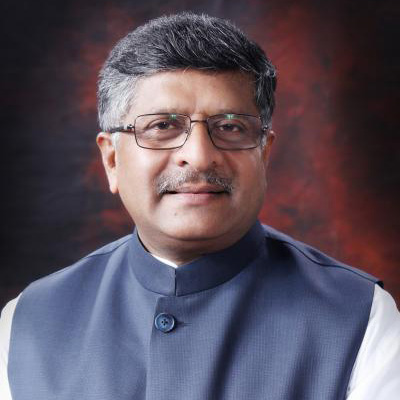
    MUMBAI: Taking a leaf out of Prime Minister Narendra Modi’s Digital India initiative, Union Minister of Communication and Information Technology Ravi Shankar Prasad today stressed on how the country’s growth is interlinked to this programme.
    “The government is dedicated to creating a digital ecosystem that will enable internet to touch the lives of all Indians,” Prasad, who was speaking at the 9th India Digital Summit of IAMAI, said.
    He further pointed out how it was imperative to create hubs in rural India that will help the growth of e-commerce, which remains unexplored so far. “Unless connectivity reaches every village of India, the dynamics of growth will remain unchanged,” he said.
    Speaking on access, Prasad said, “It took 30 years to cover 10 lakh kilometres of optic fibre laying, and in just next three years, seven lakh kilometres will be added, making rural connectivity a reality.”
    Releasing the IAMAI &The Boston Consulting Group (BCG) report India@Digital.Bharat, Prasad said, “For the internet economy to touch $200 billion by 2020 that will contribute five per cent of GDP, we need to move at a fast pace towards computer literacy. The other key areas which will help the internet economy to grow is mobile internet. The government is committed to digitisation and we look at extensive public-private partnerships (PPP) to the have successful implementation.”
    The India@Digital.Bharat report establishes that India is headed towards an internet economy worth $200 billion by 2020, that will contribute five per cent of the GDP growing at 23 per cent compared to 13 per cent overall.

    As the following chart shows, Internet in India by 2018 will be more mature and mobile will be more predominant.

    The number of internet users in rural areas will touch 210 million by 2018, aiding India’s internet user base to cross 500 million by 2018.

    Speaking at the launch of the report, BCG senior partner and director Alpesh Shah said, “India will have more than half a billion internet users in the next three years – this growth has the potential to fundamentally change the way in which consumers save, learn, play, move and work. However, the extent of shift will depend a lot on how the government and the industry come together to unlock the true potential of the internet.”
    IAMAI chairman and Google India managing director Rajan Anandan, stressed on the growth of internet in India and successful roll-out of the government’s Digital India programme. “India is the third country in the world to have over five Internet companies valued at over $1 billion. India is the fastest growing Internet country but we need to move from narrow band to broadband at the earliest,” Anandan said.


  • Government should set aside Rs 10,000 crore for cable modernisation: Arvind Prabhoo

    Government should set aside Rs 10,000 crore for cable modernisation: Arvind Prabhoo

    MUMBAI: The seed of the dream of seeing a ‘Digital India’ was sown by Prime Minister Narendra Modi, as he took charge to make India a better and developed country. And now to make this dream come true are the cable TV operators, who are looking at achieving this through cable TV transformation.


    In keeping with this, Maharashtra Cable Operators Foundation (MCOF) president Arvind Prabhoo has already sent a presentation to the Information and Broadcasting Ministry (I&B) to not only update them of the needs of the industry, but also how the government could help push the agenda.


    According to Prabhoo, the sector needs regulatory support. This includes cable Internet Service Provider (ISP) licence on soft terms, last mile cable operator licensing, price control on content and level playing field for domestic voice over IP (VoIP). The MCOF president has also requested the Ministry for infrastructure support including long haul fibre and BSNL networking sharing, innovative per customer/month fees and cable modernisation fund. With the industry moving to a whole new system of cable TV viewing, the industry needs re-skilling and incentives for innovations.    


    MCOF in its proposition to the I&B has also said that the government needs to become the national data pipe in order to act as a digital courier. “Set one country, one service, one price,” informed Prabhoo. 


    Not only this, the government should look at setting aside a cable modernisation fund of around Rs 10,000 crore. Of this, according to Prabhoo, Rs 4000 crore will be used in set top box (STB) financing at Rs 300 per SD STB, Rs 5500 crore at Rs 600 per home passed will be used in infrastructure upgrade and Rs 500 crore will be used towards technology R&D. “The Ministry could fund the industry for a tenure of five years. With this funding, the government will be the biggest beneficiary as it would be collecting taxes on the funds,” opined Prabhoo.


    Cable TV currently reaches to close to 60 per cent homes (12 crore) of which around 9 crore are in DAS phase III and IV areas. “The sector which has a workforce of close to 300,000, has the potential to serve some 50 crore data users,” he added.


    In the presentation to the Ministry, MCOF has also highlighted the challenges faced by the digital India. These include the high customer acquisition cost, resulting in unavailability of basic data services, shortages in last mile local loop and predominance of concrete in civil structures which is eroding fidelity of wireless services.


    “We had sent the presentation to the Ministry for a robust cable TV industry, but have not heard from them so far,” concluded Prabhoo.

  • India SatCom-2015: Ushering in a new era

    India SatCom-2015: Ushering in a new era

    MUMBAI: Accounting for approximately 17 per cent of the global population and with a growing middle class and a large population still living in rural & remote areas, India presents large market opportunities for satellite communication services. With the government’s focus on ‘Digital India’, one of the significant market enablers for broadband penetration shall be over satellite, as a large share of the population still remain beyond the reach of the terrestrial broadband network including fiber and cable.

    To shake off  the inertia and cynicism and bring about an awakening call to the policy makers for the need to refocus on satellite communication policy and to realise the dream and vision of our Hon’ble Prime Minister – Narendra Modi to make  “ Digital India “ –India’s road map for providing inclusive growth & development for its entire population of 1.3 billion, we are organising a unique day long seminar about Satellite Communication and how we can use this technology to transform  the lives of the people of India. On behalf of Broadband India Forum ( BIF ), we are pleased to invite you to attend this gala event to be held on 16 January 2015 at  Hotel Le Meridien , Janpath, New Delhi  from 10am.  The theme of the conference is India Satcom-2015: Ushering in a new era.

    The chief architect of the ‘Digital India’ program- Hon’ble Minister of Communications & IT-Shri Ravi Shankar Prasad ji has been invited to grace the occasion by inaugurating the conference and delivering the inaugural address.

    The dignitaries who have been extended the invitation to be a part of the conference are Rahul Khullar, Chairperson- TRAI, Rita Teotia, Special Secretary- Dept. of Telecom and Kiran Karnik prominent Indian administrator chiefly known for his work in the broadcasting and outsourcing industries, RK Arnold, Member TRAI besides leading industry veterans viz. Vern Fotheringham-CEO & MD, Kymeta Corp, USA who shall be delivering the keynote address & David Hartshorn-Secretary General, Global VSAT Forum ( GVF ) who shall be bringing an international perspective  to the discussions.

    The occasion will also see the release of the White Paper on Satellite Vision – 2020 besides the launch of the India SatCom Forum under the aegis of Broadband India Forum. This will be entrusted to take the recommendations of the conference forward and work diligently to provide industry inputs in the New Satcom Policy-2015.

    The conference is expected to be attended by eminent visionaries, technocrats, industry specialists and bureaucrats from Telecom Regulatory Authority of India, Ministry of Information and Broadcasting, Doordarshan, Prasar Bharati, Bharat Sanchar Nigam Limited, Department of Telecommunications, Government of India, Telecom Engineering Center, Indian Space research Organization / ANTRIX,WPC (Wireless Planning & Coordination Wing) and from the Broadcasters, Satellite Service Providers,Satellite Operators, Telecom Service Providers, Broadband Service Providers / Internet service Providers, DTH Operators , VSAT Service Providers, System Integrators, Technology Providers  and Users.

    The conference has been supported by two large international organisations- the Global VSAT Forum (GVF)  and the Cable & Satellite Broadcasters Association (CASBAA).


  • Rs 64,840 crore expected as revenue from spectrum auction

    Rs 64,840 crore expected as revenue from spectrum auction

    NEW DELHI: The estimated revenue from the auction of spectrum is targeted at Rs 64,840 crore (excluding 2100 MHz spectrum) of which Rs 16,000 crore is expected to be released in the current financial year.


    The reserve price approved is Rs 3,646 crore pan-India per MHZ in 800 MHz, Rs 3,980 crore for 900 MHz band pan-India excluding Delhi, Mumbai, Kolkata, and Jammu and Kashmir; Rs 2,191 crore pan-India (excluding Maharashtra and West Bengal) in 1800 MHz band.


    The union cabinet chaired by Prime Minister Narendra Modi has approved the proposal of the Department of Telecom to proceed with auction in 800, 900 & 1800 MHz bands.


    The quantum of spectrum to be put to auction is 103.75 MHz in 800 MHz band in all service areas, 177.8 MHz in 17 LSAs in 900 MHz band and 99.2 MHz in 15 LSAs in 1800 MHz band. Thus a total of 380.75 MHz in 800,900 & 1800 MHz is being put to auction.


    Payment terms, eligibility criteria and auction objectives shall be as in the previous auction of February 2014.


    The cabinet also decided that intent to put 2100 MHz to simultaneous auction may be announced along with auction of other bands. Details of this will be announced later on.


    The government has set itself the following objectives for the auctions:


    •    Obtain a market determined price of apectrum in various bands through a transparent process;

    •    Ensure efficient use of spectrum and avoid hoarding;

    •    Stimulate competition in the sector;

    •    Promote rollout of the respective services;

    •    Maximise revenue proceeds from the auctions within the set parameters.
    Eligibility Criterion

    •    Any licensee that holds a UAS/ CMTS/ UL(AS)/UL licence with authorization for Access Services for that Service Area; or

    •    Any licensee that fulfils the eligibility for obtaining a Unified License with authorisation for Access Services; or

    •    Any entity that gives an undertaking to obtain a Unified License for access service authorisation through a New Entrant Nominee as per the DoT guidelines/licence conditions. Can bid for the Spectrum (subject to other provisions of the Notice).

    Payment Terms


    Successful bidders shall make the payment in any of the following two options:

    a)               Full upfront payment within 10 days of declaration of final price or pre-payment of one or more annual instalments; or

    b)               Deferred payment, subject to the following conditions:

    (i)              An upfront payment; of 33 per cent in the case of 1800MHz band, and 25 per cent in case of 900MHz and 800 MHz; of the final bid amount shall be made within 10 days of declaration of successful bidders and final price;

    (ii)            There shall be a moratorium of two years for payment of balance amount of one time charges for the spectrum, which shall be recovered in 10 equal annual instalments.

    (iii)          The first instalment of the balance due shall become due on the third anniversary of the scheduled date of the first payment. Subsequent instalment shall become due on the same date of each following year. Prepayment of one or more instalments will be allowed on each annual anniversary date of the first upfront payment, based upon the principle that the net present value of the payment is protected.

  • Prasar Bharati: A ‘successful’ year gone by

    Prasar Bharati: A ‘successful’ year gone by

    Since 1995, Doordarshan has been trying to build bridges of communication with Indians living abroad and also to showcase its diverse culture, values and rich heritage to the world by launching its international channel.

    From March 2011, Doordarshan started availing of the service of ISRO’s INSAT-4B in both KU band and C band. However, the inadequacy of not being able to locate any significant global partners to distribute and connect DD to homes overseas continued. Doordarshan did make renewed efforts through Indian Missions to distribute its international channel abroad, but it could make little progress in this last mile distribution, because of several reasons. On the other hand, countries like Japan, Germany, China, Russia and France, invested heavily to ensure a global reach for their international channels.

    Over the last one year, concerted efforts made by Prasar Bharati to locate viable global distribution platform to DD India has resulted in an agreement with Deutsche Welle (DW), the international broadcasting arm of the German public broadcaster for a slot on the DTH platform of EUTEL SAT Hotbird 13 B. It is an extremely popular DTH platform and in Europe it was the logical choice for DD India to launch its overseas services afresh. Hotbird 13B has a total number of 1543 TV channels of which 1117 TV channels are free-to-air. A total of 124 English channels are available on this satellite, prominent amongst which are BBC, CNN, CCTV, RT, France24, VOA TV, Euromans, Sky News, Bloomberg TV, Al Jazeera, etc.  DD India will be in the basic package of the DTH service. The projection of India’s viewpoint to the global audience being  a dire necessity, Prasar Bharati has found a suitable platform with DW on extremely favourable terms on reciprocal basis which is no mean achievement.Placing DD on Hotbird DTH platform will also give it full access to the Middle Eastern GCC countries, where Indians work and reside in large numbers. The telecast trials are likely in a few days and formal launching is expected shortly.

    It was a feather in its cap and moment of honour for India when the Prasar Bharati CEO, Jawhar Sircar, was elected as vice president of the Asia Pacific Broadcasting Union (ABU) in 2014 with its presence in 63 countries, boosting its international presence.

    Doordarshan team has come up with new serials in the current year attracting more eye balls in the afternoon session of DD National creating a new record heralding resurgence of the public broadcaster towards fulfilling its mandate with renewed vigour away from market driven commercial initiatives. Meeting the aspirations of the people of Telengana, dedicated DD Yadagiri from Hyderabad and DD Saptagiri channels from Vijayawada for Seemandhra have become fully operational. Other major initiative was upgradation of  four Hindi channels as 24 hours channels as DD Rajasthan, DD Madhya Pradesh, DD Bihar and DD Uttar Pradesh  from the respective capital DD Kendras giving local look and feel enriching  the telecast with regional flavour.  The basic infrastructure to operationalise DD Kisan channel has been put in place by Doordarshan.  Concerted efforts are on to enrich the channel in the coming year meeting the aspirations of all the agro-economic zones with due importance to related fields and provide wholesome content to the agrarian population of the nation.  

    A major decision in 2014 was to optimise the huge advantage of Digital Terrestrial Transmitters from the four metros which are ready and from other important state capitals in cluster with ability to provide a bouquet of 20 attractive TV channels along with a combination of audio channels from each location with perfect digital output reaching the hand held smart devices equipped with tiny dongles or chips which are under field trials already. The technology is capable of live streaming content without buffering and circumventing ‘server down’ possibility fully.

    Doordarshan was in news for amateurish display by some casual assignees  highlighted in media exposed huge vacancies of creative professionals  in Prasar Bharati and absence of a vibrant mechanism to service the HR functions for cadre restructuring, removal of service conditions related anomalies, conduct of regular departmental promotion proceedings, induction and appointment of creative professionals after strict professional evaluation. After Dr Surya Prakash joined as chairman, the proposal for Prasar Bharati Recruitment Board gained impetus and its establishment looks to be on course.

    Prasar Bharati chose to strengthen its popular Vividh Bharati network in the metros by simulcasting in FM mode. While Kolkata has already commenced its operation, other metros are awaiting the launch. AIR’s 86 odd local radio stations across the country have already started simulcasting Vividh Bharati across the nation spicing up AIR’s airwaves in the cause of uniting India.

    Prime Minister Narendra Modi’s monthly Mann ki Baat – a heart-to-heart and intimate sharing of thoughts with the people living in every nook and corner of the country – is a shot in the arm for Prasar Bharati and AIR undoubtedly has emerged a clear winner in reaching the whole nation through all its channels. The programme has received spontaneous response from thousands of listeners spread all over the country including far flung areas. The broadcast has done the vastest disseminated public service through territorial, satellite and web modes.

    While AIR has decided to webcast all primary channels from all its capital Kendras, it has started field trials of its most popular Vividh Bharati as part of its internet bouquet of FM Gold, FM Rainbow and Urdu Service.

    The dream of CEO Jawhar Sircar is to connect the whole of India through FM-station utilising its existing terrestrial towers all over the country for mounting FM antennas and cutting costs and simulcasting its primary service to ride over shortcomings of Medium Wave transmission.

    For Prasar Bharati, creative dynamism has remained a challenge with innumerable competitors in the field. But its new team is optimistic to accomplish its mandate as a national public broadcaster to inform, educate and entertain the masses at home and abroad and achieve conspicuous deliverables in the new year.

    AIR has become the torchbearer of the Prime Minister’s clarion call for ‘Swachh Bharat’ i.e. Clean India mission through its extensive campaign so that it becomes a truly peoples’ movement and the Prime Minister’s dream of clean India by 2019 becomes a reality. To lend support to the mission, AIR launched extensively several programmes on all its channels, in a variety of formats. The objective is to bring about attitudinal changes and behaviour modifications in the way of life of people while making them aware about environmental hygiene and cleanliness.

    Apart from promos, jingles and slogans on the theme, a multi-episode serial in Hindi entitled ‘Des ApnaUjla-Ujla’ has been launched w.e.f. 2 October 2014.

    The yeoman service rendered by All India Radio (Radio Kashmir, Srinagar, Jammu) during the recent devastating deluge, which helped in saving hundreds of lives, connecting families, keeping the morale and spirit high of the population hit by the worst ever natural calamity and prevention of outbreak of epidemics in the aftermath of the disaster, have all come for lavish praise from every quarter including the Chief Minister of J&K and the cabinet secretary to the government of India. AIR’s uninterrupted service during this unprecedented disaster became all the more laudable as all other sources of information like print media and other electronic channels had come to a grinding halt in the State during those trying days.Similarly, AIR’s role in effective disaster management communication during the rescue, relief and rehabilitation operations at the time of recent Hudhud cyclone in the Andhra coast and particularly Vishakhapatnam also won accolades.

    Vividh Bharati, the old faithful, is avidly listened to even today in the face of stiff competition from rival media, especially private FM radio stations. Described as All India variety programme (Akhil Bharatiya Panchrangi Karyakram), it was initially radiated on two high-power shortwave transmitters at Mumbai and Chennai. Later, the service was progressively extended to 37 centres. Today, it is a veritable national service owing to its country-wide reach, with several stations/transmitters carrying the service:-

    • Exclusive/dedicated Vividh Bharati Channels                            37
    • Local Radio Stations (10:00 am to 5:00 pm)                               65
    • 100 Watt FM Relay Centres                                                         82

    Almost all these stations operate on the FM mode. Till recently, in the four metros, the service was available only on the emaciated medium wave transmitters. AIR has recently launched dedicated FM transmitters in the metros as well. Availability of the service on 102 FM transmitters, not to mention the 100 watt FM relay centres, has further enhanced the exposure to Vividh Bharati, owing to proliferation of FM receivers, car radios and mobile devices. To begin with, Vividh Bharati was an urban phenomenon. Today, it is able to penetrate deep into the country side and is an ideal vehicle for those eager to capture the rural markets.

    The fact that Vividh Bharati simultaneously reaches a vast section of people of all hues creates a psychological bond of togetherness, building up cohesion and common values.

    The year 2014 is the 75th anniversary year of external broadcasting in India and the 50th anniversary of its Urdu service. The External Services Division (ESD) is truly the extended arm of foreign policy and public diplomacy. The traditional modes of shortwave and medium wave transmission have been largely replaced during the year by FM and internet radio bringing about a turnaround during the year. The highlights of the revamping of the ESD are:

    1. Enhancing the level of engagement with the MEA particularly the External Publicity/ Public Diplomacy Division on an urgent basis, MEA will carry details of important programmes scheduled for broadcast in the General Overseas Service (GOS), the flagship service of ESD in English as well as other services in their bi-monthly magazine ‘India Perspective’.

    2. Modernisation efforts of ESD like creation and maintenance of multi-media websites with live internet radio and Radio on Demand components. Trial runs for the websites have been completed and GOS has already been informally hosted and ready for launch.

    3. ESD has also created three round-the-clock web radio portals, featuring live streaming of all the services. These have also been tested and ready for formal launch.

    4. With a view to reaching out to the Indian diaspora and involving the PIOs in the development agenda of the nation and making them true brand ambassadors for the country, multi-media websites for the Indian language services of ESD like Hindi, Bangla, Gujarati, Tamil and Urdu are being developed, with content specifically designed to the respective  target areas.

    5. General Overseas Service is targeted to the English speaking listeners all over the world with the exception of USA, Canada, South-America and the Caribbean. To reach these uncovered areas, a dedicated multi-media website ‘airworldservice.org.in’ has been launched during the year. The programmes of GOS are also available on the web radio portal of ESD. A GOS programme on Gandhian Philosophy has recently won the best programme award for the year 2014.

    6. To augment reception quality of cross-border and neighbourhood services targeted to South-East Asia and some countries in the East Asia from Chinsura (West Bengal) and to Pakistan, Afghanistan and some CIS countries from Rajkot, transmitters were upgraded. This will go a long way to support the new initiatives of the Central Government to strengthen its relations and engagement with the countries in the neighborhood and also undertake counter-propaganda and perception management programmes in a more effective manner. 

    • The News Services Division (NSD) of All India Radio is one of the world’s largest news gathering and dissemination apparatus.
    • Harnessing mobile technology, NSD launched free AIR news SMS service to the public in several regional languages viz. Asamese, Dogri, Gujarati, Hindi, Malayalam, Marathi, Nepali, Sanskrit and Tamil, besides English. The number of people registered for the Service has crossed 5 lakhs, with nearly 80% opting for the regional languages.
    • Substantially increased its presence on the social media, reaching out audiences far and wide. Popularity of AIR’s Facebook page can be gauged by the fact that the number of likes increased from 7 lakh in May, 2014 to 17 lakh in November, 2014. 
    • Twitter handle @airnewsalerts is also gaining momentum day by day, from 2,15,000 followers in May, 2014 to 3,70,000 in November, 2014
      • To further strengthen its reach, NSD joined another online audio platform sound cloud in May 2014. Sound cloud is an audio platform which is used in over 200 countries and has a global reach of 317 million per month. Within short span of time, it has become popular and has nearly 5.4 lakh plays so far, with an average of around 20,000 plays and 800 downloads per week.
    • To lend support to the Mann Ki Baat programme, NSD has been carrying content of  the PM’s speech in all bulletins, national as well as regional, the later carrying the regional language version. SMSes, based on the content, are sent in several languages to the people who had registered for the service. A special static home page was created on www.newsonair.nic.in with a link to take people directly to live webcast page of ‘Mann Ki Baat”.  A special window was created for the webcast of the speech, uploading the text of the address on the website. PM’s speech was live tweeted both in Hindi and English simultaneously. What is more, it was posted on Sound Cloud, generating unique plays within a short span of time reflecting its appeal
    • A variety of CDs based on the prized possessions in the treasure trove of AIR’s archives was prepared, released and uploaded on AIR’s Youtube. Significant among these CDs are the audio cuts of Mahatma Gandhi, Bharat Ratna and former Prime Minister Atal Bihari Vajpayee, Marian Anderson and Dr. Martin Luther King (Jr.).
    • CDs based on recordings of Sardar Vallabhbhai Patel are ready, with refurbishing in its final stage.
    • CD containing recordings on various subjects by Netaji Subhas Chandra Bose, Pt. Jawahar Lal Nehru, Dr. Rajendra Prasad, Dr. B. R. Ambedkar, Lal Bahadur Shastri, Dr. Sarvepalli Radhakrishnan is being prepared. Refurbishing of these recordings is in final stage.
    • 300 hours (approx.) fresh recording received from AIR stations have been digitized with detailed metadata. 3000 hours (approx.) of archival recordings have been deep archived with detailed metadata in Storage Area Network (SAN).
    • AIR has a humongous network of 590 transmitters serving 414 stations, covering virtually the entire population of the country.
    • Under an ambitious digitalisation programme, 31 old medium wave transmitters and five shortwave transmitters have been replaced by new DRM transmitters.
    • Archival facility was setup at Chennai, Delhi, Hyderabad, Kolkata and Mumbai, facilitating digitalization and restoration work
    • Under the Special Package for J&K and North-East, several new FM transmitters are being installed.
    • Modernization and automation of existing Regional News Units.
    • The dream of Prasar Bharati to connect whole of India through FM-isation, utilising its existing terrestrial towers all over the country for mounting  FM antenna cutting costs and simulcasting its primary service to ride over shortcomings of  medium wave transmission, especially the dwindling number medium wave receivers, is fast becoming a reality through a phased progamme launched by AIR.
    • While AIR has decided to webcast all its primary channels from all its capital sations, it has started live streaming, on a trial basis, to take field trial of its most popular Vividh Bharati service as part of its internet bouquet of FM Gold, FM Rainbow and Urdu Service.  This has helped in taking the service to listeners overseas, especially the Indian diaspora, clamouring for it.


    (These are purely personal views of Prasar Bharati principal adviser Brigadier (Retd) VAM Hussain and indiantelevision.com does not necessarily subscribe to these views.)

  • DeitY celebrates Good Governance Day

    DeitY celebrates Good Governance Day

    KOLKATA: The Department of Electronics and Information Technology (DeitY) organised a mega event and an exhibition at the Manekshaw Centre, New Delhi on 25 December to celebrate Good Governance Day.

    The event was inaugurated by Union Minister of Communications & Information Technology Ravi Shankar Prasad, and attended by officials of central government and its agencies, industry partners, interested netizens, and electronic and print media.

    In his keynote address at the event, the Minister said, “Based on the pillars of participation, accountability, transparency, responsiveness and efficiency, Good Governance can be effectively achieved through the vision of Digital India of Digital Infrastructure as a utility to every citizen, Governance and services on demand and digital empowerment of citizens.”

    The Minister further emphasised that simple and inclusive technology has transformative power and is the source of good governance.

    “In the last six months, the government has taken a number of landmark initiatives. The Digital India programme, unveiled by Prime Minister Narendra Modi, is committed to take the cause of Good Governance forward in letter and spirit,” the Minister added.

    He in his concluding remarks directed all the officials of the ministry of communications and IT that we must ensure that the vision of Digital India becomes a reality!

    The Minister launched a number of Good Governance projects initiated by Department of Electronics and Information Technology, Department of Telecommunication, Department of Posts and their organisations.

    On the other hand DeitY secretary RS Sharma said, “The department has taken a number of initiatives like MyGov (Citizen participation platform), Aadhaar Enabled Biometric Attendance System, Jeevan Pramaan, e-Greetings, e-Sampark, National Digital Literacy Mission, e-Governance Competency Framework etc to promote good governance in the country.”


  • State election results: A busy day for news channels

    State election results: A busy day for news channels

    MUMBAI: The year 2014 saw not only the 16th Lok Sabha election, but a number of states undergoing assembly elections as well.


    As the year ends, two states – Jammu & Kashmir and Jharkhand – casted their votes and elected their new governments. The result day i.e. 23 December, was a day of excitement for news channels as most of them started early with predictions. As the day progressed, the counting results were displayed on the screens as media stalwarts analysed the results.


    The numbers clearly showed the mark that Prime Minister Narendra Modi had left on these states as the BJP won a number of seats. In Jharkhand, the party has won with almost majority while in J&K, it is the second largest party after PDP. However, the “breaking news” was J&K Chief Minister Omar Abdullah losing from both Beerwah and Sonawar assembly constituency seats.


    The news channels focused on the next step of the political parties especially in J&K as there was no clear winner. The channels got a panel discussing the same as well as senior editors within the channel analysed the winners, the overall results as well as what discussions are going on behind the closed doors of parties on their next move.


    The analysis continued till late afternoon; with a little break as BJP’s Amit Shah held a press conference to talk about the party’s performance in the two states. “2014 is the year of BJP,” is what the right-hand man of Modi had to say.


    Throughout the day, the channels also gathered as well as took people’s reaction through their digital platforms. Hashtags like #Dec23WithArnab, #NDTVResults were created and promoted on channels as they geared for the big debates to be held at primetime.

  • Rs 18000 crore worth investments received for ‘Digital India’: Prasad

    Rs 18000 crore worth investments received for ‘Digital India’: Prasad

    NEW DELHI: The Prime Minister Narendra Modi’s mandate of ‘Digital India’ will be a game changer for the country and will have a cascading effect on the entire system said Communications and Information Technology Minister Ravi Shankar Prasad.


    Chairing the consultative committee meeting attached to his Ministry, he informed the members that about 700,000 kilometer of cable for broadband is proposed to be laid in the next three years as against one million kilometers already laid in the country, so far.


    The Minister informed members that 50,000 gram panchayats will be provided broadband facility in the first tranche and 2.5 lakh in the next three years. Prasad also assured the members that the government is giving priority to the production of electronic goods as part of the ‘Make in India’ programme.


    Reacting to the concern of some of the members about poor services of the BSNL network in the country, he said more funds are proposed to be provided to the public sector telephone service providers during the VII phase to improve their functioning and make them commercially active.


    The Department of Electronics and Information Technology secretary RS Sharma, made a presentation on the ‘Digital India’ programme before the members of the consultative committee. Earlier at the FICCI, Prasad said Rs 18000 crore worth investments proposals have been received till now for the ‘Digital India’ programme, of which Rs 4000 crore worth have been approved and more are in the pipeline.


    Speaking at the session on ‘The role of ICT and ‘Digital India’ initiative in India’s growth’ at the 87th AGM of FICCI, Prasad said that while there are issues of spectrum to provide high speed connectivity and regulatory control, India will become an exciting place as far as ‘Digital India’ is concerned. E-commerce, he said, was worth billions of dollars and will help increase India’s GDP in a big way.


    Prasad said that the huge postal network can be used for various services like banking, insurance etc. The postal services earn Rs 280 crore from e-commerce, he said, and urged the private sector to take the initiative to develop India digitally.


    Stating that digital connectivity is needed for good governance, Prasad said India had more than $100 billion turnover in IT industry. All fortune companies connect with India’s IT. India has the potential of becoming number two after China and surpass the United States.


    Spelling out the initiatives that have already been taken under the Digital India Programme, the Minister said mygov.in portal has been launched to allow India to interact on various government programmes. Suggestions received on various programmes like ‘Clean Ganga’, ‘Swachh Bharat’ through the portal and designing, logo, slogan etc have been prepared. Under the ‘Jan Dhan Yojna’ – name for the programme was coined with the help of suggestions received through the portal, eight crore bank accounts have been opened till now with a total deposit amount of Rs 8000 crore. This is an ideal example of financial inclusion through digital technology.


    Additionally, programmes such as ‘Jeevan Pramaan’, a  biometric-enabled digital service for pensioners has been launched. Besides, through IT, two lakh schools were connected (two crore children) on the eve of Teacher’s Day.


    Prasad said the digital divide between those who have and those who don’t needs to be plugged. For this the government has initiated the programme – National Optical Fibre Network (NOFN) – which proposes to connect seven lakh kilometers optical fiber to be laid to connect 250 gram panchayats in three years. Wi-fi spots will be provided around the clusters after that and all villages to be provided with internet connectivity.


    He said that to promote ‘Digital India’ it is proposed to set up a broadband duct which is a pre-requisite for getting sewer, water and electricity connections.