Tag: Narendra Modi

  • Prasar Bharati and Qatar Media Corp join hands to exchange radio & TV programmes

    Prasar Bharati and Qatar Media Corp join hands to exchange radio & TV programmes

    NEW DELHI: Prasar Bharati and Qatar Media Corporation agreed to exchange of content that highlights the national characteristics, cultural and heritage, social events, festivals and competitions of both the countries.


    A memorandum of understanding (MoU) signed between the two also provides for exchange programmes for journalists, experts, technicians, specialists etc in the field of electronic media, radio and television.


    The MoU is aimed at enhancing the mutual bonds of friendship and to increase co-operation in the field of broadcasting between the two countries.


    The signing ceremony took place in Hyderabad House, New Delhi, in the presence of Prime Minister Narendra Modi, Qatar’s Emir Sheikh Tamim Bin Hamad Al-Thani, Indian and Qatari delegates.


    The Indian side was represented by Prasar Bharti CEO Jawhar Sircar and the Qatar side by its Ambassador to India Ahmed Ibrahim Abdulla Al Abdulla.


    There will be no commercial use of the content to be shared, according to the MoU. The aim is also to strengthen their co-operative relationship in the field of radio and television; and improve mutual understanding of political, economic, social and scientific aspects of the countries.


    Attempts will be made to explore opportunities for co-production between the two pubcasters.


    The aim will also be to encourage cooperation and coordination in efforts and attitudes in the regional and international forums, conferences, and meetings related to the radio and television field.


  • Tata Sky awaits MIB approval for Rs 250 crore investment

    Tata Sky awaits MIB approval for Rs 250 crore investment

    MUMBAI: Direct to home (DTH) operator Tata Sky has been applying a wait and watch policy not only for transponder space, but also for an approval from the Information and Broadcasting Ministry (I&B), for an additional Rs 250 crore investment.


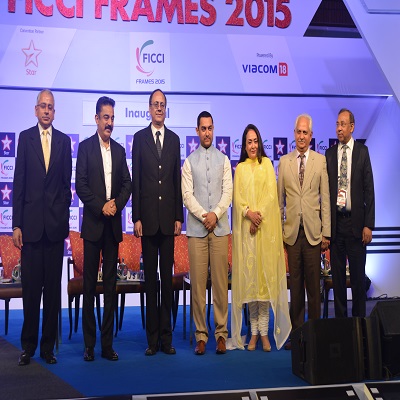
    “The money for the project has already come. But, if the approval doesn’t come in the next 48 hours, I will have to return that money to the foreign investors,” said Tata Sky MD & CEO Harit Nagpal, while addressing the inaugural session at FICCI FRAMES 2015.


    Responding to this, I&B Ministry additional secretary JS Mathur said, “Well, we had granted the approval a month back, and then Tata Sky realized that for the route it wanted to take with the investment, it had to reapply and this is the reason it is taking time.”


    Taking cue from Prime Minister Narendra Modi’s ‘Digital India’ campaign, Nagpal said, “The enabler of connectivity is broadband.”


    As per Nagpal, with low Average Revenue Per User (ARPU), putting fresh wires in the country would not give any return on investment. “Otherwise, there are enough hungry entrepreneurs, who would have used the opportunity. And if they haven’t, means that conditions are not viable in the country,” opined Nagpal.


    The country, though has hundreds miles of wires all over, which can carry broadband, and all it’s waiting for is an enabling and uniform environment, to use this infrastructure and deliver broadband to the consumer. “The rest as has happened in telecom, will happen,” he added.


    According to Nagpal, the industry lacks new thinking. “If anybody finds a successful format, 20 others follow and copy. I have seen general entertainment channels (GECs) being launched as pay TV, churning out the same content, and then either vanishing or becoming free to air (FTA). They lose viewership and distribution and then they are forced to carry 20-22 minutes of advertisement, which the regulator starts questioning and they are then seen sitting in courts,” he said.


    The problem, as per Nagpal, is not the producers, but the economics of the business, the restrictions and the permissions needed to do business. “All this restricts the producer from taking risks and choosing a safe and successful path,” he said.


    Nagpal, further went on to say, “I don’t think there is room for more Stars, Zees and Sonys. Also there is one Arnab and one Barkha, you can’t have too many of them. It is the niche, which will take us forward, and they are low investment and high return product.”


    Flair of creativity and new ideas is the key ingredient in the media and entertainment sector. “The deeper I travel, the more gems I see, but the production centres in the country are all located in the big cities. There is need to take production centres in smaller towns, where the talent is and create more self employed professionals in those areas,” he added.


    According to Nagpal, while the rules for setting up, funding and running the business are in place, one still needs to follow rules and ask for permission at every step. “Things have improved in the past few months and the government is keen to clear files, faster than ever before,” he said.


    The only way the industry can grow, as per Nagpal, is by allowing the businesses to inform and not seek approvals and also by self regulation. “In case we violate the law, issue penalties, cancel the licence,” he announced.


    Touching upon the movie business, Nagpal said that while we make the highest number of films, the industry is still not making money. “We have reached a choking point in terms of adding screens and it is marred by either high cost of real estate or the long list of approvals,” he said.


    According to Nagpal, the increasing number of digitized homes will help more producers to monetize their production. “This has already started, a lot of films are breaking even only on the basis of selling their rights to cable and satellite,” he said.


    The country has seen digitisation of 42 cities. Touching upon the condition in the digitized cities, Nagpal said, “The local cable operators are running the digitised area and the multi system operators (MSOs) are watching. Customers are not getting packages they want and neither are they getting value added services. The customers are willing to pay, unlike what is being projected by LCOs.”


    Digitisation is equal to automation. “The new role of the LCO is to be of a service provider to the MSO and not a partner. I think this needs to be thought about,” concluded Nagpal. 
  • Enhanced reach & instant dissemination on social media impacts content quality

    Enhanced reach & instant dissemination on social media impacts content quality

    NEW DELHI: Minister of State for Information and Broadcasting Rajyavardhan Rathore said on 19 March that the enhanced reach and instant dissemination on social media had impacted the content style and precision of both photography and videography.


    This had led to instant communication across different social media platforms, he said while inaugurating the first National Photography and Videography Workshop organized at the National Media Centre here.


    Rathore said that the Ministry would explore the possibility of organizing similar workshops in other parts of the country including the North East wherein the potential was tremendous as the initiative was innovative in approach involving the professionals associated from the concerned domains.


    The workshop would also act as a facilitating tool in carrying forward the messages of the Government across platforms accessed by different cross sections of the population. As technology was the principal driver of innovation, it had become a critical determinant and catalyst in enhancing the skills of the individual and organization.


    The impact of the dynamic growth of technology was self- evident as there was a proliferation of changes across formats. The enhanced reach, instant dissemination on social media had impacted the content style and precision of both, photography and videography. This had led to instant communication across different social media platforms.


    The government is keen to fulfil the aspirations of Prime Minister Narendra Modi, whose emphasis has been on upgradation of skills through appropriate training methods and tools. The workshop was designed keeping in mind the basic parameters of the ‘Skill India’ initiative. Relying on the basic principles and outline of the ‘Skill India’ initiative, the workshop was an attempt to hone the skills of Government personnel associated with photography and videography.


    Speaking on the craft and art of photography, Rathore said that like any other art photography and videography could be mastered through right inputs. The workshop was an appropriate tool in this direction.


    Recounting the history of photography, Rathore mentioned that pictures had a long lasting impact. Today historic occasions were remembered on several instances only through pictographic description. This was perhaps the reason for the immense popularity of ‘Coffee Table Books’ on different subjects.


    Earlier, I&B secretary Bimal Julka said the workshop had been designed to address the immense skill opportunities that had emerged in the media and entertainment sector. As ‘Skill Development’ was a comprehensive approach involving critical stakeholders in the Government, the endeavor of the Ministry was to incorporate the ‘Skill India’ initiative across its training programmes. The workshop also provided a platform for the Government to converge its expertise and skills, keeping in mind the challenges of assignments, events in the media space dominated by social media, emerging technologies and competitive environment.


    Julka mentioned that as key programmes and initiatives of the Ministry involved technological prowess and a thorough understanding of contemporary changes, the Workshop was certainly a step in the right direction.


    He specifically highlighted the role and relevance of the workshop in the context of the archival heritage of the Ministry across platforms. It was for this purpose that an attempt had been made to bring together different aspects of technology for both, the photography and video segment. For this purpose, professional agencies specializing in digital technology, animation and graphics had been invited to provide value addition to the personnel associated from Photo Division and Doordarshan.


    The key highlight of the workshop was the Joint Session on the History of Art and Appreciation of Photography addressed by eminent photographer Rajesh Bedi and renowned cinematographer Santosh Sivan. Both shared their experiences involving the critical themes with regard to content presentation, layout, use of technology etc.


    The one-day workshop had been organised with two parallel sessions being held concurrently on Photography and Videography. The parallel sessions have been organised keeping in mind the common themes and integration between platforms and the need of skills / tools and contemporary development in both the sectors. Approximately 25 organisations / Ministries are attending the workshop. Over 135 officers participated in the Workshop. 

  • AIR and DD channels to simulcast PM’s ‘Mann Ki Baat’

    AIR and DD channels to simulcast PM’s ‘Mann Ki Baat’

    NEW DELHI: This month’s Mann Ki Baat by Prime Minister Narendra Modi on All India Radio (AIR), addressed to farmers and rural India, will be broadcast at 11 am on 22 March.


    It will also be simultaneously broadcast live on Doordarshan (DD) channels. The address can also be heard on Vividh Bharati, FM Gold, and FM Rainbow radio. The programme will also be live-streamed on the Prime Minister’s official website.


    This is the sixth edition of the radio programme in which Modi shares his thoughts with Indian citizens. The focus of PM’s address will be on farmers and allied issues. He had invited citizens to share their ideas and thoughts on the subject in the Open Forum of MyGov.in.


    The Prime Minister has already interacted directly with people in the earlier five editions of Mann Ki Baat, the last one being addressed to children and young people sitting for their final examinations in March and April.


    Modi has dwelt upon several issues close to the hearts of the people such as Swachh Bharat Abhiyan, promotion of khadi, skill development, scholarship for disabled children, infrastructure for educational institutions, and menace of drugs.


    The Prime Minister also shared the Mann Ki Baat forum with the US president Barack Obama during his visit to India where the two leaders interacted with the people on a host of issues.


  • PM Modi’s ‘Mann Ki Baat’ to address farmers’ issue in March

    PM Modi’s ‘Mann Ki Baat’ to address farmers’ issue in March

    NEW DELHI: Prime Minister Narendra Modi will be talking to farmers and their families in his next Mann Ki Baat on 22 March.


    Modi conveyed this through a tweet saying he would be talking to his farmer brothers and sisters through the programme on All India Radio (AIR).


    In a subsequent tweet, Modi asked farmers and others to send in their views and questions and wanted them to write letters C/O All India Radio’s Delhi office.


    Last month, he had addressed students in schools, colleges and service exams in Mann Ki Baat.


    Although the broadcast is on radio as Modi feels it reaches more people than television, Doordarshan and other TV channels are expected to simulcast the audio with suitable videos or stills.


    Interestingly, the broadcast comes a day before the soft launch of Kisan TV, which is expected on 23 March. The channel will be formally launched on Baisakhi day (14 April) as it marks the start of the sowing season.


    Kisan TV, to be managed by Doordarshan, will be a 24-hour channel devoted to farmers and rural India. The channel was earlier supposed to launch on Makar Sankranti (14 January) but I&B Minister Arun Jaitley has been assured that all arrangements would be completed by mid-April.

  • Farewell Editor

    Farewell Editor

    The last time I did an India at 9 debate on CNN IBN on June 2, 2014, Vinod Mehta was on the panel. As the debate was ending, Vinod insisted on having the last word. ‘What is this I am hearing about you quitting or going on a sabbatical? Don’t stay away from the screen for long, you must return soon!’ As it turned out, that was my last appearance on CNN IBN: I did not return. Little did I know then, that neither would Vinod. He left us permanently this Sunday, leaving behind a great void.

    I never had the privilege of working under Vinod, although my wife Sagarika did and she told me wonderful stories of an editor who was passionate and committed to journalism. My interactions with Vinod were largely on the television screen though he did get me to write the occasional column for Outlook. I found him the person I had always imagined him to me: honest, straightforward, and above all, irreverent. Most editors take themselves very seriously and believe their one article or programme can change the world. Many will tell you how proximate they are to the corridors of power. Not Vinod. His almost self-deprecating attitude to being an editor was perhaps his greatest strength (he had even named his dog ‘Editor’). That coupled with a nose for news and the big, bold headline made him the ideal reporters’ editor, someone who nurtured and embraced many fine young talents. For Vinod, the story mattered, not the pomposity of the byline or the celebrityhood of being editor.

    In a sense, Vinod belonged to what I would call the grand ‘Bombay school of editors’, reared in the more genteel 1960s and 70s. Leading the pack was my first editor when I was in college: Behram Contractor or Busybee, someone also blessed with the craft of using simple language to bring a story alive. Vinod and Behram were in many ways two of a kind: they didn’t flaunt their connections or get intimate with their sources, but enjoyed the idea of bringing out a cracking good newspaper or magazine.
    Sadly, we live in an age where the editor is an endangered species, combating marketing, corporate and political pressures. Vinod is perhaps one of the last of the editors who would not compromise on journalistic independence. As he once told a colleague: “Let someone serve a legal notice, the story must go!” His views were his own, he did not wish to follow the herd or be intimidated by the cacophony of cheerleaders and naysayers. That both LK Advani and Sonia Gandhi were present at his funeral exemplified his ability to cut across the political divide. He wrote a fine book on Sanjay Gandhi and an equally well written biography of Meena Kumari: in both books, there was just enough gossip and anecdote to make them real page turners. Editor, author, journalist: we shall all miss his affable, always energetic presence. RIP.

    Post- script: Vinod made the effortless transition to being a pundit on television. ‘I don’t really like it, but it does pay well,’ he told me with a smile. That was quintessential Vinod: he liked expressing his thoughts candidly, but not without a glass of whiskey in the hand!

    (The piece has been written by veteran journalist Rajdeep Sardedsai on his blog http://www.rajdeepsardesai.net and Indiantelevision.com took his consent and uploaded it after his approval)

  • Telecom spectrum bid: Rs 77,000 crore committed by end of round three

    Telecom spectrum bid: Rs 77,000 crore committed by end of round three

    NEW DELHI: A total telecom spectrum of Rs 77,000 crore (provisional figure) was reached by the end of the week with 17 rounds.


    Eight telecom operators — Reliance Communications, Reliance Jio Infocomm, Bharti Airtel, Vodafone India, Tata Teleservices, Uninor, Idea Cellular and Aircel attended the six fresh rounds of bidding. 


    On day one, bids value was Rs 60,000 crore, while day two bids value reached Rs 65,000 crore. The bids were held for spectrum in 2100 MHz, 1800 MHz, 900 MHz and 800 MHz bands.  


    The bidding has taken place in all bands, according to the Communications and Information Technology Ministry. There is still some spectrum available and auction will continue for this. 


    The reserve price value was around Rs 49,000 crores of provisionally won spectrum.


    The estimated revenue from the auction of spectrum is targetted at Rs 64,840 crore (excluding 2100 MHz spectrum) of which Rs 16,000 crore is expected to be realized in the current financial year.


    The reserve price approved is Rs 3646 crore pan-India per MHZ in 800 MHz, Rs 3980 crore for 900 MHz band pan India excluding Delhi, Mumbai, Kolkatta, and Jammu and Kashmir; Rs 2191 crore pan India (excluding Maharashtra and West Bengal) in 1800 MHz band. 


    A meeting of the Union Cabinet chaired by Prime Minister Narendra Modi had, early in January, approved the proposal of the Department of Telecom to proceed with auction in 800, 900 and 1800 MHz bands. 


    The quantum of spectrum to be put to auction was 103.75 MHz in 800 MHz band in all service areas, 177.8 MHz  in 17 LSAs in 900 MHz band and 99.2 MHz in 15 LSAs in 1800 MHz band. Thus a total of 380.75 MHz in 800, 900 and 1800 MHz was being put to auction.  


    Payment terms, eligibility criteria and auction objectives shall be as in the previous auction of February 2014. 


    The Cabinet had also decided that intent to put 2100 MHz to simultaneous auction may be announced along with auction of other bands. Details of this will be announced later on.


    Later that month on 15 January, the Telecom Regulatory Authority of India opined that clubbing the 2100 MHz band spectrum with the spectrum of other bands for auction in February will be defeated if sufficient spectrum is not made available in the 2100 MHz band.


    “A split auction of 2100 MHz (one in February 2015 and remaining say, in December 2015 after availability from Defence Ministry) will artificially increase the market price of 2100 MHz in February because of the severe supply constraint. The 15 MHz of spectrum in the 2100 MHz spectrum being vacated by the Defence Ministry should be auctioned in view of the in-principle agreement reached with MoD, even if it is not available immediately,” TRAI had said. 


    The Authority reiterated that in the auction of 2100 MHz band spectrum, an auction-specific cap should be placed that no bidder would be permitted to bid for more than two blocks in a local service area if three to four blocks are available in that local service area. 


    TRAI had said there was no change in the reserve prices for spectrum in the 2100 MHz bands from what were recommended earlier.


    It said the Department of Telecom is responsible to ensure that the spectrum being auctioned is either interference free or to share information upfront about the areas where interference is likely to occur so that the telecom service providers participating in the auction can take informed decision.


    These views were given to the DoT in Clarifications/Reconsideration of Recommendations on ‘Valuation and Reserve Price of Spectrum: 2100 MHz Band’.

  • Contest for PMO mobile app launched; winner gets trip to US

    Contest for PMO mobile app launched; winner gets trip to US

    NEW DELHI: A contest has been launched for development of a mobile app for the Prime Minister’s Office (PMO).  


    Prime Minister Narendra Modi in his recent address at the 25th foundation day of the National Association of Software and Services Companies (NASSCOM) had announced the intention to launch a mobile app for PMO. 

    The Government’s citizen engagement platform MyGov will host this contest in association with Google. The contest will be organized over the next three months in three areas of ideation, wireframe development and app development. The best app will be then presented to the PMO. The team developing the wining app will get a chance to visit the headquarters of Google in the United States. 

    The contest is open for all citizens of India above the age 18 years, who are registered on MyGov (https://mygov.in). Participants can submit their entries on the contest page. Each phase will be assessed by an independent jury constituted by MyGov. 

    Speaking on the launch, Communication & Information Technology Minister Ravi Shankar Prasad said views of the citizens collected through the MyGov and other forum have been incorporated into railway and Union Budgets. 


    The need to tackle benami properties and the idea for introduction of sovereign gold bound scheme have come through some suggestions from the people. He said this Government wants to take follow up action on ideas obtained through crowd sourcing and also wants to use social media for public good. 

    Deputy secretary R S Sharma gave an overview of the Digital India programme, whose aim is to first digitally connect all citizens of the government and then digitally empower them in participative process of policy making and being continuously informed of various government initiatives and programmes. 

    MyGov CEO Gaurav Dwivedi charted out the evolution of MyGov, since its launch on 26 July last year and laid out some key features of the newly released MyGov Version 2.0. Google India managing director Rajan Anandan, who is MyGov’s partner in the contest, spoke of Google’s commitment to partner India’s digital drive at multiple levels.

  • Spectrum bid: Six e-auction rounds held; bidders commit Rs 60,000 crore

    Spectrum bid: Six e-auction rounds held; bidders commit Rs 60,000 crore

    NEW DELHI: Six rounds of bidding were completed in the auction of spectrum in 2100 MHz, 1800 MHz, 900 MHz and 800 MHz bands, which began today. 


    The bidding has taken place in all bands, according to the Communications and Information Technology Ministry.


    At present, a value of approximately Rs 60,000 crores has been committed by bidders against the value (at reserve price) of around Rs 49,000 crores of provisionally won spectrum.


    However, spectrum is still available and bidding for this will re-commence tomorrow.


    The estimated revenue from the auction of spectrum is targeted at Rs 64,840 crore (excluding 2100 MHz spectrum) of which Rs 16,000 crore is expected to be realized in the current financial year.


    The reserve price approved is Rs 3646 crore pan-India per MHZ in 800 MHz, Rs 3980 crore for 900 MHz band pan India excluding Delhi, Mumbai, Kolkatta, and Jammu and Kashmir; Rs 2191 crore pan India (excluding Maharashtra and West Bengal) in 1800 MHz band.


    A meeting of the Union Cabinet chaired by Prime Minister Narendra Modi had, early in January, approved the proposal of the Department of Telecom to proceed with auction in 800, 900 and 1800 MHz bands.


    The quantum of spectrum to be put to auction was 103.75 MHz in 800 MHz band in all service areas, 177.8 MHz in 17 LSAs in 900 MHz band and 99.2 MHz in 15 LSAs in 1800 MHz band. Thus a total of 380.75 MHz in 800,900 and 1800 MHz was being put to auction. 


    Payment terms, eligibility criteria and auction objectives shall be as in the previous auction of February 2014.


    The Cabinet had also decided that intent to put 2100 MHz to simultaneous auction may be announced along with auction of other bands. Details of this will be announced later.


    Later that month on 15 January, the Telecom Regulatory Authority of India opined that clubbing the 2100 MHz band spectrum with the spectrum of other bands for auction in February will be defeated if sufficient spectrum is not made available in the 2100 MHz band.


    “A split auction of 2100 MHz (one in February 2015 and remaining say, in December 2015 after availability from Defence Ministry) will artificially increase the market price of 2100 MHz in February because of the severe supply constraint. The 15 MHz of spectrum in the 2100 MHz spectrum being vacated by the Defence Ministry should be auctioned in view of the in-principle agreement reached with MoD, even if it is not available immediately,” TRAI had said.


    The Authority reiterated that in the auction of 2100 MHz band spectrum, an auction-specific cap should be placed that no bidder would be permitted to bid for more than two blocks in a local service area if three to four blocks are available in that local service area.


    TRAI had said there was no change in the reserve prices for spectrum in the 2100 MHz bands from what were recommended earlier.


    It said that the Department of Telecom is responsible to ensure that the spectrum being auctioned is either interference free or to share information upfront about the areas where interference is likely to occur so that the telecom service providers participating in the auction can take informed decision.


    These views were given to the DoT in Clarifications/Reconsideration of Recommendations on ‘Valuation and Reserve Price of Spectrum: 2100 MHz Band’. 

  • Marketing, promotion the &TV way

    Marketing, promotion the &TV way

    And in 2015 a new benchmark has been set on how to launch a new channel in the hyper competitive and challenging Indian TV ecosystem. We are referring to the effort that is being put behind the unveiling of Zee Network’s &TV on 2 March.


    In what could be labelled as an extremely well coordinated exercise, the brand has been in your face everywhere you go… in the streets, on television, in print, on radio, online and in social conversation. Estimates are that the network has laid out an advertising and marketing war chest of more than Rs 100 crore. All that is left is for Prime Minister Narendra Modi to come out and endorse it! Or the once again emerging common man’s political and social poster boy – Delhi’s chief minister Arvind Kejriwal to mention it.


    India’s oldest and most successful television and media industry monitor Indiantelevision.com has also been roped in as a partner by India’s oldest television network for the &TV launch. Hence, you will see a coordinated activity on the site. The ‘Indian’ in our masthead has been merged with one of the key messages it is trying to convey: television in our country will now be referred to as &ndiantelevision. Every ‘and’ reference in our stories has been replaced by the channel’s logo. We were more than willing to partake of this marketing and social experiment, as it is only for a day.


    It is a messaging and marketing innovation, which we believe has not been done before, and will definitely merit a case study going forward. We believe the more discerning and progressive will see it as such. It is an era of partnerships, and who else but Indiantelevision.com (which has been serving at least two generations of leadership and several more generations of low – and mid-management in the privately run television industry since it started in the early nineties) would dare to venture to take this pioneering step.


    Clearly, what was once perceived as a conservative and ‘Lala’ media group has engineered a campaign that would do any of the more experienced marketing mavens in Unilever India or Procter & Gamble or Coke or Pepsi proud.


    There is ample reason for the Subhash Chandra promoted and now run by his son Punit Goenka, Zee Network to go into a marketing overdrive for &TV. The channel is launching in the thick of cricket season: the exciting World Cup is on and Dhoni’s team has once again found its form. This is exciting India’s cricket mad TV viewers to start visualizing and wanting another India victory in the prestigious once in four years prize. Ratings for Star Sports have been like never before and around half of the Indian TV viewing audience stayed glued to their TV set to watch our men in blue thrash the boys in green from Pakistan in India’s opening match. Even repeat telecasts were tuned in to later in the evening, as were the analysis and magazine shows on Star Sports.


    While the World Cup will culminate end-March, it will soon to be followed by the slam bam version of the gentleman’s game the money spinning Indian Premier League (IPL) on the Sony Entertainment network in April. Even though riddled with controversy, the cricket league has been attracting eyeballs over the years. And should continue to do so in the 2015 season too.

    If one were to be a critic and point out a single flaw in the &TV campaign, it could be the over dependence of the channel on projecting one programme – the Shah Rukh Khan-hosted India Poochega Sabse Shaana Kaun. While it is a good strategy to use arguably India’s best known Bollywood face and the second richest actor in the world, it also means the show will have to measure up and meet the expectations it has raised in the minds of viewers. Yes, two other shows Razia Sultan and Begusarai are also being promoted but the decibel levels are lower than that for the Shah Rukh show. And Shah Rukh has not really set the small screen on fire in his earlier sojourns as the host of shows like Zor Ka Jhatka, Kaun Banega Crorepati or Kya Aap Paanchvi Pass Se Tez Hain, though the telecast of his films on TV has been good reason for viewers to stay put at home in the past.


    However, Goenka like his father is emerging as a business executive who is willing to take risks – some may say an expensive one. But the fact is that if the show catches on, he could well end up getting loads of praises and advertising dollars. If it doesn’t it could well prove a driver for other shows on the channel.


    Colors used this strategy at the time of its launch: Akshay Kumar became its  face, and though his Khatron Ke Khiladi did not get very high numbers as one would have expected, it worked like a magnet and drew audiences into the channel’s other shows and positioned Colors in the minds of viewers as an edgy and differentiated channel.


    If that is the strategy that Goenka and the &TV team lead by Rajesh Iyer are following (Iyer was associated with the Colors launch as well), then the other shows will have to really deliver. Prima facie the Zee Network seems to have raised the bar on production values if one looks at the shows on its new offering. The effort has been to keep the story telling and narrative for its fiction shows differentiated. Hopefully, India’s general entertainment viewers perceive the effort as such with &TV too.


    The new GEC is also launching at the time when a new TV viewership measurement system BARC is about to start rolling out its services. Who knows what surprises it may throw up as it has used newer metrics for placing its viewership meters in its 20,000 strong universe. The surprises could well end up working in the Zee Network’s and &TV’s favour.


    However, recent efforts to innovate in India’s Hindi general entertainment genre with linear channels have met with a rather tepid response. Star’s Life OK shone briefly, Zee TV’s Zindagi got critical acclaim but limited audiences and Sony Entertainment’s Pal was not well received by viewers.


    We will know soon enough whether &TV has what it takes. For that, it’s over to the audience.