Tag: Narendra Modi

  • Amitabh Bachchan receives Padma Vibhushan amidst thunderous applause

    Amitabh Bachchan receives Padma Vibhushan amidst thunderous applause

    NEW DELHI: Bollywood megastar Amitabh Bachchan received the nation’s second highest honoour Padma Vibhushan from President Pranab Mukherjee in the presence of various dignitaries as well as his family.


    Due to illness, 92-year-old veteran actor Dilip Kumar, who was also one of the Padma Vibhushan awardees, could not attend the civil investiture ceremony held at the majestic Durbar Hall of Rashtrapati Bhavan.


    The 72-year old Bachchan was cheered by actor son Abhishek, daughter-in-law Aishwarya Rai, wife Jaya and daughter Shweta Nanda, her son Agastye and daughter Navya Naveli. Dressed in a black ‘bandhgala’ suit, Bachchan folded his hands in respect as he received the honour from the President to thunderous applause.


    Bachchan received the Padma Shri in 1984 and the Padma Bhushan in 2001.


    Vice President Hamid Ansari, Prime Minister Narendra Modi, senior Ministers, BJP patriarch L K Advani, Delhi Chief Minister Arvind Kejriwal were among those who were present. 


    The Padma Bhushan awardees included 12-time national award winning film maker Jahnu Barua.


    The awards were presented in two batches, the first batch, having been presented on 30 March. 


    Those from the film and music industry who received the Padma Shri awards included music maestro Ravindra Jain, vocalist Tripti Mukherjee, founder of Shillong Chamber Choir Neil Herbert Nongkynrih, and South Indian film star Kota Srinivasa Rao.


    The Padma Shri recepients from the field of sports included Captain of Indian women cricket team Mithali Raj, Portuguese yoga grand master Jagat Guru Amrta Suryananda Maha Raja, and Women hockey player Saba Anjum, were given Padma Shri awards.


  • “CBFC should examine a film’s message & not ban it due to some scenes”: Paresh Rawal

    “CBFC should examine a film’s message & not ban it due to some scenes”: Paresh Rawal

    NEW DELHI: In the wake of fingers being pointed at the current Central Board of Film Certification (CBFC) chairman Pahlaj Nahalani’s questionable decisions regarding many a films that have come up for release recently, veteran actor Paresh Rawal has said that the message of a film and not some shots here or there should come in for scrutiny before the CBFC.


    Rawal said that every film may contain one or two scenes that may hurt someone, but what has to be seen is whether the message sought to be conveyed by the film is meaningful. He felt that the work of the CBFC was a thankless job.


    Referring to protests held outside film theatres, often by persons who had not even bothered to see the concerned film, Rawal said this was sad. He added that even the communal divides in the country often occurred because of misinformation.


    Denying reports that his latest film Dharam Sankat Mein had been shown to some religious leaders to get their approval, he said it would be a “dangerous trend if a film is shown to extra-constitutional authorities.”


    Rawal, who was in the Capital for promoting the film along with actor Annu Kapoor, said: “Even a serious message if conveyed lightly manages to make an impact.”


    Replying to a question posed by Indiantelevision.com about the run-of-the-mill comedies that he acts in along with some meaningful cinema, he said that it should not be forgotten that it was the money made from those so-called trashy comedies, which helped him take serious cinema even at fees far lower than he would otherwise get.


    Rawal revealed that he was making the biopic on Narendra Modi under his own banner. He said that films on Modi had been made in Gujarati, but never in Hindi. The movie is slated to go on floors in August.


    He also said a sequel to OMG was underway with him, Akshay Kumar and Mithun Chakraborty.


    Rawal informed that he loved serious cinema and therefore his most memorable films were Sardar, which was a biopic on Sardar Vallabhbhai Patel, Road to Sangam, and OMG – Oh my God.


    Hailing from the theatre background, Rawal had never planned his career in cinema when he came on the big screen in 1984.


    Answering a question, he said that he had cut down the number of films he would do to three or four a year, after become a Member of Parliament. However, he said he was an actor first, then an MP. Rawal also informed that his perspective about Parliament had changed since he became an MP.


    Stressing that the country faced problems because there was no ‘Manav Dharam’ or ‘Rashtra Dharam,’ Rawal said that if people loved their country, there would have been no need for the Government to announce programmes on Swachh Bharat or sanitation.


    Agreeing to his point of view, Kapoor said that problems like rape etc. were not confined to India, but Indians themselves often talked about them as if they were ashamed of being Indian but did little to stop these crimes. He said Manav Dharam should be uppermost. He added that while there was freedom of speech, why did people resort to freedom of action.


    When asked about simultaneously acting in comedy and serious films, he said that every theatre person learnt to have a ‘switch on, switch off’ quality and therefore he has no problem going from the set of light film to that of a serious one.


    Speaking about the message that their latest film conveys, Kapoor said, “We are sure that you’ll learn something from this film and the message it gives is of ‘humanity’ and that of all religions, humanity is the biggest religion.”


    Directed by Fuwad Khan and produced by Sajjad Chunawala, Dharam Sankat Meinis a remake of the 2010 British comedy film The Infidel and also stars Naseeruddin Shah.


    The story revolves around a character named Dharam Pal, played by Rawal, who faces the dilemma of choosing between two religions and goes through identity crises when he discovers that what he believed himself to be was actually born to a Muslim family.


    The film is slated for release on 10 April.

  • Govt. stays decision to enlarge size of tobacco ads on packets

    Govt. stays decision to enlarge size of tobacco ads on packets

    NEW DELHI: The Government has stayed a decision taken by the Health Ministry around six months earlier to increase the size of pictorial warnings on tobacco products from 1 April.


    This follows the report by a Parliamentary panel’s assertion that it needs more time to deliberate on the issue.


    The Central Government said it will take a “measured and responsible” decision on the issue of increasing the size of pictorial warnings on tobacco in the backdrop of a controversy generated by Bharatiya Janata Party (BJP) members of the Parliamentary panel suggesting “nil” effects of smoking.


    However, Information and Broadcasting Minister Arun Jaitley made it clear that the decision of the government in the matter will not be based on the opinions of individuals.


    His comments came amid reports that Prime Minister Narendra Modi had directed removal of the members with “conflicting interests” from the Committee of Subordinate Legislations examining the provisions of Cigarettes and Other Tobacco Products Act 2003.


    However, Jaitley did not directly comment on the issue of removal of these members and said, “There is a system in the Parliament and it has also been written in the rules of procedures. There is one opinion that it should be changed. This is in the hands of the Parliament, in the hands of the chair. It is not the issue concerning the government,” he said.


    BJP MPs Dilip Gandhi, Shyam Charan Gupta and Ram Prasad Sarmah have claimed there is no clear proof yet linking cigarette puffing and cancer.


    Asserting that a “multi-pronged” approach to discourage tobacco use was needed, Jaitley said, “Individuals can give individual opinions, but government takes measured and responsible decisions.”


    Meanwhile Health Minister J P Nadda said the panel is presently deliberating the matter and his ministry will take a decision based on merit. “The subordinate legislative committee of Parliament is deliberating on the matter. After that, whatever comes, we will decide the things on its merit. Health Ministry has been consistent on the issue right from the beginning,” he said.


    Gupta’s remarks have also been criticised by opposition parties including Congress, SP and CPI(M), which alleged that there was a “conflict of interest” as Gupta was in tobacco trade and also a member of Parliamentary Committee of Subordinate Legislation looking into the rules regarding tobacco sale in the country.


    The developments come after Panel chairman Dilip Gandhi himself had said that all studies in regard to health hazards of tobacco consumption have come from abroad and one should consider the Indian aspect too.


    “All agree on the harmful effects of tobacco. But there is no Indian survey report to prove that tobacco consumption leads to cancer. All the studies are done abroad. Cancer does not happen only because of tobacco. We have to study the Indian context, as four crore people in states like Madhya Pradesh, Andhra Pradesh, Maharashtra and Chhattisgarh are dependent on bidi-making through Tendupatta,” Gandhi had said.


    Health Minister Harsh Vardhan had issued the notification around six months earlier saying that cigarette manufacturing companies will have to devote at least 85 per cent of the surface areas of cigarette packets on both sides to graphically and literally represent the statutory warning from 1 April this year. 


    In the gazette notification amending the Cigarettes and Other Tobacco Products (Packaging and Labelling) Rules 2008, every cigarette packet was asked to carry on both sides pictorial depiction of throat cancer and a message in English, Hindi or any Indian language. “I have specified that 60 per cent of the space must be devoted to a picture and 25 per cent to the legend,” he said. 

    Vardhan had said, “Graphic health warnings using a mixture of pictures and words are part and parcel of every country’s policy on cigarette marketing. Many studies have established that the inclusion of larger and more noticeable health warnings on packages significantly impact life expectancy rates and lead to savings on medical costs.” 


    Meanwhile, the Health and Family Welfare Ministry had last month launched public service advertisements and poster on tobacco control featuring India’s ambassador for tobacco control Rahul Dravid.


    The advertisements and posters have been prepared by the Ministry of Health and Family Welfare, and the World Health Organization Country Office for India (WHO), in collaboration with the Public Health Foundation of India (PHFI) and HRIDAY. 


    The anti-tobacco campaign featuring Dravid is an effort by the Ministry to reach out to millions of young and potential tobacco users to encourage them to refrain from the deadly habit of tobacco use.


    The audio and visual ads in Hindi and English, along with the posters will be used to create awareness regarding the harmful effects of tobacco use through TV, radio, at schools, community spaces, railway compartments, and social media. 

  • PepsiCo CEO Indra Nooyi hails Modi’s ‘Make in India’ initiative

    PepsiCo CEO Indra Nooyi hails Modi’s ‘Make in India’ initiative

    KOLKATA: Indian Prime Minister Narendra Modi’s call for ‘Make in India’ would help boost up manufacturing and employment in the country, PepsiCo chairman and CEO Indra Nooyi said on Saturday.

    Nooyi, who heads the Fortune 500 company, also said that business success nowadays is measured on quarter-on-quarter or year-on-year basis. 

    “I think the PM is absolutely right on this. It creates a manufacturing base and employment,” said Nooyi, during a brief media interaction at Indian Institute Management, Calcutta (IIM-C) convocation, in Kolkata. 

    She informed that almost everything that her company sells here is “Made in India.” 

    Answering a query as to whether her company was looking to promote its Rs 33,000 crore investment plan by 2020, Nooyi quipped, “That’s a lot of money… let’s get on with that.”

    Talking about the success of business, she said, “Most successful businesses are those, which focus on the long-term. The most successful companies are the ones that create value over the long term for employees, for shareholders, and for the greater community.” 

    “We’re working every day to build a more balanced portfolio, to conserve natural resources, and to create diverse, inclusive workplaces, because we understand that long-term growth is contingent upon a healthy relationship between a company, its community, and its consumers,” Nooyi said. 

    She further said that challenges faced by India are inter-connected, which demands solutions and leadership. 

    “We still face complex challenges like inequality, climate change and resource scarcity that demand solutions and leadership. Making these challenges even more complex is the fact that they are all interconnected. You cannot dive into one issue without touching another,” Nooyi said.

    In her concluding remarks, Nooyi said that though the county has made a lot of progress over the last four decades, India has a long way to go going forward.

  • Kisan TV set for launch by April third week; soft launch next week

    Kisan TV set for launch by April third week; soft launch next week

    NEW DELHI: Kisan TV, earlier slated for formal launch on Baisakhi Day – 14 April, is now expected to go live in the third week of April.


    Kisan TV is a 24-hour channel devoted to farmers and rural India.


    DD sources said that the channel may now be launched on 21 April. This is because Prime Minister Narendra Modi will not be in the country on Baisakhi Day. Sources also told Indiantelevision.com that a trial run had already commenced but a formal soft launch may come within the next few days.


    Initial plans were to launch the channel, which is to be run by Doordarshan, on 14 January (Makar Sankranti Day).


    A corpus of Rs 100 crore had been set aside in July last year in the Budget. However, this year’s budget showed an allocation of Rs 90 crore for the same in 2015-16.


    Meanwhile, the Parliamentary Standing Committee on Information Technology, which also examines issues linked to Information and Broadcasting Ministry said in a recent report that emphasis should be laid on local dialect on a regional basis so that farmers all across the country are able to access the channel in their local language/dialect, thereby getting benefited by this laudable initiative of the government. DD sources had earlier told this website that the content on DD Kisan will be in Hindi with regional dubbing.


    The members appreciated the decision to launch a channel for farmers and said it would await efficacy of the channel in delivering utility services to the target groups.


    The Committee noted that the Empowered Finance Committee (EFC) Memo pertaining to the launch of the channel was under finalization for circulation to appraisal agencies and the process is on for content identification.


    Noting that the proposed Doordarshan Kisan is a dedicated channel for the farmers to give them information targeted to address the wholesome edutainment needs of a farmer to adopt and adapt to modern scenario, the national broadcaster had in early December invited proposals for programmes under the Self Financing Commissioned (SFC) Scheme.


    As per DD sources, the content expected for DD Kisan will primarily address the developmental needs of the farmer addressing ‘Core Agriculture’, ‘Critical Support’ and ‘Essential Ancillary’ areas, keeping in mind the varied Agro-Economic Zones, Climatic Areas, Different Crops and the need to address the target audience spread across various states but will have to be entertaining and engaging.


    The genres for which it invited proposals are: Documentaries/Features (Field Based); Magazines/Docu Dramas (Field Based); Cookery Shows/Biographies; Daily Soap/Fiction Serials/Family Serials/Thrillers; film song based programmes; Reality Shows/Game Shows; and Mandi Bhav/Bazar Bhav/Agro Based Bulletins.


    In addition, DD Kisan will have a new segment for iconic characters plus content packaging where animation characters will convey the agricultural themes and desired messaging. It is expected that the participants under this category will also provide layouts of the channel’s packaging.


    It will also have a segment for edited feature films where the entire film will be capsuled with anchor-based presentation for 60 minutes.


    Prasar Bharati will also take inputs from different agricultural universities and institutes to develop rich content for the channel and the same would be disseminated among the farmers.

  • India continues to be the second most economically confident nation: study

    India continues to be the second most economically confident nation: study

    MUMBAI: India continues to be the second most economically confident nation globally on the back of improved performance by industry and services sector, according to a report by global research firm Ipsos.


    According to the ‘Ipsos Economic Pulse of the World’ study, Saudi Arabia (94 per cent) solidified its position at the top of the national economic assessment in February 2015, followed by India (80 per cent), Germany (76 per cent), Sweden (73 per cent), China (71 per cent), and Egypt (61 per cent).


    The lowest average global economic assessment this month is in Italy (eight per cent). Close behind are France (10 per cent), Brazil (12 per cent), Spain (12 per cent), South Korea (13 per cent) and Hungary (16 per cent).


    One in two (50 per cent) Indians believe that the local economy, which impacts their personal finance is good, a sharp drop of five points.


    Indians are very hopeful that the Narendra Modi-led NDA government will continue making progress on its domestic reforms agenda and encourage investments that will trigger economic growth and create more jobs; with more than six in ten (64 per cent) people expecting that the economy in their local area will be stronger in next six months, a rise of two points making India the most optimistic country globally.


    “The Indian economy is reviving, aided by positive policy actions by the government that has improved investors’ confidence and lower global oil prices. However, India needs to revitalize the investment cycle and fast-track structural reforms to speed up growth further,” said Ipsos managing director – India Amit Adarkar.


    “India – Asia’s third-largest economy is expected to grow faster than China in the next few years backed by strong GDP growth, low inflation and stable development focused government at the center,” added Adarkar.


    The online Ipsos Economic Pulse of the World survey was conducted in February 2015 among 18,235 people in 24 countries.


    Starting the New Year on a positive note, the average global economic assessment of national economies surveyed in 24 countries is down one point as 40 per cent of global citizen’s rate their national economies to be ‘good’.


    Countries with the greatest improvements in this wave: Saudi Arabia (94 per cent, +7 pts.), Belgium (39 per cent, +6 pts.), Japan (26 per cent, +3 pts.), Argentina (24 per cent, +3 pts.), Mexico (22 per cent, +3 pts.), France (10 per cent, +3 pts.), Russia (28 per cent, +2 pts.), Sweden (73 per cent, +1 pts.), South Africa (27 per cent, +1 pts.) and Spain (12 per cent, +1 pts.).


    Countries with the greatest declines: China (71 per cent, -9 pts.), Egypt (61 per cent, -6 pts.), Germany (76 per cent, -5 pts.), Brazil (12 per cent, -5 pts.), Canada (59 per cent, -4 pts), the United States (47 per cent, -4 pts.), Australia (56 per cent, -2 pts.), Great Britain (44 per cent, -2 pts), Turkey (43 per cent, -2 pts), and Poland (25 per cent, -1 pts.).


    Saudi Arabia (68 per cent) regains the top position in the local economic assessment, which impacts their personal finance. Sweden (59 per cent) is in the distant second, followed by China (53 per cent), Germany (53 per cent), Israel (51 per cent), India (50 per cent) and Canada (40 per cent). Small minority assess their local economy as ‘good’ in Italy (11 per cent) followed by Hungary (12 per cent), South Korea (13 per cent), Spain (13 per cent), France (15 per cent), Japan (15 per cent) and Mexico (15 per cent).


    India (64 per cent) remains in the lead of the future outlook assessment, followed by Saudi Arabia (60 per cent), Brazil (51 per cent), China (44 per cent), Egypt (44 per cent), Mexico (38 per cent) and Argentina (32 per cent). Once again, only a fistful in France (five per cent) expect their local economy to be strong six months from now, followed by Israel (eight per cent), Belgium (10 per cent), Sweden (10 per cent), Hungary (11 per cent), South Korea (11 per cent), Italy (12 per cent), Poland (12 per cent) and Japan (14 per cent).

  • Narendra Modi congratulates Ronnie Screwvala on his debut book

    Narendra Modi congratulates Ronnie Screwvala on his debut book

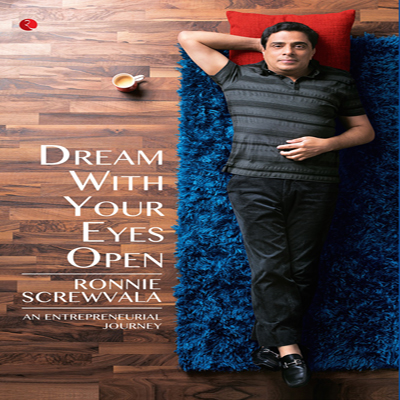
    MUMBAI: India, under the leadership of Prime Minister Narendra Modi, is seeing an unprecedented wave of optimism with a high focus on making India an entrepreneurial country, tapping into its unbridled power. Giving the current scenario, Ronnie Screwvala one of India’s most celebrated first generation entrepreneurs announces the launch of his book – Dream With Your Eyes Open that encapsulates his 25 yearlong entrepreneurial journey.

    With the book, Screwvala shares his failures and triumphs and strives to instill a belief of it’s all possible and it can be done within this generation.

    What’s more, Modi sent in his congratulations and wishes to Screwvala appreciating his effort to evangelise entrepreneurship in the country through his book.

    “I am happy to learn that Shri Ronnie Screwvala has written a book on the theme of entrepreneurship, Dream With Your Eyes Open. I hope the book will encourage the youth of India to pursue their dreams, and in doing so, devote their energies to find innovative ways to build better lives for millions of Indians. On this occasion, I convey my best wishes to Shri Ronnie Screwvala and hope his effort will serve as inspiration or many,” Modi said.

    “It is humbling to receive such encouraging words from such a visionary and communicative leader and our country’s Prime Minister. I am delighted that Shri Narendra Modi emphasizes on the power of entrepreneurship, I myself feel that the country should have more entrepreneurs and even today, 99 per cent of people don’t feel confident enough to start a business on their own. Dream With Your Eyes Open shares failures and triumphs, thoughts and anecdotes of my journey. It details out my vast experiences and myriad lessons learned from more than two decades of building some successful (and some not-so-successful) businesses. The idea of the book was born from the need to share my learnings and hopefully inspire young and well established entrepreneurs at all stages of their journey,” added Screwvala.

    “This book is small contribution from my end towards tapping the entrepreneurial potential of our country. It is encouraging that my friends and colleagues have come forward to show their support for the book and the cause it aims to champion. I hope this book inspires people to dream and dream big,” he said.

  • Indian ad spends to grow by 11.3% in 2016; digital to lead way: Carat

    Indian ad spends to grow by 11.3% in 2016; digital to lead way: Carat

    MUMBAI: Global media network Carat’s first forecast for worldwide advertising expenditure in 2016 shows that Indian advertising spend is poised to grow by 11.3 per cent in 2016.

    Following the formation of a stable government in 2014 led by Narendra Modi, the economic prospects look bright in India.While Indian advertising spends increased by +8.7 per cent in 2014, as per the agency’s forecast, it is poised to leap by double digits of +11 per cent in 2015.

    Carat’s also released its latest forecasts for 2015 and actual figures for 2014, with all markets ring-fencing digital media spending, even when faced with negative economic headwinds.

    Asia Pacific

    In the Asia Pacific market, advertising spend is forecast to grow by a solid +5.2 per cent in 2015. This has however been revised down from the +5.9 per cent previously forecast in September 2014, with its major market Japan moderating forecasts from +1.7 per cent to +0.9 per cent, alongside a number of other markets including Hong Kong, Taiwan, Malaysia and Vietnam. Growth is expected to pick up pace in 12 out of the 14 markets in 2016 with growth overall of+5.8 per cent in 2016. 

    Based on data received from 59 markets across the Americas, Asia Pacific and EMEA, Carat’s global advertising expenditure forecast showsthat digital media, with a predicted $17.1 billion or +15.7 per cent increase in spend in 2015, is outpacing previous Carat predictions from September 2014. Powered by a dramatic rise in mobile ad spending globally of +50 per cent and online video of +21.1 per cent predicted in 2015, Carat forecasts that digital will, for the first time, account for more than a quarter of all advertising spend in 2016 with a market share of 25.9 per cent.

    From a global perspective, Carat forecasts that in 2015, advertising spend across all media will increase by $23.8 billion to reach $540 billion, accounting for a +4.6 per cent year-on-year increase. Market optimism continues into 2016 with Carat’s first forecast for the year predicting a year-on-year global advertising growth of +5.0 per cent.

    Carat Advertising spend forecast -March 2015

    Digital media spend continues to be the star driver of growth in the global advertising market, with a predicted $17.1 billion increase in spend in 2015 corresponding to a 15.7 per cent year-on-year growth rate, outpacing previous Carat predictions from the September 2014 report.New predictions for 2016 highlight that digital will continue to grow at double-digit levels, at 13.8 per cent, and will account for more than a quarter of all advertising spend globally.

    Trend Highlights from the report:

    ·Digital’s unwavering positive trajectory is being powered by a dramatic rise in mobile, online video, social media and programmatic spending. Carat predicts that in 2015, global mobile spend will increase +50 per cent, and online video will be up +21.6 per cent. US programmatic display advertising spending is predicted to grow +137 per cent to reach $10 billion this year, accounting for 45 per cent of the US digital display ad market.

    ·Digital media spend is being ring-fenced by advertisers even in markets with significant negative economic headwinds.In Central & Eastern Europe for instance, while total advertising spend is predicted to decrease by 2.2 per cent this year, digital media will see a double-digit growth of +12.9 per cent. Digital media is the only media expected to grow in this region this year.

    ·Carat’s first advertising expenditure forecasts for 2016 show elevated confidence in the advertising market, a robust +5 per centgrowth despite a still-recovering economic climate boosted by a year of events- the UEFA European Football Championships, Rio 2016 Olympic Games and US presidential elections.

    ·Global forecasts for 2015 have been revised down from the +5.0 per cent previously forecast in the September 2014 report, to +4.6 per cent. This is due to a reduction in advertising spend predictions in key markets including Russia, Japan and Brazil.

    ·The recovery in Western Europe has driven a second consecutive year of growth in 2015, predicted at +2.8 per cent. This follows a +2.3 per cent increase in advertising spend in the region in 2014. Growth is driven by the UK market, which is predicted to grow strongly by +6.4 per cent, and Spain by +6.8 per cent following the improved economic climate and consumer sentiment there. Greece (+8.0 per cent), Ireland (+5.7 per cent) and Portugal (+9.4 per cent) are also showing relatively high growth rates this year recovering after suffering severely from the global economic recession. Growth of advertising spend in Western Europe in 2016 is forecast to continue at the predicted level for 2015 of +2.8 per cent.

    By media, whilst Digital is the star performer in terms of growth, achieving higher that predicted levels in 2014 of +17.4 per cent and accounting for 21.7 per cent of market share, TV will continue to command the majority of market share for the foreseeable future, reaching 42.7 per cent in 2014, and is predicted to grow by more than +3 per cent year-on-year in 2015 and 2016. The steady decline in Print is expected to continue, however Out-of-Home is now positioned as the second fastest growth media, behind Digital, with a global market share of spend of 7.1 per cent. For the first time, Out-of-Home is predicted to outpace Magazines global share of advertising spend, with Magazines forecast to achieve 6.9 per cent market share in 2015, and with continuing declines for this media, it is predicted to fall behind Radio for the first time in 2016.

    Commenting on the Carat Advertising Expenditure forecasts, Dentsu Aegis Network, CEO Jerry Buhlmann said, “The strength of Digital continues to dominate discussions and the new distribution of spending. With a quarter of the global population now owning and relying on their smartphones daily, they are our second brain in our hands. Mobile dominates the way consumers access information, view content, browse products and purchase goods and this is reflected in the innovative services and approach we are discussing with our clients.

    By media:

    Globally,digital media spend is forecast to increase by $17.1 billion this year to reach 23.9 per cent of total global media spend in 2015.Digital’s growth far outpaces all other media types with a forecast increase of +15.7 per cent in 2015 and +13.8 per cent in 2016.

    Growth in digital spend is high in all regions. The highest in Asia Pacific at +20.1 per cent in 2015, followed by an impressive +16.4 per cent in North America and +16.2 per cent in Latin America. Even in Central & Eastern Europe, which is showing overall sluggish ad market growth, digital spending is predicted to achieve double digit growth this year of +12.9 per cent. In Western Europe growth is in high single digits (+9.8 per cent) this year.

    Mobile spend is notably rising dramatically at +49.7 per cent in 2015 with circa 50 per cent growth in each of the regions – Western Europe, Asia Pacific, North America and double digit growth in Latin America and C&EE. With the rise in smartphone ownership rates and data usage, mobile is playing a huge role in the way consumers access information, view content, browse products and purchase services and goods.

    Carat is seeing a major shift in behaviour with internet usage on mobile devices catching up with PC usage and exceeding it in some markets yet at an investment level, there is still a significant discrepancy with the amount of time spent with mobile media disproportionate to the advertising share mobile attracts.A factor, which is holding back investment in mobile is the difficulty in proving the ROI for more traditional businesses. Much of the early investment in mobile advertising has been amongst pure-play, app economy brands and business for whom there is an easily demonstrable ROI for investing in mobile.

    Mobility is the primary reason behind social’s explosive growth. Facebook and Twitter will continue to be the big winners in the mobile social space. Facebook leads the way in mobile advertising investment with their cost effective solution to advertisers, non-intrusive native advertising experience to audiences, targeting capabilities and selection of ad formats. Twitter is moving up with an increase in spending behind promoted tweets, its Amplify pitches and improvements to its targeting options such as the development of its TV targeting offering. One of its big plays this year is the introduction of Promoted Video for advertisers – a new way for brands to post videos that users can play in their timelines with a single tap.

    Online Video demonstrates continuing strong growth, +21.6 per cent forecast for 2015, with growth partly driven by a shift of investment away from TV. Expectations are particularly high for original content. In the US, nearly half (48 per cent) of online video budgets will go to ’made for digital’ video.

    Display spends including Video and Social is forecast to increase by 15.8 per cent in 2015. However it is ‘Search’ that continues to command the highest share of total Digital spend at 45 per cent, with growth of+12.6 per cent this year and +11.5 per cent in 2016.

    TV continues to command the highest share of spend, 42.2 per cent globally in 2015, remaining popular particularly in Latin America and the Middle East with share of spend above the global average in APAC and C&EE.

    There are indications, however, of TV’s share slowly eroding as it has decreased by 1.2 per cent points over the past five years. Growth was boosted last year by a slew of events with +4.4 per cent growth. TV spend is predicted to increase by +3.6 per cent this year, picking up in 2016 a quadrennial year – to +3.9 per cent.
  • I&B Ministry open to discussion with M&E sector: Rajyavardhan Singh Rathore

    I&B Ministry open to discussion with M&E sector: Rajyavardhan Singh Rathore

    MUMBAI: The India media and entertainment (M&E) sector is undergoing rapid changes and has huge potential to take its content across the globe. However, in order to achieve this, the sector will need the support of the Information and Broadcasting (I&B) Ministry.


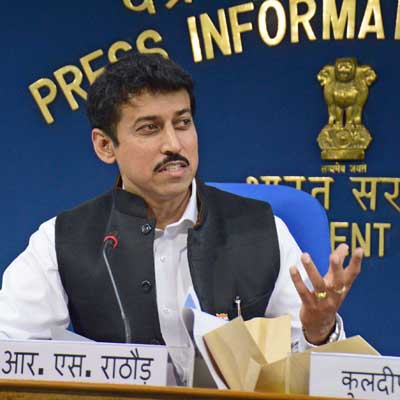
    “The country has the power to become a super power in M&E and as government, we want to interact with the different sectors in the M&E industry. We want to hear about the bottlenecks and the suggestions. We are keen to iron them out to do business,” said Minister of State Information & Broadcasting Rajyavardhan Singh Rathore.


    Rathore, who was talking at the just concluded FICCI Frames 2015, said that the Indian M&E sector had the ability to reach out to the world. “India is poised to be a global phenomena. We just need to come up with content that can create a foothold in any country,” said Rathore.


    He added that Indian content can be targeted at larger audiences and not just the Indian diaspora. “This we can learn from the US, which has been able to push across its culture across boundaries,” he said.


    The I&B Ministry, under the aegis of Prime Minister Narendra Modi’s government, has been working hard towards improving the media unit. “The Prime Minister has been able to popularize radio, which is now expanding. In a year or so, close to 800-900 cities will have either one or multiple FM Radio stations,” he informed.


    Talking about film certification, Rathore said that the Central Board of Film Certification (CBFC) has be a certification board and not censorship body. “They need to give certification based on content,” he said, adding that the Ministry has decided to have a re-look at the Cinematography Act.


    The Ministry is also looking at improving the Film and Television Institute of India (FTII). “Script is important for any movie and that is what is currently lacking. There is no structure. This facility needs to be improved. Film and TV industry should partner with FTII,” he said.


    Talking about the other initiatives, which the Ministry is undertaking, Rathore said that a National Centre of Excellence for the Animation, Visual, Gaming and Comic (AVGC) is being set up. “We want this centre to be a benchmark for all centres that come later. But to do this, the government will need the support of the industry. It is the industry, which can give life to this project. Become a partner with us,” urged Rathore.


    The MoS is of the view that the country’s culture can be promoted though the films. “The content that is being put out should carry our culture,” he said.


    Speaking on how the M&E sector could become a ‘Soft Power’ of the 21st century, Rathore said, “Currently, the M&E sector is working on individual efforts. We need to join forces and interact more to understand the strengths and move in a certain direction.”


    Rathore concluded by assuring the sector that the Ministry will, with open arms, help the M&E sector grow. “We need to develop a degree of trust to grow,” he concluded.


  • National Supercomputing Mission to launch with Rs 4500 crore corpus

    National Supercomputing Mission to launch with Rs 4500 crore corpus

    NEW DELHI: A National Supercomputing Mission will be launched at an estimated cost of Rs 4500 crore over a period of seven years.


    This was decided by the Cabinet Committee on Economic Affairs chaired by the Prime Minister Narendra Modi on 25 March.


    A press note said, “This is a visionary programme to enable India to leapfrog to the league of world class computing power nations.”


    The Mission would be implemented and steered jointly by the Department of Science and Technology (DST) and Department of Electronics and Information Technology (DeitY).


    The Mission envisages empowering national academic and R&D institutions spread over the country by installing a vast supercomputing grid comprising more than 70 high-performance computing facilities. These supercomputers will also be networked on the National Supercomputing grid over the National Knowledge Network (NKN).


    The NKN is another programme of the government, which connects academic institutions and R&D labs over a high speed network. Academic and R&D institutions as well as key user departments/ministries would participate by using these facilities and develop applications of national relevance.


    The Mission also includes development of highly professional High Performance Computing (HPC) aware human resource for meeting challenges of development of these applications.


    The Mission implementation would bring supercomputing within the reach of the large Scientific & Technology community in the country; will provide significant qualitative and quantitative improvement in R&D and higher education in the disciplines of Science & Technology; and enable the country with a capacity of solving multi-disciplinary grand challenge problems. Currently, in the top Supercomputing machines in the world, a major share is taken from advanced countries such as the US, Japan, China and the European Union (EU). The mission envisages India to be in the select league of such nations. To provide continuity in maintaining a lead in supercomputing, the Mission also includes advanced R&D. This will create requisite expertise to build state-of-the-art next generation supercomputing. The Mission supports the government’s vision of “Digital India” and “Make in India” initiatives.


    The Mission has been conceptualized and evolved keeping in view the ever increasing computing demand of the scientific and academic community in the country, international technology trends and roadmaps of leading countries in the area, strategic importance and emergence of supercomputing as a benchmark for Scientific & Technological advancements. Two key departments of the Government of India, DeitY and DST will be implementing the mission jointly through two leading organizations. These are the Centre for Development of Advanced Computing (C-DAC) and the Indian Institute of Science (IISc), Bangalore.


    Worldwide supercomputing facilities have enabled countries in their S&T capabilities in areas such as designing vehicles, aeroplanes, massive structures like high rise buildings and bridges, infrastructure, discovery of new life saving drugs, discovery and extraction of new energy sources including oil, natural gas etc. Over the years, supercomputers have benefitted mankind in several ways. Weather prediction has reached accuracy of forecast as well as real time tracking of natural phenomenon. Timely warning of cyclones in the recent past have saved many lives and property.


    The Mission aims to further such capabilities beyond current levels.