MUMBAI: Prime Minister Narendra Modi’s vision for ‘Make In India’ is slowly but steadily gaining momentum.
With an aim to strengthen local competitiveness and expand business in India, Mitsubishi Electric Corporation’s Indian arm Mitsubishi Elevator India will build a factory in Bangalore.
The company is looking at investing close to Rs 1.83 billion (approx. 3.45 billion Japanese yen) to set up the factory, which will be in operation by July 2016. The factory will have production capacity of 5,000 units annually.
India’s elevator and escalator market, which has grown in step with the country’s rapid economic development, is now the world’s second largest, next to China. Annual demand rose to 47,000 units in 2014 and is expected to continue growing. In 1995, Mitsubishi Electric began selling elevators through local distributors. In August 2012, it established a company in Chennai to reinforce sales, installations and maintenance, and in April 2014, Mitsubishi Electric launched the NEXIEZ-LITE elevator model for low- to mid-rise buildings in the India’s market.
Bangalore has seen an increasing number of enterprises in fields including the IT industry setting up operations. By producing locally, Mitsubishi Electric expects to strengthen product competitiveness in terms of price and delivery time, focusing especially on its NEXIEZ-LITE model. A special emphasis will be placed on the efficient integration of sales, manufacturing, installation and maintenance.
The site area of the factory is 89,000 square meters, with floor space of 25,400 square meters.
NEW DELHI: India and South Korea will be inking an audio-visual co-production agreement, which was accorded by the Union Cabinet. The agreement will include cooperation between the film industries of the two countries to promote export of Indian films and act as a catalyst towards creating awareness about India and its culture.
This will help in increasing bilateral trade between both countries.
The Union Cabinet chaired by Prime Minister Narendra Modi, approved completion of internal ratification procedure, to enable the agreement to come into force.
The Agreement will be signed during the forthcoming visit of the Prime Minister to South Korea.
The agreement will mean that producers from both countries would get an opportunity to pool their creative, artistic, technical, financial and marketing resources to co-produce films.
This will lead to exchange of art and culture between the two countries, and co-productions would provide an opportunity to create and showcase the ‘soft power’ of India.
The deal is also likely to generate employment among artistic, technical as well as non-technical personnel engaged in the arena of film production including post-production and marketing, thus adding to the country’s Gross Domestic Product (GDP).
The utilization of Indian locales for shooting raises the visibility / prospects of India as a preferred film shooting destination across the globe would be promoted and this will lead to inflow of foreign exchange into the country.
This will also lead to transparent funding of film production.
An audiovisual co-production agreement between India and South Korea is expected to open doors for wide ranging collaboration and lead to strengthening of India’s cultural presence in an important part of the world as well as open up new frontiers for the film industries of both countries.
MUMBAI: In the lead up to PM Narendra Modi’s visit to China, Network 18 has launched ‘The India – China Dialogues,’ which is an initiative that aims to mirror the emerging dynamism in bilateral policy making and reflect on the areas of mutual cooperation between India and China.
The full day conclave will be hosted on 12 May, 2015 at Park Hyatt, Beijing and broadcast across the leading Network18 channels including CNN-IBN and IBN7.
The second such initiative in a series of ‘Dialogues’ after the India-US Dialogues organised on the eve of President Barack Obama’s visit to India in January this year, the India – China Dialogues endeavours to build a critical mass – both intellectual and proper to propel this vital relationship to the next level.
With Modi’s maiden journey to Beijing, this year will see the recalibration and cementing of bilateral ties between Asia’s two leading economies – India and China. Modi’s trip is all set to be a potentially defining one, which could transform ties between the two Asian neighbours and create new opportunities for their people.
The India – China Dialogues will see distinguished dignitaries from both sides examining key areas that are pivotal in this partnership. Topics ranging from trade and investment, technology cooperation and the business prospects with Make in India, will be discussed. The expert panel will also explore the synergies for growth in the areas of tourism, healthcare and education, people to people relations.
IBN Network CEO Avinash Kaul said, “As Asia’s leading economies come together, we are looking forward to solution led discussions that will help the two nations to further cultivate their relations and script new pathways of progress for all. I’m sure that the India-China Dialogues will serve as a beneficial platform to examine key areas that will shape the relationship between the two countries and ideate out-of-the-box solutions for the two governments.”
Network 18 group president – news Umesh Upadhyay added, “We at Network18 take immense pride in announcing The India – China Dialogues after the huge success of The India-US Dialogues. Marking the prestigious occasion of our Prime Ministers visit to China, this conclave aims to give our viewers an in-depth analysis of the relationship between India and China and set the tone for PM Modi’s visit.”
NEW DELHI: Prasar Bharati chairman Dr A Surya Prakash has been nominated by the Central Government as a member of the Nehru Memorial Museum & Library (NMML) Society.
The NMML Society is headed by Prime Minister Narendra Modi.
The NMML plays a key role as a resource centre for promotion of study and research in the field of modern and contemporary Indian history. It organizes lectures, seminars etc. in India and abroad to promote and foster academic contacts within India as well as with other countries through exchange of personnel and research materials.
Prakash is an author, a columnist and a leading commentator on Indian Constitutional and Parliamentary issues and Governance. He has held key positions in several print and electronic media organisations of repute. He has also been a media teacher, having taught media law and ethics.
MUMBAI: The Information and Broadcasting Ministry (I&B) has a long wish list for the cable TV sector and one among them is the timely completion of digitisation of phase III and phase IV. While stakeholders have taken up the challenge to ensure that they meet the deadline, what remains to be seen is how will the Ministry deals with the southern cities of Chennai and Coimbatore, which fall in phases I and II respectively and still needs to see complete digitisation.
While other metros like Mumbai and Delhi have seen 100 per cent digitisation, Chennai falls way behind. An I&B report in 2012 had said that close to 62 per cent of the homes in Chennai were digitised. Rubbishing the report, the Chennai Metro Cable TV Operators’ Association said that the reality was far from the figures released by the Ministry.
“There are close to 30-35 lakh cable TV homes in Chennai and of this, only five lakh have been digitised,” a multi system operator (MSO) operating in the city tells Indiantelevision.com.
There are six MSOs operating in Chennai and each of these MSOs have converted only 10 per cent of their consumers to digital TV homes. “We had placed orders for close to one lakh set top boxes, but have seeded only 25,000. The reason behind this is the pending Arasu case in the court,” says the MSO.
Another problem, which MSOs are facing is that of pay TV channels being available to Arasu Cable for free, while the other operators are paying for it. “About 33 pay channels are available to Arasu Cable for free, but we are paying for those 33 channels. It is a big hurdle in the path to digitisation,” adds an MSO.
As for the ongoing case against Arasu, the court asked the I&B Ministry to submit its Inter Ministerial Committee (IMC) report, which hasn’t been submitted as yet. “Not only this, almost 125 cases have so far been filed in the court regarding analogue switch off. The MSOs want to seed set top boxes, but we cannot move forward till the court comes up with a decision on Arasu,” informs the MSO.
The MSOs in Chennai are preparing themselves for the competition they face from the direct to home (DTH) players. For the same, they are now looking at installing hybrid HD boxes and also pushing broadband to their subscribers. “We want to maintain the digital subscribers and so we are now moving to HD boxes,” he says.
The condition of Coimbatore, which falls under phase II, is no better. So far the city has not seen any analogue cable TV home being converted to digital home.
Also pertinent to not here is that after several failed attempts at getting the DAS license, former Tamil Nadu Chief Minister J Jayalalithaa had resorted to writing to Prime Minister Narendra Modi requesting him to issue the DAS license to the state owned cable operator. In the letter, Jayalalithaa had requested the Inter Ministerial Committee to submit its final report too.
Complete digitisation spanning 100 per cent homes in Chennai and Coimbatore is possible only after the court gives its final verdict on the state owned Arasu Cable. If the I&B really wants its vision for cable TV digitisation to be complete, it will have to fast track the case.
NEW DELHI: Prime Minister Narendra Modi’s Mann ki Baat will be aired live on 26 April simultaneously on all channels of All India Radio and Doordarshan.
The program will also be live-streamed on the Prime Minister’s official website.
In a tweet he said, “Looking forward to ‘Mann Ki Baat’ on the 26th of this month.” This is the seventh edition of the radio program in which PM shares his thoughts with the citizens.
Modi has already interacted directly with the people in the earlier six editions ofMann Ki Baat. He has dwelt upon several issues close to the hearts of the people such as Swachh Bharat Abhiyan, promotion of khadi, skill development, scholarships for disabled children, infrastructure for educational institutions, menace of drugs and the issues related to farmers.
In the last edition broadcast on 22 March, he shared the concerns of farmers and said that the government will take proper and prompt steps to resolve their problems and do its level best to help them tide over difficult situation.
In another earlier edition, Modi urged students to shed their examination stress and develop a positive attitude.
He also shared the Mann Ki Baat forum with US President Barack Obama during his visit to India in January when the two leaders interacted with the people on a host of issues.
Modi has from time to time invited citizens to share their ideas and thoughts on the subject in the Open Forum of MyGov.in. The programme has generated an encouraging response from citizens across the country.
NEW DELHI: Kisan TV, which was earlier slated to launch on Baisakhi Day (14 April), has been postponed to May. This is not the first time that the launch date of the 24-hour channel, devoted to farmers and rural India, has been pushed forward. The channel, which will be run by Doordarshan, was initially slated for launch in Makar Sankarti Day on 14 January.
Information and Broadcasting Minister Arun Jaitley said that the delay had been caused as Prime Minister Narendra Modi was not in the country, though DD sources had earlier informed Indiantelevision.com that the channel may be launched on 21 April.
Jaitley said the preparations for the launch of the channel were at an advanced stage and that the trial runs were on.
A budget of Rs 100 crore had been set aside in July last year in the Budget but a sum of Rs 90 crore had been allocated for this in 2015-16.
Jaitley was speaking after inaugurating Delhi’s Vividh Bharati channel of All India Radio (AIR) on FM Mode.
The Parliamentary Standing Committee on Information Technology, which also examines issues linked to I&B Ministry said in a recent report that emphasis should be laid on local dialect on regional basis so that farmers all across the country are able to access the channel in their local language/dialect, thereby getting benefited by this laudable initiative of the Government.
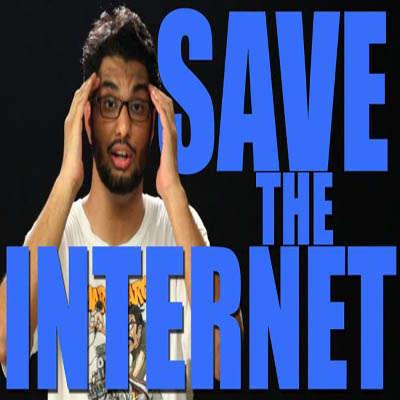
MUMBAI: Not long ago stand-up comedy group All India Bakchod (AIB) was directly or indirectly labeled as ‘anti-socials’ because of the controversial roast they uploaded on social media platform, which was eventually pulled down. The same group has now made a sincere attempt to explain the complicated concept of “Net Neutrality” to the common man. And their attempt has been successful with the video going viral and how.
Net neutrality is something that every taxpayer deserves but no one cares for. It’s often regarded as technical jargon. However, AIB’s “Save The Internet” video has changed the perception and now a lot of people are aware of the impending catastrophe.
What is Net Neutrality?
Net Neutrality means every user will have the right to access whichever website she or he wants to. There will be no infringement from anybody and certain websites won’t be given more bandwidth than others. Amazon or The Times Of India, Flipkart or Indiantelevision.com, every website will load at the same speed and that is exactly what Net Neutrality means. And that’s the problem telecom operators have.
Where it started from:
Indian telecom operators lobbied to The Telecom Regulatory Authority of India (TRAI) to change certain rules as per their convenience, which would have a direct impact on the consumer’s pocket. TRAI, in response to the telecos on 27 March, released a 118-page long consultation bulletin, which concluded by asking 20 questions. The last date to respond to that bulletin electronically is 24 April, 2015 while all the counter responses can be sent till 8 May, 2015.
What all can change?
No, telecom companies are not restricting any particular website so you can be rest assured that another ban is not coming into play. The demand is to access certain genres that users have to pay separately for. The question then arises: What are the users paying the initial fee for?
The scenario that can emerge from the change is; to access Flipkart, Whatsapp, Facebook or any other established OTT service, one has to separately subscribe for it. The freedom to access any website independently will be infringed upon and the internet, which is probably the only free platform where one can express their opinion, will become a claustrophobic cozy club dominated by big names.
Who all will face the impact?
Not only users but the change will also vigorously affect all aspiring entrepreneurs and start-ups. It is easy for established ventures like Flipkart, which is supporting telecom operators, to pay the service providers and ask them to make their app freely available. However, that will leave an impact on the start-ups who don’t have the luxury of cracking a deal with telecom operators. The irony is that when the Prime Minister is delivering speeches in France and Germany about how easy it is to do business in India and sharing aspirations of making the country a global destination for investment, Indian e-commerce startups are on the verge of demolition.
What did AIB do?
The stand up comedians came up with a video (Save the Internet) explaining the entire concept of net neutrality. What was lost and diluted in TRAI’s 118 page long complicated bulletin was garnished in AIB’s nine-minute video. The important points were highlighted and the refreshing yet simple explanation that AIB members’ offered in the video added to the appeal and was lapped up by young and old alike. The Net Neutrality jargon thus became a national movement.
What did AIB’s video do?
AIB’s video conveys this message – “Internet is not a luxury but a utility.” The video ends with a link, which directs people to the net neutrality home page where all of TRAI’s 20 have been answered in detail. One can simply click to send an email with the pre-written answers or can edit as per their wish. At the time of filing this report, AIB’s video had received 1,132,453 views and more than 100,000 emails had been sent to TRAI through the http://www.netneutrality.in/ website.
The AIB video witnessed unabated praise across all social media platforms from the common man and celebrities alike. It brought about the necessary awareness in India and made Net Neutrality a national issue. The Internet is a very important part of the civilized world and a major source of information, entertainment and social networking. Net Neutrality is a right of every Internet subscriber and cannot be infringed at any cost. While the issue has managed to become a major talking point, one only hopes that political parties don’t politicize the issue and turn it into vote bank propaganda because Internet without Net Neutrality is like bones without flesh.
NEW DELHI: With increasing emphasis on social media by the present government, citizens who do not have access to internet will be able to receive the tweets sent by Prime Minister Narendra Modi from time to time on issues of national importance.
People who want to know Modi’s views on various events can now receive his tweets through SMS on their mobile phones.
A person wanting to receive the tweets will merely have to give a missed call to (011) 30063006 and the caller will start receiving these tweets.
Bharatiya Janata Party (BJP) president Amit Shah has written a letter to all state and district units of the party to popularize this concept.
For those using the internet, the Prime Minister can also receive mails from people on either pmindia.nic.in or mygov.in.
Currently, Amitabh Bachchan is one of the few whose tweets are being sent by SMS to selected mobile users.
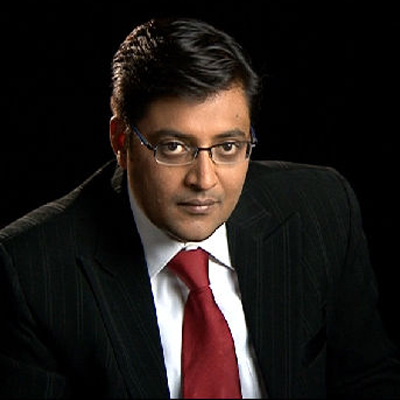
GOA: The second day of the 10th edition of Goafest started with a zealous key note from Times Now editorial director and editor-in-chief Arnab Goswami.
Seconding the image that he’s built with his different mode of journalism, Goswami said, “The formula of stating an opinion as a journalist is wrong is not true and my presence here today proves that. The journalism I follow is journalism of opinion and is not PR driven. If my opinion helps bringing about a change, I will opine and not shy behind the wall of neutrality. When you know there is something wrong, you don’t need to be neutral. When the facts prove something, you don’t need to be neutral.”
A tad different in his approach to journalism when compared to his peers, Goswami has oft been accused of promoting sensationalism, being over the top loud and what not. In his keynote, the senior journalist addressed some of the accusations that have been levied on him time and again. They are as follows:
Sensationalism: “I know I am accused of sensationalism. Let us go back to the initial stages of Times Now… a small kid was lying at the bottom of a 60 feet deep bore well. We covered it with supreme priority for three continuous days till the kid was rescued alive. We did it because a poor kid was always neglected. Had it been a politician’s or a celebrity’s child, the treatment would have been different. It is because of the OB Vans that the small kid’s life became a national issue and everyone was praying for the kid. We were accused of sensationalism after the coverage, but our coverage then ensured that no such bore well is left unfilled now, which saves small kids from facing the trauma that Prince went through and hence I am proud of sensationalizing, and if it does good to the people of India we will keep doing it.”
Getting Too Involved in the Story: “I know I am accused of getting too involved in a story, which eventually ends up with me taking sides and compromising neutrality. In 2011, we got to know about a small accounting error from a group of Indians on British soil. We analysed the facts and the story was on air. Early next morning, young journalists came running to me and said: ‘Sir, Kalmadi is responding to our story.’ A small report shaking a person of Kalmadi’s magnitude was not normal. I got thousands of calls and one of them was from a person I love – the late Vinod Mehta. He told me: ‘What did you do? Why is everyone so anti-Arnab because of one report? There is something beyond what you have reported… dig deep and find out.’ The entire team got involved. We didn’t sleep, we didn’t think anything else and after a week of investigation, what we came out with was a historical moment for the Indian media — the unveiling of Commonwealth Game Scams, which started the journey of unveiling scams in the public forum. So if getting too involved brings in such revolutions, I promise in future too, no matter how much ever we are criticized, we will keep getting too involved.”
Not Giving Chance To Others To Speak: “Well once I decided that I will let the other person speak and that day became a historical day for the Indian media. And the person was Rahul Gandhi. After that day, there is nothing more left for him to speak anymore. He came with a script in his head and my motive was to make him speak out of that script and the moment I succeeded in doing it, he revealed many hidden secrets. With that the people of India came to know about his feeble nature, which set the tone for the Narendra Modi led government. Well, now we don’t even know where he is, so it’s not that I don’t let others speak, it’s just that I stop them from speaking what they have pre-scripted and is not relevant and accurate.”
The keynote was followed by a Q&A round where advertising fraternity representative Prasoon Joshi asked Goswami numerous questions. Answering on the ’Shame in Sydney’ episode that was run after India’s defeat against Australia in the ICC Cricket World Cup semi-finals, which saw substantial criticism on social media platforms, Goswami said, “I have no regrets on running that episode. Criticising a defeat is not a crime and we also appreciate them when they win. It is not something new. Over the years, we saw every defeat in a big match was aggressively criticised. Cricket fans had a problem with the word shame, which is a different argument. We are open to criticism but that doesn’t mean I have any regret airing that episode.”
Goswami’s speech about how Times Now is all about bringing about a change amidst a gathering of advertisers and agencies, could have had multiple motives. However, that didn’t stop him from taking a dig at rivals.
While he didn’t exactly criticise others for airing content that he didn’t agree with, at the risk of sounding pompous, he said, “I think I hardly have any rivals.” Goswami’s intention was most likely to tell the advertising fraternity that Times Now was beyond competition when it came to viewership and popularity.