Tag: Narendra Modi

  • Modi’s Mann ki Baat on 28 February will be the 17th consecutive broadcast

    Modi’s Mann ki Baat on 28 February will be the 17th consecutive broadcast

    NEW DELHI: The 17th instalment of Prime Minister Narendra Modi’s ‘Mann Ki Baat’ will be broadcast on 28 February, just a day before the presentation of the Union Budget for 2016-17 by Finance Minister Arun Jaitley.

    The broadcast will be at 11 am over the entire network of All India Radio. The broadcast will be relayed by all AIR stations, all AIR FM channels (FM Gold and FM Rainbow), local radio stations, Vividh Bharati Stations and five community radio stations. 

    The regional versions of the ‘Mann Ki Baat’ will be originated by the capital AIR stations in non-Hindi speaking zones at 8 pm on the same day. The regional versions will be relayed by all AIR stations including local radio stations in the respective states.

    It will also be broadcast by Doordarshan and other private TV and news channels in India and broadcast simultaneously.  Similarly, radio in private sector patches and all DTH operators will also carry it.

    It will also be streamed live for global audience and is accessible through mobile app All India Radio Live and on pmindia.nic.in.

  • Modi’s Mann ki Baat on 28 February will be the 17th consecutive broadcast

    Modi’s Mann ki Baat on 28 February will be the 17th consecutive broadcast

    NEW DELHI: The 17th instalment of Prime Minister Narendra Modi’s ‘Mann Ki Baat’ will be broadcast on 28 February, just a day before the presentation of the Union Budget for 2016-17 by Finance Minister Arun Jaitley.

    The broadcast will be at 11 am over the entire network of All India Radio. The broadcast will be relayed by all AIR stations, all AIR FM channels (FM Gold and FM Rainbow), local radio stations, Vividh Bharati Stations and five community radio stations. 

    The regional versions of the ‘Mann Ki Baat’ will be originated by the capital AIR stations in non-Hindi speaking zones at 8 pm on the same day. The regional versions will be relayed by all AIR stations including local radio stations in the respective states.

    It will also be broadcast by Doordarshan and other private TV and news channels in India and broadcast simultaneously.  Similarly, radio in private sector patches and all DTH operators will also carry it.

    It will also be streamed live for global audience and is accessible through mobile app All India Radio Live and on pmindia.nic.in.

  • “To make in India, but to benchmark it in the world:” Fareed Zakaria

    “To make in India, but to benchmark it in the world:” Fareed Zakaria

    MUMBAI: With PM Narendra Modi inaugurating the Make in India Week 2016 on 13 February, the second day of the week started with the CNN Asia Business Forum 2016. With seven sessions lined back to back, the forum enthralled delegates with a series of dynamic dialogues. The interactive discussion briefly explored new ideas, growing technology, secrets of leadership and the challenges Asia faces plus the tactics.

    Gracing the forum with their presence were eminent personalities like Finance Minister of India Arun Jaitley, Cisco executive chairman John Chambers, GE president and CEO South Asia Banmali Agrawala, Mahindra Group chairman Anand Mahindra, Aditya Birla Group chairman Kumar Managalam Birla, Emerson Electric Co. president Edward Monser, Google India and South East Asia MD Rajan Anandan, Snapdeal co-founder and CEO Kunal Bhal, Vinnova director general Charlotte Brogren, DJI director of strategic partnerships Michael Perry, AirAsia group CEO Tony Fernandes, Kerry Logistic Network chairman George Yeo and US Ambassador to India Richard Verma.

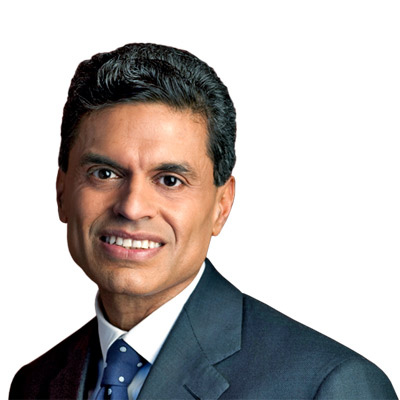
    The sessions were moderated by CNN’s business anchors Fareed Zakaria, Richard Quest and CNN Asia Pacific editor Andrew Stevens.

    With a mission to make the viewers understand about the world around us, Zakaria addressed the ‘State of the World’ by providing a snapshot of the global geopolitics.

    “The world is in a mess almost everywhere you look but you certainly have to start with the Middle East to understand how the people are anxious and uncertain about things,” Zakaria said.

    With countries like Lybia or Syria facing crisis in the current scenario against to what it was 40 years back, Zakaria strongly believes that the states system, which was built back during the World War I is essentially collapsing. “The states at that time were ruled by highly repressive dictators who knew law and order very well. But what has happened 10 years back is that these dictatorships have one by one have proved to be more and more fragile,” he says.

    The one characteristic that remains common and extremely important is that in these nations, the dictator left and what was noticed later on is the fact that there was no state or administrative institution to maintain political order. Going further, he explains that underneath the state it was noticed that there was no civic society or organisation to maintain social order and underneath that what you discover is that there is no nation.

    Zakaria points out, “People have retreated to identities that make them unavoidably hostile to one another. When order collapses you look for something that gives you security and stability and that security does not come in the Middle East from your national identity. These nations were created recently. It’s coming from much older identities like Siaa, Sunni, Arabians, etc, who are 1000 – 2000 year old identities. They have created an inbuilt sectoring of religious conflicts that persist and is going to take some time to be sorted out.”

    US engine has become the largest engine for producing liquid hydrocarbon in the world. The unbalanced supply and demand are the two engines that rightly explain the crisis. Zakaria explains, “The one engine in the US, which saw a growth from $1 million – $10 million in 10 years and the other engine being the declining demand in China.”

    Zakaria sheds light on how Europe faced crisis and how in the past 25 years the European Union has solved every economical challenge. “Every time the people thought the European Union is going to collapse, it endured, deepened and strengthened itself. Those were economic challenges but now they are facing political challenges about national identity and that proves to be harder to solve,” adds the CNN anchor.

    “If you look at the western hemisphere, the US is still probably the most powerful economy today. It’s growing fast at a pace twice as Europe and four times faster than Japan and is growing past many emerging markets like Brazil or South Africa. What is happening in Asia is an export dominated growth and a move that is shifting more to domestic consumption. For these countries, the decline of all has been an avoid depressing,” he says.

    The challenge that India has to face is how it deals with the issues and the opportunities from the global perspective. One of the discussions shed light on how India is doing compared to China, Turkey, Vietnam or Indonesia and that comparison is the key issue for India to recognise that there is a global competition for investment, for tropical, for talent and how does India solves this key issue.

    “When Manmohan Singh announced reforms for India in early 1990s, he compared it with South Korea. At that time, the GDP for the two countries were same but later South Korea became bigger by contributing 13 times more to the GDP than India. But India has potential to grow and has done well from then to now. Today South Korea’s per capita GDP is 20 times that of India’s. So the world moves on and India is doing extremely well but it needs to look around and make sure it does as well as what the rest nations are doing,” concluded Zakaria.

  • “To make in India, but to benchmark it in the world:” Fareed Zakaria

    “To make in India, but to benchmark it in the world:” Fareed Zakaria

    MUMBAI: With PM Narendra Modi inaugurating the Make in India Week 2016 on 13 February, the second day of the week started with the CNN Asia Business Forum 2016. With seven sessions lined back to back, the forum enthralled delegates with a series of dynamic dialogues. The interactive discussion briefly explored new ideas, growing technology, secrets of leadership and the challenges Asia faces plus the tactics.

    Gracing the forum with their presence were eminent personalities like Finance Minister of India Arun Jaitley, Cisco executive chairman John Chambers, GE president and CEO South Asia Banmali Agrawala, Mahindra Group chairman Anand Mahindra, Aditya Birla Group chairman Kumar Managalam Birla, Emerson Electric Co. president Edward Monser, Google India and South East Asia MD Rajan Anandan, Snapdeal co-founder and CEO Kunal Bhal, Vinnova director general Charlotte Brogren, DJI director of strategic partnerships Michael Perry, AirAsia group CEO Tony Fernandes, Kerry Logistic Network chairman George Yeo and US Ambassador to India Richard Verma.

    The sessions were moderated by CNN’s business anchors Fareed Zakaria, Richard Quest and CNN Asia Pacific editor Andrew Stevens.

    With a mission to make the viewers understand about the world around us, Zakaria addressed the ‘State of the World’ by providing a snapshot of the global geopolitics.

    “The world is in a mess almost everywhere you look but you certainly have to start with the Middle East to understand how the people are anxious and uncertain about things,” Zakaria said.

    With countries like Lybia or Syria facing crisis in the current scenario against to what it was 40 years back, Zakaria strongly believes that the states system, which was built back during the World War I is essentially collapsing. “The states at that time were ruled by highly repressive dictators who knew law and order very well. But what has happened 10 years back is that these dictatorships have one by one have proved to be more and more fragile,” he says.

    The one characteristic that remains common and extremely important is that in these nations, the dictator left and what was noticed later on is the fact that there was no state or administrative institution to maintain political order. Going further, he explains that underneath the state it was noticed that there was no civic society or organisation to maintain social order and underneath that what you discover is that there is no nation.

    Zakaria points out, “People have retreated to identities that make them unavoidably hostile to one another. When order collapses you look for something that gives you security and stability and that security does not come in the Middle East from your national identity. These nations were created recently. It’s coming from much older identities like Siaa, Sunni, Arabians, etc, who are 1000 – 2000 year old identities. They have created an inbuilt sectoring of religious conflicts that persist and is going to take some time to be sorted out.”

    US engine has become the largest engine for producing liquid hydrocarbon in the world. The unbalanced supply and demand are the two engines that rightly explain the crisis. Zakaria explains, “The one engine in the US, which saw a growth from $1 million – $10 million in 10 years and the other engine being the declining demand in China.”

    Zakaria sheds light on how Europe faced crisis and how in the past 25 years the European Union has solved every economical challenge. “Every time the people thought the European Union is going to collapse, it endured, deepened and strengthened itself. Those were economic challenges but now they are facing political challenges about national identity and that proves to be harder to solve,” adds the CNN anchor.

    “If you look at the western hemisphere, the US is still probably the most powerful economy today. It’s growing fast at a pace twice as Europe and four times faster than Japan and is growing past many emerging markets like Brazil or South Africa. What is happening in Asia is an export dominated growth and a move that is shifting more to domestic consumption. For these countries, the decline of all has been an avoid depressing,” he says.

    The challenge that India has to face is how it deals with the issues and the opportunities from the global perspective. One of the discussions shed light on how India is doing compared to China, Turkey, Vietnam or Indonesia and that comparison is the key issue for India to recognise that there is a global competition for investment, for tropical, for talent and how does India solves this key issue.

    “When Manmohan Singh announced reforms for India in early 1990s, he compared it with South Korea. At that time, the GDP for the two countries were same but later South Korea became bigger by contributing 13 times more to the GDP than India. But India has potential to grow and has done well from then to now. Today South Korea’s per capita GDP is 20 times that of India’s. So the world moves on and India is doing extremely well but it needs to look around and make sure it does as well as what the rest nations are doing,” concluded Zakaria.

  • “Media should hold the government’s feet to the fire to realise Make In India:” CNN’s Fareed Zakaria

    “Media should hold the government’s feet to the fire to realise Make In India:” CNN’s Fareed Zakaria

    MUMBAI: The Make In India week inaugurated by Prime Minister Narendra Modi on 13 February has made Mumbai a site of several activities. All for a united cause — to spearhead a thriving environment of manufacturing industries in India and invite foreign direct investment (FDI) in several industry sectors.

    While the vision of Make In India has gone from being a popular Twitter hashtag to actual substantial talk about the real issues that need to be addressed about manufacturing in India, there is a long way to go before India establishes credibility among global investors as a nation of producers and innovators. As the pressure on the government to deliver on the already established brand of ‘Make In India’ increases, one can’t go without wondering the role of media in the scheme of things.

    Make In India week has given media, especially Indian media, enough fodder to make several headlines. From broadcasters allotting dedicated programming on the topic, to publications releasing special editions on the same; it seems media has had a field day since the ‘week’ was launched. And rightly so, thinks popular CNN news anchor Fareed Rafiq Zakaria of the Fareed Zakaria GPS fame.

    “I think that if there are more efforts like this, it does help the media play a more substantial role. What the Indian government is realising is that they have a serious image and brand problem. I have noticed that in Indonesia; the finance minister and trade ministers are much more attentive towards the communication of their reform policies than their Indian counterparts,” Zakaria shares while attending the CNN – Asia Business Forum 2016, which was part of the day two activities at Make In India week in Mumbai.

    He later had a one-on-one with Finance Minister Arun Jaitley to expand on the government’s executive strategy when it comes to reforms aimed at manufacturing.

    “But that is changing now,” Zakaria says adding on the significance of media in propagating the government’s brand building campaign for Make In India. “People are realising they have to sell, and to sell they need to build credibility for which presentation is essential and that is where Indian media will play a role.”

    On the flip side however, one has to ask if Make In India is a marketing effort or a reform effort? Even if there is a marketing element to it, the next question is if it will only scratch the surface with the campaigns, or will Make In India really address the issues that are at the grass root of manufacturing in India? Wherein comes the crucial role of media in connecting the two realities instead of being swept away by the hype.

    Expressing his take on it Zakaria adds, “The problem with manufacturing is that you have significant regulatory, tax and infrastructure problems. Those are the reason that you don’t get manufacturing booming in India. Now, could that change? Yes, but I haven’t seen the big bang reforms. I have noticed some good improvement reforms that the government is undertaking but it still needs that big push. For that the Indian media has to step in and be the mouthpiece of the people who are part of the manufacturing industry. They have to keep putting pressure on the government to see the deliverance of such reforms.”

    Expanding on the role of media in making Make In India successful, Zakaria says, “India has a lot of natural constituencies for natural reforms. There are many who still want the old system because they get patronage from it like subsidies, employment for families. Those are the people you hear from… who you don’t hear from are the unemployed youth, the under employed people in agriculture. We hear a lot from the voices of the past but we need to hear more from the country’s future.  Media can be the voice of the future for India’s aspirations and hopes. They should hold the government’s feet to the fire and keep them there. Right now, frankly the government isn’t facing a serious opposition so the media has to play that role,” Zakaria signs off.

  • “Media should hold the government’s feet to the fire to realise Make In India:” CNN’s Fareed Zakaria

    “Media should hold the government’s feet to the fire to realise Make In India:” CNN’s Fareed Zakaria

    MUMBAI: The Make In India week inaugurated by Prime Minister Narendra Modi on 13 February has made Mumbai a site of several activities. All for a united cause — to spearhead a thriving environment of manufacturing industries in India and invite foreign direct investment (FDI) in several industry sectors.

    While the vision of Make In India has gone from being a popular Twitter hashtag to actual substantial talk about the real issues that need to be addressed about manufacturing in India, there is a long way to go before India establishes credibility among global investors as a nation of producers and innovators. As the pressure on the government to deliver on the already established brand of ‘Make In India’ increases, one can’t go without wondering the role of media in the scheme of things.

    Make In India week has given media, especially Indian media, enough fodder to make several headlines. From broadcasters allotting dedicated programming on the topic, to publications releasing special editions on the same; it seems media has had a field day since the ‘week’ was launched. And rightly so, thinks popular CNN news anchor Fareed Rafiq Zakaria of the Fareed Zakaria GPS fame.

    “I think that if there are more efforts like this, it does help the media play a more substantial role. What the Indian government is realising is that they have a serious image and brand problem. I have noticed that in Indonesia; the finance minister and trade ministers are much more attentive towards the communication of their reform policies than their Indian counterparts,” Zakaria shares while attending the CNN – Asia Business Forum 2016, which was part of the day two activities at Make In India week in Mumbai.

    He later had a one-on-one with Finance Minister Arun Jaitley to expand on the government’s executive strategy when it comes to reforms aimed at manufacturing.

    “But that is changing now,” Zakaria says adding on the significance of media in propagating the government’s brand building campaign for Make In India. “People are realising they have to sell, and to sell they need to build credibility for which presentation is essential and that is where Indian media will play a role.”

    On the flip side however, one has to ask if Make In India is a marketing effort or a reform effort? Even if there is a marketing element to it, the next question is if it will only scratch the surface with the campaigns, or will Make In India really address the issues that are at the grass root of manufacturing in India? Wherein comes the crucial role of media in connecting the two realities instead of being swept away by the hype.

    Expressing his take on it Zakaria adds, “The problem with manufacturing is that you have significant regulatory, tax and infrastructure problems. Those are the reason that you don’t get manufacturing booming in India. Now, could that change? Yes, but I haven’t seen the big bang reforms. I have noticed some good improvement reforms that the government is undertaking but it still needs that big push. For that the Indian media has to step in and be the mouthpiece of the people who are part of the manufacturing industry. They have to keep putting pressure on the government to see the deliverance of such reforms.”

    Expanding on the role of media in making Make In India successful, Zakaria says, “India has a lot of natural constituencies for natural reforms. There are many who still want the old system because they get patronage from it like subsidies, employment for families. Those are the people you hear from… who you don’t hear from are the unemployed youth, the under employed people in agriculture. We hear a lot from the voices of the past but we need to hear more from the country’s future.  Media can be the voice of the future for India’s aspirations and hopes. They should hold the government’s feet to the fire and keep them there. Right now, frankly the government isn’t facing a serious opposition so the media has to play that role,” Zakaria signs off.

  • Innovations needed to meet ‘Digital India’ goals

    Innovations needed to meet ‘Digital India’ goals

    NEW DELHI: While the telecom industry is on track, there is need for innovation to meet the goals of Digital India. This was the general outcome of discussions at South Asia’s largest ICT, broadcast and digital media event, which ended today.


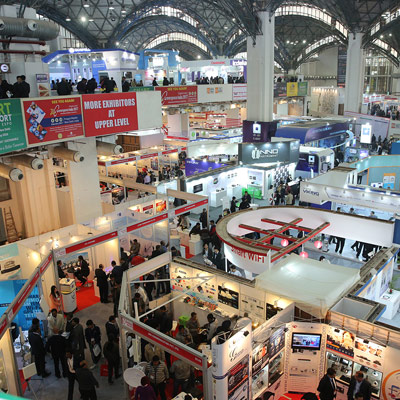
    The expo witnessed 434 companies from 29 countries around the world showcasing the latest technologies and innovations. Over 125 eminent speakers took the dais to deliberate on the theme ‘Digital India’ – roadmap, opportunities, challenges, infrastructure and investments.


    The third day of the expo deliberated on affordable broadband for rural India at the third Telecom Summit, powered by Microsoft, thus facilitating Prime Minister Narendra Modi’s vision of making India a digitally empowered economy.


    Microsoft group director, government affairs & public policy S. Chandrasekhar said, “Exhibitions India and Convergence India provide a good platform for all telecom and ICT eco-systems to come together and exchange ideas, best practices and the best of technology.”


    A presentation on ‘Internet of Things in Mobile Workforce Management’ was given by Cyient – India senior manager Venkata Satyadeep Mane. “Technology is an enabler to build smart solutions for rapid growth. Industries in India are therefore aiming to build cutting-edge technology solutions and services that will shape the digital revolution. Accordingly, the Indian ICT marketplace is going to experience substantial shifts in the coming days! In this content, I believe Convergence India is a fantastic platform to share and learn not just technology but various other elements of business solutions,” he said.


    Key session on ‘Opportunities in telecom sector arising from Big Data & Cloud’ panelist HP India country leader – future cities & CTO – technology services Lux Rao said, “The promise of Digital India has been successful in capturing the aspirations of a young India and the unbridled optimism is palpable. Smart Cities & Digital India is lending traction to the country’s modernisation agenda.”


    He added, “Convergence India holds a mirror to the current state of programmes and their progress and is a convergence of philosophy, ideas and action. The three-day program packs in an eclectic combination of knowledge and experience sharing, networking opportunities and a deep dive into fast emerging ethos of an empowered nation – Truly Digital, Truly India.”


    Exhibitions India Group chairman Prem Behl, who conceived Convergence India, said, “The exhibitors have received quality visitors and have had a positive response on all three days of the expo. The concurrent conferences were productive with detailed discussions and presentations on Digital India.”


    A landmark session on the third day included the SCTE India Awards for Technical Excellence and Innovation in Digital Cable and Broadband.


    ‘GSMA India open day 2016’ hosted a discussion on India’s mobile industry growth trends and forecasts, challenges in this fast changing market, mechanisms being used to ease efforts in monetising this market and the innovations India will need to deliver a Digital India from industry leaders.


    Participating exhibiting names included Broadcom, C-Dot, Conax, Cyient, Ericsson, EMC, Harmonic, MediaTek, Microsoft, M-Star, Nagra, Sandisk, Telenor, and Thomson to name a few.


    Convergence India 2016 expo was endorsed by the Department of Electronics & Information Technology, the Communications & Information Technology, and the Information and Broadcasting Ministries.


    Exhibitions India Group (EIG) has been organising the annual International Convergence India series of expos since 1992, and will witness its silver jubilee edition at Pragati Maidan, New Delhi from 8 to 10 February next year.

  • Innovations needed to meet ‘Digital India’ goals

    Innovations needed to meet ‘Digital India’ goals

    NEW DELHI: While the telecom industry is on track, there is need for innovation to meet the goals of Digital India. This was the general outcome of discussions at South Asia’s largest ICT, broadcast and digital media event, which ended today.


    The expo witnessed 434 companies from 29 countries around the world showcasing the latest technologies and innovations. Over 125 eminent speakers took the dais to deliberate on the theme ‘Digital India’ – roadmap, opportunities, challenges, infrastructure and investments.


    The third day of the expo deliberated on affordable broadband for rural India at the third Telecom Summit, powered by Microsoft, thus facilitating Prime Minister Narendra Modi’s vision of making India a digitally empowered economy.


    Microsoft group director, government affairs & public policy S. Chandrasekhar said, “Exhibitions India and Convergence India provide a good platform for all telecom and ICT eco-systems to come together and exchange ideas, best practices and the best of technology.”


    A presentation on ‘Internet of Things in Mobile Workforce Management’ was given by Cyient – India senior manager Venkata Satyadeep Mane. “Technology is an enabler to build smart solutions for rapid growth. Industries in India are therefore aiming to build cutting-edge technology solutions and services that will shape the digital revolution. Accordingly, the Indian ICT marketplace is going to experience substantial shifts in the coming days! In this content, I believe Convergence India is a fantastic platform to share and learn not just technology but various other elements of business solutions,” he said.


    Key session on ‘Opportunities in telecom sector arising from Big Data & Cloud’ panelist HP India country leader – future cities & CTO – technology services Lux Rao said, “The promise of Digital India has been successful in capturing the aspirations of a young India and the unbridled optimism is palpable. Smart Cities & Digital India is lending traction to the country’s modernisation agenda.”


    He added, “Convergence India holds a mirror to the current state of programmes and their progress and is a convergence of philosophy, ideas and action. The three-day program packs in an eclectic combination of knowledge and experience sharing, networking opportunities and a deep dive into fast emerging ethos of an empowered nation – Truly Digital, Truly India.”


    Exhibitions India Group chairman Prem Behl, who conceived Convergence India, said, “The exhibitors have received quality visitors and have had a positive response on all three days of the expo. The concurrent conferences were productive with detailed discussions and presentations on Digital India.”


    A landmark session on the third day included the SCTE India Awards for Technical Excellence and Innovation in Digital Cable and Broadband.


    ‘GSMA India open day 2016’ hosted a discussion on India’s mobile industry growth trends and forecasts, challenges in this fast changing market, mechanisms being used to ease efforts in monetising this market and the innovations India will need to deliver a Digital India from industry leaders.


    Participating exhibiting names included Broadcom, C-Dot, Conax, Cyient, Ericsson, EMC, Harmonic, MediaTek, Microsoft, M-Star, Nagra, Sandisk, Telenor, and Thomson to name a few.


    Convergence India 2016 expo was endorsed by the Department of Electronics & Information Technology, the Communications & Information Technology, and the Information and Broadcasting Ministries.


    Exhibitions India Group (EIG) has been organising the annual International Convergence India series of expos since 1992, and will witness its silver jubilee edition at Pragati Maidan, New Delhi from 8 to 10 February next year.

  • 9 incentives that digital start-ups need: IAMAI

    9 incentives that digital start-ups need: IAMAI

    MUMBAI: To recognise Prime Minister Narendra Modi’s vision of ‘Digital India,’ the industry body Internet and Mobile Association of India (IAMAI) has come up with specific fiscal and non-fiscal measures that India’s Internet scene requires. According to the association, the digital start-up ecosystem in India should be systematically encouraged by focusing on specific fiscal interventions.


    The suggestions are as follows: 


    1) Improve Investment Environment: India’s entrepreneurs need early stage venture capital, which is why the domestic venture capital sector needs to develop further. In the US, the VC industry took off when their government allowed the large pension funds to put 5-10 per cent of their assets into VC firms.


    2) Angel Tax: Angel Tax under Sec 56 (2) of the Income Tax Act has not been tailored to restrict start-up funding but it has put start-ups under the the Income Tax scanner, questioning the valuation by domestic individual investors. The criteria to qualify as an angel fund are stringent and need to be eased to support the start-up ecosystem in the country. The association suggests that there should be tax breaks and incentives for individuals supporting start-ups with capital.


    3) Incentivize Internet services start-ups: Internet services based start-ups form the bulk of internet companies in India. Comprising aggregators, digital advertisers and online classifieds, bring in a lot of efficiency, and are the largest employment generators. They are either enabling businesses, or they are creating lot of employment in the country, resulting in many people are earning a lot of money than they should otherwise have.


    4) Service Tax: Start-ups end up paying a huge amount over the first three years in way of service tax. Survival then takes a back seat and penalties just make a struggling start-up’s life harder. The association recommends that for the first three years, the service tax could be waived off or incentivizes the start-ups, if they pay their service taxes on time.


    5) Streamline taxation for e-commerce: Online marketplaces are changing the way businesses are done in India. Small players are setting up niche businesses in India and are attracting lot of investments in India. Online marketplaces bring in a lot of efficiency in the entire retail value chain from customer experience to payments and delivery.


    6) Taxes on e-commerce transactions: The e-commerce marketplace industry is being subjected to onerous VAT demands from several states. They should be recognised as marketplaces and exempt from VAT demands in states. As market places they provide a service to online sellers and pay the service tax on that account. The State of Rajasthan for example treats e-commerce players as market places.


    7) Boost FinTech Start-ups: FinTech plays a significant role in serving those underserved or not served by formal institutional mechanisms. They are also likely to play a significant role in various financial inclusion programmes of the government. Various forms of FinTech services such as pre-paid instruments, wallets and others create efficiency, transparency and wider reach in financial transaction.


    8) P2P lending and crowd-funding need contribution from government: While some early inroads have been made in the P2P lending segment in the country, individual efforts have not translated into a policy from the government. The lack of clarity of rules and regulations has meant the industry is shooting in the dark. In the absence of dictated policy or scriptures, it is quite plausible that misguided individuals may fall prey to unscrupulous operators that may look to make a quick buck.


    9) Easy KYC through Aadhar: This will allow innovators to build new services, which in turn will help bring more people under the ambit of financial services. Various forms of digital payments such as pre-paid instruments, wallets and others create efficiency, transparency and wider reach in financial transaction.

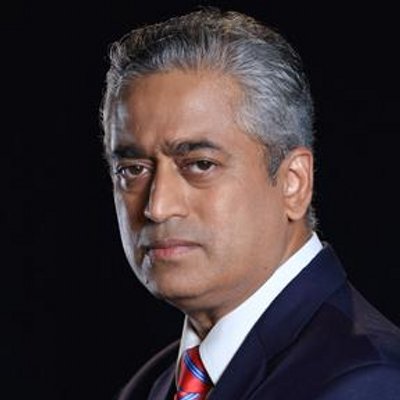
  • ‘Too much of sensation, not enough sense; too much of Delhi, not enough on the rest:’ Rajdeep Sardesai

    ‘Too much of sensation, not enough sense; too much of Delhi, not enough on the rest:’ Rajdeep Sardesai

    ‘Main zindagi ka saath nibhaata chala gaya,’ is the song that you hear when you call him. With a journalistic experience of 26 years in print and television specialised in covering national politics, this man lets his work do the talking for him. He has never abandoned hard hitting real life stories behind his brand name and has always been open and unbiased about his thoughts. Known for his fearless coverage of news and love for music, he is none other than India Today Group consulting editor Rajdeep Sardesai.

    He is also the author of 2014: The Election that Changed India. Sardesai started his career in 1988 and entered television journalism in 1994. He has bagged several awards for his journalistic excellence. Known for his humble nature and love towards his family, cricket, music, food and news, Sardesai has seen the struggle for a byline in print to an anchor on TV news channel.

    Speaking to Indiantelevision.com’s Megha Parmar, Sardesai sheds some light on PM Narendra Modi, his new hire, social media trends and the big stories witnessed in 2015.

    Read on:

    2015 was all about PM Modi traversing the world… to countries far and wide. Do you believe news channels did justice to the coverage? Don’t you think it was more about discussing his wardrobe choices and pondering about the purpose of him visiting a country rather than putting light on other important ones?

    PM Modi travelling to different parts of numerous countries is just one part of the insight. There are lots of other insights to it. If you see from his point of view, his visits abroad are his highlights. I think no Prime Minister has ever got such coverage before. Manmohan Singh had also travelled to as many countries as Modi in his tenure as a PM, but we didn’t see any coverage on that. Modi is known by his nature and is a great showman. Be it his trip to San Francisco or his trip to Australia, he knows what will sell. Talking about if we did justice to the coverage, I think yes, we did manage to highlight few other important details behind his visit. Having said that, I have also observed that many a times TV news channels act more like cheerleaders and not as journalists while covering such stories.

    In your book, ‘2014 The Election that Changed India,’ you mention about being neutral towards Modi. How difficult was it for you to remain neutral after covering what happened in 2002?

    The 2002 riots have affected me and as an observer I have the right to question politicians and criticise them. The book is my perception on where I stand on Modi. I have just put down my views about the same in my book. I share strong feelings with what happened back in 2002.

    How difficult was it to let go a channel that you had built from scratch? How has been your journey with the India Today Group so far?

    It was very difficult to part ways from the channel. That has been the most emotionally and professionally difficult decision of my life. Talking about the India Today Group, the journey has been good so far. They have been very supportive and have allowed me journalistic freedom and that’s what I value more than anything else.

    Indian media went bonkers over the Sheena Bora case, was it really required or was it simply another way of pleasing the voyeur in us?

    Frankly, it was not required at all. In my view, it’s just an example of how sensationalism replaces sense. The fact though lies that it was indeed a great news story. Mother killing a daughter story is always going to be a great news story. Having said that, we could have covered it much better. We could have laid down many facts than going into so much of gossip and trivia. We lacked on showing less facts, which needed to be covered. It was a big story. But the two questions that are to be asked is, the proportion i.e. did we over cover it and secondly, did we focus more on gossip and trivia and not facts?

    Has the age of a neutral journalist gone? Do anchors or journalists have to start taking sides?

    I don’t want to use the word neutral but according to me the age of the serious journalist, who takes up journalism seriously is under serious threat. A serious journalist would like to do stories beyond what was done in the Sheena Bora case. I don’t think we as journalists should be limited in our thoughts. Though few organisations believe in the idea that unless he or she does not take a strong stand about something, the viewers will be confused. Therefore they resort to taking sides at times for the sake of a strong position. A journalist should always push himself and should be hungry to get something exclusive and unique from a story.

    You voiced your opinion on how news channels missed the bus on the Chennai floods coverage. What steps can be taken by news broadcasters to ensure that this doesn’t happen again?

    The way out is to realise that there is a world beyond Delhi. We need to change our mindset. It is just with the mindset of the people. They have to change their mindset and have to understand that news is not only about Delhi. We followed the Nepal story better than what we did for Chennai floods and we should ask ourselves the reason behind this. I think every big story should be covered in a major way by not restricting ourselves to demographic boundaries.

    Do you think journalists are under threat from people or do you believe that social media is acting as a threat too? Can it affect the newsrooms on what stories to be followed through its trends?

    I don’t think it is a threat. I think social media is a gift to us. One can and should always try to use social media more creatively and constructively. We can’t follow social media just because of the trends or the #tags. It can be a great source of information for good stories. It can play as a compliment to the journalists. But if you only follow what is trending on Twitter or the ‘masala’ on Facebook, then I don’t think we are utilising social media to its fullest.

    If there is a large group on social media that follows me but still targets me, I take pride in that. I have the right to dissent just like everyone but you cannot abuse me. People have to understand what role we as journalists have to play in society.

    Talking about social media affecting newsrooms, today a company can fix the #trends. If the newsrooms get influenced by it, it’s terrible and I think one needs to re-think about what he is exactly trying to do by resorting to such things.

    Do trending #tags like presstitutes bother you?

    It bothers me deeply. It bothers me more because it came from a minister who used such kind of a language. I think and strongly believe that General VK Singh owes an apology to journalists for using that word in the manner he did. And the unfortunate part is that if the ministers do it, then the public will also resort to such things. They will also say that journalists are ‘presstitutes.’ There will be a few journalists who may have done a few things you could object to, but still you can’t use such words. It’s a very unfortunate word and I am sorry to say that a minister has used such a word. Twitter is a double-edged sword. As I said, it can be a great source of information or it can be a deadly aggregator of hate and anger that targets people and will lead on to building enemies. 

    Your views on the usage of the keyword intolerance and the way it was ridiculed.

    I think the way it began was unfortunate. In our country there is so much of threat that even if I give you a serious answer someone will object to it. It’s not about intolerance or religious intolerance. It’s about the lack of respect towards someone’s viewpoint. If I say something you don’t agree with, you might get angry and call me anti-national. That troubles me. India is an extremely tolerate country in many ways. What we are losing is our capacity to listen to the other side’s point of view. I think we need to get some perspective behind this entire debate and we should realise that we need to have a dialogue with each other. Everyone is saying their own thing and moving away in the society, which is not leading any of us to a logical conclusion.

    Is there a reason behind the profession attracting so much of negative criticism in the society?

    I think the fact is that we as journalists have also somewhere lost our way. We have lost our moral compass. We tend to do things sometimes in a manner that it’s bound to face criticism. It’s not that we can hide from that. We are also involved in it. If you mix sense with sensation, there will be people commenting ‘yeh toh nautanki hi karte hai.’ If you reduce a studio to a fish market, people will point fingers at you. But it still does not justify the use of words like ‘presstitiutes.’

    A few days back Harsha Bhogle said how he no longer understood television and its role in sport when he came across young journalists and their obsession with negativity because their editor would not allow anything that was non-confrontational, not aggressive or demanding. What do you have to say about this?

    I am an optimistic. I myself believe that we should have more positive stories. I myself try to do at least one positive story in a day. I agree that there is too much of negativity currently, and you need to have more positive feel-good stories as well. But that doesn’t mean that journalists should abandon negative stories. When there is a negative story, we will obviously have to report it. If in a 24 hours new channel, we cannot see one positive story then there is something wrong and we have to rectify that. It’s all about proportion; cover the Sheena Bora case but don’t cover it at the expense of the other news. Cover other news, but don’t cover it at the expense of the Chennai floods.

    Will we soon see TV news divided into two parts? Debates and News?

    I think viewers are tired of what many of the news channels are providing them. I know it’s a staple diet in the news space; but it is the cheapest way of doing journalism. Getting five people in the studio and making them fight is cheap. It doesn’t cost you much. The viewers want different ways of stating factual information from you. It will work but not in the long run.

    With growing competition, news channels have to witness a fight of breaking news first. What is your take on that?

    The thing about being first is the most stupid thing that you can have in journalism. It is stupid to go through this ‘tamasha’ of who breaks it first. What is important is the way you write and interpret it rather than being the first to break it. Breaking news at one level is breaking down now.

    Is digital gradually taking over TV when it comes to breaking news? What should news broadcasters be doing to keep the TV news audience enact?

    Yes I think so. I think earlier TV was the first resource for information. The traditional is losing its importance now. I think we will have to do much more quality stuff. Quality differentiating news is the need of the hour. The future is about quality and not quantity. The quicker the media changes its working structure; the lesser the TV channels will have to worry about its audience. They will follow the news channels eventually.

    Should ratings determine the editorial strategy as only few people have meter boxes whereas there are so many digital followers of the news channels? Is it fair to curate content for people meters and forget the followers?

    I think we should be conscious about ratings but it cannot decide content, in my view. Content should be decided on the basis of quality. If you give out quality content, you will get good enough ratings in the long run. The system itself is so flawed, that you cannot have ratings to decide your content. It is definitely unfair for the followers who are not a part of the ratings. In the end, we would be left pleasing and entertaining the people rather than enlightening them with quality news.

    Your views on the declining standards of news media is no secret. Where do you think news went wrong in 2015?

    One of the stories that we missed out in this year is Chennai floods. We did not cover it properly in the early days. Later on it was good. The first part wherein Chennai was being hit by the floods is something that I would call as our failure. We have to move beyond the Delhi centric view of the world. And I still think that we tend to focus more on the sensation element rather than on the sense.

    The other one is the Sheena Bora case and how we covered it. I personally enjoyed covering the Bihar elections where I was talking to the people and not the politicians. I think you can cover politics differently and not only through politicians. I think there is too much of sensation, not enough of sense and too much of Delhi, not enough coverage on the rest.

    Will 2016 also see news going the HD way? Is it the need of the hour?

    I think so. But even that depends on the economics of the channel. I don’t think at this moment news channels are going that way. Economically it doesn’t make sense to me. I am sure it will happen in a year or two.

    What will you advise young igniting minds who aspire to be journalists?

    To the evolving mindset I will suggest to keep your minds free and open to ideas. Always be passionate about news and never force your mind towards anything.