Tag: Narendra Modi

  • DAS IV deadline sacrosanct; MIB holds digitization workshop in Manipur

    DAS IV deadline sacrosanct; MIB holds digitization workshop in Manipur

    MUMBAI: Many in the cable TV industry have been complaining that the Narendra Modi-led government has the put cable TV digitization agenda on the backburner. That no one seems to be taking the DAS phase IV digitsation deadline of 31 December 2016 seriously.

    But the facts seem to be otherwise. The ministry of information & broadcasting (MIB) is definitely sticking to that deadline. It has been holding workshops to facilitate the understanding of nodal officers of different states about cable TV digitization.

    One such workshop was held on 20 July in Hotel Classic Grande Chingmeirong Imphal, Manipur Manipur is part of the states listed under Phase IV of the phased digitization rollout plan announced by the government. The dateline for Phase I was 31 October 2012, phase II was 31 March 2013, and phase III was 31 December 2015.

    Hosted by MIB advisor Yogendra Pal, it helped the attendees from Manipur and Nagaland understand the various provisions of the Cable Television Networks Regulations Act, the government mandate on digitization of the various phases. And finally its benefits.

    The MIB has also told its nodal officers in the north eastern states to act against unauthorized and illegal cable TV operators in the region and issue penalties on them if they continue their operations without getting their operations legalized.

  • DAS IV deadline sacrosanct; MIB holds digitization workshop in Manipur

    DAS IV deadline sacrosanct; MIB holds digitization workshop in Manipur

    MUMBAI: Many in the cable TV industry have been complaining that the Narendra Modi-led government has the put cable TV digitization agenda on the backburner. That no one seems to be taking the DAS phase IV digitsation deadline of 31 December 2016 seriously.

    But the facts seem to be otherwise. The ministry of information & broadcasting (MIB) is definitely sticking to that deadline. It has been holding workshops to facilitate the understanding of nodal officers of different states about cable TV digitization.

    One such workshop was held on 20 July in Hotel Classic Grande Chingmeirong Imphal, Manipur Manipur is part of the states listed under Phase IV of the phased digitization rollout plan announced by the government. The dateline for Phase I was 31 October 2012, phase II was 31 March 2013, and phase III was 31 December 2015.

    Hosted by MIB advisor Yogendra Pal, it helped the attendees from Manipur and Nagaland understand the various provisions of the Cable Television Networks Regulations Act, the government mandate on digitization of the various phases. And finally its benefits.

    The MIB has also told its nodal officers in the north eastern states to act against unauthorized and illegal cable TV operators in the region and issue penalties on them if they continue their operations without getting their operations legalized.

  • Discovery’s Arun Thapar & Subhash Chandra Bose documentary

    Discovery’s Arun Thapar & Subhash Chandra Bose documentary

    MUMBAI:  When you decide to make a documentary that seeks to throw some light on the disappearance of a national leader, you obviously are going to get noticed. Especially if the leader is the much-revered freedom fighter Netaji Subhash Chandra who allegedly disappeared following an air crash in Taiwan and the channel in question is factual entertainment provider Discovery India.

    Today, the Discovery India will air the documentary Subhash Chandra Bose: the Mystery. With the Narendra Modi led government releasing the long-hidden-in-secrecy  Netaji  transcripts in January 2016, the issue has been hitting newspaper headlines all over again. And historians have been eager to get at the bottom of the truth about what really happened to Netaji as accounts of him being seen after he allegedly died have been recorded.

    Discovery’s documentary produced by Iqbal Malhotra’s Aim Television therefore comes at an opportune time. It has been a pet project of Discovery Networks Asia Pacific vice president and executive producer Arun Thapar who has worked on it for more than a year. Indiantelevision.com posed Arun some questions and got some quick replies from him. Read on:

    Why did Discovery decide to commission a controversial documentary on the life of Netaji? Whose idea was it – Discovery’s or AIM’s ?

    Discovery Channel has been a pioneer in bringing differentiated and high quality content to our audiences. We are committed to meet viewer expectations and widen our local appeal by showcasing great stories about India and its prominent figures.

    Subhash Chandra Bose  is one of the most celebrated freedom fighters of the country. But his life is still overshadowed by the mystery surrounding his death. Discovery Channel wanted to bring the amazing facts and perspectives on his alleged death or “disappearance” to its viewers, especially with the recently declassified Bose Papers now available and new leads in the enduring story. It’s not about controversy but about facts and perspectives.

    Why is it interesting now from the viewership perspective?

    Despite many books on the subject, theories and inquiry commissions, the mystery of Netaji’s death or disappearance continues to intrigue Indians. New twists and turns in the story continue to emerge. Through this film Discovery Channel’s purpose is to present the facts and raise the pertinent questions and delve into its many layers. It’s an incredible story of an extraordinary man in extraordinary times.

    Why was AIM Television commissioned to produce it?

    Discovery Channel enjoys a long and successful partnership with AIM TV, which is a well respected production company with a great track record. When we proposed the idea to Iqbal Malhotra, the Producer, he was excited to pursue the subject that’s been close to his heart.

    Did you have to keep any sensitivity in mind while deciding on the breadth and scope of the subject? While scripting and filming it? What did you rely on for the raw material for the script? Who has shot it? Who wrote it? Did you have to take help from specialists or historians who have been tracking the subject?

    The life and death of a national hero is an evocative subject. It needs a lot of care and research. We’ve been very particular about the sources and we’ve presented a balanced narrative that does not pursue sensationalism at the expense of substance. We’ve had participation by individuals close to the subject matter and it has entailed an exhaustive search for material, including archives and historic pictures from around the world. For research and interviews the team worked with experts and scholars from around the world. It’s taken a year to make.

    Did you face any challenges while filming it? And after completing it?

    Every production is challenging in its own way – access to research material, experts, characters, the logistics of filming abroad, multiple crews, collecting all the material, getting all the copyrights and the crafting of a compelling narrative that stays true to the available facts and ensures that the perspectives of speakers and contributors from various parts of the world are truthfully represented. All of this is a complex yet intrinsic and exciting part of the creative process, especially when you are making a show to Discovery’s high standards.

    Has this received interest from other Discovery channel outlets in the region and internationally?

    The film Subhas Chandra Bose: The Mystery will be available to Discovery programmers around the world. It is the prerogative of each regional programming expert to plan and air it according to the preferences and demands of each region’s respective audience.

    This subject can have massive appeal considering Netaji’s legacy. Which language and which part of India do you think will watch it the most?

    Discovery Channel is broadcast in four languages in India & South Asia – these are: English, Hindi, Telugu and Bangla.  We also have a separate channel for our Tamil viewers – Discovery Tamil, which will also simulcast the documentary. Discovery has gained enormously from our language localisation strategy and we believe that each language makes the content all the more appealing to its respective audience.

    How different is the profile of a documentary viewer now compared to say three years back?

    Well firstly, “documentary” is a bit of an archaic term. We are leaders in Factual Entertainment and that’s on the back of world class content, localised for Indian viewers, including a slew of purpose-made original content. The audience is not a homogenous set. It’s vast, diverse and continuously evolving in terms of tastes and preferences.  With digitalization, new channels and great content is now reaching viewers like never before.  Rural viewership data released by BARC has added massive audience numbers to the measured television universe and we are excited to serve our viewers the very best that TV has to offer. Viewers across various audience segments gravitate towards high quality, differentiated content. We have a sizeable following amongst the young and we have seen that the youth from smaller cities and towns is appreciative of content that satisfies curiosity and is revelatory.

    What difference has the  digital evolution brought in the traditional factual entertainment genre?

    Digital platforms have redefined viewer experiences and expectations, not only in the broadcast sector but across every end-user focused industry. For content consumption, the ‘second screen’ is complementing traditional lean-back TV viewing. This is an opportunity for broadcasters like Discovery to reach out to new audiences, especially the millennials. And we are focusing on immersive content that they will enjoy and be moved by.

    What other big national titles or other subjects or titles would Discovery be commissioning? Pardon my ignorance, but is this kind of a subject a first for Discovery in India?

    India content continues to be a focus area for the network. We have endeavoured to produce and broadcast ground-breaking programmes for Indian viewers and you can expect a lot more.

    In recent months, we have aired high calibre India programmes on a variety of subjects like Siachen, Humayun’s Tomb, A.R. Rahman, HRX Heroes with Hrithik Roshan, Mumbai Railways, 1965: India’s Battles & Heroes to name a few, on the Discovery Channel. Several more are in the 2016 line-up. We continue to innovate and deliver value to our viewers.

     

  • Discovery’s Arun Thapar & Subhash Chandra Bose documentary

    Discovery’s Arun Thapar & Subhash Chandra Bose documentary

    MUMBAI:  When you decide to make a documentary that seeks to throw some light on the disappearance of a national leader, you obviously are going to get noticed. Especially if the leader is the much-revered freedom fighter Netaji Subhash Chandra who allegedly disappeared following an air crash in Taiwan and the channel in question is factual entertainment provider Discovery India.

    Today, the Discovery India will air the documentary Subhash Chandra Bose: the Mystery. With the Narendra Modi led government releasing the long-hidden-in-secrecy  Netaji  transcripts in January 2016, the issue has been hitting newspaper headlines all over again. And historians have been eager to get at the bottom of the truth about what really happened to Netaji as accounts of him being seen after he allegedly died have been recorded.

    Discovery’s documentary produced by Iqbal Malhotra’s Aim Television therefore comes at an opportune time. It has been a pet project of Discovery Networks Asia Pacific vice president and executive producer Arun Thapar who has worked on it for more than a year. Indiantelevision.com posed Arun some questions and got some quick replies from him. Read on:

    Why did Discovery decide to commission a controversial documentary on the life of Netaji? Whose idea was it – Discovery’s or AIM’s ?

    Discovery Channel has been a pioneer in bringing differentiated and high quality content to our audiences. We are committed to meet viewer expectations and widen our local appeal by showcasing great stories about India and its prominent figures.

    Subhash Chandra Bose  is one of the most celebrated freedom fighters of the country. But his life is still overshadowed by the mystery surrounding his death. Discovery Channel wanted to bring the amazing facts and perspectives on his alleged death or “disappearance” to its viewers, especially with the recently declassified Bose Papers now available and new leads in the enduring story. It’s not about controversy but about facts and perspectives.

    Why is it interesting now from the viewership perspective?

    Despite many books on the subject, theories and inquiry commissions, the mystery of Netaji’s death or disappearance continues to intrigue Indians. New twists and turns in the story continue to emerge. Through this film Discovery Channel’s purpose is to present the facts and raise the pertinent questions and delve into its many layers. It’s an incredible story of an extraordinary man in extraordinary times.

    Why was AIM Television commissioned to produce it?

    Discovery Channel enjoys a long and successful partnership with AIM TV, which is a well respected production company with a great track record. When we proposed the idea to Iqbal Malhotra, the Producer, he was excited to pursue the subject that’s been close to his heart.

    Did you have to keep any sensitivity in mind while deciding on the breadth and scope of the subject? While scripting and filming it? What did you rely on for the raw material for the script? Who has shot it? Who wrote it? Did you have to take help from specialists or historians who have been tracking the subject?

    The life and death of a national hero is an evocative subject. It needs a lot of care and research. We’ve been very particular about the sources and we’ve presented a balanced narrative that does not pursue sensationalism at the expense of substance. We’ve had participation by individuals close to the subject matter and it has entailed an exhaustive search for material, including archives and historic pictures from around the world. For research and interviews the team worked with experts and scholars from around the world. It’s taken a year to make.

    Did you face any challenges while filming it? And after completing it?

    Every production is challenging in its own way – access to research material, experts, characters, the logistics of filming abroad, multiple crews, collecting all the material, getting all the copyrights and the crafting of a compelling narrative that stays true to the available facts and ensures that the perspectives of speakers and contributors from various parts of the world are truthfully represented. All of this is a complex yet intrinsic and exciting part of the creative process, especially when you are making a show to Discovery’s high standards.

    Has this received interest from other Discovery channel outlets in the region and internationally?

    The film Subhas Chandra Bose: The Mystery will be available to Discovery programmers around the world. It is the prerogative of each regional programming expert to plan and air it according to the preferences and demands of each region’s respective audience.

    This subject can have massive appeal considering Netaji’s legacy. Which language and which part of India do you think will watch it the most?

    Discovery Channel is broadcast in four languages in India & South Asia – these are: English, Hindi, Telugu and Bangla.  We also have a separate channel for our Tamil viewers – Discovery Tamil, which will also simulcast the documentary. Discovery has gained enormously from our language localisation strategy and we believe that each language makes the content all the more appealing to its respective audience.

    How different is the profile of a documentary viewer now compared to say three years back?

    Well firstly, “documentary” is a bit of an archaic term. We are leaders in Factual Entertainment and that’s on the back of world class content, localised for Indian viewers, including a slew of purpose-made original content. The audience is not a homogenous set. It’s vast, diverse and continuously evolving in terms of tastes and preferences.  With digitalization, new channels and great content is now reaching viewers like never before.  Rural viewership data released by BARC has added massive audience numbers to the measured television universe and we are excited to serve our viewers the very best that TV has to offer. Viewers across various audience segments gravitate towards high quality, differentiated content. We have a sizeable following amongst the young and we have seen that the youth from smaller cities and towns is appreciative of content that satisfies curiosity and is revelatory.

    What difference has the  digital evolution brought in the traditional factual entertainment genre?

    Digital platforms have redefined viewer experiences and expectations, not only in the broadcast sector but across every end-user focused industry. For content consumption, the ‘second screen’ is complementing traditional lean-back TV viewing. This is an opportunity for broadcasters like Discovery to reach out to new audiences, especially the millennials. And we are focusing on immersive content that they will enjoy and be moved by.

    What other big national titles or other subjects or titles would Discovery be commissioning? Pardon my ignorance, but is this kind of a subject a first for Discovery in India?

    India content continues to be a focus area for the network. We have endeavoured to produce and broadcast ground-breaking programmes for Indian viewers and you can expect a lot more.

    In recent months, we have aired high calibre India programmes on a variety of subjects like Siachen, Humayun’s Tomb, A.R. Rahman, HRX Heroes with Hrithik Roshan, Mumbai Railways, 1965: India’s Battles & Heroes to name a few, on the Discovery Channel. Several more are in the 2016 line-up. We continue to innovate and deliver value to our viewers.
     

  • Ensure flow of undiluted and unadulterated information to the people: Naidu

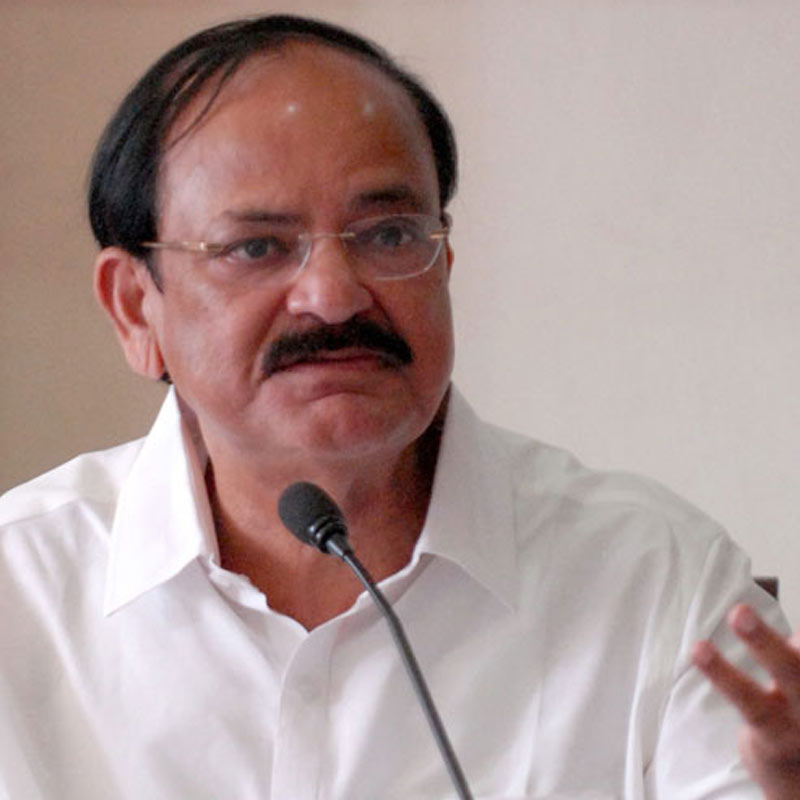
    Ensure flow of undiluted and unadulterated information to the people: Naidu

    NEW DELHI: ,Venkaiah Naidu who has assumed additional charge of Information and Broadcasting held until now by Finance Minister Arun Jaitley, has said communication processes are critical for empowering people with information that would enable them to fulfill their aspirations.

    He said the government’s mission would be to enable public communication for the development of the country and the community. Naidu told newspersons after taking charge yesterday that he would be guided by the principle of ‘Communication for Development of the Community and the Country” and the basic principles of “Reform, Perform, Transform and Inform”.

    The government was a “reservoir of Information” relating to various aspects of a common man’s life. It was important to ensure proper flow of such information -“undiluted and unadulterated” – for broadening common man’s understanding of key policy initiatives of the government. This would facilitate the task of information empowerment, thereby creating an enabling environment for key stakeholders.

    The minister said it was important to position various media units as credible brands for effectively serving the information needs of the people. He referred to the process of change ushered in by the Prime Minister Narendra Modi, which touched upon the attitudes of key stakeholders thereby reorienting our approach and understanding towards the concept of development. In order to achieve this goal, it was important to mainstream effective communication as an input to realize this change.

    Jaitley, minister of State for I and B Rajyavardhan Rathore, secretary Ajay Mittal, Director-General (Media and Communication) in Press Information Bureau Frank Noronha and other senior officers of the ministry were present.

    Naidu who already holds the urban development, housing and poverty alleviation ministry, but was divested of the parliamentary affairs portfolio in the latest reshuffle.

  • Ensure flow of undiluted and unadulterated information to the people: Naidu

    Ensure flow of undiluted and unadulterated information to the people: Naidu

    NEW DELHI: ,Venkaiah Naidu who has assumed additional charge of Information and Broadcasting held until now by Finance Minister Arun Jaitley, has said communication processes are critical for empowering people with information that would enable them to fulfill their aspirations.

    He said the government’s mission would be to enable public communication for the development of the country and the community. Naidu told newspersons after taking charge yesterday that he would be guided by the principle of ‘Communication for Development of the Community and the Country” and the basic principles of “Reform, Perform, Transform and Inform”.

    The government was a “reservoir of Information” relating to various aspects of a common man’s life. It was important to ensure proper flow of such information -“undiluted and unadulterated” – for broadening common man’s understanding of key policy initiatives of the government. This would facilitate the task of information empowerment, thereby creating an enabling environment for key stakeholders.

    The minister said it was important to position various media units as credible brands for effectively serving the information needs of the people. He referred to the process of change ushered in by the Prime Minister Narendra Modi, which touched upon the attitudes of key stakeholders thereby reorienting our approach and understanding towards the concept of development. In order to achieve this goal, it was important to mainstream effective communication as an input to realize this change.

    Jaitley, minister of State for I and B Rajyavardhan Rathore, secretary Ajay Mittal, Director-General (Media and Communication) in Press Information Bureau Frank Noronha and other senior officers of the ministry were present.

    Naidu who already holds the urban development, housing and poverty alleviation ministry, but was divested of the parliamentary affairs portfolio in the latest reshuffle.

  • Sub Rs 3K LYF 4G smartphones

    Sub Rs 3K LYF 4G smartphones

    MUMBAI: Bringing Mukesh Ambani’s vision of digitising the entire country to get its people to use the internet a step closer to fruition, LYF Smartphone+, the True 4G smartphone brand from Reliance Retail, has pushed the envelope of affordability in the Indian smartphone space by announcing a very aggressive price of Rs. 2999 on four of its Flame models – Flame 3, Flame 4, Flame 5 and Flame 6. This move also resonates with the Prime Minister Narendra Modi’s vision of a digitally-connected India says a Reliance Retail press release.

    The Indian device ecosystem always featured a clear line of distinction between smartphone users and featurephone users with price acting as a major barrier. With the introduction of 4G smartphones at a price which rivals that of featurephones, LYF has made it easy for featurephone users to upgrade to smartphones.

    Like all LYF devices, the Flame series too offers smartphones equipped with VoLTE, or voice over LTE — a technology that enables the device to provide advanced features such as faster call setup, high-definition (HD) voice and video calling, seamless switching between voice and video calls and multi-party conferencing on a 4G LTE network.

    The dual-SIM slots, a characteristic feature of every Flame phone, allow users to simultaneously use a 4G SIM in either of the slots. Further, all LYF devices come with a free Jio preview offer, under which every user buying a LYF phone gets access to the entire range of Jio services, Flame series provides a platform for users to migrate from older networks such as 2G or 3G to the more advanced 4G ecosystem. In addition to this, Flame series also offer smart aesthetic features and superior hardware technology claims the Reliance Retail release.

    With all the models being equipped with a primary camera and also a front camera, or a selfie-shooter, Flame series allows users to shoot images of all types with a range of photography features such as HDR, panorama, face detection, smile shutter, burst mode, slow motion video, metering, white balance, anti-banding and ISO. 

    Will the competition, especially the Chinese smartphone manufacturers for whom India is a focus market, react with aggressive price points? Only time can tell. The Indian consumer will definitely benefit with lower priced smartphones, bringing closer the mission of Indian political and industry leaders to have every Indian connected.

    Also read:

    Reliance Retail launches LYF Wind 5 smartphone

    Reliance Jio’s mid-segment LYF Water 5 smartphone launches on Amazon

    Reliance Jio embarks 4G trail service for public

  • Sub Rs 3K LYF 4G smartphones

    Sub Rs 3K LYF 4G smartphones

    MUMBAI: Bringing Mukesh Ambani’s vision of digitising the entire country to get its people to use the internet a step closer to fruition, LYF Smartphone+, the True 4G smartphone brand from Reliance Retail, has pushed the envelope of affordability in the Indian smartphone space by announcing a very aggressive price of Rs. 2999 on four of its Flame models – Flame 3, Flame 4, Flame 5 and Flame 6. This move also resonates with the Prime Minister Narendra Modi’s vision of a digitally-connected India says a Reliance Retail press release.

    The Indian device ecosystem always featured a clear line of distinction between smartphone users and featurephone users with price acting as a major barrier. With the introduction of 4G smartphones at a price which rivals that of featurephones, LYF has made it easy for featurephone users to upgrade to smartphones.

    Like all LYF devices, the Flame series too offers smartphones equipped with VoLTE, or voice over LTE — a technology that enables the device to provide advanced features such as faster call setup, high-definition (HD) voice and video calling, seamless switching between voice and video calls and multi-party conferencing on a 4G LTE network.

    The dual-SIM slots, a characteristic feature of every Flame phone, allow users to simultaneously use a 4G SIM in either of the slots. Further, all LYF devices come with a free Jio preview offer, under which every user buying a LYF phone gets access to the entire range of Jio services, Flame series provides a platform for users to migrate from older networks such as 2G or 3G to the more advanced 4G ecosystem. In addition to this, Flame series also offer smart aesthetic features and superior hardware technology claims the Reliance Retail release.

    With all the models being equipped with a primary camera and also a front camera, or a selfie-shooter, Flame series allows users to shoot images of all types with a range of photography features such as HDR, panorama, face detection, smile shutter, burst mode, slow motion video, metering, white balance, anti-banding and ISO. 

    Will the competition, especially the Chinese smartphone manufacturers for whom India is a focus market, react with aggressive price points? Only time can tell. The Indian consumer will definitely benefit with lower priced smartphones, bringing closer the mission of Indian political and industry leaders to have every Indian connected.

    Also read:

    Reliance Retail launches LYF Wind 5 smartphone

    Reliance Jio’s mid-segment LYF Water 5 smartphone launches on Amazon

    Reliance Jio embarks 4G trail service for public

  • Oxigen Wallet enables users to recharge Delhi Noida Delhi flyway tolls Tags

    Oxigen Wallet enables users to recharge Delhi Noida Delhi flyway tolls Tags

    MUMBAI: In continuation of the digital wave taking the country like a surge, India’s pioneer non-bank mobile wallet app, Oxigen Wallet, is set to enable its customers with FASTag cards to recharge DND flyway tolls on the move. The latest development comes following in line the recommendation released by Reserve Bank of India, in the favor of digitalizing toll payments across India.

    DND is an eight lane expressway, stretching across 9.2 km, connecting Delhi with the strategic industrial suburb, Noida. Allowing customers to recharge their DND flyway tolls digitally will bring comfort to a majority of corporate clan, commuting to and fro the expressway on a daily basis, along with other commuters. This development gains further relevance, since paying via cash for DND flyovers has always been a pain point. Now, customers can recharge their FASTag cards with just a click via Oxigen Mobile Wallet, regardless of whether they have enough cash or spare change and enjoy a near non-stop movement on the expressway.

    Further elucidating upon this strategic development, Ankur Saxena, Director & Chief Mentor, Oxigen Wallet said, “At Oxigen, it has been our key endeavor to promote digital payments in every business that heavily depends on cash transactions and hence, strengthen and streamline the economy converting cash to digital. We are enthusiastic about enabling the recent RBI guideline and digitalizing toll payments on DND. A majority of our new and existing users will access services and conveniently recharge their DND expressway cards.”

    Following the announcement, customers may walk in to the DND customer service center and select Oxigen Wallet as a preferred mode of payment to recharge or get a new membership of Gold or Silver FasTAG. The DND executive will prompt the customer to generate the OTP on Oxigen wallet app, meanwhile feeding in the customer’s mobile number and amount in the POS machine. In order to approve the transaction, customers will have to share the OTP and if their Oxigen Wallet has enough balance, the transaction would be successful and fulfilled by DND executive.

    In its bit to mainstream digital payments, Oxigen Wallet has already taken certain key initiatives, including its partnership with the HPCL, allowing users to pay for fuels via Oxigen mobile Wallet. This move to digitally recharge FASTag cards and electronically pay for DND tolls shall further streamline payments and strengthen India’s transition towards a cashless economy, in line with our Honorable PM Shri Narendra Modi’s vision, making it stand at par with the leading economies across the globe.

  • Oxigen Wallet enables users to recharge Delhi Noida Delhi flyway tolls Tags

    Oxigen Wallet enables users to recharge Delhi Noida Delhi flyway tolls Tags

    MUMBAI: In continuation of the digital wave taking the country like a surge, India’s pioneer non-bank mobile wallet app, Oxigen Wallet, is set to enable its customers with FASTag cards to recharge DND flyway tolls on the move. The latest development comes following in line the recommendation released by Reserve Bank of India, in the favor of digitalizing toll payments across India.

    DND is an eight lane expressway, stretching across 9.2 km, connecting Delhi with the strategic industrial suburb, Noida. Allowing customers to recharge their DND flyway tolls digitally will bring comfort to a majority of corporate clan, commuting to and fro the expressway on a daily basis, along with other commuters. This development gains further relevance, since paying via cash for DND flyovers has always been a pain point. Now, customers can recharge their FASTag cards with just a click via Oxigen Mobile Wallet, regardless of whether they have enough cash or spare change and enjoy a near non-stop movement on the expressway.

    Further elucidating upon this strategic development, Ankur Saxena, Director & Chief Mentor, Oxigen Wallet said, “At Oxigen, it has been our key endeavor to promote digital payments in every business that heavily depends on cash transactions and hence, strengthen and streamline the economy converting cash to digital. We are enthusiastic about enabling the recent RBI guideline and digitalizing toll payments on DND. A majority of our new and existing users will access services and conveniently recharge their DND expressway cards.”

    Following the announcement, customers may walk in to the DND customer service center and select Oxigen Wallet as a preferred mode of payment to recharge or get a new membership of Gold or Silver FasTAG. The DND executive will prompt the customer to generate the OTP on Oxigen wallet app, meanwhile feeding in the customer’s mobile number and amount in the POS machine. In order to approve the transaction, customers will have to share the OTP and if their Oxigen Wallet has enough balance, the transaction would be successful and fulfilled by DND executive.

    In its bit to mainstream digital payments, Oxigen Wallet has already taken certain key initiatives, including its partnership with the HPCL, allowing users to pay for fuels via Oxigen mobile Wallet. This move to digitally recharge FASTag cards and electronically pay for DND tolls shall further streamline payments and strengthen India’s transition towards a cashless economy, in line with our Honorable PM Shri Narendra Modi’s vision, making it stand at par with the leading economies across the globe.