Tag: Narendra Modi

  • DD 24×7 north-east channel starts on 25 December; Rs 7 crore allocated

    DD 24×7 north-east channel starts on 25 December; Rs 7 crore allocated

    MUMBAI: Pubcaster Prasar Bharati is geared up to launch a 24×7 satellite television channel in northeast India on 25 December catering to the region’s cultural ethos. Prasar Bharati runs Doordarshan and All India Radio.

    The information and broadcasting (I&B) ministry has allocated Rs 7 crore to the broadcaster for launching DD Arun Prabha.

    Indiantelevision had reported that Prasar Bharati had in April last year proposed that the existing North-East channel be trifurcated by launching two additional 24X7 satellite channels for North Eastern Region designated as Arun Prabha Itanagar and ‘Ma-Mi-Na’ Aizawl. DD North-East telecasts entertainment and information-based programmes in Assamese, Bengali, English and other languages of the north-east region.

    The channels are expected to provide a strong platform to rich cultural and linguistic identity of the region.

    Arun Prabha channel was proposed to cater to the states of Arunachal Pradesh and Sikkim, the second channel will cater to the states of Nagaland, Mizoram and Manipur and the third to Assam and Meghalaya.

    Now, DD Arun Prabha will showcase programmes on the diverse culture of the northeastern states. The ministry has already sanctioned money for this channel, said Prasar Bharati chairperson A. Surya Prakash said.

    The proposal to launch DD Arun Prabha was announced in Narendra Modi government’s first budget. This step comes as a part of Doordarshan’s initiative to strengthen its plans in the northeast.

  • DD 24×7 north-east channel starts on 25 December; Rs 7 crore allocated

    DD 24×7 north-east channel starts on 25 December; Rs 7 crore allocated

    MUMBAI: Pubcaster Prasar Bharati is geared up to launch a 24×7 satellite television channel in northeast India on 25 December catering to the region’s cultural ethos. Prasar Bharati runs Doordarshan and All India Radio.

    The information and broadcasting (I&B) ministry has allocated Rs 7 crore to the broadcaster for launching DD Arun Prabha.

    Indiantelevision had reported that Prasar Bharati had in April last year proposed that the existing North-East channel be trifurcated by launching two additional 24X7 satellite channels for North Eastern Region designated as Arun Prabha Itanagar and ‘Ma-Mi-Na’ Aizawl. DD North-East telecasts entertainment and information-based programmes in Assamese, Bengali, English and other languages of the north-east region.

    The channels are expected to provide a strong platform to rich cultural and linguistic identity of the region.

    Arun Prabha channel was proposed to cater to the states of Arunachal Pradesh and Sikkim, the second channel will cater to the states of Nagaland, Mizoram and Manipur and the third to Assam and Meghalaya.

    Now, DD Arun Prabha will showcase programmes on the diverse culture of the northeastern states. The ministry has already sanctioned money for this channel, said Prasar Bharati chairperson A. Surya Prakash said.

    The proposal to launch DD Arun Prabha was announced in Narendra Modi government’s first budget. This step comes as a part of Doordarshan’s initiative to strengthen its plans in the northeast.

  • Jio-Apple strike a win-win deal as Airtel plans aggressive 4G offer

    Jio-Apple strike a win-win deal as Airtel plans aggressive 4G offer

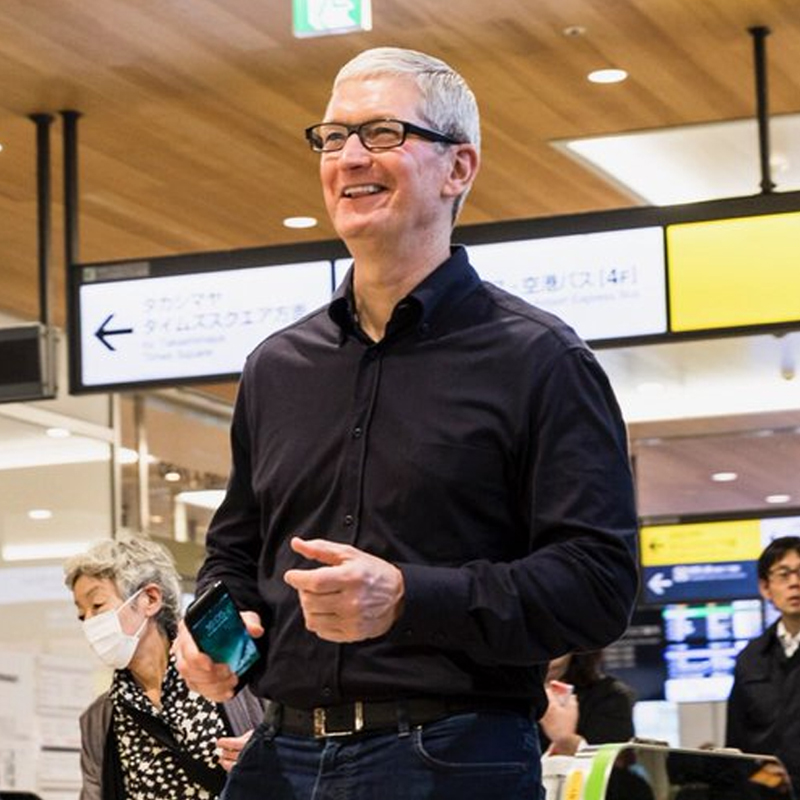
    MUMBAI: Even as Reliance Jio is giving a tough fight to the market leader Airtel, and other leading incumbent operators Vodafone and Idea, it is making significant tie-ups with cell-phone makers to up its 4G gameplan. Substantial investments are being made in high-speed telecom networks in India, said Apple CEO Tim Cook citing Reliance Jio’s 4G roll-out although he admitted its smartphone has “not done as well” in the country.

    Airtel meantime is reportedly planning to launch aggressive 4G bundled offers to take on Reliance Jio as India’s No 1 mobile carrier struggles to boost penetration and revive its slowing data revenue growth amid competition. Bharti Airtel managing director – India & South Asia Gopal Vittal agreed that it’s difficult to compete with a free services offer as it expects Jio’s full-fledged price launch to take place in December. Vittal said it will approach the regulator to clear any confusion over interconnection points (PoIs) as it has provided more PoIs to Jio than any other telco.

    Reliance Jio was the first of its kind all-IP network in India with 4G coverage in 18,000 cities and 200,000 villages, Cook said in the company’s fourth quarter earnings call. He said Apple is partnering with Reliance Jio, which is offering a free year of service to purchasers of new iPhones, to ensure “great iPhone performance” on their network. “Our iPhone sales in India were up over 50 per cent in fiscal 2016 compared to the prior year, and we believe we’re just beginning to scratch the surface of this large and growing market opportunity,” Cook said.

    He, however, noted that Apple’s smartphone has “not done as well” in India in general and one of the key reasons for that is the “(high-speed telecom networks) infrastructure hasn’t been there”. The Apple head was optimistic on the efforts being made by the Narendra Modi-led government to create jobs and develop infrastructure.

    Whether India could in future be as big of an opportunity as China for Apple, Cook said it is important to look not only at per capita income in India but also the number of people that are or will move into the middle class over the next decade. He said this class will “really want a smartphone, and I think we can compete well for some percentage of those.

    “I think it’s clear that the population of India will exceed China sometime in probably the next decade or so. I think it will take longer for the GDP to rival it, but that’s not critical for us to have a great success there,” he said.

  • Jio-Apple strike a win-win deal as Airtel plans aggressive 4G offer

    Jio-Apple strike a win-win deal as Airtel plans aggressive 4G offer

    MUMBAI: Even as Reliance Jio is giving a tough fight to the market leader Airtel, and other leading incumbent operators Vodafone and Idea, it is making significant tie-ups with cell-phone makers to up its 4G gameplan. Substantial investments are being made in high-speed telecom networks in India, said Apple CEO Tim Cook citing Reliance Jio’s 4G roll-out although he admitted its smartphone has “not done as well” in the country.

    Airtel meantime is reportedly planning to launch aggressive 4G bundled offers to take on Reliance Jio as India’s No 1 mobile carrier struggles to boost penetration and revive its slowing data revenue growth amid competition. Bharti Airtel managing director – India & South Asia Gopal Vittal agreed that it’s difficult to compete with a free services offer as it expects Jio’s full-fledged price launch to take place in December. Vittal said it will approach the regulator to clear any confusion over interconnection points (PoIs) as it has provided more PoIs to Jio than any other telco.

    Reliance Jio was the first of its kind all-IP network in India with 4G coverage in 18,000 cities and 200,000 villages, Cook said in the company’s fourth quarter earnings call. He said Apple is partnering with Reliance Jio, which is offering a free year of service to purchasers of new iPhones, to ensure “great iPhone performance” on their network. “Our iPhone sales in India were up over 50 per cent in fiscal 2016 compared to the prior year, and we believe we’re just beginning to scratch the surface of this large and growing market opportunity,” Cook said.

    He, however, noted that Apple’s smartphone has “not done as well” in India in general and one of the key reasons for that is the “(high-speed telecom networks) infrastructure hasn’t been there”. The Apple head was optimistic on the efforts being made by the Narendra Modi-led government to create jobs and develop infrastructure.

    Whether India could in future be as big of an opportunity as China for Apple, Cook said it is important to look not only at per capita income in India but also the number of people that are or will move into the middle class over the next decade. He said this class will “really want a smartphone, and I think we can compete well for some percentage of those.

    “I think it’s clear that the population of India will exceed China sometime in probably the next decade or so. I think it will take longer for the GDP to rival it, but that’s not critical for us to have a great success there,” he said.

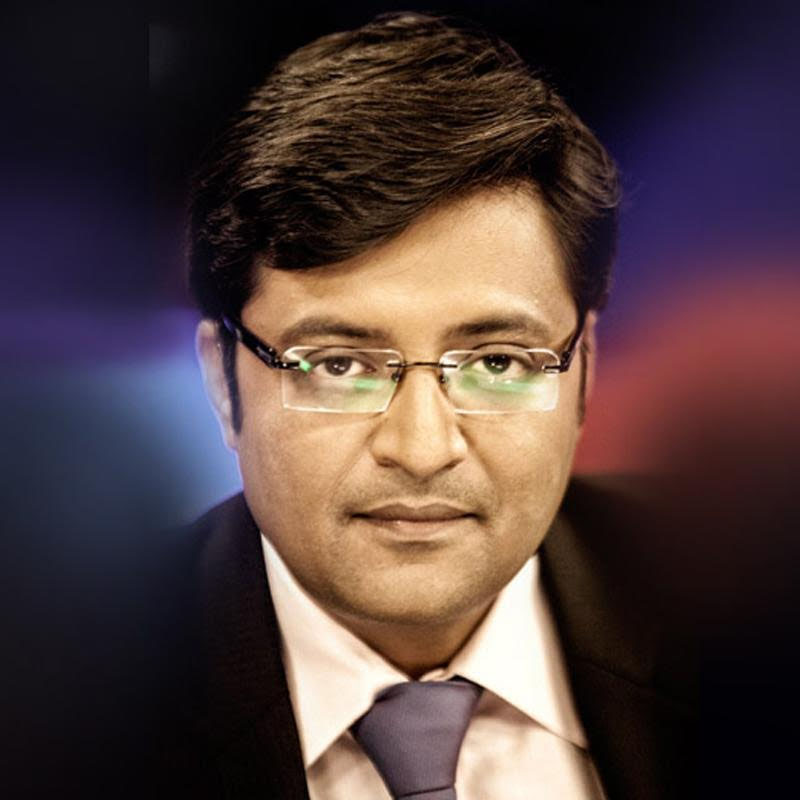
  • Arnab NOW wants to challenge BBC and CNN International

    Arnab NOW wants to challenge BBC and CNN International

    MUMBAI: “No news is good news. No journalists is even better”, so said Nicolas Clerihew Bentley, British author and illustrator, best known for his humorous cartoon drawings in books and magazines in the 1930s and 1940s. In India Bentley, probably, would have been proved wrong as Indians — at least a large swathe of the population — just cannot do without news and certainly not without Arnab Goswami.

    You can hate him, you can love him, you can call him names or you can even say he’s God’s gift to Indian TV journalism, but you just cannot ignore him. And, why not? That’s a question that the nation wants to knowdespite debating it on social media everyday. From being the quintessential outsider to be the top of the pops as the most watched television news anchor on Indian television, it has been a roller-coaster of a ride.

    From the point Times NOW was considered a laughing stock soon after it debuted in 2006, to becoming the undisputed leader in the news industry, Arnab’s contributions behind the channel’s success cannot be neglected. Just like a global food brand was born when an experimentation in the kitchen went haywire by accident, it was another such accident — some would say twist of fate — that gave India a TV news anchor who’s loathed as much as he’s revered during his daily news show called Newshour, which actually runs beyond an hour.

    Not only Arnab quit print journalism with the Kolkata-based The Telegraph after just a stint of leas than a year in 1995 to come to India’s capital city, but he also quit Delhi a few years later to migrate to Mumbai, leaving one of India’s famous nursery for news journalism, NDTV, to take up an assignment with the Times of India group’s TV venture. So much so, at one of time, Arnab wanted to quit journalism altogether.

    Yes, you read it right. Arnab wanted to leave journalism. “I wanted to leave journalism 12 years back when I was in Delhi. That is one city that will ruin your courage and leave you with two options — either quit or to be crazy. I chose the latter,” he asserted at the EEMAX Global Conclave & Awards 2016 to gasps from the swooning audience, comprising mostly young people aspiring to be TV journalists.

    But happy accidents do happen.

    Feeling blessed to be capable of reaching out to millions every night, Arnab doesn’t shy away from goof-ups or life’s low points. “I did mess up for the initial six months in Times NOW, “ he admitted frankly, “but, the experiences of taking up people’s stories and making the ordinary person a headline and championing him (or her), fundamentally made me realise that one needs to finally go down to the core.”

    India’s most watched TV news anchor — audience measurement data has proved that time and again — can also afford to be preachy when he asserts for him there’s no shades of grey (forget the 50 shades) but just

    right and wrong. “In everything in life, you have to bring it down to the binary. Don’t tell me about the grey areas. Those people who reside in the grey areas are those who are fooling themselves and won’t stick their necks out. Running down my republic (read country) is wrong and I will stick my neck out (to defend it),” he added, which many critics feel is just being pompous.

    Often accused of ruining neutrality of news or the non-partisan approach that journalists and news anchor should champion as per gospel, for Arnab neutrality in news is baseless. “I have not dumbed down journalism. Each story that I have done runs a personal risk on me. Behind what seems engrossing, is a lot of heart, a lot of feeling, a lot of soul, a lot of idealism and a lot of risk,” he explained, adding, “Oh boy, did we hear some glasses breaking at some homes of people whom Arnab loves to refer as the `Lutyen Delhi’s privileged lot’.”?

    And, true to his on-screen style — where he shouts down panellists who return to his shows despite being shut out at times — Arnab thrashed the English news media in India by accusing it of alienating people. “They used language that is only available in a dictionary, editorial meetings happened in a sacred space where there is no communication with people outside. When analytical programmes are done, there are more people from abroad than from your own country and they speak in a language that nobody understands. That is what English language journalism had done over the years,”he makes his intentions clear, adding with satisfaction, “But the country is seeing a change.”

    There are innumerable anecdotes about Arnab, his style, his posturing on TV and, yes, also his arrogance, but those don’t faze the man who seems to be on a mission.

    Recently, Mukesh Ambani, considered one of the most powerful men in India with diversified interests in many businesses, including media, was asked for his views on noisy TV shows and, predictably, the shows he watched at 9 pm. The Reliance Industries boss said, “I watch Arnab and I like him very much.” So what does Arnab feel about such encomiums about him being an influencer and opinion moulder? “I am happy to know that. There is no responsibility that I have on me. If anyone wants to listen, I don’t bring my ego in the way. I do a story and move on,” he dead-panned.

    There is also an incident that he himself recollected when Delhi’s incumbent chief minister Arvind Kejriwal asked him a reason for not supporting him or his cause to which Ornob (one of the many names by which he’s referred to on social media) had counter-punched that Kejriwal was a marketing genius.

    He has also been questioned about the way he conducted his interview with the Indian prime minister Narendra Modi and how he was very `soft’ and `docile’, unlike the fiery role that he essays on Times NOW. But, Arnab sees no problem with such an approach: “Most people have a problem with that interview. They want me to call the PM as Mr. Narendra Modi, but I am a journalist. When you have eight boxes open on a screen (with panellists), I have to shout to be heard. But, when you are doing a one on one, you don’t have to shout.”

    That is why when Arnab professed his love for a free media and his dream, one naturally has to do a double take. “I dream of an independent media with a capital `I’and the word underlined,” he highlighted and added that he wished to merge the independent media with the digital with an aim to bring the power of TV directly to the people while breaking the clutter at the same time. In his own words: “All this has to be achieved in the next three years. We will challenge BBC and CNN (International), and there should be no reason why we will not be able to do it.”

    Considering Arnab has a view on almost everything and anything — good researchers, notwithstanding — his advice to budding entrepreneurs at a conclave was, in fact, quite simple and straight: “Accept your faults, build partnerships, do not compromise on your ethics and do not have too many plans. Most importantly, do not let your ego come in the middle of your dream.” Touche!

    No wonder such simplicity at times, which may look so unlike most of his Newshour shows, leads his friends and colleagues to support him. Speaking to indiantelevision.com, Partho Dasgupta, a former colleague of Arnab at Times TV Network and now the chief executive of BARC, said, “Am very happy to see him succeed in the news business that is not easy. Beyond our professional lives, I know him more personally and know how good a human being he is.”

    Despite the seeming on-screen pompousness and arrogance, Arnab must be connecting with professionals, friends and audience at some level. At least the data, popularity (his critics call it notoriety) and personal vouching indicate to that.
  • Arnab NOW wants to challenge BBC and CNN International

    Arnab NOW wants to challenge BBC and CNN International

    MUMBAI: “No news is good news. No journalists is even better”, so said Nicolas Clerihew Bentley, British author and illustrator, best known for his humorous cartoon drawings in books and magazines in the 1930s and 1940s. In India Bentley, probably, would have been proved wrong as Indians — at least a large swathe of the population — just cannot do without news and certainly not without Arnab Goswami.

    You can hate him, you can love him, you can call him names or you can even say he’s God’s gift to Indian TV journalism, but you just cannot ignore him. And, why not? That’s a question that the nation wants to knowdespite debating it on social media everyday. From being the quintessential outsider to be the top of the pops as the most watched television news anchor on Indian television, it has been a roller-coaster of a ride.

    From the point Times NOW was considered a laughing stock soon after it debuted in 2006, to becoming the undisputed leader in the news industry, Arnab’s contributions behind the channel’s success cannot be neglected. Just like a global food brand was born when an experimentation in the kitchen went haywire by accident, it was another such accident — some would say twist of fate — that gave India a TV news anchor who’s loathed as much as he’s revered during his daily news show called Newshour, which actually runs beyond an hour.

    Not only Arnab quit print journalism with the Kolkata-based The Telegraph after just a stint of leas than a year in 1995 to come to India’s capital city, but he also quit Delhi a few years later to migrate to Mumbai, leaving one of India’s famous nursery for news journalism, NDTV, to take up an assignment with the Times of India group’s TV venture. So much so, at one of time, Arnab wanted to quit journalism altogether.

    Yes, you read it right. Arnab wanted to leave journalism. “I wanted to leave journalism 12 years back when I was in Delhi. That is one city that will ruin your courage and leave you with two options — either quit or to be crazy. I chose the latter,” he asserted at the EEMAX Global Conclave & Awards 2016 to gasps from the swooning audience, comprising mostly young people aspiring to be TV journalists.

    But happy accidents do happen.

    Feeling blessed to be capable of reaching out to millions every night, Arnab doesn’t shy away from goof-ups or life’s low points. “I did mess up for the initial six months in Times NOW, “ he admitted frankly, “but, the experiences of taking up people’s stories and making the ordinary person a headline and championing him (or her), fundamentally made me realise that one needs to finally go down to the core.”

    India’s most watched TV news anchor — audience measurement data has proved that time and again — can also afford to be preachy when he asserts for him there’s no shades of grey (forget the 50 shades) but just

    right and wrong. “In everything in life, you have to bring it down to the binary. Don’t tell me about the grey areas. Those people who reside in the grey areas are those who are fooling themselves and won’t stick their necks out. Running down my republic (read country) is wrong and I will stick my neck out (to defend it),” he added, which many critics feel is just being pompous.

    Often accused of ruining neutrality of news or the non-partisan approach that journalists and news anchor should champion as per gospel, for Arnab neutrality in news is baseless. “I have not dumbed down journalism. Each story that I have done runs a personal risk on me. Behind what seems engrossing, is a lot of heart, a lot of feeling, a lot of soul, a lot of idealism and a lot of risk,” he explained, adding, “Oh boy, did we hear some glasses breaking at some homes of people whom Arnab loves to refer as the `Lutyen Delhi’s privileged lot’.”?

    And, true to his on-screen style — where he shouts down panellists who return to his shows despite being shut out at times — Arnab thrashed the English news media in India by accusing it of alienating people. “They used language that is only available in a dictionary, editorial meetings happened in a sacred space where there is no communication with people outside. When analytical programmes are done, there are more people from abroad than from your own country and they speak in a language that nobody understands. That is what English language journalism had done over the years,”he makes his intentions clear, adding with satisfaction, “But the country is seeing a change.”

    There are innumerable anecdotes about Arnab, his style, his posturing on TV and, yes, also his arrogance, but those don’t faze the man who seems to be on a mission.

    Recently, Mukesh Ambani, considered one of the most powerful men in India with diversified interests in many businesses, including media, was asked for his views on noisy TV shows and, predictably, the shows he watched at 9 pm. The Reliance Industries boss said, “I watch Arnab and I like him very much.” So what does Arnab feel about such encomiums about him being an influencer and opinion moulder? “I am happy to know that. There is no responsibility that I have on me. If anyone wants to listen, I don’t bring my ego in the way. I do a story and move on,” he dead-panned.

    There is also an incident that he himself recollected when Delhi’s incumbent chief minister Arvind Kejriwal asked him a reason for not supporting him or his cause to which Ornob (one of the many names by which he’s referred to on social media) had counter-punched that Kejriwal was a marketing genius.

    He has also been questioned about the way he conducted his interview with the Indian prime minister Narendra Modi and how he was very `soft’ and `docile’, unlike the fiery role that he essays on Times NOW. But, Arnab sees no problem with such an approach: “Most people have a problem with that interview. They want me to call the PM as Mr. Narendra Modi, but I am a journalist. When you have eight boxes open on a screen (with panellists), I have to shout to be heard. But, when you are doing a one on one, you don’t have to shout.”

    That is why when Arnab professed his love for a free media and his dream, one naturally has to do a double take. “I dream of an independent media with a capital `I’and the word underlined,” he highlighted and added that he wished to merge the independent media with the digital with an aim to bring the power of TV directly to the people while breaking the clutter at the same time. In his own words: “All this has to be achieved in the next three years. We will challenge BBC and CNN (International), and there should be no reason why we will not be able to do it.”

    Considering Arnab has a view on almost everything and anything — good researchers, notwithstanding — his advice to budding entrepreneurs at a conclave was, in fact, quite simple and straight: “Accept your faults, build partnerships, do not compromise on your ethics and do not have too many plans. Most importantly, do not let your ego come in the middle of your dream.” Touche!

    No wonder such simplicity at times, which may look so unlike most of his Newshour shows, leads his friends and colleagues to support him. Speaking to indiantelevision.com, Partho Dasgupta, a former colleague of Arnab at Times TV Network and now the chief executive of BARC, said, “Am very happy to see him succeed in the news business that is not easy. Beyond our professional lives, I know him more personally and know how good a human being he is.”

    Despite the seeming on-screen pompousness and arrogance, Arnab must be connecting with professionals, friends and audience at some level. At least the data, popularity (his critics call it notoriety) and personal vouching indicate to that.
  • India ready for data revolution with 350 million plus Net users: Minister

    India ready for data revolution with 350 million plus Net users: Minister

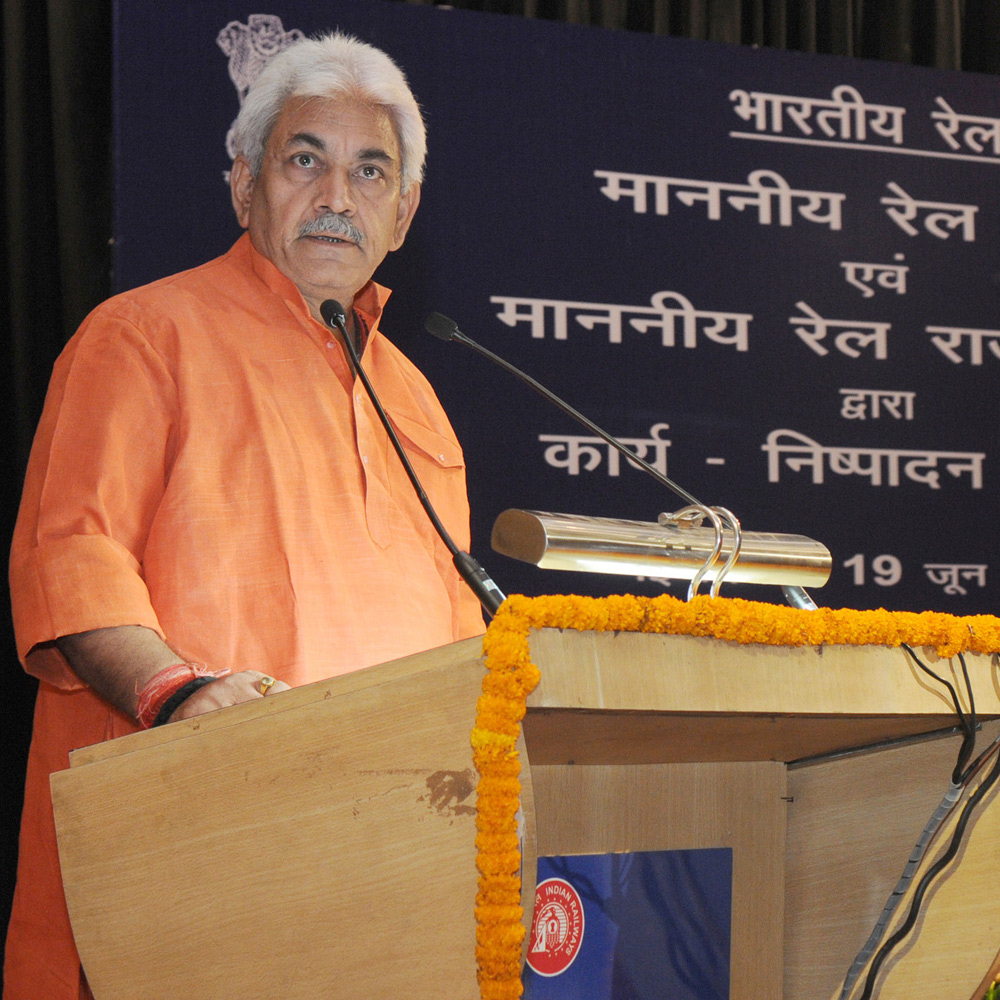
    NEW DELHI: India’s Telecoms minister Manoj Sinha has said the sector had been growing at a phenomenal pace and was considered as the fastest growing telecom market in the world with the second largest subscriber base with more than 1060 million connectivity, 160 million broadband connections and 350 million plus internet users.

    India is ready for another digital and data revolution, the minister said while inaugurating the 8th Telecom Export Promotion Council’s Buyer-Seller meet earlier this week here.

    (India’s mobile phone revolution has been spurring many media players, global and domestic, to enter the OTT space despite challenges. It is also expected that, with the introduction of 4G technology, the market for streaming video will grow in India.)

    Sinha said the rapid growth of the telecoms sector has fuelled the demand for telecom equipment, including mobile phones, which was worth about $ 20 billion in 2015-16 and is estimated to exceed $ 30 billion by 2020.

    Sinha added that India has all the ingredients of a globally competitive telecom industry like a large domestic market, world class talent, focus on R&D and IPR creation, beside a robust framework for electronic manufacturing, including set-top boxes used in a variety of telecoms and broadcast services.

    According to the Minister, Indian manufacturers have already made significant strides in exports of IT and telecom products to several countries and established that Indian IT and telecom products are of world-class quality and globally competitive on technology and price.

    The massive thrust on ‘Make in India’ and ‘Digital India’ initiatives offers a large opportunity for creation of innovative products and services and India is poised for another digital and data revolution.

    Sinha told the representatives from 28 participating countries from South Asia, South-East Asia, the Caribbean, Latin America and Africa that India holds the distinction of being the fastest growing telecom network, especially with advent of increased broadband penetration.

    Meanwhile, joining issue with his colleague, Electronics and IT minister Ravi Shankar Prasad said that, during the last fiscal ending March 2016, the sector recorded an export of $ 108 billion, which is around 45 per cent of services export from India. The sector gave direct employment to 3.7 million people and around 200,000 additional employment was created in just the past year.

    Prasad said the prime minister Narendra Modi’s government was determined to create a knowledge-based society to “improve effeciency and reach of the services.”

    He said unlike industrial revolution (that India missed), the country was all set to take lead in the ongoing digital revolution.

  • India ready for data revolution with 350 million plus Net users: Minister

    India ready for data revolution with 350 million plus Net users: Minister

    NEW DELHI: India’s Telecoms minister Manoj Sinha has said the sector had been growing at a phenomenal pace and was considered as the fastest growing telecom market in the world with the second largest subscriber base with more than 1060 million connectivity, 160 million broadband connections and 350 million plus internet users.

    India is ready for another digital and data revolution, the minister said while inaugurating the 8th Telecom Export Promotion Council’s Buyer-Seller meet earlier this week here.

    (India’s mobile phone revolution has been spurring many media players, global and domestic, to enter the OTT space despite challenges. It is also expected that, with the introduction of 4G technology, the market for streaming video will grow in India.)

    Sinha said the rapid growth of the telecoms sector has fuelled the demand for telecom equipment, including mobile phones, which was worth about $ 20 billion in 2015-16 and is estimated to exceed $ 30 billion by 2020.

    Sinha added that India has all the ingredients of a globally competitive telecom industry like a large domestic market, world class talent, focus on R&D and IPR creation, beside a robust framework for electronic manufacturing, including set-top boxes used in a variety of telecoms and broadcast services.

    According to the Minister, Indian manufacturers have already made significant strides in exports of IT and telecom products to several countries and established that Indian IT and telecom products are of world-class quality and globally competitive on technology and price.

    The massive thrust on ‘Make in India’ and ‘Digital India’ initiatives offers a large opportunity for creation of innovative products and services and India is poised for another digital and data revolution.

    Sinha told the representatives from 28 participating countries from South Asia, South-East Asia, the Caribbean, Latin America and Africa that India holds the distinction of being the fastest growing telecom network, especially with advent of increased broadband penetration.

    Meanwhile, joining issue with his colleague, Electronics and IT minister Ravi Shankar Prasad said that, during the last fiscal ending March 2016, the sector recorded an export of $ 108 billion, which is around 45 per cent of services export from India. The sector gave direct employment to 3.7 million people and around 200,000 additional employment was created in just the past year.

    Prasad said the prime minister Narendra Modi’s government was determined to create a knowledge-based society to “improve effeciency and reach of the services.”

    He said unlike industrial revolution (that India missed), the country was all set to take lead in the ongoing digital revolution.

  • GSAT-18 successfully launches, new capacity for DTH operators, TV channels

    GSAT-18 successfully launches, new capacity for DTH operators, TV channels

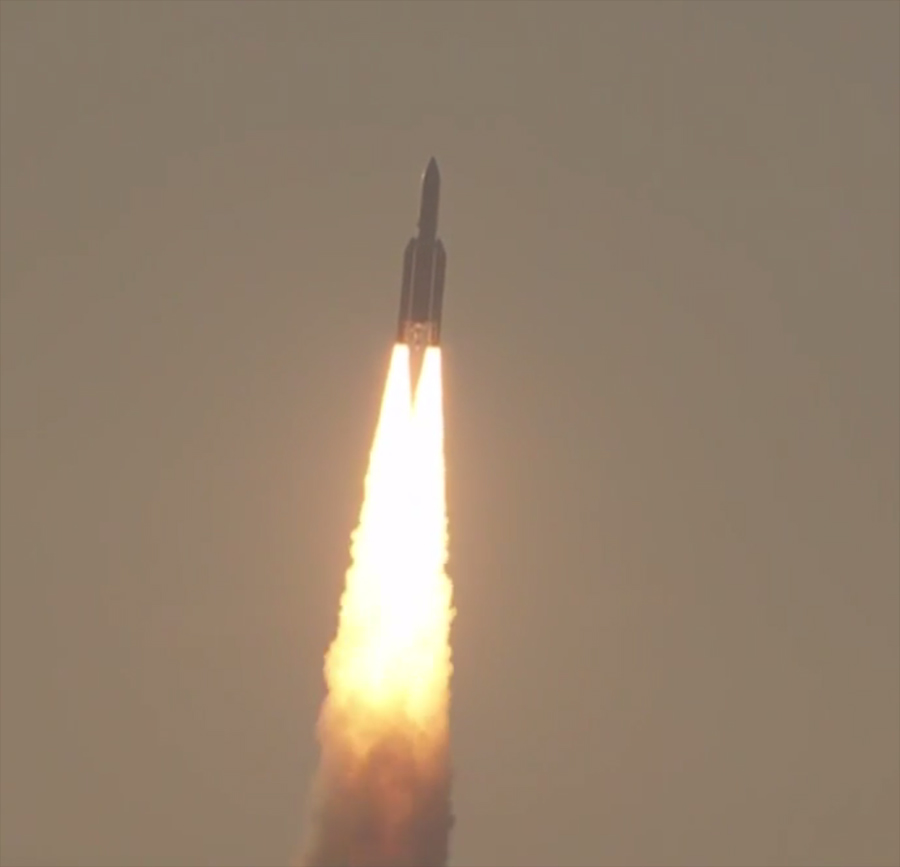
    MUMBAI: Indian DTH operators, television channels, VSAT and digital satellite news gathering providers are a happy lot because of a development in Kouro French Guiana this morning. The reason: the successful launch of Arianespace’s Ariane 5 VA 531 rocket with its passenger, the Indian Space Research Organisation’s GSAT-18 satellite. When the satellite starts ticking fully a few weeks later, its 48 transponders ranging from Ku-band, C-Band to extended C-Band will be beaming their signals over India to Indian TV viewers and companies.

    32:28 minutes after blasting off from the launch site, the 3,400 kg GSAT-18 was placed in geo-synchronous transfer orbit (GTO) this morning around 2:30 am. And, ISRO officials including the Indian ambassador in France Mohan Kumar leapt up, fisting the air in triumph.

    Following that, ISRO’s master control facility took charge of it and will perform operations which will result it being placed in a circular geo-stationary orbit. Following this, ISRO will deploy the solar panels – which will provide it power over its 15 year life – and antenna. The satellite will then be stabilized on three axis, placed at 74 degrees East longitude, and become part of ISRO’s 14 telecom fleet in space

    Later, it is planned to experimentally turn on the communication payloads of GSAT-18. After the successful completion of all the in-orbit tests, GSAT-18 will be ready for operational use.

    This was the Indian space organisation’s twentieth satellite mission through Arianespace. It will add to that count when it launches two more satellites – GSAT 11 and GSAT-11 – using Arianespace launchers in 2017.

    The VA 531 flight had another payload – Australia’s SkyMuster II satellite – which too was placed successfully in orbit. SkyMuster II aims to provide broadband facilities to remote locations in Australia.

    Prime minister Narendra Modi sent out his congratulatory message on Twitter to the scientists at ISRO.

  • GSAT-18 successfully launches, new capacity for DTH operators, TV channels

    GSAT-18 successfully launches, new capacity for DTH operators, TV channels

    MUMBAI: Indian DTH operators, television channels, VSAT and digital satellite news gathering providers are a happy lot because of a development in Kouro French Guiana this morning. The reason: the successful launch of Arianespace’s Ariane 5 VA 531 rocket with its passenger, the Indian Space Research Organisation’s GSAT-18 satellite. When the satellite starts ticking fully a few weeks later, its 48 transponders ranging from Ku-band, C-Band to extended C-Band will be beaming their signals over India to Indian TV viewers and companies.

    32:28 minutes after blasting off from the launch site, the 3,400 kg GSAT-18 was placed in geo-synchronous transfer orbit (GTO) this morning around 2:30 am. And, ISRO officials including the Indian ambassador in France Mohan Kumar leapt up, fisting the air in triumph.

    Following that, ISRO’s master control facility took charge of it and will perform operations which will result it being placed in a circular geo-stationary orbit. Following this, ISRO will deploy the solar panels – which will provide it power over its 15 year life – and antenna. The satellite will then be stabilized on three axis, placed at 74 degrees East longitude, and become part of ISRO’s 14 telecom fleet in space

    Later, it is planned to experimentally turn on the communication payloads of GSAT-18. After the successful completion of all the in-orbit tests, GSAT-18 will be ready for operational use.

    This was the Indian space organisation’s twentieth satellite mission through Arianespace. It will add to that count when it launches two more satellites – GSAT 11 and GSAT-11 – using Arianespace launchers in 2017.

    The VA 531 flight had another payload – Australia’s SkyMuster II satellite – which too was placed successfully in orbit. SkyMuster II aims to provide broadband facilities to remote locations in Australia.

    Prime minister Narendra Modi sent out his congratulatory message on Twitter to the scientists at ISRO.