Tag: Narendra Modi

  • Embark on a never seen before adventure with PM Narendra Modi and Bear Grylls in Discovery’s iconic and hugely popular franchise ‘Man Vs Wild’

    Embark on a never seen before adventure with PM Narendra Modi and Bear Grylls in Discovery’s iconic and hugely popular franchise ‘Man Vs Wild’

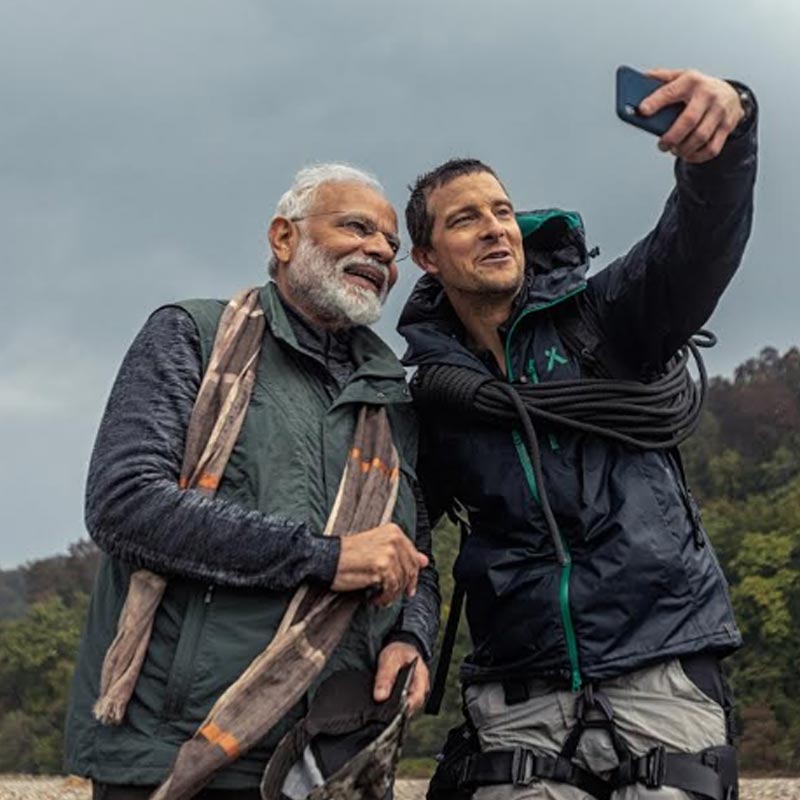
    MUMBAI: Bear Grylls uncovers PM Modi’s adventurous side on Discovery’s Exclusive show, ‘Man Vs Wild with Bear Grylls & Prime Minister Modi’ as they take an off-track journey across India’s Jim Corbett National Park situated in the state of Uttarakhand. Select excerpts of the show: –

    The adventurous Indian Prime Minister: 

    Through the episode viewers will get a glimpse of the Indian Prime Minister’s love for the environment, as in freewheeling chat, he shares little known childhood incidents spent amidst nature. Some interesting anecdotes revealed through the episode include how he used to create bathing salts from dew as a child, or his encounters with wildlife in his childhood, or the simple yet profound reason behind sending postcards across the country to celebrate the first rains!PM Modi’s keen interest in environmental conservation and values of respecting nature, is sure to inspire generations of Indians to do the same.

    The Indian Prime Minister also shines spotlight on important issues like the need to preserve and embrace nature. Responding to Bear, when he points out evident dangers lurking in their vicinity (on account of wild animals), PM Modi fearlessly says, “We should not take this place as a danger zone. When we go against nature then everything becomes dangerous; human beings too become dangerous. On the other hand, if we co-operate with nature, then she also co-operates with us.”

    This fearlessness was also observed when Bear Grylls gives PM Modi an improvised version of a spear as a safeguard against potential attack from a Tiger. To which, PM Modi replies, “My upbringing does not allow me to take a life. However, I will hold on it (the spear) since you insist!” 

    When asked by Bear Grylls about the need and efforts towards cleanliness of India, the Prime Minister, said, “Someone from outside cannot clean my India, the people of India make India clean. Personal hygiene is in the culture of the Indian people. We need to develop the habit of social hygiene. Mahatma Gandhi has done lot of work on it and recently we are getting good success in this. I believe India will succeed in this very soon.”

    Bear Grylls shared an interesting anecdote about his Mount Everest expedition, “I stood on the top of Mount Everest; when I got home, I showed my mother the photo. You know what she said? ‘Why did you not comb your hair? Mothers. Mothers. It's the same all over the 

    world, eh? Mothers.” To which PM Modi smiled and nodded wholeheartedly, perhaps thinking of his own mother. 

  • GOQii reveals 2019’s top 30 Indian Health and Fitness Influencers; PM Narendra Modi tops the list, second time in a row

    GOQii reveals 2019’s top 30 Indian Health and Fitness Influencers; PM Narendra Modi tops the list, second time in a row

    MUMBAI: GOQii, India’s leading preventive healthcare ecosystem today announced its coveted list of India’s Top 30 Health influencers for 2019. Shri Narendra Modi, Prime Minister of India emerged as the topmost health influencer, second time in a row. Bollywood actor Akshay Kumar climbed to the second spot this year and Yoga guru Baba Ramdev slid to the third spot.

    The top 30 health influencers have been derived from a list of 100 names. The scoring system was created based on the following categories: Followers on Facebook, Instagram, Twitter, and YouTube; Number of Google news mentions; and an estimate of how much each person's career focuses on fitness and health. This data was collected throughout the month of January-March 2019.

    The primary objective of this exercise was to understand how the youth of this country relates to health and fitness. We also wanted to know the people they associate with, who have had maximum impact in this category in India. We believe that this is a direct result of your active role in demonstrating the benefits of leading a healthy and balanced lifestyle daily.

    The new entrants in this year’s list included MS Dhoni, Ranveer Singh, Kareena Kapoor, Tiger Shroff, and Priyanka Chopra, who made it to the top 10.

    Commenting on the release, Mr. Vishal Gondal, CEO and founder GOQii said, “GOQii is creating a nationwide movement, encouraging people to adopt a preventive healthcare approach. This report is an effort to identify the most influential healthcare personalities in our country who have the power to make India healthy; a goal for us at GOQii as well as the Government of India.”

     Below is the list of all influencers –

    1. Narendra Modi

    Our honourable Prime Minister was instrumental in instituting the International Day of Yoga 2015, which is now observed globally. His is not only keen on improving India, but keen on improving the health and fitness of Indians as well. Despite all the tasks at hand, the 68 year old still manages to stay fit. The Prime Minister’s daily routine is inspired by the five elements of nature – water, fire, air, earth and ether. He often practices yoga as a way to keep his muscles active, and has been pictured at several yoga events. In fact, he was instrumental in instituting the International Day of Yoga 2015 which is now being observed globally.

    2. Akshay Kumar

    He is undoubtedly India’s fittest and healthiest celebrity who is trained in martial arts and has a black belt in Taekwondo. His fitness mantra? ‘Health matters the most!’ His fitness regime started much before he became an actor. Even with his hectic life, he manages to maintain his workout regime, occasionally adding new exercises to avoid boredom. He believes that one should devote their body to exercise for one hour in order to be fit. With the recent release of his action movie ‘Kesari’, Akshay Kumar trained harder than ever to maintain his physique and his level of fitness, which ultimately resulted in a level of brilliance in the movie. 

    3. Baba Ramdev

    A popular household name, Baba Ramdev has become well-respected by advocating yoga. The yoga guru believes that fitness is an integral part of life. His claim to fame is his company, Patanjali Ayurved, that believes in yoga and ayurveda as a way of improving life. His brand is now a popular name in India and is giving the MNC FMCG companies a run for their money. As of May 19th, the guru’s company is the third largest FMCG company in India.

    4. Virat Kohli

    The Indian cricket captain is one of the fittest on the field. Back in 2012, Kohli was actually overweight, and was determined to slim down and become fit if he wanted to play cricket. He started following a strict diet and workout regime that has helped him get to where he is today.

    5. Mahendra Singh Dhoni

    Ex-captain of the Indian cricket team, ‘Captain Cool’ has certainly proven that fitness has no age limit. The expert cricketer is 37 and still going strong. The tremendous amount of power behind his shots, his crazy speed between the wickets and his mastermind decisions come from years of following a strict fitness regime.

    6. Deepika Padukone

    With a fitness routine that’s packed with a combination of weights, pilates, dance and yoga, Bollywood Actress Deepika Padukone is the undisputed fitness figure in the industry today. Even before acting, she was very active and played badminton in national level championships. She manages to find a way to stick to her workout routine despite her busy schedule. She believes that yoga improves her strength, concentration, and keeps her mind active and calm. Deepika recently married the explosive actor, Ranveer Singh, who is also crazy about working out, so we can only assume that the dynamic couple motivate each other to stay fit and healthy.

    7. Ranveer Singh

    The explosive actor is unsurprisingly a fitness freak, and has a disciplined fitness regime consisting of a strict diet and workout plan. The actor’s fitness mantra is High Intensity Interval Training (HIIT). He enjoys eating home cooked meals with plenty of protein and less carbs. His workouts include burpees, push-ups, squats, and deadlifts. Aside from his workout, he also goes cycling, running and swimming regularly. He always remembers to do warm up exercises before his workouts which reduce the risk of injuries. His fitness tip is, ‘to be fit, stamina is incredibly important. Initially start slow, and then keep pushing the limits’. He also believes that a happy state of mind is the key to developing a healthy life.

    8. Kareena Kapoor

    The bollywood sensation has inspired millions of her fans because of her disciplined life, strong determination, and dedication towards her workouts that make her incredibly fit. Her workout regimes are usually a mix of dance, cardio, and yoga exercises. She is a keen follower of yoga and believes that it is an effective way of synergizing your body, mind and health.

    9. Tiger Shroff

    It comes as no surprise to anyone when we say that the Bollywood beast is crazy about fitness. The young actor has always been an athlete. According to the actor “Fitness should be a combination of muscular strength, body composition, flexibility, muscular endurance, and cardiovascular endurance”

    10. Priyanka Chopra

    The actress’ incredible fitness is due to her strict diet plans, yoga practices, and workout routine. Though she is not a gym freak, she prefers keeping fit by doing exercises and yoga. For certain movies like Mary Kom and Dil Dhadakne Do, she lost about 20 kg, which proves how hard the actress works.

    11. Shilpa Shetty

    The actress follows a strict routine to stay fit, be it yoga, diet, or workouts. According to the diva, Yoga inculcates a sense of self-control and discipline. Shilpa has also recently launched a new fitness app, with the aim of putting India on the global yoga map.

    12. Jacqueline Fernandez

    The popular actress follows a rigorous workout and a strict diet plan to achieve her athleticism. Her fitness regime is strict as well, and is a mix of strength training, martial arts, and cardio.

    13. Saina Nehwal

    The badminton ace is an extremely determined and disciplined sportsperson and follows strict training for 6 days and an important 7th day of rest for the body and mind. Her workouts and training focus on making her arms and legs stronger, which gives her a boost in the sport of badminton.

    14. P V Sindhu

    The badminton star has been playing the sport since she was seven. Fitness and exercise has always been a part of her life. Her daily schedule is packed with pranayama, yoga, swimming, and running.

    15. Sunil Chhetri

    Sunil Chhetri is one of the fittest men in the Indian football team. Chhetri stays fit by doing several exercises and routines. He loves doing speed training drills, which is an important aspect of his game. He trains six days a week, leaving the seventh day for resting.

    16. Sardara Singh

    Not only one of the top names on the hockey field, Sardara Singh has also been one of the top names in the fitness industry for a while. His secret? Exercising daily, focusing on his core muscles, and eating a healthy balanced meal

    17. Milind Soman

    The 53 year old is not just an actor, but a model, a TV host, and a fitness enthusiast as well! When he was 50, he completed two of the world’s most challenging races, the Ironman Triathlon, and the Ultra-Endurance Event. He runs 3-4 times a week, does yoga and rests at least one day of the week.

    18. Ranveer Allahbadia

    Ranveer is a popular YouTuber, with his YouTube channel ‘BeerBiceps’ racking up 2.1 million subscribers and a whopping total of 127 million views at the moment. He believes that fitness should be a permanent change and not just a temporary activity that helps you reach your physical goal.

    19. Abhinav Mahajan

    The fitness professional is a body transformation wizard! He shares his motivational workouts with over 1.2 million subscribers on YouTube. The fitness guru is a firm believer in making videos with scientific evidence.

    20. Jeet Selal

    One of the most influential fitness professionals from across the globe. Other than being a health and fitness YouTuber, he is also a fitness entrepreneur and has founded his own brand, the ‘Himalayan Stallion’.

    21. Luke Coutinho

    The holistic nutritionist practices in the field of Integrative and Lifestyle Medicine, and is also a motivational speaker. He co-authored the globally acclaimed book ‘The Great Indian Diet’ with Shilpa Shetty. Luke is working on bringing out the best results in cancer patients from across the world using ‘integrative healing’ methods.

    22. Dr. Aashish Contractor

    Dr. Aashish Contractor is a consultant in the field of rehabilitation and sports medicine, and is famously known as the pioneer of cardiac rehabilitation in India.

    23. Sanjeev Kapoor

    Chef Kapoor is very focused and meditates often. He also does pranayama daily, and climbs stairs to keep himself fit. The chef always has cooking tricks and tips up his sleeves. He has sold around 10 million cookbooks, has around 25 million monthly hits on his website, and has his own 24-hour TV channel. As a chef, Sanjeev travels a lot, and has a knowledge of food and nutrition from around the world. He is extremely cautious about what to eat, when to eat it, and how much to eat. Chef Kapoor is usually very focused and meditates often. Sanjeev has bene participating in cooking demonstrations in an attempt to raise awareness on clean-cooking and creating a healthy, sustainable environment.

    24. Mithali Raj

    The captain of India’s women cricket team is a huge inspiration to not only her teammates, but a whole generation of women that aspire to be cricketersHer fitness regime includes lifting little weights, cycling and even doing yoga along with her. Mithali’s advice for people starting fitness training is to start slow but stay consistent. The captain’s ultimate goal is to revolutionize women’s cricket, which many people believe that she has achieved already.

    25. Natarajan Chandrasekaran

    He is the Chairman of the board of Tata Sons. He joined the board in October 2016 and was appointed Chairman in January 2017. However, Natarajan is not all about work. He is also an avid photographer and a passionate runner of long-distance marathons. He ran the London Marathon in April 2017, thus completing the World Marathon Majors.

    26. Mandira Bedi

    The actress was instrumental in getting women interested in cricket, when she first hosted the IPL. She indulges in functional training by doing a mix of cardio, weights, and core training about five times a week. She works out six days a week as it is a great stress buster for her. If not at the gym, she does squats and lunges at home

    27. Mary Kom

    Mary Kom is a popular name in Women’s Boxing. Her wide range of achievements have come from years of dedicated training and discipline. Functional training and sparring are a part of her daily routine.

    28. Kuntal Joisher

    After close to 12 hours of gruelling climbing, a software engineer named Kuntal Joisher became the first complete vegan to stand on top of Mt. Everest for the second time. He did not experience any altitude sickness, and was fit throughout the 60 day journey. In doing so, he proved to the world that mountaineering can be successfully done even on a vegan diet.

    29. Divyanshu Ganatra

    The 41 year old’s sight was claimed by Glaucoma when he was only 19 but that did not stop him from living his life to its fullest potential. Infact, the Clinical Psychologist is actually an adventure enthusiast and loves outdoor activities from scuba diving to trekking to tandem cycling to paragliding.

    30. Dr. Naresh Trehan

    The cardiovascular surgeon is famous for taking the field of medicine to the next level. He has received multiple prestigious awards for his level of excellence such as the Padma Bhushan and the Padma Shri. The doctor starts his day with 30 minutes of cardio and yoga each, which gives him his very much needed stamina for the day. He eats small meals every 3 hours. These meals include fruits, salads, and nuts.
  • Cosmos-Maya’s Yoga ambitions given a boost by PM Narendra Modi who performs Asanas with Motu Patlu

    Cosmos-Maya’s Yoga ambitions given a boost by PM Narendra Modi who performs Asanas with Motu Patlu

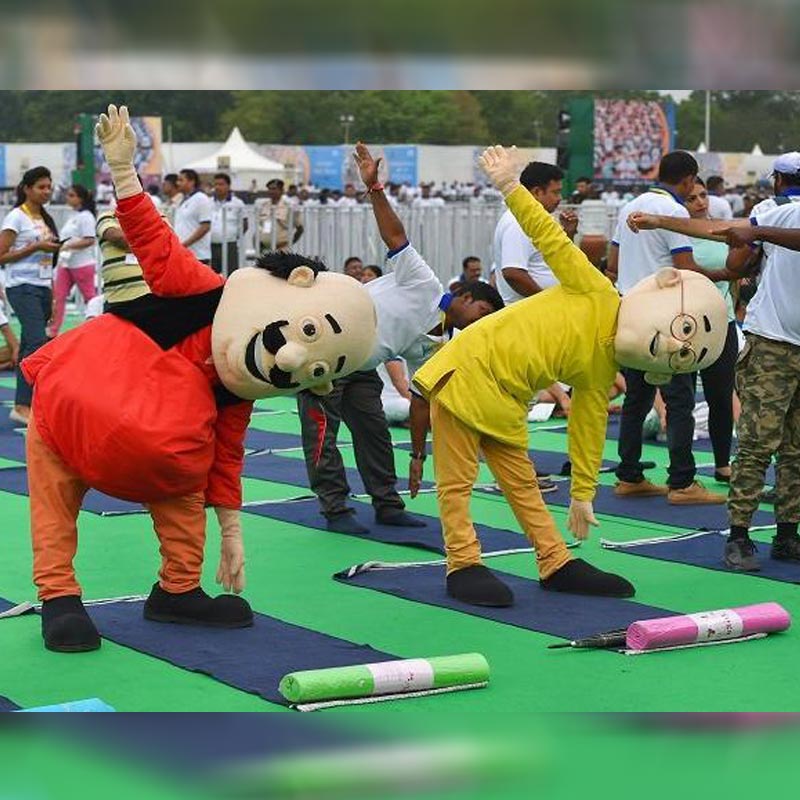
    MUMBAI: Cosmos-Maya’s iconic characters Motu and Patlu performed yoga along with Prime Minister Narendra Modi in the fifth edition of International Day of Yoga at Ranchi. The characters were present at the event to motivate children towards yoga. This development is in line with Cosmos-Maya’s efforts to inculcate in the lives of its young viewers the goodness of Yoga. The studio is in the process of producing Yoga videos to air on WowKidz, it’s YouTube platform with 23 million subscribers.

    These Yoga videos will have ViR and Imli, characters from the company’s hit series ‘ViR: The Robot Boy’, teaching kids Asanas which will be child friendly and easy to do, and in an entertaining format. These will be available to viewers in 12 major Indian languages on WowKidz.

    Said Anish Mehta, CEO, Cosmos-Maya, “We are elated to see our characters Motu and Patlu share a platform with Prime Minister Narendra Modi. The Bhagawad Gita calls Yoga the journey of the self, through the self, to the self. It has been our endeavor to pass on this message to all our employees and viewers alike. We are in the process of creating dedicated videos to help kids understand the benefits of Yoga. With the 23 million subscribers, the reach and scope of these videos will be tremendous. We are very proud to be following our Prime Minister’s footsteps, and we will take Yoga to every nook and corner of the country in 12 regional languages.”  

    A crowd of 40,000 people that gathered at the ground to participate in the massive yoga event which went on for 45 mins. Nickelodeon had included Motu Patlu as part of the proceedings. The iconic animated characters were spotted in the middle of the ground. Addressing the mega celebration of Yoga Day, PM Modi thanked everyone for participating in the event and urged them to make yoga an integral part of their lives. Modi was accompanied by several ministers and senior government officials including Jharkhand Governor Draupdi Murmu, Chief Minister Raghubar Das, Ayush Minister Sripad Naik, state Health Minister Ramchandra Kesari.

    The Jharkhand government, in a statement, said, "The Motu and Patlu characters were present on the ground to attract children towards yoga."

  • PM’s exclusive interview #bharatparmodi with Republic Bharat sets the agenda for the 2019 General Election and delivers smashing results on its social and digital assets

    PM’s exclusive interview #bharatparmodi with Republic Bharat sets the agenda for the 2019 General Election and delivers smashing results on its social and digital assets

    MUMBAI: At 8 am on Friday, Republic Bharat aired Prime Minister Narendra Modi’s first Lok Sabha election interview, which was given to Republic Media Network’s Editor-in-Chief Arnab Goswami. Causing ripples not only across the political spectrum but also making global headlines, the #ModiSpeaksToBharat interview set new records on traction, engagement and impressions on the digital space. 

    Benchmarking news highs on digital media, the #ModiSpeaksToBharat interview recorded a whopping 2.6 Billion impressions on social media during its playout. Trending just 7 minutes into the first playout on Republic Bharat, the Prime Minister’s interview trended for more than 6 hours non-stop across the country. With 333 tweets per minute for the first 48 hours, the interview generated immediate virality on the digital space. 

    The scale of engagement was unprecedented, with the interview recording a staggering 44.6M watch minutes across live and VOD assets. 

    In terms of content, the interview had 35 major national headlines which became the focus of the political opposition within minutes of the first play out. With 29 political reactions across 10 political parties, the #ModiSpeaksToBharat interview quickly became the center-point of political discourse nationally. 

    With the Prime Minister responding on various issues from national security to domestic economy, the #ModiSpeaksToBharat interview triggered strong engagement on digital media across 23 states and 1042 major cities across the country. The cities which recorded the deepest engagement were Lucknow, Kanpur, Ahmedabad, Patna, New Delhi, Mumbai,Jaipur, Pune,, Hyderabad, Surat, Varanasi, Indore,  Gurgaon, Bangalore and Kolkata. 

    In fact, Prime Minister Narendra Modi’s tough message to Pakistan during the course of this interview led to a direct response from Imran Khan’s Pakistan Government within 24 hours of the playout on Republic Bharat. 

    Prime Minister Modi’s responses to a wide array of questions ahead of the crucial vote spurred reactions beyond India’s borders. The #ModiSpeaksToBharat interview led to digital conversations in 21 countries across the globe, including audiences in the United States, United Kingdom, UAE, Singapore, Australia, Oman, Nepal, Canada and Pakistan. 

    With 7 playouts of the Prime Minister’s interview on day 1 clubbed with an aggressive digital strategy, Republic Bharat  became the one-stop destination for audiences in this crucial 2019 election season. 
     

  • NaMo TV, renamed Content TV, launched on major DTH platforms

    NaMo TV, renamed Content TV, launched on major DTH platforms

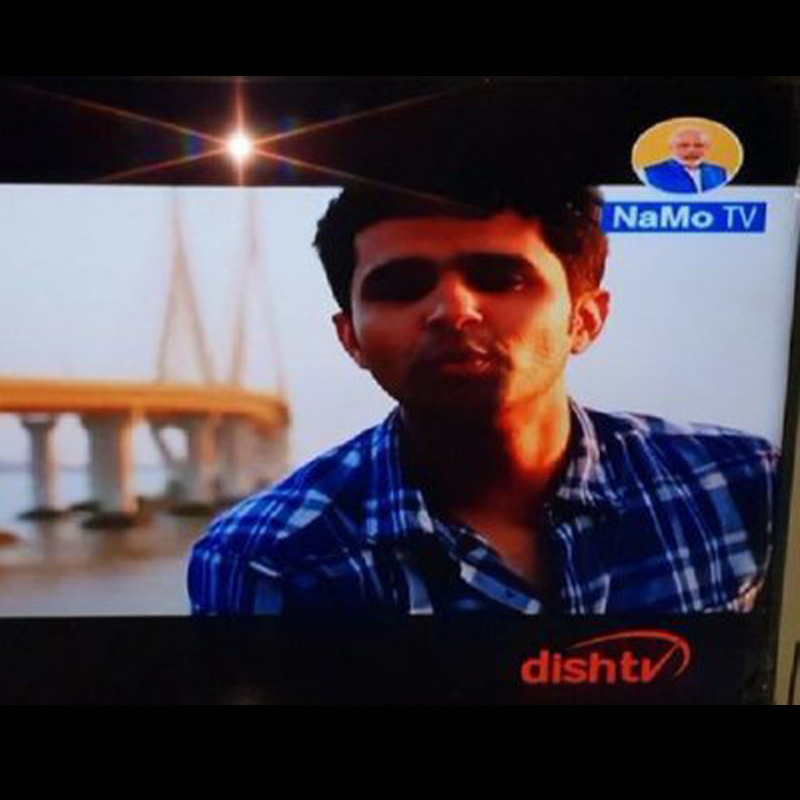
    MUMBAI: With campaigning for the upcoming Lok Sabha elections 2019 in full swing, a new channel called Content TV has now been launched on all major DTH platforms such as Dish TV, Videocon d2h and Tata Sky. The channel, which has now been renamed, was undergoing test run for several months and went live as NaMo TV. The channel appears to be an extension of the hugely popular NaMo app that contains all the information about Prime Minister Narendra Modi's welfare schemes and other activities. For now, Content TV seems to be airing programmes related to the Prime Minister, his speeches and government ads. On Wednesday, PM Modi's address to the nation triggered a controversy with the model code of conduct in force. According to media reports, the PM may not have violated the Election Commission norms as the video was relayed via NaMo TV (now Content TV) and not Doordarshan or All India Radio. There is still some confusion with regards to Content TV given that there has been no formal launch or any information in public domain with regards to which company or individual in associated with it. Interestingly, neither Content TV nor NaMo TV find a mention in the list of permitted satellite TV channels on the Ministry of Information and Broadcasting (MIB) website.

    Content TV is available on Videocon d2h, Dish TV, Tata Sky on 302, 770, and 512 respectively. The channel also has a picture of the Prime Minister as its logo.

  • PM Narendra Modi’s interview with ANI News garners 5.9 mn impressions

    PM Narendra Modi’s interview with ANI News garners 5.9 mn impressions

    MUMBAI: Indian PM Narendra Modi gave an interview to ANI News on 1 January 2019. It raked in 5.9 million impressions in the Hindi news genre, according to BARC India.

    As per a tweet by the audience measurement agency, (HSM 15+) the interview garnered great traction in the 6-7.30 pm time slot. During the course of the interview, PM Modi said that any decision on bringing an ordinance on Ram Mandir can be considered only after the judicial process gets over. He also targeted the Congress for creating “obstacles” in the Supreme Court and slowing down the judicial process.

    He also spoke on various issues from ranging from RBI governor Urjit Patel’s resignation to demonetisation to the Grand Alliance of opposition parties against the Bharatiya Janata Party and its NDA allies in 2019 Lok Sabha elections.

  • Modi says telcos must provide high level of consumer satisfaction

    Modi says telcos must provide high level of consumer satisfaction

    UMBAI: Prime minister Narendra Modi said that telecom service providers must provide a high level of consumer satisfaction and their resolutions should be based on the latest technological solutions. Modi said this while presiding over the 29th meeting of ‘Pragati’ — the ICT-based, multi-modal platform for proactive governance and timely implementation.
    A statement from the PMO quoted Modi as saying, “The Prime Minister said that resolution of issues related to the telecom sector should be based on latest technological solutions. He emphasised that service providers must provide a high level of consumer satisfaction.”
    According to the reports, Modi reviewed the progress of eight important infrastructure projects in the railway, urban development, road, and power and coal sectors. These projects are spread over several states including Uttar Pradesh, Jammu and Kashmir, Haryana, Gujarat, Maharashtra, Karnataka, Jharkhand, Odisha and West Bengal
    Reviewing the Pradhan Mantri Khanij Kshetra Kalyan Yojana, Modi noted that “significant resources are now available to several mineral bearing districts” and directed the officials to utilise the funds in a way that they bring “ease of living” to the people of these districts.

  • Sorrell pats Mukesh Ambani’s back for telecom explosion

    Sorrell pats Mukesh Ambani’s back for telecom explosion

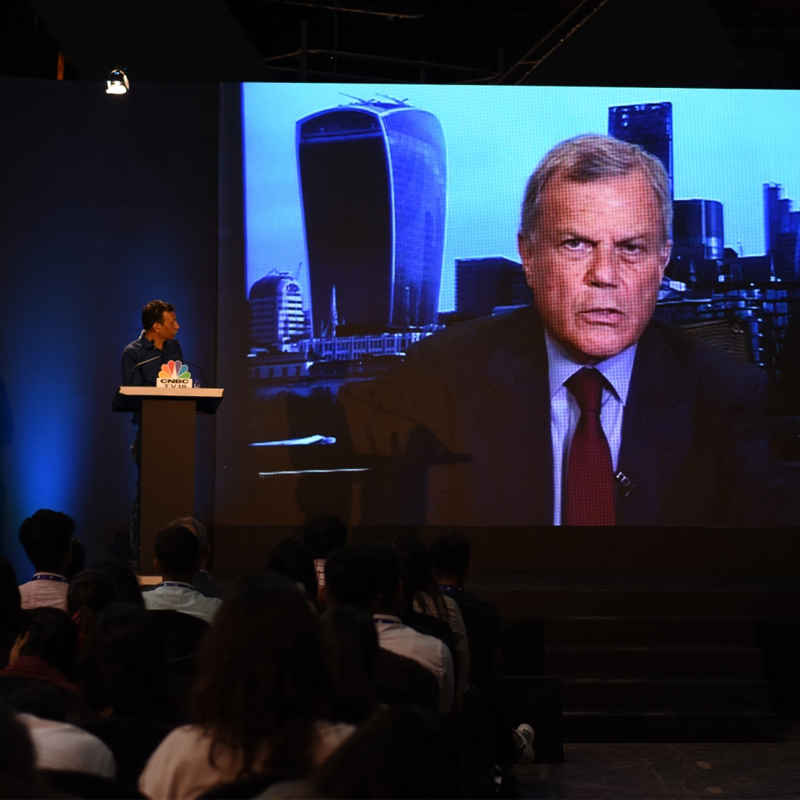
    MUMBAI: Though the announcement of ad guru and former WPP CEO Sir Martin Sorrell’s comeback strategy was announced yesterday in faraway London — a London Stock Exchange notification on Derriston Capital said so — the excitement was running equally high here at the venue where Zee Melt event was being held. And, why not? Sorrell was scheduled for a live video interaction with delegates at the event in the evening.

    But true to his style, Sorrell did not give out any juice to the media and refrained from answering anything particular about his new venture, S4. However, he did have a lot to say about the industry, in general, and India. 

    Sorrell thinks that advertising and marketing industry is in a state of flux today and will only bring opportunities for agencies and brands alike. “The discussion is whether the flux is strategic or structural. But, it is clearly a mixture of both. The A&M [advertising and marketing] industry is worth a trillion dollars with $500 billion in traditional media and traditional communication services, and $500 billion in new media,” Sorrell said speaking to the Zee Melt delegates live via CNBC’s London studio.

    “There is a clear significant change, whether it is because of Google, Facebook, Accenture, IBM or Deloitte. And this flux will bring opportunities. If you look at the $20 billion in WPP, there are parts of it that are growing and there are parts of it that are flat and parts of it that are declining. It is all about identifying those growth opportunities,” he emphasised, giving a hint at what people may expect from him in future with his new venture, which experts say could be a repeat of the WPP story with a modern-day twist.

    For the records, Sorrell is investing $53 million from his own pocket into London Stock Exchange-listed Derriston Capital, a company which will now be remade into S4 Capital, a reference to four generations of Sorrell’s family. While he will become executive chairman in the business that could explore opportunities in technology, data and content, media reports stated institutional investors have pledged 150 million pounds to buy marketing companies — a way Sorrell-founded WPP grew into a global behemoth with presence in 112 countries.

    Coming back to Sorrell-speak for the Mumbai event, the former WPP CEO, ousted on allegations of misconducts about six weeks back, hailed India as being pivotal to WPP growth with 14,000 “talented people”. He noted that India is growing fast in terms of GDP, population and potential.

    Pointing out that India, in the near future, will become the most populous country in the world with the youngest profiles, Sir Martin felt that, from a technological point of view, India has leapfrogged a lot of technologies —such as migrating directly from desktop and normal phones to smartphones. The country has seen huge distribution changes too with and Alibaba entering the market.

    On the distribution side, according to him, Mukesh Ambani’s significant investment in telecommunications and technology in Jio mobiles and SIM card has put India on the global map. In short, India represents opportunities and growth in terms of economy and technology. 

    Year 2017 saw a lot of shakeup and disruption in the industry. Of these, two iconic events that signaled disruption and structural changes for Sorrell and the industry were Unilever’s hostile takeover bid by Kraft Heinz, proving no company is safe today, and when Rupert Murdoch signaled he would negotiate 21st Century Fox business with The Walt Disney Company. What made this 21CF-Disney deal “more complicated” was the involvement of Comcast.

    Holding forth on large agencies and groups owning them, Sorrell felt that that such corporate houses have a “legacy associated with them” and come with a lot of backlog and challenges. When you have a legacy company, the business becomes more of a challenge with time as compared to when you start with a clean sheet, he said. Probably, his new venture S4 will give him and the company an opportunity to build afresh taking into account the changes taking place at client’s end and new structures and approaches that clients want.

    According to Sorrell, a major shakeup in the media industry today has been the General Data Protection Regulation (GDPR), an EU-mandated law on data protection and privacy for all individuals within the European Union (EU) and the European Economic Area (EEA). It also addressed the export of personal data outside the EU and EEA.

    The GDPR primarily aims at giving control to citizens and residents over their personal data and simplify the regulatory environment for international business by unifying the norms within the EU. Sorrell thinks these were early days to assess the impact of GDPR, but from what he’s heard Facebook’s ad sales revenue has remained un-impacted even after the news of Cambridge Analytica. He is also of the opinion that GDPR in early stages seems to favour technology giants as “we have seen smaller or media tech companies withdraw from European market rather than compete”. 

    He ended the session by applauding the Indian government and Prime Minister Narendra Modi for making a significant impact on the Indian economy, although the momentum has slowed down due to GST rollout and after-effects of demonetisation along with other factors. Pointing out that India’s economy will continue to grow and will continue to attract big brands and agencies to put their money in the country, Sorrell concluded, “I continue to be an unashamed, raging India bull and confident that the Indian economy will regain momentum soon.”

    Meanwhile, reporting on Sorrell’s new venture in detail Reuters said Derriston Capital is a little-known two-year-old listed shell company set up to invest in medical technology.

    Over 30 years ago Sorrell built WPP into a company with 200,000 staff in 112 countries by adding market research groups, media buyers, and public relations firms such as Finsbury. Worth 16 billion pounds, WPP returned millions to shareholders, including its CEO, and dominated the industry for decades. According to Thomson Reuters data, Sorrell is still the eighth biggest investor in WPP, with a 1.4 percent stake.

    The Reuters story further stated that Sorrell had vowed to break down the barriers at WPP to make it easier for clients to get all the services they needed from a small team, rather than from a range of people among the more than 400 agencies it owned. WPP competes with US groups Omnicom and IPG, France’s Publicis and Japan’s Dentsu, while thousands of small independent companies provide everything from ads for mobile phones to creative work and data analytics.

    Also Read :

    WPP board begins investigation of its CEO Sir Martin Sorrel, says WSJ

    Sir Martin Sorrell says ta-ta to WPP, Roberto Quarta becomes exec chairman

    Martin Sorrell bullish on India

    TAM or BARC, the market has to decide: Sir Martin Sorrell

  • Comment: MIB’s botched whip on fake news akin to testing waters

    Comment: MIB’s botched whip on fake news akin to testing waters

    With the scourge of fake news rampant globally, any attempt to counter it is always a welcome move. And just for that India’s Minister of Information and Broadcasting Smriti Irani cannot be faulted even if such a view is radical and would be open to severe criticism-as it was in India over the last few days with a large section of civil society coming down like a ton of bricks on the minister’s assertions on guidelines for TV and print media journalists that proposed punitive penalties for breaching some undefined norms.

    However, the wording of the press statement put out by the government’s PR arm, Press Information Bureau, on behalf of MIB is what raises questions.

    First, the government statements were aimed at “regulating” fake news and not look at avenues to arrest their spread or, as the homoeopathy strand of medicine would do, go to the root cause of the ailment. The intent becomes clear: the aim was not really to find a solution to fake news in the true sense.

    Second, the timing of the guidelines, which were aimed at handing out harsh penalties to government accredited journalists from the print and electronic media, rings some more alarm bells. Though the present BJP-led government’s official five-year tenure ends mid-2019, it is widely expected that the general elections would be held before the tenure comes to an end officially—as is mostly done, but then this government has been known to break many times tested norms-if not as early as late 2018.

    On both these counts, the honourable MIB minister was found wanting and her move was widely dubbed as nothing but an initiative to gag the news media critical of the present government. That the prime minister himself had to step in to order a rollback of the MIB diktat a day later, as officially being stated, is a story in itself.

    Let’s forget for once what some of the journalistic organisations had to say in criticism of the MIB move to cancel accreditation of journalists found peddling fake news, though the definition of fake news was not elaborated, nor was the fact as to why just on a complaint from practically anybody a journalist, whose antecedents are verified by the government annually for security reasons, will be put in the hall of shame even if it’s for varied period of time.

    Two organisations, the Press Council of India (PCI) and the News Broadcasters Association of India (NBA), made responsible to decide whether the complaint on fake news was genuine or not (according to the government statement) have not much legal standing or bandwidth to do so. While the PCI is a (toothless) watchdog for the print medium, the NBA’s self-regulatory mechanism for member-TV news channels hasn’t always worked.

    Now let’s try analysing what could have prompted such a move by MIB-a move that was unveiled seemingly without taking into confidence the PM and his office.

    It’s a known fact in India, in sharp contrast to other global markets, that a TV news channel here is started, more often than not, to flaunt one’s status symbol and increase the owner’s powers (both politically and financially) rather than being a pure journalistic means. That is not saying there are no exceptions to the rule and India has some very fine and professional news channels, which daily go through the grind of living up to the high standards of journalism. But, what explains the fact that 25-30 per cent of the total 900-odd permitted TV channels in India would fall in the news and current affairs genre? And they come in all shapes, sizes and languages. If the big guns of the news and current affairs genre mostly have scarlet bottom lines, it goes without saying that the smaller news channels are barely churning out revenue. No other country in the world has so many TV news channels.

    In a year that will lead to general elections-a period after the elections are announced is when cacophony on TV news channels start peaking-clamping down on news outlets cannot be considered a bad strategy; especially when one is not used to hear criticism. Artificial barriers become natural armours. Putting on hold future permission to TV channels by the MIB till a new policy on uplink/downlink is put in place after regulator TRAI’s recommendations is one such clampdown. But then trying to gag the news media as a whole need to be thought out and well orchestrated instead of merely announcing one evening some guidelines under the garb of attempting to regulate fake news.

    And why regulate fake news? Does that mean some fake news could have been allowed, while filtering out the more damaging ones? More importantly, why target those journalists for fake news who are accredited by the government? Did that mean that non-accredited journalists, which are in huge numbers, would have been allowed to dabble in fake news? Considering most news websites and many online ventures that pretend to deal in news but hand out mostly tainted views are not accredited with the government, either at the federal or State level, the question arises whether they would have been allowed to peddle fake news? In India, fake news is more rampant on social media platforms and little known online ventures than in mainstream media.

    But Ms. Irani and her set of advisors again cannot be faulted to try regulating the news media. From the days of the infamous Emergency unleashed by then Prime Minister Indira Gandhi in the mid-70s to her son Rajiv Gandhi in the late 1980s and few other successive governments of post-independent, India has tried to muzzle at some time or other the not-so-perfect-yet-a-vibrant media of the country. Not only such moves have backfired, including the dark days of the Emergency, but in many cases the then governments had to beat a retreat in the face of stiff opposition to any such move. So much so, folklore in the complex realm of Indian politics says that all governments that tried to regulate media in any form bit the dust and were booted out of power.

    In the mid to late 1990s, just before the first NDA government came to power under Prime Minister A B Vajpayee, the then government had tried to bring in Parliament a Broadcasting Bill, envisaging wide-ranging limits to media businesses, including cross-media restrictions of ownerships. That government didn’t remain in power to see through the proposed legislation. However, that didn’t stop other governments, including the Congress-led coalitions that ruled for 10 years after 2004, to attempt limiting media independence. Manish Tiwari, a former MIB minister in 2013, had famously proposed a common examination for journalists as the minister thought media personnel were not qualified enough.

    Cut to 2018. The storm may have blown over for the time being, but for the media to sit back and relax could be dangerous. Simply because the present government is unlike any those in the past. To take satisfaction from an explanation that the PM was totally unaware of one of his minister’s moves to gag the media could be a bad strategy for the media industry. The government was just testing the waters.

    Also Read :

    PMO directs MIB to withdraw guidelines on fake news

    MIB nod to TV channels on hold till TRAI uplink, downlink suggestions

    Smriti Irani tweets industry body advisory urging restraint by TV news channels

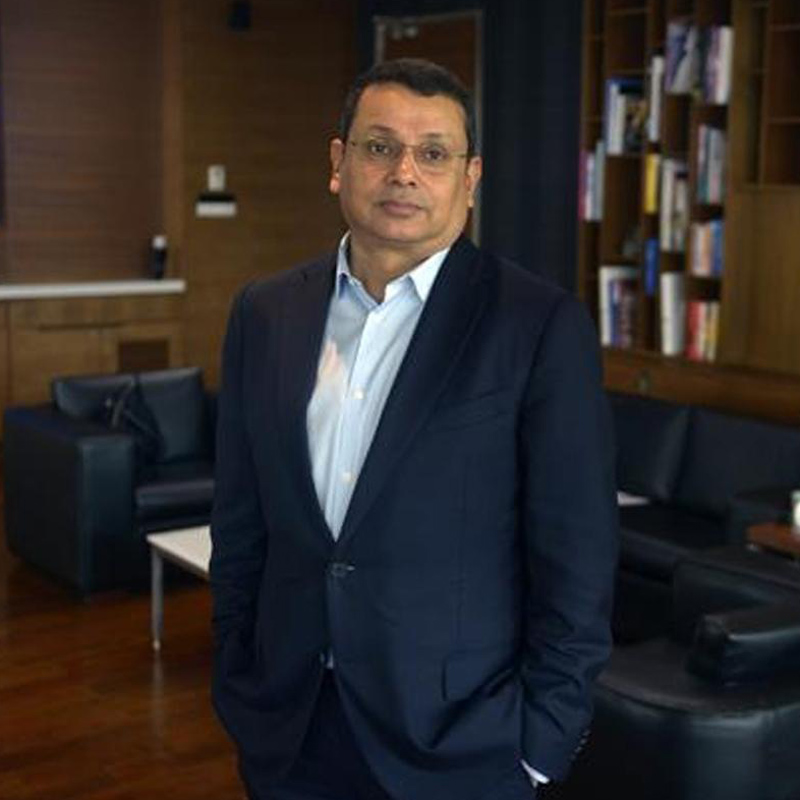
  • Uday Shankar sole media exec in top-100 powerful Indians list

    Uday Shankar sole media exec in top-100 powerful Indians list

    MUMBAI: Sharing the space with the likes of Narendra Modi, Amit Shah, Mukesh Ambani and Virat Kohli is the torchbearer of the Indian broadcast sector, Star India’s Uday Shankar. Indian Express’ list of most powerful Indians has ranked him at 69, making him the sole representative of the entire broadcast industry of the country.

    Those who made the top 100 include people from various walks of life–politicians, Bollywood actors, businessmen and cricketers. In December 2017, Shankar was bumped up from the position of Star India CEO and chairman to 21st Century Fox Asia president. Taking pride in Shankar’s work, 21 Century Fox executive chairman Lachlan Murdoch and CEO James Murdoch commented, “Uday’s new role will enhance our strategic focus across all of Asia and enable us to further capture opportunities, building on the transformation Star India has driven in our most important growth market.”

    Under Shankar’s leadership, Star India has grown by leaps and bounds. In September, Star successfully won a Rs 16,347.50 crore bid for IPL’s global media rights across platforms. He also leads the company’s video business across entire Asia for both Fox and Star and is closely involved with the parent company’s key leaders, including Rupert Murdoch and his sons, on key strategic initiatives in the region.

    Holding the reigns of a global media powerhouse, Shankar has expanded Star India into regional language channels and produces close to 17,000 hours of content each year in eight languages. Shankar’s mantra for success has been to string together a group of high-calibre executives who understand the territory and carry out the work precisely.

    The network has grown into two major areas–entertainment and sports. The latter has seen the inclusion of several non-cricketing properties, thanks to Star, such as Pro Kabaddi League, Indian Super League and leagues for sports like table tennis, badminton, etc. Lately, the network has even carved a niche for itself in the OTT space with Hotstar.

    Also Read :

    Comment: The rise and rise of Uday Shankar

    Uday Shankar becomes president of 21st Century Fox, Asia