Tag: Narayan Rao

  • NDTV eyes investor in MetroNation Chennai

    NDTV eyes investor in MetroNation Chennai

    MUMBAI: NDTV Ltd. is planning to induct strategic investors in its loss-making joint venture company, MetroNation Chennai Television Limited, that operates a news cum infotainment channel.

    MetroNation Chennai Television also plans to increase the Tamil content on the channel.

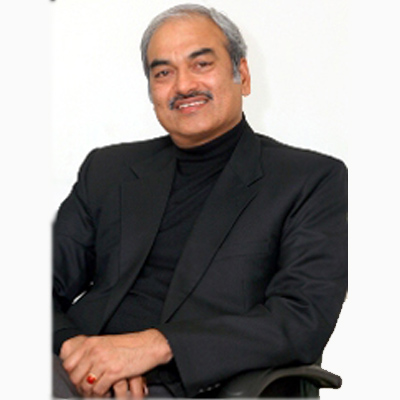
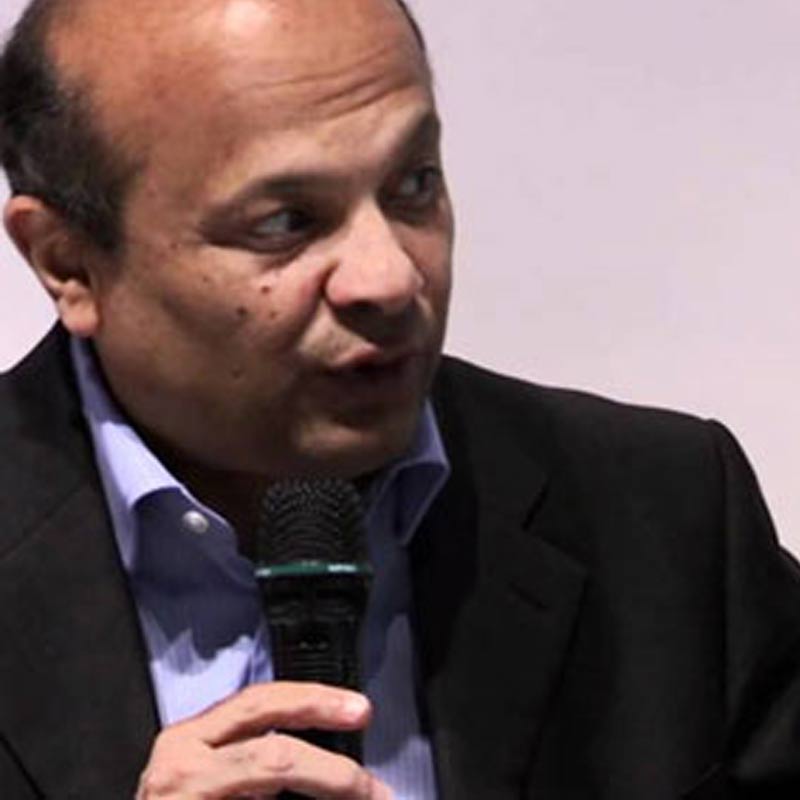
    “We are considering getting strategic investment in MetroNation Chennai Television. We are looking at raising equity capital. We are also going to increase the Tamil content in the channel,” said NDTV Group chief executive officer KVL Narayan Rao.

    MetroNation Chennai, where NDTV holds 51 per cent and Kasturi and Sons (Hindu Group) the balance 49 per cent, has incurred accumulated losses amounting to Rs 275.1 million.  
         
    The company has investment, loans and receivable aggregating Rs. 208.7 million (corresponding previous period Rs. 112.5 million and previous year Rs 1,47 million).

    Pending finalisation of the strategic options including getting in investors, NDTV has carried the investment, loans and receivable at book values since the management expects to be able to realise these assets in full.

    Rao, however, refused to reveal what capital the JV company was looking to raise and who likely would be the potential investor.

    MetroNation Chennai was launched in 2009.
     

  • WC: ICC sticks to its footage guidelines for news channels

    WC: ICC sticks to its footage guidelines for news channels

    MUMBAI: The International Cricket Council (ICC) and the Indian television news broadcasters continue to be at loggerheads.

    The ICC has maintained that the footage guidelines that it issued for news coverage regarding the World Cup are fair, contrary to the common opinion running through news channels.

    Reacting to reports that Indian news channels have said that the terms of the footage made available for them are not acceptable, an ICC spokesperson told Indiantelevision.com that there was no reason to concede ground.

    “The guidelines we have put in place for the ICC Cricket World Cup 2011 are fair, reasonable and in line with the industry best practice. They are designed to allow non-rights-holders (NRH) the opportunity to offer quality news-access coverage for their viewers while also protecting the exclusive rights of our broadcast partner,” the spokesperson said.

    The spokesperson noted that in the past, some non-rights-holders (NRH) have flouted the rules and showed almost ball-by-ball coverage of events, in breach of the broadcast partner’s rights.
         
      “At a very early stage in this process (beginning in October 2010), we and our host broadcaster engaged the views and opinions of the News Broadcasters’ Association (NBA) and involved that organisation at every stage of this process. After lengthy discussions with the NBA, we sent the final version of the guidelines to the NBA to inform them that we were going to publish them on 19 January.”

    The spokesperson said that the cricket‘s governing body got no response from them. So the ICC extended the publication date and the guidelines were finally issued on 25 January.

    “To date we still haven‘t heard back from the NBA. We consider the guidelines to be very reasonable and lenient when it comes to the issue of news access rights. Through its purchase of the rights to televise our events, our broadcast partner, ESPN Star Sports, has poured a large amount of money into cricket while also providing a fantastic televisual experience to a billion viewers in more than 180 territories around the world,” the spokesperson said.

    The spokesperson said that this investment is used to develop the game in almost every corner of the globe and it is important that their investment is protected. “At the same time we also realise the importance of free news access to NRH and so these guidelines provide a workable balance between those two sides.”

    Meanwhile, the NBA today expressed confidence that it would be able to amicably sort out the issue relating to the news telecast of ICC Cricket World Cup footage.

    NBA president KVL Narayan Rao told Indiantelevision.com that the association had already written to the ICC that it wanted to discuss the issue and he expected that this dialogue would be held soon.

    The ICC, however, said that it has not received anything from the NBA.

    NBA sources said that the common expectation was that an early resolution would be found “as both needed each other”.

  • Rough Q2 for TV news firms

    Rough Q2 for TV news firms

    MUMBAI: News channels are badly bruised by an ad slump in the second quarter as monies have shifted to Hindi general entertainment and sports channels.

    The turnover of most of the listed news companies has eroded in a quarter when other genres of broadcasting have gained in an improved advertising economy.

    TV Today, which runs India’s most popular Hindi news channel Aaj Tak, has seen a 6.6 per cent revenue fall over the year-ago period due to lower inventory utilisation. NDTV’s second-quarter revenue from the news business also slipped 6.1 per cent.

    “There is a growing concern that TV news business in India is going through a rough patch. The third quarter will see a significant recovery due to the festive season but we could be headed for a slow revenue growth for the sector in the backdrop of increasing commoditisation,” said a media analyst who has been tracking the sector.

    TV Today’s consolidated Ebitda, in fact, turned negative for the first time in 24 quarters. Net loss stood at Rs 76 million.

    “While revenue fell, staff and distribution expenses grew. Investments also went into Headlines Today and Tez for their revival. The third quarter will see a drastic improvement and TV Today will turn profitable again,” an analyst said.
      
         
      For the TV broadcasting segment, TV Today posted a revenue of Rs 596.22 million and an operating loss of Rs 40.57 million. In the trailing quarter, the company had posted a revenue of Rs 641.39 million and an operating profit of Rs 49.05 million.

    NDTV suffered from weak sales and posted a standalone Ebitda loss of Rs 233 million and net loss of Rs 343 million.

    “It has been a bad quarter generally for everybody in the news business from a revenue perspective. There has been a shift in advertising from news to GECs and sports channels. In the earlier year, some stability had come into the market in the second quarter. But the good news is that there seems to be a strong recovery in the third quarter coinciding with the festive season,” said NDTV Group CEO KVL Narayan Rao.

    TV18 improved its performance in the fiscal second-quarter but IBN18 Broadcast continues to post losses.

    Zee News Ltd chief executive officer Barun Das feels the decision to stick to hard news has worked for the company. “It has not been one of the best quarters for TV news. But we have seen revenue growth. We have the advantage of having regional news channels in our network. Sticking to hard news has worked for us. On the Ebitda level, we have performed beyond our expectations in the first two quarters. We were expecting to be Ebitda negative but have turned positive,” he said.

  • NDTV forecasts faster growth from Q3

    NDTV forecasts faster growth from Q3

    MUMBAI: NDTV’s first-quarter net loss from news business has widened over the year-ago period as it increased its employee expenses while revenue dipped on absence of political advertising.

    The company, which operates English news channel NDTV 24X7, Hindi news channel NDTV India and business news channel NDTV Profit, suffered a net loss of Rs 241.2 million for the three-month period ended June compared to a loss of Rs 23.9 million a year ago.

    Income from operations at Rs 670.8 million fell 12.11 per cent, as against Rs 763.2 million in the year-ago period. In the previous fiscal, revenue had jumped on the back of political advertising due to general elections.

    “The first quarter has generally not been good for anybody so far as ad revenue goes. Companies are just walking out of recession and there is an air of caution. We expect a slight improvement in the second quarter and better growth over the subsequent quarters. Our subscription revenue for the first quarter has seen good growth,” says NDTV Group CEO Narayan Rao.

    On consolidated basis, the subscription income has gone up 22 per cent to Rs 116 million, as against Rs 95 million in Q1 FY 10 on the back of increased DTH penetration.

    NDTV’s expenses jumped 20 per cent to Rs 889.1 million, from Rs 741 million a year ago. This was mainly because of personnel cost, increase in marketing expenses and special bonuses the company awarded to its employees.

    The rise in personnel cost even without the one-time expense of bonus and gratuity has been sharp over the trailing quarter.

    Explains Rao, “We have got to a headcount that is similar to 2007 – prior to our expansion. That is a good development. Besides, salaries had to be corrected after the recession.”

    On a consolidated basis, NDTV has narrowed its net loss to Rs 311.1 million, as against Rs 834.1 million a year earlier. However, the previous fiscal included NDTV Imagine financials, which NDTV sold to Turner International, and is thus not strictly comparable.

    Income from operations stood at Rs 835.6 million compared to Rs 1.31 billion a year ago, while expenses were at Rs 269.7 million (from Rs 667.7 million).

    The company’s lifestyle channel, Good Times, is performing well. “Good Times should be able to do a revenue of over Rs 650 million this fiscal and is profitably poised. The core news business could remain under a bit of a strain unless ratings improve,” says a media analyst who tracks the company.

  • ‘NDTV is a debt-free company and we are sitting on a cash pile of $70 million’ : NDTV Group CEO KVL Narayan Rao

    ‘NDTV is a debt-free company and we are sitting on a cash pile of $70 million’ : NDTV Group CEO KVL Narayan Rao

    Two years back, Dr Prannoy Roy-promoted NDTV Ltd crafted a growth path in the entertainment business. Riding a bull run, the news broadcasting company launched NDTV Networks Plc to house subsidiary arms NDTV Imagine Ltd and NDTV Lifestyle.


    NBC Universal invested a whopping $150 million for an indirect 26 per cent in NDTV Networks at a time when valuations were running high. Besides, NDTV raised $100 million in step-up coupon bonds.


    The global downturn led to the exit of NBCU, freeing NDTV to scout for investors for its non-news verticals. US-based Scripps Networks snapped up 69 per cent stake in NDTV Lifestyle while Turner International agreed to take 92 per cent of NDTV Imagine.


    So where does this leave NDTV? Are its growth wings clipped?


    In an interview with Indiantelevision.com‘s Sibabrata Das, NDTV Group CEO KVL Narayan Rao says at the end of a whole chain of transactions NDTV is left with a cash pile of $70 million to focus on its news business while retaining portions of the non-news business.


    Excerpts:


    What prompted you to get out of the entertainment business?
    We wanted to focus on what we are best at: running news operations. We are a credible news organisation and there is enough scope to grow that. Besides, we will still retain 5 per cent stake (3 per cent post issue of primary shares to Turner) in NDTV Imagine. As for the Hindi GEC space, it was clear that a strong international strategic partner would bring in funding and global expertise. We are delighted that we have this deal with Turner.


    Did the global downturn and the exit of NBC Universal spur the chain of events?
    No. We bought out NBCU‘s stake. As a result, we got the opportunity to find a good investor who would run the company.


    NBCU had invested $150 million for the 26 per cent stake. Did you pay $25 million to buy back their stake?
    The deal is confidential. I can‘t comment on that.


    Was the deal with Turner dependent on repurchasing the bond holders who would have held 20 per cent in NDTV Networks?
    We had set out to do a few things. Buying back the bond holders was part of that process. We paid $72.4 million for that. This allowed us to pursue investors for our different verticals.


    But wouldn‘t the payout have been $115 mn (along with interest payments)?
    There was a negotiation that took place. We bought out the bonds and that allowed our subsidiaries the flexibility for restructuring and financing the businesses including being able to access bank finances for working capital and other requirements.


    ‘We wanted to focus on what we are best at: running news operations. We are a credible news organisation and there is enough scope to grow that‘


    Did you decide to retain a higher stake in NDTV Lifestyle because it would involve less funding while NDTV Imagine would guzzle in more money?
    We entered into an agreement with the US-based Scripps Networks which has experience in creating lifestyle brands. They took a 69 per cent stake and the transaction value was $55 million.


    Will NDTV get $30 million while the balance go as investments into NDTV Lifestyle?
    I can‘t comment on the specifics.


    Two years back, NDTV decided to expand because of a bull run. The market tanked and the scenario changed dramatically. Was it a mistake to expand into the non-news business?
    We have completed a chain of transactions. But at the end of it, NDTV is a debt-free company and we are sitting on a cash of $70 million. Perhaps, we are the only TV news organisation that would be sitting on such a large cash pile. We will still have some non-news businesses running. We also have NDTV Convergence. We have a decent future to look forward to.


    NDTV had posted a standalone net loss of Rs 731.8 million on a turnover of Rs 3.09 billion for the fiscal ended 31 March 2009. How do you plan to turnaround in the news business?
    For FY‘09, we had a one-time cost of around Rs 400 million. We have taken substantial cost-saving measures this year.


    Do you have major plans to invest in NDTV Convergence?
    It is one of our important properties. A lot, though, will depend on getting the right revenue model.


    NDTV has shut down MetroNation Delhi. Do you have any revival plans?
    It is too early to comment on this.

  • Sameer Manchanda is NBA president

    Sameer Manchanda is NBA president

    NEW DELHI: IBN18 Broadcast Ltd joint managing director Sameer Manchanda has been elected President of the News Broadcasters Association (NBA) for the year 2009-10. He succeeds TV Today CEO G Krishnan, who has held the post since the formation of the NBA in 2007.

    NDTV Group CEO KVL Narayan Rao is the vice president while Zee News Ltd CEO Barun Das is the Treasurer.

    The Board of NBA also consists of Krishnan, Times Global Broadcasting CEO Chintamani Rao, Independent News Service chairman Rajat Sharma, and Media Content & Communications Services (India) managing editor Shazi Zaman.

  • NBC Universal to invest in NDTV’s movie biz

    NBC Universal to invest in NDTV’s movie biz

    MUMBAI: NDTV plans to set up a separate entity for its film production business where NBC Universal will come in as an equity partner.

    The company is currently in the process of developing and producing various scripts. But as the business scales up, there will be need for capital infusion.

    “NDTV Imagine Films is working on some projects. We are, however, at the early stage of the film production business. It won’t be right to comment on what shape this will take. But NBCU films division is a potential partner for this venture going forward,” says NDTV Group CEO KVL Narayan Rao.

    NBCU has already pumped in $150 million for an effective indirect holding of 26 per cent stake in NDTV Networks, the holding company for NDTV’s entertainment and lifestyle channels, digital media and other interests, including products and services.

    For the movie business, NBCU intends to have funding outside this commitment.

    On the entertainment front, NDTV will, however, currently focus on growing its Hindi general entertainment channel NDTV Imagine. In the pipeline is a big-ticket celebrity show which it hopes will shore up the ratings.

    In its news operations, NDTV has embarked on a cost cutting and rationalisation exercise. Sensing a slowdown in advertisement revenue growth due to the overall market conditions, NDTV feels it is in a better situation because it has stayed out of debt and is sitting on Rs 6.6 billion of cash in its books.

    “In these times, it is better to be conservative. The focus should be on consolidating your position and sustaining and maintaining your businesses. We have started rationalising the operational components of cost. Even for distribution expense of our channels on cable networks, we are staying within budgets. We expect some amount of consolidation to take place in the news business in future,” says Rao.

    NDTV will launch MetroNation Chennai by the end of this fiscal. “Our focus will be on MetroNation Delhi and Chennai,” says Rao. After Chennai, NDTV had plans to roll out the city-centric channel in Mumbai.

    Indiantelevision.com had earlier reported that NDTV would set up a joint venture company with The Hindu Group for the Chennai channel. NDTV would hold 51 per cent and Hindu Group the balance 49 per cent.

    Meanwhile, NDTV has incurred a consolidated net loss of Rs 1.19 billion for the second quarter of the fiscal due to the entertainment side of the business being in its early growth phase. Revenues, however, rose 65 per cent over the year-ago period to stand at Rs 1.28 billion for the quarter.

    On a standalone basis, NDTV’s net loss was at Rs 130.40 million for the quarter ended 30 September 2008 as against a net loss of Rs 39.50 million in the prior year period.

    Total Income from operations increased to Rs 739.10 million, from Rs 677.7 million in the second quarter of FY’08. Expenditure was at Rs 900.2 million, up from Rs 699.3 million.

    NDTV board has decided to split the company into “news and other businesses” and “entertainment and specified allied businesses.” There will be “no regulatory restrictions on FII/ FDI investment in the entertainment media” and this will enable the “company to bring in strategic partners for businesses in any/all the non–news businesses.”

  • NDTV to hold 51% in JV with Hindu Group for Chennai channel

    NDTV to hold 51% in JV with Hindu Group for Chennai channel

    MUMBAI: Prannoy Roy-promoted NDTV Ltd is floating a joint venture company with The Hindu Group to launch a Chennai city-centric channel.

    NDTV will hold 51 per cent in the JV while the Hindu Group will have the balance 49 per cent. The JV will launch MetroNation Chennai, marking Hindu’s foray into television news broadcasting.

    “We are setting up a joint venture company with The Hindu Group where we will hold 51 per cent. Hindu is a reputed brand at the regional and national level. It was a natural gravitation towards each other,” NDTV Group CEO KVL Narayan Rao tells Indiantelevision.com.

    The relationship will also extend to content-sharing with the most popular English newspaper in Tamil Nadu. “We aim to launch MetroNation Chennai in the next 3-4 months,” Rao says.

    Mumbai will see the next launch, but it is likely to be in the next fiscal, Rao adds. NDTV launched MetroNation in Delhi last year to tap the local market.

    NDTV will house the MetroNation channels under a subsidiary company.

    NDTV is also planning to launch a World cinema channel in the next couple of months. “We have already obtained the licence for it,” says Rao.

    The marriage between TV news broadcasters and print owners is gaining popularity. Star India has a joint venture partnership with ABP Group while IBN18 (formerly Global Broadcast News) holds a reletionship with Lokmat to run Marathi news channel IBN Lokmat.

  • News Channels: Sensation-fatigue, government’s attitude and regional channels will decide future content

    Why has phenomenon of unrestrained inputs developed is one question that if answered well, will rid us of taking moralistic positions. In this the points made by QW Naqvi, News Director at TV Today are pertinent.

    Naqvi says that first there was none, and then there was clutter of private news channels and the clutter will increase as days go by. To cut the clutter, channels did what has been seen in Bollywood in terms of genres of films. Some channel did something, which clicked and all channels started doing the same thing, which became a wave.

    Successive waves of formulae came and went, first family tension-based stories, then crime, then violence and sex and then bhoot-pret and the seemingly ridiculous, as this year the channels bent over backwards to snatch the ephemeral eyeballs from each other.

    Part of the phenomenon is because Indian news channels spend relatively much less money and try to break even fast and run the shortest course, cutting at the corners, but that is only part of the story.

    The other part is that over the past year, lifestyles have vastly changed and worries have shifted in the urban middle class areas from roti-kapda-makaan to a restless quest about how to best entertain themselves. The news channels have been trying to answer that quest for the viewers by experimenting with their own formulae, from serious to sensatonal.

    In this process Aaj Tak itself became a victim, in the sense that it did go over to the sensational, though it did not banish serious news or socially relevant stings that shook the country.

    And here comes the third point: Aaj Tak is – despite the veering away from serious news – doing the best in terms of turnover. What does that show? That advertisers are flocking for the raw hide?

    Quite contrarily, Narayan Rao says that despite sticking to the hard news path, they are today not number three in ratings, but firmly sticking to the number two position in terms of revenue, so what does that show?

    Perhaps the picture will become clearer if we see that despite drawbacks, IBN 7 did reach a point where it had a 14 per cent market share this year, from a lowly six a year ago, and though it could not retain that share that for too long, according to Ashutosh, “this shows that there is scope for serious news”.

    Also, according to industry sources, India TV is far more disadvantaged in revenue terms than its ideological opponent IBN 7, which though it has not broken even is doing better business.

    But the ethical debate in 2007 was really being driven by the fact that there has been a consistent fear in the minds of the CEOs that the vanilla channels with soaring and consistent ratings, would sooner or later bag the big brands, who could shift greater proportions of their spendings to higher rated channels.

    Rating itself has been debated widely this year, especially in the captains in the news channel space, and barring India TV, which says that only those gripe about rating who get the wrong end of the stick, all major channels are today questioning various aspects of rating system of TAM, even while agreeing that it is as of date the industry standard.

    The sample size has been questioned, so has been the possibility of tampering with people metre homes, and also the issue that it is a Western system that does not take into consideration the plurality of Indian society, and even the highest rated channel’s news head, Naqvi too feels that there is need for vast improvements in the system.

    This year, TAM has ruled the market, creating what Sardesai has termed the ‘tyranny of the eyeball-driven marketplace’.

    But then going by the above discussion, where we saw Aaj Tak stay at No. 1 with its mix of the sensational and serious in equal measure, and yet NDTV stay at No. 2 with its insistent on serious journalism, it seems that TRP is not driving revenue flows: it is after all, perceptions, and here is why.

    Let us not forget that Aaj Tak had started out a decade ago as the private sector’s perfect answer to sterilised government reporting on Doordarshan and had been marked by three specific attractions: accuracy and speed and courage. The perception of Aaj Tak as a credible channel that talked a lot more things than the PMs and the CMs had made it a darling of the masses as well as the classes.

    When advertisers today decide on apportioning monies from their budget, their perception of NDTV and Aaj Tak have remained the same, though one changed and the other did not.
  • NDTV launches NDTV Arabia in ME and North Africa

    MUMBAI: NDTV has launched NDTV Arabia in the Middle East and North Africa region. The 24-hour news and infotainment channel will be free-to-air channel available on Nile Sat.

    However an official press release states that the official launch will be around the end of October, after the channel’s soft launch today.

    The English channel will have a mixed content of business, current affairs and lifestyle. Subsequently the channel is going to have local news content produced from its bureau in Dubai, the release added.

    NDTV Ltd. chairman Prannoy Roy said, “We are proud to announce the launch of NDTV Arabia, the first wholly owned region specific channel from the bouquet of NDTV. This launch is in line with our plans to initiate international expansion beyond our current core market and reach new target audiences. The aim is to give more and more people access to credible quality news and information from India and South Asia. Our next step for the region will be to launch further channels targeting the local Diaspora.”

    NDTV Group CEO KVL Narayan Rao said, “NDTV Arabia is NDTV’s first venture into the Middle East and Africa as a customised channel. The channel aims to cater to growing interest in Indian current affairs and economy among a large population of Indian and South Asian origin in the Middle East and Africa.”