Tag: Narayan Rao

  • NDTV’s KVL Narayan Rao passes away

    NDTV’s KVL Narayan Rao passes away

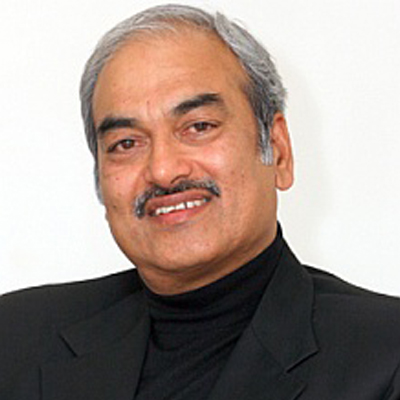
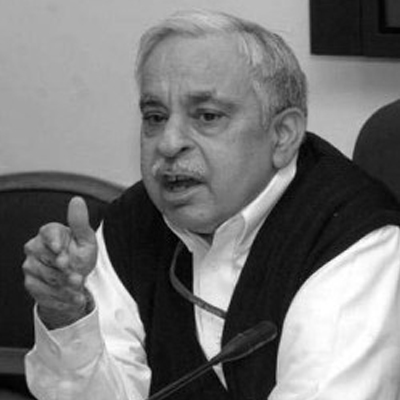
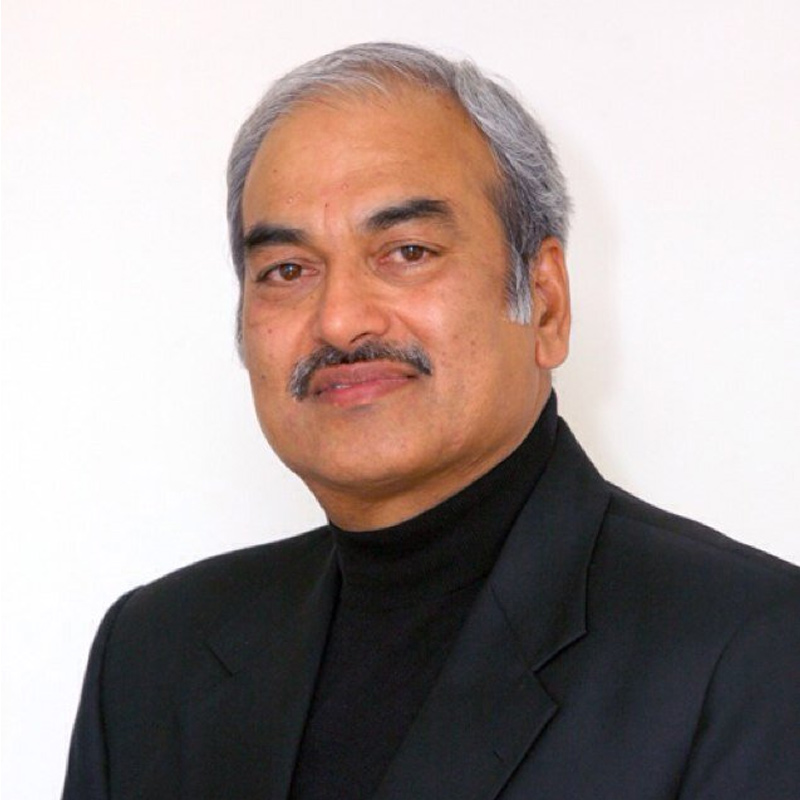
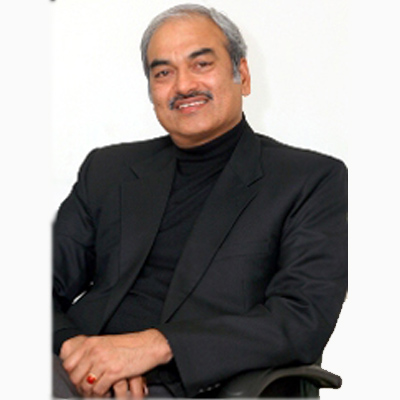
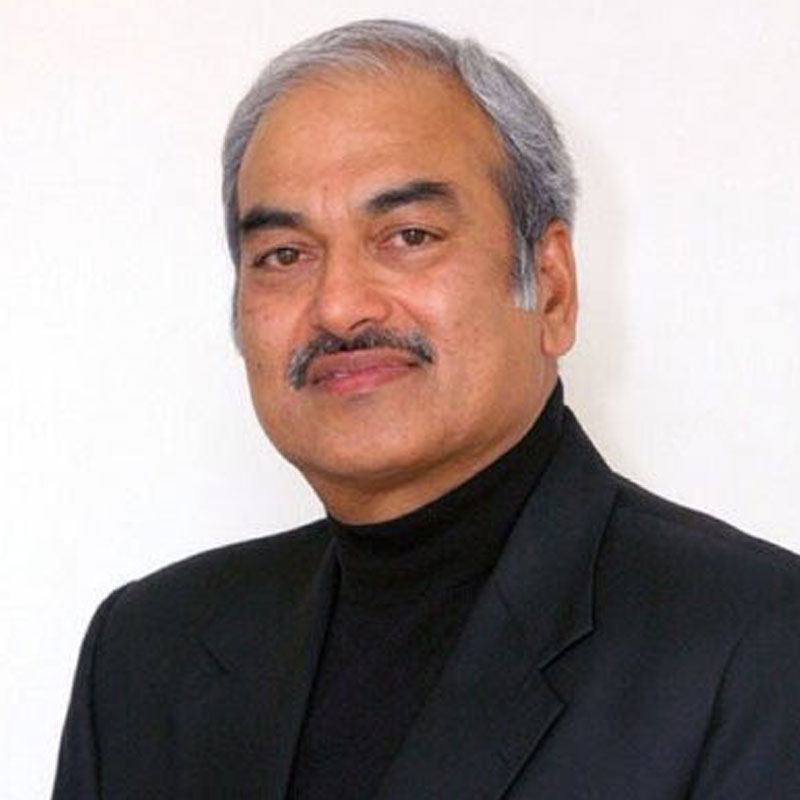
    MUMBAI: NDTV group CEO and executive vice chairperson KVL Narayan Rao passed away at 8am today. Suffering from cancer, he was 63 years old.

    His funeral is scheduled at 9.30 pm at Lodhi auditorium

    In October 2016, Narayan Rao was reappointed for a second tenure as NDTV’s group CEO replacing Vikram Chandra, in addition to his responsibilities as executive vice chairperson. 

    Narayan Rao started his career as a journalist with the Indian Express before joining the Indian Revenue Service (IRS), wherein he held several important appointments during his tenure from 1979-1994.

    Narayan Rao had joined NDTV in January 1995 looking after human resources, administration and operations of IRS.

    He was invited to join the board of NDTV in 1998 and had been its executive director since then. He was appointed group CEO in 2007 and executive vice chairperson in August 2011. A former president of the News Broadcasters Association (NBA), Rao was also on the board of the Indian Broadcasting Foundation (IBF). He has been VP of the Commonwealth Broadcasting Association (CBA). He also served as a member of the FICCI Entertainment Committee as well as a member of the CII National Committee on Media and Entertainment. 

  • NBA apprises new I&B secretary Sunil Arora with revenue models of news b’casters

    NBA apprises new I&B secretary Sunil Arora with revenue models of news b’casters

    NEW DELHI: The newly appointed Information and Broadcasting Ministry secretary Sunil Arora was today apprised of various issues relating to news broadcasters in a wide-ranging discussion with the News Broadcasters Association (NBA). 


    NBA president Rajat Sharma told indiantelevision.com that all issues including the ad cap were discussed with Arora.


    The meeting comes soon after the adjournment of the ad cap case to 23 September by Delhi High Court.


    This is the first meeting of the new secretary who took over on 31 August, 2015.


    Issues relating to carriage with multi system operators (MSOs) and local cable operators (LCOs) and revenue models for growth of the industry were also discussed. 


    The delegation led by Sharma comprised NDTV’s Narayan Rao, Ashok Venkatramani of ABP News, Anuradha Prasad of News 24, Ashish Bagga of India Today, A P Parigi of Network 18 and NBA secretary general Annie Joseph.


    Special secretary J.S. Mathur was also present in the meeting. 


    The delegation also apprised the secretary about the initiatives taken by the broadcasting industry in the direction of self-regulation which includes working of News Broadcasters Standards Authority (NBSA), an independent authority set up by NBA and the two tier mechanism of complaints redressal relating to news channel followed by them. 

  • I&B Ministry-bashing unwarranted, says NDTV’s Narayan Rao

    I&B Ministry-bashing unwarranted, says NDTV’s Narayan Rao

    MUMBAI:  For the past one and a half years, India has been undergoing stomach churning change in the television industry thanks to the government mandated rollout of digitisation. With the due date to complete digitisation nationwide getting closer (31 December), much needs to be done. Now, with a new government in place and new Information and Broadcasting (I&B) Minister Prakash Javadekar assuring the industry that digitisation will be implemented, expectations are only rising.


    The recent CII meeting that took place with Javadekar saw industry stalwarts express their woes and wish-lists to the minister. They also expressed their displeasure at the inefficiency of the I&B bureaucracy.


    I&B joint secretary of broadcasting Supriya Sahu and I&B secretary Bimal Julka were targets of accusations of delays in clearances and permissions.


    Some other industry leaders – while appreciating the fact that the I&B Ministry  pushed through DAS, whereas CAS in 2006-2007 just fell through –  have lambasted even the TRAI – along with the I&B Ministry – at industry  gatherings over the past six months for not moving fast and determinedly enough on many issues that have impacted their businesses.


     NDTV vice chairperson and News Broadcasters Association president KVL Narayan Rao thinks that industry needs to keep a cool head and not resort to bureaucracy bashing. Narayan Rao has nearly 30 years work experience; half of that was spent in the bureaucracy with the Indian Revenue Service (1979-1994); the other half has been with the news network NDTV.


    Says he: “I think the attack on the bureaucracy, particularly that on the I&B Ministry, was quite unfair. We currently have some highly efficient officials at the I&B Ministry who have shown a lot of understanding of our issues and have tried to do all they can to solve them. Supriya Sahu and Bimal Julka come immediately to mind.”


    At the CASBAA India 2014 conference in New Delhi earlier this year, Sahu made a detailed presentation on the progress and benefits of digitisation stating that only 10 broadcasters had shared data with the Ministry. She appealed to other broadcasters to share revenue data with them so that the government could ascertain whether the digitisation dividend was really coming the way of industry.


    If one harks back to 2012 almost everyone was cynical that the government mandated digital addressable system (DAS) rollout would ever become a reality. Almost everyone scoffed at even the suggestion. But it was a determined ministerial secretariat led by the then secretary Uday Kumar Varma and his team which consisted of Supriya Sahu and her directors Reijemon who pushed it through – along with the TRAI. Julka who replaced Varma has been following the same narrow strait.


    Hence Rao feels that constant hurling of barbs at ministry officials is unpalatable. Says he:  “Please remember that this is virtually the same lot of officials who ensured the implementation of the first two phases of digitisation which isn’t an easy task at all, who also issued the notification on ratings agencies, a long pending demand of the industry, and issued over 400 permissions for channels and who have allowed self/independent regulation to prevail. Yes there have been delays now and then but how much of that can be attributed to the bureaucrats is debatable.”


    Indeed, several initiatives were taken by the I&B mandarins. Officials regularly met (at one time it was almost weekly) with industry executives – whether from broadcasting, MSOs, or LCOs – to asses digitisation’s progress. The security clearance check that directors of various channels were subject to – which pained many a broadcaster – came at the behest of the Ministry of Home Affairs.


    When a large grouping from the broadcasting industry  rose against the only TV ratings agency TAM, it was the I&B Ministry that took note of it and came up with policy guidelines for TV viewership monitoring. It was the Ministry which also pushed the institution of Broadcasting Audience Research Council, which the industry had kept in cold storage for almost half a decade.


    After the Saradha chit fund scam, the Ministry quickly stepped in and did a check of the shareholding pattern of various channels to prevent repeats of a similar nature.


    When TRAI came out with the 10+2 ad cap regulation, the Ministry supported the broadcasters’ view in keeping it at bay till digitisation pans out, though nothing concrete has come out of it as yet.


    Additionally, while the Ministry did use the stick, it also doled out carrots by extending DAS deadlines on more than a few occasions – keeping in mind the realities on the ground – to give it a reasonable chance at success. Despite the long rope extended by both TRAI and the I&B Ministry, industry at the cable TV and MSO level has yet to begun physical billing for DAS subscribers even in some phase I cities. Forget about phase II.


    Says a media observer: “Agreed for the last three or four months of the UPA regime the Ministry’s focus was on the election; industry issues were not a high priority. It was not a fault of the civil servants alone; the Ministry itself and the government on the whole could not move, thanks to the losses in the New Delhi state elections, and the stigma of corruption which kept hitting the Congress I in its face. I can understand some sections of the industry getting edgy, nervous and agitated for many a broadcaster’s, DTH operator’s business plans are linked to digitisation’s success and the fact that bureaucrats and ministries don’t throw a spanner in the works.”


    She adds: “But we have to remember we have a new government led by Narendra Kumar Modi who has a lot more freedom than the previous regime. There’s a lot of positivity around, even though there are economic challenges on hand. The industry should look ahead, and not back. Things can only get better, and with experienced officials in the Ministry at helm, it will be easier to push through things. New ones could end up taking longer as they will have to come to grips with the sector – and that takes time.”


    That’s a piece of advice which the irate members of the industry can ponder upon.

  • Industry leaders’ thoughts on Independence Day

    Industry leaders’ thoughts on Independence Day

    Independence. We in India have had it for so many years that the India that is emerging does not know what it is like to not be free. For millions, the struggle to get freedom from the British, Portuguese and sundry other rulers are just chapters in their history books. But occasions like Independence Day and Republic Day remind us that we were once subservient and that we overcame bondage and won our freedom.

    15 August is the 67th year of our independence. For sure, the Indian flag will be hoisted in neighbourhoods all over India. Smaller flags will be mounted on cars, cycles and bikes. And even smaller ones pinned on our shirt pockets. Patriotic songs will be played out on radio and on TV.

    And hopefully for a day we will forget all our complaints against rising prices, economic upheaval, a political and administrative class that is showing little backbone for fair governance and well-being of its citizenry, corruption and the lack of respect that many in India have for women. Hopefully, we will remember the price that was paid for the valuable freedom that we enjoy today. And feel proud to be Indian. We, at indiantelevision.com surely are and even proudly carry it in our name.

    Indiantelevision.com’s young team of journalists spoke to senior professionals from the advertising, broadcasting, cable TV and marketing sectors to get a fix on their feelings on India’s 67th Independence Day. And also to gather from them on what their favourite patriotic song or movie is. Read on to feel patriotic:
    O&M India executive chairman & NCD Piyush Pandey

    I am very proud to be an Indian. I think India is a very significant country with many diverse cultures and we have come a long way. In the future, I wish the country to be in a much better shape than what it is currently.

    Mile Sur Mera Tumhara is my favourite patriotic song and truly depicts the light of Indian culture and unity amongst Indians.
    NDTV executive vice chairperson Narayan Rao

    I feel good that we live in an independent country but it shouldn’t be taken for granted.
    I’d like broadcasting to be world class and for journalism to have high standards, credibility and ethics.
    My favourite song is Saare Jahan Se Achchha.
    Publicis director, CCO south Asia Bobby Pawar

    Yes I am proud and happy as well that I am living in an independent country as an independent man.

    I really don’t have any ideas about where the industry is headed. If I did know, then I probably would make millions on it. However, I am very optimistic about the growth in the industry.

    My favourite movie is my friend’s Prasoon Joshi’s film Rang De Basanti and the title song from the same movie is my favourite song.
    Discovery Networks Asia Pacific, sr VP & GM, head of revenue, pan-regional ad sales & south asia, Rahul Johri

    I am proud of being an Indian and happy about it. I think in the coming years the broadcasting industry will evolve as the market evolves. I see many more options on offer for viewers and I see the broadcasting industry only growing further.

    My favourite patriotic song is the video Ye Mera India by Saleem and Suleiman which is on Animal Planet.

    Zee, chief content and creative officer Bharat Kumar Ranga
    I renamed myself from Mukesh to Bharat, when I was in the fourth standard. I fell in love with Manoj Kumar’s character as Bharat inUpkaar. So when I was filling my form for fifth standard, I renamed myself as Bharat. This is how deeply I feel about India. Though firangi competition is welcome, but in India only Indians will rule. I am among those, who believes in the country.

    It is in India, that media enjoys the stature of being the fourth pillar. It started with print and went on to books and films. There was a certain independence given to broadcasters, but that was not utilised to the maximum. Though India has done well in a lot of sectors, but growth in media has not been great. We need to break away from daily and weekly competitions to unleash the power of media.
    My favourite patriotic song is Mere Desh Ki Dharti from the movie Upkaar, I still get all 

    charged up hearing the song. Purab and Paschim was one movie which aptly brought out the power of India, and that is my favourite patriotic movie.

    Draftfcb+Ulka advertising ED & CEO Ambi M G Parameswaran
    I am proud to be an Indian. And I value my freedom. 

    As a nation, the change I would like to see is that the slowdown, which we are witnessing, goes away. I know it will be another 12-18 months before that happens, but then we will see double digit growth after that. The GDP growth needs to regain momentum, business confidence need to rise, rural development really needs to happen, and food prices need to come down.

    My favourite patriotic movie is the Tamil film Kappalottiya Thamizhan.
    Star Den Media Services, CEO Gurjeev Singh Kapoor
    We feel proud to be independent and we celebrated Independence Day at our workplace too on 14 August. Everyone was wearing small paper flags across their hearts proudly. We decked up the office with balloons and placed a small flag on every workstation.

    In broadcasting, freedom of expression is critical and this has rarely happened in the past, but it is witnessing a change. Things have gone through a revolutionary change and kudos to the industry for bringing in this welcome change.

    I love patriotic movies, but Saat Hindustani (1969) and Shaheed (1965) figure among my favourites.

    Zee News CEO Alok Agrawal
    I feel good as an Indian. We are living in a democratic country. There are lots of things we need to do to improve. We all have some amount of influence that we can use.
    We are launching an entire new initiative Bharat Bhagyavita. Our responsibility as media is to inform and empower people with knowledge and make them aware of their rights and encourage them to do something about what’s going on.

    Nothing comes to mind. I don’t go by defining a favourite. Any patriotic song is fine. I like almost all songs.

    Media Consultant, Sanjeev Hiremath
    For me patriotism is a feeling and cannot be defined in a song, though I really love the Hollywood movie ‘Independence Day’.

    In the 67th year of Independence, the biggest achievement for India is that it is no longer considered as a developing nation. A lot of Indian companies are now investing in overseas business. Our GDP is robust and we are above world average. I am proud to be an Indian and the reason is its diverse culture. My only concern is that though individually we are progressing, the country collectively isn’t. Even today 70 per cent of the population lives on 1.50 dollars a day. It makes me sad. The political scenario needs to improve.

    What is good about the cable and satellite industry is that we are not 10 years behind when we compare ourselves to other countries. We have been making gradual progress and now with DAS, in the next two years we will be up close with the world cable and satellite industry.
    Playtime Creations TV producer Hemal Thakakar

    As an Indian we feel proud that we had so many great men and women who gave their lives for freedom we enjoy today. Somewhere I think we have failed them and have misused freedom which they got for us. I hope, pray and wish we correct that.

    For broadcasters, future is shining. Digitisation is beginning of new horizon as our country gets hungry for more entertainment and infotainment. New avenues are discovered and looking at the Indian diaspora and the fact that we are a young nation, the broadcast industry is going to get a major boost.

    My favourite song is the title track from the film Swades and Kandho Se Milte Hain Kandhe.

  • Industry leaders’ thoughts on Independence Day

    Independence. We in India have had it for so many years that the India that is emerging does not know what it is like to not be free. For millions, the struggle to get freedom from the British, Portuguese and sundry other rulers are just chapters in their history books. But occasions like Independence Day and Republic Day remind us that we were once subservient and that we overcame bondage and won our freedom.

    15 August is the 67th year of our independence. For sure, the Indian flag will be hoisted in neighbourhoods all over India. Smaller flags will be mounted on cars, cycles and bikes. And even smaller ones pinned on our shirt pockets. Patriotic songs will be played out on radio and on TV.

    And hopefully for a day we will forget all our complaints against rising prices, economic upheaval, a political and administrative class that is showing little backbone for fair governance and well-being of its citizenry, corruption and the lack of respect that many in India have for women. Hopefully, we will remember the price that was paid for the valuable freedom that we enjoy today. And feel proud to be Indian. We, at indiantelevision.com surely are and even proudly carry it in our name.

    Indiantelevision.com‘s young team of journalists spoke to senior professionals from the advertising, broadcasting, cable TV and marketing sectors to get a fix on their feelings on India‘s 67th Independence Day. And also to gather from them on what their favourite patriotic song or movie is. Read on to feel patriotic:

    O&M India executive chairman & NCD Piyush Pandey

    I am very proud to be an Indian. I think India is a very significant country with many diverse cultures and we have come a long way. In the future, I wish the country to be in a much better shape than what it is currently.

    Mile Sur Mera Tumhara is my favourite patriotic song and truly depicts the light of Indian culture and unity amongst Indians.

    NDTV executive vice chairperson Narayan Rao

    I feel good that we live in an independent country but it shouldn‘t be taken for granted.

    I‘d like broadcasting to be world class and for journalism to have high standards, credibility and ethics.
    My favourite song is Saare Jahan Se Achchha.

    Publicis director, CCO south Asia Bobby Pawar

    Yes I am proud and happy as well that I am living in an independent country as an independent man.

    I really don‘t have any ideas about where the industry is headed. If I did know, then I probably would make millions on it. However, I am very optimistic about the growth in the industry.

    My favourite movie is my friend‘s Prasoon Joshi‘s film Rang De Basanti and the title song from the same movie is my favourite song.

    Discovery Networks Asia Pacific, sr VP & GM, head of revenue, pan-regional ad sales & south asia, Rahul Johri

    I am proud of being an Indian and happy about it. I think in the coming years the broadcasting industry will evolve as the market evolves. I see many more options on offer for viewers and I see the broadcasting industry only growing further.

    My favourite patriotic song is the video Ye Mera India by Saleem and Suleiman which is on Animal Planet.

    Zee, chief content and creative officer Bharat Kumar Ranga

    I renamed myself from Mukesh to Bharat, when I was in the fourth standard. I fell in love with Manoj Kumar‘s character as Bharat inUpkaar. So when I was filling my form for fifth standard, I renamed myself as Bharat. This is how deeply I feel about India. Though firangi competition is welcome, but in India only Indians will rule. I am among those, who believes in the country.

    It is in India, that media enjoys the stature of being the fourth pillar. It started with print and went on to books and films. There was a certain independence given to broadcasters, but that was not utilised to the maximum. Though India has done well in a lot of sectors, but growth in media has not been great. We need to break away from daily and weekly competitions to unleash the power of media.

    My favourite patriotic song is Mere Desh Ki Dharti from the movie Upkaar, I still get all charged up hearing the song. Purab and Paschim was one movie which aptly brought out the power of India, and that is my favourite patriotic movie.

    Draftfcb+Ulka advertising ED & CEO Ambi M G Parameswaran

    I am proud to be an Indian. And I value my freedom. 
    As a nation, the change I would like to see is that the slowdown, which we are witnessing, goes away. I know it will be another 12-18 months before that happens, but then we will see double digit growth after that. The GDP growth needs to regain momentum, business confidence need to rise, rural development really needs to happen, and food prices need to come down.

    My favourite patriotic movie is the Tamil film Kappalottiya Thamizhan.

    Star Den Media Services, CEO Gurjeev Singh Kapoor

    We feel proud to be independent and we celebrated Independence Day at our workplace too on 14 August. Everyone was wearing small paper flags across their hearts proudly. We decked up the office with balloons and placed a small flag on every workstation.

    In broadcasting, freedom of expression is critical and this has rarely happened in the past, but it is witnessing a change. Things have gone through a revolutionary change and kudos to the industry for bringing in this welcome change.

    I love patriotic movies, but Saat Hindustani (1969) andShaheed (1965) figure among my favourites.

    Zee News CEO Alok Agrawal

    I feel good as an Indian. We are living in a democratic country. There are lots of things we need to do to improve. We all have some amount of influence that we can use.

    We are launching an entire new initiative Bharat Bhagyavita. Our responsibility as media is to inform and empower people with knowledge and make them aware of their rights and encourage them to do something about what‘s going on.

    Nothing comes to mind. I don‘t go by defining a favourite. Any patriotic song is fine. I like almost all songs.

    Media Consultant, Sanjeev Hiremath

    For me patriotism is a feeling and cannot be defined in a song, though I really love the Hollywood movie ‘Independence Day‘.

    In the 67th year of Independence, the biggest achievement for India is that it is no longer considered as a developing nation. A lot of Indian companies are now investing in overseas business. Our GDP is robust and we are above world average. I am proud to be an Indian and the reason is its diverse culture. My only concern is that though individually we are progressing, the country collectively isn‘t. Even today 70 per cent of the population lives on 1.50 dollars a day. It makes me sad. The political scenario needs to improve.

    What is good about the cable and satellite industry is that we are not 10 years behind when we compare ourselves to other countries. We have been making gradual progress and now with DAS, in the next two years we will be up close with the world cable and satellite industry.

    Playtime Creations TV producer Hemal Thakakar

    As an Indian we feel proud that we had so many great men and women who gave their lives for freedom we enjoy today. Somewhere I think we have failed them and have misused freedom which they got for us. I hope, pray and wish we correct that.

    For broadcasters, future is shining. Digitisation is beginning of new horizon as our country gets hungry for more entertainment and infotainment. New avenues are discovered and looking at the Indian diaspora and the fact that we are a young nation, the broadcast industry is going to get a major boost.

    My favourite song is the title track from the film Swades and Kandho Se Milte Hain Kandhe.

  • TRAI seeks to define TV ratings guidelines

    TRAI seeks to define TV ratings guidelines

     NEW DELHI: Even as the government-mandated Broadcast Audience Research Council (BARC) has been working on getting its act together, the Telecom Regulatory Authority of India (TRAI) today expressed the need for urgency in finalising its regulations for TV ratings agency accreditation. In an Open House today on its consultation paper on “Guidelines/Accreditation Mechanism for Television Rating Agencies in India,” TRAI officials indicated that the system of rating agencies could be streamlined only through proper guidelines mandated by it.


    TRAI chairman Rahul Khullar, Principal Advisor (Broadcasting and Media), and other officials were present at the open house attended by about 30 stakeholders, including News Broadcasters’ Association head K.V.L, Narayan Rao, BARC CEO Partho Dasgupta, Paritosh Joshi, Indian Broadcasting Foundation (IBF) secretary general Shailesh Shah, among others.


    The stakeholders were generally in favour of a self-regulated mechanism through BARC which has committed to roll out TV ratings by Q2 2014.


    Most of the attendees agreed that TAM had failed in its task and any agency that takes over this work should be able to give a more rational coverage of viewership.


    Khullar at the meeting candidly said that even if BARC is progressing, he had been mandated by the ministry of information & broadcasting to start the consultative process on TV ratings which he was doing. He also said it was not clear who would be the regulating agency for the TV rating process in India: TRAI, I&B minsitry, or industry itself.


    Some participants of the Open House however expressed their fears that it is quite likely that TRAI will end up being the regulatory agency for the same.


    In an effort to put an end to controversies generated by TRPs, TRAI had on 17 April issued a paper to deal with issues such as establishing an accreditation mechanism for TV rating agencies and methodology of audience measurement to ensure transparency and accountability in the rating system.


    The consultation paper on “Guidelines/Accreditation Mechanism for Television Rating Agencies in India” also seeks to get the views of stakeholders on sample size; secrecy of sample homes; cross holding between rating agencies and their users; complaint redressal; sale and use of ratings; disclosure and reporting requirement; competition in rating services; and audit.


    The consultation paper has been issued at the behest of the I&B ministry, which had earlier received a report from the Amit Mitra Committee on the subject. IBF has since been working to set up BARC as an alternative to TAM.


    TRAI officials said incorrect ratings will lead to production of content which may not be really popular while good content and programmes may be left out. Therefore, there is a need to have an accurate measurement and representative television ratings for programmes.

  • Media’s independence needs to be zealously guarded: Narayan Rao Executive Vice Chairperson at NDTV

    Media’s independence needs to be zealously guarded: Narayan Rao Executive Vice Chairperson at NDTV

    Freedom of the media is a fundamental component of a vibrant democracy. It is what differentiates a democracy from a dictatorship and all forms of totalitarianism. Indeed a democracy cannot function without a free media while the latter can only exist in a democratic state.

    As Lord Northcliffe, owner of The Times during the First World War once said, “News is something someone somewhere wants to suppress”. As a free media in the world‘s largest democracy, it is our job to ensure that nothing ever gets suppressed. Also, dissemination of news is really the performance of a public service. We seek to inform and educate and to do it with independence….from Government and from revenue considerations. Our responsibility is not to the Governors but to the governed.

    While a free media is an absolute need, it is also necessary to stress that with freedom comes responsibility. Responsibility to ensure that one is always accurate and credible and respectful of the privacy of an individual.

    It is in this need for freedom with responsibility that talk of regulation comes up every now and then. I would like to state with all the emphasis at my command that the only regulation that is acceptable in a democracy is self regulation. And by this I do not mean that each news organization regulates itself by following its own editorial policy and standards which would naturally be of varying levels from channel to channel, but to have a structured self regulatory mechanism that watches over a common expectation of what constitutes good, responsible journalism.

    While a free media is an absolute need, it is also necessary to stress that with freedom comes responsibility. Responsibility to ensure that one is always accurate and credible and respectful of the privacy of an individual.
    _____****_____


    I honestly believe that the News Broadcasters Association (NBA) has made remarkable progress in this regard. We created a common code of ethics, a wonderful document of journalistic good practices and expectations, which is available for all to see on the NBA website. We then set up a News Broadcasting Standards Authority (NBSA) with a Chairperson and several eminent members to monitor and ensure that this code is followed by all our member channels. Our first Chairperson was the most ethical, learned and highly regarded, late Justice J S Verma. He ensured along with the eminent members, that the NBSA is truly independent. It also needs to be noted that the NBSA is the “standards authority” and not merely the complaints authority.


    The aim is to improve standards of news broadcasting over a period of time and we are well on the path to realizing that aim. In probably the only such example of its kind in the world, every member channel carries a scroll several times a day, exhorting viewers to approach the NBSA if they have any complaint against a channel. The decisions of the NBSA can be seen on the NBA website and over time action has been taken against several of our channels. We also have some Editors sitting on the NBSA for fixed terms and on a rotational basis as it is believed that self regulation flourishes and standards improve when it is known that, among others who will look at the quality of your content, will be your own peers.

    We will miss Justice Verma immensely. But the show must go on and I am honoured and delighted to announce that Justice R V Raveendran, former Judge of the Supreme Court of India, has very graciously accepted our invitation to be the next Chairperson of the News Broadcasting Standards Authority.

    Justice Raveendran brings with him incredible legal and judicial ability, a wealth of experience and outstanding reputation in upholding democratic institutions and values through strict and fair implementation of the law of the land. He very ably takes the baton from the late Justice Verma to chart out the next leg of our mission to establish that the media must function through structured self regulation.

    In such a robust system where is the need for a media council? With all due respect to our Parliamentarians in the Standing Committee and some others, very erudite people who have pushed for such a Council, my counter question to them is what for? When we have the NBSA which is doing such magnificent work in an independent and strict manner, what is it that a media council will do? Who will appoint such a media council? Government? How can that be acceptable?

    We will miss Justice Verma immensely. But the show must go on and I am honoured and delighted to announce that Justice R V Raveendran, former Judge of the Supreme Court of India, has very graciously accepted our invitation to be the next Chairperson of the News Broadcasting Standards Authority.
    _____****_____

    The media is the fourth estate, the fourth pillar of democracy, and has to be independent of the other three. And like the three zealously guard their independence of each other and safeguard their positions, as they must and should do, so should the media zealously guard its independence.

    That in part means, no Government appointed body to oversee the media. 
    Some complain that the NBSA does not have statutory powers. I would urge that they only take a look at the NBA website to look at the powers that the NBSA has been given. These range from censure to asking offending channels to carry apologies, retractions and corrections on the same slot where the offense was first carried (if, for example, the offending story was in the 9 pm news, the retraction/apology has to be carried in the 9 pm news as well), a fine that can be up to Rs one lakh, and finally, the power to recommend to the licensing authority that the license of a particular channel should be suspended, even cancelled. Isn‘t that power enough?

    (To take a dekko at some of the decisions that the NBSA has taken click here)

    Also, it needs to be noted that in the Cable Act, when it comes to the advertising code, the Advertising Standards Council of India (ASCI) has been mentioned as the standard under which advertising can take place. Similarly, for programming, why can‘t the same be the case with the NBSA for news and the BCCI for other categories of television? In fact this has been one of our long pending requests to the Ministry of I&B.

    What is necessary is to ensure that all laws are implemented strictly and speedily by our courts. We have laws against defamation and libel but the general feeling is that there will be no decision in most such cases for 20 years. That can sometimes make our journalists complacent about essential things like accuracy. If one knows that the law will be applied with effect and expeditiously, one will be far more conscious of the need for absolute accuracy. We have the laws. Please implement them.

    (The views expressed in the comment are in author‘s personal capacity and do not represent the corporate viewpoint)

  • Industry reacts to move to net billing

    Industry reacts to move to net billing

    MUMBAI: After nearly three weeks of speculation, debate and discussions, the advertising agencies, represented by the Advertisng Agencies‘ Association of India (AAAI), and the broadcasters, represented by the Indian Broadcasting Foundation (IBF), the bodies have come to a consensus about shifting to net billing.

    The decision came as a relief to both agencies and broadcasters as the latter had stopped airing ads on their respective networks. Clients were yelling blue murder at the agencies for not being able to promote their products to TV viewers. Indiantelevision.com spoke to some of the network officials to get their views on what they thought about the settlement between the two:

    Says MCCS CEO Ashok Venkatramani, “I welcome it completely. It‘s the right thing and I am very glad that the issue is resolved and I think we have done the right thing moving to net billing. It should have happened earlier, but it‘s better late than never.”

    AXN Networks India business head Sunil Punjabi feels that the new net billing system is not going to affect broadcasters. “It doesn‘t make a difference from a channel‘s perspective. It is just that things will be more transparent. From a tax perspective things will be clearer.” He however adds that from an agency’s perspective there could be an impact pertaining to commission. “Earlier on a bill of Rs 100 we were paid Rs 85. The rest was the agency‘s commission. Now we will charge Rs 85 and get paid that.”

    Venkatramani adds that the industry was “just hanging to the system which is completely outdated and nobody was gaining. It was just a paper number, paper figure or you can say paper transaction and it doesn‘t make much difference to their (agencies‘) life. They just need to sit with their clients and renegotiate their actual fees.”

    Taking a slightly milder tone, Colors CEO Raj Nayak said, “I am glad that both the IBF & the AAAI have been able to come to a mutually agreeable solution on the net v/s gross billing issue. This is an industry issue and we have to address it together keeping the interests of all stakeholders in mind.”

    NDTV group CEO Narayan Rao is in complete agreement and adds, “We were part of that decision and we fully supported it. I am glad that the IBF leadership and also some of the CEOs of our broadcasting channels have been able to achieve this conclusion.”

    Helios Media CEO Divya Radhakrishnan feels that the standoff between the two stakeholders of the industry served little more than proving a point one way or another. She said, “Broadcasters and agencies are working in the same space of providing communication solutions for brands. Hence there can be no reason for working at cross purposes. An amicable solution works for all concerned. Such stand offs serve no purpose other than wanting to prove a point. Lastly, if a stance has to be taken then it cannot be selective.”

  • Narayan Rao re-elected NBA president

    Narayan Rao re-elected NBA president

    MUMBAI: NDTV Group executive vice chairman KVL Narayan Rao has been re-appointed president of the News Broadcasters Association (NBA) for 2011-12.

    In the Annual General Meeting held today, Zee News Ltd CEO Barun Das has been re-elected as vice president, while Media Content and Communications Services (which manages news television channels Star News, Star Majha and Star Ananda) CEO Ashok Venkatramani is the honorary treasurer.

    The other members on the NBA board are Independent News Services chairman Rajat Sharma; Times Television Network MD and CEO Sunil Lulla; and Network18 Group COO B Sai Kumar.

  • NDTV to up Narayan Rao, Vikram Chandra

    NDTV to up Narayan Rao, Vikram Chandra

    MUMBAI: NDTV is going to elevate its group CEO KVL Narayan Rao to the newly created post of executive vice chairman.

    Vikram Chandra, who is CEO of NDTV Convergence and NDTV Networks, will be made group CEO.

    The board will meet on 29 July to give its consent to these two elevations at the top.

    NDTV sources, however, denied rumours of any editorial changes involving group editor Barkha Dutt and managing editor Srinivasan Jain.

    When contacted, Rao declined to comment.