Tag: nano-influencers

  • Social Panga brings out ‘The Viral Union’ to power influencer marketing

    Social Panga brings out ‘The Viral Union’ to power influencer marketing

    MUMBAI: Social Panga is stepping up its game in the creator economy. The integrated creative and digital marketing agency has launched The Viral Union (TVU)—a dedicated influencer marketing vertical designed to bridge the gap between brands and content creators.

    Led by Sudarshan Kailash, TVU will offer brands 360-degree influencer solutions, spanning nano, micro, and macro influencers, talent partnerships, and performance-driven campaigns. With influencer marketing expected to grow at 25 per cent annually, reaching Rs 10,500 crore by 2027, Social Panga is seizing the opportunity to provide data-backed, scalable, and high-impact influencer marketing strategies.

    Social Panga co-founder Himanshu Arora underscored the significance of this move, “Influencer marketing is no longer an add-on—it’s a core strategy for brands looking to engage audiences authentically. The Viral Union is designed to bridge the gap between content creators and brand narratives, ensuring campaigns that not only drive visibility but also deliver tangible business impact. With TVU, we are doubling down on our commitment to data-backed, creative-first storytelling that truly resonates.”

    Social Panga co-founder Gaurav Arora echoed the sentiment, “We have always believed in deep vertical expertise and evolving with market dynamics. The Viral Union is a natural extension of this philosophy, bringing together data, creativity, and authenticity to drive meaningful engagement for brands. With TVU, we are strengthening our integrated ecosystem—complementing the production excellence of The Yellow Shutter and the creative ingenuity of Social Panga—to elevate brand storytelling and campaign impact.”

    Kailash emphasised the evolving nature of influencer marketing, “Influencer marketing is no longer just about visibility; it’s about delivering real impact. At The Viral Union, we are committed to building campaigns rooted in authenticity, backed by data, and driven by creativity. Our goal is to set new benchmarks in the industry, helping brands connect with audiences in more meaningful and effective ways.”

    TVU is already working with major brands such as Domino’s, AMD, Kit Kat, Bumble, Swiggy, Tata Motors, Pepperfry, and 3M. With plans to scale influencer-driven strategies across multiple platforms, industries, and audience segments, the vertical is set to redefine how brands leverage the power of digital storytelling.

    Social Panga, a part of LS Digital, also operates a production house called The Yellow Shutter, further enhancing its creative capabilities.


  • Public relations’ role in the fast-evolving influencer world

    Public relations’ role in the fast-evolving influencer world

    MUMBAI: The role of influencers has witnessed major shifts within the evolving landscape of public relations. Once relegated as mere taste makers with a huge following, the influencers have turned into complex collaborators that create brand narratives, build deeper connections with audiences, or effect social commerce. Today, looking into this changing landscape of influencer partnerships requires more than just product promotion but rather an authentic and deeper-rooted relationship with audiences.

    As public relations embraces this new reality, it becomes essential to understand the trends that are transforming the influencer landscape, without which a brand will not be able to adjust in order to stay relevant, ethical, and effective in their campaigns.

    The shift from mega-influencers to micro and nano-influencers

    In its early days, influencer marketing was a channel where brands obsessed over superstars and mega-influencers with millions of followers, believing that a larger reach would translate into a greater impact on the customer. With a more sophisticated shift in the influencer marketing scenario, public relations professionals recognised that engagement is more significant than the number itself.

    Today, micro and nano-influencers are driving the most meaningful conversations and creating authentic connections with their very small, yet engaged, audience. Just as these smaller influencers concentrate on building niche followings based on the interests or values of their audiences, so do brands looking to target well-defined and loyal communities.

    This means a change for the PR, no longer searching for a name or a size but for brand-aligned truth speakers on issues concerning values, cultures, and messaging. Micro-influencers might not have the reach of celebrities, but because they have a closeness with their audience, they can deliver better RoI in terms of trust, loyalty, and long-term affinity for a brand.

    Aninditaa gupta

    Aniniditaa Gupta

    The rise of real and relatable influencers to finding out authenticity over perfection

    Gone are the days when influencers could simply post heavily curated pictures and hope for the audience to engage. Nowadays, consumers crave authenticity, and those influencers who share 100 per cent real and unfiltered experiences often succeed better than others who show what’s perceived as flawless.

    Audiences want to see influencers dealing with the little nitty-gritty of their difficult lives, talking about mental health talk, or sharing unfiltered moments that make him/her appear human. Brands reaping rewards from this shift have been giving collaborations with influencers who expose human vulnerabilities, honesty, and authenticity in their value.

    For PR teams, this means an end to the old-school traditional glossy campaigns in favor of a fresh and transparent approach to their activities. Brands need to learn to embrace the “imperfections” that come with influencer collaborations, allowing for content that resonates with honesty and relatability while still aligning with the brand’s values.

    Influencers contributing to social change

    The rise of socially conscious consumers has transformed influencer partnerships. Now, they’re social cause advocates raising awareness on matters of interest like the environment, mental health, and social justice. This pressure requires PR professionals to make sure influencers are a good fit with a brand’s values and are not just peddling pitch for that company. Consumers expect that brands should take a stand on serious issues. Influencers driving the conversation can bolster a brand’s reputation. For the PR team it is equally important to formulate authentic, purpose-driven partnerships that resonate with audiences, and not just opportunistically align themselves with trending causes.

    The impact of paid and organic content on authentic engagement and brand connection

    As influencer marketing grows, the difference between paid and organic content is becoming clearer. Consumers can spot inauthentic, overly promotional posts. Clear guidelines, like FTC rules for labelling paid posts, help with transparency. While paid content offers reach, organic posts feel more natural and connect better with audiences. Public relations account teams should permit influencers to create the content naturally, so that sponsored posts feel like a real part of their message, not just an ad.

    influencers

    Data driven PR

    In the past, measuring the success of influencer marketing was subjective-as brands would look at follower numbers, engagement rates, and sales figures. However, in today’s world, the more sophisticated the analytics tools that PR professionals utilize, the better they can gauge the correct level of influence an influencer possesses owing to data reliability.

    Insights driven by data now allow brands to track sentiment analysis, audience demographics, and long-term brand loyalty. With this, PR teams can find out the exact ROI of the influencer campaigns, refine their strategy, and ensure they partner with influencers who would positively resonate with their target audience.

    Moreover, relying on data can allow public relations professionals to better look towards the evolution of consumers and how that will allow them to keep ahead of trends and consider the types of influencers and content that would drive the most engagement.

    Building long-term partnership with influencers

    In the past, measuring the success of influencer marketing was subjective-as brands would look at follower numbers, engagement rates, and sales figures. However, in today’s world, the more sophisticated the analytics tools that PR professionals utilise, the better they can gauge the correct level of influence an influencer possesses owing to data reliability.

    Insights driven by data now allow brands to track sentiment analysis, audience demographics, and long-term brand loyalty. With this, PR teams can find out the exact ROI of the influencer campaigns, refine their strategy, and ensure they partner with influencers who would positively resonate with their target audience.

    Moreover, relying on data can allows public relations professionals to better look towards the evolution of consumers and how that will allow them to keep ahead of trends and consider the types of influencers and content that would drive the most engagement.

    Maintaining trust and understanding ethical challenges

    As the influencer market expands, there are emerging concerns about ethics and trust-building faults, especially regarding fake followers and undisclosed paid promotions. Brands must guarantee that their influencer partnerships are above-board, ethical, and aligned with their principles. The PR professionals should work with the influencers who maintain integrity and really have genuine connections with their followers. Brands, for their part, need to be proactive in the ethical world, like readily disclosing paid partnerships and avoiding partnering with questionable influencers to protect themselves.

    Conclusion

    The landscape of influencers is no longer confined to product endorsements. The modern-day influencer is like a storyteller, an advocate, a powerful partner that establishes a reputation and identity. In this new landscape, PR professionals need to adjust their approach and tasks, remain steadfast, and focus on building deeper, long-term productive relationships with influencers.

    In this fast-paced, rapidly-evolving environment, agility, trends-monitoring of overcoming all that distracts the audience in every wave of growing and engaging with them at every touchpoint is where success lies. With the right approach, influencer collaborations can ride to the very front of any brand’s PR strategy, paving the way to trust, engagement, and the long-term establishment of lasting connections amid the cacophonic world of digital innovations.

    (Aninditaa Gupta is  Scenic Communications founder. The views expressed in the article are entirely her own and indiantelevision.com need no subscribe to them.)

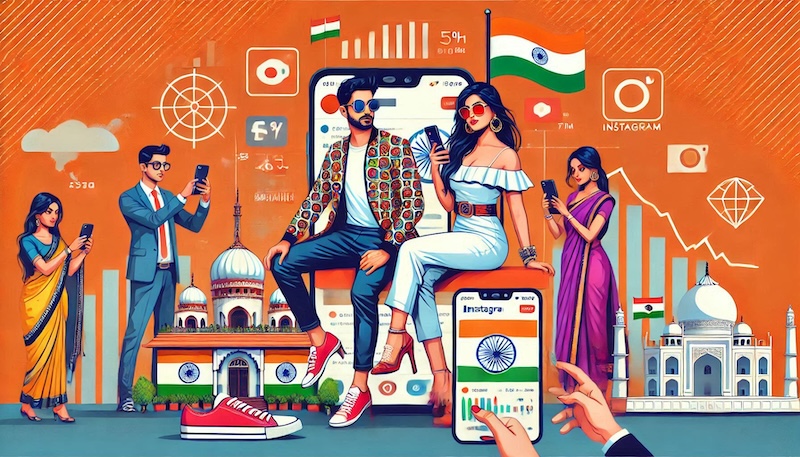
    (Picture for the main page created using Microsoft Image Designer. No copright infringement is intended)

  • GUEST COLUMN: Influencer marketing trends to keep on your radar in 2022

    GUEST COLUMN: Influencer marketing trends to keep on your radar in 2022

    Mumbai: There is no denying that digital marketing in the modern era is an essential part of brand building and expansion. Not only does digital marketing open doors for brands to connect personally with their customers, but it also enables interactions across countries and cultures. Ad spending in the digital advertising market is projected to reach $565.20 billion in 2022. While digital marketing has several effective techniques that have made it the most influential form of promotion, one particular branch that stands out is influencer marketing. 

    Influencer marketing is a form of marketing where brands choose certain ambassadors or people, who are not celebrities in the actual sense but have a high social media following, to promote their products or services. Due to the boom of social media in recent years, this form of marketing has seen a tremendous rise with every brand, little or large, opting for influential people on social media to promote their products and services. According to the Digital Marketing Institute, an online forum that teaches various digital marketing techniques, around 70 per cent of the younger audience worldwide tend to trust influencers while making purchases.

    Findings by the research firm MarketsandMarkets reveal that influencer marketing is set to become a $24.1 billion industry by 2024, globally. Seeing this exponential growth it is only fair for brands to know the latest trends in the sector in order to expand their reach and generate higher revenues. 

    Rise of nano & micro-influencers

    The rise of nano & micro-influencers is a trend that seems to be at an all-time high in recent times. As per the Financial Express, high-end celebrities accounted for only about 27 per cent of the influencer marketing spend while the remaining 73 per cent was spent entirely on micro and nano influencers in India. The primary reason for this is that the engagement that comes with micro-influencers exceeds that of high-end celebrities by about seven times. 

    Nano and micro-influencers have a smaller base, generally one that they are familiar with and interact quite frequently with their followers. This makes the customers feel a personal connection with the figure causing building of trust. Through these influencers, brands can execute focused campaigns cost-effectively.

    Short-form videos will continue to rule social: 

    As attention spans shift from minutes to seconds, short video promotions will always remain the king of social media. Features like Instagram’s Reels and YouTube Shorts are made to cater to the short attention span of the modern world. 

    Brands tell their stories via a number of video formats, including product teasers, explainer videos, behind-the-scenes and user-generated content. Connecting with Bharat by partnering with creators on Indian short-form video platforms is a big opportunity that is yet to be tapped on.

    Regional content will thrive: 

    In recent months, there has been an exponential rise in the regional content that brands generate for promotional purposes. As per a report published by Financial Express, there are about 210 million monetizable internet users who speak vernacular languages in India.

    This demand for vernacular content has caused regional content-creators to carve out a strong niche for themselves. Consumers feel a strong connection with the influencer and the familiarity of the lingo gives the influencers a high trust and reliability index. 

    The shift from ‘one-off’ campaigns to ‘always on’ strategy

    The industry is shifting from experimental influencer marketing spending to planned budgets. Brands are more focused on building long-term partnerships with creators who can be the voice of the brand across all stages of the marketing funnel. 

    Rise of B2B influencer marketing

    B2B influencer marketing is one dominant trend that will emerge in the influencer marketing sphere in the times that lay ahead. In a recent article carried out by Garner, it was reported that around 80 per cent of sales in the B2B spaces are now being made digitally.

    B2B brands are for sure to leverage key opinion leaders and content-creators on platforms such as LinkedIn & Twitter in order to shape and spread their brand narrative.

    Given that now, a national advertising regulator like ASCI is issuing guidelines for influencers, the industry is being given its due and influencer marketing is being treated as a force to be reckoned with. Going forward, influencer marketing will only become a stronger part of digital marketing strategies for brands.

    The author is Opportune Ventures founder Kanishk Kanakia.