Tag: Nandini

  • Kumkum Bhagya, spinoff, SaReGaMaPa help Zee TV dominate Hindi GECs across genres

    Kumkum Bhagya, spinoff, SaReGaMaPa help Zee TV dominate Hindi GECs across genres

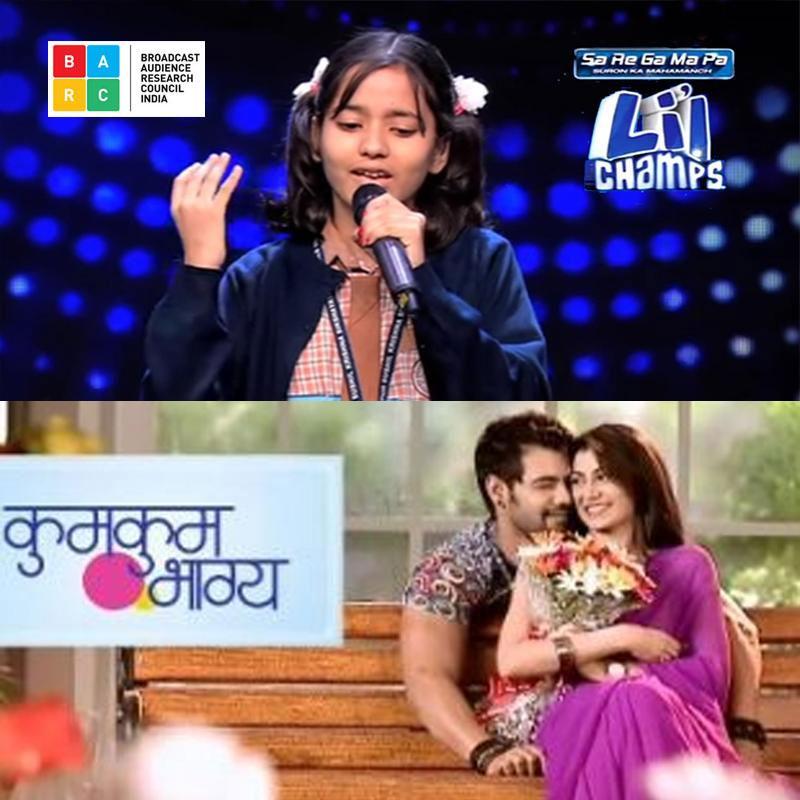
    BENGALURU: Two family soaps and a homegrown reality show have been time and again propping up Zee TV’s ratings in 2017– one soap – Kumkum Bhagya did it for the channel in the previous calendar year also. The other soap, a spinoff of the same – Kundali Bhagya has been rocking the ratings for the channel right from the time of its launch on 12 July 2017. And Zee TV’s home grown reality show is the music talent hunt Amul Sa Re Ga Ma Pa Little Champs. These programmes, along with other programmes on the channel seemed to have done a fair bit in helping viewership stickiness/enhancement in week 44 of 2017 (Saturday, 28 October 2017 to Friday, 3 November 2017). So much so that Zee TV topped the ratings amongst the Hindi GEC in Broadcast Audience Research Council of India (BARC) weekly data for top 10 channels across genre: All India (U+R) : 2+ Individuals. Zee TV was ranked second after the Sun Network’s flagship Tamil GEC Sun TV in week 44 of 2017. This time around for Zee TV, it was the spinoff that had a larger viewership in the Hindi GEC HSM (U+R) and Hindi GEC HSM (U) market than the original.

    Three channels from Sony Pictures Network, two channels each from Network 18, Star India and Zee Entertainment Enterprises Limited (Zeel) and one channel from the Sun Network made up the top 10 channels list for week 44 of 2017. From the genres perspective, seven Hindi GEC channels and one channel each from the Hindi Movies, Tamil GEC and Telugu GEC space made it to BARC’s weekly list of top 10 channels across genre.

    In week 44 of 2017, Sun TV was the leader across genres with 1,014.077 million weekly impressions. All the five programmes in BARC’s weekly list of top 5 Tamil programmes (TN/ Puducherry (U+R) : NCCS All : Prime Time (1800 – 2330 hrs) : 2+ Individuals) were from Sun TV. Among Sun TV’s programmes that made it to the top five, Tamil programmes is a multilingual (Tamil, Telugu, Malayalam and Kannada) supernatural television drama – Nandini claimed to be the second biggest budgeted series on Indian television after Naagin and the biggest in South India.

    Sun TV was followed by Zee TV with 795.129 million weekly impressions at second place. Star India’s recently renamed and free to air (FTA) channel Star Bharat was at third place with 707.563 million weekly impressions. At fourth place was Zee TV’s FTA Hindi GEC sibling – Zee Anmol with 678.924 million weekly impressions followed by Network 18 (Viacom 18) flagship Hindi GEC Colors with 614.118 million weekly impressions.

    Women focused Hindi GEC Sony Pal from the Sony Pictures Network India (SPN) stable was at sixth place in week 44 of 2017 with 597.676 million weekly impressions. SPN’s Hindi movies channel Sony Max was at seventh place with 573.083 million weekly impressions followed by Star India’s flagship Hindi GEC Star Plus at eighth place with 565.534 million weekly impressions. The Network 18 associated Telugu GEC ETV Telugu was at ninth place with 537.726 million weekly impressions in week 44 of 2017. Helped along by the Amitabh Bahchan anchored Kaun Banega Crorepati or KBC was SPN’s flagship Hindi GEC Sony Entertainment Television (SET) with 491.791 million weekly impressions at tenth place in week 44 of 2017.


  • ‘Balika Vadhu’ becomes the longest running daily drama on Indian television

    ‘Balika Vadhu’ becomes the longest running daily drama on Indian television

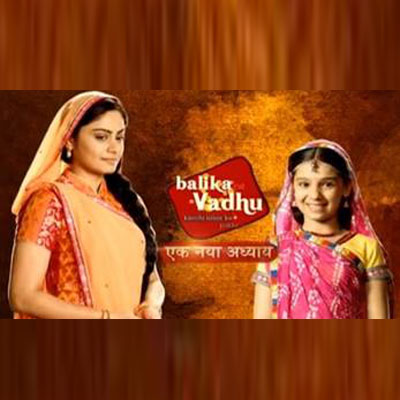
    MUMBAI: If there is one thing that everyone wishes for, it is that their children do not go through the hardships that they have faced in their own life. The story will come a full circle on Colors flagship show, Balika Vadhu as an 11-year leap sets the stage for a new era led by Anandi’s daughter, Nimboli whose lost childhood is shrouded by the travails of being a child bride. Leading a chaste life with the only family she has truly known since birth, it is Nimboli’s endearing personality that pulls at the heartstrings of everyone around her.


    As the show becomes the longest running daily drama series on Indian television with maximum number of episodes, Nimboli’s journey on Balika Vadhu kicks off starting 4 March, 2015 and will air every Monday to Saturday at 8:00 PM on the channel.


    Commenting on the new age dawning in Balika Vadhu, Raj Nayak, CEO – COLORS, said, “The success of Balika Vadhu is synonymous with our success as an entertainment channel because it become a key identifier for our offerings to viewers. Over the years, Balika Vadhu has become a global phenomenon through characters which resonate with viewers across the world. As we now enter a new phase on the show, with the promise to showcase newer entertainment avenues, we are proud to celebrate the milestone of being the longest running fiction drama on Indian television. This landmark achievement could not have been possible without our viewers’ unending love and relentless support and the hardwork of our creative team and our producers”.

    As the story moves forward by 11 years, Balika Vadhu will now highlight the life of Anandi’s daughter Nandini who, unknown to her mother, has been subjected to a thali wedding when kidnapped as an infant. A single mother and widow, Anandi’s heart cries out for her missing daughter. But, she eventually finds solace in becoming a social activist after establishing a gurukul for women who have been wronged in life. Even as Anandi’s yearning for her daughter continues to grow over the years as she prays for her daughter’s welfare, Nandini is rechristened as Nimboli by her tough-to-please in-laws who consider her to be as bitter as the fruit of a neem tree. Nimboli has one dream…to be free and enjoy her life, but her dreams are quashed by her insensitive in-laws and husband.


    Growing up in a household where gender bias and inequality are the way of life, Nimboli finds an ally in Mangala Devi who is her guiding light and supporter through every hardship that comes her way.


    Commenting on the new era, Manisha Sharma, Programming Head – COLORS, said, “After entertaining viewers through a record-breaking no of episodes, Balika Vadhu is now ready for a brand new chapter to unfurl in the lives of Anandi and her children. The unpredictable journey peppered by sharp twists in Anandi’s journey has enabled us to deliver meaningful content to our viewers every single day. Over the past 7 years, we have not only showcased the story of a child bride, but also touched upon various issues such as adult education, widow remarriage, adoption and many more which have established Anandi as the face of change. And now, as Nimboli’s life as the new Balika Vadhu is about to begin, the story comes a full circle with child marriage being at the helm of a new journey on the show.”


    Speaking about the new phase in the show, Toral Rasputra aka Anandi, said, “Balika Vadhu has been all about Anandi for the past 7 years. And now, as Anandi’s daughter finds herself caught in the same situation and history is repeating itself, a new journey is set to begin…from the eyes from Nimboli. Over the years, Anandi’s stature has grown by leaps and bounds, and she has, today, become the voice of reason which the entire country looks up to. Portraying the character of a mother whose child has been snatched from her arms has many emotional nuances which have helped me grow as an actor. I hope that the viewers are supportive of this new undertaking in Balika Vadhu and give as much love to Nimboli as they have to Anandi.”


    As the story Balika Vadhu readies to move forward, COLORS has roped in 11-year-old Baroda resident, Gracy Goswami to portray the character of young Nimboli whose life and dreams have been compromised since she was an infant.


    Stepping into the shoes of Anandi’s daughter, Gracy Goswami aka Nimboli said, “For more than a year now, I have watched Balika Vadhu with my mother and wondered it is like for young girls who find themselves trapped in this situation. Nimboli is much like me – a mischievous young girl with a whole lot of questions in her mind. Balika Vadhu is an educative show highlighting the wrongs that happen in our society, and I feel extremely lucky to be playing the daughter of an inspirational character like Anandi. I hope that fans of the show enjoy watching me on screen and support my character.”


    Speaking about the leap, producer Sunjoy Waddhwa from Sphere Origins said, “When we launched Balika Vadhu, little did we know that the show will become the phenomenon that changed the face of Indian television to what it is today. It is extremely satisfying for us to see the show’s popularity continue soar as Balika Vadhu becomes the longest running drama on television. Balika Vadhu has been a beacon of change in the society and we hope that the fresh perspective through the eyes of Nimboli will continue to find mass appeal amongst viewers across the country.”

  • Alternative distribution plans for indie films

    Alternative distribution plans for indie films

    MUMBAI: There are nearly 1,000 movies that are made in India every year, but only about 35-40 per cent actually mange to get a proper release across the nation. This is one of the major obstacles for small time independent filmmakers who work on a shoe-string budget on their dream projects.

    The Mumbai Film Festival in its fifteenth edition is trying to plug that hole. In what could have been termed as an intellectually and thought provoking discussion, a panel of dignitaries from the media and film space came together on one stage to show the way to independent filmmakers.

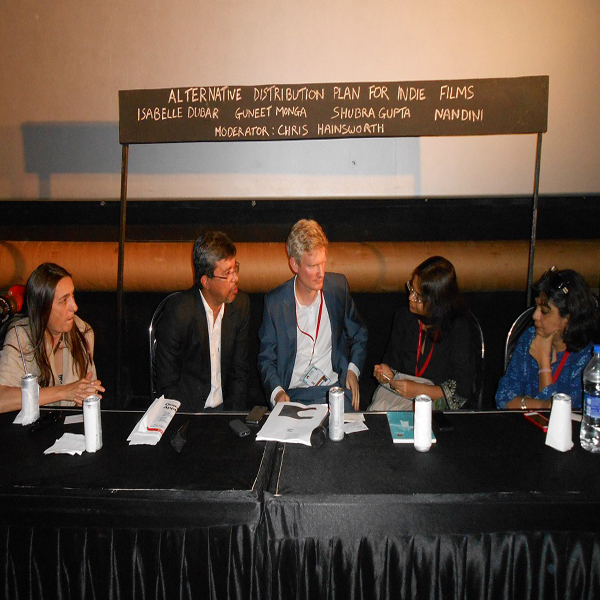
    The session held at Metro Cinema, was moderated by AV Pictures MD Chris Hainsworth and discussed the various alternative distribution avenues for independent films and filmmakers. The panel consisted of Guneet Monga, a film producer and CEO with Anurag Kashyap Films since 2009; Isabelle Dubar, head of distribution at Hapiness Distribution based in France; Anil Wanvari, Founder, CEO & Editor-in-Chief at indiantelevision.com; Nandini, a film producer and finally Shubhra Gupta, a film critic with Indian Express over the past two decades.

    The discussion kicked off with Guneet Monga who briefly started out by talking about her journey so far. “I started producing movies nearly six years ago, but started taking movies to festivals only with That Girl in Yellow Boots. I had no clue how to go about looking for buyers for the movie. But gradually, I realised that the deliverables that we have here in India is nowhere close to the scale at which films are marketed in the international film circuits, and I have learnt things the hard way.”

    On being quizzed on what would be the right place to look for buyers in the overseas market, Monga quips, “Why go anywhere when we have two very good home grown festivals – The MAMI (Mumbai Academy of Moving Image) and the Film Bazaar held in Goa every year – but yes, the scope for buyers is in plenty overseas as well. It’s just about delivering the right mix of content that is of universal appeal. And it is also important that those in the business get to know you and take you seriously because you are meeting them again and again.”

    Isabelle Dubar steps in while speaking about distribution of films. She was the one to take Gangs of Wasseypur (Part I & II) to the French market. “The French market is very outhouse in nature, with approximately 600 films from all over the world coming to the market every year,” says Dubar.

    She further clarifies that the French market is still not that open to Bollywood films and it never really caught on it in a big way, but after observing the response for Gangs of Wasseypur (GOW) at various festivals world over and the appreciation it got at Cannes, she was egged on to give it a shot.

    “We didn’t want to risk releasing both the parts together as a six hour long single feature film and thus adapted to how it was released in India. So, the first part was released around July and we promoted and marketed it like a contemporary Indian take on The Godfather,” Dubar remarks. The results were very pleasing. Though the expectations were high they still managed to get people to watch the movie.

    Dubar says, “We expected nearly 30,000 admissions, but we got 15,000 which is still a sizable number. The second part that we released during Christmas the same year didn’t get much favourable response with only 5,000 attendees. But Anurag Kashyap’s work has been appreciated and the market is open to more Indian films now, so that’s a positive sign.”

    Dubar further threw light on the fact that Kashyap’s Ugly will also be distributed by Hapiness Distribution in and around the French market. “We are also releasing The Lunchbox – a co-production with a French producer – on 11 December in France,” adds Dubar.

    Dubar finally went on to say that be it any language or genre what matters at the end is that the story and the characters should be able to have an universal connect and nothing can stop the film from being accepted and doing well globally.

    The point in question now is how will a film get the right platform to get buyers? “There are bigger markets than just festivals to be tapped into by independent filmmakers. There is Mipcom, Mip Doc and Mip TV, where nearly 11,000 people spend 1,300 Euros a piece to look for buyers or sellers of content, It’s the biggest content trade market in the world,” says Anil Wanvari.

    He further urges the independent filmmakers’ community to unite and pitch for more funding from the government in their distribution efforts. He gave the example of the UK where 50 per cent of all costs to market films and TV shows internationally at markets are paid back to the filmmakers to encourage them to find alternate streams of revenue while pushing the British  perspective and culture. “Even the Andhra Pradesh and Karnataka government offer incentives to producers of animation and gaming to attend markets worldwide to find new customers for their offerings,” he said and added, “Other state governments should be urged to do the same.”

    “Earlier, Prasar Bharti used to screen movies on Sundays from independent filmmakers, maybe that is one thing that needs to be started again. But the need of the hour is for the filmmakers’ community to get together and help raise awareness for these films. Use of social media to bring the importance of independent cinema to the government’s notice and also to transform it into a movement is very essential. More importantly, filmmakers and producers should be aware of the rights they should retain with themselves whether it is SVOD or PPV or NVOD or online or airline or shipping or DTH or whatever right. Never give away all the rights for the movies at once just because a distributor demands them and because you are a first time filmmaker struggling to get your film on the screen. You need to learn to monetise and keep monetising from the product you have created,” Wanvari expounds.

    Film producer and founder of Idyabooster.com Nandini Masinghka too thinks that the need of the hour is to get more clarity as a filmmaker whether the film he is making is for artistic pleasure or for monetising it. “Be clear about your audience; be clear how you will market, how will you distribute. Don’t just put all your money into creation and production,” she highlighted. “If you don’t have the expertise to manage this, then bring in someone who does. Thus, the industry needs more independent producers, who don’t just finance the project but are also responsible for monetising it rightly,” Nandini explains.

    After patiently listening to the conversation, film critic Shubhra Gupta says, “I am surprised that we are discussing the business of cinema without considering the art of it. If the movie is not made artistically, you anyway won’t get buyers for it.”

    Gupta also points out that after the emergence of multiplexes not many films from the independent space get their due at the box-office. “I am forced to see a Besharam on a Friday, when the movie I so wanted to see has been removed. So how will these movies get their due,” Gupta quizzes. She refers to the situation in Chennai where individuals backed and pushed the cause of independent cinema such as Pizza and made it successful.

    Monga highlighted one case in point during her early days as a film maker. “My first film was on cricket and the prints were in the theatres when news emerged that India has been eliminated from the World Cup in 2007. Immediately, the exhibitors sent me back my prints. So I took up the cause of distributing the film myself in Delhi and encouraging schoolchildren to watch it in their schools. I also sold the tickets to universities myself. I then moved this concept similarly to Punjab and made money there. I even made money on the DVD which a home video company had given up on by selling them in the foyers of the theatres where I screened the film. I never gave up on my dream and pursued monetisation from every angle.”

  • Congress TV Agenda?

    Congress TV Agenda?

    With elections looming large, the spotlight may be on political parties and their candidates however an unlikely candidate seems to have entered the fray, i.e. television.

    Very quietly, two shows have been launched on two TV channels within the span of one week, bearing an uncanny resemblance to Indias biggest ruling party – the Congress.

    One; Anil Kapoors Indian adaptation of the American espionage series 24, which aired on Colors on 4 October and the other; Desh Ki Beti – Nandini, which premiered on Sony on 7 October.

        
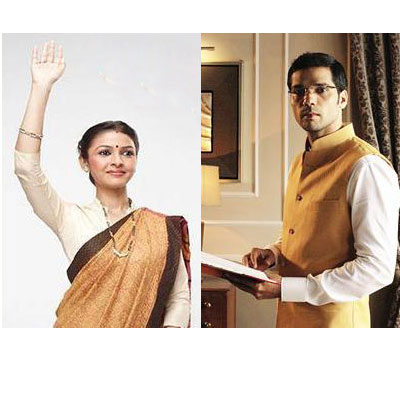
    The desi 24 sees the young scion of a political family, Aditya Singhania played by Neil Bhoopalam, reaching out to the countrys youth a la our very own vice president of the Congress Party, Rahul Gandhi.

    While Desh Ki Beti has a bun-sporting, saree and long sleeve blouse-clad Nandini waving out to the crowd, reminiscent of Indias only woman PM, the late Indira Gandhi.

    Leaving aside similarities; both the shows couldnt have been timed better. North India goes to elections in November while the race for Indias next PM unfolds in the first half of 2014.

    24 will end in approximately three months but the impact is sure to last. That Colors reduced the air time of one of its most popular shows, Comedy Nights with Kapil, to accommodate the series is proof of just how much is riding on the timing. Similarly, Sony prematurely pulled the plug on its earlier week day show Chhanchhan to make way for Nandini, citing low TRPs as reason.

    Social media has been quick to catch the so-called connect between these shows and the ruling party. Heres sampling the kind of comments on Twitter and Facebook: A new show called desh ki beti nandini seems to be funded by congress, daily soap Nandini will subtly glorify pre emergency Indira. Direct editorial control from Rahul Gandhi, waiting for Aditya Singhania the 24 character based on Rahul Gandhi, to take his speech and say phaad ke phenk do, 24 just predicted a Rahul Gandhi victory and so on.

    Makes one wonder whether this is part of the viewers fertile imagination or truly Congress Ka Haath behind these shows…