Tag: Nalin Mehta

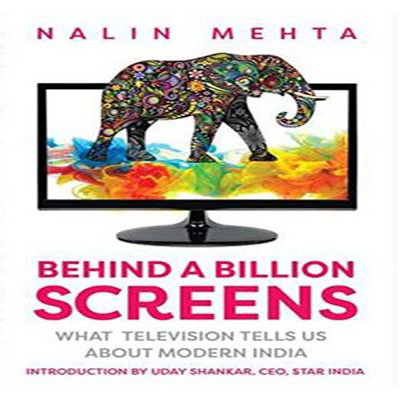
  • Nalin Mehta’s ‘Behind a Billion Screens’ examines Indian TV industry

    Nalin Mehta’s ‘Behind a Billion Screens’ examines Indian TV industry

    MUMBAI: India is a country where television forms the most important part of one’s life. Everybody watches television, everybody has an opinion on it and everybody thinks they know exactly what is wrong with it. 


    It’s a topic that often raises a lot of heat and smoke but too little light. Throwing some light on this trend of television is author and journalist Nalin Mehta’s new book ‘Behind a Billion Screens.’


    The book closely examines how television works in India, how TV channels make their money or not, how this is changing and what this means for the cacophony that appears on our screens.


    The book, which was initially going to be a joint effort by Star India CEO Uday Shankar and Mehta, was later written independently by the latter.
    The book answers key questions like:


    • Who owns Indian television? Just how much is it controlled by politicians, corporations and real estate companies? What are the patterns of control nationally and across regional languages? How does India compare with other countries and why does this matter?


    • What explains television’s terrible crisis of content? Is there really no market for intelligence in India and is dumped down content the only thing that audiences want? Why do channels keep behaving like Bollywood producers of the 1980s who kept churning out the same old tired formula films till a new multiplex-savvy breed of film-makers started challenging old orthodoxies? Is there a talent problem or management problem or a crisis of business models?


    • What is wrong with current government controlling system on television and why this ‘terrible-backend’ needs to change? Indian television continues to be controlled by outdated regulations, even as it is mired in public battles for greater regulation, as called for by Justice Katju. Studying the role of the Ministry of Information and Broadcasting, Telecom Regulatory Authority of India (TRAI), state governments and the judiciary, this book answers just how much control the state still has on broadcasting, why its jugaad nature of regulation is now unsustainable and why a major change is needed.


    • Does self-regulation work? How did self-regulatory bodies governing television come into being and what has been their factual record? Has self-regulation made any difference to programming or is it simply a chimera only designed to keep government out?How does India compare to other countries?
    • Does public broadcasting still matter, what exactly is wrong with Prasar Bharti and how can it be fixed?


    • Is television becoming irrelevant in the digital age? How is television shape-shifting in response to mobiles and the net, how are companies changing their businesses and programming, where is India going and how different is India from the rest of the world.


    The book highlights how India’s $15 billion media and entertainment industry – including television, print, radio, digital media – is growing at roughly 14 per cent a year. This, by some accounts, is impressive, benefitting immensely from the tailwinds of GDP growth of the last decade. But the stark fact is that even at $15 billion, India’s entire media taken together is just about one fourth the size of Google ($59 billion in revenues) – a fourteen-year-old company that is younger than most major Indian TV channels.


    “Let us not even go that far. If the entire Indian media was a company, it would rank seventh or eighth in India! Media is a globally growing industry but our participation in that ecosystem is zero and India is hardly factored into the global thought process of technology or content,” the book points out.


    Mehta, in the book, highlights how India is drunk on its own volumes: the largest number of newspapers in circulation, the second largest number of television viewers and millions of digital consumers. Digital, in particular, is an indictment of our creative and strategic limitations.


    “We have over 700 million mobile screens and yet we do not have a relatively unique content proposition for the medium. So, our ability to convert that into corresponding value is disappointing. Both in business and creative terms, the Indian media and entertainment sector still remains much smaller than it should be in a country of 1.2 billion people,” the book says.


    Even at these volumes, the reach as a percentage of population is not spectacular. India has 100 million households with no television, their time spent on it is abysmally low when compared to global standards; some 350 million people read the newspaper – but that tells us how many do not read!


    Mehta points out that in television, India needs a lot more content and this will come not only by scaling up production but through a fundamental transformation of the ecosystem. Resources, talent and every related facet have to evolve dramatically. For example, the production infrastructure in Mumbai, studio space, access to talent is creaking and unable to keep pace with the demand.


    Despite all the gloom and doom, India’s media and entertainment sector has consistently delivered impressive growth rates for the past few years. But, this is not a sector whose value is measured just by the size of its financial contribution. Media and entertainment remains central to defining the direction of India’s social and economic path; its work remains key to the imagination and inspiration of a billion Indians every day; and its health will be central to the ethos and values of the society we collectively shape.


    Mehta, through the book, says that with Narendra Modi’s new government in place, since May 2014, there is a renewed focus on reassessing things and trying to improve them. 

    “We need to make the case, for example, digitisation is not just about putting boxes and laying cables. It entails a fundamental transformation of the way we look at media and there is an opportunity for Indian media and content to move from just being a provider of entertainment content to being a creative industry, like the IT sector, for example, that plays a much larger role in the overall economic vision for the country,” Mehta opines in the book.


    He further writes that the media has been more than just a silent victim. Too often, the news media has focused on what is sensational rather than what is important. Too often, the point of news seems to be to reduce the extraordinary diversity of the country to the most banal, a contest between extremes that canonly be resolved through a shouting match on live television. With singular dominant narratives, the trend seems to be to create heroes on a particular day only to label them as thugs and crooks the next.


    Until recently, for a long time the media–government equation seemed like a broken relationship, and one that has had dire consequences for both the industry as well as the government. The failure to establish credibility and importance meant the industry perennially stayed on the back foot, defending itself against every new wave of regulation aimed only at curtailing its wings further. In return, governments were not able to leverage either the impact that mass media can have in India or harness the power of media as an economic engine that can create jobs and wealth.


    The book, in order to put things in perspective, says, “As a $15 billion industry, we employ over six million people. This can be so much more significant and meaningful. According to official estimates, about fifteen million people are entering the job market every year while the country is generating only about three million new jobs a year. This means that we are adding, as filmmaker Shekhar Kapur eloquently put it, a city of unemployed people as big as Delhi every year. And yet, the lens often used to look at this industry is largely one of glamour and propaganda and the biggest debate is on how to control and contain it.”


    There are 161 million cable and satellite homes but the measured universe so far is much smaller. “I do not know how many subscribers I have with a particular MSO and the MSO doesn’t know how many households his LCO delivers the signals to. The same is true in advertising too. The country’s premier media agencies can’t even seem to agree on a fact as basic as the size of the advertising market. One leading agency recently estimated the total market size to be Rs 35,000 crore, while the other, equally illustrious, estimated it to be Rs 29,000 crore. A variance of no less than 20 per cent! The ambiguity in data for other sectors of the media and entertainment industry is no less. Numbers are supposed to be the foundations of rational business decisions but how can we make decisions when professionals in the business of numbers can’t get their numbers straight?”


    Reacting on the book, Shankar said, “Nalin is probably the best media academic in India…this book is a seminal contribution to the evolving debate about the role of the Indian media.”


    Author and India Today Group consulting editor Rajdeep Sardesai added, “Excellent… an incisive and much needed study of how television is changing in India.”
    Times Now editor in chief Arnab Goswami said, “Fantastic… Nalin has beautifully pieced together the real, untold story behind the sound bytes.
  • Vinay Tewari joins Headlines Today as managing editor

    Vinay Tewari joins Headlines Today as managing editor

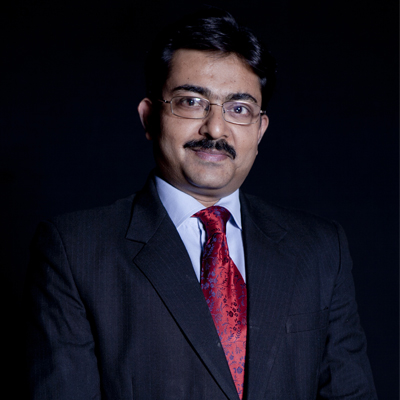
    MUMBAI: Taking charge of TV Today Network’s English news channel Headlines Today as the new managing editor is Vinay Tewari.


    Confirming the news to indiantelevision.com, Tewari said that he would be joining the organisation from 1 October. His role would be to build the brand of Headlines Today. He will report to India Today Group chief creative officer and India Today Group digital chief operating officer Kalli Purie.


    Tewari will take charge of a position that was vacated by Nalin Mehta early this year. Prior to this, he was with Network 18 as managing editor of CNN-IBN. He was also assigned the responsibility of IBN7.


    This will be his second stint with the company. He was earlier Hindi channel Aaj Tak’s Delhi bureau head and also had the responsibility of bringing synergy between the Hindi and English news channel.


    He had started his two decade long career in 1993 with the Pioneer before moving to The Times of India. 

  • Nalin Mehta joins TOI Delhi as consulting editor

    Nalin Mehta joins TOI Delhi as consulting editor

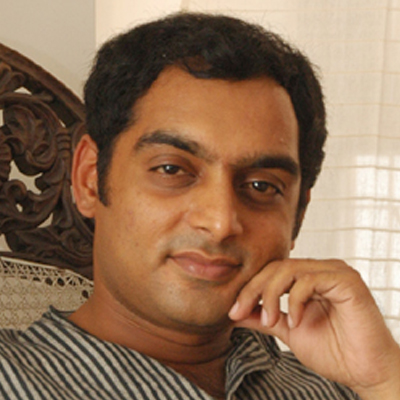
    MUMBAI: After his brief stint of seven months at Headlines Today, Nalin Mehta has now switched places as the new consulting editor of the Times of India. Mehta, who joined the organisation on 8 August, will be based out of New Delhi, highly placed sources have confirmed to indiantelevision.com.


    Prior to this, he was managing editor of Headlines Today. Mehta has had a long association in the media industry starting off in the broadcast media as a journalist with Zee News and then moving on to NDTV. After completion of his PhD, he became deputy news editor and prime time anchor with Times Now.


    By moving back to the print sector, sources say, Mehta has taken a break from the broadcast media for a while.


    He has also written several books on the media industry such as India on Television, Olympics: The India Story (co authored by Boria Majumdar) and Television in India. Currently, he is also working on his next untitled book.


    Recently, another notable anchor, CNN-IBN deputy editor Sagarika Ghose had also announced her plan to join Times of India as consulting editor from New Delhi.


  • Rajdeep Sardesai-Sagarika Ghose to join India Today group?

    Rajdeep Sardesai-Sagarika Ghose to join India Today group?

    MUMBAI: India’s power news couple – Rajdeep Sardesai and Sagarika Ghose – may be headed for Aroon Purie’s India Today group.


    While Sagarika is joining Living Media magazine India Today as editor at large, Rajdeep is reported to have got an offer to join the TV Today Network, which he confirmed to Indiantelevision.com.


    Said Sardesai: “Yes, Shekhar Gupta – vice-chairman, India Today group and editor in chief of news properties and I have been in discussion and we go back a long way. But I have not yet taken a decision. I am currently, focusing on my book for the next six weeks as I have to complete it by then.”


     Sources close to the India Today group however revealed that both Sagarika and Rajdeep have accepted the offer made to them. Their joining date is expected to be 1 August.  


    The India Today group has gone through some changes on the editorial front in the past few months with the magazine’s editor Kaveree Bamzai stepping down, Headlines Today managing editor Nalin Mehta quitting and Karan Thapar launching his show on the channel. 


    Sources indicate that Gupta has decided to give the group a new independent editorial thrust, something along the lines that the Indian Express group had in its heydays.

  • Nalin Mehta quits Headlines Today

    Nalin Mehta quits Headlines Today

    MUMBAI: Within weeks of India TV editorial director QW Naqvi and Sahara Samay group editor BV Rao quitting the respective channels, Headlines Today managing editor Nalin Mehta has also put in his papers and has left the channel.


    Mehta had joined Headlines Today in September 2013 when Rahul Kanwal was elevated to editor at large of both Headlines Today and Aaj Tak. He has worked with news organizations such as Zee News, NDTV and Times Now.


    Apart from this, Mehta has published books such as ‘India on Television’ and ‘Television in India’.

  • Govt needs to regulate distribution and licensing of news channels

    Govt needs to regulate distribution and licensing of news channels

    NEW DELHI: Television news content is getting redefined as costs spiral and revenue is under constant pressure, senior newscasters said here today.

    The investment in news gathering is being sacrificed and content is much weaker today amid an uncontrollable distribution cost, launch of a plethora of channels, and glamorisation of the profession.

    “As an industry, there has been a decline in content. Better TV journalism was done 10 years back. We can’t look at content in isolation from the commercial environment we operate in,” said IBN18 Editor-in-Chief Rajdeep Sardesai, while speaking at the third Indian News Television (NT) Summit.

    The chase for eyeballs, in fact, has resulted in news getting commoditised. The fundamental challenge for content makers is to free from these “ratings pressures” and create differentiated content.

    “The real crisis is the lack of distinction. In an age of clutter, how different can we be. That is the important question,” said NDTV managing editor Barkha Dutt.

    A glaring example is the “sameness” of guests across news channels. “We have started working on formula,” admitted Aaj Tak news director QW Naqvi.

    Elaborated Dutt: “The crisis is more with political journalism.”

    The problem at hand, particularly in the case of Hindi news broadcasters, is when there is a collective effort to swing from a niche to a mass market as this means introducing higher doses of entertainment content.

    “We have created an industry solely dependent on ad revenues while we have to pay heavily for distribution. Channels are forced to cut costs to stay afloat. Editors are moving into jingoism or trivialisation and news is getting commoditised. English news channels are beginning to learn from Hindi channels,” said Sardesai.

    While noting that self-regulation of content was bound to happen, Sardesai said the government should also ensure regulation of distribution and licensing of new channels. “Less than 10 per cent of the cost is being spent on content. Around 50 per cent is going into distribution,” Sardesai said.

    Naqvi said news selection is done often on the basis of what will ‘sell’ or accepted. He blamed the problem of TRPs but said this was something that news channels could not avoid.

    Author and former TV journalist Nalin Mehta said Indian television was the third largest and fastest growing medium in the world, but was also the most unregulated. There was necessity to put an independent regulator in place. Despite complaints that news on Indian channels appeared similar, the viewership of news channels had gone down by 30 per cent in the past year.

    Sahara Media India CEO and Editor-in-Chief Sanjeev Srivastava who moderated the discussion accused most news channel heads of being ‘escapists’ who did not want to try anything new. He also blamed lack of research for this.

  • Wanted: More than just editors

    Wanted: More than just editors

    The Mumbai attacks, for all their tragedy and pathos, were an unparalleled television event. It was news television that became the conduit of a shocked nation‘s horror and anger as we watched the terrible spectacle unfold in our living rooms. Mumbai was to be a game-changer at many levels – diplomatic, administrative and political. A year later, as the blanket coverage of the one-year retrospectives winds up on the networks, it is time to take stock. As the media focuses attention on the slap-dash political legacy of Mumbai – with many of the central characters of 2008 back where they were in 2009 – it is also time to focus the lens back on the news networks.

    Any discussion of broadcast reform in India gets stuck between two poles: the controlling impulses of a state always looking to turn the clock back and take back lost control and the need to maintain the independence of news television. For all its flaws, the creation of the Indian satellite news industry has been a landmark struggle unparalleled in the history of global news and the fear has always been that any attempt at regulation risks throwing the baby out with the bathwater. Yet, some kind of a real watchdog there must be. In a different context, the untamed impulses of Wall Street‘s bankers that led to the global economic crisis are an example of what unbridled laissez faire can lead to. Fifteen years after the landmark Supreme Court judgment that freed the airwaves, India remains the most unregulated television market in the world and while this suits the owners and the editors in their no-holds barred quest for revenues, Mumbai underscored the need for an unbiased oversight body comprising all stakeholders more than ever.

    Two provisos need to be added here. Much of the governmental criticism of the TV networks in 2008 focused on how television became the world‘s window into the ineptitude of the Indian state – too many spokespeople, too much ground confusion and too many operational details being divulged by the then Home Minister. Let us be clear. That was not television‘s fault. The state cannot blame the messenger for its own failures. In the early hours of Mumbai, television coverage did what it was meant to do: it brilliantly captured the scramble, the confusion and the reality on the ground.

    The real problem with television coverage in the days after Mumbai was a more deep-set one that we are used to seeing in its coverage of other events as well; that of sensationalism and the new addition to the vocabulary of newsrooms: “aggressive” journalism. The networks, in varying degrees of complicity, became not outlets of information but channels of propaganda and the lowest common denominator. The same sensitivity that goes into creating the saanp-seedhi genre of news went into much of the post-Mumbai coverage with at least one top network talking seriously about the option of a first-nuclear strike on Pakistan. This was not a considered news response; this was the response of a petulant child with the candy of TRPs hanging in front.

    The post-Mumbai proposal to provide the channels only edited and pre-censored footage of emergency situations was preposterous and was rightly opposed by TV editors and all those who believe in the institution of the free press. But it should also have been a moment to pause and consider how much of this statist counter-reaction was a result of TV‘s own impetuosity. What we have in the form of oversight today in news television is tall promises of self-regulation that are given with seeming sincerity but always fall prey to the weekly tyranny of ratings. Mumbai should have been an opportunity for genuine reform, one that seems lost.

    Ambika Soni‘s relatively benign and thoughtful attitude to news must not lead TV owners and editors into a comfort zone of complacency. Personalities come and go but the problem with satellite television regulation is structural, one that goes into the heart of the unique manner in which the industry grew in its initial years as an illegal medium. There is still no overarching regulatory body to oversee broadcasting issues. There is no Indian equivalent of the American Federal Communication Commission and Indian broadcasting remains highly unregulated. Compared to other developed television markets Indian broadcasting exists within a highly confusing maze of overlapping controls. For instance, India is one of the few developed TV markets with no cross-media ownership laws. Such a state of affairs, at a time when India is fast emerging as a new global media capital cannot be sustainable.

    In a sense, Indian television has continued to operate in a legal framework that is more akin to that utterly untranslatable North Indian word: jugaad. Jaipal Reddy‘s Broadcasting Bill of 1997 was based on British law after studying the broadcasting systems of six countries – USA, UK, France, Germany, Italy and Australia – and sought to create a new legal structure for broadcasting but disappeared into oblivion when the Gujral government fell. Priyaranjan Dasmunshi‘s draconian version of such a Bill is now on the backburner. Since the 1995 Cable Networks Regulation Act (which has limited uses), Parliament has only managed to pass one major broadcasting-related bill – the 2007 Act on mandatory sharing of sports feeds. And that only passed because of the immense drawing power of cricket.

    The Ministry of Information and Broadcasting has periodically tried to fill the regulatory vacuum with draft legislation and summary executive directives/notifications, most of these designed to assert its control. It has consistently tried to put the genie of broadcasting back into the bottle. Looking at it from a historic perspective, the contentious twists and turns over CAS and the news uplinking policy changes when NDTV bifurcated from Star News are perfect examples of the minefield that is the current broadcasting legal framework.

    War, they say, should never be left to the generals alone. Television, similarly, is too pervasive an influence to be left to the judgment of the industry itself. A year after Mumbai, the need for a genuinely impartial authority to balance the content and regulatory oversight that Indian broadcasting desperately needs is being felt even more. 

    (Nalin Mehta is the author of India on Television and a founding editor of the Routledge journal South Asian History and Culture)