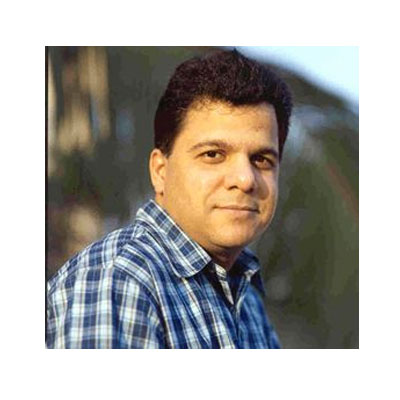
A go-getter he may be, with successful stints in both the print and television media. But your regular corporate honcho Raj Nayak is not. A people’s person who sets great store by personal connect is what marks him out as different.
In his latest avatar as chief executive of NDTV Media, the advertising and marketing arm of Dr Prannoy Roy’s company, it has certainly been a huge adjustment for him from the heady days at Star when he was heading ad sales at the country’s most happening television network. Lean and mean about describes the set-up he works out of in Mumbai’s Worli suburb.
In his first significant interview to the media since taking charge at NDTV Media, Nayak speaks to indiantelevision.com about these last nine months (he was nine years at Star) and what the future holds.
Excerpts from a conversation held over a quiet lunch at his office:
It’s nine months since NDTV has been functioning independently. How would you describe these past months?
In nine months we’ve arrived, as far as our Hindi news channel is concerned. When we launched, everyone was very gung-ho about our English channel but they were very skeptical about our Hindi channel.
NDTV 24×7 of course, within two months of launch became India’s Number 1 English news channel. But with NDTV India we had some initial teething problems.
What problems? On the distribution front?
Distribution was a problem, yes. It was also a question of the end user. Before launching the channel, NDTV’s research teams traveled across the Hindi heartland. And one of the things that came through was that a lot of people had not heard about NDTV. But they knew the news anchors like Barkha Dutt, Rajdeep Sardesai and Dr Prannoy Roy himself.
There was a major problem there, because at that time we had strategically decided that none of the English anchors would be on the Hindi channel. Fortunately for us, some of the best Hindi journalists joined NDTV at around the same time, whether it was Nidhi Kulpati, Punya Prasun Bajpai, Naghma or Dibang.
So we just replicated the campaign we’d prepared for NDTV 24×7 in Hindi. We put these faces upfront. And people recognized these faces, this person was on Aaj Tak, this person was on Zee News, so they tuned on to the channel.
But, I think somewhere in the initial stages, because our distribution had a problem, it took us time to roll out our plans. Probably we expected a little too much too early and didn’t realize the seriousness of the competition. We lost the first four to eight weeks. The take-off that should have been there. That didn’t happen the way we wanted it to.
So your growth has essentially been in the last six months?
Yes. In the last six months, if you map the growth, I would like to say we are the fastest growing channel in the country. To be Number Two in a matter of six months, especially when people had  almost said, ‘What can NDTV do in Hindi’ and all that.
I would like to give 80 per cent of the credit for this to the editorial team though. I think they have really given it their best shot.
So, how did distribution clean up its act?
See, as you well know, we have a franchise alliance with Sony. I think the problem there was that we launched with two channels and there was initial confusion over which one to prioritise.
When we realized that we had a distribution problem in Hindi, we prioritised and said, let’s focus on our Hindi channel. We were not so worried about the English channel as we knew consumers were aware of the channel. And we knew consumer demand would create the pull for the English channel anyway. So we focused on the Hindi channel.
You say the distribution for NDTV India has settled. What do you mean by that?
In terms of reach, we are today the second largest connected news channel in the country after Aaj Tak.
When Dr Prannoy Roy launched the NDTV channels, his proposition was that NDTV was an Indian channel living up to international standards. Nobody will have a quibble against the quality that NDTV represents. But there are those that say the costs that NDTV has incurred in doing that puts a question mark on how long it can be sustained.
| “If you speak to media planners or clients, one reputation that Raj Nayak has, is that he’s never sold cheap” |
See, please remember, whether it is Dr Roy or any other businessman, at the end of the day, you are not running a news channel for charity. Yes, there may be passion, there may be vision, but at the end of the day, no business can run unless it sustains itself.
The fact is that NDTV, by itself has a successful track record over 15 years, as being a profitable company. To produce a world class product you may require better technology, manpower and the resources that go behind it. But you are not going to compromise on that to make your product inferior in quality.
The way to go about it is – to sustain it what do you need? What are the kinds of revenues you need? And then you go about trying to see, ‘Can we generate those kinds of revenues to sustain the business?’ And if you can, then you continue in that format.
Somewhere if you feel that it is not able to, then you cut corners. But the reality as of today is that, on our business plan, on our sales forecast, revenues are keeping completely in tune with the business that we set when we started the channel.
Testimony to that fact is when you look at the number of brands on NDTV India. We have 255 brands of which 59 are exclusive to NDTV India.
You mention the number of brands. There have been comments that because of the discounting that you resorted to around the time of launch, it has impacted everyone negatively in terms of rates. Would you like to respond to that?
In fact, it is the other way round. If you speak to media planners or clients, one reputation that Raj Nayak has, is that he’s never sold cheap.
In fact, one of the biggest difficulties we encountered when we launched, and one of the reasons that in the first two months, especially on our Hindi channel, we hardly had any advertising, was for the simple fact that we were not willing to discount beyond a certain point. We just had two or three clients,
Even today, what I can with conviction say, and the market will stand testimony to, is that we are probably more expensive than all other news channels besides Aaj Tak. In my opinion, the only channel that didn’t discount and stayed put on their rates, was Aaj Tak. Everyone else went around discounting the product and probably spoiled the market to a certain extent.
So what are your rates?
Today, on Hindi our average prime time ER is about Rs 4,000 per 10 seconds. If you take an average ER for daytime and prime it would be about Rs 2,200 to Rs 2,500.
That’s for India. And for 24×7?
For 24×7 it’s much higher. Prime time rates are Rs 8,000 to Rs 10,000 and if you take morning and evening combined, it’s about Rs 5,000.
And the beauty of all this is that while 24×7 commands a premium in terms of pricing, you don’t get the same volume of business. So, in the long run, it is the Hindi channel that will actually bring you volumes and money.
Speaking of content and packaging, the colour combos and even the music as well as the way the headlines at a glance are presented does have that BBC look and sound. Wasn’t there some inspiration there?
Inspiration from a BBC would definitely be there at some point or the other, but I don’t think it was deliberate. It’s just that we hired a team of professionals who have done a lot of channels abroad and they came and worked closely with our team in Delhi and they gave us various options. Finally Prannoy and Radhika said, ‘this is what we like’.
By the way, you’re the first person telling me that we look like the BBC.
In terms of marketing, what innovations has NDTV Media introduced?
For me anything that we do, if we’ve done it smartly, falls in that ambit. It’s one thing to have a huge advertising budget, and make a big noise with it and build a brand. And I’ve been used to that.
The other way is to spend the least amount of money and make equal noise in terms of raising the brand proposition value. I think one of the things that we’ve done successfully in the last nine months is that we’ve spent very miniscule amounts of money, but done a lot of strategic alliances, with newspapers, TV channels, film producers and a whole host of other people, including radio stations. We utilized our air time and created as much noise as any of our competitors in the market.
What is the main difference in profile between those who advertise on NDTV 24×7 and those who opt for NDTV India?
Nearly 25 per cent of our advertisers are common to both channels. There are lots of brands that we do not accept on NDTV 24×7, whereas we are far more liberal with NDTV India. On NDTV India, 50 per cent of our revenue comes from retail advertising. Banks, insurance, credit cards, automobiles, airlines, suitings, oil, and consumer durables form a large part of the advertising on NDTV 24×7. It is a premium channel and that reflects in the list of advertisers we have on board.
Looking at your closest rival today – Star News. It has an advantage because of the network and Star’s promotional powers. As a former Star executive, you know that as well as anyone. How are you countering that?
I agree that it’s a major advantage and that is something that you have to live with. But at the end of the day I just don’t believe that only promotion and advertising and marketing is what makes a channel succeed. If that was the case, there are so many other channels within other networks that have been promoted like Hell and are still where they were. At the end of the day, it’s a combination of marketing, positioning and content. And you can’t forget distribution. All of them have to come together.
Speaking of a network, we may not have one in the true sense, but as I mentioned earlier, we have worked out strategic alliances with different content platforms. So we all bring something to the table and work in a manner that benefits all.
What has been the biggest adjustment or learning if you want to put it that way, from your days heading the sales and marketing for a network like Star and your situation today?
| “We have used creative ways to stretch our advertising rupee and used our relationships with various media partners to build strategic media alliances” |
It is totally different. From a position where you had everything happening at your command, life is a little different to the extent that we are still in the process of building the organisation. The upside to this is that it has brought in some form of discipline and made me and the team look at expenditure far more creatively, which I am sure will reflect in our bottomline.
We operate with a lean mean team, so there is multi tasking and it is complete teamwork, thereby the output is much better. We have a saying within the organisation, a line borrowed from the hotel industry, which says, “When the house is full, everyone picks up the plate”. Hierarchy is for administrative purposes but when the need arises, everyone rolls up their sleeves.
What do you miss most from your days at Star now that you have struck out on your own in a sense?
I would be lying if I said I do not miss my 10 years at Star. It was one of the finest moments in my career.
But professionally speaking, even though the task at hand in my current assignment is much smaller in scale and size, the challenge is much bigger. We have probably the smallest marketing budget among news channels, but we end up making the maximum noise. We have used creative ways to stretch our advertising rupee and used our relationships with various media partners to build strategic media alliances.
You took quite a few people from Star along with you into NDTV Media. What was it that convinced them to make the switch?
It would be wrong to say I took people. The team that is in place today has joined because they believed in the project. For them it was a mission. The passion of the team is what makes it click and I am extremely proud to be a part of it.
Looking at a more general perspective, according to a senior channel executive, ad revenue growth is expected to be between 10 and 15 per cent this year. What is your take on this?
The year has been good. Yes, 10 to 15 per cent growth is a good estimate. The next three months will see some hectic media activity with the India-Pakistan cricket series, and the general elections. Both are huge events in India.
How much are news channels expecting to gain in political advertising during the general elections?
The state elections that went by have clearly demonstrated the benefit of using television advertising as part of the campaign. I would like to believe that all major political parties will keep aside a large portion of their advertising spend to advertise on national and regional news channels.
And do you expect political parties to advertise on general entertainment channels as well?
Going from past experience and given that there is a restriction on how much you can spend, I would like to believe they will stick with news channels and regional channels. Mass entertainment channels will need big budgets.
Another senior channel executive sees advertising growth this year coming particularly from durables, auto, technology, insurance and oil, besides IPO advertising. Your view as far as TV channels in general are concerned?
I do not see growth coming from any particular sector. IPO advertising may go up but otherwise all the sectors you mentioned are already big spenders and the trend will continue. I do not see them increasing their budgets substantially.
You mentioned elections. There seem to be very few who would be willing to lay any bets against the NDA coming back to power. In this kind of a scenario, wouldn’t there be pressures on news channels to go soft on the government? After all, if the result is as good as a foregone conclusion, why unnecessarily rub the government the wrong way?
I don’t think a news channel’s job is to be bothered about which government is coming to power. At the end of the day, the news channel’s job is to report. If this government is going to come back to power with a good majority, so be it. That’s what we are going to report.
I don’t think there will be pressures on reporting because the government is coming to power or the government is going out of power.
You have already stated that as far as the pecking order is concerned, you are Number 2 in Hindi and Number 1 in English. But what about DD News? Definitely it’s not the staid, laid back entity that the private broadcasters were expecting.
DD will always have an advantage and to ignore DD would be foolish. In terms of distribution, they have an advantage, because it’s a must carry channel. They have large resources; nobody can deny that.
Having said that, no matter how well DD News does, at the end of the day, perceptions that have been built up over the years are very difficult to change. A DD National network also does very well, but in spite of its reach advantage, advertisers still spend more money on a mass entertainment channel. And I see a similar thing happening in news.
There will be a lot of viewers who go to DD, but I think that the majority of advertisers would still prefer to put their money on a private news channel.
The other thing of course is no matter how independent DD is or whatever it does, it will always face a perception problem as it will be seen to be owned by the government.
Coming back to the elections, what’s in store from NDTV on that front?
NDTV has been synonymous with elections for the last 15 years. Expect a lot from us this time round as well, because we have a big line-up of programmes planned.
Are the elections the platform with which you hope to make your assault on the Number 1 spot?
Even though that is our ultimate aim, our immediate concern is not reaching Number One. But definitely, we expect the elections to give us that little advantage of reaching out to those audiences who haven’t yet sampled our channel. There is an opportunity here because that’s when you pan out across the country. And so indirectly, through your programming, you reach out to more people.
Let’s go beyond the NDTV news channels. NDTV Media was conceived as much more than just the advertising and marketing arm of the news channels. Where are you on that front?
The clear agenda when we set up this company was that NDTV being a major stakeholder in the company, our foremost objective would be to establish the two news channels. Make them self-sufficient financially as well as to make them successful brands.
What’s the time frame for that?
| “I would like to believe that all major political parties will keep aside a large portion of their advertising spend to advertise on national and regional news channels” |
We have set ourselves a time frame of one year. Importantly, both channels have now established themselves and even on the revenue front, we are on track.
Once that is done, one of our priorities, and I’ve set myself a deadline of 30 June, is to then look at what are the other things we want to do. Doing similar kinds of work – sales, marketing, research, programme syndication, events for other channels which are not in competition with NDTV.
We are already in discussions with a few people. It’s just that we didn’t want to take too many things on our plate at the same time that we’ve been going a little slow. But that will happen.
Sports is one thing you made your name with so to speak, so that would appear a natural target.
I would love to. If I had the resources and the money, the first thing I would want to launch is a sports channel. The next best thing is to try and see if I can work out some sort of a strategic alliance with some major sports broadcaster who may feel that our services may be handy for them.