Tag: Nadira Babbar

  • The 100th show Juhi Babbar Soni’s ‘With Love, Aap ki Saiyaara’ celebrates 100 Indian women achievers

    The 100th show Juhi Babbar Soni’s ‘With Love, Aap ki Saiyaara’ celebrates 100 Indian women achievers

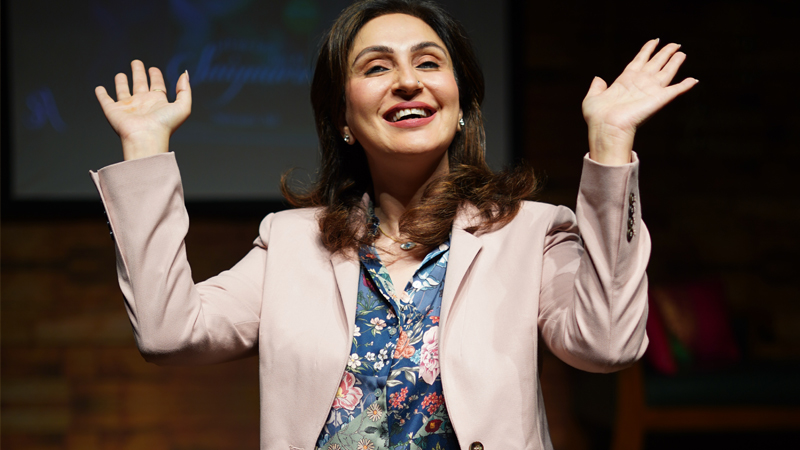
    Mumbai: Juhi Babbar Soni, renowned for her theatre group Ekjute, founded by her parents Raj Babbar and Nadira Babbar is set to mark a milestone seldom seen in today’s screen-dominated digital era. On 28 June, at Sheila Gopal Raheja Auditorium in Bandra, Juhi and her troupe will proudly present their 100th performance of “With Love, Aap ki Saiyaara”. This captivating narrative delves into the diverse identities of contemporary Indian women.

    The play features Juhi narrating the journey of Saiyaara through her book that Saiyaara has written. In the play, the book itself is titled “With Love, Aap ki Saiyaara.”

    Based on a character conceived by Nadira Zaheer Babbar, the play is written, directed, and performed by Juhi Babbar Soni herself, “With Love, Aap ki Saiyaara” portrays Saiyaara as not just a character but a symbol of resilience, determination, and aspiration. The play, spanning 100 uninterrupted minutes, invites audiences to join Saiyaara on her introspective journey, described by acclaimed poet and lyricist Javed Akhtar as “Behad umda performance hai Juhi ki. Yeh play bahut kuchh ehsaas dilaata hai.” (Juhi’s performance is exceptional. This play evokes many emotions.)

    Juhi has also tried a few innovative approaches that have caught everybody’s attention for this feel-good play. For example Saiyaara’s sweet and spicy take on ‘men, marketing and mores’, which is conveyed in a conversational approach with the gallery, making the audience a part of the performance!

    Veteran actor Anupam Kher, couldn’t help but praise Juhi’s command over her language during the superb dialogue delivered in the play, “(It is a) Fantastic performance, beautifully written play and Juhi’s command of the language is amazing!”

    Expressing her joy and gratitude, Juhi Babbar Soni said, “I am very happy and deeply grateful to my audience for their unwavering support and love. This milestone wouldn’t have been possible without them.”

    Interestingly, Juhi initiated the play with an online performance during the lockdown and successfully transitioned it to the stage post-pandemic.

    28th June show would be the remarkable 100th show within just 30 months of the play being performed in 35 plus cities in India and 5 cities in London.

  • ‘Ghayal Once Again:’ Much mellowed

    ‘Ghayal Once Again:’ Much mellowed

    Ghayal Once Again can be termed as a true sequel as the film connects with Sunny Deol starrer Ghayalreleased in 1990. In that era, a suppressed common man’s outburst against a mighty criminal (Amrish Puri inGhayal) who has the politicians and the system at his command was palatable.

    Sunny is back after serving 14 years in prison. He gets flashbacks of past which Soha Ali Khan, a doctor keeps in control with instant medication. Sunny has now turned a vigilante, runs a newspaper called Satyakam, which publishes real news sans sensationalism. He has a loyal team around him, which shares his spirit and purpose. Sunny is now a much admired person with a great following among youth.

    Om Puri is now a retired cop who has become an RTI activist. Puri has come across some material, which can virtually destroy the tycoon, Narendra Jha, who accumulates wealth through illegal means. Jha has the local home minister and, through him, the entire police force in his pocket. Puri is called for a meeting where an argument ensues and Jha’s drug addict and violent son, Abhilash Kumar, shoots down Puri. This is made to look like a road accident. 

    Unknown to Jha and company the whole shooting incident has been shot on a cell phone of a bunch of students out to take pictures and videos of some rare birds. But, the guardians of the kids know how powerful Jha is and handover the video to him.

    However, one of the girls from this group of four, thought it prudent to make a copy of the video, which they plan to handover to Sunny. But, it seems Jha has the entire city under video surveillance as well as the phones taped of anybody who can harm him. As Sunny and the students decide to meet up, Jha lets loose his foreign mercenaries, no less, on the kids. There is a long chase through the city roads in cars and later through a shopping mall. All beamed live in Jha’s room. But, Sunny reaches in time and saves kid. 

    A lot follows, the students are now kidnapped and kept under vigil at Jha’s fortress like mansion surrounded by Jha’s own army as well as the entire police force of the city. Now it is for Sunny to get them out. And, as Sunny is wont to do, he becomes a one man army, as usual, preferring hand to hand fight against multiple guns.

    The problem with Ghayal Once Again is that it follows the same theme that worked in 1990 when a lot of anti-establish feelings prevailed. Also, Sunny was the leading action hero around as his contemporaries, Anil Kapoor and Jackie Shroff, did varied roles. Now, just about everybody does action films thanks to technology. The story is old-fashioned about one powerful man calling shots in a major metropolis like Mumbai; it does not convince anymore. 

    From the moment film begins till the chase sequence the film holds only to become predictable thereafter. The action scenes become repetitive. Cinematography by veteran Ravi Yadav is competent. Editing wise, the film needed some sharp trimming. Music, having no scope, does not quite work. Performance wise, the Sunny – Soha pair is odd despite their love being silent. Sunny is his usual self doing Ghayal again while Soha has little scope. While the students all do well, Ramesh Deo, Manoj Joshi, Tisca Chopra, and Sachin Khedekar are okay. The villain duo, Jha and Abhilash, is effective. 

    Ghayal Once Again hasn’t had an encouraging opening. It caters to single screen masses mainly of which not many are left.

    Producer: Dharmendra
    Director: Sunny Deol
    Cast: Sunny Deol, Soha Ali Khan, Om Puri, narednra Jha, Manoj Joshi, Tisca Chopra, Sachin Khedekar, Nadira Babbar, Abhilash Kumar

    ‘Sanam Teri Kasam:’ Of unseen villain

    An early cancer as a part of a love story was Dil Ek Mandir, a Meena Kumari, Rajendra Kumar, Rajkumar film. There it was a love triangle. However, the Hollywood hit, Love Story (1970), based on Erich Segal’s novel of the same name, set a trend for star-crossed romances where one of the protagonists is afflicted by cancer. Immediately thereafter in 1971, there followed a film with cancer as the main theme in Hrishikesh Mukherjee’sAnand, though this was not a love story or a triangle. Love Story finally inspired Rajshri’s musical hit, Ankhiyon Ke Jharokhon Se in 1978.

    Hrishikesh Mukherjee’s other foray in this theme, Mili, failed despite a memorable musical score and the reigning stars of the day, Amitabh Bachchan and Jaya Bachchan, in the cast. There may have been a few more films on the theme but none made a mark. 

    In Sanam Teri Kasam, Harshwardhan Rane inherits a flat from one Julie aunty in a building society occupied by creatures from era gone by. No explanation is offered for the deceased aunt’s largesse. Rane is projected as some sort of a stud for he has a new woman in his bed each night and they are Page 3 girls. How, why? 

    Rane is like a 1950s romantic hero. He is never seen making a living. All he does is guzzle alcohol, chase romance and is busy suppressing his past tragedies. He has spent eight years in jail for being accused of a murder at the age of 14. Cinematic liberty allows you to consign a 14 year old to eight years in prison. 

    Luckily for him, there lives a Tamil-Brahmin family in his society, the head of which also lives in 1950 or probably before that. The family has two daughters of which the older one, Mawra Hocane (Mawra Hussain originally) looks like what we call a geek today. She is bespectacled, with a figure like a walking stick, and her father adds to the unpalatable look by rubbing incense stick ash on her forehead. She works as a librarian. 

    To cut a story short, Mawra’s younger sister can’t marry till Mawra does, but there are no takers for her. She promises her sister that she will clear her way and visits Rane at 4 am in the morning to seek his help to get her a makeover from one of his girls who figures as a top rated makeover artist. What follows is a scandal. Mawra is branded for being in a debauch’s house at an unearthly hour. She is disowned by her family! 

    Rane now becomes her caretaker.

    The rest of the film is like a silent movie since none of the characters say what they want to say but say everything else. It is hackneyed to say the list. Mawra is supposed to be a very intelligent girl, well read, but can’t read Rane’s feelings for her. Rane has been with numerous girls but can’t express his love for Hocane. He even works on getting her married to an IIT-IIM guy because that was what her family wanted! 

    Finally, when they realize they are in love, cancer plays the villain. Mawra has limited time to live. Hence, in what has become traditional now, Rane marries her before she dies.

    The script of the film is like a remix thing as is done with music albums. It borrows from a number of films from the past. This is not limited to just the script; direction also follows the beaten path, hugely clichéd. For this film with newcomers with little of known supporting cast, its 155 minute run is not justified and, what is more, makes it feel like never-ending. Dialogue is mundane except on two occasions. With limited locations, the cinematography is average. The one positive with the film is the musical score by Himesh Reshammiya if it can help at all. Editing is non-existent. 

    While Mawra is a perpetual wronged crybaby in the film, Rane refuses to either cry or laugh; he prefers to carry one single expression throughout. Rest in the cast are incidental.

    Sanam Teri Kasam is an insipid movie with scant appeal.

    Producer: Deepak Mukut
    Directors: Radhika Rao, Vinay Sapru
    Cast: Harshvardhan Rane, Mawra Hocane, Murli Sharma, Vijay Raaz, Sudesh Berry

  • ‘Ghayal Once Again:’ Much mellowed

    ‘Ghayal Once Again:’ Much mellowed

    Ghayal Once Again can be termed as a true sequel as the film connects with Sunny Deol starrer Ghayalreleased in 1990. In that era, a suppressed common man’s outburst against a mighty criminal (Amrish Puri inGhayal) who has the politicians and the system at his command was palatable.

    Sunny is back after serving 14 years in prison. He gets flashbacks of past which Soha Ali Khan, a doctor keeps in control with instant medication. Sunny has now turned a vigilante, runs a newspaper called Satyakam, which publishes real news sans sensationalism. He has a loyal team around him, which shares his spirit and purpose. Sunny is now a much admired person with a great following among youth.

    Om Puri is now a retired cop who has become an RTI activist. Puri has come across some material, which can virtually destroy the tycoon, Narendra Jha, who accumulates wealth through illegal means. Jha has the local home minister and, through him, the entire police force in his pocket. Puri is called for a meeting where an argument ensues and Jha’s drug addict and violent son, Abhilash Kumar, shoots down Puri. This is made to look like a road accident. 

    Unknown to Jha and company the whole shooting incident has been shot on a cell phone of a bunch of students out to take pictures and videos of some rare birds. But, the guardians of the kids know how powerful Jha is and handover the video to him.

    However, one of the girls from this group of four, thought it prudent to make a copy of the video, which they plan to handover to Sunny. But, it seems Jha has the entire city under video surveillance as well as the phones taped of anybody who can harm him. As Sunny and the students decide to meet up, Jha lets loose his foreign mercenaries, no less, on the kids. There is a long chase through the city roads in cars and later through a shopping mall. All beamed live in Jha’s room. But, Sunny reaches in time and saves kid. 

    A lot follows, the students are now kidnapped and kept under vigil at Jha’s fortress like mansion surrounded by Jha’s own army as well as the entire police force of the city. Now it is for Sunny to get them out. And, as Sunny is wont to do, he becomes a one man army, as usual, preferring hand to hand fight against multiple guns.

    The problem with Ghayal Once Again is that it follows the same theme that worked in 1990 when a lot of anti-establish feelings prevailed. Also, Sunny was the leading action hero around as his contemporaries, Anil Kapoor and Jackie Shroff, did varied roles. Now, just about everybody does action films thanks to technology. The story is old-fashioned about one powerful man calling shots in a major metropolis like Mumbai; it does not convince anymore. 

    From the moment film begins till the chase sequence the film holds only to become predictable thereafter. The action scenes become repetitive. Cinematography by veteran Ravi Yadav is competent. Editing wise, the film needed some sharp trimming. Music, having no scope, does not quite work. Performance wise, the Sunny – Soha pair is odd despite their love being silent. Sunny is his usual self doing Ghayal again while Soha has little scope. While the students all do well, Ramesh Deo, Manoj Joshi, Tisca Chopra, and Sachin Khedekar are okay. The villain duo, Jha and Abhilash, is effective. 

    Ghayal Once Again hasn’t had an encouraging opening. It caters to single screen masses mainly of which not many are left.

    Producer: Dharmendra
    Director: Sunny Deol
    Cast: Sunny Deol, Soha Ali Khan, Om Puri, narednra Jha, Manoj Joshi, Tisca Chopra, Sachin Khedekar, Nadira Babbar, Abhilash Kumar

    ‘Sanam Teri Kasam:’ Of unseen villain

    An early cancer as a part of a love story was Dil Ek Mandir, a Meena Kumari, Rajendra Kumar, Rajkumar film. There it was a love triangle. However, the Hollywood hit, Love Story (1970), based on Erich Segal’s novel of the same name, set a trend for star-crossed romances where one of the protagonists is afflicted by cancer. Immediately thereafter in 1971, there followed a film with cancer as the main theme in Hrishikesh Mukherjee’sAnand, though this was not a love story or a triangle. Love Story finally inspired Rajshri’s musical hit, Ankhiyon Ke Jharokhon Se in 1978.

    Hrishikesh Mukherjee’s other foray in this theme, Mili, failed despite a memorable musical score and the reigning stars of the day, Amitabh Bachchan and Jaya Bachchan, in the cast. There may have been a few more films on the theme but none made a mark. 

    In Sanam Teri Kasam, Harshwardhan Rane inherits a flat from one Julie aunty in a building society occupied by creatures from era gone by. No explanation is offered for the deceased aunt’s largesse. Rane is projected as some sort of a stud for he has a new woman in his bed each night and they are Page 3 girls. How, why? 

    Rane is like a 1950s romantic hero. He is never seen making a living. All he does is guzzle alcohol, chase romance and is busy suppressing his past tragedies. He has spent eight years in jail for being accused of a murder at the age of 14. Cinematic liberty allows you to consign a 14 year old to eight years in prison. 

    Luckily for him, there lives a Tamil-Brahmin family in his society, the head of which also lives in 1950 or probably before that. The family has two daughters of which the older one, Mawra Hocane (Mawra Hussain originally) looks like what we call a geek today. She is bespectacled, with a figure like a walking stick, and her father adds to the unpalatable look by rubbing incense stick ash on her forehead. She works as a librarian. 

    To cut a story short, Mawra’s younger sister can’t marry till Mawra does, but there are no takers for her. She promises her sister that she will clear her way and visits Rane at 4 am in the morning to seek his help to get her a makeover from one of his girls who figures as a top rated makeover artist. What follows is a scandal. Mawra is branded for being in a debauch’s house at an unearthly hour. She is disowned by her family! 

    Rane now becomes her caretaker.

    The rest of the film is like a silent movie since none of the characters say what they want to say but say everything else. It is hackneyed to say the list. Mawra is supposed to be a very intelligent girl, well read, but can’t read Rane’s feelings for her. Rane has been with numerous girls but can’t express his love for Hocane. He even works on getting her married to an IIT-IIM guy because that was what her family wanted! 

    Finally, when they realize they are in love, cancer plays the villain. Mawra has limited time to live. Hence, in what has become traditional now, Rane marries her before she dies.

    The script of the film is like a remix thing as is done with music albums. It borrows from a number of films from the past. This is not limited to just the script; direction also follows the beaten path, hugely clichéd. For this film with newcomers with little of known supporting cast, its 155 minute run is not justified and, what is more, makes it feel like never-ending. Dialogue is mundane except on two occasions. With limited locations, the cinematography is average. The one positive with the film is the musical score by Himesh Reshammiya if it can help at all. Editing is non-existent. 

    While Mawra is a perpetual wronged crybaby in the film, Rane refuses to either cry or laugh; he prefers to carry one single expression throughout. Rest in the cast are incidental.

    Sanam Teri Kasam is an insipid movie with scant appeal.

    Producer: Deepak Mukut
    Directors: Radhika Rao, Vinay Sapru
    Cast: Harshvardhan Rane, Mawra Hocane, Murli Sharma, Vijay Raaz, Sudesh Berry

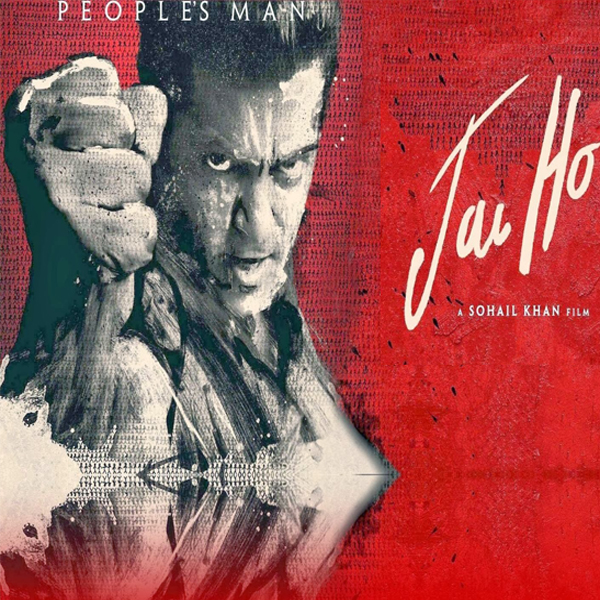
  • Jai Ho ….Not Quite Salman

    Jai Ho ….Not Quite Salman

    MUMBAI: With an array of blockbusters behind him, the burden of delivering a bigger grosser grows every time a new Salman Khan film hits the screens. Keeping up with these expectations is not an easy task.


    Too add more to it, with his latest, Salman, also attempts to promote his personal image that of a charitable pure heart which he is building through Being Human Foundation. That makes Salman’s character too goody-goody; he is all sugar.


    Jai Ho has is a remake of Telugu film Stalin which borrowed the idea from  Hollywood film Pay It Forward (2000) about creating a chain wherein every person who receives a favour from someone does favours for three other people when given a chance. The idea is to multiply the do-gooders in the society. That is one side of Salman; the other is that of fighting the evil forces which is represented by Danny and his son, daughter and son in law. This is a dampener since people have stopped caring about politicians’ character.


    Salman is an ex-army man, discharged for disobeying the orders of his high command. His intentions were noble, though. He ventured into enemy territory and freed some children held captive there. He always seems to be in the right place at the right time for wherever he goes someone or the other is in need of help. For instance, he helps an armless student, Genelia D’Souza, write her exam paper as her writer has not turned up and Salman happens to be around, dropping his nephew to school. Next, Salman spots a car driver rudely pushing and hitting a young beggar girl. He beats up the driver and here onwards starts his enmity with Danny clan. The driver happened to be his man and soon Danny’s goons are looking for him. The fights are the usual South Indian films kind very much in vogue with Hindi films lately: hundreds of swords and sickles wielding goons vs. Salman and how he annihilates them.


    But, this pure heart hero’s heart also throbs for other reasons, the romantic kind. He finds his lady love in his sister’s (Tabu) neighbour, Daisy Shah. There is no coochi-cooing. The romance is pure Rajshri film brand with heroine around mainly to sing songs with Salman.


    In between song and dance, Salman has to fight off Danny’s dirty tricks. Salman’s mother (Nadira Babbar) is run over by Danny’s men to warn him to back off while on another occasion his nephew is kidnapped and while saving him Salman ebds up killing Danny’s son in law (Mukul Dev). This adds more fuel to the fire. Even as Danny is desperate to kill Salman, his idea of doing three favours to others catches on; and everybody including the chief minister (Mohnish Behl) are curious to know whose noble idea it was.


    The CM, unhappy with the war between Salman and Danny, decides to intervene. Having learnt Salman’s background as a decorated army man he does not think it fair to punish Salman nor does he want his party to suffer because of Danny’s antics. The meeting between the three, Salman, Danny and Mohnish ends with a compromise and Salman has been asked to wait till Mohnish gives Danny a piece of his mind behind closed doors. Danny puts his plan in to effect; kill Mohnish, take his place as the CM and frame Salman for the murder.


    The original, Stalin was released in 2006 and the concept has become outdated. What is more, like many South films, Jai Ho also tends to get preachy and that is not what fans of Salman’s one-liners want. There is not much to the story and the first half becomes boring. The villain and his goons provide some mass entertainment. Yes, and there are also some mushy moments. Music is weak with just one song worth a mention. The film lacks finesse. As for performances, the film hinges totally on Salman and he is at his usual physical and acrobatic best. Daisy is fair, this being her debut film. Nadira Babbar is stagy. Tabu and the rest are okay. The film has a few known faces doing cameo roles in Suniel Shetty, Aditya Panscholi, Mahesh Manjrekar, Genelia, Mohnish, providing variety.


    Jai Ho, despite Salman, has had a tepid opening response even from single screens; having been made to pay high MGs, the single screens stand to lose their earnings from couple of recent money spinners. 


    Producers: Sunil Lulla, Sohail Khan.

    Director: Sohail Khan.

    Cast: Salman Khan, Daisy Shah, Tabu, Danny Danzongpa, Nadira Babbar, Mukul Dev, Mahesh Thakur, Resham Tipnis, Ashmit Patel, Yash Tonk, Haroon Qazi, Genelia D’Souza, Suniel Shetty, Aditya Panscholi, Mahesh Manjrekar, Sharad Kapoor.