Tag: N Srinivasan

  • ICC broadcast rights till 2023 bagged by Star India

    ICC broadcast rights till 2023 bagged by Star India

    MUMBAI: In one of the most anticipated sports deal, The International Cricket Council (ICC) jointly awarded its audio-visual rights for ICC Events from 2015 to 2023 to Star India and Star Middle East.


    Though the exact final value of the rights fee has not been disclosed, it is much in excess of the ICC’s previous commercial deals.


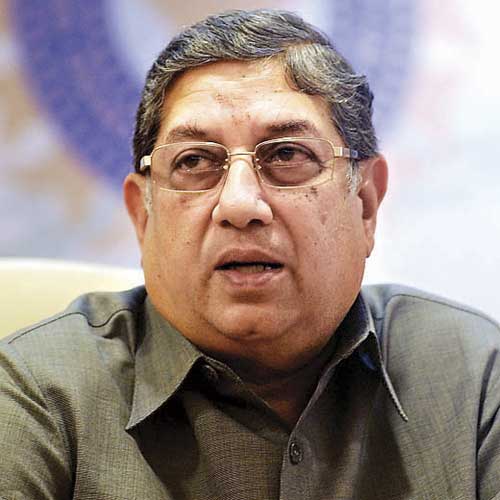
    Commenting on the decision to name the two broadcasters as the successful bidders, ICC chairman N Srinivasan said, “We are delighted that our partnership with the Star group has extended to the next cycle of ICC Events. This illustrates the strong relationship we have built in the current cycle and the value we have delivered since 2007.”


    He further went on to say that Star has an outstanding reputation as a sports broadcaster and has played an integral role in promoting and growing the game by taking coverage of ICC Events to a truly global and record-breaking audience.


    This commitment for the next eight years will ensure greater stability for ICC members as well as increased funding for developing and established countries. Emerging nations will have access to the largest funding resource in the history of the game and the board has fully endorsed this framework as the best means of safeguarding the future of the sport,” he added.


    Speaking on the investment by Star,  Srinivasan said the level of investment committed by Star showed that the game is stronger than ever before and hopefully with the financial stability for the next eight years, they could implement plans to strengthen and grow the game further, making it an even bigger and better global game.


    The new eight-year period includes 18 ICC tournaments, including two ICC Cricket World Cups (2019 and 2023), two ICC Champions Trophy tournaments (2017 and 2021) and two ICC World Twenty20 tournaments (2016 and 2020).


    Star India CEO Uday Shankar said, “We are delighted and honoured to extend our partnership with ICC. This is a tribute to Star’s commitment and ICC’s trust in our ability to take the great game of cricket to the next level. Star will constantly attempt to reinvent the viewer experience to make cricket bigger and bigger.”


    The current cycle has seen ESPN Star Sports hold the audio-visual rights until the contract expires at the end of next year’s ICC Cricket World Cup 2015.


    IBC’s finance and commercial affairs committee chairman Giles Clarke commented, “This innovative and exciting partnership will underpin the long-term financial health of the global game and provide real stability for all our members. It will help the ICC and our members to grow participation in areas such as the women’s game where there have been great strides made as well as supporting the emerging nations. This deal benefits all ICC members and will allow them to improve their competitiveness and public interest in a targeted and sustainable way. The partnership will also guarantee increased promotion and marketing of the game in key markets across the globe.” 


    The decision was made by the ICC Business Corporation (IBC) Board, ICC’s commercial arm, during a meeting at the ICC headquarters in Dubai on Sunday. The decision followed a robust tender, bidding and evaluation process, which started in July 2014. The process, which involved two rounds of bidding, received 17 competitive bids from various broadcasters across different territories for the rights.


    ICC chief executive David Richardson said, “This agreement guarantees more money for all our members, thereby underpinning the growth and development of the game. Star has been an excellent partner for the ICC during the current rights cycle, promoting and supporting ICC Events and cricket in general in the sub-continent, and I am pleased that we now have a chance to build on that success over the next eight years on a global level.”


  • Sunil Gavaskar relieved as BCCI interim president

    Sunil Gavaskar relieved as BCCI interim president

    MUMBAI: India’s cricketing legend Sunil Gavaskar has been relieved of his duties as the interim BCCI president by the Supreme Court. He was appointed to manage the recently concluded Indian Premier League (IPL) 2014.


    The bench headed by Justice T.S Thakur relieved Gavaskar but appreciated the work he had done of conducting the affairs of both the board and the IPL.


    The court also allowed him to seek compensation from the BCCI for the work he had done so far. The move comes after Gavaskar had written to the apex court seeking clarity on his role since the IPL had concluded.


    Senior BCCI Vice President Shivlal Yadav will meanwhile continue to function till further orders of the apex court.


    The Supreme Court had appointed Gavaskar after taking control of the board on 28 March from current ICC chairman N. Srinivasan who was asked to move aside in the wake of the alleged betting charges against his son-in-law Gurunath Meiyappan during the previous season of IPL.

  • ICC Board meet concludes in Melbourne

    ICC Board meet concludes in Melbourne

    MUMBAI: The ICC and IDI Boards, under the newly appointed chairmanship of  Narayanaswami Srinivasan, met yesterday during the ICC Annual Conference week in Melbourne. A number of decisions were made and various reports were presented.

    The ICC Board noted the significant progress made on the Future Tours Programme (FTP) which has been extended through to 2023. They have expressed satisfaction that is certainty around long-term scheduling with balance between home and away matches for all 10 teams and the three formats. The ICC Board agreed with the ICC Chief Executives’ Committee (CEC) recommendation that the Members must sign all bilateral agreements through to 2023 before the next ICC meeting, which will take place in October.

    The ICC Board approved the composition of various sub-committees. David Cameron of West Indies and Najam Sethi of Pakistan have been elected to the five member ICC executive committee , which will be chaired by Wally Edwards and will also include Srinivasan and Giles Clarke, with ICC chief executive David Richardson as an ex-officio member.


    Clarke will also chair the Finance and Commercial Affairs Committee (F&CA), which will include Edwards, Srinivasan, Nazmul Hassan of Bangladesh and Jayantha Dharmadasa of Sri Lanka with Richardson again as an ex-officio member.
     

    On the other hand, the Governance Review Committee will be chaired by Martin Snedden and will include Peter Chingoka of Zimbabwe,  Hassan of Bangladesh, Sanjay Patel of India and Imran Khawaja of Singapore with Srinivasan and Richardson as ex-officio members.

    The ICC Development Committee has also been reconstituted to emphasise the importance of developing the game beyond its traditional boundaries.
    The committee will be chaired by the ICC chairman and include the three associate member representatives of the ICC Board, the three associate member representatives on the ICC Chief Executives’ Committee and the Affiliate Members’ Global Representative. It will also include the Full Member Directors like Chingoka of Zimbabwe, Cameron of West Indies and Snedden of New Zealand as well as Richardson and ICC Head of Global Development Tim Anderson, both ex-officio members.

    The ICC Board agreed to give T20I status to the Netherlands and Nepal, both of which qualified for the ICC World Twenty20 Bangladesh 2014. This means there are now eight associate sides with T20I status. The other six are Afghanistan, Hong Kong, Ireland, Scotland, Papua New Guinea (PNG) and United Arab Emirates (UAE) which already have T20I status by virtue of having ODI status.

    The ICC Board also  noted with  concern about the number of bowlers with suspected illegal bowling actions currently playing cricket and noted the recommendations of the ICC Cricket Committee and the CEC to revise processes to encourage umpires and referees to identify suspect bowlers with greater confidence, to use the expertise of the bio-mechanics working in this area to assume a greater role during the assessment process, and to allow for ongoing scrutiny of bowlers once they have been identified under the ICC procedures. The ICC Board will receive a further update at its next meeting.

    It also concurred with the view that international venues must be set up to their maximum possible boundary dimensions, as per the playing conditions, to help maintain an appropriate balance between bat and the ball.

    The ICC Board noted a number of other changes approved by the CEC, which met on Tuesday. The major changes to the ICC playing conditions for international cricket will come into effect from 1 October 2014.

    The ICC Board received the annual anti-corruption report from Sir Ronnie Flanagan, the anti-corruption and security unit chairman, who repeated the need for the ICC to maintain its vigilance in the area of anti-corruption and also sustain the current high levels of education and strategy of prevention.

    The ICC Board discussed and agreed on the terms of reference for a review of cricket’s anti-corruption processes and resources at both international and domestic level. The review group, which is aimed at improving the structures and resources, will be chaired by ICC chief executive David Richardson and will also include ECB chief executive David Collier, BCCI representative Sundar Raman, James Sutherland, the Cricket Australia Chief Executive, and an independent expert.

    The ICC Board also received an update on the encouraging progress in preparation and ticket sales for the ICC Cricket World Cup 2015, which will be staged in Australia and New Zealand from 14 February. New Zealand and Sri Lanka will feature in the opening match in Christchurch, while on the same day Australia will host England in Melbourne, which will also stage the final on 29 March.

    On Thursday, the ICC Board had confirmed that the USA Cricket Association (USACA) was the ICC’s recognised member in the USA and approved the Development Committee’s recommendation that Oman Cricket (OC) should become the 38th Associate Member of the ICC. It also confirmed the suspension of the Affiliate Membership of Brunei and removal of Tonga as an Affiliate Member.

  • N Srinivasan confirmed as ICC chairman

    N Srinivasan confirmed as ICC chairman

    MUMBAI: Narayanaswami Srinivasan has been confirmed as the International Cricket Council (ICC) chairman after the 52-member full council approved amendments to the ICC’s Memorandum and Articles of Association at the annual conference in Melbourne.

    Srinivasan was nominated by the Board of Control for Cricket in India (BCCI) for the top position and will assume charge following the conclusion of the ICC annual conference week.

    The approval of the constitutional changes, which flowed from an ICC Board resolution taken in Singapore on 8 February and finalised on 10 April, also means that a new executive committee was formed, which will report to the ICC Board.

    The initial chair of the executive committee will be Cricket Australia’s chairman, Wally Edwards, while the chair of the ICC’s finance and commercial affairs committee (F&CA) will continue to be England and Wales Cricket Board’s chairman, Giles Clarke.

    Srinivasan said it was an honour to become ICC chairman and promised that the ICC will continue to play a leading role in the promotion and development of the global game.

    “It is an honour to be confirmed as the chairman of the International Cricket Council,” said Srinivasan, adding: “I will leave no stone unturned in trying to strengthen the pillars and foundations of our sport, both on and off the field. I want to ensure that cricket retains and grows its popularity, and that the ICC plays a leading role in this global growth.”

    “I want to see more strong teams in international cricket. For this to be achieved, we all need to work hard to develop local talent in our countries. Naturally, there will be more support to those who first show they can help themselves. The ICC is a members’ organisation and the pathway is now there for any member to play test cricket or in the major ICC events if it performs well enough over a sustained period of time.”

    Srinivasan congratulated outgoing ICC president Alan Isaac for his contribution.” Isaac has been an inspirational president of the ICC. He provided guidance to everyone during his two-year term and all three international formats remain incredibly popular. The game is unquestionably stronger than it was at the start of his term,” he said.

    The annual conference also saw Mustafa Kamal become the eleventh president of the ICC.

    Kamal said: “This is a memorable and historic day for Bangladesh cricket. On this day 14 years ago, Bangladesh became the tenth test playing country. Today, a Bangladeshi becomes the eleventh president of the International Cricket Council. Thank you for bestowing this honour on Bangladesh and me.”

  • IPL 7: Ready, steady, Po!

    IPL 7: Ready, steady, Po!

    Just a day to go for that spectacle called the Indian Premiere League and already, the season has seen more than its fair share of twists and turns!


    Apart from the fact that the upcoming tournament coincides with the 16th general elections – bringing back the ghost of IPL season two that had to be organised on South African shores because it collided with the polls here – there have been other changes as well. Right from the omission of Pune Warriors India as a franchise (earlier, Deccan Chargers and Kochi Tuskers Kerala faced termination as well) to N Srinivasan losing his chair to cricketing legend Sunil Gavaskar being appointed as the BCCI-IPL interim president on the order passed by the Supreme Court.


    Also, IPL is down to eight teams just like it was when it first kicked off, with the number of matches down to 60, of which, the first 20 will be played in the UAE and the remaining ones back home beginning 2 May.


    So before the action begins, here’s looking at some of the things the franchises need to make note of before they forge ahead:


    Maintaining momentum


    Back in 2009, when IPL had to shift to South Africa due to general elections, there were a lot of logistical issues that caused trouble for the franchises. While shifting to UAE this time round may look simpler because of the similarity in conditions, the teams will have to do some adjusting when they shift back to India in early May.


    The return to India could be more a psychological blow for the teams because while there will be bigger crowds and greater support back home, migrating back to India from the UAE with wins under their belts may prove a daunting task for the teams.


    They will have to make the psychological adjustment and rework their strategy to better suit Indian conditions. If any side gains momentum in the UAE, it is crucial that they win the first few games during the Indian leg to keep wheel of fortune turning. As far as the conditions go, it may become easier for the teams in India as the heat wouldn’t be as intense as that of the UAE. The pitches too would be a lot more familiar.


    Thus, it would all boil down to how well a franchise returns and gets moving in India. It may be a challenge for the teams that are winning, but those who struggle in the UAE may welcome the return to home conditions and that could work in their favour. So buckle up for some high adrenaline action in the first week of May.


    Sponsors fighting shy of IPL?


    What began as a fledgling franchise in 2008 is today a world-renowned property with brand value pegged at $3.03 billion in 2013 and the highest at $4.13 billion in 2010.


    But, 2014 seems to be a troubling year for IPL franchisees, what with the recent controversies, uncertainty about the fate of the tournament (this season), and the decision to take the first half to UAE having made sponsors put on their guard.


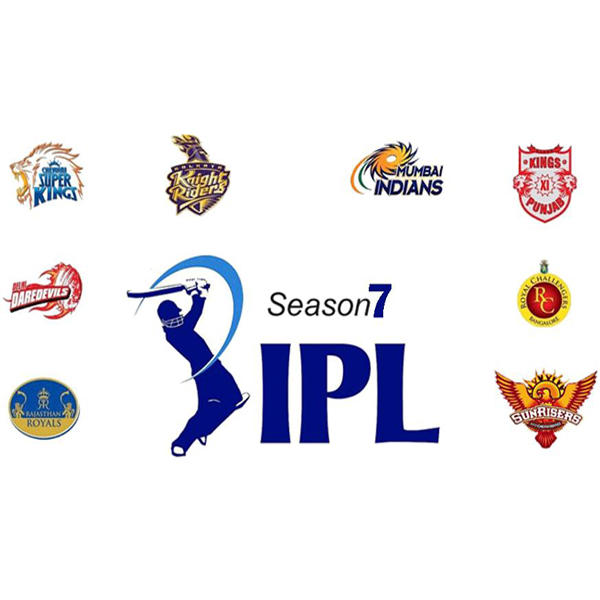
    According to an American Appraisal India report of 2013, Chennai Super Kings and Mumbai Indians emerged as the most powerful brands valued at $72 million each; followed by Kolkata Knight Riders ($69 million) and Royal Challengers Bangalore ($51 million). Rajasthan Royals ($45 million) and Delhi Daredevils ($40 million) were somewhere in the middle, while Kings XI Punjab ($32 million) and Sunrisers Hyderabad ($25 million) sat at the bottom of the pile.


    Each team is trying to claw its way back with operational improvements however, trust flows with stakeholders will eventually determine the health of IPL’s long-term liquidity and profitability. For the current eight teams to sustain, their short-term operational movements need to be aligned with their strategic plans for the tourney.


    For example, Kings XI Punjab has had its number of sponsors come down to just two from 15 in 2013. Till last season, the franchise had NVD Solar as its title sponsor for three years, along with Arise Inverters and Batteries, Raindrops Basmati, Lux Cozi, ACC, USL and McDowell’s No. 1 as official team partners. But this season, it has only USL and TK Sports on board as sponsors with the tourney at the doorstep.


    GMR group owned-Delhi Daredevils seems to have undergone a makeover this season with a new-look squad, new logo and new sponsor – Quikr. Till last year, the Muthoot Group was its title sponsor, but it did not wish to renew its contract and thus, it opened the doors for the e-commerce portal to step-in as the title sponsor for a period of three years. Apart from Muthoot, other premiere sponsors including Bajaj Allianz, Coca-Cola India, Matrix and consumer goods company Panasonic have also opted out of sponsorship deals this season.


    Other franchisees such as Chennai Super Kings, Rajasthan Royals and Kolkata Knight Riders are facing a different challenge. While these teams have managed to get some sponsors on board, the sponsorship rates have taken a pounding. Delay in the announcement of the venue and the controversies surrounding the tourney have impacted business this year, according to most trade pundits.


    So how are the teams facing up to these challenges?


    With the playing field down to just eight teams, it will lead to intense battles on the field that will hopefully lead to great last over finishes, creating an enthralling experience for the fans.


    Last season winners and maiden title holder Mumbai Indians, will square off with 2012 winners Kolkata Knight Riders on April 16 to kick-off the tourney at Sheikh Zayed Stadium, Abu Dhabi.


    The league is scheduled to culminate on 1 June 2014, to crown the champions for season seven of the Pepsi Indian Premiere League. Here is a brief description of the teams competing for the coveted title this time around.


    Chennai Super Kings (CSK)


    Team (from): MS Dhoni (Captain), Suresh Raina, R Ashwin, Ravindra Jadeja, Dwayne Bravo, Faf du Plessis, Brendon McCullum, Dwayne Smith, Ashish Nehra, Mohit Sharma, Samuel Badree, Ben Hilfenhaus, Matt Henry, B Aparajith, Mithun Manhas, Ishwar Pandey, Pawan Negi, Vijay Shankar, Ronit More, John Hastings.


    One of the most successful franchises in the league, having won the title twice (2010 and 2011) under the leadership of M S Dhoni (also captain of Team India); one of the major reasons for the success of CSK is the stability and collective effort in the team. They always have a chance to win the cup and this year is no different.


    Royal Challengers Bangalore (RCB)


    Team (from): Virat Kohli (Captain), Chris Gayle, AB de Villiers, Yuvraj Singh, Parthiv Patel, Albie Morkel, Mitchell Starc, Ashok Dinda, Ravi Rampaul, Muttiah Muralitharan, Nic Maddinson, Varun Aaron, Vijay, Sachin Rana, Yogesh Takawale, Abu Nechim Ahmed, Yuzvendra Chahal, Shadab Jakati, Sandeep Warrier, Harshal Patel, Tanmay Mishra.


    The most flamboyant team among all, with the likes of Virat Kohli and Chris Gayle, but it hasn’t really used its resources well to conquer the league. The best result for the team was in 2011, when they came second to CSK. With some real match winners, and Kohli currently in top form, the Challengers need to really put the pedal to the metal (bat to the ball) from the word go this season.


    Delhi Daredevils (DD)


    Team (from): Kevin Pietersen (Captain), M Vijay, Dinesh Karthik, JP Duminy, Manoj Tiwary, Quinton de Kock, Mohammed Shami, Rahul Sharma, Saurabh Tiwary, Laxmi Ratan Shukla, Nathan Coulter-Nile, Shahbaz Nadeem, Ross Taylor, Milind Kumar, Wayne Parnell, HS Sharath, Jayant Yadav, Jaydev Unadkat, James Neesham, Kedar Jadhav, Mayank Agarwal, Rahul Shukla, Siddharth Kaul.


    This is one team that has just drifted away after beginning strongly in the first two seasons. The team really needs to play to its strengths and take each match as it comes. The strategy needs to be very clear; first to reach the play-offs and then the semi-final and if the team plays to its strength, play the final. With the temperamental Pietersen at the helm of things, it will be interesting to see the approach of the team this season.


    Kolkata Knight Riders (KKR)


    Team (from): Gautam Gambhir (Captain), Sunil Narine, Jacques Kallis, Robin Uthappa, Yusuf Pathan, Shakib Al Hasan, Umesh Yadav, Vinay Kumar, Morne Morkel, Piyush Chawla, Manish Pandey, Veer Pratap Singh, Chris Lynn, Andre Russell, SS Mandal, Pat Cummins, Debabrata Das, Suryakumar Yadav, Manvinder Bisla, Ryan ten Doeschate, Kuldeep Yadav.


    The Shah Rukh Khan-owned franchise, was lost till it found a leader in Gautam Gambhir and have stood by him. Under Gambhir, KKR lifted the cup in 2012 and can certainly be a strong contender for this season as well. The team banks on a good mix of youth and experience, with Kallis and Gambhir giving stability to the batting. If Sunil Narine can spin his web yet again and Yusuf Pathan along with new entrant Robin Uthappa create some magic, the Knight Riders may stand to repeat its 2012 feat yet again.


    Rajasthan Royals (RR)


    Team (from): Shane Watson (Captain), Ajinkya Rahane, James Faulkner, Stuart Binny, Sanju Samson, Brad Hodge, Steven Smith, Abhishek Nayar, Ben Cutting, Kane Richardson, Tim Southee, Unmukt Chand, Ankush Bains, Vikramjeet Malik, Rahul Tewatia, Ankit Sharma, Amit Mishra, Deepak Hooda, Rajat Bhatia, Kevon Cooper, Iqbal Abdulla, Dhawal Kulkarni, Pravin Tambe, Karun Nair, Dishant Yagnik.


    The maiden champions will always be remembered for their 2008 tournament; from being the dark horse to really nudging every one out of the league to lift the cup. But since then, the team has not really done much to be noticed. Having been consistent and qualifying for the play-offs last season helps in keeping the team together, but it lacks the killer instinct which may be made up with the appointment of Shane Watson as captain. The team looks very balanced on paper and can give any team a run for its money any given day.


    Sunrisers Hyderabad (SRH)


    Team (from): Shikhar Dhawan (Captain), Dale Steyn, David Warner, Darren Sammy, Amit Mishra, Aaron Finch, Irfan Pathan, Ishant Sharma, Bhuvneshwar Kumar, Brendan Taylor, Moises Henriques, Venugopala Rao, Jason Holder, S Aniruddha, Manprit Juneja, KL Rahul, Amit Paunikar, Naman Ojha, Ricky Bhui, Ashish Reddy, Chama Milind, Parveez Rasool, Prashanth Parameshwaran, Karn Sharma.


    Having the advantage of being the youngest franchise in the league, the Sunrisers Hyderabad, proved its mettle by qualifying to the play-offs in the 2013 season. The team really battled in some of the memorable matches of the season. Under the leadership of Shikhar Dhawan, the team looks poised to maintain its performance and do exceedingly well in season seven as well. With match winners like Dhawan, Warner, Steyn, Mishra and Sammy, this looks like the most balanced team among the lot.


    Kings XI Punjab (KXIP)


    Team (from): George Bailey (Captain), David Miller, Manan Vohra, Virender Sehwag, Mitchell Johnson, Cheteshwar Pujara, Shaun Marsh, Wriddhaman Saha, Thisara Perera, Glenn Maxwell, Rishi Dhawan, Anureet Singh, Sandeep Sharma, Akshar Patel, Beuran Hendricks, Karanveer Singh, Murali Kartik, Shivam Sharma, Shardul Thakur, L Balaji, Parvinder Awana, Gurkeerat Singh Mann, Mandeep Singh.


    This team has never really proved its mettle right from season one down to season six; there have been constant changes in leadership and that has been detrimental to its performance as well. With George Bailey at the helm and support from ‘old hands’ like Sehwag, Johnson, Saha and Balaji, it’s yet to be seen if this season brings a change in fortunes for KXIP.


    Mumbai Indians (MI)


    Team (from): Rohit Sharma (Captain), Lasith Malinga, Kieron Pollard, Harbhajan Singh, Ambati Rayudu, Michael Hussey, Zaheer Khan, Pragyan Ojha, Corey Anderson, Josh Hazlewood, CM Gautam, Aditya Tare, Apoorv Wankhade, Marchant de Lange, Krishmar Santokie, Ben Dunk, Pawan Suyal, Sushant Marathe, Jasprit Bumrah, Shreyas Gopal, Jalaj Saxena.


    The reigning champions of season six IPL 2013, have seen it all. The first two years having struggled to not even qualify for the play-offs; followed by standing runners-up in 2010 and then finally completing the journey last year. But this year the one big change will be, Sachin Tendulkar not figuring in the squad, having retired from all forms of cricket. The team looks good and well balanced to retain its title, only time will tell if it really can.
  • ICC Board approves changes; N Srinivasan to chair the Board from mid-2014

    ICC Board approves changes; N Srinivasan to chair the Board from mid-2014

    MUMBAI: After having spent hours behind closed doors to come up with a solution for the various issues facing the International Cricket Council (ICC); the ICC board – today – has approved a comprehensive resolution relating to the governance, competition and financial models of the cricket governing body at a meeting in Singapore.


    The key elements of the resolution are as follows:-


    Protecting Test cricket

    A Test Cricket Fund will be introduced to help ensure all of the Test playing teams will be able to sustain a home programme of Test cricket through to 2023. The fund will be available to all Test playing members except the Board of Control for Cricket in India (BCCI), Cricket Australia (CA) and the England and Wales Cricket Board (ECB).


    There was also confirmation that all full members will enter into a series of contractually binding bi-lateral agreements as a matter of urgency so that they can confirm a comprehensive schedule of matches in a Future Tours Programme that will now be extended to 2023.


    Breaking the glass ceiling

    Associate Members will now have a clear pathway to playing Test cricket. The winner of the next ICC Intercontinental Cup will be entitled to take part in a play-off against the bottom-ranked full member and, if successful, obtain Test status. This complements the pathways that are already in place for any member to be able to qualify for the major events in ODI and T20I cricket.


    A certain and attractive package of ICC major events

    The World Test Championship will be replaced with an ICC Champions Trophy in 2017 and 2021.


    Since there was a low probability of coming up with a format for a four-team finals event in Test cricket that fits the culture of Test cricket and preserves the integrity of the format. 


    The most recent ICC Champions Trophy event proved to be popular among supporters around the world and the future events would build on this success. It’s also an event that any ICC member (including the top Associate Members) can aspire to qualifying for by improving their performances in ODI cricket.


    With the ICC Champions Trophy alongside the ICC Cricket World Cup and ICC World Twenty20 and the formats and venues already confirmed for all of these events the ICC has a really attractive package for 2015-23 to take to the market.


    A new financial model for full members

    Full members will gain greater financial recognition based on the contribution they have made to the game, particularly in terms of finance, their ICC history and their on-field performances in the three formats.


    This decision is the outcome of a negotiation between members that has been required to provide long-term certainty of participation of all members in both ICC events and bilateral series against other members. Without that certainty, the rights for ICC events, which are to be taken to market this year, would have been significantly impacted and, by extension, so would the financial support that has driven the growth of cricket around the world.


    The structure of the model will ensure that none of the full members will be at a lesser position than they are at present and – if forecasts of revenue generation prove to be correct – all will be significantly better off. The agreement of the model has been an important part of a wider negotiation that will now provide long-term certainty of participation in ICC events by all of the full member teams.


    Enhanced support for the leading associate members

    Funds that will be directly distributed to Associate and Affiliate Members (AMs) will continue to grow, building on a dramatic increase in the previous cycle (2007-15) if revenue targets are achieved. There is also a commitment to continue to support tournaments for all of the AMs and a range of centralised services.


    The planning process for the next cycle can now begin in earnest and as part of this – there will be a review – in partnership with the AMs and their representatives – of the appropriate scope of services and tournaments and the suitability of the current scorecard distribution model of the funds.


    BCCI’s N Srinivasan to chair the ICC board from mid-2014

    The ICC Board will continue to be the primary decision-making body. From the start of July this year, the ICC chairman will be N Srinivasan from the BCCI.


    A new Executive Committee will be formed to report into the Board. The initial Chair of this Executive Committee (ExCo) will be Wally Edwards from Cricket Australia while the Chair of the Finance and Commercial Affairs Committee (F&CA) will continue to be Giles Clarke from the ECB. These roles will be for an initial two year transitional period to 2016 only.


    Once this transitional period is completed, the Chair of the ICC Board will be elected from within the ICC Board with all Full Member Directors entitled to stand for election.


    BCCI, CA and ECB – will be represented on both sub-committees, along with two representatives of the other Full Members (who will be elected by the Board).


    Several of these decisions are yet to be considered and adopted by the ICC’s Full Council. The relevant resolutions will now be drafted through the appropriate committees, including the Governance Committee and the Board before being submitted for approval to Full Council.


    A set of proposals was initially developed by the respective Chairs of BCCI, CA and ECB – N Srinivasan, Wally Edwards and Giles Clarke before being presented to a meeting of the Full Members on 9 January.


    These proposals were then discussed, negotiated and modified at two subsequent ICC Board meetings. A resolution was put to a vote today and supported by the required majority of the ICC Board, including eight Full Members. Two of the Full Members – Pakistan Cricket Board (PCB) and Sri Lanka Cricket (SLC) – abstained in the vote as they felt they needed more time to discuss the amended resolution with their respective Boards.


    ICC president Alan Isaac said: “The Board has made some significant decisions today which provide us with long-term certainty in relation to the future governance, competition and financial models of the ICC.


    “This decision comes after extensive discussions between Members that I helped initiate and were given impetus through a position paper presented by the BCCI, Cricket Australia and ECB in early January,” he added.


    “Since this time a set of resolutions have been drafted, negotiated and modified – based on a set of principles agreed by the ICC Board on 28 January – and finalised at the meeting today. There were eight full members who were in a position to support the resolution today and the two who abstained have pledged to further discuss the issues with an aim to reaching unanimous approval over the coming weeks,” Isaac ended.


    ICC CEO David Richardson said: “We now have clear direction from the Board and it is our job to implement the approved resolution.”