Tag: N. Ram

  • Maran brothers’ feud ends with a Rs 800 crore handshake: media reports

    Maran brothers’ feud ends with a Rs 800 crore handshake: media reports

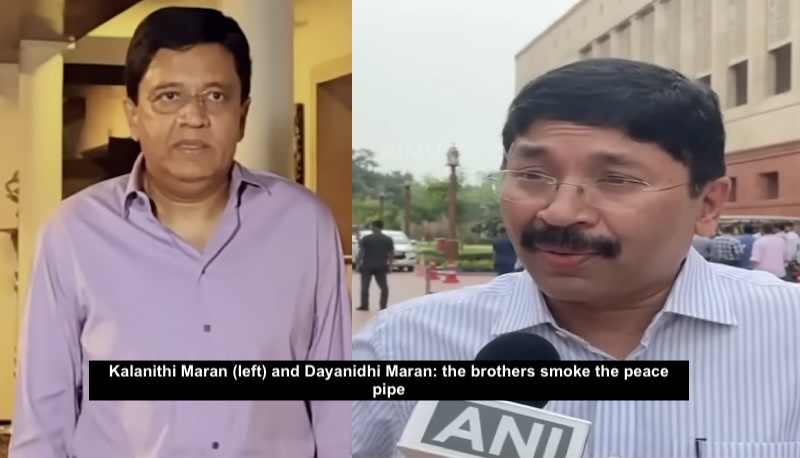
    MUMBAI: According to news daily Indian Express, a bitter family dispute between the Maran brothers, Kalanithi and Dayanidhi, has been resolved following the direct intervention of Tamil Nadu chief minister M K Stalin. The settlement, which saw DMK MP Dayanidhi Maran reportedly receive around Rs 800 crore in cash and nearly an acre of prime land in Chennai’s exclusive Boat Club area valued at an estimated Rs 100 crore, brings an end to a row that had rattled investor confidence and threatened the DMK’s image.

    The feud boiled over in early June when Dayanidhi issued a legal notice to his elder brother Kalanithi, alleging fraudulent share allotments and corporate misgovernance at Sun TV Network in the early 2000s. Dayanidhi had initially sought Rs 1,500 crore, while Kalanithi was only willing to offer Rs 500 crore.

    Stalin, who has previously mediated within the Maran family, initially attempted to resolve the matter himself. When this failed, he enlisted the help of Dravidar Kazhagam president K Veeramani and senior journalist N Ram, both of whom have close ties to the family. Sources indicate that three rounds of talks, including two in person and one via video conference, ultimately led to the agreement.

    Dayanidhi’s legal notice specifically claimed that in 2003, while their father Murasoli Maran was in a coma, Kalanithi allegedly allotted himself 1.2 million equity shares at a nominal Rs 10 per share, consolidating over 60 per cent of Sun TV. This, the notice alleged, diluted the stakes of the Maran and M Karunanidhi families from 50 per cent each to 20 per cent.

    Sun TV, in a stock exchange filing on June 20, vehemently denied the allegations, calling them “incorrect, misleading, speculative, defamatory and not supported by facts or law,” and stated that all transactions were legally vetted prior to the company’s public listing.

    Despite Sun TV’s rebuttal, the controversy sent tremors through the markets, causing its share price to drop over 5 per cent in intra-day trading, and an overall decline of about 8 per cent from recent highs, unsettling investors.

    A top source within the DMK first family confirmed that Stalin was visibly displeased by the public nature of the dispute, especially with assembly elections looming next year. His decision to bring in the 91-year-old Veeramani, an elder statesman of Tamil Nadu politics, was due to his respected stature and lack of financial interest in Sun TV.

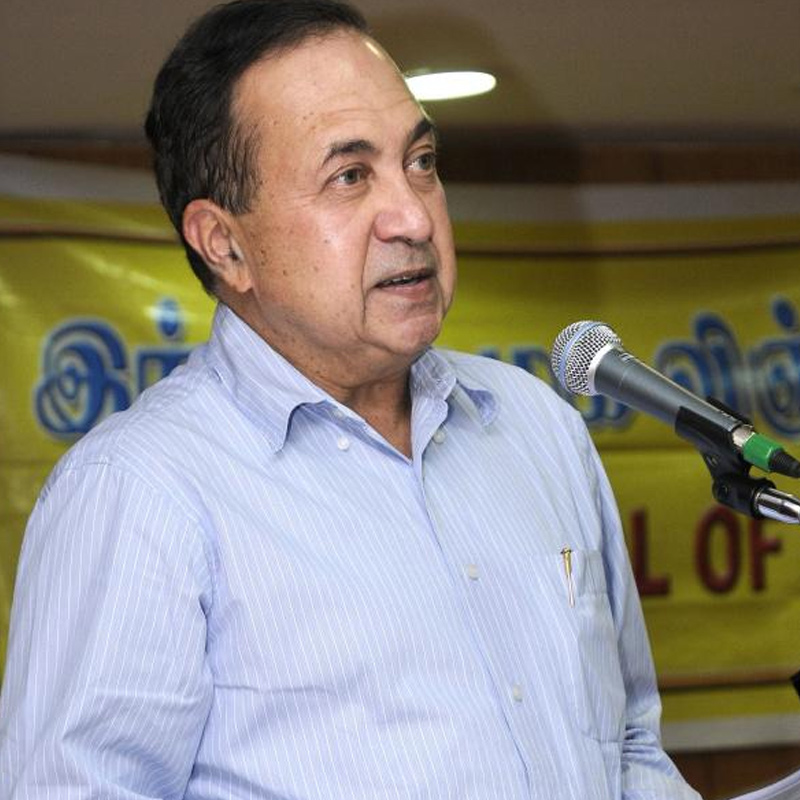
    N Ram, a relative of the Maran family and former editor of The Hindu, also played a crucial role, lending credibility and balance to the mediation given his standing in the media world and ideological alignment with the DMK.

    “First, Veeramani phoned the Maran family. After that the others also joined, and three rounds of talks were held between the last week of June and the first week of July,” a source revealed, adding, “Both parties were asked to refrain from speaking to the media and were urged to settle and move on.”

    The talks underscored the potential damage to the DMK’s and Maran family’s reputation, as well as the high costs and protracted nature of continued litigation.

    The late Murasoli Maran, a nephew of Karunanidhi and cousin to Stalin, was instrumental in establishing the DMK’s presence in Delhi and served as a cabinet minister in multiple central governments. His presence as family patriarch had previously maintained peace between Kalanithi, who built the Sun TV empire, and Dayanidhi, who leveraged his father’s legacy to become the union minister for telecom.

    The first major rift, the Indian Express reported,  occurred in 2007 when the Maran family’s newspaper, Dinakaran, published a poll favouring Stalin as Karunanidhi’s political heir over M Alagiri, leading to violent reactions from Alagiri’s supporters. While tensions have simmered since, the financial dimension of this latest dispute made it one of the most severe.

    “This whole thing could have gone the other way,” a senior source commented. “But Stalin, Veeramani, and Ram made it clear: let this end now, before it weakens everyone.”

     Indian Express failed to get any comments from N. Ram, the Marans or the chief minister. 

  • Mathrubhumi to organise a one-day event on World News Day

    Mathrubhumi to organise a one-day event on World News Day

    Mumbai: Mathrubhumi on Monday announced plans to host an event on World News Day on 28 September at the Uday Palace Convention Centre, Kowdiar Gardens, Thiruvananthapuram.

    Speaking of the event, Mathrubhumi managing director M. V. Shreyams Kumar, who will deliver the presidential address, elaborated on why the centurion institution was associated with the international event, said, “World News Day is a global campaign to display support for journalists and their audiences organised by the Canadian Journalism Foundation and WAN-IFRA’s World Editors Forum. By associating with this event, organised as a part of Mathrubhumi’s centenary celebrations, we intend to reinforce our identity as the custodian of credible and fact-checked journalism.” 

    Media mavens, eminent journalists, and owners will deliberate on the way ahead for practitioners of credible journalism in our age of disruption. The subject is “Sacred Facts: Media in a Post-Truth World.”

    The Hindu former chief editor N. Ram, the doyen of Indian journalism, will deliver the inaugural address. The keynote speech of the first session on “Fact Punch: Curated Media and its Challenges” is by the Indian Express’s former editor Arun Shourie. The event will start at 10 a.m. with a welcome address by Mathrubhumi vice president of operations Devika Shreyams Kumar.

    The Times of India, Tamil Nadu resident editor Arun Ram; Outlook former editor Ruben Banerjee; senior journalist Seema Chisti; and Frontline editor Vaishna Roy are the discussants, with The Hindu, Delhi resident editor Varghese K. George moderating the session.

    The post-lunch session between 1.45 p.m. and 3.15 p.m. will be on “Counter Media: Narratives, Lapses in Reporting, and Self-Critique,” to be moderated by N. Open Magazine executive editor P. Ullekh. The keynote address will be given by India Today TV consulting editor Rajdeep Sardesai.

    Senior journalist Hari S Kartha will be on the panel, as will Madhyamam editor V. M. Ibrahim, social media activist Kiran Thomas, Asianet News Group editorial advisor M. G. Radhakrishnan, and media critic advocate Sebastian Paul.

    The concluding session between 3.45 p.m. and 5.15 p.m. will be on “The way forward: Is fact-based journalism a winning proposition?” featuring ABP Network CEO Avinash Pandey; Kairali TV managing director John Brittas MP; The News Minute editor-in-chief Dhanya Rajendran; Boom Fact Check managing editor Jency Jacob and Ananda Vikatan managing director B. Srinivasan. While the keynote speech will be delivered by The Indian Express executive director Anant Goenka, the session will be moderated by Mathrubhumi director of digital business Mayura Shreyams Kumar.

    All three sessions will be followed by audience-discussant interaction.

  • Mumbai Press club awards Ninan , NDTV editor Ravish Kumar

    Mumbai Press club awards Ninan , NDTV editor Ravish Kumar

    NEW DELHI: Veteran business journalist T N Ninan has been honoured with the Red Ink Life Time Achievement Award of the Mumbai Press Club. The ‘Red Ink Journalist of the Year’ Award was given to NDTV India’s senior executive editor Ravish Kumar for his consistent and good reporting on politics and issues that concern the common man.

    The awards presented by Maharashtra governor C Vidyasagar Rao and Union Energy minister Piyush Goyal recognizes Ninan’s extensive contribution to business journalism through editorial leadership which he provided to a host of publications. Vinod Mehta, Kuldeep Nayar, N Ram, Mrinal Pande and Prannoy Roy were in the past honoured with the Life Time Achievement Award.

    ‘The Wire’, a news and public affairs website founded by Siddharth Varadarajan and Siddharth Bhatia, was adjudged the ‘Red Ink Start-up of the Year’.

    The Mumbai Press Club also honoured posthumously Jagendra Singh of Shahjahanpur, UP with the ‘RedInk Veer Patrakar Puraskar. Jagendra Singh was allegedly killed for his exposes on illegal sand mining and other misdemeanours of a local politician in June 2015.

    The Red Ink Awards for Excellence in journalism were given away in 10 categories for meritorious work in TV, print and digital formats. The categories were politics, crime, health and wellness, business, environment, human rights, photography, science and innovation, entertainment and lifestyle and sports.

    The theme of the Red Ink Awards 2016 was ‘To Rise Above It All’ . A panel discussion held on the occasion reflected upon many challenges being faced by journalism in a period of increasing violence, vested interests and hashtag writings. The panel moderated by Shobha De comprised veteran journalist Meenaz Merchant, co-founder of Wire news portal, Siddharth Varadarajan, Moneylife Foundation’s Sucheta Dalal and NDTV editor Ravish Kumar.


  • Mumbai Press club awards Ninan , NDTV editor Ravish Kumar

    Mumbai Press club awards Ninan , NDTV editor Ravish Kumar

    NEW DELHI: Veteran business journalist T N Ninan has been honoured with the Red Ink Life Time Achievement Award of the Mumbai Press Club. The ‘Red Ink Journalist of the Year’ Award was given to NDTV India’s senior executive editor Ravish Kumar for his consistent and good reporting on politics and issues that concern the common man.

    The awards presented by Maharashtra governor C Vidyasagar Rao and Union Energy minister Piyush Goyal recognizes Ninan’s extensive contribution to business journalism through editorial leadership which he provided to a host of publications. Vinod Mehta, Kuldeep Nayar, N Ram, Mrinal Pande and Prannoy Roy were in the past honoured with the Life Time Achievement Award.

    ‘The Wire’, a news and public affairs website founded by Siddharth Varadarajan and Siddharth Bhatia, was adjudged the ‘Red Ink Start-up of the Year’.

    The Mumbai Press Club also honoured posthumously Jagendra Singh of Shahjahanpur, UP with the ‘RedInk Veer Patrakar Puraskar. Jagendra Singh was allegedly killed for his exposes on illegal sand mining and other misdemeanours of a local politician in June 2015.

    The Red Ink Awards for Excellence in journalism were given away in 10 categories for meritorious work in TV, print and digital formats. The categories were politics, crime, health and wellness, business, environment, human rights, photography, science and innovation, entertainment and lifestyle and sports.

    The theme of the Red Ink Awards 2016 was ‘To Rise Above It All’ . A panel discussion held on the occasion reflected upon many challenges being faced by journalism in a period of increasing violence, vested interests and hashtag writings. The panel moderated by Shobha De comprised veteran journalist Meenaz Merchant, co-founder of Wire news portal, Siddharth Varadarajan, Moneylife Foundation’s Sucheta Dalal and NDTV editor Ravish Kumar.


  • Media comes under attack from CEC and Law Minister on regulation and paid news

    Media comes under attack from CEC and Law Minister on regulation and paid news

    NEW DELHI: The media came under attack on issues of paid news and regulation at different forums in the capital over the weekend.


    Chief election commissioner (CEC) VS Sampath suggested that paid news should be made an electoral offence that attracts disqualification so that it acts as a deterrent, regretting that inadequacies in legal framework were not allowing the poll panel to effectively check this and other malpractices.


    He also said that there is a ‘crying need’ for a ‘well defined legislation’ governing expenditure of political parties during elections as its absence was allowing them and their candidates to circumvent the rules.


    Speaking at a session organised by the Law Commission, Sampath reckoned, “When the Election Commission looked into whether it had the powers to deal with paid news it found the answer was negative.”


    He also added that paid news in whatever form is presently not even an electoral offence. “If it is an electoral offence, it can eventually lead to the disqualification of the candidate. Whatever the difficulties of implementation, the very fact that if it is listed as electoral offence, it would act as a deterrent against people using it in the elections,” he further explained.


    The CEC revealed that a recommendation in this regard has been made to the Law Ministry.


    He also asked why government advertisements during elections should not be considered as paid news. “Since paid news is not an electoral offence, the Commission now tries to check this menace by invoking its powers related to candidates’ spending,” he added.


    “When they (candidates) file their expenditure returns, they always build a cushion for this. If Rs 40 lakh those days was the limit, invariably no candidate would file a return for more than Rs 25 lakh. That Rs 15 lakh will be the cushion for this,” Sampath stated.


    Sampath also revealed that while the Commission’s control over a candidate’s spending is only after he files his nomination, people make substantial election related expenses before that.


    He added that people start spending but the Election Commission is constrained ‘because of the law and the interpretation of the law.’


    The law states that EC can hold an election within the period of six months before the due date.  “We have been making proposals on so many occasions. Why should not the Commission have powers to ensure the purity of the election during this six-month period?” the CEC questioned.


    He noted that all limits for poll expenditure is for candidates and none for political parties.


    “We have seen political parties handling huge amounts of cash. We have seen political parties giving to the candidates’ huge amounts of cash. When it is caught they will say no, no it is not meant for him, it is meant for him to distribute to others in his district or in his state.


    “There is no regulatory framework governing these things.  There is a crying need for a well defined legislation governing political parties particularly political parties’ finance,” Sampath reckoned.


    The Commission had recently tried to come out with some transparency guidelines. He said in countries like the US, expenditure commissions only take care of the expenditure and how political parties raise finance.  He also called for a ‘well defined law’ relating to opinion polls conducted by TV channels.


    “There should be a well defined law regulating opinion polls also,” Sampath said, adding that there is a view that voters will not be swayed by opinion polls but added that that there were instances where candidates won by wafer thin margins. Later, he was asked why during elections when polling was on in one area, poll related news from other areas continued to be shown on electronic media or internet.


    Sampath also explained that there is a mismatch between law and electronic revolution. “On every poll day during this Lok Sabha election, this violation has taken place. It is because of mismatch between law and electronic revolution in the country. All our laws did not take in to account electronic revolution,” he said, adding that EC has to abide by the law as it exists.


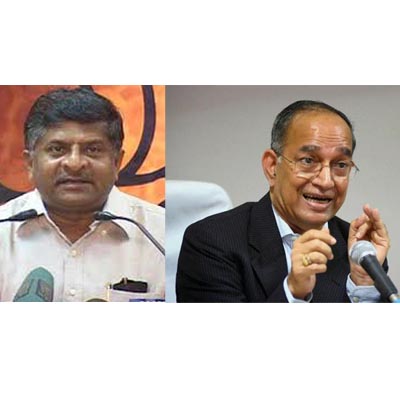
    At another session, Law Minister Ravi Shankar Prasad said those in politics and government should recognise the right of the Press to ‘criticise, lampoon us.’


    Delivering the inaugural address at the National Consultation in Media Law organised by the Law Commission of India with the National Law University, Delhi, Prasad said the leaders in his government, including Prime Minister Narendra Modi, were those who fought for press freedom during the Emergency.


    Noting that the Indian media has matured during the comparatively short span of its existence, he spoke of his early years as a panellist on TV. “Earlier we used to outshout each other. Anchors spoke more, some still do it. But the process of maturing has started,” he said.


    “But if media freedom is necessary and important for the media, self-regulation must be the mode,” he added.


    “Paid news is sickening. Politicians have to realise that Indian voters are mature and cannot be swayed by aggressive promises alone,” Prasad stated.


    He said press freedom should be equally balanced with right to privacy, so also the right of the media should not hinder the freedom to conduct a fair trial.


    “My government recognises the importance of social media. We have no intention to curb this flowering of creativity. But there are reasonable restrictions prescribed under the Constitution, which will be used only in extreme, rare circumstances and with the complete approval of the higher authorities, that too only in serious issues threatening our national or communal framework,” the Minister explained.


    Speaking at a panel discussion on the topic media regulations, Kasturi and Sons Ltd Chairman (publishers of The Hindu) N Ram opined, “There was hardly any self-regulation for the Press today. He claimed that his newspaper had introduced the idea of a full-time news ombudsman independent of the editor. He said this practice however had not spread to other newspapers, and TV certainly did not have it.”


    He also added how even the Press Council of India was dominated by people from the newspaper industry and that an independent mechanism, which was also transparent, was crucial for self-regulation.

  • Rajiv Lochan to lead all non-editorial operations of The Hindu and Group newspapers

    Rajiv Lochan to lead all non-editorial operations of The Hindu and Group newspapers

    NEW DELHI: The Hindu Group today announced that Rajiv C Lochan had been appointed as managing director and chief executive office of the group with effect from 1 June 2014.


    According to the Board of Directors decision announced by the newspaper today, he will lead all non-editorial operations of the company and will join the Board of Directors of Kasturi and Sons Limited (KSL), publishers of The Hindu and Group newspapers.


    KSL chairman N Ram and co-chairman N Murali said: “In this digital age when the Indian press, and specifically The Hindu newspaper group, faces radically new types of challenges and opportunities, when relevant and rich editorial content that continually engages a variety of readers and best editorial practices need to go hand in hand with a smart business strategy that thinks two steps ahead, operates with a progressive vision rooted in values, and balances its responsibilities of ensuring value to shareholders, a fair and just deal for employees, and sustained gains for readers, advertisers, and other partners in the business, we are confident that we have found the right person to head the non-editorial operations of the company.”


    They added: “Rajiv brings to his challenging role as MD & CEO of KSL dynamism and social awareness combined with a winning record as a professional who has led in driving performance and transforming the culture of large organisations in step with rapidly changing times. We are excited about this change at the helm of our business operations.”


    Lochan was a partner with McKinsey & Company and founding location manager of McKinsey’s practice in Chennai. His focus in McKinsey was to help leaders and leadership teams drive performance and cultural transformation of their organisations. In addition, he focused on the social sector, primarily rural economic development and financial inclusion.


    Lochan is currently the trustee of IKP Trust and will continue to devote time to public health issues in rural India. He graduated from IIT, Madras and has advanced degrees from the Massachusetts Institute of Technology and Columbia Business School.

  • Indian print media still has time before negative trend starts: N Ram

    Indian print media still has time before negative trend starts: N Ram

    MUMBAI: The Indian print market is different from the west and is still showing growth in readership unlike many matured markets where digital growth is affecting readership. India has a ‘new kind of advantage’ as readership is still growing.

    However, even if the media here is growing, it can’t afford to be complacent about the timing because India could head towards “a mature market-like situation”. These were the thoughts of The Hindu former editor-in-chief N Ram, who was delivering a keynote at the third day of global media convention Ficci Frames 2012.

    Throwing a word of caution, Ram said that in 3 to 7 years, Indian print would start suffering the same fate as that of the US.

    Citing the example of matured markets, Ram said that newspapers and broadcast are in “irreversible decline” mode and there is “anxiety and gloom”.

    Ram was talking on ‘Building Deeper Reader Engagement- Sustaining Long Term Newspaper Loyalty over Regions’. He said that in the mature markets, news media is in crisis because of a decline in the circulation as more people are embracing digital. Even in the broadcast media the dominant players are witnessing sharp decline, he said.

    However, India has a different advantage, said Ram while outlining the “Two Media World Phenomenon”. He said that regional languages and Hindi newspapers are seeing increase in their circulation. He was optimistic that the medium term prospects for the media industry are looking good.

    He stressed on the need of building the bond of trust with the readers, which according to Ram can engage the readers to sustain their loyalty.

    Ram said that the most important thing is to stick to the basic principles of journalism – context, accuracy, perspective, fact checking and verification. This, according to him, is imperative in building a relationship with the readers.

    Ram said that “trust is the key to good journalism”. He emphasised on the need for a brand to be clear about its identity, core values and focus without imitating anybody else.

    He also warned against “editorialising in the guise of news” and said that the readers want shorter articles and more analyses and editorial content and views, especially in the digital viewing context.

    Talking about digital, Ram said that the time is more challenging and exciting than ever before. Increasing popularity of the digital media will hurt circulation.

    Terming it as a “Digital Age Paradox”, Ram said that the newspapers are witnessing increase in readership of their online editions. However, there is no business model.

    Ram said that the revenue model has not been evolved for the digital yet and so it will not replace the old revenue model of the newspapers any time soon. In the digital era, a major share of the revenue goes to the search engines like Google and content providers like iPad apps.

    This, he said, is squeezing the newspapers’ revenue, as they have to subsidise digital journalism, which is cannibalising their circulation.

    Dainik Bhaskar Group director Girish Agarwal also stressed on the need of maintaining the standards and fundamentals of journalism.

    As per Agarawal, India had a huge advantage in terms of numbers as there is a huge gap between people who can read and who actually read a newspaper.

    He added that its a Herculean task for intellectual organisations like newspapers to be relevant to consumers (readers) while keeping the fundamental of news intact. He said that a newspaper brand cannot rest on its past glory but should move ahead by acknowledging and understanding what the consumer wants.

    He also added that newspapers should have “global vision and hyper local content”.