Tag: N Parameswaran

  • SK Gupta moved to broadcasting in TRAI, N Parameswaran to look after network services

    SK Gupta moved to broadcasting in TRAI, N Parameswaran to look after network services

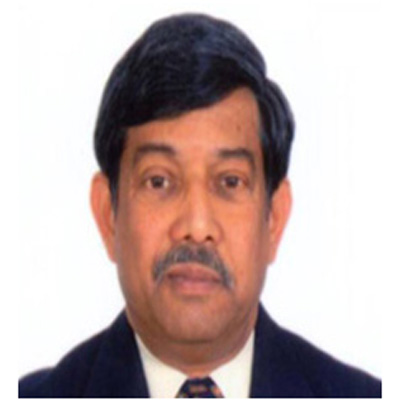
    NEW DELHI: S K Gupta, who was until now looking after broadband issues in the Telecom Regulatory Authority of India (TRAI), has been made the Principal Advisor in charge of Broadcasting issues.


    He thus takes the place of N Parameswaran, who will now be looking after network services and licensing as Principal Advisor.


    Telecom Ministry sources confirmed that the term of Parameswaran in TRAI is to expire later this year. He has been in the telecom sector since January 1980. He played a key role in the liberalisation of the telecom sector in India. He was the first executive director of the Information & Communication Technologies Authority, Mauritius, wherein he set up the Authority and facilitated the liberalisation of the ICT sector. He has held various positions in Department of Telecom and MTNL.  He joined TRAI in 2007 and was looking after broadcasting since 2009.


    The term of TRAI chairman Rahul Khullar is also expiring in May this year. A 1975 batch IAS officer of Delhi cadre, Khullar succeeded J. S. Sarma in May 2012 for a three-year term. 

  • TRAI is working on amending QoS regulation: N Parameswaran

    TRAI is working on amending QoS regulation: N Parameswaran

    MUMBAI: It has been nearly three months since the Telecom Regulatory Authority of India (TRAI) came up with its consultation paper on levying financial disincentives on multi system operators (MSOs) and local cable operators (LCOs) who are delaying the process of billing in the digital addressable system (DAS) areas of the country.

    Although it has been long since the deadlines for commencement of billing in DAS areas got over, there is no clue on how the whip will be cracked on those who haven’t gone beyond installing set top boxes in phase I and II.

    TRAI principal advisor N Parameswaran says, “We are in the process of working on the amendment to the Quality of Service (QoS) regulation. The comments have come and we are yet to take a final decision on the same.”

    Meanwhile, the MSOs that indiantelevision.com spoke to have said that billing has happened only in few areas of New Delhi and Kolkata while the remaining cities in DAS phase III and IV don’t even have proper consumer application forms (CAFs).

    TRAI earlier had said that it is seeking to implement financial penalties on those MSOs and LCOs who defy the law. Comments had been asked from stakeholders on the same. The regulator had also said that for non-compliance of issuing bills, a disincentive of not exceeding Rs 20 per subscriber will be levied on the MSO and/or its linked cable operator and for the second time, penalty would be Rs 50. “For non-compliance of regulations, Rs 100 will be levied on each MSO for each contravention. If the MSO and LCO have entered into an agreement, both of them will be penalised for faults while in the case of no deal being signed, only the MSO is liable to pay,” TRAI had said.

    As per the consultation paper, the amendment, when approved, will come into effect 30 days from the date of publication.


  • Stakeholders undivided on constitution of commercial subscriber

    Stakeholders undivided on constitution of commercial subscriber

    NEW DELHI: What constitutes commercial or non-commercial subscribers for broadcasting and cable TV services?


    This question remained largely unresolved in an open house discussion on tariff issues related to broadcasting and cable television services for commercial subscribers held later today.


    Broadcasters by and large were in agreement that anyone other than a domestic subscriber is a commercial subscriber.


    There was also division on who is responsible for the subscriber. While broadcasters feel they should know about the subscribers, the multi-service operators and cable operators said they are generally responsible for dealing with the subscriber and the broadcaster should not interfere.


    The Open House Discussion was called by the Telecom Regulatory Authority of India (TRAI) as it has to submit a proper tariff chart to the Supreme Court by 16 July.


    The meet was attended by senior officials of TRAI, the broadcasting fraternity including the Indian Broadcasting Foundation, and other stakeholders, apart from consumer organisations.


    The whole controversy rose after an order of the Telecom Disputes Settlement and Arbitration Tribunal of 28 May 2010 was challenged in the Supreme Court, which had on 16 April this year said: “…However, we direct that for a period of three months, the impugned tariff, which is in force as on today, shall continue. Within the said period, TRAI shall look into the matter de novo, as directed in the impugned judgment, and shall re–determine the tariff after hearing the contentions of all the stake holders….”


     TRAI had issued a consultation paper in this connection, and also invited comments from stakeholders by June-end. Though several stakeholders have already responded in writing, they were today given a final opportunity to send in their written comments by 8 July.


     On behalf of TRAI, the meet was attended by member R K Arnold, Dr Vijayalakshmy K Gupta, principal advisor N Parameswaran and secretary Sudhir Gupta. Others among the approximately 100 stakeholders who attended were IBF’s Sailesh Shah, Sony’s Naresh Chahal, Star’s Pulak Bagchi, a representative of Siticable and Cable Operators Federation of India’s Roop Sharma.


    Cable operator and journalist K K Sharma said most cable operators charged the same fee from commercial or non-commercial subscribers.


    A representative of the hotel industry said that it did not differentiate between a commercial or non-commercial subscriber. 


    Broadcasters representatives insisted that a lot of the investment went into production of content and so advertising was important, but some stakeholders said that encrypted channels should not be allowed to take commercials.


    Among the questions that the TRAI had asked in the consultation paper was whether stakeholders agreed with the definitions of ‘commercial establishment, ‘shop’ and ‘commercial subscriber’ given by TRAI; whether there was a need to further categorise commercial subscribers; tariff for commercial subscribers and whether it should be the same as for ordinary subscribers.

  • TRAI to hold MSO-MCOF meet in Mumbai

    TRAI to hold MSO-MCOF meet in Mumbai

    MUMBAI: Maharashtra Cable Operators Federation (MCOF) that had recently approached the Bombay High Court challenging the payment of entertainment tax, billing and the carriage fee has now approached the Telecom Regulatory Authority of India (TRAI) to seek answers on the constitution of revenue share.


    “While the TRAI says that there should be a revenue share between the multi system operators (MSOs) and last mile owners (LMOs) on the subscription fee the LMO collects from the consumer, is that the only revenue in this cable TV universe?” questions MCOF president Arvind Prabhoo.


    According to Prabhoo, there should be clear definition of constitutes revenue. “Apart from subscription revenue, there is carriage fee revenue, advertising revenue and even activation revenue. So why it that these revenues are not shared amongst all the stakeholders of the cable TV system?” he asks.


    “Who decides what revenue is?” questions Prabhoo.


    With regards to this, a meeting has been called between the MSOs and MCOF by TRAI. “I had met N Parameswaran earlier this month and had discussed these issues with him. With regards to this, TRAI has decided to hold a meeting in Mumbai between MCOF and MSOs,” informs Prabhoo.


    When Indiantelevision.com contacted TRAI principal advisor N Parameswaran he confirmed the meeting, but said that no particular date was yet decided. “We will be holding a meeting between the two in order to address issues of billing,” concludes Parameswaran.  

  • TRAI Open House: Aggregators given another week to respond

    TRAI Open House: Aggregators given another week to respond

    NEW DELHI: Television aggregators were today given a period of one week to give any recommendations they may have on the regulations relating to them issued earlier by the Telecom Regulatory Authority of India (TRAI).

    At an Open House that was well-attended, TRAI Chairman Rahul Khullar said any stakeholder wanting to give views in writing may do so within a week.

    Around 200 persons representing all stakeholders were present at the meeting, and put forth their views. While a majority said there was need for regulations, many felt that TRAI needed to fine-tune the regulations. MediaPro CEO Arun Kapoor, Dish TV’s Jawahar Goel, legal representatives of Airtel, Reliance, IndiaCast, apart from cable operators such as Vicki Choudhary, Roop Sharma, Money Oberoi were present at the open house.

    Khullar had TRAI Advisers N Parameswaran and Wasim Ahmed and other senior officials also present in the house.

    According to TRAI spokespersons, the discussions were frank and free and a final view would be taken after written representations are received.

    An aggregator attendee at the open house said that it was apparent from Khullar’s body language that he was not too happy with the state of affairs in the aggregation business today.

    Says he: “Khullar made three or four very important observations. The first is that aggregated bouquets of channels owned by rival bouquets creates a monopoly situation which is not a healthy one and needs to be addressed. Second: he recognised that the networks like Star, Zee, Sun, Network18 own channels across several corporate entities as licence holders and this needs to be considered. Third: smaller broadcasters and networks could face problems in distribution across the vast Indian cable TV landscape and this also should be borne in mind. Finally, he acknowledged that aggregation can help keep prices in check on account of bulk discounting”

    Adds another attendee: “Change is something that Khullar wants to bring in. We expect some change; the clout that aggregators enjoy is not something that the regulator wants to see continuing. He clearly wants aggregators to be brought under control. We are reading the writing on the wall, and we are readying for the change. How we manage this change is something we have to deal with.”

  • TRAI to get another advisor in Broadcasting and Media

    TRAI to get another advisor in Broadcasting and Media

    NEW DELHI: Often accused of being more telecom-centric, the Telecom Regulatory Authority of India has decided to recruit more persons who are experts in broadcasting and media.

    The regulator has advertised for the post of Advisor (Broadcasting and Media) ‘on deputation on foreign service terms’. According to the TRAI website, the initial deputation will be for two years.

    TRAI already has one Principal Advisor,N Parameswaran, and two Advisors, Wasi Ahmed and Raj Kumar Upadhyay.

    The work entails to the non-technical aspects of broadcasting – covering general management, economic and social dimensions of all forms of the media. Economic work relating to wholesale and retail tariffs and interconnection will form part of the work of the new Advisor.

    The work will also entail specialisation in the digitisation of the media and interaction with all stakeholders.

    TRAI had been set up for the telecom sector in 1997 but was given the work of broadcasting in 2004 at the time of the introduction of the Conditional Access System.

  • Industry needs to come together to put all systems in place for Phase 2: Parameswaran

    Industry needs to come together to put all systems in place for Phase 2: Parameswaran

    MUMBAI: The multi system operators (MSOs) might have successfully installed set top boxes (STBs) in majority of homes in phase 1 of digitisation but the government feels that is just one aspect of the drive and other aspects like subscriber management system (SMS) and billing system need to be put in place if the real benefits of digitisation have to be realised.

    The Telecom Regulatory Authority of India (Trai) wants the industry to set things right for Phase 2 of cable TV digitisation. Trai consultant N Parameswaran said Tuesday that the stakeholders need to work towards having all the systems in place in order to implement digitisation in letter and spirit.

    “Digitisation has not happened in a manner that we wanted to. It’s not a regulatory issue. The industry has to come together and ensure that that all the systems are in place from day one for phase 2,” he said.

    According to Parameswaran, the real benefits of digitisation have not reached people. "The subscriber management system is not in place. What has happened is only set top boxes have been installed,” Parameswaran said, while taking part in a panel discussion on digitisation at Ficci Frames 2013.

    Parameswaran said that the Trai had recently issued notices to MSOs and LCOs (Local Cable Operators) to make their SMS operational in DAS areas to ensure things fall in place.

    While commending the industry for achieving digitisation in a short span of time, Den Networks CMD Sameer Manchanda assured that the SMS and billing system will fall in place in 60 days.

    “We should have all things in place in 60 days. Putting eight million STBs was a herculean task. Digitisation has taken years in other countries,” Manchanda said.

    IndiaCast Group CEO Anuj Gandhi said the ARPUs (Average Revenue Per User) will increase gradually. The key is to segment existing channels and create packages accordingly. A case in point, Gandhi said, was having a South Indian channel package for Mumbai.

    Gandhi urged the industry to take one step at a time. The immediate priority, he said, was to get back-end systems in place. “For broadcasters, it’s a scary thought that the customers are getting more channels for the same price,” averred Gandhi.

    According to Multi Screen Media (MSM) CEO Man Jit Singh, government should continue to play the facilitators role like it did in the first phase. He also said that STBs have installed, subscribers are getting digital signals but little has changed apart from that.

    “What we have shown in first phase is that we came together as an industry to implement digitisation. The government also has a critical role to play. It should continue to play the facilitators role to bring together different stakeholders in the industry,” Singh said.

    He added, “Tiering and ARPU is incremental to drive the market together by understanding the consumer needs and expectations. The burden of expansion has to be shared by the Local Cable Operator (LCO), Multi System Operator (MSO), broadcaster and the consumer.”

    IBM Global Business Services India/SA Director & Partner, Industry Leader – Media & Entertainment Raman Kalra said that it is important for the industry to keep parallel strategy in place as the business model is evolving continuously.

    “Consumer is willing to pay but the industry should know how to extract it. The key is to know your customers to facilitate micro-segmentation and then work on the content strategy accordingly,” Kalra said.

    Reliance Broadcast Network Limited (RBNL) CEO Tarun Katial said the advent of digitisation has made things easier for new channels as the carriage and placement is not a big problem anymore.

    He also said that the availability of more channels has meant that consumers are sampling more channels which is good for niche channels. He also felt that dynamics will change as advertisers will now have to shell out more for advertising on television as subscription revenues go up and advertising duration is cut down.

    Times Television Network (TTN) MD & CEO Sunil Lulla said, “The current economics are not adequate for the success of Phase 2 of digitisation. There is an urgent need for industry transformation and an effective change in consumer experience. We are sitting at the cusp of change where widespread and deep digitisation will happen on the back of consumers, regulators and government working together.”

  • Industry  needs  to come together to put all systems in place for Phase 2: Parameswaran

    Industry needs to come together to put all systems in place for Phase 2: Parameswaran

    MUMBAI: The multi system operators (MSOs) might have successfully installed set top boxes (STBs) in majority of homes in phase 1 of digitisation but the government feels that is just one aspect of the drive and other aspects like subscriber management system (SMS) and billing system need to be put in place if the real benefits of digitisation have to be realised.

    The Telecom Regulatory Authority of India (Trai) wants the industry to set things right for Phase 2 of cable TV digitisation. Trai consultant N Parameswaran said Tuesday that the stakeholders need to work towards having all the systems in place in order to implement digitisation in letter and spirit.

    “Digitisation has not happened in a manner that we wanted to. It’s not a regulatory issue. The industry has to come together and ensure that that all the systems are in place from day one for phase 2,” he said.

    According to Parameswaran, the real benefits of digitisation have not reached people. "The subscriber management system is not in place. What has happened is only set top boxes have been installed,” Parameswaran said, while taking part in a panel discussion on digitisation at Ficci Frames 2013.

    Parameswaran said that the Trai had recently issued notices to MSOs and LCOs (Local Cable Operators) to make their SMS operational in DAS areas to ensure things fall in place.

    While commending the industry for achieving digitisation in a short span of time, Den Networks CMD Sameer Manchanda assured that the SMS and billing system will fall in place in 60 days.

    “We should have all things in place in 60 days. Putting eight million STBs was a herculean task. Digitisation has taken years in other countries,” Manchanda said.

    IndiaCast Group CEO Anuj Gandhi said the ARPUs (Average Revenue Per User) will increase gradually. The key is to segment existing channels and create packages accordingly. A case in point, Gandhi said, was having a South Indian channel package for Mumbai.

    Gandhi urged the industry to take one step at a time. The immediate priority, he said, was to get back-end systems in place. “For broadcasters, it’s a scary thought that the customers are getting more channels for the same price,” averred Gandhi.

    According to Multi Screen Media (MSM) CEO Man Jit Singh, government should continue to play the facilitators role like it did in the first phase. He also said that STBs have installed, subscribers are getting digital signals but little has changed apart from that.

    “What we have shown in first phase is that we came together as an industry to implement digitisation. The government also has a critical role to play. It should continue to play the facilitators role to bring together different stakeholders in the industry,” Singh said.

    He added, “Tiering and ARPU is incremental to drive the market together by understanding the consumer needs and expectations. The burden of expansion has to be shared by the Local Cable Operator (LCO), Multi System Operator (MSO), broadcaster and the consumer.”

    IBM Global Business Services India/SA Director & Partner, Industry Leader – Media & Entertainment Raman Kalra said that it is important for the industry to keep parallel strategy in place as the business model is evolving continuously.

    “Consumer is willing to pay but the industry should know how to extract it. The key is to know your customers to facilitate micro-segmentation and then work on the content strategy accordingly,” Kalra said.

    Reliance Broadcast Network Limited (RBNL) CEO Tarun Katial said the advent of digitisation has made things easier for new channels as the carriage and placement is not a big problem anymore.

    He also said that the availability of more channels has meant that consumers are sampling more channels which is good for niche channels. He also felt that dynamics will change as advertisers will now have to shell out more for advertising on television as subscription revenues go up and advertising duration is cut down.

    Times Television Network (TTN) MD & CEO Sunil Lulla said, “The current economics are not adequate for the success of Phase 2 of digitisation. There is an urgent need for industry transformation and an effective change in consumer experience. We are sitting at the cusp of change where widespread and deep digitisation will happen on the back of consumers, regulators and government working together.”