

Tag: N Parameshwaran

  • Government keen to resolve issues facing M&E industry

    Government keen to resolve issues facing M&E industry

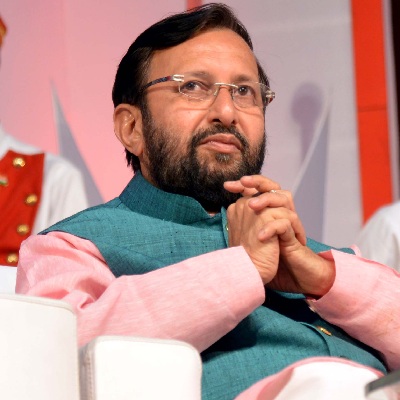
    NEW DELHI: While exuding confidence in the Media and Entertainment industry in the country, Information and Broadcasting Minister Prakash Javadekar today said it was important for the stakeholders to keep the welfare of the citizens in mind.


    He said he knew the sector had immense opportunities and the world “is fascinated by our culture and Indian cinema is becoming very popular.”

     
    “Education and entertainment are the primary needs after roti, kapda and makaan (food, cloth and shelter),” Javadekar added.


    The Minister said that his attempt in keeping with the mandate of the new government would be to take decisions on pending issues as soon as possible as “delay is out, decision is in.”  The work of the government is not to create roadblocks but to give impetus to entrepreneurship and industry. 

    Addressing the ASSOCHAM meet on media and entertainment, SCREENS 2014, the Minister, said the path-breaking initiatives on digitisation were bound to improve the quality of television broadcasting in the country. Both the government and the industry should work together for the welfare of the consumers. “There are issues of distribution, there are issues of taxation,” he added.

    “We, both the industry and the government, have to think about the final consumer. Government and industry have to think about the welfare of common citizen and to that end we are partners, we are the facilitators,” he said. 


    Later, Additional Secretary (Films) Raghvendra Singh said that the government was in the process of revamping the Cinematograph Act 1952 which had been drafted when there was no television or other media,


    Realising that media and entertainment was the biggest market in terms of consumer needs; the government is also on the threshold of announcing a major initiative for curbing piracy.


    He was conscious that entertainment tax being a state subject was not uniform, and that there was a grievance about service tax. He hoped all these issues would be subsumed in the proposed Goods and Sales Tax, which the government hopes to bring forward soon.


    He said that the government was very keen to upgrade the Film and Television Institute of India and the Satyajit Ray Film and Television Institute, also to set up a centre of excellence for animation and special effects as soon as possible.


    He also informed that the government was finalising its work on the National Film Heritage Mission for assessment of preservation and restoration of film material.


    “Funds have already been provided in the Ministry’s allocations for anti-piracy measures but this was not possible without collaboration from the industry itself,” said Singh.


    Telecom Regulatory Authority of India member Vijayalakshmy K Gupta stressed that addressability has led to better television and online video viewership has grown 13 per cent between December 2012 and December 2013.


    It has also led to reduction of carriage fee, she claimed on the basis of the first two phases of digital access system.


    She said that TRAI was firm on its decision not to permit state or central government units in private radio or television broadcasting.


    She felt that as far as cinema was concerned, there was need for a Film Commission for dealing with various issues.


    TRAI advisor N Parameshwaran said, “One major problem is that all multi-system operators are ‘pulling in different directions’ and therefore it is difficult to resolve their problems.”  


    He agreed that there was need for rationalisation of taxes in the country as far as media and entertainment were concerned.


    He said TRAI was already working on the issue of increasing bandwidth in view of 4G technologies coming in after HD.


    He denied charges by cable operators that broadcasters or MSOs were being protected as he said they had also been prosecuted for violating rules.

  • Trai Open House on media ownership called off as LCOs, MSOs raise demands on DAS

    Trai Open House on media ownership called off as LCOs, MSOs raise demands on DAS

    NEW DELHI: An open house called by the Telecom Regulatory Authority of India (Trai) in Hyderabad on media ownership had to be called off mid-way when cable operators and multi-system operators insisted that they should be heard on their problems relating to digitisation.

    Around 200 LCOs and MSOs wanted an end to the vertical monopoly of large media houses and sought protection from the Government.

    They also raised issues relating to revenue share not being fair, and said it was the LCOs who had built the industry from scratch and made it possible for the broadcasters to reach the consumers.

    They also wanted the bouquets drawn up by large broadcasting houses to be broken and rates to be fixed channel-wise.

    Some LCOs said the customer had become like a ‘robot‘ that could be manipulated by the broadcasters.

    Some of the speakers also said the LCOs had built the industry without foreign direct investment (FDI), and therefore any discussion on FDI was meaningless unless their questions were answered.

    The Trai delegation included principal advisors N Parameshwaran and Anuradha Mitra, deputy advisor G S Kesarwani, and secretary Rajeev Agrawal.

    Trai officials had come armed with just over thirty questions relating to media ownership issues on which it has already issued a consultation paper. Less than twenty were discussed.
