Tag: N.P. Singh

  • Sajid Nadiadwala re-elected as IFTPC president

    Sajid Nadiadwala re-elected as IFTPC president

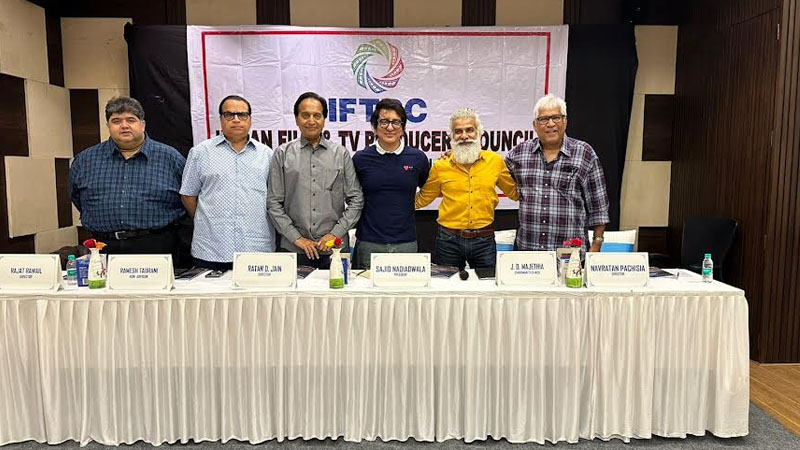
    Mumbai: The Indian Film & TV Producers Council (IFTPC), the leading organisation representing producers in the Indian film, television, and digital media sectors, held its 33rd Annual General Meeting (AGM) on 10 September 2024 at the IFTPC Studio under the leadership of Sajid Nadiadwala, who was re-elected as president. In his address, Nadiadwala detailed the Council’s achievements and progress over the past year. He observed that “the central government as well as the State CM are receptive to the Film Industry,” and expressed hope that the recent box-office successes of certain films will help reinvigorate the industry, highlighting his satisfaction with the success of content-driven films that do not rely on star power.

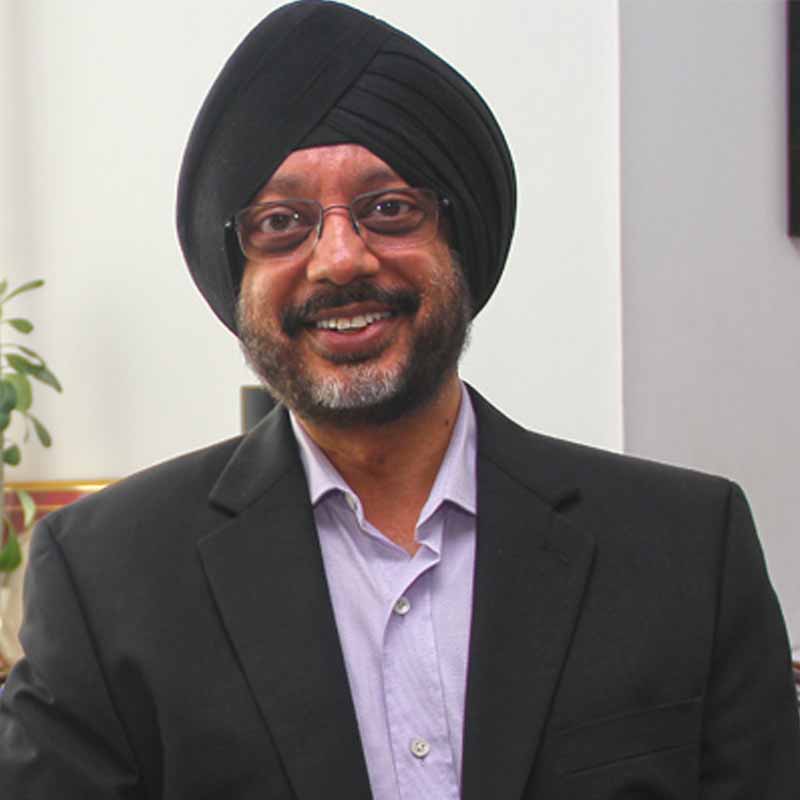
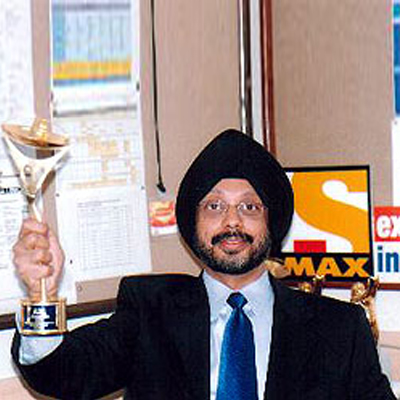
    JD Majethia, re-elected as TV and Web Wing chairman, recalled the recent farewell event for Sony Network CEO and MD N.P. Singh noted that Singh was “surprised at the pleasant and warm farewell given to him.” Majethia assured that the IFTPC will continue to honour many more distinguished figures from the industry in the future and expressed his optimism that “within 2-3 years, the Indian TV and Web will definitely reach the pinnacle of glory.”

    The reconstituted board of directors for 2023-24 includes Sajid Nadiadwala as president, JD Majethia as chairman of the TV/Web Wing, along with Ratan Jain, NR Pachisia, Madhu Mantena, Shyamashish Bhattacharya, Kumar Mangat, Rajat Rawail, Nitin Vaidya, and Abhimanyu Singh. Ramesh Taurani has once again been requested to continue serving as an honorary advisor.

  • Neeraj Vyas to move on from Sony Pictures Networks India

    Neeraj Vyas to move on from Sony Pictures Networks India

    Mumbai: Sony Pictures Networks India (SPNI) has announced that Sony Entertainment Television, Sony SAB, PAL, and Sony MAX Movie Cluster – business head Neeraj Vyas, will be leaving the company effective 31 August 2024. After an illustrious career spanning close to three decades, Neeraj has decided to embark on a new entrepreneurial journey.

    Neeraj Vyas has been instrumental in shaping several key businesses at SPNI, including the flagship general entertainment channels (GECs), Sony Entertainment Television, Sony SAB, Sony PAL, and the Hindi movies cluster. His journey with SPNI began in sales for Sony Entertainment Television (SET), and he swiftly rose to the position of national sales head for the channel in 2005. Within five years, he was appointed Executive Vice President for Sony MIX, the network’s Hindi music channel, demonstrating exceptional leadership and strategic vision.

    In 2011, Neeraj took on the responsibility for Sony MAX, followed by Sony SAB and Sony PAL in 2017, and Sony Entertainment Television in 2023. Under his guidance, Sony SAB was successfully repositioned as a premium entertainment brand, achieving significant growth through a revitalized programming line-up and content strategy. His leadership has been a source of inspiration for many in the industry.

    N.P. Singh said, “Neeraj Vyas’s journey with Sony Pictures Networks India has been remarkable. His vision and leadership have been pivotal in transforming our entertainment channels into market leaders. Neeraj has an innate ability to understand the pulse of the audience and create content that resonates deeply with viewers. On a personal level, Neeraj’s passion for excellence and his innovative spirit have always inspired those around him. His departure marks the end of an era for us, but we are excited about the new ventures he will undertake. Neeraj leaves behind a legacy of success, and we wish him all the best as he embarks on his entrepreneurial journey.”

    Neeraj Vyas said, “My time at Sony Pictures Networks India has been an incredible journey filled with learning, growth, and countless memorable moments. I am deeply grateful for the opportunities to lead dynamic teams and work on groundbreaking projects. As I move on to explore new entrepreneurial ventures, I carry with me the invaluable experiences and relationships built over the years. I am excited for what lies ahead and remain confident that the teams at SPNI will continue to achieve great heights.”

  • If not Sony, then who for Zee?

    If not Sony, then who for Zee?

    Mumbai: It’s on. It’s off. It’s on again. It’s off again. The yes and no speculation about the Zee Entertainment merger with Culver Max Entertainment (Sony in India) has been crazy enough to  blow one’s brains in almost every direction.

    Yesterday, Zee-baiters and haters must have gone all gleeful when Bloomberg broke the news that Sony is dis-inclined to go ahead with the fusion courtesy all the brouhaha that has been created around allegations that father Subhash Chandra and son Punit Goenka personally pocketed company-borrowed money. This despite, Punit was loathe to agree to Sony’s demand that he accede his position as CEO of the merged entity to Sony India head NP Singh. Indian media bit the bait of the “failed merger” news and went to town and proclaimed the death of the merged entity. Both Zee and Sony kept their lips zipped officially.  

    Towards evening came a report that a partnership might yet be in discussion splitting the odds equally. The reason: a penalty of $100 million will have to be paid out to Zee TV by Sony should they pull out of the merger, said a few newspaper reports. Others suggested Zee had failed to live up to many conditions precedent in the merger agreement documents between the two and hence a tremendous trust deficit has been built up between the two.  (These reports have since been denied by Zee in a regulatory filing and it has claimed that it is continuing to pursue the merger agreement).

    Sony has to respond to  Zee’s last month’s merger proposal and new conditions by 20-22 January and agree or disagree to the terms; it still has a lot of time to decide. Then why be in a rush to have anonymous sources make the revelation that its interest was off the table? Did the Bloomberg journo misquote the source? Or was Sony just testing how Zee would react to its disgruntlement? Would the latter take advantage of the stringent exit clause and howl or would it just walk away quietly?

    Whatever be Sony’s rationale, it’s imperative that it gets clarity sooner than later. That’s because a megalith is being created with the signing of an agreement between Mukesh Ambani’s Jio (Viacom18) and Disney’s India operations under Disney + Star India. The agglomeration of the two will create a giant which will control a sizeable chunk of the market by viewership. That’s something which many are saying could  harm the development of the media & entertainment vertical in the long term, especially placing oodles of power in the hands of one giant.

    Sectors do better when there is an equally fit No 2 giving the No 1 a run for its dollars. And a No 3 and a No 4. Muscle is needed to fight muscle. Sony, Zee, Sun TV on their own will be dwarfed in front of the Jio-Disney combine. Yes, we have gorillas like Netflix, Amazon, Google, Microsoft operating in India.  But one is not clear about how they will play their hand going forward. A few smaller players will innovate and through their nimble-footedness score a few points. But the advantage of scale of capital, content creation, distribution, and advertising inventory will lie with one major – Jio-Disney.

    We have seen how Jio has changed the dynamics of the telecom as well as streaming business, thanks to its humongous 400 million plus telco subscribers. Making premium sports and entertainment content available for free to subscribers can be a good customer acquisition strategy. But for how long will that go on and that too unchallenged?

    Cable TV operators have been crying foul to the regulator TRAI as the same content on cable TV and DTH is being levied at a fee to subscribers. True, the government wants to make TV available to many more though its free to air service DD FreeDish. For obvious reasons. It wants to be able to address large swathes of the  population across the nation on one platform, rather than have to engage with many more outlets. And it wants it to say what the powers-that-be want to say.

    In such a scenario, it’s imperative that consolidation in the industry is encouraged. So that balance and sanity are maintained.

    Let’s suppose that Sony is willing to let go of a hundred mill in penalties for calling off the merger. Will a corporate raider swoop in jostling out the promoters? Doubtful, considering media is a specialized business which is transforming so rapidly that no non-strategic corporate will be willing to lose billions of dollars in trying to set things right at Zee. Especially considering that its margins have been under pressure and how much cleaning up it needs on several fronts.

    Then, what are the white knight options left for Zee to get scale and get out of its financial commitments to debtors as well as get infusion of cash for growth.

    Private equity? Hedge funds with mountains of resources? They might be cautious, considering how Sony has fled from getting into bed with it.

    Could Adani be interested? He is yet digesting his news venture NDTV and digital acquisitions, so interest from his side might be lukewarm.

    Or could it be Kalanithi Maran’s Sun TV?

    It seems like a good fit. Both Chandra and Maran -run entrepreneurial organisations. Both are pioneers and the latter has so much cash, he does not know what to do with it. Sun TV is strong in the south, Zee TV has strengths in Hindi and some regional languages. Sun TV is nurturing a Hindi language entertainment channel. A joint venture will see lots of benefits accruing to both. The two business groups will have to keep aside the personal and professional differences of the promoters and look at long term survival and growth.

    But that’s in the future. Now, if Goenka and Chandra can find ways to assuage the miffed mood amongst executives in Sony headquarters, the story might have a fairy tale ending like the two want.

    The author is a media analyst. The views expressed in the comment piece are his own and indiantelevision.com need not subscribe to them.

  • Sony Pictures Networks India rebrands channel portfolio

    Sony Pictures Networks India rebrands channel portfolio

    Mumbai : Sony Pictures Networks India (SPNI) has rebranded all its network channels to be more aligned with Sony’s global ethos.

    Sony’s networks exist at the crossroads of technology and entertainment, and the logos reflect that the new branding colors are vibrant, inspiring, and reminiscent of a brilliant light spectrum.

    The logo’s curve is inspired by the swing of the Sony-S, and the dominant background is synonymous with the Sony brand.

    Sony has created a visual thread that connects the diverse family of Sony’s networks and reflects the 360-degree entertainment experience with this uniform shape and associative color play.

    SPNI managing director & CEO N.P Singh said, “The power of the Sony brand and its values have driven our work ethics so far, and today, it reflects in our channel-brand architecture as well.”

    “The work that we started three years ago has now reached fruition. We are creating a powerful unified entertainment conglomerate with a broader appeal by refocusing our existing channel portfolio in its latest look and feel,” he adds.

  • Sony Pictures Networks India (SPN) recognised among India’s Best Companies To Work 2020

    Sony Pictures Networks India (SPN) recognised among India’s Best Companies To Work 2020

    MUMBAI: Sony Pictures Networks India (SPN), has been honoured among India's Best Companies To Work For 2020 by the Great Place to Work® Institute, India. This data has been gathered from an overall ranking of the 100 Best Companies to Work for in India, by surveying over 2.1 million people in 800+ organizations across 21+ industries. The Great Place to Work® Institute is a firm that assists organisations to identify, create and sustain great workplaces through the development of high-trust cultures. This study was done with the most rigorous, credible and comprehensive methodologies to identify such organizations.

    https://www.instagram.com/p/CBpY_Adp6kG/?igshid=1ddfvlrzkrpu7

    Staying true to its Go-Beyond corporate philosophy, India’s leading entertainment and sports broadcast network, SPN, has always been an employee-first organisation. The network truly believes in providing a nurturing environment for its employees with an empowering culture built on its foundational values that encourages differences in perspectives, fosters collaboration and rewards excellence. Building on its employee value proposition, ‘Tell Stories Beyond the Ordinary’ – manifested through its three pillars: Think, Rise and Live, employees are empowered to craft their own experiences and go the extra mile, pushing the envelope by generating pathbreaking, premium and progressive content.

    The following are some of initiatives that earned SPN the recognition as one of India's Best Companies To Work For 2020:
    • Through its signature enterprise series – ‘Propellers’, employees receive opportunities to co-create the company’s vision, lead and deliver organisational development projects with recognition, visibility and mentorship from the CEO.
     
    • To fuel a robust content culture SPN offers an ideation platform – ‘SPN Pitchers’, where employees across the network can pitch their next big idea/program hosted under the patronage of the network’s flagship channels and content studio – StudioNEXT.

    • SPN offers multiple learning avenues through the SPN Learning Academy. It provides tailored experiences across levels, peer learning platforms and best-in-class content initiatives like ‘Dastangoi’, to help build a future-ready, high-performance content culture. This helps align people, purpose, passion and profits to create meaning at work.

    • To enable employees upskill and encourage them to stay ahead of the game, a fluid and flexible learning environment is furthered through e-learning opportunities and custom webinars to drive learning across the board.

    •Taking a holistic approach to the wellbeing of its employees, SPN provides the Employee Assistance Programme (EAP) – an emotional and mental wellness counselling support service, along with comprehensive sponsored annual health check-ups and medical insurance for employees and their families covering congenital diseases as well as providing for infertility treatment.

    • SPN supports new parents in their transition through extended parental leave which includes leave for adoption and enhanced parental benefits like preferential parking for pregnant women, a mother’s room on the premises, amongst other initiatives.

    Furthermore, as a strong advocate of inclusion, SPN revised its policies, benefits and infrastructure, such as gender-neutral language, gender-neutral washrooms, and universal parental and medical benefits to include members of the LGBTQ+ community. Employees are also given in-depth information on prevention of sexual harassment (POSH) along with the deployment of a host of safety measures. Through recurring sensitisation programs such as ‘Unconscious Bias’ trainings, focus group discussions and forums as well as incentivising through 2X rewards on LGBTQ+, women and PWD referrals, SPN fosters inclusion in both its culture and content.
    Comments:

    N.P. Singh, Managing Director and CEO, Sony Pictures Networks India (SPN):
    “It is indeed an honour to be recognised among India’s Best Companies to Work for 2020 by Great Place to Work®, India. This recognition is an acknowledgement of our commitment towards building a culture of trust, pride and care. We hold ourselves to the highest standards in everything that we set out to do. I dedicate this achievement to the entire team at SPN.”

    Manu Wadhwa, Chief Human Resource Officer, Sony Pictures Networks India (SPN):
    “Our progressive policies and initiatives have evolved from proactively listening to people over the course of time and creating a conducive environment for their professional and personal growth. We are delighted and honored to have been bestowed with this recognition. Winning this award is a testament of our consistent drive towards challenging stereotypes and breaking boundaries.”

  • Mike Hopkins departs Sony Pictures; joins Amazon as head video entertainment

    Mike Hopkins departs Sony Pictures; joins Amazon as head video entertainment

    MUMBAI: Jeff Bezos has scored a coup of sorts. The Amazon chairman & CEO has signed up Sony Pictures Television (SPT) chairman Mike Hopkins as leader of the video entertainment business – including Prime Video and Amazon Studios – reporting directly to him. Hopkins who joined SPT- with oversight of its TV production, distribution and marketing operations globally for the studio –  in November 2017 after serving as CEO of Hulu will be leaving the Japanese company on 24 February 2020.

    The anouncement was made by Sony Pictures Entertainment (SPE) chairman & CEO Tony Vinciquerra in an internal note to staff.  Said Vinciquerra in the memo: “I want to thank Mike for his outstanding leadership since arriving at the studio in late 2017. From day one he was charged with rethinking the way we run our television businesses. Under his watch, SPT has been transformed into a stronger and more nimble organization, able to pivot and change course quickly in today’s rapidly evolving entertainment landscape. As part of our ‘Reimagine’ efforts, SPT has undergone essential structural change and realignment—such as combining our networks operations with distribution/home entertainment into a new territory management model and refocusing our network portfolio. Additionally, SPT has made several significant deals on the M&A front and forged new relationships with top creators and talent. These were not small tasks and would not have been possible without the outstanding work of SPT’s excellent divisional leadership and their teams, who will continue to drive our business forward.”

    During his stint at SPT, Hopkins negotiated with AT&T and helped Sony acquire 42 per cent of GSN, it did not already own. SPT also sold a majority stake in streaming service Crackle to Chicken Soup for the Soul under his watch.

    At the commerce giant, current Amazon Studios head Jennifer Salke will report to Hopkins. Salke is expected to drive the creative at the studio while the bespectacled Hopkins is expected to drive distribution and biz dev. The current boss of Amazon’s streaming platform senior vice president of business development &  digital entertainment Jeff Blackburn – to whom Salke has so far been reporting – is on a sabbatical. Worldwide Amazon Video vice-president Greg Hart will also report to Hopkins.

    Blackburn too sent an internal note to Amazon staff in which he said: “Mike comes to us with over 20 years of industry experience at Fox, Hulu and Sony. He has an extensive track record as a global business leader in media, film and TV — negotiating landmark content and distribution agreements, running marketing operations, leading product/tech teams, and overseeing production of breakthrough television content. I have had the pleasure of working closely with many of you as we’ve built these video businesses from the ground up. You’ve created a global streaming service and award-winning original content that our customers love. And I know you’re only getting started. I’m so excited for Mike to join Jen and Greg [Hart], and the broader video leadership team, and build upon the global momentum we’ve experienced in 2019.”

    Sony’s Vinciquerra also announced that a realignment of the leadership structure is underway at SPT following Mike’s decision.  More responsibility will come president of worldwide distribution Keith LeGoy’s way and he will now oversee Funimation and the networks operations, programming and strategy group. Jeff Frost, president of US production, will now oversee first-run television, Embassy Row and the new game-show development team run by Mike Richards. LeGoy and Frost will report directly to Vinciquerra. As will the profitable India operations headed by CEO NP Singh.

    How this will impact Sony Pictures Networks’ India’s continuing conversations with Reliance Industries to acquire its entertainment TV business under TV18 is not clear at the time of writing. With Singh directly reporting to Vinciquerra the due dilligence process which is on currently by Sony in India could speed up or take time.

  • IBF questions need for new tariff order revisions

    IBF questions need for new tariff order revisions

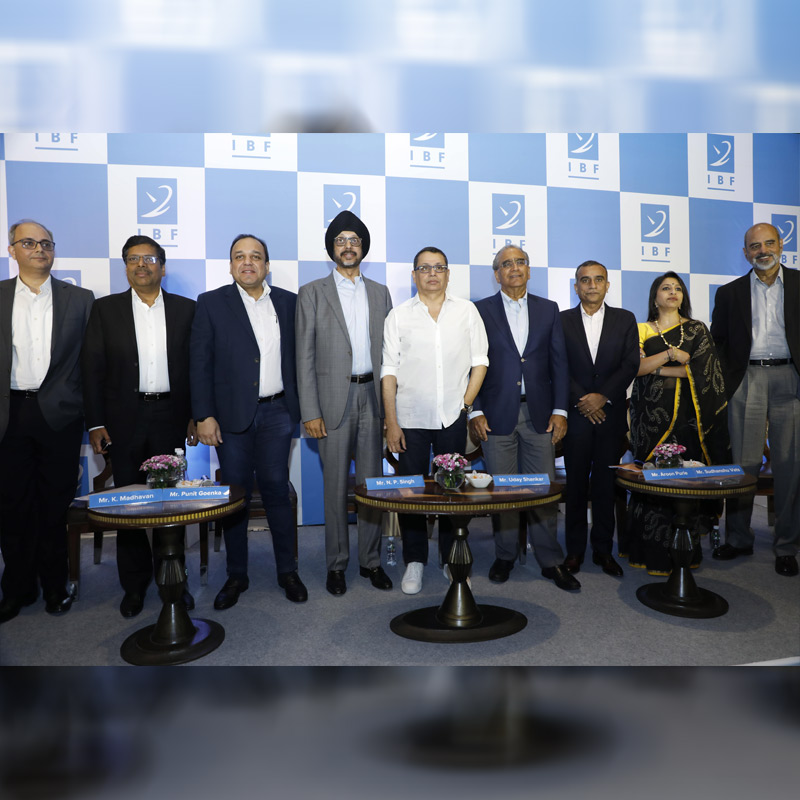
    MUMBAI: The last six months have been rather unsettling for the television sector what with the regulator the Telecom Regulatory Authority of India revising tariff regulations for pay TV at least a couple of times. Indian broadcasting CEOs hence came together under the umbrella of the Indian Broadcasting Foundation (IBF) on 10 January to air their concerns about the latest amendments in the new tariff order.  They were more than clear that the latest revision is going to adversly affect their toplines and bottomlines and hence that may leave them no recourse but to consider legal options.

    While the new price regime implemented in the last year did not have enough time to settle, the Telecom Regulatory Authority of India (TRAI) once again revised the order recently including reducing the pricing cap to Rs 12 per channel to be included in a bouquet, down from Rs 19 per channel.

    “Even as the new regime was settling down, on 1 January 2020, TRAI notified certain amendments to the New Tariff Order and Interconnection Regulations for the broadcast sector. These amendments attempt to make further disruptive changes in an industry already grappling with the paradigm shift to an MRP based pricing regime,” IBF president and  Sony Pictures Networks MD & CEO N P Singh expressed.

    He also mentioned that while the broadcasting industry is apprehensive about the magnitude of changes, they support bringing in order into the system.

    Singh also noted that the collective cost to the broadcasters was well over Rs 1,000 crore in just communicating the changes to the consumers. Moreover, there was an overall loss of 12-15 million subscribers in the process.

    Walt Disney Company Asia Pacific president, Star  Disney India chairman Uday Shankar also raised the question that if a comprehensive exercise was done last year, then what is the need for the current revision. He also added that if TRAI is so concerned with bringing down the price for the consumer then why, in the name of NCF (network capacity fee), distributors are being allowed to charge as much as Rs 160 for something that DD FreeDish is giving for free.

    “The objective of NTO 1 was first – to give choice to consumers, second – to bring transparency and third – to reduce litigation. While only the first two have happened, it's too early to talk about the third. Statistically, overall 94 per cent of Indians are aware of the NTO and the choices they have because of the efforts made by the broadcast industry collectively. The month on month churn in industry shows that people are continuously fine-tuning their choices. The other objective of NTO was transparencey which it has also brought in. The question therefore, is ‘what is the fundamental need to change again?,’" posed Viacom18 Group CEO & MD & IBF vice president Sudhanshu Vats.

    "India is a heterogenous country with different choices and abilities to pay. In every sector there is a wide spectrum and that needs to play out more in Indian media as well. This push for consistency shouldn’t come in the way of the industry's and the economy's growth. In the M&E industry there is a lot of dynamism and flux and hence the broadcast sector needs to be able to settle down. If there has to be any change we need to allow for enough time for its implementation and also changes shouldn't be suggested so frequently," he added.

    Shankar also emphasised on the problems that long-tail channels will face. He commented that the latest revisions will seriously threaten the existence of smaller channels. He also raised concerns about the quantum of investment in content, which broadcasters have been making. 

    Zee Entertainment Enterprises Ltd (ZEEL) CEO & MD Punit Goenka also questioned if these changes are in line with the government’s stated intent of improving the ease of doing business. According to him, whether it will really benefit end consumers is also arguable. 


  • Sony Pictures Networks India appoints Raj Mohan Srinivasan as chief information officer

    Sony Pictures Networks India appoints Raj Mohan Srinivasan as chief information officer

    MUMBAI: Sony Pictures Networks India (SPN),has appointed Raj Mohan Srinivasan as chief information officer (CIO) for the network. Prior to joining the network, Raj Mohan was in an entrepreneurial role.

    With over three decades of global experience across organizations such as IBM, Oracle and an entrepreneurial venture, Raj Mohan’s expertise lies in Business and IT Strategy, leading business transformation, strategic execution with a deep market focus and financial acumen. He has advised clients across industries in their business strategies, market & product positioning, whilst defining the roadmap for their digital businesses, multi-media and IT platforms. He has hands-on experience in providing solutions on cognitive, Big Data and Analytics on Enterprise Tech Platforms.

    He holds a Post Graduate degree in Operations Research & Computer Applications from NIT Trichy and is certified as a Global Transformation consultant by Booz Allen and Boston Consulting Group. He is also a certified Corporate Director, from the Institute of Directors, India.

    A winner of the Malcom Baldrige Award in 1993, he has authored publications on Artificial Intelligence and has two patents in the Knowledge Management Domain.

     “SPN welcomes Raj Mohan Srinivasanas Chief Information Officer (CIO). With over 30 years of varied industry experience, Raj will be a key contributor for the company’s technology and IT strategy. I am confident that his varied work experience will be instrumentalin shaping the business roadmap for the network,” SPN managing director and CEO N.P. Singh commented.

  • Take out masses from media, and you will have no media left’, says 21st Century Fox president Uday Shankar

    Take out masses from media, and you will have no media left’, says 21st Century Fox president Uday Shankar

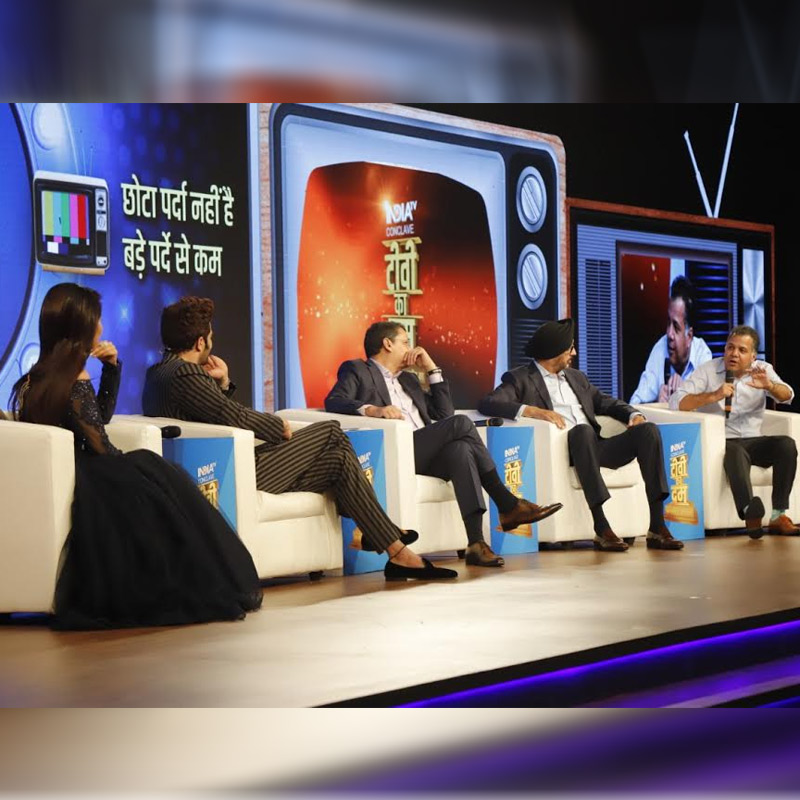
    MUMBAI: "You cannot take out mass from 'mass media', because then there will be no media left", said Uday Shankar, President of 21st Century Fox and former chairman and CEO of Star India at "TV Ka Dum", a daylong conclave organized by India TV in Mumbai, attended by top Bollywood and TV stars, last weekend. 

    Participating in a panel debate with Raj Nayak, COO of Viacom-18 and N. P. Singh, CEO of Sony Pictures Networks, Uday Shankar said: "Television shows are made to get ratings, because the viewers are the ultimate arbiters. TV shows are not made for private viewing. Whether TV shows, newspapers or films, unless the masses read or watch them, you cannot judge their popularity."

    Uday Shankar added: "Ratings are only the output to judge the content that is produced. Ratings is the sum of how many number of people watched a particular show. No astrologer can predict the ratings of a show. Producers are interested only in what viewers would like to watch or know, whether it is horror, comedy or love story."

    On the issue of why more and more TV shows based on superstition and horror are being produced, Uday Shankar replied: "There are serious TV shows too, like Satyamev Jayate, but to cater to a nation of 125 crore people, you cannot have a single size boot. One has to make shows according to the size of the foot of different types of people."

    "TV networks have a broad spectrum of shows that include entertainment, and shows which are serious and some light. which the viewer can enjoy. When a person returns home tired after daylong work, and sits with his family to watch TV, he or she needs entertainment.  You can't go on hectoring him or her all day with speeches.  Give some time to speeches and some to entertainment, in the language which he or she can understand and accept. 

    "If a car or bicycle manufacturer can want more and more people to buy vehicles,  then why not a TV producer can want more and more people to watch the show. There is nothing wrong in it. " 

    "Some vested interests, including some politicians, do not like to watch certain TV shows. My answer is: if the people of our country have become more conscious and they are asking questions from those in power, it is not because of consciousness spread by the political class. TV programmes, whether entertainment or news, have spread awareness among the people."

    Viacom-18 COO Raj Nayak said: "My question is why do those who raise objections watch TV programmes that are negative? If some TV shows get good numbers it is because they are in demand. But one should also know that people watch shows like Satyamev Jayate, Balika Vadhu, Shakti (on transgenders), Udaan (on bonded labour). These shows entertain and also try to bring about social changes. 

    Nayak said: "The Star Plus show Saathiya was on women empowerment, and shows like these educate people. Shows are made to care to different tastes of viewers. If more people watch the TV show Naagin, let me say, television did not create Naagin. Already there were four Bollywood films on Naagin.

    Nayak added: "Television and cinema reflect what is happening in society, they reflect what people want. Whenever we launch a new show, we never look at the TRP. No channel makes shows after watching TRPs. Shows are made only when there is good content. TRP is only a byproduct. Of course, at the end of day, the channels want TRPs because, after all, we have to run our company."

    N.P. Singh, CEO of Sony Pictures Networks, said: "I agree that television is an important medium for creating social impact.  Our shows did create a positive impact on society. Kaun Banega Crorepati is a very powerful and successful format, and its success was a given. It is a vehicle to create a positive and social change impact. 

    "We showcased stories of small town people whose work inspire others. That is why we decided that we will show the life journey of KBC participants so that it can inspire viewers."

    Asked by hosts Maniesh Paul and Charul Malik as to why TV shows are pulled off the air abruptly by GEC networks, Uday Shankar replied: " It's natural that when viewers do not like a show, it is pulled off the air. What can we do? We are not running an autocratic regime where shows will continue to run by government diktat, even if viewers like it or not. Here you have to respect the wishes of the people. For us, shows are a commercial enterprise. If viewers do not watch the show, how can we sell it (to advertisers)?

  • Sony to launch Marathi GEC

    Sony to launch Marathi GEC

    MUMBAI: Sony Entertainment Television (SET) is prepping up to launch a new regional language general entertainment channel Sony Marathi. Sony’s Ajay Bhalwankar will lead the channel, according to a source at SET.

    The channel is at the development stage and the company is building the team by hiring more employees for the new channel. The launch date has not been announced yet but the channel is likely to make its debut after March, said another source.

    Sony is seeking to tap diverse regions of the country by expanding its offerings with a variety of content and by expanding its channel library. Sony Marathi will be the network’s second regional channel after Sony AATH, its regional channel.

    SET had brought Bhalwankar on board as chief creative director in April 2014 to provide creative leadership and direction for SET and lead the programming and on-air production teams. The new channel will run under Bhalwankar guidance.

    Recently, the good times have been rolling for Marathi channels as they are attracting good viewership. The Marathi GECs in the market that currently are doing well are Colors Marathi, Zee Marathi and Star Pravah. The genre has surprisingly turned out some of the most viewed channels in the television space. In week 41 in 2015, the genre had registered 242 million impressions, whereas in week 50 of 2017, the viewership was 594 million impressions, an increase of 145 per cent in the weeks compared.

    Currently, Sony Pictures Networks India has SET, Sony SAB, Sony AATH, Sony TV HD, Sony SAB HD and Sony Pal in the GEC genre.

    Also Read:

    ‘Prithvi Vallabh’ is 20% history, 80% mystery: Anirudh Pathak

    Man Jit Singh, Andy Kaplan to depart Sony Pictures following restructure

    ‘Porus’ launched as ‘Digvijaya’ in Sri Lanka

    Sports fans power 35-40% of traffic on SonyLiv