Tag: My Name Is Salt

  • Manipuri film bags top award at Mumbai International Film Festival

    Manipuri film bags top award at Mumbai International Film Festival

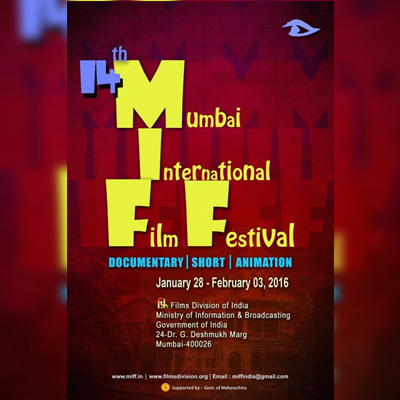
    MUMBAI: The Manipuri documentary film Phum Shang has won the Golden Conch Award for the Best Documentary Film (upto 60 minutes) at the 14th Mumbai International Film Festival for Documentary, Animation and Short Films, which concluded here today.

    The Swiss film My Name is Salt and Indian entry Placebo shared the Gold Conch award for the Best Feature length Documentary Film.

    Debanjan Nandy’s animation film Chhaya bagged the first prize in the Animation Category of International Competition. Mumbai filmmaker Devashish Makhija’s Agli Baar  shared the Best Short Fiction Film honours with the UK entry Solo Finale by Ingo Putze.

    The Dadasaheb Phalke Award for the Best Debut Film of a Director went to Far From Home by Copenhagen, Denmark based film maker Nitesh Anjan.

    The Festival organised by the Films Division every second year in collaboration with the Government of Maharashtra and the Indian Documentary Producers Association had commenced on 28 January.

    The main awards were given away by Maharashtra Governor Vidyasagar Rao in the presence of Maharashtra Culture Minister Vinod Shreedhar Tawde, filmmaker Ramesh Sippy, brand ambassador Jackie Shroff and Festival director Mukesh Sharma.

    Speaking on the occasion, Rao said that he would like documentaries to transform themselves from those for a young India since the average age of the Indian today was 29, which was far below that of the United States or China.

    He also wanted the Films Division to explore new talent from remote parts of the country and even economically weaker sections. Rao urged the Division to work with universities and schools in the state to ensure that films are made by students and also shown there.

    “The documentary format is important as these films help to understand the complexities of the situation in all parts of the world,” he said.

    He wanted Doordarshan to reserve a one-hour slot every week for documentary, short and animation films.

    Rao also rooted for more women filmmakers to emerge and said MIFF should encourage innovation and new ideas.

    Tawde said that documentaries provoked governments to action when they exposed ills in society and thereby played an important role. “MIFF should be held every year, and the state government can host it in the intervening year in case the Information and Broadcasting Ministry at the centre is not inclined to do so,” he added.

    Sippy said that commercial cinema was glamorous but the real challenge lay in making documentary or short films. “This should be encouraged,” he said.

    Shroff said he had come into the Festival as the brand ambassador but was leaving as a student who had learnt so much about documentaries and shorts. He also wanted the Festival to be made an annual affair. Answering a question by presenter Sameera Gujjar, he said that commercial films were dreams whereas the documentary were facts. Asked about national and international cinema, he said feelings were the same everywhere.

    Biju Dhanapalan who had been a member of the national jury said that special awards should be instituted for investigative documentaries, and those which have archival value, apart from making a strong appeal for restoring the Silver Conch award for the second best film. He also wanted the event to made into an annual feature. He said the national jury saw 27 films.

    Ashish Kulkarni, who headed the Animation and New Media Jury, said that films by professionals and students could not be clubbed together and there had to be separate awards for these. He also wanted more awards for new media category. He said that the jury saw 21 animation and 32 new media films and was impressed with the way the filmmakers combined various mediums.

    A total of 385 documentaries, shorts and animation films were shown at the Festival from around 20 countries out of the 850 received.

    The 52 minute documentary Phum Shang directed by Hao Bam Pabankumar who is an alumnus of the Satyajit Ray Film & Television Institute, Kolkata, critically examines the serious environmental problems faced at the Loktak lake. The largest fresh water lake in North East India characterised by its unique floating biomass, known as ‘Phumdi,’ is today considered a dying lake due to unchecked human activity. Pabankumar won the Golden Conch Award and a cash prize of Rs 3 lakhs.

    My Name is Salt directed by Mumbai born and Zurich based Farida Pacha is a film about the journey of thousands of families to the Rann of Kutch to extract whitest salt in the world. Chandigarh based film maker Abhay Kumar’s 96 minutes film Placebo explores the stress and pressure faced by medical students.

    My Name Is Salt also won the Best Cinematographer award for Lutz Konermann, while Placebo, which won the Award for Best Editor, was also declared the Most Innovative Film in the competition section.

  • Manipuri film bags top award at Mumbai International Film Festival

    Manipuri film bags top award at Mumbai International Film Festival

    MUMBAI: The Manipuri documentary film Phum Shang has won the Golden Conch Award for the Best Documentary Film (upto 60 minutes) at the 14th Mumbai International Film Festival for Documentary, Animation and Short Films, which concluded here today.

    The Swiss film My Name is Salt and Indian entry Placebo shared the Gold Conch award for the Best Feature length Documentary Film.

    Debanjan Nandy’s animation film Chhaya bagged the first prize in the Animation Category of International Competition. Mumbai filmmaker Devashish Makhija’s Agli Baar  shared the Best Short Fiction Film honours with the UK entry Solo Finale by Ingo Putze.

    The Dadasaheb Phalke Award for the Best Debut Film of a Director went to Far From Home by Copenhagen, Denmark based film maker Nitesh Anjan.

    The Festival organised by the Films Division every second year in collaboration with the Government of Maharashtra and the Indian Documentary Producers Association had commenced on 28 January.

    The main awards were given away by Maharashtra Governor Vidyasagar Rao in the presence of Maharashtra Culture Minister Vinod Shreedhar Tawde, filmmaker Ramesh Sippy, brand ambassador Jackie Shroff and Festival director Mukesh Sharma.

    Speaking on the occasion, Rao said that he would like documentaries to transform themselves from those for a young India since the average age of the Indian today was 29, which was far below that of the United States or China.

    He also wanted the Films Division to explore new talent from remote parts of the country and even economically weaker sections. Rao urged the Division to work with universities and schools in the state to ensure that films are made by students and also shown there.

    “The documentary format is important as these films help to understand the complexities of the situation in all parts of the world,” he said.

    He wanted Doordarshan to reserve a one-hour slot every week for documentary, short and animation films.

    Rao also rooted for more women filmmakers to emerge and said MIFF should encourage innovation and new ideas.

    Tawde said that documentaries provoked governments to action when they exposed ills in society and thereby played an important role. “MIFF should be held every year, and the state government can host it in the intervening year in case the Information and Broadcasting Ministry at the centre is not inclined to do so,” he added.

    Sippy said that commercial cinema was glamorous but the real challenge lay in making documentary or short films. “This should be encouraged,” he said.

    Shroff said he had come into the Festival as the brand ambassador but was leaving as a student who had learnt so much about documentaries and shorts. He also wanted the Festival to be made an annual affair. Answering a question by presenter Sameera Gujjar, he said that commercial films were dreams whereas the documentary were facts. Asked about national and international cinema, he said feelings were the same everywhere.

    Biju Dhanapalan who had been a member of the national jury said that special awards should be instituted for investigative documentaries, and those which have archival value, apart from making a strong appeal for restoring the Silver Conch award for the second best film. He also wanted the event to made into an annual feature. He said the national jury saw 27 films.

    Ashish Kulkarni, who headed the Animation and New Media Jury, said that films by professionals and students could not be clubbed together and there had to be separate awards for these. He also wanted more awards for new media category. He said that the jury saw 21 animation and 32 new media films and was impressed with the way the filmmakers combined various mediums.

    A total of 385 documentaries, shorts and animation films were shown at the Festival from around 20 countries out of the 850 received.

    The 52 minute documentary Phum Shang directed by Hao Bam Pabankumar who is an alumnus of the Satyajit Ray Film & Television Institute, Kolkata, critically examines the serious environmental problems faced at the Loktak lake. The largest fresh water lake in North East India characterised by its unique floating biomass, known as ‘Phumdi,’ is today considered a dying lake due to unchecked human activity. Pabankumar won the Golden Conch Award and a cash prize of Rs 3 lakhs.

    My Name is Salt directed by Mumbai born and Zurich based Farida Pacha is a film about the journey of thousands of families to the Rann of Kutch to extract whitest salt in the world. Chandigarh based film maker Abhay Kumar’s 96 minutes film Placebo explores the stress and pressure faced by medical students.

    My Name Is Salt also won the Best Cinematographer award for Lutz Konermann, while Placebo, which won the Award for Best Editor, was also declared the Most Innovative Film in the competition section.

  • Ice Poison named best film at 68th Edinburgh International Filmfest

    Ice Poison named best film at 68th Edinburgh International Filmfest

    NEW DELHI: Midi Z’s Ice Poison (Taiwan, Myanmar), which had its British premiere, was named as the best film in the international section of the 68th Edinburgh International Film Festival.


    The award is given to filmmakers from outside of the United Kingdom in recognition of their imagination and innovation.


    Filmmaker, actor and writer Niki Karimi chaired the International Feature Film Competition Jury with producer Michael Fitzgerald and journalist Mark Rabinowitz.


    The ceremony concluded the 12-day festival with the international premiere of We’ll never Have Paris.


    The award for ‘Best Documentary Feature Film’, supported by Al Jazeera was awarded to Farida Pacha’s My Name Is Salt. Re-introduced in 2014, the award underlines the festival’s long-standing support of documentaries, and the competition saw feature-length documentaries from around the world competing for the cash prize of ?10,000.


    The winner was selected by the Best Documentary Feature Film Jury, chaired by director Cynthia Beatt, with director and editor Dominique Auvray and producer Sunmin Park. The Best Documentary Feature Film Jury said: “It is a beautifully shot and edited film that details the cyclical nature of salt harvesting in Gujarat, India. The film itself mirrors this cycle with delicacy and restraint. Between scenes are spaces to imagine what we do not see during the eight months of filming. This one family of salt harvesters represents the 40,000 other families whom one senses on the horizon, closer or farther away, all doing the same work, all burdened by the same fears of whether this harvest will bring enough for them to survive until the cycle begins again.”


    The Michael Powell award for ‘Best British Feature Film’ was awarded to Joanna Coates’s Hide And Seek which received its world premiere at the festival. Her innovative utopian drama wins one of the longest-running film awards in the UK, honouring imagination and creativity in British filmmaking. The award carries a cash prize of ?20,000.


    The winner was chosen by the Michael Powell Jury, chaired by director Amos Gitai with actor Nina Hoss and actor/writer/comedian Michael Smiley.


    The award for ‘Best Performance in a British Feature Film’ went to Eddie Marsan for his performance in Still Life. The performance award was also selected by the Michael Powell Jury who further awarded a special commendation to Zoe Telford for her performance in Greyhawk.


    Slap directed by Nick Rowland won the Virgin Atlantic Little Red Award for ‘Best Short Film’. The prize was one of three short film awards supported by Virgin Atlantic Little Red bestowed by the Short Films Jury which was chaired by academic, curator and journalist Linda Ruth Williams with actor Lenora Crichlow and producer Nicole Gerhards.


    The award for ‘Creative Innovation in a Short Film’, now in its second year, was awarded by the Short Films Jury to The Bigger Picture directed by Daisy Jacobs.


    Another award in its second year within the shorts category, the award for ‘Outstanding Individual Contribution to a Short Film’, which celebrates imaginative and innovative work in short cinema, was awarded to Ainslie Henderson and Will Anderson for their screenwriting and direction of the short film Monkey Love Experiments.


    As voted for by the audience, the McLaren award for ‘Best New British Animation’, supported by the British Council, went to My Stuffed Granny by director Effie Pappa. Named after Scottish-born filmmaker Norman McLaren, the McLaren Award is the longest running award celebrating creativity amongst UK animation talent which this year saw it celebrating its 25th anniversary, alongside the year-long celebrations marking the centenary of the birth of Norman McLaren. The award was presented by Sue Loughlin, the first ever recipient of the McLaren Award in 1990.


    The Student Critics Jury Award, supported by James and Morag Anderson, was awarded to Stations Of The Cross, directed by Dietrich Brüggemann.                                         


    Also awarded during the ceremony were AWFJ EDA Award for ‘Best Female-Directed Narrative’ and AWFJ EDA Award for ‘Best Female-Directed Documentary’. Alliance for Women Film Journalists president Jennifer Merin, presented the two awards to Frauke Finsterwalder’s Finsterworld and Stephanie Spray and Pacho Velez’s Manakamana respectively, with a special documentary award commendation to Farida Pacha’s My Name Is Salt