Tag: music

  • Global entertainment & media revenues surge to $2.3 trillion; OTT growth to moderate: PwC

    Global entertainment & media revenues surge to $2.3 trillion; OTT growth to moderate: PwC

    Mumbai: Last year, the global entertainment and media (E&M) industry grew significantly faster than the world economy as a whole. Following a 2.3 per cent dip in 2020 due to the pandemic, E&M sales increased by a solid 10.4 per cent in 2021, from $2.12 trillion to $2.34 trillion.

    Virtual reality (VR) and gaming are significant growth drivers for the industry as it becomes more digital, mobile, and youth-focused, and digital advertising permeates every aspect of the industry. These conclusions are drawn from PwC’s Global Entertainment & Media Outlook 2022–2026, which represents the 23rd annual research and forecast of E&M spending by consumers and advertisers across 52 countries & territories.

    Findings in this year’s Outlook include:

    – After growing by 35.4 per cent in 2020, OTT (over-the-top) video revenues increased by 22.8 per cent in 2021, to $79.1 billion. The rate of OTT revenue growth is anticipated to slow slightly; it will increase at a 7.6 per cent CAGR (compound annual growth rate) through 2026, pushing revenues to $114.1 billion.

    – Traditional TV still brings in a sizable amount of money, but it is facing intense competition from OTT streaming services. Global sales are expected to shrink at a CAGR of -0.8 per cent, from $231 billion in 2021 to $222.1 billion in 2026.

    – Revenue from video games and esports worldwide was $215.6 billion in 2021, and it is anticipated to increase by 8.5 per cent CAGR to $323.5 billion in 2026. With $109.4 billion, Asia Pacific produced the majority of the world’s revenues in 2021, more than double the second-highest region, North America. Gaming has overtaken video and communications as the third-largest data-consuming E&M content category.

    – Despite starting from a small base, VR continues to be the fastest-growing E&M segment. Following a strong 39 per cent growth in 2020, global VR spending increased by 36 per cent y-o-y to $2.6 billion in 2021. The segment is anticipated to grow at a CAGR of 24 per cent between 2021 and 2026, reaching $7.6 billion. With $1.9 billion in revenue in 2021, gaming content is the main source of VR revenue. By 2026, this should rise to $6.5 billion, or 85 per cent of all VR revenue.

    – Due to its widespread use in the digital sphere, advertising now dominates its own industry sector. After falling by almost seven per cent in 2020, advertising increased by an astonishing 22.6 per cent in 2021, reaching $747.2 billion. Advertising is expected to expand at a 6.6 per cent CAGR through 2026, driven nearly entirely by digital. The revenue from internet advertising is expected to increase even more quickly, increasing at a CAGR of 9.1 per cent. Advertising is anticipated to exceed consumer spending and internet access in 2026 to become a one trillion dollar business and the largest E&M revenue stream.

    – In 2023, global cinema revenue is anticipated to hit a new high of $46.4 billion after experiencing losses due to the pandemic. Box office revenue is anticipated to grow by 18.9 per cent CAGR from $20.8 billion in 2021 to $49.4 billion in 2026. In 2020, China surpassed the US to become the world’s biggest cinema market, and it is predicted that it will continue to hold this position through 2026.

    – In 2024, live music revenue is anticipated to surpass pre-pandemic levels. Recorded music sales are expected to increase from $36.1 billion in 2021 to $45.8 billion in 2026, driven by the development of digital music streaming subscriptions.

    – Massive data consumption is being fueled by the expansion of content. Data consumption was 2.6 million petabytes (PB) in 2021, and it is projected to increase by 26 per cent CAGR to 8.1 million PB by 2026. With a predicted CAGR of 29.6 per cent, gaming will consume data at the quickest rate during the projection period. The fastest-growing device category between 2021 and 2026 will be mobile handsets, growing at a CAGR of 28.8 per cent and predicted to increase mobile data usage from 1.1 PB to 3.8 PB.

    PwC Germany Global Entertainment And Media Industry Leader Werner Ballhaus said, “Industry press tends to focus on the companies that have dominated the E&M industry. But it is the choices that billions of consumers make about where they will invest their time, attention and money that are fueling the industry’s transformation and driving the trends.  We are seeing the emergence of a global E&M consumer base for the coming years that is younger, more digital and more into streaming and gaming than the current consumer population. This is shaping the future of the industry.”

    North America dominates per capita E&M, but faster growth resides elsewhere: Regionally, North America has by far the biggest E&M expenditures per capita at $2,229, nearly double that of Western Europe’s $1,158. In contrast, Asia Pacific, which had E&M sales of $844.7 billion in 2021, had a per-capita expenditure of $224. Of all regions in the world, the Middle East and Africa spend $82 less per capita on E&M.

    While OTT video and gaming account for the majority of revenue growth, esports and the cinema industry are also experiencing rapid expansion. Latin America, the Middle East, Africa, and Asia make up the top ten growth markets by CAGR. The countries with the best prospects for E&M consumer spend growth over the five-year forecast period are Turkey (estimated 14.2 per cent CAGR), Argentina (10.4 per cent), India (9.1 per cent), and Nigeria (8.8 per cent).

    The metaverse awaits: The metaverse may soon develop into a wonderfully realistic environment where people may access immersive virtual experiences using a VR headset or other connecting device. The potential financial and commercial worth of the metaverse extends far beyond VR because it is an evolution that might fundamentally alter how companies and customers engage with goods, services, and one another. Over time, a significant portion of the profits from video games, musical performances, advertisements, and even online shopping may move into the metaverse.

    How big is the E&M opportunity in the metaverse?  

    One place to start is the rapidly expanding VR sector. Although it is now one of the less significant areas studied, the 36 per cent increase in global spending over the previous year gives an indication of its long-term potential. The number of stand-alone and tethered VR headsets installed worldwide is expected to increase from 21.6 million in 2021 to 65.9 million in 2026.

    Ballhaus added, “With the impressive growth and potential of the E&M industry comes tremendous volatility and what we describe as fault lines and fractures opening up between companies, within sectors and across geographies and generations. For businesses, intense competition and continual disruption will remain the order of the day. Our data shows the mix of revenues and spending is changing rapidly. As fault lines proliferate and widen, every business in E&M stands to be disrupted. The challenge and goal must be to understand your consumer and end up on the right side of disruption.”

  • Winners of Indian Telly Awards – Bangla 2021 announced

    Winners of Indian Telly Awards – Bangla 2021 announced

    Mumbai: Started in the year 2000, the Indian Telly Awards, often referred to as the Tellys are presented every year by Indiantelevision.com to recognise the exceptional talent from the Indian Television industry.

    The mega ceremony held in Mumbai is attended by thousands of TV actors, producers, writers and directors to celebrate the best performances both on-screen and behind-the-scenes of television in India every year. Considering the evolving situation of the pandemic, the winners of 2021 were announced virtually during an event on 28 January 2022

    This year, the Indian Telly Awards honoured the regional language television industry, beginning with the City of Joy- West Bengal. Watch the virtual ceremony here.

    Here are the winners:

  • Podcast consumption on Gaana jumped 40 % YoY in 2021: CMO Shashwat Goswami

    Podcast consumption on Gaana jumped 40 % YoY in 2021: CMO Shashwat Goswami

    Mumbai: If the digital revolution paved the way for the OTT boom, it also provided a fresh impetus to the audio industry to evolve with the changing times. As the habit of consuming content on the go became a lifestyle for people, audio emerged as the most convenient option to keep one entertained and informed without any hassles.

    According to the data released by the UK-based agency MIDia Research, worldwide music streaming subscriptions grew 26.4 per cent in the second quarter of 2021. The total number of subscribers currently stands at 521.3 million – an increase of 109.5 million from the year before.

    The rise of podcasts

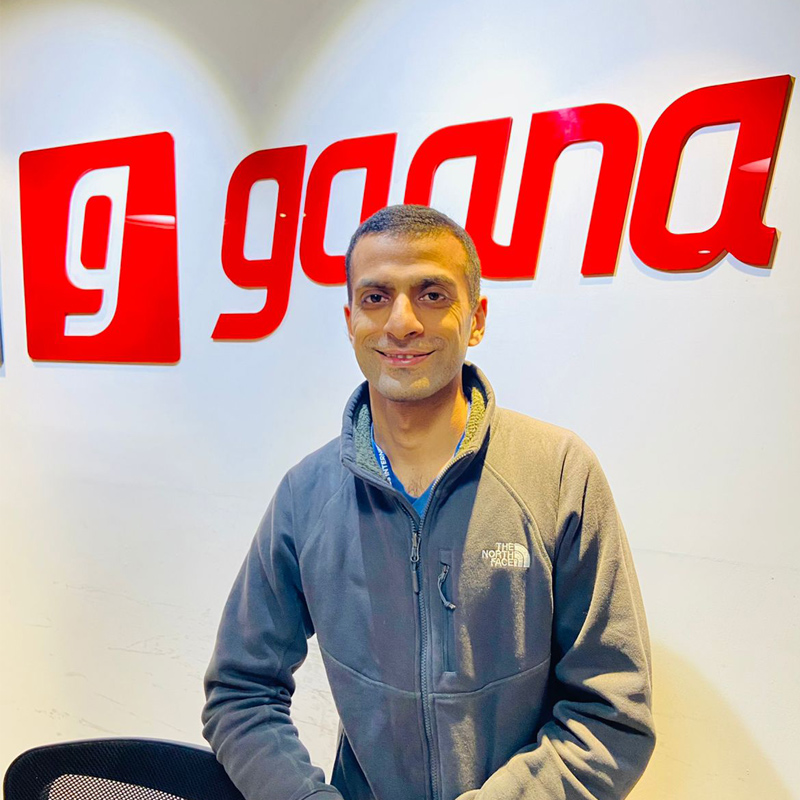
    “Not just the musical content, but we saw a massive traction on our non-music content,” said Gaana head of marketing Shaswat Goswami in an exclusive conversation with Indiantelevision.com. Launched in 2010, the Times Internet-owned platform currently has around 180 million active listeners and finds its place among the top three streaming platforms in the country. The platform aspires to double its growth numbers by the end of 2022.

    Discussing the increasing popularity of podcasts, Goswami said, “The overall consumption of podcasts on Gaana increased by ~40 per cent YoY, while we expanded our library to nearly 40K podcasts. This not only includes exclusive Gaana Originals but also a catalogue of national and international podcasts hosted in collaboration with different associations to keep pace with the rising demand.”

    As people’s appetite for screen-free entertainment grew during the pandemic, the demand for podcasts also rose, especially from regional markets which witnessed a jump of 32 per cent in 2021. Podcasts of diverse genres such as music, motivation, stories and devotional ruled the non-music content. 

    Competition heats up, as new players jump in

    Audio streaming has seen a global boom with a host of streaming apps flooding the market during the last few years. India too witnessed a surge in popularity of music apps like Gaana, Spotify, JioSaavn, and Amazon music which stamped their impact on the country’s audio streaming scene.

    Talking about the increasing competition and entry of new players, Goswami said, “Unlike any other industry, we don’t lose a user simply because they have downloaded a new streaming app. Instead of uninstalling one as against the other new one, they usually continue using both apps. This kind of usage is the ‘new normal’ in music streaming – where there will be multiple apps on the phone.”

    More opportunities for diverse, independent artists

    With an increasing appetite for new content, Indians did not shy away from exploring a plethora of independent and diverse artists. The rise of streaming also empowered artists from all backgrounds to build a new fan base around the world and make successful careers in music. Streaming companies also provided the investment and support needed for the talent to thrive and reach a truly global audience.

    “Gaana too worked closely with regional artists like Deepak Medatwal, Rajnish Kaushik, and Abhay Maheshwari,. We also plan to onboard more content creators including independent artists and established names in 2022 by further expanding our partner network and supporting individual podcasters in content creation and broadcasting,” said Goswami.

    The Gaana CMO also expects regional language music and independent music to pick up in the coming months. “We are working with a lot of artists, and are constantly in touch with our label partners, artist partners for collaborations and to understand what support they are looking for on a new release and helping them,” added Goswami, who joined the audio streamer in October 2021 after moving on from grofers.

    Focus on content marketing

    The audio industry heavily relied on content marketing especially digital, along with traditional media like television, print to connect with their customers. Gaana launched most of its campaigns on digital and has been consistently growing its media spend in line with the business.

    The audio platform’s marketing campaigns have also become more and more contextual and tailored to its user interests. The audio streamer has increasingly moved from mass campaigns to more segmented and personalised campaigns on the basis of language, user profile etc, and reported a 48-50 per cent jump in user retention over the last quarter.

    The ambitious vision is to get to a billion users and ensure that it’s current consumer demographic represents the country’s internet penetrated demographic at large. “You cannot have 180 million users and not be representative of the country’s population,” said Goswami. “So be it in terms of language or metro vs non-metro there’s no conscious targeting on the brand’s part. However, we do see a lot of traction coming from the smaller towns, because that’s where the internet expansion is happening.”

    With the battle of audio streaming apps heating up, Gaana CMO said the brand has been going all out to ensure it stays top of mind for its user base, as well as strengthening its main product – the app. “The bulk of our energies and innovations have been on that product- on how we can give our users an experience that’s glitch-free. Having great music content is our foremost priority, along with having a well-performing, quality product that guarantees a great user experience. That’s one major checkmark in Gaana’s favour, which we are constantly working on to better, along with the brand reach and awareness.”

  • Gaana surprises listeners with new feature ‘AutoQueue’

    Gaana surprises listeners with new feature ‘AutoQueue’

    Mumbai: Music streaming app, Gaana has unveiled its latest product feature ‘AutoQueue’ that promises to offer personalised music listening to its users.

    The newly introduced feature is powered by a machine learning algorithm that factors the probability of songs being heard together (past behavior) as well as similarity of music, tempo/bpm, etc to predict possible songs a user would like to hear after they have manually played one song. The algorithm analyses thousands of signals and data points to come up with personalised song suggestions.

    The feature enables consumers to hit up a song and indulge in seamless streaming while Gaana plays similar songs on its own. The benefit is that it will dramatically reduce the time spent in manual searching & solves the problem of “listener’s block” (where one struggles to think of the next song to play). Autoqueue also makes the discovery of new music easier, as listeners get served apt songs they might not know of on their own.

    Gaana CEO Sandeep Lodha said, “In the last year and a half, audio streaming has played a major role in people’s lives and consumption is on the up. With AutoQueue we are going one step further to hyper-personalise each user’s app experience making it effortless to listen to great music. The feature is born of Gaana’s user research & tech capabilities and gives personalised endless background track to the lives our users live in the foreground.”

    The brand has also released an ad film to communicate the ease & joy of music listening with AutoQueue. The lighthearted commercial shows two girls going for a short drive that turns to a never-ending long drive, as Gaana AutoQueue keeps playing surprisingly apt songs that they love.

  • Moodagent launches its first brand campaign in India

    Moodagent launches its first brand campaign in India

    Mumbai: International music streaming app Moodagent empowers individuals to make their listening experience entirely their own as it unveils its global brand campaign called ‘We’re Moodagent. We’re Here’ in India. The cinematic campaign takes this thought a step further as it encourages individuals to design their own dynamic listening experience and promises to ‘be here’ for all of life’s ups and downs – with a playlist to match.

    Created in-house by Copenhagen-based Moodagent, the campaign brings alive the brand thought that every distinct mood deserves its own playlist.
     
    “Every individual is unique and both their favourite tune and their mood and situation is constantly evolving. It was important for Moodagent India to lean into the theme of individuality and personalisation and not simply distribute a global video, but rather create a local version based on the global storyboard,” said the music platform in a statement.

    “The idea behind the campaign is to showcase how the flexibility, mobility and adaptability of Moodagent empowers listeners to lean into their individuality. We believe that music discovery should be simple, fun and interactive, but also appreciate how it can have a profound impact on our daily lives,” stated Moodagent India EVP and MD Jyoti Handa. “We want to connect artists and listeners – build a community – around that idea; that the music you listen to may define you for a moment, but you always have the power to explore and challenge what makes you – You.”

  • Music listening time through audio streaming up 51 per cent: IFPI

    Music listening time through audio streaming up 51 per cent: IFPI

    Mumbai: The pandemic has taken a severe toll on people’s lives, and impacted their media consumption patterns in more ways than one. According to a new study, it has also led to an increase in the time spent listening to music across the world. People are enjoying more music today than ever before, on an average spending 18.4 hours a week (up from 18 hours in 2019) – the equivalent of listening to 368 three-minute tracks.

    The findings are part of a new study – ‘Engaging with Music 2021’ conducted by the International Federation of the Phonographic Industry (IFPI), representing the recording industry worldwide.

    Driven in part by record labels’ investment, engagement with streaming – particularly subscription audio streaming – also continued to grow, demonstrating increasing value to fans. Time spent listening to music through subscription audio streaming grew 51 per cent, as music fans continue to embrace it for the access and autonomy it provides to choose the artists and the music that they love.

    The report measures how people engage with music across 21 countries, and found that fans make their own listening choices, thanks to streaming. The main reasons behind their engagement with streaming were being able to choose their favourite songs, artists, and their own playlists. 68 per cent searched for specific songs and 62 per cent listened to playlists they created more than once a week.

    Around the world, music fans are enjoying a rich and diverse mix of genres. In addition to popular genres, well over 300 different ones were named by at least one person in the 43,000-person study as the music they typically listen to, including gqom, axé, and hokkien song.

    Engagement is fuelled by listeners’ increasingly rich experiences, with music driving innovations such as short-form video, live streaming, and in-game experiences. 68 per cent of the time spent on short-form video apps involved music-dependent videos such as lip-syncing and dance challenges. Furthermore, one in three (29 per cent) said they had watched a music live stream such as a concert in the last 12 months.

    Music makes a powerful contribution to wellbeing, providing comfort and healing to many, especially younger people, in challenging times. 87 per cent said that music provided enjoyment and happiness during the pandemic. 68 per cent of 16-19s said new releases from their favourite artists helped them during the pandemic.

    Music is central to what people enjoy about listening to the radio. 74 per cent listen to it mainly for the music and 73 per cent tune in to their favourite radio station because of the music it plays.

    The availability of unlicensed music remains an issue for the music ecosystem and the threat continues to evolve. Almost one in three (29 per cent) of people had used illegal or unlicensed methods to listen to or download music, and 14.4 per cent had used unlicensed social media platforms for it.

    The data is based on fieldwork conducted in June and July 2021 with 43000 respondents aged between 16 and 64. Panels were nationally representative in each country.

    IFPI chief executive Frances Moore, said, ‘Engaging with Music 2021’ tells the story of how fans around the globe are connecting with the artists and music they love in ways never before imagined.

    “Record companies have enabled artists to develop their vision, licensed an abundance of music tracks to a multitude of platforms, and harnessed new technologies to pave the way for music fans around the world to connect with artists in these growing, and exciting ways. The freedom of record labels to license music to these new and immersive experiences is crucial to the future growth of the entire music ecosystem.  We are campaigning worldwide to ensure governments maintain or implement a fair environment in which such commercial deals can be made,” said Moore.

  • Artium Academy launches brand film with Sonu Nigam

    Artium Academy launches brand film with Sonu Nigam

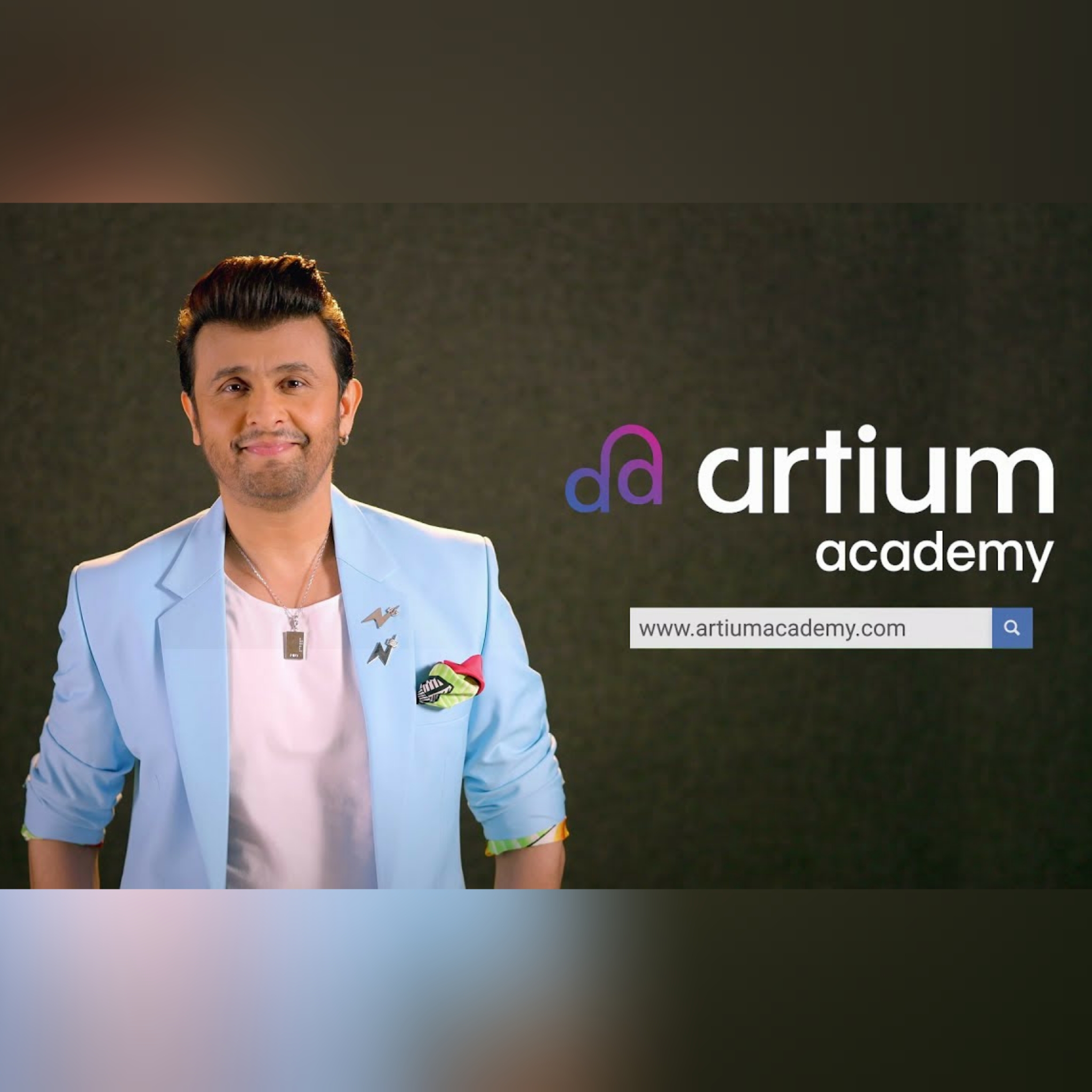
    Mumbai: Online music education platform Artium Academy on Monday launched its first brand film featuring the celebrated singer Sonu Nigam.

    To lend depth and build a strong music pedagogy, Artium Academy’s academic board has Nigam as its patron-in-chief and voice expert Anant Vaidyanathan as chief of pedagogy, who will be framing the academic policy and the accreditation process, said the platform in a statement.

    The Artium board comprises music maestros like Shubha Mudgal (Hindustani classical), Aruna Sairam (Carnatic music), KS Chitra (South Indian popular film music), Louiz Banks (keyboard), Aneesh Pradhan (percussions), Raju Singh (guitar), and Gino Banks (drums) acting as faculty heads, driving the curriculum for their respective genres.

    In the coming weeks, Artium intends to deploy a 360-degree campaign on all identified media formats with tactical as well as ongoing campaigns. The objective is to put forth the cumulative might of pedagogy of the brand in order to engage with all forms of music enthusiasts alike.

    “The centuries-old, venerated music training methods of India are ready to meet the technological opportunities of the new age to create a never before learning experience for the music aspirant of today,” said Artium Academy founder and CEO Ashish Joshi. “Artium aspires to be a thought leader in technological research and innovation to enhance the power of self-assessment, to capture vast data from fine human judgment, and feed machine learning towards the creation of AI-supported systems of assessment and prescription, and the sheer experience of the learning session, and facilitating the reach of qualitative pedagogy to the deserving across the globe.”

    “Musical expertise is a product of multiple inputs from a variety of sources, experiences, influences, inspirations, challenges, struggles, failures and victories,” said Sonu Nigam, who is also one of the investors of Artium Academy. “My colleagues and I feel privileged to bring our learning, knowledge,  skill development methods, and insights within the reach of multitudes of students through our design of performance-based learning programs that are committed to bringing out the best in each individual.’’

  • Online is second most consumed media after TV in rural India: Report

    Online is second most consumed media after TV in rural India: Report

    Mumbai: There has been an internet revolution in rural India, with online being the most consumed media after television, according to a joint report released by media agency GroupM and insights and consulting firm Kantar on Wednesday.

    With respect to online content consumption, music/audio leads the pack at 69 per cent followed by news at 49 per cent and gaming at 33 per cent. Usage of video/OTT apps is driven by YouTube at 87 per cent (most in Rajasthan, AP/ Telangana, TN, and Bihar), followed by Disney+ Hotstar at 30 per cent (highest usage in UP, TN, Gujarat, Kerala), the report said.

    WhatsApp and Facebook are the most used social media/ messenger platforms at 87 per cent (most in Rajasthan, AP / Telangana, Karnataka) and 66 per cent (most in Odisha, UP, Gujarat and West Bengal) usage respectively, according to the second edition of the Rural COVID Barometer report. 

    The report explores rural India’s concern about the impact of the second wave and how it alters consumer behaviour and purchase patterns. The research was conducted with Kantar’s data and insights network and Dialogue Factory’s rural marketing intelligence in eighteen Indian states, across rural adults (18+ years in age) with representation across gender, NCCS, and age groups.

    Phone Pe is the most used digital payments app with 19 per cent of rural consumers having used these services in the last 6 months, says the report. Usage of Phone Pe is driven by Karnataka at 46 per cent followed by Rajasthan at 38 per cent.

    Growth in the consumer durables and automotive (two-wheeler) sectors is likely to slow down in the next six months. However, the smartphone category is expected to see fast growth in the near future.

    The construction sector is also expected to see a bounce-back with consumers expected to spend on building a house/undertake smaller construction work in the next six months.

    As a result of the pandemic, rural consumption and shopping patterns have witnessed a major shift. With respect to retail channels, 56 per cent of consumers prefer local village shops for purchasing groceries, and 49 per cent for personal hygiene, and 45 per cent for cleaning products. Even big-ticket items like consumer electronics and durables are preferred to be bought at these local shops at 50 per cent and 46 per cent respectively. 

    Rural consumers are saving 25 per cent of their income, the report stated. Southern India (except for Tamil Nadu) is saving more in comparison to other parts of the country. As expected, expenses are higher on personal care, hygiene and cleaning products while spends on indulgence and beauty products have been deprioritised.

    “The pandemic has evolved the rural consumer’s decision-making process. They are watching their spending and prioritising their buying patterns by the need of the hour,” said GroupM Dialogue Factory, head of experiential marketing – APAC, Dalveer Singh. “There is a positive acceptance of the vaccination and the upper- and middle-class rural Indians are being more proactive in financial planning to deal with covid constraints, which make these markets a significant place to introduce investment and savings products. There is a deep sense of uplift on the subject of India’s economic future.”

    While rural India is concerned about the COVID situation in the second wave, most are also positive about economic recovery once the situation normalises. Nearly three in four rural households have received some form of assistance via government schemes, thus providing the much-needed financial cushion to consumers, the report stated.

    “With a highly concerned rural consumer, rural India is planning finances better and inclined towards a savings mindset,” stated Kantar Insights Division, senior executive director, Puneet Avasthi. “We are witnessing a significant rise in digital payments as an important mode of transaction. With the change in consumption priorities in favor of health and hygiene products, FMCG marketers should leverage this trend for planning their innovation pipeline.”

  • News18 Languages brings Musicathon Season 2 on Independence Day

    News18 Languages brings Musicathon Season 2 on Independence Day

    Mumbai: News18 Languages (Kannada, ODIA, Tamil, Gujarati, Bangla, Lokmat, Assam, Kerala) is all set to bring ‘Musicathon Season 2’ to celebrate India’s 75th Independence Day with a bouquet of songs from singers across the country.

    The musicians will perform to celebrate the spirit of positivity and hope through their soulful voice and heartfelt songs. They will be singing renditions of patriotic songs and also their own compositions, the television network announced on Friday.

    As part of the channel’s commitment of delivering impactful initiatives, ‘Musicathon Season 2’ will salute & acknowledge the spirit of the selfless service of the unsung heroes and to infuse the day with positivity & hope.

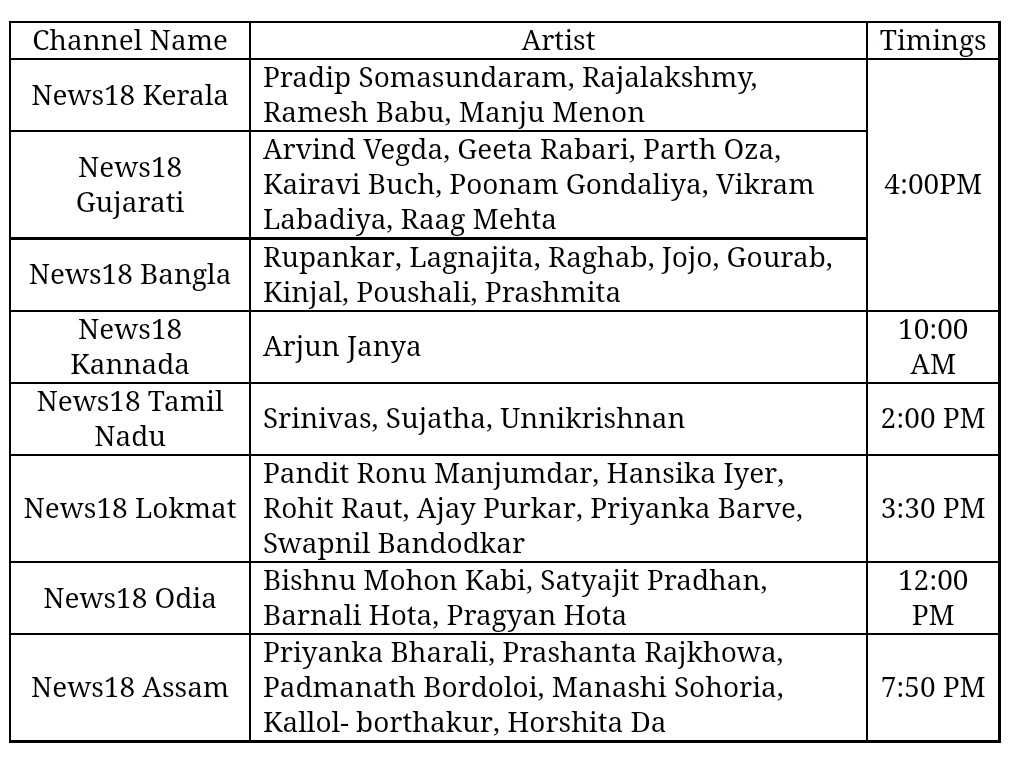
    The channels will reverberate with music from Srinivas, Sujata from Tamil Nadu, Pradip Somasundaram, Manju Menon from Kerala, Arjun Janya from Karnataka. Gujarat will feature Arvind Vegda, Geeta Rabari, Parth Oza, Bengal will have Rupankar, Lagnajita, Raghab, Jojo, Gourab and Assam with Priyanka Bharali, Prashanta Rajkhowa, Padmanath Bordoloi, Manashi Sohoria. Maharashtra will feature songs sung by Pandit Ronu Manjumdar, Hansika Iyer, Rohit Raut, Ajay and Orissa with Bishnu Mohon Kabi, Satyajit Pradhan, Barnali Hota.

  • ShareChat, Moj sign multi-year music licensing deal with T-Series

    ShareChat, Moj sign multi-year music licensing deal with T-Series

    Mumbai: Mohalla Tech-backed short video app Moj and social media platform ShareChat on Wednesday announced an exclusive multi-year agreement with T-Series. The partnership allows ShareChat and Moj to access an extensive catalogue of the music label’s Indian music library.

    ShareChat and Moj were also the first in the Indian social media and short video landscape to strike a licensing agreement with T-Series last year. Moj and ShareChat COO & co-founder Farid Ahsan said “the partnership drives more value to the industry, supports more artists, and delivers an incredible creative experience to the users across India.”
    “ShareChat and Moj have been a wonderful partner and they are a true long-term partner for us in the Indian short video space,” T-Series, managing director, Bhushan Kumar said. “This long-term license reciprocates both of our intent to support the creator economy and build a robust foundation for the creator-led content ecosystem in the country.”
    Moj and ShareChat together, with a 340 million-strong monthly active user community and over 82 million creator community, represent a significant share of the internet population in India, a statement said.

    “This is an important step forward and sets the standard in the Indian social media and short video space that acknowledges and respects the music industry.” T-Series, president, Neeraj Kalyan said. “With this continued commitment, ShareChat and Moj will bring more innovation and creativity for the Indian short video space an objective we share mutually. We are hopeful this would drive deeper engagements on the platforms and create a mutually benefitting partnership for years to come.”