Tag: music licensing

  • Sony Music Publishing & Tips Music strike global renewal, add Youtube

    Sony Music Publishing & Tips Music strike global renewal, add Youtube

    MUMBAI: Hindi music beats are going global, and Sony Music Publishing (SMP) is ensuring they reach every corner of the world. Sony Music Publishing and Tips Music Ltd have renewed their exclusive global publishing agreement, marking an expanded multi-year deal that now includes Youtube (worldwide, excluding India) as a key platform for publishing exploitation. This strategic move will propel Tips Music’s legendary catalogue onto the global stage with even more firepower.

    The partnership underscores a shared mission-to amplify Indian music’s international presence. As Bollywood soundtracks and independent Indian music continue to gain traction worldwide, this deal grants SMP extended rights to Tips Music’s 32,000+ track catalogue across 24 languages. That means more Indian music in films, TV shows, ads, and digital platforms everywhere.

    Sony Music Publishing’s president – international Guy Henderson expressed enthusiasm about the continued collaboration, “We are thrilled to be expanding our relationship with Kumar and his team at Tips. Tips’ exceptional growth has been a constant factor over many years. Sony Music Publishing looks forward to an exciting future with Tips, with their continued growth and success around the world.”

    For Tips Music Ltd MD Kumar Taurani the renewed partnership signals a new era of global impact, “Building on the success of our initial partnership with Sony Music Publishing, this renewal marks an exciting evolution in our global publishing business. In just over a year of collaboration, we’ve seen remarkable growth in our international music usage, with our songs finding new listeners across continents. Adding Youtube as a platform opens significant new avenues for our artists and catalogues to reach audiences worldwide.”

    L to R: Sony Music Publishing’s president - international Guy Henderson; Tips Music Ltd MD Kumar Taurani; Tips Music Ltd CEO Hari Nair; Sony Music Publishing India MD Dinraj Shetty

    Beyond global distribution, the partnership is set to maximise publishing revenues through Sony Music Publishing’s advanced reporting systems and global partnerships. Tips Music Ltd CEO Hari Nair highlighted the significance of this, stating, “Sony Music Publishing has the best teams and world-class reporting systems, allowing Tips to monitor publishing revenues. The enhanced agreement with SMP enables us to leverage their unparalleled international network of partners and societies globally. The addition of Youtube should drive significant growth in our international publishing revenues.”

    Meanwhile, Sony Music Publishing India MD Dinraj Shetty emphasised the larger vision, “Our strengthened partnership and renewed collaboration with Tips Music marks a new era of growth and global impact. By combining their iconic catalogue with our publishing expertise, we are committed to bringing the soul of Indian music to audiences worldwide.”

    Tips Music isn’t stopping at just licensing and publishing. The company plans to invest heavily in 12-15 Hindi and regional film albums annually, alongside a robust slate of independent music under Tips Originals.

    As Indian music continues to captivate audiences worldwide, this partnership positions Sony Music Publishing and Tips Music at the forefront of this cultural expansion. The deal is expected to significantly boost publishing revenue streams while creating new opportunities for collaboration, sync licensing, and digital growth.

  • Hoopr-Budding Influencers ink partnership to ensure copyright-safe content

    Hoopr-Budding Influencers ink partnership to ensure copyright-safe content

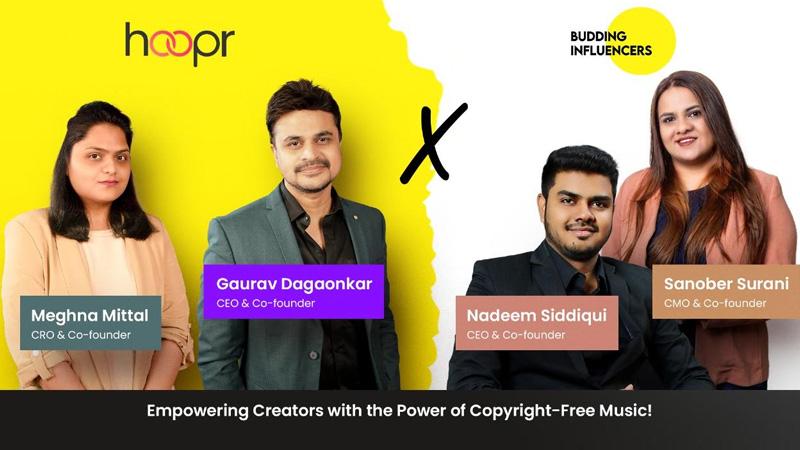
    MUMBAI: India’s leading copyright-safe music platform, Hoopr, has partnered with Budding Influencers to address one of the most pressing challenges in content creation—copyright compliance. This strategic collaboration aims to provide creators with legal music solutions and educational resources, ensuring a seamless and ethical content production process.

    Many content creators unknowingly use copyrighted music, exposing themselves and their associated brands to legal risks. According to Hoopr’s research, 87 per cent of Indian influencers have used unlicensed music and faced copyright claims, leading to penalties, content takedowns, or strained brand relationships. A recent study by the Advertising Standards Council of India (ASCI) revealed that 69 per cent of the country’s top 100 digital influencers failed to meet disclosure guidelines, including those related to music usage. These figures highlight the urgent need for accessible and compliant music solutions.

    With social media marketing budgets surging and the Indian creator economy growing at a CAGR of 18 per cent year-on-year, the demand for copyright-safe music has never been greater. Through this collaboration, over 400,000 influencers from Budding Influencer’s network will gain access to Hoopr’s extensive library of copyright-safe music, allowing them to enhance their content without legal concerns. The partnership will also roll out educational initiatives to simplify copyright laws and promote the ethical use of music in digital content.

    Hoopr co-founder & CEO Gaurav Dagaonkar commented, “We are excited to join forces with Budding Influencers to tackle these critical issues in content creation. By offering premium copyright-safe music alongside valuable educational resources, we are fostering a safer and more innovative ecosystem for creators.”

    Budding Influencers co-founder & CMO Sanober Surani echoed this sentiment, “Copyright violations have long been a challenge for influencers and brands. I recall an instance where a creator unknowingly used copyrighted music in a campaign, leading to a legal notice for the brand. This highlighted the urgent need for accessible, compliant music solutions. We are thrilled to collaborate with Hoopr to equip our creators with high-quality, legally safe music.”

    This partnership underscores a shared commitment to democratising access to essential resources and fostering a sustainable creator economy. By tackling copyright-related challenges at their core, Hoopr and Budding Influencers are empowering creators to innovate freely, without the risk of legal repercussions.
     

  • PPL & Novex: The music royalty collection question

    PPL & Novex: The music royalty collection question

    Mumbai: Are music royalty collecting agencies like Novex Communications and Phonographic Performance Ltd (PPL) entitled to collect performance royalties on behalf of their clients from organisations such as hotels and others? Well, the Bombay high court (court) has adjudicated (decision) that they are in a bunch of matters, namely Novex Communications vs Trade Wings Hotels Ltd, Comip suit No. 264 of 2022 and others (said matters), despite them not being registered as a copyright society. A single judge bench passed a detailed judgement on 24 January 2024 in favour of the two (plaintiffs).

    In 2022, the duo had filed a bunch of suits against various third parties (defendants) seeking injunctions against them from using the sound recordings, wherein the former own copyright by way of assignments from the respective producers (said songs), without obtaining licences from the plaintiffs.

    The defendants raised a preliminary issue that the PPL and Novex cannot carry on the business of licensing without being registered as a copyright society under section (s.) 33 of the Copyright Act, 1957 (“Act”).

    Rival contentions:

    Plaintiffs inter alia contended the following:

    (i) As per s.18(2), Plaintiffs being the assignees are the owners of copyright in the said songs. Further, as per  s.30, the Plaintiffs, being the owners / duly authorised agents of the owners, are entitled to grant licenses;

    (ii) Relying on compulsory license and statutory license provisions under s. 31A to D, Plaintiffs contended that these provisions do not mention copyright societies which implies that copyright licensing business need not be done only through a registered copyright society;

    (iii) Chapter VII relating to copyright societies which was introduced by 1994 amendment to the Act did not affect the rights of a copyright owner to issue licenses for its work. This is corroborated by s.34 of the Act which allows a copyright owner to withdraw itself from the copyright society. Thus, the copyright society provides an additional option to the owners to grant licenses through a copyright society in addition to (and not in exclusion to) issuing licenses on their own;

    (iv) S.33(1) of the Act which provides that no ‘person’ shall carry on the business of licensing without being registered as a copyright society does not include the ‘owner’ of a work. If ‘owner’ is deemed to be included within the term ‘person’, then s.30 which empowers an owner to issue license will be rendered negatory;

    (v) Two conflicting provisions (s.30 which entitles an owner to grant license and s.33 which entitles only a registered copyright society to grant license) should be reconciled by restricting each to its own object. Relying on the headings of s. 30, 33 and 34, Plaintiffs contended that all that is required is if a copyright society wants to do business of issuing licenses, then it must be registered as a copyright society as per s.33 and this does not curtail the owner’s right to license under s.30;

    (vi) The term ‘business’ in s.33 of the Act should be given a contextual meaning to read as ‘business of issuing licenses in respect of works which are not owned by such person’. If the term ‘business’ is given a wider meaning, then 99 per cent of the ownership rights will be taken away and the copyright owners would only be able to license their rights for philanthropy;

    (vii) Considering there is an apparent conflict between s.30 and 33 of the Act, s.30 is the leading provision and s.33 is a subordinate provision which must give way to s.30;

    (viii) The second proviso was needed since the Parliament was clear that s.33(1) did not prevent all owners including authors from licensing their copyrights for profit and since parliament wanted to draw distinction between the authors and the owners the second proviso became necessary. Hence it is specifically mentioned that licensing by the authors of the underlying works will only be done by the copyright society; ‘Parliament is deemed to know the law and therefore the fact that the Parliament has amended s.33(1) in 2012 by adding the second proviso shows that Parliament itself did not think s.33(1) barred every owner of a copyright from carrying on the business of licensing his works’.

    (ix) As per second  proviso to s.33(1), in case of underlying works forming part of sound recordings, the rights of owners to grant licenses have been taken away. Such a prohibition is not there for sound recordings. This means that rights of owners of sound recordings to grant licenses have not been curtained. With respect to Madras High Court order in Novex v DXC Technology (“DXC case”), the Madras High Court wrongly applied the second  proviso to sound recordings;

    (x) Defendants are rank infringers and they have no plausible defense;

    In response, the defendants inter alia contended the following:

    (i) The term ‘person’ in s.33(1) of the Act includes ‘owner’. Thus, without registration as a copyright society, no one can carry on the business of licensing;

    (ii) There is no conflict between s.30 and 33 of the Act. s.30 provides a right to an owner to grant license. Once the owner carries on business of licensing, then it has to first seek registration as a copyright society. Assuming there is any conflict, s.33 being a special provision must prevail over s.30 which is a general provision;

    (iii) S.33 does not take away the right of an owner to grant license as contended by the Plaintiffs. It merely regulates the same by way of providing an obligation to register as a copyright society;

    (iv) 1st proviso to s.33 which exempt owners in their ‘individual capacity’ from registration as a copyright society does not apply to Plaintiffs who are not acting in their individual capacity;

    (v) The assignment deeds in favour of the Plaintiffs are executed to circumvent the requirement of registration as a copyright society;

    (vi) Plaintiffs’ acts are in contravention of s.33(1), and therefore, they are not entitled to any reliefs from this Hon’ble Court;

    (vii) PPL was earlier registered as a copyright society and it is still trying to obtain registration. This shows that PPL is aware that it is required to be registered as a copyright society;

    (viii) If Plaintiffs’ contention is accepted, then s.33(1) would be rendered redundant;

    (ix) The law intends that there must be a single copyright society for one class of work to ensure a single window for end-users;

    (x) The law clearly seeks to address a mischief, i.e., of a person carrying on the business of licensing without regulation. Accordingly, Heydon’s Rule or Mischief Rule must be applied to suppress the mischief that was intended to be remedied, especially when Parliament has consciously made an amendment to the law;

    (xi) The Supreme Court’s decision in “ENIL v Super Cassette Industries Ltd”, the Parliamentary Debates and extracts from Copinger make it amply clear that the object of copyright societies is not just to promote rights of owners but to balance it with public interest by protecting the interests of users.

    Decision:

    After considering the rival contentions and provisions of the Act, the Court observed as follows:

       S.30 empowers an owner / duly authorised agent of an owner to grant license;

       The idea of a copyright society is to assist the owner and not take away rights from an owner.

       As per s.34(1)(b), an owner can either issue license through a registered copyright society or withdraw its authorisation to copyright society and grants license on its own;

       Chapter VII relating to copyright society does not take away the rights of owners to grant license. It only gives a choice to the owner to either exploit its copyright on its own or through a copyright society;

       The word ‘person’ in s.33(1) does not include the ‘owner’, otherwise s.33(1) would take aware the right of owner under s.30;

       S.33(1) applies to those entities which carry on the business of licensing of work which is owned by ‘others’;

       S.30 is the leading provision and s.33(1) is the subordinate provision which must give way to s.30;

       DXC case overlooked s.30 and wrongly applied second proviso of s.33(1) which relates to underlying works;

    In view of the above, the court held that the plaintiffs are entitled to carry on the business of copyright licensing without being registered as copyright societies. The court further clarified that the decision will also apply to ‘exclusive licensee’ as under s.54, the ‘owner of copyright’ also includes an ‘exclusive licensee’.

    Comments:

    The court has analysed the provisions of the act in detail and passed the decision on a long pending question. However, the decision is diametrically opposite to the detailed judgment in DXC case against which appeals are pending before the division bench of the Madras High Court. It remains to be seen if the decision is carried in appeal. Considering the differing stands taken by the courts, it would be in the interest of all that the question is tested and answered once and for all, by the Hon’ble Supreme court.

    Written by Anushree Rauta – equity partner- head of media and entertainment practice, Shwetank Tripathi – associate partner, Shrija Verma- associate, and Savan Dhameliya – associate.

    This is an article sourced from the Indiantelevision.com group legal representative firm, ANM Global, and the group need not subscribe to the views contained in it.

  • Hoopr.ai launches ‘Originals’, makes it easier for music artists to get discovered

    Hoopr.ai launches ‘Originals’, makes it easier for music artists to get discovered

    Mumbai: Hoopr, a music licencing company, will feature artists from diverse backgrounds, professions, and other walks of life through Hoopr Originals. The idea is to help discover undiscovered talent in India.

    Hoopr will also provide the artists with an additional chance to unlock revenue through sync. Their original tunes, which will be on Hoopr, will be accessible for users to licence and use in their videos, vlogs, and other content. In addition to helping them spread their music globally, the site will also help them get discovered.

    Hoopr CEO & co-founder Gaurav Dagaonkar said, ” With Hoopr and Songfest, we have worked with numerous celebrities over the past few years, such as Shaan, Divya Kumar, Ash King, Monali Thakur, Mame Khan, Shamali Kholgade, and several large influencers too. However, as we have been building Hoopr over the last eight to nine months, we’ve seen incredible depth and diversity in terms of new songwriters, composers, music creators, and producers across India.

    “So, we felt that Hoopr must be a platform that helps project this talent and gets these amazing artists discovered. Hoopr Originals is that platform, which will help new artists who are creating tracks for Hoopr get exposure in the industry. These artists are creating songs that encompass many languages and bring with them a unique blend of musical influences. An example of us doing this recently includes the song, Kyun main Kahoon by Abhinav Singh. Abhinav is a great singer songwriter, but he also holds an important role in the corporate world. There are many such talented individuals across the country, and we’re excited to produce their music and get it out there.”

    In addition to releasing songs by Abhinav Singh, Hoopr has also released songs featuring artists such as Anirudh Bhola and Adarsh Shinde and paved the way for up-and-coming artists to collaborate with established names in the industry such as Mame Khan. Furthermore, Hoopr will be releasing songs that feature artists as diverse as Rupinn Pahwa, Shubhangi Tewari, Rishi Pathak, and Fuzzculture in the near future.

    Dagaonkar adds, “We have worked on creating music videos with Hoopr originals artistes and will continue to do so. Additionally, we’re also excited about distributing these tracks worldwide.”

    Hoopr is a music licencing platform that provides music that can be used across a wide variety of content, including videos and vlogs by individual creators, professional ads, TV series, movies, live game streaming, etc. The Mumbai-based company provides music that has all the appropriate licences, so anyone who uses it doesn’t have to worry about royalties, copyright issues, etc. Crucially, this means that using music from Hoopr helps users avoid takedowns and lawsuits.

    The platform features a variety of music, from contemporary Indian pop to traditional Indian classical, from electronica to music that is unique to the various rich cultures that exist across India. Subscribers to Hoopr can access 25,000 music tracks and 3,000 sound effects from artists all over India. The music on Hoopr is also completely exclusive to the platform.

    It is noteworthy to mention that many of the films that recently won awards at the India Film Project used songs from Hoopr. The artists of these songs got their due credit and recognition, which might not have happened if they weren’t on the platform.

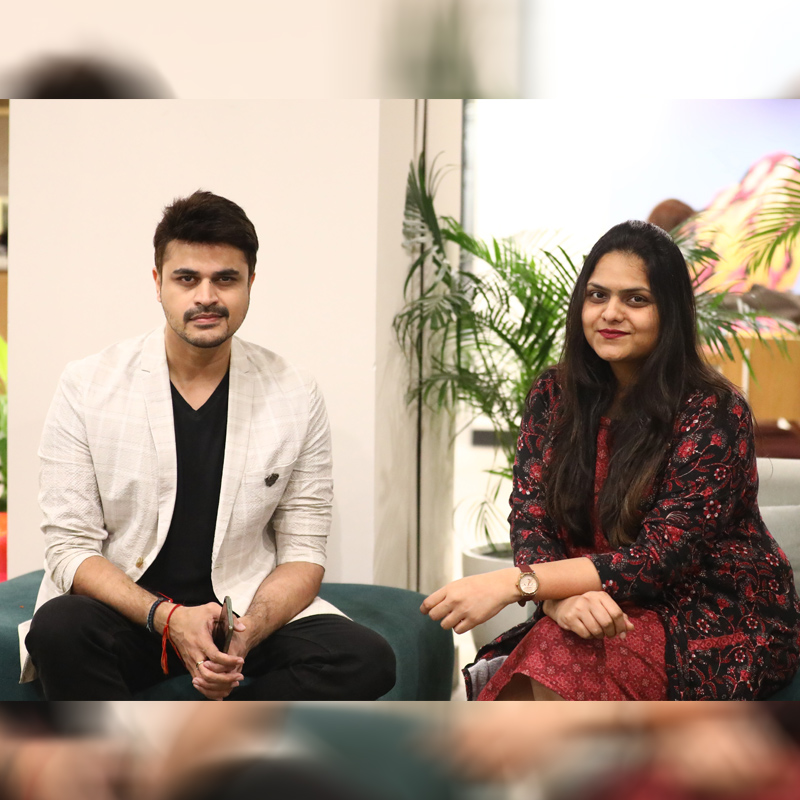
    Dagaonkar, an alumnus of IIM Ahmedabad, and Meghna Mittal, formerly of Hubilo and Yessworks, launched the company in 2021, which raised $1.5 million in its seed round in December 2021.

    Hoopr added that it is seeing 100 per cent month-on-month growth in the number of users since its launch, and these users include content creators, filmmakers, enterprises, and brands across India. Some of its users include content creators such as Ashish Vidyarthi and Tanya Khanijow, along with brands such as New Jagran Media.

  • Music licensing platform Hoopr.ai launches ‘#HarGharCreator’ campaign

    Music licensing platform Hoopr.ai launches ‘#HarGharCreator’ campaign

    Mumbai: Hoopr.ai is looking to solve a billion-dollar problem faced by content creators and businesses every day, like discovering and licencing the right music for their videos. India’s 80 million+ creator community comprises vloggers, podcasters, gamers, filmmakers, live-streamers, and influencers creating audio-visual content on a variety of topics. With over 25,000 tracks and sound effects, Hoopr.ai is not only enabling these creators to get specific music for their needs, but also helping them avoid copyright strikes and legal issues.

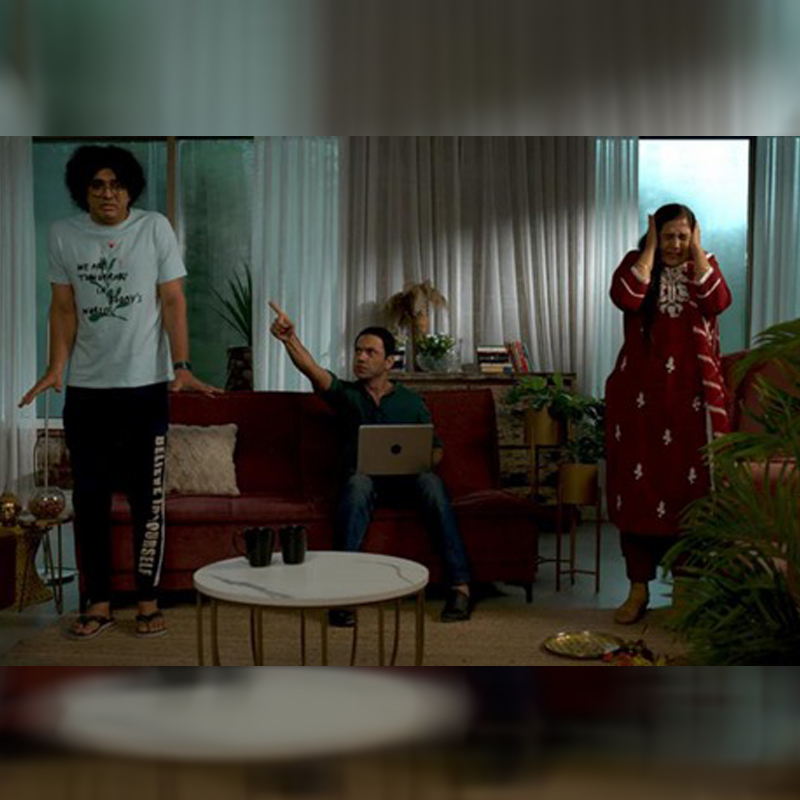
    Furthermore, what’s also changing is the mindset with regard to content creation, with more people embracing it as a career choice. And that is exactly what the ad captures. In the ad, a young college student can be seen telling his strict father that he doesn’t want to be an engineer but rather a content creator. The reaction of the father makes the ad a must-watch for all content creators and their families.

    Hoopr.ai co-founder & CEO Gaurav Dagaonkar said, “We are excited to roll out the “#HarGharCreator” campaign as part of the Hoopr platform launch. A creator is now emerging in nearly every home across India, and we want to help them find phenomenal Indian music for their videos. Apart from individual creators, the music on Hoopr is also being used by brands, enterprises, and OTT platforms, as it is cleared for use and free from any copyright strikes or takedowns.”

    Hoopr.ai secured a seed funding of $1.5 million in December 2021 from investors such as Venture Catalysts, 9Unicorns, Inflection Point Ventures, Ashneer Grover, Sahil Barua (Delhivery), Anshoo Sharma (Magicpin), etc., and has since grown strongly. The company has built India’s first and biggest music licencing marketplace that hosts thousands of original music tracks in Hindi, English, Punjabi, and other regional languages. The library boasts tracks by popular artistes such as Monali Thakur, Ash King, and Nikhil D’souza, along with numerous regional artistes. Within a few weeks of going live, Hoopr.ai has got over 15,000+ creators using the platform, including creators such as Ashish Vidyarthi, Tanya Khanijow, and City Ka Theka.

    Speaking at the campaign launch, Hoopr.ai co-founder & CMO Meghna Mittal said, “The creator economy is primed more than ever to grow, and we’re excited to support creators across India. There’s also increased awareness about the need for sourcing licenced music since awareness of issues such as copyrights has increased. Apart from helping creators, Hoopr will also enable music creators to unlock a new source of revenue for their music.”

    The creator economy, considering the pace at which it is growing, is set to become a major contributor to the Indian economy. At this point, around six lakh people make a living directly through monetary gains associated with the creator ecosystem, and this will continue to rise. The creator economy rose from $1.7 billion in 2016 to $6.5 billion in 2019 and to $9.7 billion in 2020. This growth has seen a continuous increase even during Covid, with many people becoming full-time creators across platforms such as YouTube, Instagram, Facebook, and other short video apps.

    With the “#HarGharCreator” campaign, Hoopr.ai aims to change the way creators are perceived. The company aims to build more tools that help creators make better content while at the same time enabling musicians to monetise their music better.