Tag: Music industry

  • Desi Trill names Ruth Mohinani as head of operations in India

    Desi Trill names Ruth Mohinani as head of operations in India

    MUMBAI: Desi Trill, the trailblazing global movement reshaping South Asian music and culture, has announced the appointment of Ruth Mohinani as its head of operations in India. With over 17 years of experience in television, music, and sports, spanning content strategy, IP development, A&R, sync, and licensing, Ruth is set to supercharge Desi Trill’s footprint in one of the world’s most electrifying music markets.

    As the driving force behind Desi Trill’s expansion in India, Mohinani will spearhead collaborations, curate groundbreaking events, and propel South Asian artists onto the global stage.

    Expressing her enthusiasm for this pivotal role, Mohinani shared, “Desi Trill is more than a movement—it’s a cultural shift. I’m honored to take on this role and work with a team that’s dedicated to showcasing south Asian artistry worldwide. Desi Trill’s vision aligns with my own—to empower artists, build meaningful IPs, and create content that resonates across cultures. The journey ahead is exciting, and we’re just getting started.”

    Echoing this excitement, Desi Trill co-founder Shabz Naqvi stated, “Ruth’s entry marks a pivotal moment for us in India. Her impressive track record and deep understanding of the industry make her ideal to drive our mission of creating a new genre and building south Asian talent globally under our Brown Is Everywhere community activations. We’re excited to have her on board in this journey.”

    Prior to joining Desi Trill, Mohinani served at Rolling Stone India as SVP – content strategy, where she played a key role in shaping content direction and artist engagement. Before that, she led Indian hip-hop’s meteoric rise as general manager (A&R) at Universal Music India, overseeing record-breaking streaming successes through Mass Appeal India and Def Jam India.

    Her illustrious career also includes pivotal leadership roles at NBA India, Viacom18 (Vh1 India & Comedy Central India), and Zee Trendz/Zee Café, where she pioneered IP development, content programming, acquisitions, talent management, and major events. Beyond corporate leadership, Mohinani remains a steadfast mentor, guiding emerging artists as they navigate the ever-evolving music industry.

    With this strategic appointment, Desi Trill is doubling down on its mission to connect South Asian sounds with global audiences, expanding its reach and influence across India and beyond.
     

  • Music industry to hit $184.69 billion by 2029, riding the digital wave

    Music industry to hit $184.69 billion by 2029, riding the digital wave

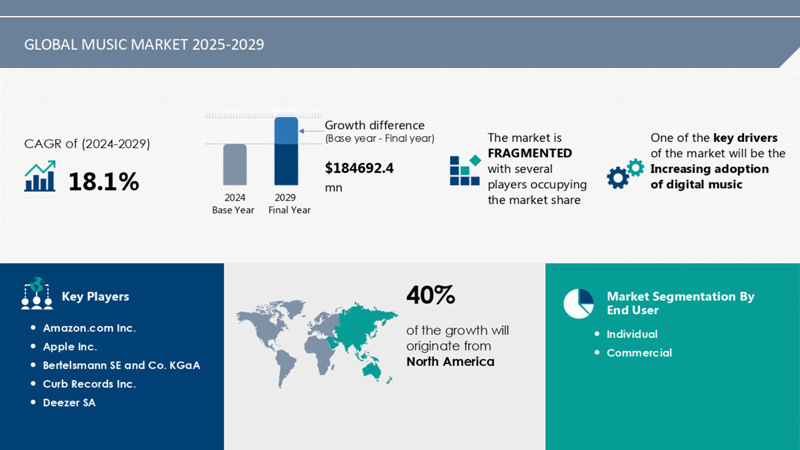
    MUMBAI: The music industry is tuning up for a record-breaking encore, with projections forecasting a $184.69 billion leap in market value between 2025 and 2029. According to Technavio, the industry’s setlist for success includes digital music adoption, AI-driven innovation, and the ever-growing streaming revolution. With a CAGR of 18.1 per cent, the industry is not just keeping up with the beat—it’s rewriting the entire score for how we consume music in the digital age.

    Streaming services and AI

    Gone are the days of cassette tapes and MP3 downloads. The streaming era is in full swing, with platforms like Spotify, Apple Music, Tencent Music, and YouTube Music leading the charge. In 2024, streaming contributed to a significant chunk of the industry’s revenue, with consumers increasingly opting for on-demand access to their favourite artists rather than owning physical copies or digital files.

    AI is also playing maestro, transforming music discovery, personalisation, and even composition. From playlist curation to predictive analytics for record labels, AI-driven models are rewriting the rules of engagement between artists and audiences. As businesses fine-tune algorithms to keep listeners hooked, the industry continues its transition towards a more data-driven, user-centric model. AI is even entering the creative process, with some companies experimenting with AI-generated music compositions, raising both excitement and concerns about the future of human artistry in the industry.

    Where is the music industry humming the loudest? North America leads the symphony, contributing 40 per cent of the global market share, thanks to a massive subscriber base and an appetite for premium content. Europe, APAC, south America, and the middle east & Africa follow suit, each playing a crucial role in the global expansion of streaming services.

    Key markets driving growth include the United States, Germany, Canada, the United Kingdom, China, France, Japan, South Korea, Italy, and the Netherlands. These regions are witnessing a spike in digital music consumption, boosted by faster broadband speeds, affordable smartphones, and a younger, tech-savvy audience. The rise of smart speakers and voice-assisted technologies like Amazon Alexa and Google Home has also contributed to the seamless integration of music into daily life.

    Music Market Scope
    Report Coverage Details
    Base year 2024
    Historic period 2019 – 2023
    Forecast period 2025-2029
    Growth momentum & CAGR Accelerate at a CAGR of 18.1 per cent
    Market growth 2025-2029 $ 184692.4 million
    Market structure Fragmented
    YoY growth 2022-2023 ( per cent) 15.6
    Regional analysis North America, Europe, APAC, South America, and Middle East and Africa
    Performing market contribution North America at 40 per cent
    Key countries US, Germany, Canada, UK, China, France, Japan, South Korea, Italy, and The Netherlands
    Key companies profiled Amazon.com Inc., Apple Inc., Bertelsmann SE and Co. KGaA, Curb Records Inc., Deezer SA, Kobalt Music Group Ltd., NORTHERN MUSIC Co. Ltd., Pioneer Music Co., Sirius XM Holdings Inc., Sony Group Corp., Spotify Technology SA, Tencent Music Entertainment Group, THEME MUSIC Co. Pvt. Ltd., TIDAL, Universal Music Group N.V., Vivendi SE, Warner Music Group Corp., Yamaha Corp., YouTube, and Zee Entertainment Enterprises Ltd.

    Industry heavyweights? The music industry is no longer just about record labels. Today, it’s a battlefield where tech giants and traditional players are battling for dominance. Key industry movers include Amazon, Apple, Warner Music, Universal Music Group, Spotify, Tencent Music Entertainment, and YouTube, among others.

    Strategic alliances, mergers, and acquisitions have become the name of the game, with companies aggressively expanding their footprint. Whether it’s Amazon Music integrating voice-activated streaming with Alexa or Spotify’s push into podcasting, innovation is at the heart of market competition. Additionally, artists are increasingly taking control of their own music distribution, bypassing traditional labels in favor of independent digital distribution platforms, enabling them to retain a larger share of their revenue.

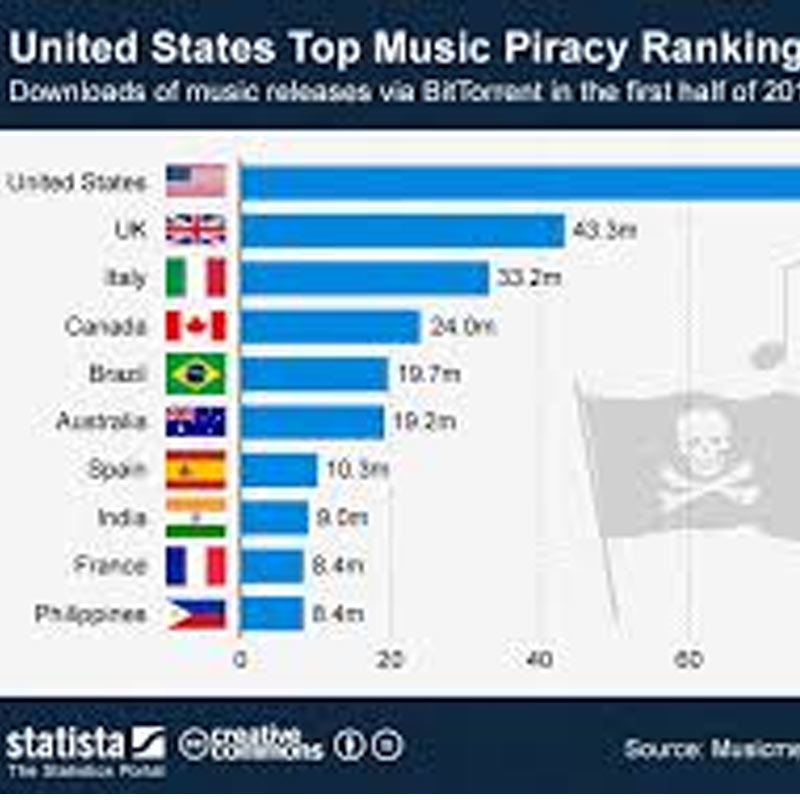
    Now despite the roaring success of digital music, challenges persist. Piracy remains a major headache, especially in regions where copyright enforcement is weak. Countries like Portugal, Spain, and the Netherlands are grappling with rampant illegal downloads, impacting revenue streams for artists and labels alike. Efforts to combat this include advanced watermarking technologies and blockchain-based rights management systems, which help trace music usage and ensure fair compensation.

    Another hurdle is the intensifying battle between traditional record companies and digital platforms. While streaming services provide unparalleled reach for artists, they also disrupt conventional revenue models, raising concerns over fair compensation and artist royalties. Some artists have voiced frustrations over the paltry earnings from streaming platforms, prompting new discussions around fairer pay structures and potential regulatory intervention.

    Future trajectory? 

    Looking ahead, the music industry is expected to lean further into AI, metaverse concerts, and blockchain-powered rights management. Live performances and immersive digital experiences are set to be the next frontier, allowing fans to engage with their favourite artists in new and exciting ways. Some companies are already developing virtual concert venues in the metaverse, enabling artists to perform for global audiences without the need for physical tours.

    Additionally, NFTs (non-fungible tokens) are emerging as a revolutionary way for artists to monetise their music, offering exclusive digital collectibles, album releases, and even fractional ownership of song royalties. These blockchain-based assets provide a new revenue stream, reducing reliance on traditional streaming platforms and giving fans unique ways to engage with their favorite musicians.

    As the industry dances to the rhythm of digital transformation, one thing is certain: music consumption will never be the same again. Whether through AI-generated beats, VR-powered gigs, or hyper-personalised playlists, the future of music is as thrilling as its past. With constant innovation, the industry is ensuring that music remains an integral part of people’s lives, adapting to changing consumer behaviors and technological advancements at an unprecedented pace.

  • AI, Hip-Hop, and the Casino Effect: The Future of Music Production

    AI, Hip-Hop, and the Casino Effect: The Future of Music Production

    Artificial Intelligence has emerged as a transformative force in various industries, especially the creative sectors. For instance, movie production has taken a turn for greatness with the advent of CGI, deep fake technology, and AI-driven animation. The music industry is also not left out, with AI enhancing efficiency and automating repetitive tasks. 

    AI is beginning to play a pivotal role in how music is created, distributed, and consumed. For instance, the “casino effect” — how digital platforms and algorithms influence our decisions — has also started reshaping the music production landscape. So, don’t be surprised that AI and the casino effect are pushing the boundaries of what’s possible in hip-hop.

    Areas Where AI and Casino Effect Impact the Music Industry

    Do you remember what takes you to the casino or makes you click the visit website button to access your favourite online casino games? That is probably the thrill of winning, the immersion of getting engaged with your favourite games, the fulfilment of taking a challenge, or all of these and more. 
    The casino uses unpredictability to create immersive games for thrilling and engaging rewards. So, the music industry has taken a cue from this. Various aspects of music production use the casino effect to boost efficiency and dynamism. Some of the parts of music production where AI and the casino effects are making the waves include:

    ● Song composition and writing;
    ● Sound design and audio effects;
    ● Song mixing and mastering;
    ● Music recommendation and recovery;
    ● Music marketing and distribution;
    ● AI-generated music video and visual effects.

    Therefore, AI is involved in every aspect of music production and usage. It plays a huge role in the industry’s emerging trends, especially hip-hop music.

    The Outcome of AI and the Casino Effect on the Music Industry

    AI is increasingly being integrated into the music production process, offering tools that can assist producers, beatmakers, and artists in creating music. 
    While people using AI to produce songs can program it to follow some commands, it can also come up with some randomness, just like in the casino. This creates a thrill and can help artists discover creative breakthroughs that would not have otherwise been possible in the traditional music landscape. Below are some notable outcomes of AI and casino effect on the music industry:

    Personalisation and Adaptive Music

    AI can analyse users’ preferences and make data-driven decisions. As such, it can easily create and suggest music and elements tailored to users’ needs, enabling the producer to make the needed music. With such a level of personalisation, users become more committed, increasing emotional connection and engagement, just like the casino tailoring experiences to its users’ needs. 
    Also, AI has become increasingly adaptive, and it can make real-time changes to songs to suit users’ needs, preferences, moods, and tastes. As such, the music stays fresh in demand.

    Enhanced Emotional Engagement

    The popular belief is that the advent of AI leads to the loss of human touch in many industries and sectors. However, its advancement in understanding and working with people’s emotions can never be denied. 
    Many people now use wearable devices to store data about their moods and emotions, from where AI can pick and store data and eventually make songs for their enjoyment. It can also make music to target various emotional responses and needs, overall personalising the songs for the listener’s greatest needs.

    Optimising Sound Design

    The soundscape has totally transformed from what it used to be. AI can create complex sounds that captivate the users and have all the finer details taken care of. AI can also capture and ensure proper sequences of sound-making elements, including melody, rhythm, and arrangements.

    Data-Driven Hit-Making

    AI helps make games that appeal to emotions and uses available datasets to suggest hit songs and enhance song production to give the best quality. It analyses hit songs for producers, giving them insights into how to make the best songs for their audience. Also, producers can easily predict the songs and elements that are received by the audience. Many casinos have also used the same tactic to know what games to produce or prioritise, making the business soar.

    Interactive and Gamified Music Experiences

    Music is now beyond the game. Producers can create gamified music structures that enable users to get more involved in music selection and production. The casino has a long reputation for being a customer-centric landscape, so the music industry adopting such a casino effect is a major transformation.

    How Will AI and the Casino Effect Drive the Future of Music Production?

    AI and the casino effect are currently storming the music production landscape. However, these two are seemingly going to be around for a while. In fact, the future holds more than we currently see. Not only will these individual factors affect music production on their own, but there are also possible convergences of their effects, leading to bigger revolutions. The table below gives an overview of what to expect.

    Aspect

    The Role of AI

    Casino Effect

    Convergence of AI & Casino Effect

    Music Creation

    Automated composition and production

    Emphasis on shorter, hook-driven tracks and focus on instant gratification

    AI predicting engaging content based on listener data

    Personalisation

    Tailored music experiences based on user data

    Predictive algorithms to keep users engaged

    Custom playlists or songs created to retain users

    Music Consumption

    AI-curated playlists and predictive content delivery

    Gamification of music platforms and reward-based listening systems

    Dynamic recommendations to maximise engagement

    Monetisation

    Enhanced advertising through AI

    Microtransactions and virtual rewards

    New subscription models offering personalised experiences

    Cultural Impact

    Shift in music education focus toward AI tools

    Potential decline in long-form music formats

    New patterns of music discovery and consumption

    Challenges and Considerations of AI and Casino Effect on Music Production

    Undoubtedly, AI and the casino effect have influenced music production positively in many ways. However, stakeholders and other partakers of the music industry have some concerns as regards the challenges AI and the casino effects in the music industry pose. Below are notable challenges and considerations of AI in music production:

    Creative Homogenisation

    AI works with data and usually relies on data analysis and existing datasets to generate new content, including songs. There have been concerns about music sounding repetitive and homogenous because AI relies on the existing data set to produce new ones. Also, AI might remove genuine originality by prioritising trends and patterns over genuine innovation.

    Decreased Motivation for Artists

    While AI and the casino effect can help artists’ innovations, they can also decrease the artist’s innovation to produce. Instead, artists can be driven by instant gratification, preventing them from having the drive to take creative risks.

    Shortened Attention Span

    The casino effect in music is believed to limit attention span. Instead, there is more dopamine-triggered consumption of music. Just like gambling is designed to keep players engaged and immersed, the casino effect in music production focuses on creating catchy and short music. While this is great, it can decrease the listener’s overall attention span and reduce their connection to the lyrical landscape.

    Ethical Concerns

    Ethical concerns have arisen about the use of AI in various fields, and music production is not left out. Many people have questioned the possibility of deep fakes, with AI creating songs with artists’ voices without permission. This is especially possible since they work with available datasets. Not only can this create a tedious ethical brawl, but it can also lead to a messy legal battle.

    Conclusion

    The casino effects are no doubt welcome in various sectors. With the thrill of unpredictability, immersion, and personalisation, everyone wants a taste of what casino lovers get without even going to the casino. Fortunately, music has recreated this thrill with AI as its backbone.

    The casino effect is most especially obvious in the Hip-Hop genre. It enables personalisation, enhanced engagement, optimised sound design, and automated and creative songwriting and composition, among other benefits.

    AI and casino effect will have more to gain in the future, with each functional individually and their convergence even more powerful. While there are concerns, further work and integration will address them quickly.

    Disclaimer: This article does not have journalistic/ editorial involvement of indiantelevision.comindiantelevision.com group or its websites does not endorse/ subscribe to the contents of the article/advertisement and/or views expressed herein.

    The reader is further advised that Online Casino, Betting, Online Gaming , Crypto products, Financial Investments/Engagement , NFTs, Products associated with health, wellness, and food are unregulated and can be highly risky. There may be no regulatory recourse for any loss from such transactions or risk associated with health conditions.

    Indiantelevision.com group shall not in any manner, be responsible and/or liable in any manner whatsoever for all that is stated in the article and/or also with regard to the views, opinions, announcements, declarations, affirmations etc., stated/featured in the same. The decision to read hereinafter is purely a matter of choice and shall be construed as an express undertaking/guarantee in favour of indiantelevision.com (indiantelevision.com group) of being absolved from any/ all potential legal action, or enforceable claims. The content may be for information and awareness purposes and does not constitute financial advice. 

  • Galaxy Racer and Sunburn brings a blend of music and esports

    Galaxy Racer and Sunburn brings a blend of music and esports

    Mumbai: India’s leading transmedia gaming company, Galaxy Race, has partnered with Asia’s premiere EDM festival, Sunburn, to create a unique blend of music and esports for gamers from across the country as the premier Music Carnival comes on board as the official venue partner of the Valorant India Invitational, which will take place between 18 to 20 November.

    Sunburn is one of the largest music festivals in the world, and this association with Galaxy Racer is their very first venture in the esports industry.

    This first-of-its-kind partnership will help esports profoundly as it gets influenced by the evolving narrative of pop culture alongside competitive gaming.

    This is the first-ever international Valorant tournament that is taking place in the whole of South Asia and India, in which the biggest names from the Valorant world, such as Paper Rex, Team Secret, RRQ, etc., as well as some of the top Indian stars, will be competing under one roof.

    According to the 2021 Deloitte’s Digital Media Trends Fall Pulse Survey, 42 per cent of gen-z gamers listened to music other than gaming ones while playing, whereas 22 per cent of the sample size shared music recommendations while gaming with other online gamers, and 11 per cent showed the trend of attending live music concerts inside a gaming world venue.

    These statistics are a testament to the significant connection that gaming and music have, making Galaxy Racer’s vision of blending the adrenaline rush of an esports LAN event with the exhilarating and exciting experience of music and setting a strong blueprint for initiating a new chapter in the history of gaming and hosting tournaments in the country.

    Speaking of the collaboration, Galaxy Racer chief gaming officer Siddharth Ravishankar said, “Music and gaming are two core components that have an immense influence on gen-z, and since merging them has yielded huge success globally, we wanted to capitalise on the untapped opportunity in India. Having Sunburn as the official venue partner fortifies the Valorant India Invitational, and it further propagates the impact that this tournament can have on Indian gamers. This partnership fulfils our aim of blending premiere Esports events with music festivals, as the goals and vision of both companies align perfectly in dishing out an experience alongside competitive gaming. Fans will have multiple options for attending either just the finals or both the finals and the music festival. We are looking forward to this remarkable blend and hope gamers and music aficionados can equally enjoy the experiences.” 

    Expressing his thoughts on the collaboration, Spacebound CEO Karan Singh asserted, “Collaborating with Galaxy Racer gives us an opportunity to enter the gaming industry, which is on the rise in India. Music is a part of gaming & esports, and this is just the right synergy for us. We are always on the lookout for unique distribution, and this is one of them to engage our fans with this unique blend.” 

  • Believe India ropes in Pitchfork Partners as strategic communication counsel

    Believe India ropes in Pitchfork Partners as strategic communication counsel

    Mumbai: World’s leading digital music company Believe India on Tuesday appointed Pitchfork Partners Strategic Consultancy LLP as its communication counsel. The agency will manage its brand strategies in India.

    Pitchfork will work closely with Believe India to strengthen its brand awareness and engagement for its services across – artist services, label and artist solutions, TuneCore, and Ishtar with relevant stakeholders across the country. It will also drive and support Believe’s mission to develop independent artists and labels with their unique offerings and solutions, at each stage of their career and development, with respect, fairness, and transparency.

    Since entering the market in 2013, Believe India has become one of the leading players in the Indian music market through organic growth and acquisitions. Believe acquired Venus in 2019 (renamed Ishtar in 2021) and recently acquired a majority stake in Think Music, a leading south Indian-based music label to strengthen its position in the region. The group now operates the full range of solutions from TuneCore to artist services to develop local independent artists in one of the world’s fastest-growing recorded music markets.

    Pitchfork Partners is a consulting organisation working to strengthen the reputation of its clients. They consider themselves a reputation warrior, helping scale leading music companies by providing tailored solutions for the artists, and labels, with the help of marketing and communication veterans. This collaboration will be beneficial since Pitchfork Partners are experts in the entertainment and music space and will only help Believe reach out to the targeted audience.

    Speaking of this association, Believe India director Vivek Raina said, “We are excited with our association with Pitchfork Partners. Their experience and understanding of the industry align with Believe’s objectives and will help us reach emerging independent artists and labels in the digital world. We are focused on building a community in which independent artists and labels will get a platform and partnership to build their fanbase and enhance their revenues in the digital world.”

    Pitchfork Partners co-founder Jaideep Shergill said, “We are delighted to work with Believe India, given its leadership position in this competitive industry. It’s a great opportunity for us to drive their messaging across audiences in the country. We look forward to reaching new heights with Believe.”

  • IPRS launches awareness drive on music licensing

    IPRS launches awareness drive on music licensing

    Mumbai: The Indian Performing Right Society (IPRS), India’s only copyright society representing authors, composers, and publishers of music is commencing a three-month-long campaign ‘License Liya Kya’ to educate music users on the different licensing needs and kinds of music licenses available.

    It will highlight the benefits of music licensing and the ease of procurement through a copyright society like the IPRS. Topics covered will include music licensing scenario in India, why music licensing matters, and the future of music licensing in the digital era. The campaign will witness talks with industry insiders and experts via virtual events, influencer programmes, and awareness-building initiatives.

    “We are glad to announce this campaign which will not only bring in awareness but will also highlight the importance of music licensing. We have always believed in creating a secure community for authors, composers, and music publishers,” said IPRS chairman Javed Akhtar. “Through this campaign, we aim to bring about gradual transformation and a mindset shift towards respecting and acknowledging ‘Fair Pay and Fair Play’ of Music. We have received a great response for our previous campaigns, and we look forward to receiving wholehearted support for this initiative as well.”

    According to the Music Consumer Study 2018, the old licensing process or the physical licensing process contributed only 10.7 per cent to the streaming revenue of the overall market. Only five per cent of the businesses took a license for the public performance of the music they play. However, after the introduction of digital licenses where people can take online licenses as well as can make online payments, digital sales began contributing 78.5 per cent to the revenue.

    As per a recent study by FICCI & EY Indian consumers spent 21.5 hours per week listening to music in 2020. While India’s average of 21.5 hours/week is higher than the global average of 17.8 hours/week, royalties to authors and composers make up only a small percentage of the media and entertainment industry’s total revenue.

    The objective of the IPRS with this campaign is to drive awareness towards Fair Pay and Fair Play in music by emphasising on the significance of abiding by licensing norms. The IPRS, registered under section 33 (3) of the Copyright Act, 1957 is entitled to grant licenses for usage of musical and literary works of its members for public performance and/or communication. There are different categories of tariffs depending on the premise, event, and medium – television, radio, internet streaming, etc where such musical work is used.  IPRS currently administers two types of licensing rights namely performing rights and mechanical rights.

    “With the launch of this campaign, we aim to create awareness on licensing and simultaneously felicitate our partners who have extended their support in endorsing fair trade music and upheld transparent and ethical value chain for authors, composers, and all music rights holders,” stated IPRS CEO Rakesh Nigam. “Through this initiative, IPRS would educate, inform and reinstate the need to listen to licensed music, thereby paving the path towards a flourishing future for the music industry and its creators.”

    Some of the earlier campaigns executed by IPRS include ‘Credit The Creators’ (addressing the need to acknowledge and credit creators of music), ‘Know Your Music’ (an initiative to promote different genres of Indian music and initiate transformation in the way audience engage with music) and ‘Her Music’ (addressing lack of women representation in the music industry and creating a forum to empower, encourage and celebrate women in music).

  • Kobalt becomes the first international publisher to sign with IPRS

    Kobalt becomes the first international publisher to sign with IPRS

    Mumbai: Indian Performing Right Society Limited (IPRS), the copyright society in India, has announced its association with international music publisher Kobalt. 

     
    Kobalt is the first international publisher to sign with IPRS since its re-admittance into the International Confederation of Authors and Composers Societies (CISAC) as a full member in December 2018. The company has entered the Indian music publishing market via a sub-publishing deal with Turnkey Music & Publishing Pvt Ltd.

    IPRS will administer both the performing and mechanical rights of the international catalogues signed to it, which means that all rights licensed to audio streaming services, FM and AM radio, and public performance can be licensed in totality. For synchronisation licenses to television and OTT audio-visual platforms, the publishers will continue to issue licenses, the organisation said in a statement on Monday.

    Speaking on the development, Turnkey Music & Publishing Pvt Ltd’s MD, which represents Kobalt’s catalogue in India, Atul Churamani, said, “This has taken a long time coming and we are delighted that finally the IPRS is administering the international works we represent for India. You can’t be a publisher of foreign works in any country and not be a part of the performing rights society. This association will open up revenue streams for the Kobalt, Fairwood, and other catalogues that we represent.”

    IPRS CEO Rakesh Nigam said, “We are very glad to have an international publisher like Kobalt onboard. With international publishers joining us it would help us enhance the valuation for all the stakeholders, including them. The streaming platforms have witnessed an upsurge in the consumption of international content. With associations similar to the one we have entered into with Kobalt, IPRS will now be able to derive the desired value for the international works in India as so far we haven’t been licensed to do so” he further added “We are open for negotiations with publishers to suit the needs. IPRS would like to sit across the table, come to an agreement and then make the necessary adjustments or changes as required.”

    Kobalt Music Publishing Limited represents over 25,000 songwriters, 600 publishers, and 20,000 independent artists like Dua Lipa, The Weekend, Marshmello, Diplo, Childish Gambino, Dave Grohl, the Foo Fighters, Enrique Iglesias, Lauv, Pitbull, and Lewis Capaldi as well as legends like Paul Mc. Cartney, Elvis Presley, Bob Marley, Stevie Nicks, and Max Martin.

  • IPRS kicks off ‘IPRS for Fair Music’ campaign

    IPRS kicks off ‘IPRS for Fair Music’ campaign

    New Delhi: The Indian Performing Right Society (IPRS), representing nearly 6,500 authors, composers, and publishers from all over India, has launched the ‘IPRS for Fair Music’ campaign to strengthen the music ecosystem in the country.

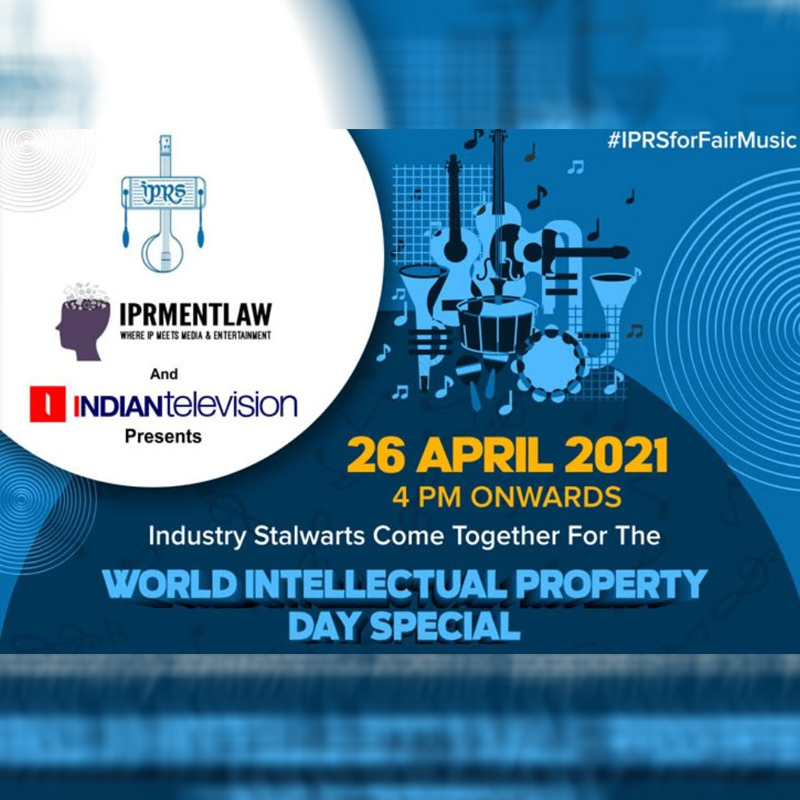
    The week-long campaign that began on 26 April will witness a slew of activities including panel discussion, virtual knowledge sessions, felicitation of fair music partners to create awareness about the need to safeguard the creators’ right to fair compensation.

    “At IPRS, we strongly advocate why fair trade of music is critical and how it will help the original creators. Digitisation and other technological advancements have empowered creators and taken the music far and near. But at the same time, the creator stands a higher risk of his/her creative ideas getting copied. So, there is a need to protect the rights of the music right holders,” said IPRS CEO Rakesh Nigam. “We are pleased to launch this campaign to spread this message across platforms. Fairtrade music is a practice that needs to be accepted and followed in India.”

    On Monday, IPRS organised a virtual panel discussion in partnership with Indiantelevision.com and Iprmentlaw, which focused on the challenges and opportunities and the need to build a healthy ecosystem for music in India.

    It will also organise ‘Know Your Rights’ – a virtual knowledge session with eminent lawyer Ameet Datta. There will also be a session on music licensing and fair pay for music to address the frequently asked questions about different licensing options based on usage and platform. IPRS will also felicitate its fair music partners, for endorsing fair trade music.

    “The exploitation of any creative work is entitled to be duly credited and remunerated. We need to build more awareness about fair pay and fair play of music,” said noted lyricist, poet and screenwriter Manoj Muntashir.

  • Intellectual Property Rights is the oxygen for creators, say industry experts

    Intellectual Property Rights is the oxygen for creators, say industry experts

    MUMBAI: As we move towards a content-based economy, the question of ownership has taken centre-stage. With a wide gamut of content being produced and consumed, establishing and protecting Intellectual Property (IP) rights is essential for content creators and the businesses that host/promote it.

    To drive forward the conversation around licensing and paid consumption of music in India, The Indian Performing Right Society Ltd. (IPRS) in association with Indiantelevision.com and Iprmentlaw organised a panel discussion hosting eminent members of the Indian music industry. The panel discussion was moderated by Indiantelevision.com founder, CEO & editor-in-chief Anil Wanvari and Iprment Law founder Anushree Rauta. 

    The panelists unanimously suggested that the royalty and copyright act in India needs serious revision. Industry experts who took part in the discussion claimed that proper implementation of the copyright act in India could benefit music creators financially, as most of their scores are being aired on television channels, OTT, radio, and on other programs without royalty. 

    Intellectual Property rights: The oxygen for music creators

    During the panel discussion, Wanvari described Intellectual Property rights (IPR) as the oxygen for music content creators. Panel members seemed to agree with Wanvari’s view, and asserted that IPR is very much necessary to ensure the stability of the music industry. 

    “Intellectual Property forms the base for the industry. The originator should always be awarded and acknowledged for it. It is very vital,” said Tunecore India head Heena Kriplani. 

    Music director Raju Singh deemed IPR as the shield of protection music creators have. In fact, IPR is the ”core existence of what we create”, he added.

    Turnkey Music and Publishing MD Atul Churamani said, “The backbone of the entertainment business is IP. Whatever we are creating, is protected by Intellectual Property rights.” 

    The royalty dilemma and copyright issues

    Issues related to royalty and copyrights are one of the most common challenges faced by composers in the country. Supreme Court advocate Harsh Kaushik revealed that the royalty business in India is confusing. 

    “The ongoing debate is if the song recording is being exploited, whether the underlying works need to be compensated separately or not,” said Kaushik. 

    IPRS CEO Rakesh Nigam said that copyright-related laws in India should be made in such a way that they should help the business. 

    “Digital royalties have sprung up during the pandemic, but TV royalties went down. In 2021, we distributed Rs 185 crore royalties,” he added remarked. 

    Panelists who attended the event concurred that royalty and copyright acts in India need serious amendments. IPRS which has currently 5,000 members including T-series, Sony Music, Saregama, Universal Music Publishing, Times Music, and Aditya Music collects royalties on behalf of them each time their music is played, be it over the radio, live concerts, or music OTTs. 

    Even though IPRS is continuing its efforts to ensure royalty amount for music creators, the copyright act which may be still in its nascent stage negatively impacts these efforts. Citing the example of royalty collection in foreign countries, Nigam added that the arrival of more royalties could elevate royalty collections to new heights, and may grow up to Rs 700-800 crore from the lowly Rs 180 odd crore now. 

    The revelation from Nigam comes at a time when several radio stations in the country have engaged in legal battles with content creators over the royalty row. 

    Churamani, during the panel discussion, suggested that separate tribunals should be set up to handle cases related to copyright issues. 

    The rising popularity of regional music

    Aditya Music director Aditya Gupta, whose firm holds the music rights of movies like Ala Ala Vaikunthapurramuloo, Uppena, and Vakeel Saab, revealed that digitalisation has helped his company to stay afloat even during Covid times. He also added that the Indian music industry is witnessing the growing popularity of regional music. Gupta revealed that his company had the. 

    “Luckily for us, last year went well because of new digital platforms. The consumption increased on digital. There were a good number of releases in the regional market. Regional music is growing well in India. Earlier, their distribution was the biggest hurdle, but deep penetration of the internet, smartphones have removed that obstacle. The consumption is growing,” added Gupta. 

    On the other hand, TM Talent Management founder Tarsame Mittal said that the pandemic has hit their business very badly. 

    “Majority of our business comes from live events. It became Zero suddenly when the pandemic struck. So we tried and looked for alternatives, and we survived somehow,” he shared. 

    Indians should pay for music

    During the panel discussion, Rakesh Nigam and Tarsame Mittal unanimously suggested that Indians should change the way in which they consume music. The duo claimed that we have the affinity to enjoy whatever is available for free, and added that this trend needs to go to ensure the stability of the industry. 

    “In India, most of the music platforms provide free music, be it Spotify, Wynk or Gaana, unlike other countries where these are paid services. We need to create a culture, where people start to pay for the music they listen to. There has to be a cost attached to it,” suggested Nigam. 

  • Music industry hit hard by Coronavirus

    Music industry hit hard by Coronavirus

    MUMBAI: The Indian music industry is feeling the heat of the coronavirus outbreak. The members of the Indian Music Industry (IMI), whose existence is solely dependent on releases of feature films, revenues from events and concerts, among others, are feeling the heat of drastically reduced cash flows. This is because film releases have been stalled and public performances revenues have dried due to cancelled music events and the shutting down of F&B outlets, said a release by IMI.

    IMI is the apex body that represents the interest of the music companies or record labels on a pan-India basis.

    IMI members follow a business model where they pay minimum guarantees (MGs) to film producers who demand substantial money upfront, well in advance for film music acquisitions. The music industry’s money is locked into film releases which may now be indefinitely postponed with no signs of predictable recovery. Around 80% of revenues come from film music for the recorded music industry.

    Another fallout is that the large numbers of artists, technicians, sessions musicians are being rendered unemployed with the closure of film production, live events, F&B sector.

    IMI chairman Vikram Mehra stated: “We are indeed looking into a financially unstable situation in the near to medium term. Consumer attention is centred on the virus and hence softer industries like ours are the first to be hit. Recordings being cancelled and postponed means many daily wage musicians supporting their families will face a hard time and record labels will not be able to recoup their investments- either paid as MGs to film producers or investments in independent music called IPop”

    Tarsame Mittal of TM Talent Management said: “The events industry is hit hard due to concerts getting cancelled and many artists, support staff who depend on their concerts for livelihood, especially the smaller stature artists, and new artists are the worst hit.”

    PPL India CEO Rajat Kakar said: “Public Performance income, a large part of the music industry’s livelihood especially that of the smaller music labels, who survive on this revenue source, has taken a beating due to cancellation of events. These smaller labels need public performance revenues to survive.”

    IMI President and Blaise Fernandes chief executive officer said: “The silver lining in this bleak outlook is COAI asking OTT service providers to lower the quality of feeds, that’s an indicator that the OTT services are doing well given the work from home situation. This will translate into revenues for the copyright holders in the industry going forward. This is apart from the suffering of the daily wage music bands that perform music at weddings and other social events.”