Tag: Mumbai

  • ‘Rolling out of Cas has been the most significant development’

    ‘Rolling out of Cas has been the most significant development’

    The Olympic motto `Citius Altius Fortius’ a Latin phrase when translated means Faster-Higher-Stronger. We see strong parallels between the motto and the Indian Entertainment & Media (IEM) Industry. India is among world’s largest media consuming and content creating markets. Paradoxically, IEM is just 0.7 per cent ($10 bn) of the global $1.4 trillion industry. Till now, poor policies, fragmented markets, low investments and leakages have kept the moolah remarkably elusive. However, with sweeping changes in distribution, convergence and integration of models, we see IEM growing to $21 billion by 2010. We are bullish.”

    The above mentioned observations of SSKI research aptly sums up the present upbeat scenario on the television and distribution sector in India. 2007 has been full of various significant developments in the television industry, which have laid the foundation for technological convergence, digitisation and addressability, thus ushering a new era in the sector which would revolutionalise the television viewing experience in the ensuing years.

    The most significant and landmark development of the year has been the successful implementation of Conditional Access System (Cas) in notified areas of Delhi, Mumbai and Kolkata. This is being regarded as a big leap towards migration from analogue regime to digital regime. The regulatory framework is acting as a catalyst in the process of digitization. Trai has already recommended to the government for extension of Cas in remaining areas of these three Metros.

    Trai has also submitted to the government a report of the Group on digitization for introduction of voluntary Cas in 55 more cities in a well defined time frame. It is now up to the information & broadcasting ministry, to trigger off the said process by laying down a clear cut road map.

    Prior to 2007 the digitisation rollout in cable was virtually negligible. However, now we expect it to be happening at an accelerated pace. It is estimated that by 2010, the total C&S homes are likely to increase to 90 million from present level of 68 million. It is expected that out of those homes, 37 million would be digitised.

    In October 2007, Trai had also sent its recommendations to the I&B ministry on the policy framework for licensing and issues pertaining to headend-in-the-sky (HITS), which too is a digital distribution platform. The ministry is examining them and once a final decision is taken on these recommendations, it is expected that the digitization in the cable segment will take off at a faster pace as HITS has potential of digitising the entire country within a short span of time.

    In addition to various benefits of digitization such as capacity augmentation and provision of Value Added Services (VAS) to consumers, digitisation also results in bringing transparency in the cable sector, which not only leads to better tax compliance and realisation of due taxes by revenue authorities, but also ensure equitable distribution of revenue across the value chain.

    The government is the biggest beneficiary of the shift from analogue to digital cable, as digitisation releases significant spectrum. The spectrum can be utilised for other services like telecommunications, defence, emergency, interactive platform and value added services. This is possibly what is driving the government to take the steps necessary for the evolution of digitisation.

    For instance, in Germany, the government subsidised Set Top Boxes for the low income group, whereas in Ireland, the government launched a company (Digico) to introduce digital terrestrial services.

    Digitisation in the cable segment will take off at a faster pace as HITS has potential of digitising the entire country within a short span of time
    _____****_____

    Similarly in DTH distribution, the market is going to witness fierce competition amongst five to six players. In addition to the existing DTH operators DD Direct, Dish TV and Tata Sky, new entrants Bharti, Reliance, Sun TV and Videocon are also expected to launch their services shortly. It is expected that by 2010 the DTH segment would also have about 16 million digital subscribers.

    Similarly, IPTV and Mobile TV both emerging digital technologies are also expected to register an impressive growth by 2010.

    The year 2007 also witnessed lot of activities and developments on the content front. Though already about 270 channels are existing yet, unfazed by the large number of existing channels, several new channels of different genres were launched during the year.

    However, on account of bandwidth constraints on analogue network, the new channels are required to spend heavily on carriage fee in order to ensure their placement on the visible band in the cable network. The existing channels also witnessed intense competition and the entertainment/current affair channels were mainly dominated by “reality shows”.
  • Dishtv announces special pricing for Cas

    Dishtv announces special pricing for Cas

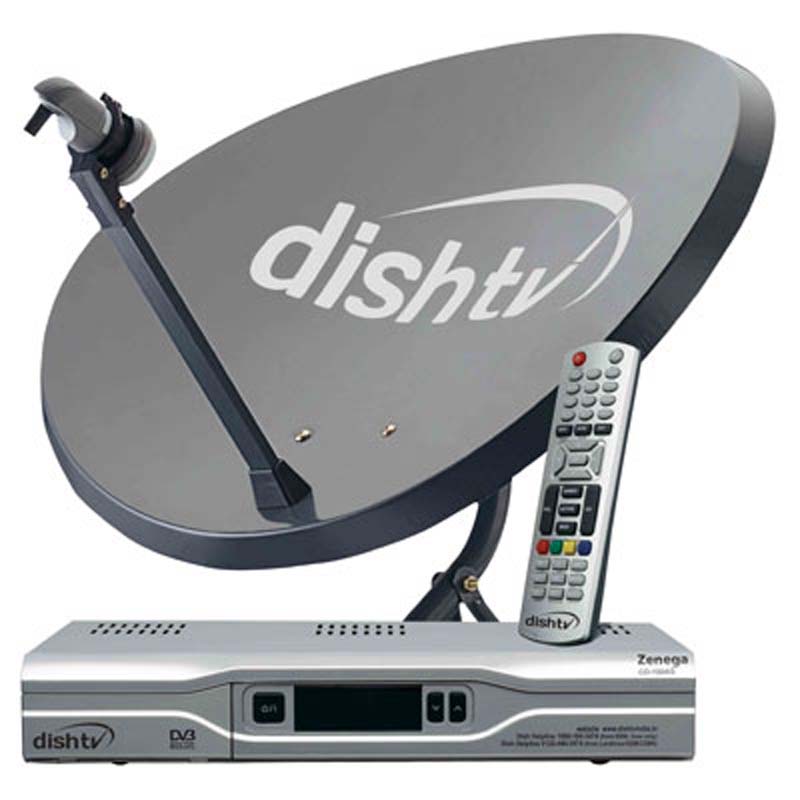
    MUMBAI: With conditional access (Cas) coming in shortly in Dehli, Mumbai, Kolkatta, the war is on for the consumer. Direct-to-home (DTH) service provider Dishtv has announced pricing offers for the Cas cities.

    Dishtv has worked on a 2 pronged pricing strategy – both for the hardware as well as for the monthly subscriptions.

    For a dishtv connection, there is now an entry option and an overall value proposition.

    The new pricing options are as follows:

    Down Payment Offer: To deliver better value to its consumers, the existing scheme has been enhanced for all new incumbent subscribers in Delhi, Mumbai and Kolkata

    On the payment of monthly subscription of one month of any of the two packages, the consumer can enjoy six months viewing. This is applicable on the acquisition of hardware at Rs 2950 along with Rs 200 as installation charges.

    Easy Pay Offer: In order to enable an easy ‘getting started’, Dishtv offers the following scheme for Cas notified areas in Delhi, Mumbai and Kolkata.

    A pay out of Rs 1300 (to take the entire equipment home, on right to use basis) + Rs 200 as installation charges. Thereafter, a monthly rental of Rs 35 for the hardware will apply for a period of five years. This will be charged along with the monthly subscription of any of the two packages that the consumer subscribes to.

    Multi TV households can now get started with dishtv at a special price. For instance, for four TVs in a typical south city home, one now needs to foot a bill of only Rs 6000 to get four dishtv connections. Further, the monthly subscriptions on the second, third and fourth connections would cost only Rs 100 + taxes each month.

    In addition its monthly subscription packages are also two tiered – one with 85 channels at Rs 210 +taxes per month and the other enhanced package with 125 channels at 240 + taxes per month, keeping in view the entertainment needs of varied users.

    Clearly, DTH service providers are taking the fight to the multi-system operators (MSOs). Tata Sky recently announced it would offer free subscription for six months to consumers who fall in the Cas area.

  • No extension on Cas deadline: I&B ministry

    No extension on Cas deadline: I&B ministry

    MUMBAI: Conditional access system (Cas) will be rolled out in the notified areas of Delhi, Mumbai and Kolkata from 31 December and no time extension is under consideration, the government said today.

    The deadline has been fixed by the Delhi High Court and there is no possibility of it being extended, an official statement from the information and broadcasting (I&B) ministry clarified.

    “In an application moved by a multi-system operator (MSO) before the Delhi high court for extension of time, the court has already taken a view that no such time extension is possible. The I&B ministry does not have the power to order any extension in the date of implementation of Cas. The transition time to run encrypted and unencrypted channels and switching off pay channel signals in unencrypted format began from 16 December and will end on 30 December,” the release said.

    The ministry was reacting to a report in a leading news daily that the deadline for rolling out Cas had been relaxed. “The report is totally misleading and baseless,” the ministry said.

    The ministry also categorically denied that it had left open a month-long window after 31 December for implementation of CAS and said that there was no question of any channel being blacked out. The I&B ministry has not filed an affidavit in the Delhi High Court seeking transition time after 31 December, it clarified.

    “In the advertisements on Cas released by the ministry from time to time in various newspapers, subscribers have been requested to apply sufficiently well in advance of 31 December for set-top boxes indicating their choice for pay channels lest their pay channels are blacked out on 31 December,” the release added.

  • Dopod launches in India with convergent mobiles

    Dopod launches in India with convergent mobiles

    NEW DELHI: Dopod International Corporation, a leading PDA phone and Smartphone provider, today opened their India operations, setting up office in New Delhi. The company is launching here with three models that has convergent technology powered by Microsoft.

    Dopod also announced the appointment of Ajay Sharma as the Regional Sales Manager, Dopod Communications (India) Private Limited, to oversee its Indian operations.

    Sharma told indiantelevision.com “Initially, we are introducing three handset models – C800, C720 and 818Pro in India. These devices are aimed at providing the combined power of telecom and IT through a unique, convergent solution with Microsoft.”

    Sharma will manage Dopod International’s new office, serving as India’s first Regional Sales Manager, India, overseeing all marketing and business development activities in the region.

    Asked about the company’s investment plans in India, Sharma said: “Presently, we are just setting up a distribution base here to cater to the Indian market. In due course we will be investing a substantial amount in marketing and sales related activities”.

    The models being introduced are 818Pro, a GSM Quad Band PDA phone that enables users to communicate by voice, any place around the world; the C720W, which supports Bluetooth v2.0 w/A2DP & AVRCP, and USB 1.1 for charging and data transfer and also provides GSM Quadband with GPRS & EDGE & hi-speed WLAN access 802.11g.; and C800, which has a sliding QWERTY keypad and 5-way navigation button that “makes messaging a breeze”.

    The last also offers the “ultimate connectivity”, with Bluetooth v2.0 w/A2DP & AVRCP, and a USB port for charging and data synchronisation, and provides GSM Quadband with GPRS & EDGE & hi-speed WLAN access 802.11g.

    Company executives explained that Dopod have entered the Indian market late, after it has seen the expansion phase into the B and C class cities, and the Class A cities have matured into creating a large demand for convergent mobile phones.

    “Dopod International would offer sophisticated and innovative converged solutions to the Indian consumers, which would be at par with the best designs and trends prevalent internationally. The distribution of its handsets models in India would start through a strategic tie-up with National Distributor, Jaina Marketing & Associates,” Sharma said.

    Asked about the roadmap for the company in India, Sharma said, “In the first phase Dopod plans to make its handsets available to Indian customers in 10 cities: Delhi, Mumbai, Kolkata, Chennai, Bangalore, Hyderabad, Pune, Ahmedabad, Surat and Chandigarh.

    Dopod International Corporation was founded in 2002, and has expanded rapidly, Sharma said.

    By the end of 2007, Dopod plans to set up operations in 25 cities in the country.Talking about the models on offer, Sharma said: “818Pro is designed simply to appeal to the no-fuss crowd. It is a light, small and futuristic device which comes in lifestyle design with incredibly enhanced features.”

    The machine packs a host of comprehensive connectivity options, including WiFi 802.11b/g, Bluetooth, Infrared, GPRS (on top of basic features like SMS and MMS), making it “an unparalleled choice for not only general consumers but also mobile business professionals”, Sharma claimed.

    Powered by the advanced Microsoft Windows Mobile Version 5.0, the 818Pro comes with a full suite of applications for viewing and editing files, like Pocket Word, Excel, Power Point, managing address book and e-mails like Pocket Outlook while allowing users full access to the Internet.

    In addition, the 818Pro also comes bundled with the WorldCard Mobile Business Card Capture Solution software. “This means users can now enjoy easy business card data input. All they need is to take a picture of a business card with the intelligent software and all their contacts are instantly captured, recognised, sorted and stored,” according to Sharma.

    Model C720W has a lean and mean design, Sharma said, adding that runs on user-friendly Windows Mobile 5.0 Smartphone operating system. “Windows Mobile 5.0 with DirectPush Technology allows you to instantly synchronise emails, calendars and schedules, and besides, you can access PDF, Word, Excel and PowerPoint documents allowing you to work even while on the go,” Sharma explained. It has a built-in 128 MB ROM, 64 MB RAM with persistent storage and a Micro-SD card slot, he added.

    Model C800 is the “slimmest PDA Phone with slide-out QWERTY keyboard”, but apart from that has all the features of C720W.

  • A new formula to ‘Engross’

    The biggest threat for advertisers is rapidly climbing as the rate of ‘ad avoidance’ crosses the 70 per cent threshold across all media, among both active and passive avoiders. What’s more alarming is the fact that ad avoidance is higher in rural India than in urban areas.

    As this trend is expected to go even higher, Intellect, a part of the Lintas Media Group in association with Hansa Research Group released the findings of a study titled ‘Engross, a media engagement and ad avoidance study.’

    Lintas India Pvt. Ltd director media services Lynn de Souza addressed a gathering of media planners, owners and clients, alerting them of the implications of this growing menace for the industry.

    “We have all been battling with ad avoidance for a while,” says de Souza. “What we certainly didn’t expect were such high avoidance levels, even in rural areas, and even on the internet. That is clearly a reflection of the consumer’s overall disapproval of the enormously high and growing ad clutter levels and is an issue that media owners should seriously take on board. In an attempt to reduce per unit prices they often simply increase the inventory on offer in an ad sales package, which results in high clutter, and high avoidance of the very ads they are trying to get more of!”

    What emerged as a result of the findings, de Souza said, was not that this group of ‘heavy media consumers’ disliked advertisements altogether, but instead they choose to avoid the growing clutter that they perceive to be dominating the media landscape. Encompassing all mass media including TV, radio, newspapers, magazines, outdoor and internet, her advice to fellow media experts, was that flooding the environment with an overdose of brands will ultimately lead the consumer to turn away from advertisements.

    With specific reference to television, this will pose a big ‘risk’ to the so-called burgeoning branded entertainment industry, which is just beginning to bear fruit in India. What’s more, the changing technological media environment will aid passive ad avoiders to quickly become active in doing the same.

    Spanning two months, October and November, Intellect engaged Hansa Research to update its biannual ad avoidance measures. This year the study included an understanding of how various consumer segments engage themselves with different genres of mass media, including sport, news, movies, education, fashion, serials etc.

    Besides narrowing in on an urban sample size of 1,073 respondents (SEC A, 15-40 year olds, students, housewives, working people) across Mumbai, Delhi, Chennai and Hyderabad, the study also captured the behaviour of the rural audiences. The Bharat Barometer (Intellect’s joint venture with ITC’s e chaupal network) was used to estimate the same measures by contacting 892 people in rural UP, Maharashtra and AP. These included 606 e chaupal Sanchalaks and 286 rural women.

    On having conceived the study, Initiative senior vice president Premjeet Sodhi said, “We are still discovering new nuggets of information each time we analyse the findings. This study is directly applicable to the media planning needs of our various clients who focus on the key youth, housewife, and working segments, and also provides us with data on the ‘upper market’ rural audiences which the industry has never had at such a detailed level earlier.”

    Focusing on two verticals within the framework of a consumer’s media interaction – content and ambient design. The former drives engagement while the latter generates avoidance which has greatly risen from last year across media. Based on the content vertical, the study highlighted the degree of engagement taking four main factors – Content, Relevance, Interactivity and Personalisation (CRIP score). Thus, Intellect has devised 305 CRIP scores across 61 genres and five target groups to be used by media planners to improve media selection.

    Speaking about the method used to administer the study, Intellect associate VP Julius Augustine says, “The most important part of the study was the development of the statements that would measure engagement across the four parameters of content, relevance, interactivity and personalization (CRIP).

    “We needed to measure engagement not just at the media but also at the genre level. Hence, part of the questionnaire was self administered, guided by the interviewer. The respondent had to place all the genres simultaneously on an engagement scale at the same time for each statement separately. Hence, if needed, the respondent could go back and change his ratings as each new medium was presented (For example, he began to compare news on TV with news in dailies) till he had rated all genres to his or her satisfaction.”

    Using the CRIP score which is synonymous with engagement, Engross concluded that the more engaging the content the lower the ad avoidance (except for magazines). More specifically, the more consumers are engaged with a particular genre, the less likely are they to avoid ads in that genre.

    Some of the findings also revealed data that would provide a ray of hope for the umpteen news channels, as news on television has emerged as more engaging than in newspapers.

    However, the biggest challenge for advertisers comes from ‘student’ consumers, as regardless of the degree of engagement with a particular genre, the level of ad avoidance remains high.

    In this day and age when media clutter is commonplace and every brand attempts to adopt newer ways to ‘break through that clutter,’ the essence of creating engaging content somehow gets displaced. All in all the core aim of seducing the consumer also gets blurred!

  • Bharti Airtel signs $400mn network deal with Nokia

    Bharti Airtel signs $400mn network deal with Nokia

    MUMBAI: Nokia has bagged a $400 million network expansion and services deal for over three years from Bharti Airtel Ltd, mobile services provider. 

    As per the three year contract, Nokia will provide managed services and expand Airtel networks to cover all towns and cities in the eight telecom circles of Mumbai, Maharashtra & Goa, Gujarat, Bihar (including Jharkhand), Orissa, Kolkata, West Bengal and Madhya Pradesh (including Chattisgarh), according to an official release.

    The network monitoring operations will be carried out from Nokia’s global network services center in Chennai.

    Nokia will also deploy its WAP solution across Airtel’s national network to enhance its mobile packet core network capabilities. 

    The WAP gateway to be implemented by Nokia shall enable easy usage of data services, thereby increasing the consumption of content on the Airtel network. Nokia will
    provide consulting services and integrate the WAP gateway into a multi-vendor environment.

    Nokia will also deploy the latest radio and core network equipment including softswitch, flexi-base stations and mini-Ultrasite base stations and provide services based on Bharti’s capacity requirements, delivering a cost-efficient rollout of on-demand capacity.

    The contract also has stringent service level agreements and performance metrics for both parties which are designed to provide consistently high quality services to subscribers and continuously enhance the user experience.

    Bharti Airtel president Manoj Kohli said, “Our network leadership across India is a critical driver in the Bharti Airtel success story. Our partnership with Nokia reinforces our commitment to this cause and Nokia will provide us the latest technology and expertise to drive growth in the latent market in Eastern India and rapidly expand our coverage in Western parts of India.

    “Nokia is proud to collaborate with Bharti on its initiative to take mobile services to millions of unconnected Indians and enhance the mobile data experience of its existing customers,” said Nokia India country director Ashish Chowdhary. “Our extensive managed services capability, powered with a comprehensive and high quality product portfolio makes Nokia a catalyst for providing affordable mobile services to rural consumers.

  • Inox Q2 records 58% net profit at Rs 69.6 million

    Inox Q2 records 58% net profit at Rs 69.6 million

    MUMBAI: Inox Leisure Ltd has reported 42 per cent year on year (YoY) growth in revenues at Rs 399.6 million for the second quarter ended 30 September 2006 versus Rs 282.4 million in the same quarter of the previous year.

    According to an official release, for the half year, the growth registered at 58 per cent from Rs 508 million crores to Rs 804.9 million.

    The profit after tax for the quarter amounted to Rs 69.6 million, as compared to Rs 56.4 million in the corresponding quarter of the previous year – an increase of 23 per cent.

    For the half year, profit after tax grew from Rs 97.2 million to Rs 153.3 million – an impressive 58 per cent.

    This quarter has seen Inox launch its Nagpur property taking its tally up to 44 screens in 12 multiplexes across 11 cities. Inox has another 21 properties in different stages of implementation, which it expects to operationalise by March 2009. This will help Inox take its total count to 33 properties across 21 cities, 130 screens and 37000 seats by March 2009, informs the release.
    In addition to the above, in September, INOX also entered into a definitive agreement for an all share swap deal with Calcutta Cinema Private Limited (CCPL) for acquiring CCPL & its brand of multiplexes – ‘89 Cinemas’ and merging the latter’s operations with Inox Leisure Limited. CCPL operates 2 properties as at present and has another 7 properties under different stages of implementation.

    Inox Leisure Ltd Deepal Asher said, “We have been able to maintain our industry leadership position in revenues and profitability, due to better footfalls and pricing at our existing multiplexes as well as the addition of new properties to our portfolio. We expect to maintain the momentum of growth going forward, with another seven properties expected to open by March 2007, in cities like Chennai, Mumbai, Bharuch, Vijaywada, Lucknow, Faridabad and Jaipur. We have also been helped with a good spate of releases, and expect this trend of a continuous flow of big budget and good quality content to continue.”

  • Radio City moves to common frequency of 91.1 FM

    Radio City moves to common frequency of 91.1 FM

    MUMBAI: Music Broadcast Private Ltd promoted Radio City has adopted to a common frequency 91.1, which becomes effective from tomorrow (27 October).

    Among all the stations that Music Broadcast operates, it is only Radio City Jaipur that has been broadcasting on the 91.1 frequency since its launch. Besides Jaipur, Radio City operates in Mumbai, Delhi, Bangalore, Hyderabad, Chennai and Lucknow.

    Radio City, which launched its radio operations on different frequency in Mumbai 91 FM, Delhi 91 FM, Hyderabad 106.4 FM, Bangalore 91 FM, Lucknow 104.8 FM and Chennai 105.8 FM, will all shift on 91.1 FM, according to a press statement. 

    With its shift of frequency, Radio City will be unveiling some new shows, interviews, contests and prizes.

    As part of the big activation idea, Radio City 91.1 FM has planned a host of on-air and on-ground activities at happening malls across the city like Landmark and Lifestyle, across multiplexes like PVR and several hip hangouts. 

    Radio City will launch Get lucky contest from 27 October up till 29 October. The contest will see five lucky listeners winning a Philips DVD every day across all stations and 1 lucky listener will walk away with a Philips Home Theatre. The contest gala will continue through the week with listeners winning goodies in all shows.

    According to Radio City marketing head Rana Barua, “Even as we change our frequency to 91.1 FM, we will have a better offering for our listeners with more stars, more innovative shows more music, and more prizes. We will continue to redefine the programming limits in order to sustain our musical expertise and our leadership position.” 

  • Hungama TV Captains Hunt auditions kick off 28 October

    Hungama TV Captains Hunt auditions kick off 28 October

    MUMBAI: Currently in its third year, the Parle-G Hungama TV Captains Hunt 2006 is set to kick off the audition stage. With the inclusion of Indore, Baroda and Hyderabad, the hunt will travel across 10 cities including Mumbai, Delhi, Kolkata, Bangalore, Ahmedabad, Ludhiana, Lucknow . The first two-day audition will commence in Kolkata on 28 and 29 October at St. Thomas Boys School.

    Having received a favourable response, of about 1,68,318 kids, Hungama TV will finally select 10 kids in the age group of 8-14 years to represent their respective cities as the Hungama TV Captains providing their valuable inputs in running the channel.

    At this stage, the articulation ability and confidence levels would be tested through a method of extempore speech. The uniqueness, level of achievement and ambition to pursue the talent at this level will also be measured. This year, instead of the evaluation rounds being based on artistic abilities, a balance of the right and left-brain skills will be tested.

    Qualified judges from the event’s knowledge partner – Origentest would evaluate all the rounds to arrive at two candidates per city who would compete in the Grand Finale to be held in Mumbai on 9 and 10 December, informs an official release.

    What’s different, is that the premise for this year’s talent hunt is to ‘Find and Shape the Future Leaders of India’ thus, several leaders from various industries will form a Captains Advisory Council (CAC) to meet the Captains on a regular basis and provide them with a sound platform to hone their nascent talent, while giving them advice and direction to emerge as leaders of tomorrow.

    As reported earlier, the channel has set aside a budget of Rs 10+ million for this year’s Captain’s Hunt. Hungama TV will be pushing the initiative via on air promotions and on-ground initiatives primarily through the intensive School Contact Program.

    Initiated in 2004, this concept allows a Board of Kid directors to give active and regular feedback on running of the channel specifically in the area of programming, marketing, distribution and competition.

  • Star signs first CAS agreement in Delhi

    Star signs first CAS agreement in Delhi

    NEW DELHI: Star India looks like being the first major broadcaster to sign on to the CAS bandwagon.

    In a clear statement of intent directed at its detractors who have been claiming that India’s leading broadcast network is only paying lip service to the government mandated rollout of addressability, Star has signed up with one of South Delhi’s biggest independent cable TV networks, Home Cable, for CAS-enabled services.

    This agreement between a broadcaster and a cable network also heralds that the “CAS dawn” is around the corner.

    Says Star India president – advertising sales and distribution Paritosh Joshi, “We have sent out CAS agreements to all the cable networks operating in the CAS notified areas of Mumbai, Delhi and Kolkata. We expect to have signed contracts in place well within the government-stipulated deadlines.”

    “Other than Home Cable, we expect to sign up the other networks in Delhi like SitiCable (now called WWIL), INCablenet and Hathway (26 per cent owned by Star) by tomorrow evening. In Kolkata there are seven or eight networks while in south Mumbai the main ones are Hatway and INCablenet,” Joshi pointed out.

    Addressability is an issue that has been buffeted by various forces, including political ones wherein the underlying theme had been to stall it as long as possible.
    Home Cable is owned by Vikki Chowdhry and services a sizable number of households in the posh Maharani Bagh and New Friends Colony areas of South Delhi where CAS is scheduled to be rolled out from 1 January 2007.

    According to Chowdhry, “The court mandated CAS has to be rolled out and since my network was one of those that has registered with the government, it is better I finish signing up the various agreements with broadcasters as soon as possible.”

    Those cable networks and MSOs who have applied for government clearance for CAS rollout in Delhi include WWIL, the Hindujas-controlled INCablenet, Hathway and few other independent operators who have big networks servicing a large area.

    CAS is scheduled to be rolled out in south zones of Mumbai, Kolkata and Delhi from the midnight of 31 December 2006 wherein all pay channels would have to pass through a set-top box on a mandatory basis.