Tag: Mumbai

  • Community Radio – waiting to take off

    Community Radio – waiting to take off

    Community radio is the latest addition the FM radio bandwagon in the country. With the great radio story just beginning to happen this year, it’s not surprising to find these avenues opening up. But community radio is a non profit, non commercial version of the FM radio sector.

    With government policies becoming open and procedures getting simplified, Community Radio (CR) is getting pretty popular; not in terms of the number of radio stations opened, but in terms of the interest it has generated among people. The more interested parties of course, are the universities and educational institutes as they have been getting licenses at short notice. Anna University’s FM venture, Anna FM in chennai was the first of its kind of CRS to start, but not many have been able to replicate its success story.

    2007, however, was a very eventful year in terms of the licenses granted. The likes of Mumbai univeristy, Delhi univeristy and others have been the leading institutions to procure these CRS licenses. Delhi university CRS has already gone on air in 2007 and Mumbai university’s own radio station should go live in early 2008.

    But the basic objective of CRS should be understood. With the advent of private FM radio channels, entertainment and radio have become synonymous with films and youth. But CRS can be a very interesting change or option in terms of FM broadcasting. If private radio is all about fun and entertainment, CRs can offer some infotainment via fun programmes tackling various acadmeic and social topics.

    Sounds vague, but if the CRS can be a professional radio run by amateurs, then the basic target is achieved. That’s precisely what the CRS holders need to do in 2008.

    Technology too is becoming cheaper and easily available. So, someone can easily start a CRS for as low as Rs 10 lakh. This can include some very good equipment which will help the operators to package the CRS programming in a very FM and private radio-like fashion. This is the need of the hour and can be surely achieved.

    Also, it becomes a very healthy and attractive sector for service providers as you need many players, if the number of CRS in country has to reach 500 in the coming years. A very good volume business oppurtunity indeed.

    Even the UN has made plans to assist the building of various CRs across the country as a part of its Millenium Development goals.
    As for CR, like every coin, it has two sides to the story.

    On the flip side, people have not yet understood the basic idea of starting a CRS. It does not imply just running a station for the sake of it, neither does it mean being revolutionary with your own radio. It’s also not about being a drag, serious type of radio.

    A CRS can be a very important link for youngsters and amateurs alike. If the hobbyist can provide good topics, amateurs can train themselves for a good radio career while working at a CRS. You need to have infotainment programmes to attract people. With the government allowing a 100W transmitter, you can easily cover an area of about 40 odd km, a pretty big area to operate in. Also, with the government allowing five minutes per hour as commercial time, the main headache of sustaining a CRS disappears. If your CRS can be innovative and intelligent, a private radio player in your area might also be interested in helping you generate revenue on a sharing basis. I see no harm in this.

    Another problem is, some people think of CRS as a completely non profit idea which should not earn money. But, I guess you need money to at least survive and there is nothing as a free dinner in life any more.

    If we are reading this article, it’s to get something in return, right !
    We should all look at the CRS as a great oppurtunity to learn new tricks in radio, train yourself to be a future radio broadcaster and make FM radio a useful medium for all in all ways.

    2007 was really a mind opener for the CRS sector, and I sincerely hope that 2008 will soon set up decent examples of innovative and infotainment led CRS in the country.

  • ‘We used the brand ambassador route to break through the cluttered FM market’ : Tarun Katial – Big FM COO

    ‘We used the brand ambassador route to break through the cluttered FM market’ : Tarun Katial – Big FM COO

    Reliance ADAG has aggressive plans laid out for its radio venture Big FM. With 29 stations already in place, Big FM has 16 more waiting in the wings. And it has an investment outlay of Rs 4 billion.

    Banking on Abhishek Bachchan as the face of Big FM and supported by the brand philosophy of ‘Suno Sunao Life Banao,’ Reliance’s radio venture is looking to firm up its position in existing markets by rolling out four unique properties this year-end.

    In an interview with Indiantelevison.com’s Nasrin Sultana, Big FM chief operating officer Tarun Katial speaks about the penetration of the FM stations into the urban and smaller markets, the potential that the sector has, and the advertising opportunities it throws open for local advertisers.

    Excerpts:

    Being a new entrant in established markets, has it been a tough journey for Big FM?
    We have been extremely successful in selling the brand across the country. Our success comes from launching in cluttered markets like Kolkata, Mumbai, Bangalore and Chennai. We were the first station in Bangalore to come out with local language content.

    How has it been in the smaller markets which opened up for private operators in the second phase?
    Big FM is working extremely well in small towns. We have, in fact, revolutionised media and media consumption habits in the tier II and tier III cities. Eventually people are realising that radio is a local medium which needs to have localised content and marketing to make it successful.

    We have even entered troubled places like Srinagar and Guwahati where no one thought of venturing.

    Are the big advertisers willing to put money in the small town stations?
    For Big FM, local advertising contributes 30-40 per cent of our entire revenue kitty. Apart from this, there are corporates who advertise across all the 29 stations including big FMCG and telecom players.

    Is Delhi turning out to be a sticky wicket for the new players?
    Delhi is one of our best stations. It has been getting us good revenue. Nokia, Samsung and the big FMCGs, apart from the local retailers, are our major advertisers in Delhi. As far as listnership goes in Delhi, our internal research says that we have a good amount of base in the capital city.

    What has been the focus area for Big FM?
    It is really bad to say that we are focused on some markets and not on others. In the tier II, tier III cities it has been our effort to gather a base for listenership. In the next roll out phase, our focus will be about building a uniqueness and getting the dynamics of the company to all the stations.

    Why was there a requirement to change content in your Delhi station?
    The consumer behaviour and attitude of Delhi changes very frequently and it is very different from the other cities. Our internal research showed that Delhi is happening and on the move. That is where we zeroed in the ‘100 chartbuster’ format whereby every week the songs that the station plays is renewed. 100 songs are selected on the basis of a survey that covers mobile phones, internet downloads, music sales and song requests. This way, we satisfy the need of Delhi listeners to get something new every week. We are the first station in the country to have introduced such content in music.

    How is Big FM faring in regional markets like Jhansi, Bareilly, Jalandhar, Asansol and Guwahati among others?
    We have created a local brand out of the local product. FM has created an atmosphere where local entrepreneurs have understood these cost effective measures. There are lots of un-organised and semi-organised workers in the Indian economy for whom we have provided a platform.

    In the regional space, we have been beneficial to the common people by generating job avenues. People now need not go to cities in search of jobs in media.

    Physical hardware sales are also up. Nokia, Reliance and Samsung have got sales high. Even FM radio is being launched on the mobile platform.

    Is having Abhishek Bachchan, Upendra and Asin as brand ambassadors helped you in grabbing listenership in the Hindi and southern regions?
    Today we are in a cluttered FM market in India. The easiest way to break through the clutter is through the brand ambassador route.

    FM should be allowed to have news and sports in the content mix

    How has the brand philosophy ‘Suno Sunao Life Banao‘ worked for Big FM?
    The whole premise was to provide a new space. If you listen to our station, it’s about raising ones voice. Our content and marketing campaigns affect the lives of the people. Later this year we will introduce four new properties that will make (banao) someone’s life. As far as music goes, we are currently playing contemporary hot music of Tempo 3. Tempo 3 are specific songs that are up beat because as a rule the station does not play extremely slow music.

    What do you regard as prime time for Big FM?
    Our prime time is dependent on who our target audience is at a particular time band. If it’s the youth, then the prime time band is evening. If it’s the office goers, then it’s definitely in the morning. If it’s women, the target then is the afternoon time band.

    Which are the different platforms you are experimenting with to build brand awareness?
    Across mediums, internet is the best medium as it has an extended reach. But the best thing that works for us is on-ground activities. Big FM has been doing a good amount of on-ground activities across the country, which has received a good response in terms of participation.

    What do you think about TV campaigns used by FM stations to advertise?
    TVC is definitely a good way of promoting a brand. We are also looking to launch a TVC soon.

    What is your argument for or against the Content Code?
    Instead of getting ways to regulate us, the government should grant us some freedom. As FM affects so much of the consumption of people’s life, we should be allowed to have news and sports in our content mix.

    The ministry is talking about regulating FM broadcasters, when we are already functioning with restrictions to our content.

    When they are comparing Indian FM stations with the international radio industry, they have conveniently forgotten that we are the only set of broadcasters who have been working on the restricted content set up by the government.

    What is the investment outlay for Big FM?
    We are pumping in Rs 4 billion.

    What is the de-merger status of Big FM?
    I can’t comment on that.

    How is Big FM planning to synergise Reliance ADAG’s Big Music and Entertainment for music and home video?
    Big FM gets the exclusive music and content rights from Big Music and Entertainment, giving us the first right of refusal. We have the option to build music properties across the medium. We have the option to promote the division by pushing the content through internet downloads and mobile ring tones. Big FM does 360 degree advertising for Big Music and Entertainment.

    How are your advertising spots being priced?
    Recently we have introduced the uniform rate card system ‘Aqua’ for all our advertisers across the country. This is easily available in our website. Unlike other stations, we are transparent in our advertising rates. The advertisers know what is the rate for the same space on the other stations. The advertisers are aware of how we are priced in different markets.

    Besides, all our stations have installed the wide orbit software.

    With the increasing content clutter on radio especially with Bollywood music, how is Big FM placed?
    I agree that Bollywood is all over FM stations, but it also depends on what kind of songs you are playing at what time of the day. How you treat the music is what differentiates the content. We play old songs across era in different time bands.

    You have recently got Raju Srivastav (stand up comedian of The Great Indian Laughter Challenge) as an RJ. In an attempt to break away from the clutter, every FM station is now adopting the fun element. How is this differentiated?
    Fun is an important aspect of entertainment. We are here to entertain, so what’s wrong in doing it? Some are doing it by some other means and people; we are doing it with Raju. He is the best and the biggest clutter breaker in the industry. Nobody wants to start the day on a sad note. We will get you to start the day with laughter and good thoughts. Our effort is rewarded if we can put smile in our listener’s faces.

    Do you think the future will be in niche or mass stations?
    The FM business is in a nascent stage for me to predict the future. It depends on what is the target, though I would recommend that segmentation is required.

    How are you looking to close 2007?
    We have recently announced the four properties that Big FM has planned for the various festival seasons for the later part of the year. Starting from September, Big FM will start rolling out these properties.

    We will soon launch a show completely based on and coinciding with the ICC World Cup Twenty20. The show will provide scrore updates, interactive contests and interview of cricket celebrities.

    During the time of Diwali and Dusshera, Big FM will launch a shopping contest Sabse Sasti Diwali. With the various tie-ups that we are still working on, the contest will offer shopping discounts from 9.27 per cent to 92.7 per cent.

    Then we have a contest titled Chipak Ke Dekho by which we will give away a car to whoever remains near the car for the longest duration of time.

    Finally, we have the biggest contest of its kind, Ek Saal Free Maal to bear the entire expenses of the winner for the whole year of 2008.

  • CNN-IBN starts reality news show

    NEW DELHI: CNN-IBN is launching a show Summer Showdown in a reality show format.

    Encouraging citizen journalism, the show will follow a family each from the five metros – Delhi, Mumbai, Bangalore, Chennai and Kolkata – for five-weeks. They will be asked to report on all the civic problems that they feel are threatening to become a crisis this summer – from continuous power cuts, overflowing sewers to the dismal state of our roads.

    In addition, these citizen journalists will be provided opportunities to meet and interact with the local civic authorities to find solutions to these real and unrelenting problems and work towards realising them.

    The two-three minute daily basis stories of their personal experience will be carried on CNN-IBN’s Newswheel. The initiative will culminate in a one-hour special on 26 May that will track the previous week’s progress to see which city’s civic authorities were the most efficient in responding to their citizen’s appeals.

  • CNN hits the streets for marketing ‘Eye on India’

    NEW DELHI: In a unique marketing road show activity called ‘Express Yourself’, CNN branded vehicles are travelling around three Indian cities – Delhi, Mumbai and Bangalore – encouraging youth to express their views on issues relevant to them.

    Coinciding with CNN’s week-long Eye on India: Generation Next, the innovative travelling exhibit is also distributing flyers that soliciting opinion on topics ranging from what it is like to be young in India today, the importance of religion, caste, arranged marriages, what makes the youth proud to be Indian.

    Eye on India: Generation Next is being promoted extensively through an aggressive, 360 degree marketing campaign, a press note from the channel says.

    It explains that with the aim of generating awareness and drive appointment viewing, the campaign includes a comprehensive mix of trade and consumer advertising, both in print and online; promotional television spots on CNN’s Asia Pacific and Europe/Middle East / Africa feeds; online consumer contests, etc.

    CNN’s Eye on India focusses on India’s growing youth population. More than half a billion people under the age of 25 or one in 12 people in the world is a young Indian, and CNN’s week of special programming trains the spotlight on this demographic. This edition of Eye on India will include a series of special programmes on CNN, along with highlights of Indian youth in various segments of life, in business, sports, industry, etc.

    The programme kicked off on 18 March, and the channel hopes this will provide CNN’s global audiences a comprehensive look at the country’s youth.

  • Pirated software worth $2.1 mn seized in 2006 raids

    Pirated software worth $2.1 mn seized in 2006 raids

    BANGALORE: The total value of software seized in 2006 in the more than 200 anti-piracy raids carried out across the country is $2.1 million.

    The raids were conducted by the Business Software Alliance (BSA) and its member companies collectively and individually. BSA has vowed to step up enforcement actions in 2007 to further bring down piracy rates.

    Jeffrey J Hardee, BSA vice president and regional director, Asia-Pacific, said, “In over 200 actions that have been conducted by BSA and its member companies in 2006, we had found widespread use and sale of pirated software across Indian cities. With the high software piracy rate in India, it is important to highlight efforts of the industry in combating piracy through enforcement.”

    The BSA and its members have carried out raids in cities such as Delhi, Mumbai, Chennai, Kolkata, Ahmedabad, Bangalore and Hyderabad in 2006.

    As per the findings of the BSA-IDC study of 2005, the rate of PC software piracy in 2005 was 72 per cent. According to the statistics, the Indian software industry lost revenue to the tune of of $566 million in 2005.

     
    Hardee added, “BSA adopts a three pronged strategy i.e. spreading the awareness on the perils of piracy, training and education of users including use of specialized tools like software asset management (SAM) and enforcement, in addressing software piracy around the globe. Whilst enforcement is a last resort, it is an important part of our approach as it serves to underline the seriousness of the matter.”

    Pirated software that has been seized includes those from Adobe, Autodesk, McAfee, Microsoft and Symantec.

     
    The BSA maintains a close working relationship with the government and industry associations in India such as Nasscom. According to an economic impact study conducted by IDC, if the piracy rate is reduced by 10 points by 2009, India could benefit with an additional 115,000 new IT jobs; an additional $ 5.9 billion pumped into its economy and increased tax revenues of $ 386 million.

  • Kainthola takes over as executive director in LS TV

    Kainthola takes over as executive director in LS TV

    NEW DELHI: Indian Information Service officer Bhupendra Kainthola has taken over as the new executive director (programmes) of Lok Sabha Television, filling the vacancy created in January after the termination of services of Sudhir Tandon, without ascribing reason.

    Kainthola has been posted to LS TV on deputation for three years. He is an IIS officer of the 1989 batch.

    His last posting was as the deputy general manager (media) for the National Highways Authority of India (NHAI) for the past two years, but he has earlier worked for several years in Doordarshan News in the Mumbai and Delhi kendras. He also functioned in the Press Information Bureau for one year.

    The post of the ED (P) has been held as an additional charge first by the executive producer Vartika Nanda-Sahai, and then by the executive director (marketing), Sunit Tandon, who is in the channel on deputation from the National Films Development Corporation.

    Sudhir Tandon had retired as deputy director general in August 2005 from the charge of Director of the Delhi Kendra of Doordarshan before joining LS TV. He had received a termination order in late December ending his three-year contract (in just over a year), without assigning any reasons.

    The LS TV was first conceived by the Lok Sabha Speaker Somnath Chatterjee and offered to Doordarshan.

    However, the public broadcaster had demanded financial support for a minimum of 250 employees. Bhaskar Ghose – a former Director General of Doordarshan and also Secretary in the Information and Broadcasting Ministry – was then given the task of running the channel with a strength of less than 80 people.

    He was appointed with the designation of media adivsor to the speaker and chief executive of the channel. LS TV was formally launched as a 24×7 channel from July 24, 2006 when the Monsoon session commenced. 

    Commencing with the Budget session, the channel is now in charge of transmitting the signals to the Doordarshan tower from where these are uplinked. Earlier, this work was being handled by DD staff.

    Furthermore, two more studios are coming up to augment the facilities, but sources in the channel told indiatelevision.com that there was no corresponding increase in staff strength which was now just over 100.

    The channel still does not have any funds of its own and has to depend on the Audio Visual Unit of the Lok Sabha Secretariat for its expenses and infrastructure.

  • Valentine special on Radio Mirchi

    MUMBAI: This Valentine, Radio Mirchi 98.3 FM gives Delhiites a chance to show that love is above all……. By participating in a simple contest ‘Apna Sapna Ya Money Money’, Radio Mirchi listeners can win a chance of testing whether they and their Valentine can survive the eternal debate of ‘Love is more important than money’. It’s time to prove their love for each other through the aiwaves.

    In simple words, people in love usually say that love is more important as compared to money. Now radio Mirchi gives them a chance to prove it. Listeners will have to call in and leave their response on ‘Paise se bara pyar hai ya pyar se bara paisa’. One lucky person (selected) will get a chance of spending the entire day on February 14 with his / her partner and would have to manage all expenses with only Rs. 98.30/-. In this amount they will have to buy each other a gift, spend on food and other conveniences and of course spend the entire day with each other. The satellite jock of Mirchi will be there with them in the Mirchi Gaddi to monitor to proceedings and provide live updates to listeners.

    As a special treat, the couple gets awarded with a romantic dinner date in a five star hotel, along with a special gift, at the end of the day.

    So tune in to 98.3 FM to participate in ‘Apna Sapna Ya Money Money’.

  • Radio One now finds listeners a ‘Valentine’

    MUMBAI: Put on your best perfume, think of interesting opening lines and leave the rest to Radio One FM 94.3. Mentos presents Radio One Speed Dating, a totally fun event where single, interesting and eligible guys and girls get together for a fun evening.

    Speed Dating is an exciting concept and is based on the psychological evidence that most people make up their mind of whether they like someone in the first 60 seconds of interacting with them.

    Perfetti India and Radio One have signed up a deal to conduct Speed Dating sessions at leading nightclubs at 4 locations across the country i.e. Mumbai, Delhi, Bangalore and Chennai.

    Speaking on the concept and success of Speed dating over the years, Radio One FM 94.3 vice president Shariq Patel says, “This is the third speed dating event we are organizing and the registrations have increased with each event. This is also the second time in a row that Mentos has partnered with us. Given the previous years experience this year Mentos has signed up for the event across all 4 of our stations i.e. Delhi, Chennai and Bangalore apart from Mumbai.”

    Perfetti marketing head Samir Sunjea adds “Speed dating is a perfect fit for Mentos since it caters to our target age group. It is a ‘fresh’ concept in India and therefore echoes our brand’s core intrinsic values.

    Moreover, the Speed Dating concept adheres to the ‘Mentos Life’ philosophy – a way in which to avoid the dull and usual and to adopt a fun and innovative approach to ordinary life.”

    Event Details
    – 20 men and 20 women invited for the exclusive event
    – All have to register at the venue
    – When registering all the participants are given a badge and a memo card with interested/uninterested marked against every name.
    – Each participant will get around 5 mins for 20 one-on-one dates.
    – The men will keep moving while the women remain seated.
    – The participants will move to the next table at the sound of the bell
    – If two participants are interested in meeting again, they are to mark their memo card accordingly.
    – Only if both concerned people are interested in each other, as marked in their memo card are they matched
    – Radio One will provide the female participant with the male’s contact details. Only if she wants to pursue the friendship further will she call. Hence a completely safe way of interacting with people.


    To register for speed dating all you have to do is log on to www.radioone.in and register yourself. If you are a working professional above the age of 21, you have a chance to be invited for this exclusive event at your city.

    Mumbai-The speed dating event will happen at Squeeze in Mumbai on 8th February, 2007. The cast of the new film Just Married is also expected to attend the event. Esha Deol, Perizaad Zorabian and Bikram saluja .

    Bangalore- followed by Mumbai, the action will shift to Bangalore on Feb 11th at Athena. IT people, its all about working and networking!

    Chennai- Feb 12th, Chennai will rock like never before at Sparks, Hotel savera.

    Delhi- A day prior to the Valentines day, Delhi will conduct speed dating at Lizard lounge on Feb 13th. A day prior to the V day!

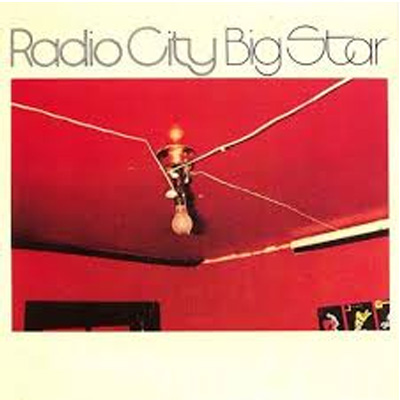
  • Star plans radio re-entry, to pick up 20 per cent in  Radio City

    Star plans radio re-entry, to pick up 20 per cent in Radio City

    MUMBAI: Star Group plans to pick up 20 per cent in Music Broadcast Pvt. Ltd. (MBPL), marking a re-entry into the private FM radio business.

    Star is buying the stake from India Value Fund, (earlier GW Capital) a venture capital fund. With this, India Value Fund’s holding will drop from 75 per cent to 55 per cent.

    In early 2005, Star had sold its stake in MBPL, the company which operates its FM radio stations under the Radio City brand, for Rs 300 million. India Value Fund had acquired a controlling stake in MBPL.

    “Star is buying back the 20 per cent it had sold earlier in MBPL. The radio business is set to explode with the government changing its policy and opening up the second phase of private FM expansion,” says a source close to the company. He, however, could not confirm the price Star is paying to acquire the stake.

    MBPL chief executive officer Apurva Purohit was not available for comment. Star officials also could not be reached. The government regulations permit only 20 per cent foreign direct investment (FDI) in the FM radio business.

    In May 2005, Star had discontinued its arrangement of supplying content to MBPL. Later in the year the country’s biggest television network in terms of revenue also ceased doing air time sales for Radio City.

    Since the inception of Radio City, MBPL had contracted Star to provide its expertise in the areas of programming, ad sales and marketing. The operations were handled through DigiWave, a 50:50 joint venture between Star and the PK Mittal-promoted Ispat group.

    Radio City is already operational in seven cities comprising Mumbai, Delhi, Bangalore, Lucknow, Hyderabad, Chennai and Jaipur. The plan is to launch in 13 more cities including Ahmedabad, Surat, Baroda, Sangli, Akola and Nagpur.

  • STBs moving fast in Mumbai, Delhi

    STBs moving fast in Mumbai, Delhi

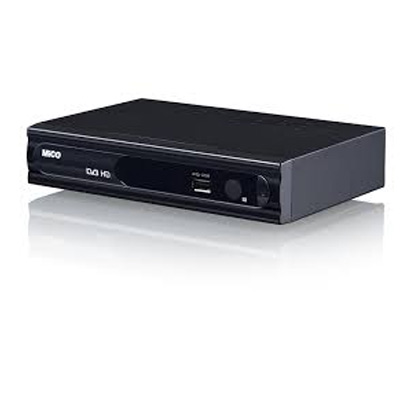
    MUMBAI: Multi-system operators (MSOs) have in store 200,000 set-top boxes (STBs) and orders have been placed for importing more to meet the growing demand from consumers, the Telecom Regulatory Authority of India (Trai) chairman Nripendra Misra tells Indiantelevision.com.

    The offtake of STBs has been slow in Kolkata while there seems to be a healthy demand in Mumbai and Delhi, he adds. MSOs have seeded 135,000 boxes in Mumbai, 105,000 in Delhi and only 24,000 in Kolkata.

     
    “Kolkata is slow to take off and our feedback is that most of the consumers are opting for free-to-air (FTA) package at this stage. But overall Cas (conditional access system) is getting accepted by the consumers,” says Misra.

    Mumbai with 130,000 has the maximum number of STBs in stock while Delhi has 55,000 and Kolkata 20,000. But the major MSOs like Incablenet, Hathway Cable & Datacom and Wire & Wireless India Ltd (WWIL), who are operating in multiple cities, have no problems in shifting the boxes according to the consumer requirement.

    Misra admits, though, that there are “reports of shortages in some pockets.” Consumers falling under the Cas areas did not order for the boxes earlier and there is a rush only after Cas got implemented which has led to this current situation, he clarifies.

     
    The cable & broadcast regulator has called for a meeting with the MSOs on Friday to take stock of the Cas situation. The Trai will be sending teams to Mumbai, Delhi and Kolkata from Monday to make spot assessments, Misra says.