Tag: Mumbai

  • Telecom spectrum auction further delayed

    Telecom spectrum auction further delayed

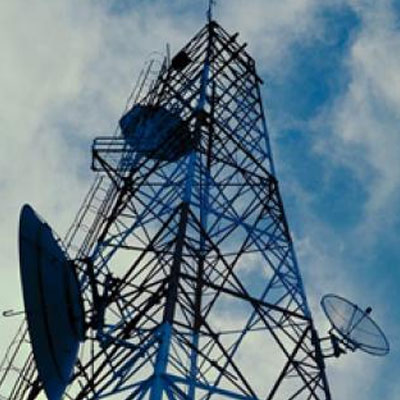
    NEW DELHI: The spectrum auction which has been put off from time to time will begin on 3 February 2014. The Department of Telecom (DoT) had been asked to give clarifications to a number of questions from mobile phone companies like Bharti Airtel and Vodafone India on spectrum usage charges, option of withdrawing from auction and availability of contiguous spectrum but there is still no clarity on these issues.

    According to a notice issued today, the DoT will now give clarifications on the concerns raised by service providers on 2 January. The department has also extended the last date for operators to submit their applications to bid in the auction to 15 January.

    While DoT will announce the pre-qualification of bidders by 25 January, bidders will also be given an option to withdraw their applications, according to the changes in the auction schedule. Service providers had objected to DoT’s move to remove the option of withdrawing their bids, as was allowed in the last auction.

    Operators will now be allowed to withdraw their bids by 27 January and the final list of bidders will be announced on 29 January. A mock auction will be conducted over 30 and 31 January.

    Leading operators like Bharti Airtel and Vodafone India had warned DoT in a pre-bid conference held last week that they could stay away from the upcoming bandwidth auctions if the government continued with the present cascading spectrum usage charge (SUC) regime, instead of moving to a flat fee structure of 3 per cent.

    The government levies SUC between 3-8 per cent of revenue earned by telecom companies from telecom services, depending on the quantum of airwaves held.

    The telecom department is set to auction 403 Mhz in 1800 Mhz and 46 Mhz in the 900 Mhz bands in the next round of auctions, beginning 23 January. The government aims to raise Rs 40,874.5 crore from spectrum revenue this fiscal year ending 31 March 2014, including one-time spectrum fee, and has its hopes pinned on this round to raise funds to limit its budget deficit.

    Operators stayed away from the last two rounds held in November 2012 and March 2013 citing very high reserve prices and low spectrum availability. The government has set the reserve price in 1800 Mhz at Rs 1,765 per unit for pan-India airwaves, 25 per cent lower than the last auctions.

    DoT also lowered the reserve price for Delhi, Mumbai and Kolkata circles in 900 Mhz band by 53 per cent from last auctions to Rs 360 crore, Rs 328 crore and Rs 125 crore respectively.

  • ‘Heropanti’ shoot commences in Mumbai

    ‘Heropanti’ shoot commences in Mumbai

    MUMBAI: Sajid Nadiadwala’s Heropanti, which stars Tiger Shroff and Kriti Sanon, has begun shooting for its Mumbai schedule. The movie which shot its first schedule in Chandigarh and Patiala extensively, finished their shoot in Delhi recently.


    Jackie Shroff’s son, Tiger Shroff, who is making his Bollywood debut in Heropanti, will be seen doing adrenaline-filled action scenes in the movie. The young actor is paired opposite model- Kriti Sanon- in the action-romance film. Video clips of Tiger training for the film show him doing gravity defying stunts and acrobatics for which he trained rigorously with his trainers. After Mumbai, Heropanti is expected to move on to its next schedule in Kashmir.


    Directed by Sabbir Khan, the film is an action-romance and is produced by Sajid Nadiadwala and under the banner of Nadiadwala Grandsons Entertainment Pvt Ltd. It is slated to release on 16 May, 2014.

  • PVR expands its footprints in Mumbai

    PVR expands its footprints in Mumbai

    MUMBAI: PVR Cinemas, the largest cinema exhibition company in India has further strengthened its national presence with the launch of its 2-screen multiplex in Milap Mall, Kandivali (West) with a seating capacity of 325. Opening with 100% occupancy for the blockbuster film Dhoom 3, PVR Milap commences its journey on a buoyant note. PVR Cinemas recently surpassed the milestone of 400 screens and with the newly opened multiplex it reaches a count of 94 cinemas, 404 screens and 38 cities in India.

    Gautam Dutta, Chief Operating Officer, PVR Ltd, said, “Giving our customers an unmatched movie viewing experience is our prime goal here at PVR. Mumbai is an exciting market being the hub of cinema and it is with PVR Milap, our 21st property in the city, that we further reiterate our stance of being the largest cinema exhibition company in the country. This organic growth and expansion strengthens our presence in Maharashtra as we grow to 33 properties in the region.”

    The 8,000 sq. ft property gives its customers an ambience of luxury and style with walls expressing the era of cinemas dazzled with a theme of golden, beige and red. Giving an edge to the multiplex is the exceptional sound and projection technology offered by PVR. The multiplex possesses 2K Digital projection, Dolby sound and 3D enabled with PULZ speakers, bringing to the discerning movie-goers a quality cinema experience.

    Alongside, is a wide array of F&B ranging from savor combos of popcorns, nachos and gourmet sandwiches to an exotic variation of desserts.

    PVR first set foot in Maharashtra in the year 2006 and continues to keep alive the love of cinema offering its audiences with state of the art facilities and a fresh feel with the launch of PVR in Milap.

  • Aamir vs Aamir

    Aamir vs Aamir

    MUMBAI: Dhoom 3 proves to be a good sequel, for once. Unlike many films that simply use the name and brand, it actually carries on the characters from previous movies. Once again, Abhishek Bachchan and Uday Chopra, two Mumbai cops are chasing after a villain, this time as a team sent to Chicago Police to solve a case of bank robberies. The reason being that the thief leaves a message in Hindi and it is assumed that he has to be an Indian.

    Dhoom 3 starts off by setting a tempo for the fast-paced thriller that it promises to be with Uday and Abhishek demonstrating their fighting instincts and coordination as they take on a local basti don in Mumbai. As the action moves to Chicago, it is Aamir’s turn to show his mastery with his bike. In fact, Aamir’s arsenal of gears and gadgets would give James Bond a complex!

    Aamir’s story dates back 25 years to when his father, Jackie Shroff, ran The Great Indian Circus in Chicago. The circus had not been doing too well and the local bank owner threatened to attach the circus if Shroff didn’t not manage to pay off his dues within five days; Shroff devised a new circus act which he was sure would revive his circus and pleads for a little more time. When refused, Shroff kills himself. Aamir is now grown up and ready to take revenge for his father’s death, which he calls murder. His plan is to ruin the bank, force its closure. He robs the bank’s branches one after the other. His style is that when he robs a bank, he throws a part of his loot on streets outside the bank and watches people pounce on this rain of dollars. The bank is losing reputation as well as standing in the stock market.

    What makes these heists exciting is their aftermath as Aamir charts his escape in a long chase by the police with his multipurpose bike. In fact, he is techno savvy and all his robberies and escapes are executed with the help of many gadgets. It is time to get Abhishek and Uday in on the scene. It is also the time for Aamir to revive The Great Indian Circus and to get the glamour quotient on the scene. Katrina Kaif is trying to get a break into the circus but dressed like a geek, she does not impress Aamir’s assistant who keeps rejecting her. Aamir agrees to give her five minutes to prove her talent and sees a geek turn out to be a glamour doll.

    Producer: Aditya Chopra.
    Director: Vijay Krishna Acharya.
    Cast: : Aamir Khan, Katrina Kaif, Abhishek Bachchan, Uday Chopra, Jackie Shroff.

    Having opened up the other side of the story, that of the circus and its background, it is time to spring a surprise on the viewer; there are two Aamirs. The other one is always in the background because he suffers from autism, due to which faces communication problems and has strange mannerisms. That is the circus’s secret behind their most famous trick where Aamir enters a wooden box on stage but emerges from some other corner of the hall. (This seems lifted straight from The Prestige, which tells a similar story about a magician.)

    As Abhishek and Uday try to solve the jigsaw puzzle, they spy on Aamir and follow the closet Aamir on his once a week Sunday outing. Abhishek makes sure he drives a rift between the brothers. Sadly, these plots make Abhishek look more like a villain than a supporting actor! These manoeuvres also make the proceedings very slow and insipid especially after the racy first half had set the pace. As the Aamir brothers embark on the last leg of their ‘destroy the bank’ operation, there is one more chase before the film ends by springing another surprise.

    Being third in the Dhoom trilogy, some may make comparisons and feel that story/script wise D2 was better; however, this film is much more ambitious, lavishly shot and full of special effects. It has good music that is very well choreographed and the film is a visual delight. With other characters being insignificant, the film is Aamir vs Aamir talent showcase as he gets to juxtapose two totally different characters in the same frame most of the time. He is simply amazing. Katrina Kaif is the other character who gets some importance in this film and she does very well while also excelling in dance numbers. Abhishek gets no scope while Uday is the joker in the pack. Direction is competent and handling of double roles is apt. Technically the film is very good.

    Dhoom 3 is set to shatter collection records and create some of its own new records. Expectations were high from the trade and especially the exhibitors and it will live up to them.

  • Reserve price for the auction of telecom spectrum in 1800 MHz and 900 MHz bands finalised

    Reserve price for the auction of telecom spectrum in 1800 MHz and 900 MHz bands finalised

    NEW DELHI: The reserve price for 1800 MHz band has been fixed for Rs 1,765 crore per MHz Pan India, which works out to be Rs 8,825 crore for 5 MHz Pan India.

    The Union Cabinet has approved the finalisation of the reserve price for auction of spectrum in 1800 MHz band for all service areas and for 900 MHz band in Metro service areas of Delhi, Mumbai and Kolkata.

    According to the recommendation of the Empowered Group of Ministers, the reserve price for 900 MHz band of Rs 360 crore, Rs 328 crore and Rs. 125 crore per MHz in Metro service areas of Delhi, Mumbai and Kolkata respectively.

    The decisions will result in further efficient utilisation of the scarce natural resource of spectrum facilitating expansion of telecom services in the country.

  • DAS & the LCO fightback for survival

    DAS & the LCO fightback for survival

    It’s the festival of lights. And for many the festival of noise courtesy exploding fireworks. In the hope of reducing the number of those belonging to the latter tribe, we, at indiantelevision.com, decided to put a display of firecracker articles for visitors this Diwali. We have had many top journalists reporting, analysing, over the many years of indiantelevision.com’s existence. The articles we are presenting are representative of some of the best writing on the business of cable and satellite television and media for which we have gained renown. Read on to get a flavour and taste of indiantelevision.com over the years from some of its finest writers. And have a happy and safe Diwali!

    Written By Seema Singh


    (Seema today is senior manager – PR & Communication at the Broadcast Audience Research Council. She wrote this article in 2013.)


    Posted on : 05 Dec 2013 09:45 pm


    MUMBAI: With no one giving them any guarantees about their long term survival under the government-mandated DAS regime, small time local cable operators (LCOs) are banding together as cooperatives in pockets nationally, agglomerating funds, and setting up their own headends. From Bengaluru to Kolkata to smaller towns, this is being mirrored across the country.  Digitisation has spurred a new wave of entrepreneurialism in the cable TV business.

    “Analogue cable TV spread like wildfire in the 80s and early 90s thanks to small time business men who invested and toiled away to deliver satellite TV via cable to homes,” says a cable TV industry observer.

     “Now digitisation in its current form is designed to kill those very last mile operators, big or small,” points out  Maharashtra Cable Operators Federation (MCOF) president Arvind Prabhoo.

    “Some have given up and have joined hands with the MSOs, fearing the huge investments needed for digitisation and the backlash from the national MSO,” says the cable TV industry observer. “But don’t expect all the guys who have built the cable TV industry to what it is today to yield without a fight; hence the new wave of entrepreneurialism.”

    Take the case of the Bengaluru boys.  70 independent cable TV operators got together to set up their own cable TV headend and distribution infrastructure in March 2013.

    Explains one of the members – Sagar E Technologies’ executive director Sudhish Kumar: “There were two reasons: digitisation and revenue share. We had at several instances raised voice against the MSOs with regards to billing, ownership of set top boxes (STBs) and ownership of consumers. The TRAI suggested revenue share model showed that the revenue shared between the LCOs and MSOs will be 35:65 or 40:60. We were being given a small pie. The same was the case as far as cable TV carriage, placement fees or value added fees. We were to get nothing.”

    Branded as Mirai Communication, the consortium is registered as a private limited company and has 10 directors. Its headend is located in Electronics City, Bengaluru. It is through this that the operator provides feeds across Bengaluru. “In Bengaluru we cover areas like: Central Bengaluru, Central Railway Station, Whitefield and ITPL among others,” informs Kumar.

    And Kumar says its headend is future-ready technologically. “We have a Harmonic headend, costing Rs 3 crore, with a carrying capacity of 500 channels.” 

    Some 50,000 STBs imported from DTM, China with CAS from NSTV and SMS from Magnquest, have been seeded amongst its subscribers and the plan is to take the number to one lakh soon. Since some of the LCOs in the joint venture were link operators for the major MSOs in Bengaluru, their boxes have been replaced with the Mirai Communication STBs.

    “These are standard definition high quality MPEG4 boxes with one GB of DVR,” informs chief technology officer Sriram. The price tag of each box is between $16 and $19 (around Rs 1200). The final cost works out to Rs 2000- 2500. This includes CAS, cost of headend, import duty and the cost of STB.” 

    Issues with DAS implementation and revenue share got us together to setup our own headend says Sudhish Kumar

    The company has spent close to Rs 30 crore on the whole setup, which includes infrastructural help from Tata Teleservices, using the optical fibre it has laid across the garden city. “Though we have our own hybrid fiber-coax (HFC), we are using almost 400 km of Tata Teleservices underground OFC, since maintaining the network across the city is a huge task. It has given us drops at several points across the city through which the signal is made available to homes,” says Kumar.

    So what are the challenges the group has faced? “Well, the current 10 directors got along to form a team. We then proposed what we were planning to do to others in the city. It was a challenge to bring everyone to come together, but it has worked out well since,” he informs.

    Each of them was asked to choose between acting as a collection agent by becoming a link operator for a national MSO  becoming an owner by becoming a part of Mirai Communication. “Though it earlier seemed like a herculean task, with 70 operators coming together, we realised that we had to pay only Rs 2000-2500 per box. We were anyways paying Rs 1000-1500 to the MSOs for seeding boxes. So, now by paying extra Rs 1000-1500, we could own the STB and also keep our consumers intact,” explains Kumar.

    It was the Hyderabad based Fibre Optics that offered a one-stop solution and the challenge has not yet ended.  “It is an ongoing task. We have managed to get feeds from all broadcasters.  We are paying them for one lakh subscribers, when currently we have 50,000 subscribers. But, we hope to seed more boxes soon,” adds Kumar.

    What is the revenue share between the 70 cable ops who have formed the consortium? “Well! It is simple. The operator gets a share against the active boxes which are part of his own subscriber network,” he informs. Mirai Communication has started generating bills. “The revenue has started rolling out now,” he informs.

    Bengaluru’s operators are not the only ones, who have come together to setup their own headend. Following their footsteps are the 100 cable operators from Kolkata that recently announced the setting up of ‘Bengal Broadband’. As reported by Indiantelevision.com, the new entrant will be functional from FY2015 (LCO’s form ‘Bengal Broadband’ to be effective from FY15).

    Says Prabhoo, “LMOs all over India like in Bengaluru and Kolkata must group together and form a co-operative model in such a way that even the smallest LMO can survive and sustain. LMOs must register under small scale industry so that they can avail of collateral free bank loan up to Rs 1 crore.”

    We have seeded standard definition high quality MPEG4 boxes with one GB of DVR, informs Sriram
    While the State Bank of India already is providing such facilities, MCOF is also in talks with IDBI Bank and Canara Bank to offer the same. 

    “Time is running out for the MSOs and if they do not learn to act fairly soon enough then many co-operative headends will come up in most cities of India. One may find another 100-200 headends coming up with 200-300 different cooperatives formed and that will continue for a year or two and then there will be consolidation. And I see it happening. These are large cooperatives with a 500,000 or million universe,” adds Prabhoo.

    Kumar points out that they are already in talks with both independent MSOs across India and also LCOs in Mumbai, Delhi, Nasik, Kerala, Chennai, Hyderabad and Gujarat for setting up more such co-operative headends. “We are in talks with independent MSOs and asking them to collectively set up one headend for the entire country,” he concludes. 

    Change as we say is the only constant. Even in cable TV land. 
  • PC launches the GUESS 2013 holiday collection

    PC launches the GUESS 2013 holiday collection

    MUMBAI: Actor Priyanka Chopra, who became the first actor from Bollywood to represent the international brand GUESS, recently launched the brand’s 2013 Holiday Collection at its flagship store in Mumbai.


    Priyanka portrays a movie star at home in an elegant Mediterranean villa wearing some of the season’s most stand-out dresses in the Holiday collection. The actor launched and unveiled the line’s signature form-fitting dresses and a headliner this season – the black mini with a floral twist.


    Singer-turned-photographer Bryan Adams captured the actor in her glamorous free spirited best in a series of black and white photographs when Guess had announced the association earlier in November.


    Guess creative director Paul Marciano in a release said, “Priyanka’s confidence, strength and sensuality reflect the qualities I always look for in a model. Priyanka Chopra reminds me of Sophia Loren, the top actresses of the 1950s. With the Indian movie industry exploding on a global stage, and Guess having a brand presence in 87 countries, we could not have found a better global brand ambassador. Choosing Priyanka reinforces our celebration of multi-talented, dynamic and accomplished women.”


    Priyanka exulted, “For as long as I can remember, Guess has been at the epicenter of fashion for women. I am honored to be face of the brand and this iconic holiday campaign. Guess is aspirational, inspirational and so relatable to women from across the world and I think this is a remarkable opportunity which in its own way, erases boundaries and makes the world a smaller place. When you look good, you feel great…and to me, that’s what Paul Marciano captured in these pictures and what Guess is all about.”

  • TRAI cracks the whip again on DAS phase I MSOs

    TRAI cracks the whip again on DAS phase I MSOs

    MUMBAI: Consumer billing has been a major irritant for all those involved in the process of India’s cable TV digitisation. The Telecom Regulatory Authority of India (TRAI) has been hauling up all and sundry amongst the multi-system operators (MSOs) to issue bills to cable TV subscribers, but has not managed to get the process in motion as yet even in the DAS phase I metros of Mumbai, Delhi and Kolkata.

    Now it’s time for another warning from the TRAI. It has written to 29 MSOs in the DAS phase I areas, telling them that they have to get their act together on consumer billing for the month of November 2013. Bills should be dispatched to cable TV subscribers by either the MSOs or local cable TV operators by 15 December; and a compliance report submitted by 31 December. Earlier on 6 November, the TRAI had intervened asking the MSOs to send a compliance report for Delhi, Mumbai and Kolkata by 15 November.

    The direction comes from the powers conferred on the authority under section 13, read with sub clauses (i) and (v) of clause (b) of sub-section (1) of section 11, of the Telecom Regulatory Authority of India Act, 1997 (24 of 1997) and regulation 14, 15, 16 and 24 of the Standards of Quality of Service (Digital Addressable Cable TV Systems) Regulations, 2012 and to protect the interest of the consumer.

    As per the direction, the MSOs also need to ensure that a proper receipt is given by it or its linked LCO for every payment made by the subscriber. “The MSOs will have to offer cable TV services to its subscribers on both pre-paid and post-paid payment options and generate bills for subscriber. That apart, the MSO also has to provide to the pre-paid subscriber, at a reasonable cost, the information relating to the itemised usage charge showing actual usage of service,” states the TRAI direction.

    What is notable is that it is not mandatory for the MSOs or its linked LCO to provide to the subscriber the information for any period beyond six months, preceding the month in which the request is made by the subscriber. According to the direction, “Every MSO shall, on request from the subscriber, change his payment plan from pre-paid to post-paid or vice-versa, without any extra charge.”

    To make the billing process clearer, the regulator has, as per regulation 15 of the Standards of Quality of Service (Digital Addressable Cable TV Systems) Regulations, provided that every MSO should – either directly or through the LCO – “give to every subscriber the bill for charges due and payable by such subscriber for each month or for such other period as agreed between the parties, for which such charges become payable by the subscriber.”

    The subscriber will be billed, generally on a monthly basis, including the service tax registration number and the MSO’s entertainment tax registration number. “Every MSO or its linked LCO, shall give 15 days, from the date of the bill, to every subscriber for making payment of the bill and in case the subscriber fails to make payment after expiry of the due date of payment, the MSO or LCO may charge simple interest of 12 per cent per annum on the amount due for the delay in making payment,” states TRAI’s direction.

  • DDB Mudra releases Youth Report 2013

    DDB Mudra releases Youth Report 2013

    MUMBAI: DDB Mudra Group has released its maiden Youth Report themed on “Beauty Money Sex Love Faith Substance”, the six entities which most acutely influence the choices and aspirations of urban young Indians.


    “Our role has been to merely curate the content so as to ensure the insights are raw and relevant. We have further ensured the focus is on the core thought process that goes behind brand decisions which is more sustained so that the data can be of use to marketers while developing their communication” explains DDB Mudra Group chief operating officer Pratap Bose.


    The report, unlike any other, has been collated by a panel of 40 college students, who themselves are a part of the TG, across five major cities including Mumbai, New Delhi, Bangalore, Chennai and Kolkata.


    “This report also features our six mindset archetypes, a proprietary tool we use to cut through conventional SECs to better understand youth buying behavior given the diversity and continuous evolution of this TG,” adds the agency’s chief youth marketer Samyak Chakrabarty.

  • Deutsche Bank and PVR Nest once again bring in the festive cheer to 5000 kids from NGOs across cinemas in five cities

    Deutsche Bank and PVR Nest once again bring in the festive cheer to 5000 kids from NGOs across cinemas in five cities

    MUMBAI: After the joyful success last year, ‘5000 Popcorns’ returned to kick start the festive cheer in New Delhi, Mumbai, Kolkata, Pune and Bengaluru, which  witnessed packed cinema auditoriums with 5000 children sitting transfixed to watch the heart-warming ‘Stanley ka Dabba’, an Amole Gupte film.

    Amole Gupte himself joined the children at PVR Goregaon, Mumbai and interacted with them amongst cheers and applause.

    In its second year ‘5000 Popcorns’, which is a joint initiative of Deutsche Bank in India and PVR Nest, a registered foundation of India’s leading multiplex chain PVR Limited, brought together 5000 children from not for profit and community schools in one of the largest simultaneous movie screenings across cities. The children enjoyed the film that takes you through the wonder years of childhood while skilfully weaving in messages for providing education to all children and opposing child labour.

    Speaking on the occasion, Shrinath Bolloju, Chief Operating Officer, for Deutsche Bank in India said “After the stirring and warm response we got from the kids last year, we at Deutsche Bank are pleased to once again bring in the Christmas and New Year’s cheer to the children through the magic of cinema, even while sharing a beautiful and inspiring social message. We are delighted with the enthusiastic response we have received from the children and NGOs.”

    Ms. Deepa Menon, Vice President- Corporate Social Responsibility at PVR Limited said “We are extremely happy to partner with Deutsche Bank through ‘5000 Popcorns’ and being able to bring entertainment to such a large number of children. Such platforms enable children to explore their talents on a broader canvas. It is not just about entertainment, PVR Nest, through its creative education programs has aimed at nourishing children’s creativity and building their capacities on film making and publishing of over 1,00,000 children  from 100 city schools each year.”