Tag: Multiplex

  • PVR Cinemas revamps its Ghatkopar property

    PVR Cinemas revamps its Ghatkopar property

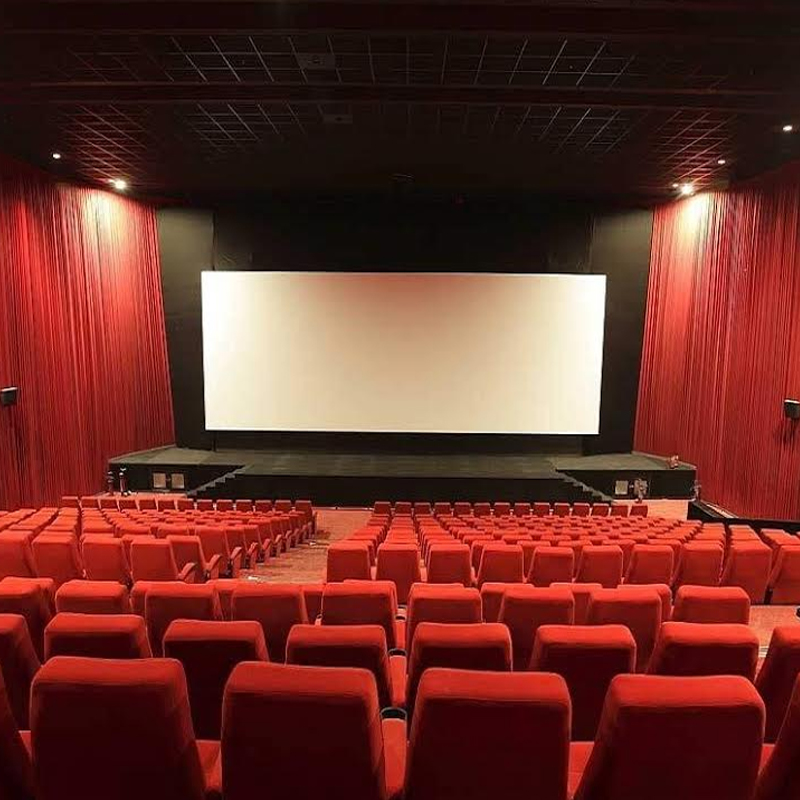
    MUMBAI: PVR cinemas has remodeled its four-screen multiplex at PVR R Odeon Mall in Ghatkopar East, Mumbai. Strategically located, the renovated PVR property, the company said it has the latest technology and features and can accommodate 976 guests.

    With this launch, PVR Cinemas consolidated its foothold in Maharashtra with 137 screens in 29 properties and 233 screens across 51 properties in the West.
    The four-screen property is equipped with cinematic technologies including 2K projectors, Next Gen 3D and advanced Dolby 7.1 sound. There are recliner seats in the last row of all the audis for the discerning audience who prefer an extra comfort and a lavish experience while watching movies.

    PVR joint managing director Sanjeev Kumar Bijli said, “We are happy to welcome movie buffs back in Ghatkopar with an experience they have never seen before. With audiences getting back to theatres in full swing, we feel extremely privileged to launch our twelfth property in the city of entertainment. We have carefully curated all the experiences and are confident that PVR Ghatkopar will be a delight for one and all in the region.’’

    Adding to the overall ambience, PVR has launched the property featuring an all-vegetarian menu with an extensive range of gourmet delicacies served in the luxury of comfortable recliners which further adds to the property’s unique offerings and provides a warm and welcoming ambience.
    PVR CEO Gautam Dutta said, ‘’The new Ghatkopar property has been designed to offer an exemplary and engaging and movie-viewing experience. PVR Cinemas has always been focused on providing a holistic experience and the new revamped property is a testimony for that as it is backed by best-in-class hospitality and cutting-edge in-theatrical technology. In addition, we have a long, delectable food slate with scrumptious flavors that will leave our vegetarian patrons wanting more.’’

    With this opening, PVR strengthens its growth momentum in FY 2022-23 with 854 screens at 173 properties in 75 cities (India and Sri Lanka).

  • PVR Cinemas partners with Cinionic to provide 100 percent laser projection

    PVR Cinemas partners with Cinionic to provide 100 percent laser projection

    MUMBAI: PVR Cinemas has announced an expanded preferred partnership agreement with Cinionic, the world’s leading provider of laser cinema solutions, to power 500 screens with Barco Series 4 4K laser projection. On completion of the rollout on new and existing screens, PVR will be the first exhibition chain in India to go 100 percent 4K RGB laser projection. The announcement was made at CineEurope, a European convention and trade show for major, regional and independent cinema exhibitors, which is taking place this week in Barcelona.

    The Barco Series 4 family from Cinionic features next generation 4K laser projection that supports sustainability with reduced waste, lower energy consumption, and an extended lifetime. The thoughtfully designed Series 4 moves away from the use of consumables, utilizing reusable components like air filters, and the laser light source eliminates the need for lamps and their subsequent replacement and disposal. All models within this leading laser projection range are also exceptionally efficient, reducing power consumption with smart power management, minimized heat dissipation, and increased operational efficiency.

    PVR chairman & managing director Ajay Bijli said, “PVR is aligned to the Climate Action SDG goal of the United Nations and has committed to lower its emission and reduce its carbon footprint. The BARCO Series 4 4K RGB laser projectors is a sustainable investment from PVR as part of its endeavor to make changes in operational practices for reducing emissions and conserve energy for a sustainable future”.

    This announcement continues a long-standing partnership between PVR and Cinionic as together they work to elevate the cinematic experience for audiences in India. Laser Projection by Cinionic delivers exceptional presentation quality with vivid colours, high brightness, and clear on-screen images. Through the expanded agreement with Cinionic, PVR will also benefit from Cinionic’s enhanced services with Cinionic Cloud, a digital platform for managed services through remote connectivity, improving the performance and optimizing the cost of operation over time. Cinionic services help to ensure worry-free operations for cinemas, by monitoring the health of the projector, predicting service interventions in advance, and minimizing screen downtime.

    “PVR continues to enhance the theatrical experience for India, offering cinematic excellence and a commitment to a sustainable future. We are proud to expand our strong relationship with PVR to deliver a fully laser-powered theatrical experience. The eco-friendly Barco Series 4 offers audiences across India a greener way to go to the movies” said Cinionic CEO Wim Buyens.

    In observing evolving trends in the cinema exhibition industry, energy-efficient and eco-friendly product designs are gaining momentum. Energy is no longer simply an internal cost factor. Today’s leading exhibitors are looking for ways to reach their sustainability goals without sacrificing quality and identifying how every part of their cinema value chain can contribute towards supporting a greener value proposition.

  • As a brand, we have always been hungry for growth and expansion: Anand Vishal

    As a brand, we have always been hungry for growth and expansion: Anand Vishal

    Inox’s chief sales and revenue officer Vishal Anand has helmed critical management roles with various cinema entities. With a career spanning over two decades, he has managed many portfolios including business operations, sales and marketing.

    Anand has played a spectacular role in driving box-office growth and advertising revenue generation for Inox across multiple platforms & channels. Sharing about the optimistic approach toward growth and expansion of Inox, Anand revealed his plan to add 16 properties with 77 screens in the upcoming year. He also talks about tapping new markets and adding 900 screens that would expand Inox’s presence to over 30 new towns and cities.

    With a holistic and in-depth knowledge of the cinema exhibition business, his expertise lies in developing & executing sales strategies, building strategic coalitions and mapping opportunities. He thrives on cluster mapping, opportunity management and working with cross-functional peers to deliver consistently.  

    Under his leadership, Inox’s business has regained its market momentum with nearly 80 per cent of its business reaching the pre-covid levels and it is expected to revive complete 100 per cent business growth in the next two months, thereby hinting towards better performance and capitalisation during the upcoming festive seasons.

    Indiantelevision.com caught up with Anand to find out about Inox’s plans and cinema exhibition business.

    Excerpts:

    On improving operational efficiencies after the merger with PVR

    While I can’t speak much on the subject, all I can say is that the synergies of the two organisations are going to fetch tremendous value for all the stakeholders, and most importantly, the cinema lovers of India.

    On levelling up Inox’s revenues and profit back to pre-covid level

    The fourth quarter served as a reminder of the pre-covid times for us as well as for the cinema industry, with the remarkable 11 million footfall and 24 per cent occupancies. Within the fourth quarter, the month of March was thunderous, to say the least, with magnificent record-breaking numbers. I am happy to say that we garnered the highest ever F&B collection in a single month, in March 2022. We also reported our highest ever quarterly spends per head or SPH at Rs 91 in Q4. On a full-year basis, we have recorded an increase in spend per head from Rs. 79 to Rs. 97 in the last year.

    On reducing fixed costs by 10 per cent via manpower reduction

    A number of organisations all over the world prioritize cost management as a routine business practice, and there are numerous ways to do it. Use of technology, optimum utilisation of resources and assets are other smarter ways to do it.

    On the capex for the current fiscal and the screen expansion strategy

    We look to add more than 77 screens in this financial year. As a brand, we have always been hungry for growth and expansion. Whether it was calendar year 21 or FY22, we ended up adding the most number of screens in the industry, even when the tides were against us. We are as optimistic as we have always been. We plan to add 16 properties with 77 screens in FY23, out of which, 13 screens have already been added.

    On deciding about different forms of multiplexes like Megaplex

    There is a lot of research and business intelligence which goes into the process of defining the shape, size and number of auditoriums for a cinema. The size and affluence of the catchment, their paying propensity, their aspirations, the competition’s presence, and the F&B revenue feasibility are some of the factors which are ascertained while giving shape to a multiplex.

    Our Megaplexes in Mumbai and Lucknow have allowed us to delight our guests with world-class cinema viewing experiences, fascinating design and ambience, great dining options and above all, fantastic memories to cherish.

    On the number of malls in the country is a challenge

    The Indian cinema exhibition industry can be characterised by a massive appetite for cinematic entertainment and a massive supply of good quality content in multiple Indian languages, but a market which is heavily under-screened. With more than five movies delivering box office collections in excess of Rs 100 crore post, the unlock after the third wave of covid is a testimony to our country’s massive consumption capabilities and well the availability of the content of terrific quality. At the same time, the screen count in our country has been marginally going down. In short, there’s ample demand and ample supply, but the mode of consumption is scarce. Our country’s bludgeoning and ever-growing young aspiration-driven population deserve more good quality entertainment destinations to enjoy the world-class content produced in India, for which the gap needs to be bridged.

    On how the government need to do more to aid the growth of multiplexes

    The entire value chain, which includes state and local level government authorities, mall developers, the technology providers and cinema chains will all have to play a part in this endeavour. The clearances to open a cinema need to be consolidated and streamlined into a single window clearance system. This should go a long way in speeding up the regulatory compliance process.

    The mall-developers community also needs to be armed with simplification of the regulatory environment around the real-estate business, which should allow them to break free and go aggressive on urbanization. Our cinema technology partners must also be prepared to add to the layers of technology and scale up to satiate the demand of various markets in our country. Overall, the government must incentivise and encourage the stakeholders in the cinema exhibition industry, which should not only help them recover from the shackles created by covid, but also set new benchmarks globally. 

    On how the box office is shaping up this year

    We have an extremely positive sentiment for FY23, thanks to an extremely rich pipeline with movies in all genres and languages, including “Dhaakad”, “Bhool Bhulaiyaa 2”, “Maidaan”, “Major”, “Prithiviraj”, “Anek”, “Lal Singh Chaddha”, “Avatar 2”, “Ram Setu”, “Top Gun: Maverick”, “Jurassic World: Dominion” and “Adipurush”. Movies and cricket are two primary and biggest sources of entertainment in India

    On the impact of inflation

    Cinema viewing is a part of our country’s cultural fabric, and to some extent inflation-proof, as proven by the industry’s rollicking performance over the past quarter or so. With about 10 per cent of our screens in the premium category and an even presence in 73 cities across the country, we have a fair mix of premium and affordable experiences and ticket prices across a vast price range. We have not brought in any modifications in our approach due to inflation. 

    On the plan to tap into the smaller towns and cities

    Our additional pipeline of more than 900 screens would expand our presence to more than 30 new towns and cities where we do not have our presence currently. Cinema has a universal demand in our country and we have a strong desire to get closer to our customers and take the world-class cinema experience to new geographies.

    On the revenue split between ticketing and other areas like F&B

    We generate about 60 per cent of our revenues from ticket sales, about 25 per cent of our revenues from F&B sales and about 15 per cent of our revenues from sales of cinema advertisements.

    On the idea of doing merchandising

    We are in the business of movies, and in recent times movies have transformed into movie franchises and are considered brands themselves. Like with every brand, movies also connect on a deeper level with fans who seek this connection and they develop a community with fellow movie lovers. The fans also crave a sense of belonging and something solid when it comes to their favourite movie franchise and stars. We aim to provide this sense of belonging to this large group of passionate fans through our channels. This would help us enlarge and engage the community of Inox patrons as we offer them a shared sense of enjoyment.

    On F&B activities including the home, delivery deals with Swiggy, Zomato

    Inox has implemented a comprehensive and renewed F&B roadmap with the introduction of some new processes and exciting innovations, including making our food available on online food ordering platforms, Swiggy and Zomato. The idea is to tap a new consumer base that buys our food products even if they are not watching a movie, besides strengthening the F&B revenue stream. We have also introduced home-meal replacement options. We have included meal options like Pulao, Biryani, Dal Makhani, the much-loved servings of Rajma-rice & Chana-rice, Pastas, Garlic Bread, Tandoori Popcorn and Chilli Cheese Toasts.

    Recently, we announced our partnership with table reservation and food discovery platform, EazyDiner. We are the first cinema chain in India to get listed on the table reservation platform – EazyDiner. With this collaboration, EazyDiner members can avail of a flat 15 per cent discount across all Inox food counters and Café Unwind. Making the experience more rewarding and befitting, EazyDiner members can enjoy a flat 25 per cent discount across all Insignia lounges across the country on reserving a table via EazyDiner.

    Inox has announced its partnership with ITC’s ready-to-eat, gourmet brand Kitchens of India to introduce a re-defined innovative F&B experience across all multiplexes across India. With this first-of-its-kind partnership, Inox aims to add a new experience in the cinema halls through a trusted range of 100 per cent natural, Indian gastronomical delights.

    On improving in-cinema advertising revenue 

    Yes, the advertising revenues are not just back to normal but have come back with a renewed rigour. We are back to nearly 80 per cent of the pre-covid levels and expect it to reach 100 per cent within the next two months, well in time to capitalize on the festive season with our complete might. We are seeing a new crop of brands which are keen to explore the unique benefits of cinema advertising, and take their brands to audiences, who are coming to cinemas with a huge pent up appetite for the community viewing experiences.

    With a marvellous content pipeline, a huge desire for participating in community experiences and our efforts to offer unparalleled cinema experience, we are sure of registering a strong comeback on this front.  

    On in-cinema advertising goals of the company

    While offering both reach and recall, there are plenty of benefits of cinema advertising. It offers a tremendous visual impact, which comes through the biggest possible screens that the audience would come across. Another reason behind the success of cinema advertising is the captive state of mind in which the audience is seated in the auditorium, which leads to negligible avoidance of visual communication.

    Cinemas offer higher brand recall and engagement with premium audiences compared to any other medium. While cinema advertising can act as a great tool for geography-specific marketing, we also bring on a national scale thanks to our massive presence in 73 cities with 692 screens.


  • Curtains for Cinemas?: Industry pins hopes on vaccine roll-out amid second wave

    Curtains for Cinemas?: Industry pins hopes on vaccine roll-out amid second wave

    KOLKATA: The film entertainment segment of the M&E industry was perhaps the worst hit due to a long-term closure induced by the outbreak of Covid2019. With phased opening and beginning of theatrical releases, the allied segment had been on the course of recovery, but the second wave of the pandemic has abruptly derailed hopes of revival.

    After fresh lockdown guidelines were enacted in Maharashtra, shares of major multiplex chains like Inox and PVR slipped for two consecutive days, given the fact that the state contributes to around 35 per cent of all India box office.

    “As a responsible organisation, we completely relate to the Covid situation in Maharashtra. The revival process of the cinema industry had begun, and the recent curbs are much like a speed-breaker in the journey, which we shall surpass soon in a month’s time,” said Inox Leisure Ltd Alok Tandon.

    He went on to add that the performance of movies like Roohi and Godzilla Vs Kong showed that audiences are willing to turn up in big numbers for new and good quality content, even after an elongated lockdown.

    However, more than cinema occupancy, what’s adding to the woes of cinema owners is that the skyrocketing caseloads have once again disrupted the release calendar. Akshay Kumar-starrer Sooryavanshi, originally scheduled for March 2020, has been postponed indefinitely from its 30 April 2021 release date. Eventually other big ticket releases like Radhe will follow the same path, Elara Capital VP research analyst (media) Karan Taurani surmised.

    Like a playback of last year, this lockdown too will be lifted in a phased manner based on the number of daily cases, opined Taurani. But this time around it may not be as troublesome as 2020, and unlock will happen more swiftly thanks to the vaccine roll out being ramped up. However, he pointed out that theatres may well be the last to open up even if cases come down.

    On the other hand, Inox’s Tandon has reposed faith in upcoming content and increased turnout in the markets dependent on movies in other Indian languages, especially in the southern and eastern parts of the country. Over the past few months, movies like Master, Roberrt and Uppena had brought out the southern audiences in droves. Yuvarathnaa, Sulthan and Wild Dog are also currently performing exceedingly well in the South Indian markets, he added.

    “With Covid cases rising again, there are two major factors which will determine the future of theatrical revenues. One is the fear factor which can lead to lower footfalls even if theatres are open. Secondly, the slate: some films have again started postponing their releases. Unless there is a mass vaccination drive properly rolled out and a solid film slate of releases, the situation is probably not going to improve meaningfully,” EY India partner and media & entertainment leader Ashish Pherwani remarked.

    He also noted that the uncertainty around recovery timelines could result in further direct-to-digital releases, but that may not be a permanent trend. In a similar vein, Taurani mentioned that there is already a big backlog of films and April-June was supposed to be a period where cinemas could go back to 17-20 per cent occupancy on the back of big Hindi releases. Now, many of the mid-small budget producers will again go for OTT premieres. 

    Moreover, in-cinema advertising, which went down almost 90 per cent in 2020, will also be keenly impacted even if the theatres are open in some states.

    “Artificial intelligence has actively taken over the cinema advertising space and this allows for delivering appropriate content depending on location of the cinema, ticket price, demographic and occupancy,” said Harkness Screens Asia EVP Preetham Daniel. “Though the occupancy levels in the auditoriums are not as high as pre-Covid, the value of the advertisement, I believe will be equally impacted. Having said this, the revenue from advertising will definitely take a hit. We had seen the occupancy numbers and box office rising but given the second wave, we may see it drop again as some large releases will now get pushed to June.”

    The advantage of AI is the decision to play a particular ad will now be more accurate based on the heaps of data available on people behavioural pattern, he explained. This allows for brands to sign on long term as opposed to a weekly or monthly run. While Covid2019 also has affected the on ground activation campaigns for the brands, Daniel remained optimistic that it will eventually pick up as and when hyped movies hit cinema screens.

    “Thanks to a huge pent-up demand and a stellar line up of movies, 2021 is destined to be a blockbuster year for us, and we are still certain about it. In the current situation, we have pinned our hopes on the rapid and widespread vaccination drive, which we hope would arrest the surge in cases,” Tandon said.

  • Maharashtra allows opening up of cinema halls from tomorrow

    Maharashtra allows opening up of cinema halls from tomorrow

    KOLKATA: After months of closure due to Covid2019 crisis, the Maharashtra government has given green signal to the film exhibition sector to restart the business. The state government has allowed cinema halls, theatres, and multiplexes outside containment zones to open from tomorrow.

    On the lines of the central government’s decision, screenings will be limited to 50 per cent of the overall seating capacity. No eatables will be allowed inside, the notification stated.

    The SOP for the same will be issued by the cultural affairs department and local authorities. It will also take into consideration the SOP issued by the ministry of information and broadcasting (MIB). Earlier, ministry of home affairs (MHA) allowed the opening of cinema halls from 15 October but all states did not follow the decision immediately. However, the industry was awaiting the decision of the Maharashtra government specifically.

    Since late March, the cinema halls have been shut amounting to huge losses for the cinema owners. The producers opted for OTT platforms to release their movies. As the move comes just before Diwali, it could be a breather for the industry which is bleeding for last six months.

  • Industry remains cautiously optimistic with reopening of cinema halls

    Industry remains cautiously optimistic with reopening of cinema halls

    KOLKATA: For people across the film exhibition industry, the Unlock 5.0 guidelines have brought them a reason to smile. On Wednesday evening, the ministry of Home Affairs (MHA) allowed opening of cinema halls from 15 October with 50 per cent seating capacity. As the sector is back in business, the stakeholders rejoice the decision despite persisting challenges.

    The reopening of the cinema halls is a critical point for the industry that has been struggling in the face of the pandemic. Even before the nationwide lockdown started, cinema halls shut fearing the spread of Covid2019. Being out of the business for nearly seven months, the cinema owners have been asking for some respite for quite some time now. Last month, the Multiplex Association of India (MAI) appealed to the government to allow theatres to reopen “on an urgent basis”. The association has “wholeheartedly” welcomed the latest decision of the government. Back in June, a survey from Book My Show stated that 54 per cent of Indians want to catch their favourite films in cinemas within 15-90 days of opening up.

    “Millions of movie lovers, employees of the cinema exhibition sector, along with the entire film industry were eagerly awaiting this announcement. We would like to extend our heartfelt gratitude to the MHA and the ministry of Information and Broadcasting (MIB) for their support and guidance. We are committed to ensure a safe, secure and a hygienic cinema going experience for the movie lovers of our country, as always, we would continue to assign top-most priority to the health and well-being of our guests and employees,” MAI stated.

    The multiplex owners have expressed an equal amount of satisfaction around the announcement. Carnival Cinemas managing director PV Sunil said this is the right time to open up with Diwali around the corner. Sunil opined that 50 per cent capacity is better than what they had predicted would be allowed. The industry had been proposing a 50 per cent capacity. Most of the countries are also following the same norm. As of now, Carnival’s software is being modified in accordance with that so that the audience has a seamless experience while booking tickets online.

    “This is a welcome move by both the west Bengal government and the central government. So many people are associated with the industry, so much money is at stake, the industry was losing almost Rs 1,500 crore every month while it was shut. We are happy that we are able to restart and people will be able to go back to the practice of going to a movie theatre.” SVF Cinemas head Rudra Prosad Daw said, the movie chain which operates in east India.

    While a part of the industry has been worried about the seating capacity limits eating up their profits, Daw said that it is a good percentage in the initial phase. He added that average footfall over the year is on an average 32 per cent, although it is higher excluding the southern part. However, he noted that for big blockbuster releases, the footfall goes up to 80-90 per cent during the weekend which could be a cause of discomfort. Daw emphasised that safety would be put at highest priority, for both audience and staff members.

    Ambient director Deepak Kumar welcomed the move and said it would help cinema halls to be better prepared to welcome its consumers like most of the establishments have done that have resumed operations in a phased manner. According to him, cinema halls opening with 50 per cent seating capacity is a step in the right direction. Moreover, as the cinema halls are usually located within a mall, it would also add up to the footfall count. The decision will not just help the owners but also its ancillary.    

    The return of cinema halls to business came as a relief for the studios too which have halted many of their releases. Many of the OTT platforms may have opted for digital premiers giving some breather to the production houses but the number is too limited compared to overall pending movie slate.

    “The reopening of theatres is a relief for studios and theatre owners while once again offering audiences the unparalleled experience of watching movies on big screens. We are looking forward to entertaining audiences in this era of the “new normal”. The pandemic has led to a surge of content consumption across genres and platforms and this is a hugely encouraging indicator for content creators and providers. Cinema is and will always continue to remain an expression of creativity and imagination and we look forward to fostering a stronger bond with our audiences,” Eros Motion Pictures COO Shikha Kapur said.

    But now the eyes are at states like Maharashtra, which has decided to continue the shut down till 31 October. Elara Capital VP – research analyst (media) Karan Taurani said that pan India opening is expected around Diwali or latest by late November. Hence, he opined that large scale content or a big Hindi film is not to hit cinemas before December. SVF Cinema’s Daw also added that they have not heard from Bollywood yet while its parent company SVF and some other producers in west Bengal has already planned releases around Durga Puja.

    “We are cognisant of the prevalent environment and will monitor this on an ongoing basis to determine our release strategy. With regards to our content slate, Eros has an exciting line-up of films for which announcements will be made at an appropriate time,” Kapur added.

    Adding to concerns regarding the fresh releases, analysts believe impact on revenues coming from food and beverages (F&B) and advertising may last longer. “F&B will be under pressure as consumers may not be open to consuming food in cinemas; further, affordability levels too may negatively affect overall F&B spending vs pre-Covid times. Advertising revenue, which is too high margin in nature, will see a negative impact as occupancy in our view will remain restricted until active cases become negligible or a vaccine is launched,” Elara Capital said in a report.

    However, Ambient’s Kumar is optimistic. He stated brands would flock back to cinema halls as cinema is an efficient advertising medium which ensures 100 per cent captive audience. 

  • Cinema halls to be back in business from 15 October

    Cinema halls to be back in business from 15 October

    KOLKATA: After coping with the initial shock of Covid2019, the economy has started reviving slowly. With the new guidelines issued by the ministry of home affairs, the revival will speed up, especially in the cinema exhibition sector. The ministry has finally allowed the opening up of cinemas, theatres, multiplexes from 15 October onwards as part of its Unlock 5.0 plan.

    According to the guidelines released today, theatres can open with upto 50 per cent of their seating capacity being thrown to movie goers  outside containment zones. Standard operating procedures (SOPs) are to be released a little later by the ministry of information and broadcasting (MIB) which is the regualtor for the exhibition sector. 

    Along with that, exhibition halls, and entertainment parks have also been given the go-ahead to welcome customers.  States and union territories have been  given the flexibility to to permit gatherings of more than 100 people outside containment zones after 15 October and under social distancing rules.  This probably means B2B exhibitions, cultural, religious, political functions and other gatherings will be allowed from mid-October.  The department of commerce will issue SOPs for these. 

    Earlier this week, west Bengal chief minister Mamata Banerjee had  announced that cinema halls can start screening films for the public come 1 October.  It was the first state government to give the green signal to the beleaguered cinema exhibition sector.

    Since late March 2020, cinema halls have been shuttered leading to huge losses for cinema owners. Film producers and distirbutors , as an alternative, opted for OTT platforms to release their movies. As the move comes just before the festival season, it could be a breather for the industry which has been bleeding for the past six months.

    The experential and events sector is also heaving a sigh of releif with exhibitions, cultural gatherings being permitted. Estimates are that the industry has lost close to Rs 10,000 crore ever since the lockdown was announced late March 2020. And hundreds of thousands of event executives and managers have lost their jobs. With the lockdown measures  being pried open, the hope is that many of them will get back their jobs, with companies working to kick start consumption, and in the process the economy even more.  

  • Multiplex Association of India expresses displeasure over decision to keep cinemas, multiplexes shut in Unlock 2.0

    Multiplex Association of India expresses displeasure over decision to keep cinemas, multiplexes shut in Unlock 2.0

    MUMBAI: On 1 June the government of India entered into unlocking by phases. As per Unlock 2.0 guidelines, offices, high streets, markets and shopping malls, airlines are opened but there is no relief for multiplexes. It continues to be included in the prohibited activities list.

    Today, Multiplex Association of India (MAI), under the aegis of Federation of Indian Chambers of Commerce and Industry (FICCI) issued an official statement expressing their disappointment over central government’s decision to keep cinemas and multiplexes shut even when the other business is opened up.  

    “At a time when a significant part of the economy is being opened up, including domestic travel, offices, high street, markets, shopping complexes, etc., the Multiplex Association of India (MAI) feels dismayed that cinemas and multiplexes continue to remain in the list of prohibited activities under the central government’s Unlock 2.0 guidelines. The association finds it highly demotivating and disheartening when in fact, cinemas and multiplexes can become an example of how social distancing guidelines and crowd control can be best exercised in a safe and planned manner. As compared to the unorganised retail and shops that have been opened up, multiplexes and cinema are part of the organised sector, playing hosts to ‘revenue paying’ customers only and hence, in a better position to limit crowds unlike marketplaces and deploy all the mechanisms and guidelines for crowd control and social distancing,” MAI states in the note.

    The body highlighted that the multiplex industry in India employs more than 200,000 people directly. It also points out that it is the backbone of the Indian film industry accounting nearly 60 per cent of revenues of film business. And directly providing  livelihoods to more than a million people – right from the spot boys to makeup artists, musicians, designers, technicians and engineers to cinema employees to directors and actors.

    The body also said that the lockdown has brought the entire industry to a standstill with losses mounting every passing day. It mentions that an early decision to allow cinemas to open up will only help the mobilisation of resources in the film industry’s ecosystem and would lead to gradual resurrection.

    It said that even after opening up, they anticipate at least three to six months before things return anywhere close to normal.

    It further read, “On one hand where programming of new content will take some time to kick in; movie buffs on the other hand are expected to take a cautious approach before returning to cinemas. These are real challenges that the industry will have to overcome and we believe together, with the support of the government, we will be able to overcome them.”

    Globally, countries like France, Italy, Spain, Netherlands, Austria, Hong Kong, UAE, US, etc. and more recently Belgium and Malaysia have opened cinemas.

    To which the MAI said, “Many countries around the globe have opened up cinema halls and multiplexes to the public with implementation of the highest degree of safety protocols and have seen a warm response by audiences. In effect, more than 20 major cinema markets around the world have started operating. MAI is of the firm belief that, there must be a start and the unlocking of cinemas in non-containment zones across India should be done post haste – there must be a beginning and an opportunity must be given to us, just like some of the other sectors.”

  • Disney+ Hotstar’s ‘Multiplex’ to pit OTTs against each other

    Disney+ Hotstar’s ‘Multiplex’ to pit OTTs against each other

    KOLKATA: An unprecedented crisis has compelled producers to re-imagine the film distribution model suddenly. As theatres remain shut across the country, producers are developing camaraderie with over-the-top (OTT) platforms. While Amazon Prime Video was the first OTT platform to go aggressive over digital premieres of films, Disney+ Hotstar is taking the trend forward with the launch of Disney+ Hotstar ‘Multiplex’. From July, it will premiere seven Bollywood movies for its subscribers and this might escalate the conflict between producers and multiplex owners.

    Disney+ was scheduled to launch in India during IPL 2020 which later got postponed due to the Covid2019 pandemic. The rebranded Disney+ Hotstar could have emerged a clear winner on the back of India’s most popular sporting event. Now, it is banking on another segment which has crazy fandom – Bollywood.

    “At Disney+ Hotstar, we firmly believe in pushing boundaries to achieve the unexpected. A few years ago, we took an audacious step of bringing sports closer to people by streaming it LIVE on mobile devices – a move that forever changed the course of LIVE sports in India. Today as we launch Disney+ Hotstar Multiplex, we find ourselves yet again at the cusp of making a revolutionary change by bringing the biggest Bollywood movies directly to millions across the country,” The Walt Disney Company APAC chairman and Star and Disney India president Uday Shankar said in a press statement. 

    The belief was that only small budget movies would go to OTT and the big ones would want the ROI via theatres. But as Shankar launched the service alongside top Bollywood stars such as Alia Bhatt, Akshay Kumar, Ajay Devgn and Abhishek Bachchan, that idea is bound to change.

    “Any OTT player who is releasing films will see a significant increase in subscribers. Usually, movie-going costs for a family range between Rs 1000-2000 depending on which city and where they are watching the movie. Against that, they can always subscribe to platforms like Disney+ Hotstar at a lower price and get done for the year. Hence, there will be a new set of consumers who will come on these platforms. If somebody becomes a subscriber for a movie, they will continue for other content once and the platforms will acquire subscriber for a lifetime. So, the tectonic shift in movie-release business is going to be a big win for OTT players,” says PwC India media, entertainment and sports advisory, partner and leader Raman Kalra.

    Experts believe the move will dramatically increase the subscriber base of the service even as Media Partners Asia projected it could have 25 per cent of the total online video revenue pie by 2025. After Disney’s acquisition, Hotstar has grown personalisation and search functionality as the platform has invested in scaling its premium entertainment proposition.

    Even though the tussle between OTT and multiplexes will continue, Shankar said that they both will grow together. “Even when films started releasing on TV, theatres grew. Digital premiere will give a new life to the industry. We have 500 million mobile screens in this country right now where films can be watched. If we can reach out to them, it will be a great outlet for the industry to showcase its creativity and tell stories. We should not see this as a short-term tactical compromise, we should see as a big leap for our film industry,” he said during the virtual press conference.

    Kalra also believes that the audience will love to go back to theatres once everything settles downs. But a parallel set of movies will be produced keeping OTT platforms in mind. However, he, too, believes that both sides will have enough demand in the market given the lower screen density in India.

    “We thought why not use the opportunity of the pandemic to create a big, alternative world of exhibition, and create a network of virtual theatres – private theatres – in everybody’s homes, and that is what we are doing today,” Shankar said. 

    This also leads to another question. Will such mega launches spell the death knell for smaller OTT players? Kalra thinks these international players and homegrown players always have had a different strategy. If more people flock to these larger platforms, the latter will definitely have enough demand if they make content and monetisation strategy focusing on the kind of subscriber they want to target and accordingly give them the expected experience.

    “It will create a contest between various OTT players particularly negative for the likes of ZEE5 and Amazon Prime Video which have focused more on originals,” says SBICap Securities institutional equity research head Rajiv Sharma. “It will have some serious short term implications and is a matter of concern for multiple players because they have been overlooking participating in the digital value chain.”

    The conflict started when Amazon Prime Video acquired the rights for Gulabo Sitabo. Then came the stunner that Akshay Kumar’s Laxmmi Bomb would be released on Disney+ Hotstar. Not to mention that the upcoming movie of late actor Sushant Singh Rajput, Dil Bechara, will be the move that flags off the Multiplex service.

    “Competitive intensity may increase now among OTT players also. This will have a cascading effect as the contest to chase movies and delay in the opening of malls will continue to add to producers’ problem as they will have to focus only on digital to generate revenue,” Sharma adds.

    Kalra agrees that there might be disappointment coupled with a lot of debate and discussion. While he, too, says that in the long-run, theatres and digital screens will co-exist, he believes the theatre owners will also have to change the business model keeping the need for contactless experience in mind. 

  • Inox predicts suboptimal operations in future due to lower discretionary spending

    Inox predicts suboptimal operations in future due to lower discretionary spending

    MUMBAI: Multiplex chain operator Inox Leisure Ltd was amongst movie chains that were badly hit due to the pandemic. Nearly three months later there is no sign of when cinema halls will resume functioning. Inox said, in a BSE filing, that to ensure smooth functioning of operations, Inox has cut costs across all the functions and departments. 

    It has strengthened engagement with business partners, developers and distributors and producers. It requested the state and central government for support while invested more time in planning in order to utilise its resources better resumption of operations.

    The company has increased liquidity by adding additional lines of funding through short/ long term debts. The company's management believes that these certain measures ensure that the company has sufficient liquidity to fund the business operations for at least the next six months and will further add liquidity by the additional term debts from banks. For now, it has enough liquidity to continue its operations and does not expect to face any liquidity crunch.

    INOX believes that normalcy could be gradually restored during the financial year ending 31 March 2021. Gradually, over time, it will be able to resume and continue its operations for the foreseeable future.  However, it will be unable to operate at optimal capacity even in the future, considering social distancing norms imposed by the government.

    Inox highlights that it has adhered to all recommended precautions/guidelines in its operations, which includes sanitisation and hygiene, providing work from home facility to all employees, maximising audio and video-conferencing and minimising contact. It also closed employee travel and followed all government directions on the subject. However, it points out that once the lockdown ends, the company will be able to open all its offices, cinema halls adhering to the guidelines as specified by the government and will comply with all safety measures to safeguard its stakeholders from Covid2019.

    Its worry is that there could be future impact on its operations if there is a prolonged lockdown situation, inability to operate at optimal capacity due to distancing norms and customers’ change in priorities and postponing discretionary spending.

    Cinema chains tend to have added products and services that go along with its main movie offering. Inox expects there to be pent-up demand for its products and services but it could estimate the amount. For Q4 2020, it saw, loss after tax of Rs 2 crore.

    Apart from this, the company has performed a sensitivity analysis on the assumptions used and based on economic information and assessment, with its help the company expects to recover the carrying amount of these assets. The report also mentions that it will continue to closely monitor any material changes to future economic conditions.