MUMBAI: TVS Motor Company launched a new advertising campaign for its motorcycle brand — TVS Sport. The campaign has been conceptualised by Mullen Lowe Lintas Group and follows the journey of a young boxer from a small village straight to the National Sports Training Facility in the city. He is abetted by TVS Sport, the perfect partner in his pursuit of success; the product’s unmatched fuel economy of 95 km/l, five-year warranty and affordable pricing; one that is an ideal fit for his requirement.
The film opens with a young man riding out of his village on TVS Sport, reminiscing how his humble beginnings never stopped him from chasing his dreams. He rides past the local gym in the village, smiling at how his goals have changed over the years. Riding on the dusty roads in the outskirts, he passes by a broken bike and continues unperturbed on his TVS Sport. His determination is fuelled by the confidence that his bike is high on mileage and durability and is ready to be pushed to new limits. As the film closes, we see him take off his jacket, revealing his jersey with National Boxer imprinted on it thus cementing his position as a go-getter.
The concluding voiceover reinstates that we must never let distances or difficult roads get into the way of achieving our dreams.
TVS Motor Company VP – marketing (motorcycles) Arun Siddharth said, “The youth residing in small towns, harbour dreams of making it big in life and surpass every obstacle. TVS Sport with its unmatchable mileage, and durability gives them an edge on their path to achieving success beyond the prescribed boundaries. The film is an attempt to celebrate the spirit of such people who set their sights higher and overcome challenges.”
MullenLowe Lintas Group executive director Rajesh Ramaswamy said, “We wanted to position the TVS Sport, which offers great mileage and durability, as the perfect partner for these young, go-getters who will stop at nothing to achieve their dreams. It’s a perfect fit and the ad captures both the mind-set of the youth today and the salient features of the bike.”
MUMBAI: In the current Indian scenario, the combined effect of demonetisation, crackdown on un-taxed incomes, and a series of Bills passed by the government to make real estate more regulated, the consumer is anxiously holding their breath for real estate prices to fall in urban India. It’s made the real estate market sluggish, with people delaying buying decisions to avoid the risk of losing money, in case prices fell.
Rohan Builders of Pune, were among the first real estate companies in India to introduce a ‘Price Protection Policy’ back in 2008. The policy ensures that if the market price of the property bought falls, Rohan refunds the difference to the consumer. They have re-introduced this policy, in the wake of current market conditions. While this policy is immensely relevant in the current market, it normally gets buried in the fine print of the legal documents and is left to the sales personnel to explain (or ignore).
To put spotlight on Price-Protection, LinTeractive recently unveiled a digitally-led initiative, Price-Protected Sabziwala (vegetable vendor). At this shop, you get price-protection on vegetables, even on small fluctuations in the market.
The campaign kicked-off with a series of prank videos set in Pune called “Aaj ka Bhav” (the rates today) by the popular comedy group STFU18. In the Series, vegetable vendors in and around Pune were asked if they would return money to consumers if vegetable prices fell. OOH and social media are being deployed to communicate Rohan’s price protection policy.
To push the idea further, an online vegetable store, #PriceProtectedSabziwala has been launched, where people can buy vegetables with a price protection guarantee. Physical vegetable stores on the same lines have been setup in retail malls of Pune. The buyers of veggies from these stores are notified via SMS, every time prices fall and they can claim a refund of the difference online. The website goes on to introduce Rohan’s Price Protection Policy invite buyer interest. A stock exchange-like price ticker for the vegetable market has been created as a mobile utility.
Rohan Builders director sales Abhishek Bhatewara said: “In the current state of the real estate market in India, the home buyer is anxious that house prices may fall, delaying their buying for a later date. At Rohan Builders, we understand the buyers’ hesitation in committing their hard-earned savings to buy a house right now. LinTeractive has come up with a very simple and effective way to make people relate to this policy – an everyday fluctuation we all live with – the prices of sabzi. We’re trying to trigger in the minds of the consumer that, buying a home with Rohan is something they should consider without fear as their investment is protected from any downturn in the market.”
Within three days of going live, the campaign has generated enormous buzz in Pune. It’s reach has crossed 3.5 million (all organic) and its garnering attention from local media. In fact, RED FM RJs even visited the vegetable vendors and talked about them at length in weekend programming.
MullenLowe Lintas Group CMO & president – marketing services Vikas Mehta said: “To put spotlight in a blind spot (price protection by a real estate company in this case) is always an interesting marketing challenge. These are hard times for the real estate business and I commend Rohan for thinking digital-first. Sumanta and the team at LinTeractive have done a great job of executing the idea seamlessly in an omni-channel manner. To see measurable impact on the clients’ business in such a short period since the campaign went live with an improved CPL, is truly heart-warming.”
Over a hundred potential customers have already come forward with interest in buying properties from Rohan Developers. More leads continue to pour-in as the campaign progresses.
LinTeractive executive VP Sumanta Ganguly said: “Inherent to our approach has always been the effective understanding of consumer journey’s to use the effective touchpoints to enable specific action. The omni-channel campaign has been created using touch-points including physical and digital experiences (on ground, web and mobile), conversations on social media, video content and OOH.”
MUMBAI: MullenLowe Lintas Group today, through an internal communique sent out by Joseph George (Joe), Group Chairman & CEO, MullenLowe Lintas Group announced the leadership for its flagship agency – Lowe Lintas.
Lowe Lintas chief creative officer Arun Iyer will operate as the chairman & chief creative officer of the agency. Partnering him will be Lintas’ veteran Raj Gupta, currently the president and Mumbai office head, Lowe Lintas, who will operate as the CEO of the agency. Both these appointments, the communique said were to be effective from 1 April, 2017.
Joe said: “I have worked long, and closely with both – individually and as a team; and I can without a shred of doubt say that Arun and Raj are best placed in experience, expertise and energy to fulfil Lowe Lintas’ business, effectiveness and creative ambitions going forward.”
Arun who has been with Lowe Lintas for over 15 years has been the creative genius behind many campaigns across Surf Excel, Idea, Tanishq, Axis Bank, Paperboat, Freecharge, Hotstar, Google, OLX, Fastrack, Flipkart, Hike and many others. He was the youngest Creative Director in the history of Lintas to have been appointed National Creative Director in 2010 and also when appointed Chief Creative Officer in 2016.
Arun Iyer said: “We are getting ready for the future and the plan is to ensure we have the most contemporary hyper-bundled offering in the industry.”
Raj Gupta who has been with Lintas for over 25 years has held leadership positions in the company across Media, Digital, Strategic Planning, Channel Planning, Business Development and of course Account Management. His width of expertise and leadership experience across functions, the company feels, will be invaluable in the agency’s journey back to full service or what at the Group they call Hyper-bundling.
Gupta said: “Great brands have a purpose that never stops unfolding and with our determination to make Lowe Lintas truly hyper-bundled, we will now have so many more ways to tell our brand stories.”
MUMBAI: In the current state of disruption in the media and entertainment industry, two things have come forth as absolute truths — firstly, the need for brands to adapt and explore non-traditional marketing; and secondly the power of pure undiluted content.
Be it GroupM’s This Year Next Year report or the KPMG – FICCI 2016 report, pick up any recognisable marketing study, and one can tell where the M and E industry is headed with double figure digital growth rates.
Going with that idea, several brands and marketers are toeing the lines of content marketing. But few have gone ahead and taken a leap of faith with content and storytelling being the main focus.
“We are used to seeing brands sponsoring television programs. ‘Buniyaad brought to you by Colgate’ is an example. But there is nothing ‘Colgate’ in Buniyaad. Whereas in the case of long format digital videos, the kind of content brands would go for is somewhere related to the concept of the brand. The format of digital allows you to experiment a lot more at a far lesser cost,” shared MullenLowe Lintas chairman and CCO R. Balki, on why it is viable for brands to produce their own content on digital.
When asked, Balki named Leo Burnett’s campaign for Bajaj V as his favourite in the last year. At the same time, he referred to ‘Sons of Vikrant’ as a campaign, not a documentary. “Anything which is released around the bike is all part of building the brand. And that is why I say it is one of the most beautiful works I have seen recently.”
When Bajaj released its new model for the commuter segment backed by the inspiring story of INS Vikrant, the power of weaving a story as the two wheeler’s brand identity was instantly revealed when record breaking units of the bike were sold on the very first day.
But it didn’t end at that. Soon the brand launched a 16 minute video titled ‘Sons Of Vikrant’, conceptualised by its creative agency Leo Burnett, documenting the lives of the war veterans who were once aboard the warship.
Bajaj Motorcycles marketing VP Sumeet Narang said, “As we delved deeper into Vikrant and started talking to people who worked on it, we realised that there are many untold stories and memories behind the naval battleship INS Vikrant and its heroes. Since we had brought back the essence of Vikrant in the form of V, we realised that the onus was also on us to bring these stories together and share them with the nation.”
The video was launched through a gala event where the who’s who of the media and entertainment industry were invited. Amidst the glitz and glory, the anecdotes of life on INS Vikrant and war stories successfully created awe and inspired attachment around the warship. Suddenly Bajaj V wasn’t a two wheeler anymore, it was a story everyone wanted to own.
“With Sons of Vikrant, our idea was to bring out the untold stories of INS Vikrant and the war veterans and share the feeling of pride with millions,” quipped Leo Burnett south Asia CEO Saurabh Varma when asked about the concept of releasing a documentary as part of the awareness building for a product.
“To create this documentary, we met many people who were part of the war to learn their stories. The footage ran into hours, which we had to bring down to 16 minutes,” Varma added.
Though the digital platform, without the time constraint, does lend itself for more creative exploration, it isn’t necessarily the long format that is working for the brands. As per Balki, digital audience is far more ADHD than a television viewer, with little patience for the content to take shape. “If the story is very well integrated with what the brand stands for, the content will bring benefits for the brand hugely, irrespective of the length of the video.
“Fundamentally if you have a terrific piece of communication, the brand will benefit from it irrespective of the length of the video. Unless the film is very riveting people lose patience quickly. Some creatives grab on to the digital media thinking and finally they don’t have to fight with the client for the extra five seconds. I don’t think so. I feel a lot of the long forms we see are boring and could have been done shorter. If one wants to go beyond 60 secs they better have something compelling,” Balki simply stated.
While Bajaj went the non-fiction way to bring out the real emotions people had for the warship and subsequently the bike, Hector Beverages’ flagship brand Paper Boat drinks, dabbled in non-fiction recently to achieve the same.
The three and half minute video called Rizwan: The Keeper of the Gates of Heaven instantly transports the viewer into an incredible fairy tale of superhero saving the day that evokes all senses.
“Paper Boat as a brand often speaks of different tastes and smells that can trigger memories, it is an important part of our brand communication. I realised that short films and features are a great way to tell such stories,” shared Paper Boat marketing head Parvesh Debuka.
Soon Paper Boat’s agency Humour Me came up with Rizwan, written by Dhruv Sachdeva, which strongly resonated with the brand’s identity and therefore the brand went ahead with it.
It has only been five days since the film has been put up on the brand’s YouTube channel and there are already 7,00,000 plus views, with positive comments like i forgot i was watching something else and this popped up” following the video.
When asked how effective this brand communication has been compared to the traditional marketing tools, Debuka said, “It is hard to compare as the metrics are different. A brand communication is supposed to deliver a certain thing. Our 20 second spot for the Chilli Guava flavour did extremely well as well. It served the purpose of spreading awareness that we have that flavour. On the contrary Rizwan has taken our storytelling a notch higher, in terms of screenplay, the cinematic experience, in terms of animation. It is no longer creating awareness but building a bond.”
Debuka is not opposed to the idea of brands producing their own content and exploring further visibility options with it. “For starters, a video such as this when released on the digital platform, garners way more eyeballs organically than what it would take to be visible on television. But as a piece of content it can be shown on television, and even cinema theatres for that matter, but then we will have calculate distribution cost, etc.”
Going by the cost as well, a brand might come out with more in their pockets when making a video for the digital audience as opposed to putting up an ad spot on television. This window for a more ROI centric marketing is driving brands to go the content way. “Obviously when you end up making a TV commercial, you spend a little more than you would spend to make a film like Rizwan,” Debuka shared.
Given the fanfare these brand produced contents have created, more brands are likely to explore the area more extensively and start producing their own content. One can’t help but ask if that will affect the way advertising industry works.
“Agencies have to reorient themselves for the digital era. We are going to see more and more digital thinking in the works. It is no longer about marketing in digital platform but it is digital in marcom thinking. That’s a fundamental shift, and those that make this quick shift quickly and swiftly will survive. I wouldn’t say that agencies and other stakeholders in the system need to feel completely threatened by this new trend of brands making their videos. But since the industry is at a cusp of disruption now, some casualties are expected,” pointed out Vizeum India MD Shripad Kulkarni.
While there is growing enthusiasm to see more work like Paper Boat’s Rizwan and Bajaj’s Sons Of Vikrant, industry veterans are also cautioning brands against jumping the content marketing bandwagon simply out of the herd mentality. “Often we see that people absorb good content for its own sake and completely forget the brand. Therefore the story needs to be well integrated with what the brand stands for, therein the content will benefit the brand hugely,” shared Balki.
Echoing similar sentiments, Debuka added, “The primary requirement is how strongly enmeshed is your brand in the story. Whether it is told on television or digital or radio or even on the print platform. One has to ask if the brand can own that story. The content that a brand produces should be a natural extension of the brand communication. If that is not to be, then none of the mediums will work for the brand.”
MUMBAI: In the current state of disruption in the media and entertainment industry, two things have come forth as absolute truths — firstly, the need for brands to adapt and explore non-traditional marketing; and secondly the power of pure undiluted content.
Be it GroupM’s This Year Next Year report or the KPMG – FICCI 2016 report, pick up any recognisable marketing study, and one can tell where the M and E industry is headed with double figure digital growth rates.
Going with that idea, several brands and marketers are toeing the lines of content marketing. But few have gone ahead and taken a leap of faith with content and storytelling being the main focus.
“We are used to seeing brands sponsoring television programs. ‘Buniyaad brought to you by Colgate’ is an example. But there is nothing ‘Colgate’ in Buniyaad. Whereas in the case of long format digital videos, the kind of content brands would go for is somewhere related to the concept of the brand. The format of digital allows you to experiment a lot more at a far lesser cost,” shared MullenLowe Lintas chairman and CCO R. Balki, on why it is viable for brands to produce their own content on digital.
When asked, Balki named Leo Burnett’s campaign for Bajaj V as his favourite in the last year. At the same time, he referred to ‘Sons of Vikrant’ as a campaign, not a documentary. “Anything which is released around the bike is all part of building the brand. And that is why I say it is one of the most beautiful works I have seen recently.”
When Bajaj released its new model for the commuter segment backed by the inspiring story of INS Vikrant, the power of weaving a story as the two wheeler’s brand identity was instantly revealed when record breaking units of the bike were sold on the very first day.
But it didn’t end at that. Soon the brand launched a 16 minute video titled ‘Sons Of Vikrant’, conceptualised by its creative agency Leo Burnett, documenting the lives of the war veterans who were once aboard the warship.
Bajaj Motorcycles marketing VP Sumeet Narang said, “As we delved deeper into Vikrant and started talking to people who worked on it, we realised that there are many untold stories and memories behind the naval battleship INS Vikrant and its heroes. Since we had brought back the essence of Vikrant in the form of V, we realised that the onus was also on us to bring these stories together and share them with the nation.”
The video was launched through a gala event where the who’s who of the media and entertainment industry were invited. Amidst the glitz and glory, the anecdotes of life on INS Vikrant and war stories successfully created awe and inspired attachment around the warship. Suddenly Bajaj V wasn’t a two wheeler anymore, it was a story everyone wanted to own.
“With Sons of Vikrant, our idea was to bring out the untold stories of INS Vikrant and the war veterans and share the feeling of pride with millions,” quipped Leo Burnett south Asia CEO Saurabh Varma when asked about the concept of releasing a documentary as part of the awareness building for a product.
“To create this documentary, we met many people who were part of the war to learn their stories. The footage ran into hours, which we had to bring down to 16 minutes,” Varma added.
Though the digital platform, without the time constraint, does lend itself for more creative exploration, it isn’t necessarily the long format that is working for the brands. As per Balki, digital audience is far more ADHD than a television viewer, with little patience for the content to take shape. “If the story is very well integrated with what the brand stands for, the content will bring benefits for the brand hugely, irrespective of the length of the video.
“Fundamentally if you have a terrific piece of communication, the brand will benefit from it irrespective of the length of the video. Unless the film is very riveting people lose patience quickly. Some creatives grab on to the digital media thinking and finally they don’t have to fight with the client for the extra five seconds. I don’t think so. I feel a lot of the long forms we see are boring and could have been done shorter. If one wants to go beyond 60 secs they better have something compelling,” Balki simply stated.
While Bajaj went the non-fiction way to bring out the real emotions people had for the warship and subsequently the bike, Hector Beverages’ flagship brand Paper Boat drinks, dabbled in non-fiction recently to achieve the same.
The three and half minute video called Rizwan: The Keeper of the Gates of Heaven instantly transports the viewer into an incredible fairy tale of superhero saving the day that evokes all senses.
“Paper Boat as a brand often speaks of different tastes and smells that can trigger memories, it is an important part of our brand communication. I realised that short films and features are a great way to tell such stories,” shared Paper Boat marketing head Parvesh Debuka.
Soon Paper Boat’s agency Humour Me came up with Rizwan, written by Dhruv Sachdeva, which strongly resonated with the brand’s identity and therefore the brand went ahead with it.
It has only been five days since the film has been put up on the brand’s YouTube channel and there are already 7,00,000 plus views, with positive comments like i forgot i was watching something else and this popped up” following the video.
When asked how effective this brand communication has been compared to the traditional marketing tools, Debuka said, “It is hard to compare as the metrics are different. A brand communication is supposed to deliver a certain thing. Our 20 second spot for the Chilli Guava flavour did extremely well as well. It served the purpose of spreading awareness that we have that flavour. On the contrary Rizwan has taken our storytelling a notch higher, in terms of screenplay, the cinematic experience, in terms of animation. It is no longer creating awareness but building a bond.”
Debuka is not opposed to the idea of brands producing their own content and exploring further visibility options with it. “For starters, a video such as this when released on the digital platform, garners way more eyeballs organically than what it would take to be visible on television. But as a piece of content it can be shown on television, and even cinema theatres for that matter, but then we will have calculate distribution cost, etc.”
Going by the cost as well, a brand might come out with more in their pockets when making a video for the digital audience as opposed to putting up an ad spot on television. This window for a more ROI centric marketing is driving brands to go the content way. “Obviously when you end up making a TV commercial, you spend a little more than you would spend to make a film like Rizwan,” Debuka shared.
Given the fanfare these brand produced contents have created, more brands are likely to explore the area more extensively and start producing their own content. One can’t help but ask if that will affect the way advertising industry works.
“Agencies have to reorient themselves for the digital era. We are going to see more and more digital thinking in the works. It is no longer about marketing in digital platform but it is digital in marcom thinking. That’s a fundamental shift, and those that make this quick shift quickly and swiftly will survive. I wouldn’t say that agencies and other stakeholders in the system need to feel completely threatened by this new trend of brands making their videos. But since the industry is at a cusp of disruption now, some casualties are expected,” pointed out Vizeum India MD Shripad Kulkarni.
While there is growing enthusiasm to see more work like Paper Boat’s Rizwan and Bajaj’s Sons Of Vikrant, industry veterans are also cautioning brands against jumping the content marketing bandwagon simply out of the herd mentality. “Often we see that people absorb good content for its own sake and completely forget the brand. Therefore the story needs to be well integrated with what the brand stands for, therein the content will benefit the brand hugely,” shared Balki.
Echoing similar sentiments, Debuka added, “The primary requirement is how strongly enmeshed is your brand in the story. Whether it is told on television or digital or radio or even on the print platform. One has to ask if the brand can own that story. The content that a brand produces should be a natural extension of the brand communication. If that is not to be, then none of the mediums will work for the brand.”
MUMBAI: It’s that time of the year again when the entire advertising, marketing and creative media fraternity converge together to laud the most effective creative work amongst their peers. The Effie Awards, organised by The Advertising Club, has entered its 15th chapter with much pomp and show.
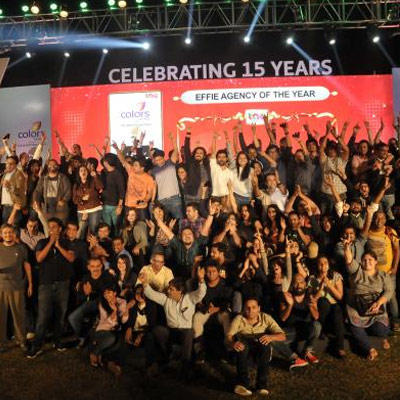
Even as the Effie Awards 2015 left agencies wanting for more Gold trophies as several categories went without any takers in the category, MullenLowe Lintas was crowned Agency of the Year with the most number of metals to its name. Claiming victory over four different categories and tying with themselves on a single, MullenLowe Lintas took home six Gold Effies, followed by five Silver and 13 Bronze trophies, making their overall count 24. The agency’s winning streak was bagging the Grand Effie for the campaign, ‘Drinks and Memories’ for Paperboat under the Integrated Advertising Campaign category.
Amongst marketers, Hindustan Unilever was named as the Client of the Year for its award winning campaigns for various brands.
A total of 15 Gold, 26 Silver and 54 Bronze statuettes were given away at the Effie Awards 2015.
Defending champions, Ogilvy and Mather (O&M) emerged as the agency to take home the most number of metals — four Gold, four Silver and a whopping 20 Bronze statuettes — taking their award tally to 28.
McCann Worldgroup India was third in line to bag the maximum awards with two Gold, four Silver and four Bronze, followed by DDB Mudra with four Silver and five Bronze. BBDO India took home two Gold, and one Bronze. The last Golden trophy was taken home by Contract Advertising for its campaign for Truecaller under Telecom and related products category.
The Leo Group India bagged two Silver and one Bronze statuettes.
Law & Kenneth Saatchi & Saatchi won Silver for the newly introduced category of New Product or Service – ‘Best campaign for a Start up category’ for their offline to online furniture shopping campaign for Pepperfry.com, while MullenLowe Lintas Group India bagged the bronze for ‘Life Mein Campaign’ for Practo. JWT also took home two Bronze.
The Effie India Awards 2015 were adjudged by an eminent jury panel of 285 industry leaders from across Mumbai, Delhi and Bangalore representing agency and clients. Some of the key categories included were consumer products, consumer durable, services, healthcare, small town and rural marketing etc.
“In an era where marketing budgets are under strain and scrutiny, it is extremely heartening that effectiveness has become the mantra of the marketing and advertising fraternity. The overwhelming response to the Effie 2015 is witness to this, with an all-time high participation of 57 agencies and 603 entries. The fact that the Effie award has become the most coveted trophy on the shelves of marketers and agency alike is the greatest joy for me,” said Effie India Awards 2015 chairman Ajay Kakkar.
Elaborating further on the entries, Effie India Awards 2015 co-chairman Vikram Sakhuja said, “The Effies this time too has it all, the power of insight, non-conventional marketing plans and ultimately a great brand success stories.”
“The business environment is constantly changing and it is imperative that we align ourselves these changes to meet the expectations of our clients. I take this opportunity to appreciate and congratulate all the winners and my industry colleagues who are driving and leading this change,” added The Advertising Club president and Colors CEO Raj Nayak in parting.
MUMBAI: It’s that time of the year again when the entire advertising, marketing and creative media fraternity converge together to laud the most effective creative work amongst their peers. The Effie Awards, organised by The Advertising Club, has entered its 15th chapter with much pomp and show.
Even as the Effie Awards 2015 left agencies wanting for more Gold trophies as several categories went without any takers in the category, MullenLowe Lintas was crowned Agency of the Year with the most number of metals to its name. Claiming victory over four different categories and tying with themselves on a single, MullenLowe Lintas took home six Gold Effies, followed by five Silver and 13 Bronze trophies, making their overall count 24. The agency’s winning streak was bagging the Grand Effie for the campaign, ‘Drinks and Memories’ for Paperboat under the Integrated Advertising Campaign category.
Amongst marketers, Hindustan Unilever was named as the Client of the Year for its award winning campaigns for various brands.
A total of 15 Gold, 26 Silver and 54 Bronze statuettes were given away at the Effie Awards 2015.
Defending champions, Ogilvy and Mather (O&M) emerged as the agency to take home the most number of metals — four Gold, four Silver and a whopping 20 Bronze statuettes — taking their award tally to 28.
McCann Worldgroup India was third in line to bag the maximum awards with two Gold, four Silver and four Bronze, followed by DDB Mudra with four Silver and five Bronze. BBDO India took home two Gold, and one Bronze. The last Golden trophy was taken home by Contract Advertising for its campaign for Truecaller under Telecom and related products category.
The Leo Group India bagged two Silver and one Bronze statuettes.
Law & Kenneth Saatchi & Saatchi won Silver for the newly introduced category of New Product or Service – ‘Best campaign for a Start up category’ for their offline to online furniture shopping campaign for Pepperfry.com, while MullenLowe Lintas Group India bagged the bronze for ‘Life Mein Campaign’ for Practo. JWT also took home two Bronze.
The Effie India Awards 2015 were adjudged by an eminent jury panel of 285 industry leaders from across Mumbai, Delhi and Bangalore representing agency and clients. Some of the key categories included were consumer products, consumer durable, services, healthcare, small town and rural marketing etc.
“In an era where marketing budgets are under strain and scrutiny, it is extremely heartening that effectiveness has become the mantra of the marketing and advertising fraternity. The overwhelming response to the Effie 2015 is witness to this, with an all-time high participation of 57 agencies and 603 entries. The fact that the Effie award has become the most coveted trophy on the shelves of marketers and agency alike is the greatest joy for me,” said Effie India Awards 2015 chairman Ajay Kakkar.
Elaborating further on the entries, Effie India Awards 2015 co-chairman Vikram Sakhuja said, “The Effies this time too has it all, the power of insight, non-conventional marketing plans and ultimately a great brand success stories.”
“The business environment is constantly changing and it is imperative that we align ourselves these changes to meet the expectations of our clients. I take this opportunity to appreciate and congratulate all the winners and my industry colleagues who are driving and leading this change,” added The Advertising Club president and Colors CEO Raj Nayak in parting.